International Relations

FSI researchers strive to understand how countries relate to one another, and what policies are needed to achieve global stability and prosperity. International relations experts focus on the challenging U.S.-Russian relationship, the alliance between the U.S. and Japan and the limitations of America’s counterinsurgency strategy in Afghanistan.

Foreign aid is also examined by scholars trying to understand whether money earmarked for health improvements reaches those who need it most. And FSI’s Walter H. Shorenstein Asia-Pacific Research Center has published on the need for strong South Korean leadership in dealing with its northern neighbor.

FSI researchers also look at the citizens who drive international relations, studying the effects of migration and how borders shape people’s lives. Meanwhile FSI students are very much involved in this area, working with the United Nations in Ethiopia to rethink refugee communities.

Trade is also a key component of international relations, with FSI approaching the topic from a slew of angles and states. The economy of trade is rife for study, with an APARC event on the implications of more open trade policies in Japan, and FSI researchers making sense of who would benefit from a free trade zone between the European Union and the United States.

News Type
News
Date
Paragraphs

This study by professors Ran Abramitzky, Leah Pllatt Boustan, and Katherine Erikson, challenges the previous notions that European immigrants in the US during the Age of Mass Migration (1850–1913) initially held substantially lower paid occupations than natives, but converged after spending 10-15 years in the United States.  

Ran Abramitzky is an associate professor of economics at Stanford and a Europe Center faculty affiliate.

For a more information, please visit the publication's webpage by clicking on the article title below.

All News button
1
Paragraphs

During the Age of Mass Migration (1850–1913), the United States maintained an open border, absorbing 30 million European immigrants. Prior cross-sectional work finds that immigrants initially held lower-paid occupations than natives but converged over time. In newly assembled panel data, the article authors show that, in fact, the average immigrant did not face a substantial occupation-based earnings penalty upon first arrival and experienced occupational advancement at the same rate as natives. Cross-sectional patterns are driven by biases from declining arrival cohort skill level and departures of negatively selected return migrants. The authors show that assimilation patterns vary substantially across sending countries and persist in the second generation.

All Publications button
1
Publication Type
Journal Articles
Journal Publisher
Journal of Political Economy
Authors
Ran Abramitzky
Paragraphs

Historical accounts suggest that Jewish émigrés from Nazi Germany revolutionized U.S. science. To analyze the émigrés’ effects on chemical innovation in the US we compare changes in patenting by U.S. inventors in research fields of émigrés with fields of other German chemists. Patenting by U.S. inventors increased by 31 percent in émigré fields. Regressions that instrument for émigré fields with pre-1933 fields of dismissed German chemists confirm a substantial increase in U.S. invention. Inventor-level data indicate that émigrés encouraged innovation by attracting new researchers to their fields, rather than by increasing the productivity of incumbent inventors.

All Publications button
1
Publication Type
Journal Articles
Publication Date
Journal Publisher
American Economic Review
Authors
Paragraphs
Why do voters agree to bear the costs of bailing out other countries? Despite the prominence of public opinion in the ongoing debate over the eurozone bailouts, voters’ preferences on the topic are poorly understood. The article's authors conduct the first systematic analysis of this issue using observational and experimental survey data from Germany, the country shouldering the largest share of the EU’s financial rescue fund. Testing a range of theoretical explanations, we find that individuals’ own economic standing has limited explanatory power in accounting for their position on the bailouts. In contrast, social dispositions such as altruism and cosmopolitanism robustly correlate with support for the bailouts. The results indicate that the divide in public opinion over the bailouts does not reflect distributive lines separating domestic winners and losers. Instead, the bailout debate is better understood as a foreign policy issue that pits economic nationalist sentiments versus greater cosmopolitan affinity and other-regarding concerns.
All Publications button
1
Publication Type
Journal Articles
Journal Publisher
American Journal of Political Science
Authors
Jens Hainmueller
-

GOVERNORS' MEETING IN SILICON VALLEY

U.S.-Japan Economic Collaboration at the State-Prefecture Level


July 28, 2014

MacCaw Hall at Arrillaga Alumni Center, Stanford University


This July, as part of the U.S.-Japan Council’s (USJC) Governors’ Circle Initiative, USJC and The Walter H. Shorenstein Asia-Pacific Research Center (APARC) will convene a Japan Governors’ Meeting in Silicon Valley. Governors from six prefectures, namely Fukuoka, Hiroshima, Oita, Okayama, Saga and Shizuoka, have confirmed their attendance, and each plans to bring a delegation of business leaders and government officials involved in bilateral economic collaboration. These governors are interested in the state of California, particularly Silicon Valley, as a leader in the fields of IT, biomedical/healthcare, automobile technology, clean energy and consumer goods. This event will serve as a catalyst for select Japanese prefectures to connect with the Silicon Valley’s innovative companies, pilot projects, and state-of-the-art technologies across a number of sectors, including technology licensing, market development, manufacturing agreements, investments, joint ventures, and strategic partnerships.

For registration, please visit http://bit.ly/GovCircle    


Date: July 28:  Plenary Session and Networking Reception/Sake Tasting (Open to Public)  

2:00 - 2:15 pm:    Opening Remarks

2:15- 2:45 pm:     Presentation by the Director of Stanford’s Freeman Spogli Institute for International Studies (FSI)

2:45 – 4:00 pm:   Governors’ Panel Discussion on Prefectures’ Economic Collaboration Targets and Collaboration with Silicon Valley

4:00 - 4:15 pm:    Break

4:15 - 5:15 pm:    Presentations:  “How Stanford Played a Significant Role in Creating New Businesses Collaborations in Silicon Valley”

5:15 - 5:30 pm:    Closing Remarks

5:30 – 7:30 pm:  Networking Reception

Frances C. Arrillaga Alumni Center

Conferences
News Type
News
Date
Paragraphs

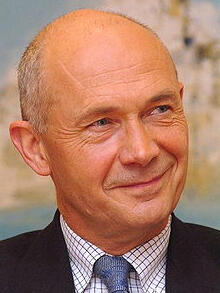
Recap: Pascal Lamy Lecture, “World Trade and Global Governance”

 
On February 10, 2014, Pascal Lamy, the former Director-General of the World Trade Organization, visited Stanford University as a special guest of The Europe Center and the Freeman Spogli Institute for International Studies. During his two-term tenure at the helm of the WTO (from 2005 to 2013), Mr. Lamy successfully guided the organization through complex changes in the regulation of international trade. Among his many achievements, he oversaw the systematic integration of developing countries into positions of political leadership in the world economic order. Prior to the WTO, Mr. Lamy served as the European Commissioner for Trade, the CEO of the French bank Crédit Lyonnais, and in the French civil service. 
 
At Stanford, Mr. Lamy first participated in a lunchtime question and answer roundtable with students that was moderated by Stephen Stedman, Deputy Director of the Center for Democracy, Development, and the Rule of Law. Among other topics, he spoke about the necessary mix of economic, social, and political policies that determine the efficacy of free trade as an engine of global economic growth. 


Image

Mr. Lamy then delivered a public lecture on “World Trade and Global Governance” before an audience of over a hundred members of the Stanford community. In this talk, Mr. Lamy outlined a statement of his thinking about the future of global governance, focusing on three overarching points. First, despite some setbacks, governments and international organizations have achieved major successes in regulating the liberalization of global trade. Tariffs are on average lower than ever before, and governments did not raise tariffs during the recent financial crisis as they did during the Great Depression. Second, a new feature of the global economy is that protectionism based on economic objectives has been replaced by ‘precautionism’ based on normative prerogatives. For example, competing national perspectives on product standards such as those related to safety or labor norms thwart efforts to achieve consensus on trade regulation. Third, in order to achieve regulatory convergence, we need to bring together stakeholders from the public and private sector to build coalitions that jointly negotiate conflicts in matters of global governance. For example, the “C20-C30-C40 Coalition of the Working” that comprises countries, companies, and cities is currently striving to overcome regulatory gridlock on climate change.
 
We welcome you to visit our website for additional details about this event.


Save the Date: The Europe Center Lectureship on Europe and the World

 
Please mark your calendars for the inaugural annual lectures in this series by Adam Tooze, Barton M. Briggs Professor of History, Yale University. 
 
Dates: April 30, May 1, and May 2, 2014
 
 
Image
Image of Adam Tooze
Adam Tooze will deliver three lectures from his forthcoming book, A World Fit for Heroes. In particular, he will speak about the history of the transformation of the global power structure that followed from Imperial Germany’s decision to provoke America’s declaration of war in 1917. Tooze is the author of The Wages of Destruction: The Making and Breaking of the Nazi Economy (2006) and Statistics and the German State 1900-1945: The Making of Modern Economic Knowledge (2001), among numerous other scholarly articles on modern European history.


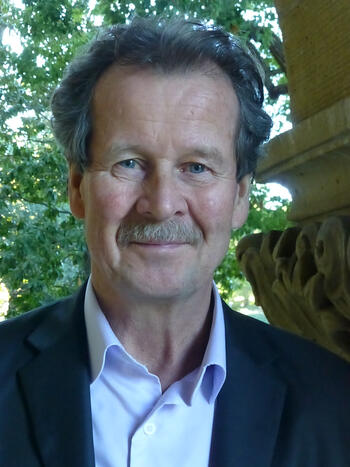
Meet our Visiting Scholars:  Manfred Nowak 

 
In each newsletter, The Europe Center would like to introduce you to a visiting scholar or collaborator at the Center. We welcome you to visit the Center and get to know our guests.
 
 
Image
Image of Manfred Nowak, Visiting Austrian Chair Professor 2013-2014, Stanford University
Manfred Nowak (LL.M., Columbia University, 1975) is Distinguished Visiting Austrian Chair Professor; Visiting Professor, Stanford Law School; and, Professor of Law, University of Vienna. One of the world’s most renowned human rights scholars and legal theorists, Nowak has published more than 400 books and articles on international, constitutional, administrative, and human rights law, including the standard commentary on the International Covenant on Civil and Political Rights. He was the Director of the Netherlands Institute of Human Rights at the University of Utrecht (1987-1989), and he founded the Austrian Ludwig Boltzmann Institute of Human Rights in 1989. From 1996-2003, Nowak was a judge at the Human Rights Chamber in Bosnia. He has also served as a U.N. legal expert on missing persons and enforced disappearances, and was appointed the U.N. Special Rapporteur on Torture and other Cruel, Inhuman or Degrading Treatment in 2004. 
 
Manfred Nowak was awarded the UNESCO Prize for the Teaching of Human Rights in 1994 and the Bruno Kreisky Prize for Human Rights in 2007.


Workshop Schedules  

 
The Europe Center invites you to attend the talks of speakers in the following workshop series: 
 

Europe and the Global Economy

 
February 20, 2014
Alan Deardorff, John W. Sweetland Professor of International Economics & Prof. of Economics and Public Policy, University of Michigan
RSVP by Feb 19, 2014
 
Mar 6, 2014
Sophie Meunier, Research Scholar, Woodrow Wilson School and Co-Director, EU Program at Princeton, Princeton University
RSVP by Mar 3, 2014
 
Mar 13, 2014
Randy Stone, Professor of Political Science, University of Rochester
RSVP by Mar 10, 2014
 
Apr 3, 2014
Kåre Vernby, Associate Professor, Department of Government, Uppsala University
RSVP by Mar 31, 2014
 
Apr 17, 2014
Mark Hallerberg, Professor of Public Management and Political Economy, Hertie School of Governance 
RSVP by Apr 4, 2014
 
May 15, 2014
Christina Davis, Prof. of Politics and International Affairs, Princeton University
RSVP by May 12, 2014
 

European Governance

 
May 22, 2014
Wolfgang Ischinger, Former German Ambassador to the U.S.; Chairman, Munich Security Conference
RSVP by May 19, 2014
 
May 29, 2014
Simon Hug, Professor of Political Science, University of Geneva
RSVP by May 26, 2014


The Europe Center Sponsored Events

 
We invite you to attend the following events sponsored or co-sponsored by The Europe Center:
 
March 6, 2014
“Promise and Critique of Capitalism: Changing Discourses Since the 18th Century”
Jürgen Kocka, Professor and Former President of the Social Science Research Center, Berlin
Location: Watt Room, Stanford Humanities Center
 
March 6 and 7, 2014
Indian Ocean Conference
“Connecting Continents: Setting an Agenda for a Historical Archaeology of the Indian Ocean World”
Location: Stanford Archaeology Center, Building 500, 488 Escondido Mall
 
March 31, 2014
Simon Hix, Professor of European and Comparative Politics, London School of Economics and Political Science
Political Science Comparative Politics Workshop
Location: Encina Hall West Room 400
 
April 15, 2014
Ulrich Wilhelm, Director General, Bavarian Broadcasting Corporation
“Assessing the Impact of the NSA Spy Scandal on American-European Relations” 
The Europe Center and FSI Stanford Special Event
Location: Oksenberg Conference Room, Encina Hall
RSVP by April 10, 2014


Other Events

 
The Europe Center also invites you to attend the following events of interest:
 
February 20, 2014
Gregory Shaffer, Melvin C. Steen Professor of Law, University of Minnesota Law School
“How the WTO Shapes Regulatory Governance”
Room 185, Stanford Law School
 
European Entrepreneurship & Innovation @Stanford Engineering
February 24, 2014
    “Switzerland and Turkey - Venture Capital and Product Design Firms”
    Giuseppe Zocco, Founding Partner, Index Ventures; Emrah Yalaz, CEO, Spring Ventures
March 3, 2014
    “Flanders and Sweden - Enterprise Software and VC Funds”
    Lieven Vermaele, CEO, SDNsquare; Martin Hauge, Founding Partner, Creandum
March 10, 2014
    “Hungary and Italy - Digital Infrastructure Startups and ‘Maker’ Movements”
    Gyula Feher, CTO & Co-Founder, Ustream
Location: Hewlett 201 Auditorium, Engineering School
 

We welcome you to visit our website for additional details.

All News button
1
News Type
News
Date
Paragraphs

Special Event:  Pascal Lamy Lecture

“World Trade and Global Governance”

 
The Europe Center invites you to a special lecture by Pascal Lamy, the former Director-General of the World Trade Organization.
 
Image
Image of Pascal Lamy
Date: February 10, 2014 
Time: 4:00 - 5:30 p.m.
Venue: Bechtel Conference Center, Encina Hall
RSVP by February 5, 2014                       
  
Mr. Lamy will speak on the necessary mix of economic, social, and political policies that will determine the efficacy of free trade as an engine of global economic growth. In particular, he will outline a statement of his own thinking about the future of global governance and international trade, and describe what remains to be done in addressing the challenges of globalization. Additionally, Mr. Lamy will reflect on the features of modern politics that create governance gridlock and thwart global oversight, and will identify how progress can be made in overcoming impediments to policy action at the international level. 
 
My Lamy served as the Director-General of the World Trade Organization from 2005-2013. He is currently the Honorary President of the Paris-based think tank, Notre Europe.


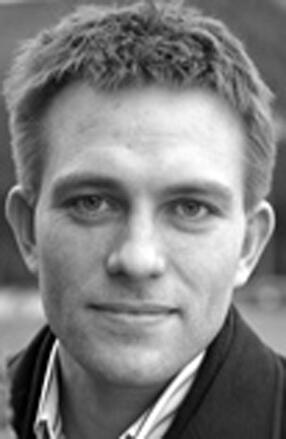
Meet our Visiting Scholars:  Bjørn Høyland 

 
In each newsletter, The Europe Center would like to introduce you to a visiting scholar or collaborator at the Center. We welcome you to visit the Center and get to know our guests.
 
Bjør
Image
Image of Bjorn Hoyland
n Høyland (PhD, London School of Economics, 2005) is Professor of Political Science at the University of Oslo, Norway. He is currently visiting Professor and Anna Lindh Fellow at The Europe Center, Freeman Spogli Institute for International Studies and Stanford Global. The focus of his research is European Union politics and comparative legislative politics. Professor Høyland’s list of journal publications includes the American Political Science Review, Annual Review of Political Science, British Journal of Political Science, and European Union Politics. His textbook (with Simon Hix) The Political System of the European Union (3rd ed) is the standard text for advanced courses on the European Union.

Workshop Schedules  

 
The Europe Center invites you to attend the talks of speakers in the following workshop series: 
 

Europe and the Global Economy

 
January 23, 2014
David Dreyer Lassen, Professor of Economics, University of Copenhagen
RSVP by Jan 20, 2014 
 
February 20, 2014
Alan Deardorff, John W. Sweetland Professor of International Economics & Prof. of Economics and Public Policy, University of Michigan
RSVP by Feb 17, 2014
 
Mar 6, 2014
Sophie Meunier, Research Scholar, Woodrow Wilson School and Co-Director, EU Program at Princeton, Princeton University
RSVP by Mar 3, 2014
 
Mar 13, 2014
Randy Stone, Professor of Political Science, University of Rochester
RSVP by Mar 10, 2014
 
Apr 3, 2014
Kåre Vernby, Associate Professor, Department of Government, Uppsala University
RSVP by Mar 31, 2014
 
Apr 17, 2014
Mark Hallerberg, Professor of Public Management and Political Economy, Hertie School of Governance 
RSVP by Apr 4, 2014
 
May 15, 2014
Christina Davis, Prof. of Politics and International Affairs, Princeton University
RSVP by May 12, 2014

European Governance

 
February 6, 2014
Matthew Gabel, Professor of Political Science, Washington University at St. Louis
RSVP by Feb 3, 2014
 
May 22, 2014
Wolfgang Ischinger, Former German Ambassador to the U.S.; Chairman, Munich Security Conference
RSVP by May 19, 2014
 
May 29, 2014
Simon Hug, Professor of Political Science, University of Geneva
RSVP by May 26, 2014

Other Events

 
The Europe Center also invites you to attend the following events of interest:
 
January 27, 2014
Vassil Terziev, Co-founder & CEO, Telerik (BG); and Japec Jakopin, Co-founder & CEO, Seaway (SI)
“Worldclass Enterprise Software and Design Firms in SouthEast and Balkans Europe” 
Sponsor: European Entrepreneurship & Innovation Thought Leaders Seminar
 
January 30, 2014
Ken Schultz, Professor of Political Science, Stanford University
“Making and Breaking Territorial Agreements: Explaining European Exceptionalism”
Sponsor: CISAC Social Science Seminar; co-sponsored by The Europe Center
 
 
All News button
1
News Type
News
Date
Paragraphs

Governments and multilateral donor organizations are increasingly targeting development aid to conflict affected areas with the hope that this aid will help government efforts to reduce conflict and stabilize these areas. 

The expectation is that implementing development projects such as roads, schools and hospitals will increase popular support for the government – effectively  “winning hearts and minds” – and reduce support for insurgents making it more difficult for them to recruit rebels and carry out attacks.

Joe Felter, a Senior Research Scholar at CISAC, with Benjamin Crost at the University of Illinois and Patrick Johnston from the RAND Corporation, challenge this conventional wisdom in their article in the June edition of the American Economic Review: Aid Under Fire: Development Projects and Civil Conflict.

Felter and his coauthors provide evidence that a “winning hearts and minds” strategy can sometimes backfire. When insurgents believe the successful implementation of government-sponsored development projects will boost support for the government and undermine their position, they have incentives to attack or otherwise sabotage those projects, thus exacerbating conflict in the short term.

Ironically, increases in violence associated with government-sponsored development efforts can in some cases be interpreted as an indicator that these efforts are effectively targeting insurgent vulnerabilities.

All News button
1
-

Image
banner2 1280x426

From May 13-15, the Center on Food Security and the Environment and the Lenfest Ocean Program welcomed leading Chinese and international scientists to the Stanford Center at Peking University in Beijing, to share research and insights on the role of ocean fisheries, aquaculture, and marine ecosystems for improving food security in China.

Given China’s demographic changes, evolving nutritional requirements, and dominant role in global fisheries, the key question of the symposium was whether marine ecosystems can be managed adequately to support the country’s future vision for domestic food security.

Nearly 30 participants from around the world shared research on the provision of wild fish for direct human consumption and for animal feeds. Participants also shared insights on China’s aquaculture sector, including the tradeoffs involved in using wild fish in aquaculture feed.

Agenda

Session I – Food security and marine ecosystems

Session II – Aquaculture, feeds and fisheries

Session III - Coastal fisheries & impacts on marine ecosystems

Session IV – Economies of the global marine fish trade

Session V - Critical issues and challenges 

Stanford Center at Peking University

The Jerry Yang and Akiko Yamazaki
Environment and Energy Building
Stanford University
473 Via Ortega, Office 363
Stanford, CA 94305

(650) 723-5697 (650) 725-1992
0
Senior Fellow, Stanford Woods Institute and Freeman Spogli Institute for International Studies
William Wrigley Professor of Earth System Science
Senior Fellow and Founding Director, Center on Food Security and the Environment
Roz_low_res_9_11_cropped.jpg PhD

Rosamond Naylor is the William Wrigley Professor in Earth System Science, a Senior Fellow at Stanford Woods Institute and the Freeman Spogli Institute for International Studies, the founding Director at the Center on Food Security and the Environment, and Professor of Economics (by courtesy) at Stanford University. She received her B.A. in Economics and Environmental Studies from the University of Colorado, her M.Sc. in Economics from the London School of Economics, and her Ph.D. in applied economics from Stanford University. Her research focuses on policies and practices to improve global food security and protect the environment on land and at sea. She works with her students in many locations around the world. She has been involved in many field-level research projects around the world and has published widely on issues related to intensive crop production, aquaculture and livestock systems, biofuels, climate change, food price volatility, and food policy analysis. In addition to her many peer-reviewed papers, Naylor has published two books on her work: The Evolving Sphere of Food Security (Naylor, ed., 2014), and The Tropical Oil Crops Revolution: Food, Farmers, Fuels, and Forests (Byerlee, Falcon, and Naylor, 2017).

She is a Fellow of the Ecological Society of America, a Pew Marine Fellow, a Leopold Leadership Fellow, a Fellow of the Beijer Institute for Ecological Economics, a member of Sigma Xi, and the co-Chair of the Blue Food Assessment. Naylor serves as the President of the Board of Directors for Aspen Global Change Institute, is a member of the Scientific Advisory Committee for Oceana and is a member of the Forest Advisory Panel for Cargill. At Stanford, Naylor teaches courses on the World Food Economy, Human-Environment Interactions, and Food and Security. 

CV
Rosamond L. Naylor Moderator
Symposiums
Subscribe to International Relations