International Relations

FSI researchers strive to understand how countries relate to one another, and what policies are needed to achieve global stability and prosperity. International relations experts focus on the challenging U.S.-Russian relationship, the alliance between the U.S. and Japan and the limitations of America’s counterinsurgency strategy in Afghanistan.

Foreign aid is also examined by scholars trying to understand whether money earmarked for health improvements reaches those who need it most. And FSI’s Walter H. Shorenstein Asia-Pacific Research Center has published on the need for strong South Korean leadership in dealing with its northern neighbor.

FSI researchers also look at the citizens who drive international relations, studying the effects of migration and how borders shape people’s lives. Meanwhile FSI students are very much involved in this area, working with the United Nations in Ethiopia to rethink refugee communities.

Trade is also a key component of international relations, with FSI approaching the topic from a slew of angles and states. The economy of trade is rife for study, with an APARC event on the implications of more open trade policies in Japan, and FSI researchers making sense of who would benefit from a free trade zone between the European Union and the United States.

0
taylor_johnson.jpg

Taylor Johnson joined CISAC as research assistant to Amy Zegart in September 2014. Taylor graduated summa cum laude from Washington University in St. Louis with a BA in International and Area Studies.  She received her master’s degree in International Affairs from the Elliott School at The George Washington University in May 2015.

Taylor moved to the Bay Area from DC, where she worked as communications assistant at the U.S. Global Leadership Coalition. She has also completed internships at the World Affairs Council of Dallas/Fort Worth and the U.S. Department of State. 

National Security Affairs Program Manager
Date Label
-

Image

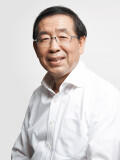
The Honorable Park Won Soon is the 35th mayor of Seoul, South Korea. He was initially elected in Oct. 2011, and recently reelected for another four-year term in June 2014. Park was elected as an indepedent candidate, with the support of the Democratic Party and Democractic Labor Party.

In his keynote speech, Mayor Park will share his philosophy on civic participation and local governance, reflecting on his career in- and outside government. He will explore communication strategies that local government can employ to better engage citizens and motivate collective action, using best practices from Seoul to illustrate his point.

Before assuming office, Park was a human rights lawyer and passionate activist who founded several NGOs. In his early university years at Seoul National University, Park was arrested and expelled for participating in a student rally against the military dictatorship of President Park Chung Hee, and was subsequently imprisoned for four months.

Park passed the state bar exam in 1980, and worked as a public prosecutor in the Daegu District Court in Gyeongsang Province (1982–3), afterward launching a private law practice in Seoul. In 2006, Park founded the Hope Institute, a think tank that aims to apply policy alternatives based on ideas generated by Korea’s citizens.

He also founded the People’s Solidarity for Participatory Democracy in 1994, a nonprofit organization dedicated to promoting justice and human rights in Korean society through civic participation.

In 2000, Park founded the Beautiful Foundation, a nonprofit organization that aims to promote a culture of philanthropy and a just society in Korea, and in 2002, the Beautiful Store, a secondhand store that raises funds for the Foundation’s initiatives.

Park holds a diploma in international law from the London School of Economics and Political Science and a bachelor’s degree in history from Dankook University. In 1993, he was a visiting research fellow in the Human Rights Program at the School of Law at Harvard University and from 2005-6 he was a distinguished practitioner at the Shorenstein Asia-Pacific Research Center, Stanford University.

This event is part of the Asia-Pacific Leaders Forum.

The video of this presentation is located on the Shorenstein APARC YouTube channel.


McCaw Hall

Stanford Alumni Association
Frances C. Arrillaga Alumni Center
326 Galvez Street
Stanford, CA 94305-6105
Parking, Map & Directions.


Park Won Soon Mayor of Seoul
Lectures
-

60 years have passed since Japan started its development cooperation in 1954.  Japan has undergone the process of a defeated country of World War II becoming an economic superpower in the 1970s-1980s to be stagnant in the succeeding two decades.  During these periods, Japan's financial contribution to development cooperation once reached the highest among the OECD countries in the 1990s. But recently Japan's financial contribution stays at 4th or 5th. How has the Japanese development cooperation evolved over the past six decades? What have been its characteristics? What are the current debates of future direction of Japan's development cooperation? What role does it play in overall Japan's diplomacy and international relations?


Mr. Ak

Image
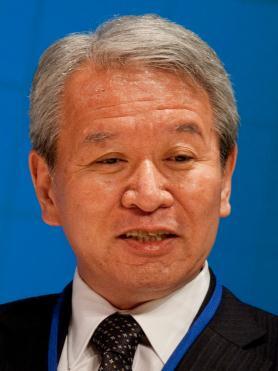
ihiko Tanaka is President of the Japan International Cooperation Agency (JICA). Before assuming the present post, he was Professor of International Politics at the Interfaculty Initiative in Information Studies and at the Institute for Advanced Studies on Asia, the University of Tokyo. Most recently he was Vice President of the University of Tokyo (2011-2012), Executive Vice President of the University of Tokyo (2009-2011), and Director of the Division of International Affairs of the University of Tokyo (2008-2010).

He obtained his B.A. in International Relations at the University of Tokyo in 1977 and his Ph.D. in Political Science at Massachusetts Institute of Technology in 1981.

Mr. Tanaka’s specialties include theories of international politics, contemporary international relations in East Asia, and Japan’s foreign policy. He has numerous books and articles in Japanese and English including the New Middle Ages: The World System in the 21st Century (Tokyo: The International House of Japan, 2002).

He received the Medal with Purple Ribbon for his academic achievements in 2012.


Akihiko Tanaka President Speaker President, Japan International Cooperation Agency
Seminars
-

The 2008 global financial crisis came with fears - and, for some, hopes of a new wave of public mobilisation in industrialised countries. Large protests were particularly expected in the epicentre of the crisis, the European Union. Yet, the force with which social groups garnered their calls for strikes ebbed quickly away. Gerald Schneider provides new evidence for why this was the case. He claims that strikes, and particularly political strikes, are 'bad weather' phenomena and crises exacerbate them. In monetary unions, where currency adjustments are difficult, fiscal changes are not supported by easing monetary measures and should unchain social unrest unless supranational actors get involved. Schneider argues that the political actions of the European Central Bank (ECB) have countered the potential for strikes in the Eurozone. He provides evidence for his theory with yearly panel data and a new original data  set of monthly strikes between 2001 and 2013. His analyses support the thesis that the EU institution was successful at attenuating social indignation over the Eurocrisis and its political fallout.

This paper is based on co-authored work with Dr. Federica Genovese (Essex) and Pia Wassmann (Hannover).

Image
Professor Gerald Schneider, University of Konstanz

Gerald Schneider is Professor of International Politics and Executive Editor of “European Union Politics”. His main areas of research are European Union decision making, the causes and consequences of armed violence, the international political economy of financial markets, bargaining and conflict management.

Schneider defended his doctoral thesis at the University of Zurich in 1991, worked as post-doc at the University of Michigan (Ann Arbor) for two years and was an assistant professor (1992 – 1995) at the Institut universitaire de hautes études internationales in Geneva. Before joining the faculty at Konstanz in 1997, he was a Professor of Political Science at the University of Stuttgart (1996-1997) and Program Director at the University of Berne (1994 – 1997). Gerald Schneider has also been visiting scholar at Università Bocconi (Visiting Research Professor), Charles University Prague, Harvard University, University of Kobe, Sciences Po Paris (Grosser Chair) and Università Siena. He has published around 150 articles in various journals and volumes. Schneider is President of the European Political Science Association (2013-2015) and was also in 2003-2004 Vice President of the International Studies Association, and served as Program Chair for the 50th annual convention in New York City in 2009. Schneider has acted as a consultant and referee for various organizations, including the World Bank and the U.S. National Science Foundation. He has served for various selection committees of the the Alexander von Humboldt Foundation since 2007 and was a member of the scientific board of the Swiss Network of International Studies (2008-2013). Besides his native German, Schneider speaks English, French and survives in Italian and Danish.

The Eurotower Strikes Back: Crises, Adjustments and Europe's Austerity Protests
Download pdf

CISAC Central Conference Room
Encina Hall, 2nd floor
 

Gerald Schneider Professor of International Politics Speaker Universität Konstanz, Germany
Seminars
-

Conference Agenda for Day 3, October 10, 2014:


9:00 – 10:15 AM Chair: Katherine Jolluck, Stanford University

  • Aigi Rahi-Tamm, Tartu University. Doubly Marginalized People: the Hidden Stories of Breaking Trust between People in Estonian Society (1940–1960)
  • Daina Bleiere, Rīga Stradiņš University. Women in the Soviet Latvian Nomenclature (1940–1987)

10:30 AM – 12:15 PM Chair: Darius Staliunas, Lithuanian Institute of History

  • Saulius Grybkauskas, Lithuanian Institute of History. The Second Secretaries of Communist Parties in the Soviet Baltic Republics during 1944–1990
  • David Beecher, University of California, Berkeley. A Tale of Two Scholars:  Paul Ariste and Yuri Lotman
  • Gail Lapidus, Stanford University. The Baltic National Movements and the End of the USSR

12:15 – 2:00 PM Break

2:00 – 3:15 PM Chair: Paul Roderick Gregory, Hoover Institution

  • Elga Zalīte, Green Library. The Rev. Richards Zariņš Collection in Stanford University Libraries as a Source for the Study of the Post-World War II Latvian Emigration in the United States
  • David Jacobs, Hoover Institution Archives. Stateless Representatives: Baltic Diplomats during the Cold War

3:30 – 4:15 PM Chair: Saulius Sužiedėlis, Millersville University, Pennsylvania

  • Maciej Siekierski, Hoover Institution Archives. Baltic Collections and Scholarship at the Hoover Institution
  • Liisi Esse, Green Library. The Baltic Studies Program of Stanford University Libraries


6:00 – 8:00 PM, Cubberley Auditorium, Education Building, 485 Lasuen Mall

Latvian film director Pēteris Krilovs will present his documentary Obliging Collaborators (2014)


Conference organizers:  Professors Lazar Fleishman (Slavic Department) and Amir Weiner (History Department)

Sponsored by: Hoover Institution Library and Archives, Office of the Provost, Stanford School of Humanities and Sciences, Stanford Global Studies Division, The Europe Center, Stanford University Libraries, Division of Literatures, Cultures, & Languages, Department of Slavic Languages and Literatures, Department of History, Center for Russian, East European and Eurasian Studies, and the Stanford Humanities Center.


Stauffer Auditorium, Hoover Institution (9:00am - 4:15pm)
Cubberley Auditorium (for film screening, 6:00pm - 8:00pm)
 

Conferences
-

Conference Agenda for Day 2, October 9, 2014:


9:00-10:45 AM Chair: Magnus Ilmjärv, Тallinn University

  • Ineta Lipša, Institute of History of Latvia. Interwar History of Latvia: the Gender Aspects
  • Aivars Stranga, University of Latvia. Kārlis Ulmanis' Regime: Politics, Economics, Culture
  • Andres Kasekamp, Tartu University. The Estonian Radical Right in the 1930s: The Collapse of Democracy and the Rise of Authoritarianism. 

11:00 AM – 12:15 PM Chair: David Holloway, Stanford University

  • Arturas Svarauskas, Lithuanian Institute of History. Regime, Society, and Political Tensions in Lithuania, 1938–1940.
  • Magnus Ilmjärv, Тallinn University. Munich Pact and the Baltic States, 1938 – The Fateful Year for the Baltic States.

12:15 – 2:00 PM Break

2:00 – 3:15 PM Chair: Norman Naimark, Stanford University

  • Saulius Sužiedėlis, Millersville University, Pennsylvania. The Nazi Occupation and the Holocaust in Reichskommissariat Ostland: Conflicting Narratives and Memories
  • Uldis Neiburgs, Museum of the Occupation of Latvia. Latvia, Nazi German Occupation, and the Western Allies, 1941–1945

3:30 – 4:45 PM Chair: Gabriella Safran, Stanford

  • Ene Kõresaar, Tartu University. World War II in Estonian Memory and Commemoration
  • Kristina Burinskaitė, The Genocide and Resistance Research Centre of Lithuania. The KGB Search of War Criminals in the West and the Attempts to Discredit Lithuanian Emigration


Conference organizers:  Professors Lazar Fleishman (Slavic Department) and Amir Weiner (History Department)

Sponsored by: Hoover Institution Library and Archives, Office of the Provost, Stanford School of Humanities and Sciences, Stanford Global Studies Division, The Europe Center, Stanford University Libraries, Division of Literatures, Cultures, & Languages, Department of Slavic Languages and Literatures, Department of History, Center for Russian, East European and Eurasian Studies, and the Stanford Humanities Center.


Stauffer Auditorium, Hoover Institution

Conferences
(650) 723-3729
0
Senior Fellow, by courtesy, at the Freeman Spogli Institute for International Studies
Ward C. Krebs Family Professor
Senior Fellow at the Hoover Institution
Professor, by courtesy, of Economics
brw.0118_lg_cropped3.jpg PhD

Barry R. Weingast is the Ward C. Krebs Family Professor, Department of Political Science, and a Senior Fellow, Hoover Institution. He served as Chair, Department of Political Science, from 1996 through 2001. He is a member of the National Academy of Sciences and the American Academy of Arts and Sciences.  Weingast’s research focuses on the political foundation of markets, economic reform, and regulation. He has written extensively on problems of political economy of development, federalism and decentralization, legal institutions and the rule of law, and democracy. Weingast is co-author of Violence and Social Orders: A Conceptual Framework for Interpreting Recorded Human History (with Douglass C. North and John Joseph Wallis, 2009, Cambridge: Cambridge University Press) and Analytic Narratives (1998, Princeton). He edited (with Donald Wittman) The Oxford Handbook of Political Economy (Oxford University Press, 2006). Weingast has won numerous awards, including the William H. Riker Prize, the Heinz Eulau Prize (with Ken Shepsle), the Franklin L. Burdette Pi Sigma Alpha Award (with Kenneth Schultz), and the James L. Barr Memorial Prize in Public Economics.

CV

Encina Hall
616 Serra Street
Stanford, CA  94305-6165

0
Anna Lindh Visiting Scholar at The Europe Center, 2014-2015
maria_sjoholm.jpg

Maria Sjöholm currently holds the position as a post-doc researcher at the Faculty of Law of Stockholm University, Sweden. She is in the process of writing a monograph reviewing the integration of women’s human rights law into regional human rights treaties, analysing the methodological and theoretical frameworks with which such rights have been incorporated into these treaties. Her previous research includes the book “Defining Rape: Emerging Obligations for States under International Law?” (Brill) and an article on the approach by the European Court of Human Rights to human trafficking. She is a member of the Committee on Feminism and International Law of the International Law Association and has taught courses on international human rights law and international criminal law at various universities in Sweden.

Authors
News Type
News
Date
Paragraphs

Improving communication and historical education are two of the major recommendations from a final report on a Stanford-hosted dialogue on World War II memories in northeast Asia.

Stanford's Walter H. Shorenstein Asia-Pacific Research Center convened a dialogue in May with experts from Asia, the United States and Europe to examine World War II reconciliation in Asia. It came at a time of heightened tensions among the governments of China, Japan and South Korea – contentious issues include territorial disputes and the way these societies portray WWII events.

"Each nation in northeast Asia and even the U.S. has selective or divided memories of the past, and does not really understand the views of the other side," said Stanford's Gi-Wook Shin, director of the Shorenstein center and a lead organizer of the event.

Stanford's two-day session was a culmination of a multi-year project that Shin and associate director Daniel Sneider organized. That effort has also yielded three books, and Shin and Sneider have another co-written volume under way on the subject. The research center is part of Stanford's Freeman Spogli Institute for International Studies.

A path to peace

The report, "Wartime History Issues in Asia: Pathways to Reconciliation," suggests the countries involved take the following steps:

  • Create supplementary teaching materials: Based on Stanford's Divided Memories and Reconciliation project, supplementary curricula could highlight how the WWII period is treated in Chinese, Japanese, South Korean and American textbooks. An alternative approach would be to focus on two or three thorny WWII themes, such as the Nanjing massacre, the atomic bombing of Japanese cities and forced labor.
  • Launch history dialogues: Ongoing conversations among Asian, American and European historians could highlight specific WWII events or contentious issues. The dialogue could be broadened into an international setting with more European participation.
  • Offer educational forums: Public and open educational forums could be held so historians could offer various perspectives on WWII issues to journalists, policy makers and college students.
  • Conduct museum exchanges: A dialogue among museum professionals in Asia and even the United States and Europe could create historically accurate narratives for those museums dealing with reconciliation issues. One idea would be to create a model museum wholly dedicated to WWII reconciliation in Asia.
  • Increase student exchanges: Large-scale middle and high school student exchanges among China, Japan and South Korea could build educational and cultural bridges among these nations.

"A balanced historical education with a better understanding of the perspective of the other side is urgently needed," Shin said.

He said that for China and Korea, Japanese acts of aggression – such as the Nanjing massacre or forced labor and sexual slavery – constitute the most crucial element in their colonial and wartime memories.

"Korea and China are a less significant element in Japan's memories, while Japan looms large in theirs," said Shin.

For Japan, Shin added, U.S. actions such as the fire-bombings of Japanese cities or the nuclear attacks on Hiroshima and Nagasaki are more important.

Europe provides a model

Scholars from China, Japan, South Korea, Europe and the United States, including Stanford University faculty members, participated in the conference. Most of them have significant experience on reconciling wartime history issues.

Because WWII reconciliation in Europe has been largely successful, scholars from that continent were an integral part of the Stanford talks. In particular, Germany has engaged in robust history textbook revisions and exchanges with France, Poland and other countries.

Along with the Shorenstein Asia-Pacific Research Center, the Stanford dialogue was co-sponsored by the Trilateral Cooperation Secretariat, an international organization in Seoul established by the governments of China, Japan and South Korea in 2011 to promote peace and prosperity.

Shin said that governments and civil organizations alike should work together to bring about healing and reconciliation necessary for peace and prosperity in Asia. The media and political leadership can play important roles.

"Reconciliation will also benefit the U.S., which has huge interests in the region," he added.

The rise of nationalism among youth in China, Japan and South Korea is dangerous, the report stated: "Dialogue among youth of the different nations is needed, along with an appreciation for the diversity of views and the complexity of history."

"The Stanford dialogue could launch a new effort to resolve wartime history issues in the region," according to the report.

Clifton Parker is a writer for the Stanford News Service.

Hero Image
headline
Dialogue participants gather outside Encina Hall.
Debbie Warren
All News button
1
Subscribe to International Relations