International Relations

FSI researchers strive to understand how countries relate to one another, and what policies are needed to achieve global stability and prosperity. International relations experts focus on the challenging U.S.-Russian relationship, the alliance between the U.S. and Japan and the limitations of America’s counterinsurgency strategy in Afghanistan.

Foreign aid is also examined by scholars trying to understand whether money earmarked for health improvements reaches those who need it most. And FSI’s Walter H. Shorenstein Asia-Pacific Research Center has published on the need for strong South Korean leadership in dealing with its northern neighbor.

FSI researchers also look at the citizens who drive international relations, studying the effects of migration and how borders shape people’s lives. Meanwhile FSI students are very much involved in this area, working with the United Nations in Ethiopia to rethink refugee communities.

Trade is also a key component of international relations, with FSI approaching the topic from a slew of angles and states. The economy of trade is rife for study, with an APARC event on the implications of more open trade policies in Japan, and FSI researchers making sense of who would benefit from a free trade zone between the European Union and the United States.

-

U.S. Trade Representative Michael Froman, America’s top trade official and a member of the President’s cabinet, will discuss the Trans-Pacific Partnership (TPP), a groundbreaking new trade agreement with countries throughout the Asia-Pacific Region. During his final State of the Union address last month, President Obama urged Congress to pass this legislation during the current session.  Winning congressional approval of the TPP is one of the Obama Administration’s leading priorities for 2016.

Ambassador Froman will highlight both how exporting Made-in-America products benefits the California economy as well as how the TPP will strengthen America’s economy and its relationships with key partners in the Asia-Pacific region.

Image

Ambassador Michael Froman is President Barack Obama’s principal advisor, negotiator and spokesperson on international trade and investment issues.  He leads the Office of the United States Trade Representative in its work to open global markets for America’s exports, enforce U.S. rights in the global trading system, and foster development through trade.

Key initiatives under Ambassador Froman’s leadership include the Trans-Pacific Partnership agreement in the Asia-Pacific Region; the Transatlantic Trade and Investment Partnership with the European Union; the negotiation of agreements on services, information technology and trade facilitation at the World Trade Organization; and monitoring and enforcement of U.S. trade rights, including through the Interagency Trade and Enforcement Center (ITEC).

Prior to becoming USTR, Ambassador Froman served at the White House as Assistant to the President and Deputy National Security Advisor for International Economic Affairs, responsible for coordinating policy on international trade and finance, energy security and climate change, and development and democracy issues.

Before joining the Obama Administration, Ambassador Froman served in a number of roles at Citigroup, as a Senior Fellow at the Council of Foreign Relations, and a Resident Fellow at the German Marshall Fund.

He received a bachelor’s degree in Public and International Affairs from Princeton University, a doctorate in International Relations from Oxford University and a law degree from Harvard Law School.

For Ambassador Froman’s complete biography, click here.

Conditions for Entry:

  • Current Stanford student or valid photo ID required
  • All bags, backpacks and purses subject to search
  • No signs are allowed
  • No noisemakers are allowed

This event is co-sponsored by the Freeman Spogli Institute for International Studies, the U.S.-Asia Security Initiative, the Walter H. Shorenstein Asia-Pacific Research Center and the Stanford Institute for Economic Policy Research.

Please direct media inquires to Ms. Lisa Griswold, lisagris@stanford.edu
Seminars

This project aims to develop and test remote-sensing based approaches to gathering two typesof aid-relevant data: data on agricultural productivity and data on household assets, with a focus on Sub-Saharan Africa.  The work will combine new high-resolution satellite imagery with household survey data to develop algorithms to measure crop yields and key household assets remotely (i.e. from space), with the household survey data providing the “ground truth” with which to train the algorithms.

-

Abstract:

The study of autocracy is arguably one of the most visible fields in political science, producing an already voluminous and still growing literature. The field, however, is not without its problems. One fact perhaps stands out: The field has become extremely fragmented as the field has expanded. This state of fragmentation has its costs. We put forward an integrated and dynamic framework for understanding autocratic politics. An integrated framework allows us to better organize empirical data, reconcile diverging results and interpretations, and reveal neglected and hidden interactions of factors, mechanisms, and pathways. Equally important, an integrated framework exposes critical gaps within our knowledge and suggests new directions for further inquiries.


Speaker Bio:

Image
tang 2012
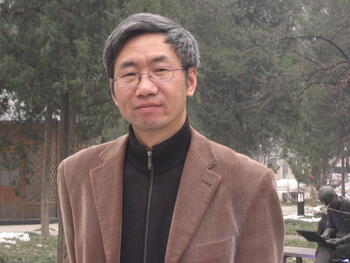
Shiping Tang is Fudan Distinguished Professor and Dr. Seaker Chan Chair Professor at the School of International Relations and Public Affairs (SIRPA), Fudan University, Shanghai, China. He is currently a Fulbright visiting research scholar (2015-16) at the School of Global Policy and Strategy, University of California at San Diego. Prof. Tang has very broad research interests and has published widely. His most recent book, The Social Evolution of International Politics (2013), received the International Studies Association (ISA) “Annual Best Book Award” in 2015. He is also the author of A General Theory of Institutional Change (2011), A Theory of Security Strategy for Our Time: Defensive Realism (2010), and many articles in journals in international relations, institutional economics, sociology, and philosophy of the social sciences.

Shiping Tang Fudan Distinguished Professor
Seminars
-

The Center for International Security and Cooperation (CISAC) is honored to offer the 2016 Drell Lecture with Dr. William J. Perry, 19th U.S. Secretary of Defense, who will take attendees on "A National Security Walk Around the World."


Drell Lecture Recording: NA


Drell Lecture Transcript: NA


Speaker's Biography: William Perry is the Michael and Barbara Berberian Professor (emeritus) at Stanford University. He is a senior fellow at the Freeman Spogli Institute and the Hoover Institution, and serves as director of the Preventive Defense Project. He is an expert in U.S. foreign policy, national security and arms control. He was the co-director of CISAC from 1988 to 1993, during which time he was also a part-time professor at Stanford. He was a part-time lecturer in the Department of Mathematics at Santa Clara University from 1971 to 1977.

Image
William J. Perry

Perry was the 19th secretary of defense for the United States, serving from February 1994 to January 1997. He previously served as deputy secretary of defense (1993-1994) and as under secretary of defense for research and engineering (1977-1981). Dr. Perry currently serves on the Defense Policy Board (DPB), the International Security Advisory Board (ISAB) and the Secretary of Energy Advisory Board (SEAB). He is on the board of directors of Covant, Fabrinet, LGS Bell Labs Innovations and several emerging high-tech companies. His previous business experience includes serving as a laboratory director for General Telephone and Electronics (1954-1964); founder and president of ESL Inc. (1964-1977); executive vice-president of Hambrecht & Quist Inc. (1981-1985); and founder and chairman of Technology Strategies & Alliances (1985-1993). He is a member of the National Academy of Engineering and a fellow of the American Academy of Arts and Sciences.

From 1946 to 1947, Perry was an enlisted man in the Army Corps of Engineers, and served in the Army of Occupation in Japan. He joined the Reserve Officer Training Corps in 1948 and was a second lieutenant in the Army Reserves from 1950 to 1955. He was awarded the Presidential Medal of Freedom in 1997 and the Knight Commander of the British Empire in 1998. Perry has received a number of other awards including the Department of Defense Distinguished Service Medal (1980 and 1981), and Outstanding Civilian Service Medals from the Army (1962 and 1997), the Air Force (1997), the Navy (1997), the Defense Intelligence Agency (1977 and 1997), NASA (1981) and the Coast Guard (1997). He received the American Electronic Association's Medal of Achievement (1980), the Eisenhower Award (1996), the Marshall Award (1997), the Forrestal Medal (1994), and the Henry Stimson Medal (1994). The National Academy of Engineering selected him for the Arthur Bueche Medal in 1996. He has received awards from the enlisted personnel of the Army, Navy, and the Air Force. He has received decorations from the governments of Albania, Bahrain, France, Germany, Hungary, Japan, Korea, Poland, Slovenia, and Ukraine. He received a BS and MS from Stanford University and a PhD from Pennsylvania State University, all in mathematics.

The talk will be followed by a Q&A session moderated by CISAC Co-director Dr. David Relman

The Drell Lecture is an annual public event sponsored by CISAC. By tradition, the Drell speaker addresses a current and critical national or international security issue that has important scientific or technical dimensions. The lecture is named for Sidney Drell, CISAC's founding science co-director. Albert and Cicely Wheelon generously endowed the lectureship.

Jen-Hsun Huang Engineering Center 

Mackenzie Room (3rd floor)

475 Via Ortega

Stanford University

19th U.S. Secretary of Defense
Lectures
-

REGISTRATION FULL.

Ambassador Ušackas will dwell on security challenges faced by Europe. He will share his views on why and how interdependent economic partners: the EU and Russia got into a geopolitical confrontation and what is the way forward? What are the consequences of the war in Ukraine, effects of Syria crisis and what is the future role of NATO in Europe. 

Ambassador Ušackas has been serving as the European Union Ambassador to the Russian Federation as of 1 September 2013. Previously, he was the European Union Special Representative and Head of the European Union Delegation in Afghanistan from April 2010. After obtaining his Law Degree from Vilnius University and completing his post-graduate education in Political Sciences in Denmark and Norway in 1991, he joined the Lithuanian Ministry of Foreign Affairs. In his distinguished career in the Foreign Service, he served as Counselor to the Lithuanian Mission to both the EU and NATO from 1992 to 1996; Political Director of the Lithuanian Ministry of Foreign Affairs from 1996 to 1999; Deputy Minister of Foreign Affairs of Lithuania and Chief Negotiator for Lithuania’s Accession to the European Union from 1999 to 2001; Lithuanian Ambassador to the United States of America and United Mexican States from 2001 to 2006; Ambassador of Lithuania to the Court of St. James from 2006 – 2008; and was Lithuanian Foreign Minister from 2008 to 2010. During the course of his career, he has received numerous awards such as Order for Merits to Lithuania, Cross of Commander, State awards of Estonia, France, Georgia, Greece, Norway, Poland, Spain and Ukraine; award for merits to the city of Utena and Member of honour of Lithuanian Students’ Union. He was awarded the Honorary citizenship of his home town Skuodas in 2010 and Ukmerge in 2013. In 2014, Vygaudas Ušackas was bestowed a Honorary Doctor's Degree in Political Science of Vytautas Magnus University of Kaunas. He is also fluent in English and Russian and has a working knowledge of French. Mr Ušackas is married and has two children.


Vygaudas Ušackas European Union Ambassador to Russia
-

Image
van jackson event
How has North Korea managed to experience numerous foreign policy crises without escalation to war?  Why has North Korea been willing to repeatedly engage in small-scale attacks against the United States and its South Korean ally?  And why have U.S. officials in liberal and conservative presidential administrations only rarely taken North Korean threats seriously?  In this presentation of his newly released book, Rival Reputations: Coercion and Credibility in US-North Korea Relations, (Cambridge University Press), Dr. Van Jackson argues that these puzzles are best explained with reference to the weight of history in U.S. and North Korean foreign policy.  The book draws on the concept of reputation--the influence of past words and deeds on decision-making in the present--to explain patterns of hostile interactions in foreign policy between the United States and North Korea from 1960s through the present day.  The book's findings have major implications for the conduct of U.S. and South Korean foreign and defense policy toward North Korea.

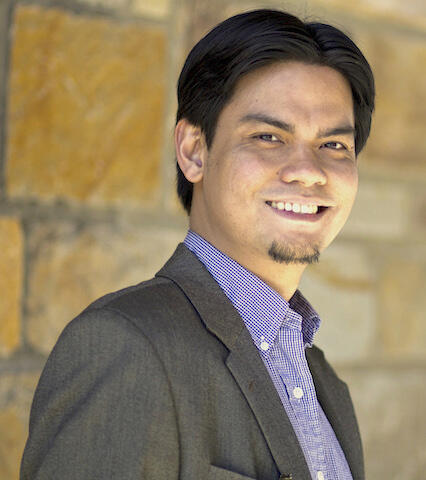
Dr. Van Jackson is an associate professor in the College of Security Studies at the Daniel K. Inouye Asia-Pacific Center for Security Studies, specializing in East Asian security, U.S. foreign policy, defense strategy, historical institutionalism, and international relations theory. He is also an adjunct senior fellow at the Center for a New American Security (CNAS) in Washington, as well as a senior editor for the online defense daily, War on the Rocks. From 2009 to 2014, Dr. Jackson held positions in the Office of the Secretary of Defense as a strategist and policy adviser focused on the Asia-Pacific, senior country director for Korea, and working group chair of the U.S.–Republic of Korea Extended Deterrence Policy Committee. He has previously taught at Georgetown University and the Catholic University of America, and has held fellowships with the Council on Foreign Relations, CNAS, and Pacific Forum CSIS. He is also widely published in leading disciplinary and area studies journals.

Van Jackson <i>College of Security Studies, Daniel K. Inouye Asia-Pacific Center for Security Studies</i>
Seminars
-

Incompetent and dishonest politicians are common in developing countries. Scholars who write about corruption and poor governance tend to take the existence of bad politicians as a given and focus on the damage that they do. Few study the ways in which politicians are recruited in order to improve that process. Some scholars acknowledge the need to encourage the creation of a political class that is competent and honest. But none have gone further by conducting real-world experiments to evaluate the efficacy of screening and incentivizing competent and virtuous citizens to stand for public office, that is, how to nudge good people to become politicians in the first place.

Dr. Ravanilla will describe a policy intervention designed to attract able and ethical candidates to public service. Can a leadership-training workshop and non-monetary status rewards be used to screen and motivate good people to serve the public good? His answer is yes. The results of a randomized field experiment among youth running for an elective post in the Philippines show that such an intervention is indeed feasible and can be effective in motivating able and moral individuals to seek public office while at the same time discouraging candidates who do not meet these criteria.

Image
rnico
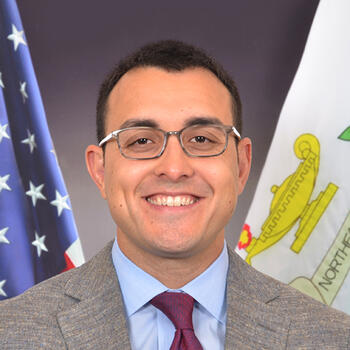
Nico Ravanilla will begin an assistant professorship in the School of Global Policy and Strategy at the University of California, San Diego, in September 2016.  The Southeast Asia Research Group named him a Young Southeast Asia Fellow for 2015-16.  He earned his PhD in political science and public policy at the University of Michigan in 2015.

Nico Ravanilla 2015-16 Shorenstein APARC Postdoctoral Fellow, Stanford University
Seminars
News Type
News
Date
Paragraphs

David Shear, assistant secretary of defense for Asian and Pacific security affairs, visited Stanford on Jan. 22 for a daylong series of discussions on the state of U.S. defense strategy in the Asia-Pacific region.

Shear facilitated a closed-door dialogue with Stanford-based senior military fellows studying national security issues at the Freeman Spogli Institute for International Studies and the Hoover Institution.

Shear also met with faculty members of the Walter H. Shorenstein Asia-Pacific Research Center and the Center for International Security and Cooperation, and delivered a lecture to a packed audience at Encina Hall.

The events were sponsored by the U.S.-Asia Security Initiative led by Ambassador Karl Eikenberry. The initiative seeks to produce research outcomes and constructive interaction between academic and governmental experts on security challenges facing the Asia-Pacific region. More information about the initiative can be found here.

Hero Image
ds events v2
(L) David Shear, assistant secretary of defense for Asian and Pacific security affairs, listens to a question posed by an audience member; (R) Shear facilitates a closed-door dialogue with a cohort of Senior Military Fellows at Stanford.
All News button
1
News Type
News
Date
Paragraphs

On January 21, 2016, an inquiry report ordered by the British government was released detailing the death of former Russian spy Alexander Litvinenko. Chairman of the inquiry, retired judge Sir Robert Owen, concluded that there is a strong probability that the Russian security service FSB directed the killing of Litvinenko and the operation was probably approved by President Vladimir Putin.

Michael McFaul, FSI director and former US Ambassador to Russia, discussed his initial reactions to the report findings on PBS NewsHour.

View full interview and transcript at PBS NewsHour.

Read Litvinenko report at the UK Home Office.

Hero Image
litvinenko report jan 21 2016
All News button
1
Subscribe to International Relations