International Relations

FSI researchers strive to understand how countries relate to one another, and what policies are needed to achieve global stability and prosperity. International relations experts focus on the challenging U.S.-Russian relationship, the alliance between the U.S. and Japan and the limitations of America’s counterinsurgency strategy in Afghanistan.

Foreign aid is also examined by scholars trying to understand whether money earmarked for health improvements reaches those who need it most. And FSI’s Walter H. Shorenstein Asia-Pacific Research Center has published on the need for strong South Korean leadership in dealing with its northern neighbor.

FSI researchers also look at the citizens who drive international relations, studying the effects of migration and how borders shape people’s lives. Meanwhile FSI students are very much involved in this area, working with the United Nations in Ethiopia to rethink refugee communities.

Trade is also a key component of international relations, with FSI approaching the topic from a slew of angles and states. The economy of trade is rife for study, with an APARC event on the implications of more open trade policies in Japan, and FSI researchers making sense of who would benefit from a free trade zone between the European Union and the United States.

-

Ambassador Osius will make remarks on U.S.-Vietnam relations in the wake of President Obama’s May 2016 visit. He will focus on the unfinished task of reconciliation. Relations were normalized in 1995. Yet many in Vietnam’s diaspora community, especially those most affected by the legacies of the war, oppose rapprochement and engagement. Overseas communities can play important and constructive roles in relations between their countries of origin and the rest of the world. Ambassador Osius will argue that a fully engaged Vietnamese-American community could and would contribute a lot toward growing the U.S. partnership with Vietnam, including helping to shape a beneficial future of greater trade, improved regional stability, and an expanded role for civil society.

Image
ted osius
Ted Osius is the sixth U.S. ambassador to Vietnam (December 2014-Present). Previously he was an associate professor and a senior fellow, respectively, at the National War College and the Center for Strategic and International Studies; deputy chief of mission at the U.S. Embassy in Jakarta; and political minister-counselor at the U.S. Embassy in New Delhi. His earlier career included service as regional environment officer for Southeast Asia and the Pacific in the U.S. State Department and as senior advisor on international affairs in the Office of the Vice President. 

This event is co-sponsored by the U.S. - Asia Security Initiative and the Southeast Asia Program
Ted Osius U.S. Ambassador to Vietnam
Seminars
-

Image
Accidental State

Abstract

The existence of two Chinese states—one controlling mainland China, the other controlling the island of Taiwan—is often understood as a seemingly inevitable outcome of the Chinese civil war. Defeated by Mao Zedong, Chiang Kai-shek’s Nationalists fled to Taiwan to establish a rival state, thereby creating the “Two Chinas” dilemma that vexes international diplomacy to this day. Accidental State challenges this conventional narrative to offer a new perspective on the founding of modern Taiwan.

Hsiao-ting Lin marshals extensive research in recently declassified archives to show that the creation of a Taiwanese state in the early 1950s owed more to serendipity than careful geostrategic planning. It was the cumulative outcome of ad hoc half-measures and imperfect compromises, particularly when it came to the Nationalists’ often contentious relationship with the United States.

Taiwan’s political status was fraught from the start. The island had been formally ceded to Japan after the First Sino–Japanese War, and during World War II the Allies promised Chiang that Taiwan would revert to Chinese rule after Japan’s defeat. But as the Chinese civil war turned against the Nationalists, U.S. policymakers reassessed the wisdom of backing Chiang. The idea of placing Taiwan under United Nations trusteeship gained traction. Cold War realities, and the fear of Taiwan falling into Communist hands, led Washington to recalibrate U.S. policy. Yet American support of a Taiwan-based Republic of China remained ambivalent, and Taiwan had to eke out a place for itself in international affairs as a de facto, if not fully sovereign, state.


Biography

Hsiao-ting Lin is a research fellow and curator of the East Asia Collection at the Hoover Institution. He holds a BA in political science from National Taiwan University (1994) and an MA in international law and diplomacy from National Chengchi University in Taiwan (1997). He received his DPhil in oriental studies in 2003 from the University of Oxford, where he also held an appointment as tutorial fellow in modern Chinese history. In 2003–4, Lin was a postdoctoral fellow at the Institute of East Asian Studies, University of California at Berkeley. In 2004, he was awarded the Kiriyama Distinguished Fellowship by the Center for the Pacific Rim, University of San Francisco. In 2005–7, he was a visiting fellow at the Hoover Institution, where he participated in Hoover’s Modern China Archives and Special Collections project. In April 2008, Lin was elected a fellow of the Royal Asiatic Society of Great Britain and Ireland for his contributions to the studies of modern China’s history.

Lin’s academic interests include ethnopolitics and minority issues in greater China, border strategies and defenses in modern China, political institutions and the bureaucratic system of the Chinese Nationalist Party (Kuomintang), and US-Taiwan military and political relations during the Cold War. He has published extensively on modern Chinese and Taiwanese politics, history, and ethnic minorities, including Accidental State: Chiang Kai-shek, the United States, and the Making of Taiwan (Harvard University Press, 2016); Modern China’s Ethnic Frontiers: A Journey to the West (Routledge, 2011); Breaking with the Past: The Kuomintang Central Reform Committee on Taiwan, 1950–52 (Hoover Press, 2007); Tibet and Nationalist China’s Frontier: Intrigues and Ethnopolitics, 1928–49 (UBC Press, 2006), nominated as the best study in the humanities at the 2007 International Convention of Asia Scholars; and over a hundred journal articles, book chapters, edited volumes, reviews, opinion pieces, and translations. He is currently at work on a manuscript that reevaluates Taiwan’s relations with China and the United States during the presidency of Harry Truman to that of Jimmy Carter.


This event is sponsored by the Taiwan Democracy Project in the Center on Democracy, Development, and the Rule of Law. It is free and open to the public, and lunch will be served. Please RSVP by November 28.

Reuben Hills Conference Room

2nd Floor, Encina Hall East

Hsiao-ting Lin Librarian, East Asian Archives, Hoover Institution
Lectures
-


Image
Taiwan's Democracy Challenged

This discussion will be based on the authors' recently published book, Taiwan's Democracy Challenged: The Chen Shui-bian Years, Lynne Rienner Publishing (2016).

Abstract

At the end of Chen Shui-bian’s two terms as the president of Taiwan, his tenure was widely viewed as a disappointment, if not an outright failure. Today, the Chen years (2000-2008) are remembered mostly for relentless partisan fighting over cross-Strait relations and national identity questions, prolonged political gridlock, and damaging corruption scandals—as an era that challenged, rather than helped consolidate, Taiwan’s young democracy and squandered most of the promise with which it began.

Yet as Taiwan’s Democracy Challenged: The Chen Shui-bian Years documents, this conventional narrative obscures a more complex and more positive story. The chapters here cover the diverse array of ways in which democratic practices were deepened during this period, including the depoliticization of the military and intelligence forces, the ascendance of an independent and professional judicial system, a strengthened commitment to constitutionalism and respect for the rule of law, and the creation of greater space for civil society representatives in the policy-making process. Even the conventional wisdom about unprecedented political polarization during this era is misleading: while elite politics became more divided and acrimonious, mass public opinion on cross-Strait relations and national identity was actually converging.

Not all developments were so positive: strong partisans on both sides of the political divide remained only weakly committed to democratic principles, the reporting of news organizations became more sensationalist and partisan, and the Taiwanese state’s exceptional autonomy from sectoral interests and vaunted capacity for long-term planning deteriorated. But on the whole, the authors argue, these years were not squandered. By the end of the Chen Shui-bian era, Taiwan’s democracy was firmly consolidated. 


This event is sponsored by the Taiwan Democracy Project in the Center on Democracy, Development, and the Rule of Law. It is free and open to the public, and lunch will be served. Please RSVP by October 31.

Taiwan's Democracy Challenged presentation slides
Download pdf

CISAC Central Conference Room, Encina Hall 2nd Floor

CDDRL
Stanford University
Encina Hall, C147
616 Jane Stanford Way
Stanford, CA 94305-6055

(650) 724-6448 (650) 723-1928
0
Mosbacher Senior Fellow in Global Democracy at the Freeman Spogli Institute for International Studies
William L. Clayton Senior Fellow at the Hoover Institution
Professor, by courtesy, of Political Science and Sociology
diamond_encina_hall.png MA, PhD

Larry Diamond is the William L. Clayton Senior Fellow at the Hoover Institution, the Mosbacher Senior Fellow in Global Democracy at the Freeman Spogli Institute for International Studies (FSI), and a Bass University Fellow in Undergraduate Education at Stanford University. He is also professor by courtesy of Political Science and Sociology at Stanford, where he lectures and teaches courses on democracy (including an online course on EdX). At the Hoover Institution, he co-leads the Project on Taiwan in the Indo-Pacific Region and participates in the Project on the U.S., China, and the World. At FSI, he is among the core faculty of the Center on Democracy, Development and the Rule of Law, which he directed for six and a half years. He leads FSI’s Israel Studies Program and is a member of the Program on Arab Reform and Development. He also co-leads the Global Digital Policy Incubator, based at FSI’s Cyber Policy Center. He served for 32 years as founding co-editor of the Journal of Democracy.

Diamond’s research focuses on global trends affecting freedom and democracy and on U.S. and international policies to defend and advance democracy. His book, Ill Winds: Saving Democracy from Russian Rage, Chinese Ambition, and American Complacency, analyzes the challenges confronting liberal democracy in the United States and around the world at this potential “hinge in history,” and offers an agenda for strengthening and defending democracy at home and abroad.  A paperback edition with a new preface was released by Penguin in April 2020. His other books include: In Search of Democracy (2016), The Spirit of Democracy (2008), Developing Democracy: Toward Consolidation (1999), Promoting Democracy in the 1990s (1995), and Class, Ethnicity, and Democracy in Nigeria (1989). He has edited or coedited more than fifty books, including China’s Influence and American Interests (2019, with Orville Schell), Silicon Triangle: The United States, China, Taiwan the Global Semiconductor Security (2023, with James O. Ellis Jr. and Orville Schell), and The Troubling State of India’s Democracy (2024, with Sumit Ganguly and Dinsha Mistree).

During 2002–03, Diamond served as a consultant to the US Agency for International Development (USAID) and was a contributing author of its report, Foreign Aid in the National Interest. He has advised and lectured to universities and think tanks around the world, and to the World Bank, the United Nations, the State Department, and other organizations dealing with governance and development. During the first three months of 2004, Diamond served as a senior adviser on governance to the Coalition Provisional Authority in Baghdad. His 2005 book, Squandered Victory: The American Occupation and the Bungled Effort to Bring Democracy to Iraq, was one of the first books to critically analyze America's postwar engagement in Iraq.

Among Diamond’s other edited books are Democracy in Decline?; Democratization and Authoritarianism in the Arab WorldWill China Democratize?; and Liberation Technology: Social Media and the Struggle for Democracy, all edited with Marc F. Plattner; and Politics and Culture in Contemporary Iran, with Abbas Milani. With Juan J. Linz and Seymour Martin Lipset, he edited the series, Democracy in Developing Countries, which helped to shape a new generation of comparative study of democratic development.

Download full-resolution headshot; photo credit: Rod Searcey.

Former Director of the Center on Democracy, Development and the Rule of Law
Faculty Chair, Jan Koum Israel Studies Program
Date Label
Larry Diamond Senior Fellow and Principal Investigator, Taiwan Democracy Project
Seminars
-

This talk will be based on Professor Lin's new book, Taiwan's China Dilemma: Contested Identities and Multiple Interests in Taiwan's Cross-Strait Economic Policy, Stanford University Press (2016). 


Abstract

China and Taiwan share one of the world's most complex international relationships. Although their similar cultures and complementary economies promoted an explosion of commercial ties since the late 1980s, they have not led to a stable political relationship, let alone progress toward the unification that both governments once claimed to seek. In addition, Taiwan’s economic policy toward China has alternated between liberalization and restriction. Most recently, Taiwan's Sunflower Movement succeeded in obstructing deeper economic ties with China. Why has Taiwan's policy toward China been so controversial and inconsistent?

Author Syaru Shirley Lin explains the divergence between the development of economic and political relations across the Taiwan Strait and the oscillation of Taiwan’s cross-Strait economic policy through the interplay of national identity and economic interests. She shows how the debate over Taiwanese national identity has been intimately linked to Taiwan’s economic policy during a turbulent time in cross-Strait relations. Using primary sources, opinion surveys, and interviews with Taiwanese opinion leaders, she paints a vivid picture of one of the most unsettled and dangerous relationships in the contemporary world.

As Taiwan grapples with the growing importance of the Chinese economy, it also experiences the uneven socio-economic consequences of globalization. This has produced a reconsideration of the desired degree of further integration with China, especially among the younger generations. Taiwan’s China Dilemma illustrates the growing backlash against economic liberalization and regional economic integration around the world.


Biography

Image
Shirley Lin

Syaru Shirley Lin teaches political science at the University of Virginia and is a member of the founding faculty of the master’s program in global political economy at the Chinese University of Hong Kong. Her book, Taiwan’s China Dilemma: Contested Identities and Multiple Interests in Taiwan's Cross-Strait Economic Policy, was published by Stanford University Press in 2016. She graduated from Harvard College and earned her masters and Ph.D. from the University of Hong Kong. Before starting her academic career, Prof. Lin was a partner at Goldman Sachs, where she was responsible for direct investment in Asia and spearheaded the firm’s investments in many technology start-ups such as Alibaba and Semiconductor Manufacturing International Corp. Previously, she specialized in the privatization of state-owned enterprises in Singapore and China. Prof. Lin’s present board service includes Goldman Sachs Asia Bank, Langham Hospitality Investments and Mercuries Life Insurance. She also advises Crestview Partners and the Focused Ultrasound Foundation and is a member of the Hong Kong Committee for Pacific Economic Cooperation.


This event is sponsored by the Taiwan Democracy Project in the Center on Democracy, Development, and the Rule of Law. It is free and open to the public, and lunch will be served. Please RSVP by October 17.

CISAC Central Conference Room, Encina Hall, 2nd Floor

Syaru Shirley Lin Professor of Political Economy Chinese University of Hong Kong and the University of Virginia
Lectures
News Type
News
Date
Paragraphs

The Shorenstein Asia-Pacific Research Center (APARC) at Stanford is now accepting applications for the Shorenstein Postdoctoral Fellowship in Contemporary Asia, an opportunity made available to two junior scholars for research and writing on Asia.

Fellows conduct research on contemporary political, economic or social change in the Asia-Pacific region, and contribute to Shorenstein APARC’s publications, conferences and related activities. To read about this year’s fellows, please click here.

The fellowship is a 10-mo. appointment during the 2017-18 academic year, and carries a salary rate of $52,000 plus $2,000 for research expenses.

For further information and to apply, please click here. The application deadline is Dec. 16, 2016.

Hero Image
27193530153 58630c4828 o
All News button
1
-

Abstract: Deterrence is one of the most central concepts in international relations scholarship. Countries can dissuade changes to the status quo, according to the logic of deterrence, by threatening an opponent with pain (deterrence by punishment) or by reducing the probability that an opponent will achieve its aims (deterrence by denial). In the realm of international security, most deterrence theorists assume that states need military capabilities to deter by punishment or denial. Deterrence works, based on this line of thinking, because states can use military power to destroy cities, bomb critical military targets, or blunt land invasions. It is also possible, however, to punish an adversary without invoking destruction militarily. Yet deterrence through non-military means remains poorly understood in international relations. This project develops a theory to identify the conditions under which countries can deter opponents without using threats of military force. I explore the implications of this theory in one particular context: the development of dual-use nuclear technology. Having the capability to build nuclear weapons — a condition known as “nuclear latency” — may provide countries with deterrence benefits that we normally associate with having a nuclear arsenal. When states achieve nuclear latency, they (implicitly) threaten to develop nuclear weapons at some point in the future. The threat here is to pursue a policy that others would find undesirable, not to physically destroy things of value on another state’s territory, as in traditional deterrence theory. Does this kind of threat discourage others from meddling in a country’s affairs? This study presents the results of an analysis designed to identify the effects of nuclear latency (and nuclear arsenals) on the onset of international conflict from 1945 to 2000, drawing on a new dataset of sensitive dual-use nuclear plants in 32 countries.

About the Speaker: Matthew Fuhrmann is an associate professor of political science and Ray A. Rothrock `77 Fellow at Texas A&M University. He was named an Andrew Carnegie Fellow in 2016 by the Carnegie Corporation of New York. He is the author of Atomic Assistance: How “Atoms for Peace” Programs Cause Nuclear Insecurity (Cornell University Press, 2012) and the coauthor of Nuclear Weapons and Coercive Diplomacy (Cambridge University Press, 2016). His work has been published or is forthcoming in peer-reviewed journals such as American Journal of Political ScienceBritish Journal of Political ScienceInternational OrganizationInternational SecurityInternational Studies QuarterlyJournal of Conflict ResolutionJournal of Peace Research, and Journal of Politics. He has also written opinion pieces for The Atlantic (online), The Christian Science MonitorSlate, and USA Today. He is a term member of the Council on Foreign Relations. You can follow him on Twitter @mcfuhrmann.

Encina Hall, 2nd floor

Visiting Associate Professor CISAC
Seminars
Paragraphs

It is tempting to characterize the recent round of North Korea missile and nuclear tests as only the latest example of the provocative behavior of its brash young leader, Kim Jong Un. A simultaneous launch of three medium-range missiles, mounted on mobile launchers, was defiantly timed to coincide with China’s hosting of the G20 summit in Hangzhou. And the latest nuclear test, the fifth carried out by North Korea, seemed designed to assert its status as a nuclear weapons power ahead of the U.S. presidential vote, Sneider writes.

All Publications button
1
Publication Type
Commentary
Publication Date
Journal Publisher
Toyo Keizai Online
Authors
Daniel C. Sneider
News Type
News
Date
Paragraphs

Last month, Admiral Scott H. Swift, the commander of U.S. Pacific Fleet, spoke to an audience at the Stanford Center at Peking University (SCPKU) and at Stanford via their linked Highly Immersive Classrooms (HIC). Against the backdrop of increasing tensions and hostility in the South China Sea, Swift stressed the importance of building a trust-based relationship between China and the United States. Stanford professor Jean Oi opened the roundtable by introducing Swift at SCPKU while Karl Eikenberry, director of the U.S.-Asia Security Initiative and former U.S. ambassador to Afghanistan, chaired the session at Stanford’s Graduate School of Business.

After his formal remarks, Swift engaged in a roundtable discussion with Chinese and American scholars on both sides of the Pacific. The participants at SCPKU included experts from Peking University and Chinese think tanks. Participants at Stanford included a diverse group of scholars from across campus with a number from the Shorenstein Asia-Pacific Research Center. The HIC allowed a lively interactive session where Swift fielded questions from SCPKU and Stanford.


Image
dsc 1361


Hero Image
dsc 1386
All News button
1
-

RSVPS ARE NO LONGER BEING ACCEPTED AS WE HAVE REACHED VENUE CAPACITY. PRESS FILMING IS PROHIBITED.

Seating is first come, first served.


Image
amb  he cropped
A Panel Discussion Featuring

Ambassador HE Yafei

Former China Ambassador

to the United Nations


Panelists:

Ambassador Michael H. Armacost

Shorenstein APARC Distinguished Fellow, former U.S. Ambassador to Japan and the Philippines

Ambassador Karl W. Eikenberry

Director, U.S.-Asia Security Initiative; former U.S. Ambassador to Afghanistan

Professor Jean C. Oi (Moderator)

Director Shorenstein APARC China Program; William Haas Professor of Chinese Politics


Ambassador HE Yafei served as Vice Minister of the Overseas Chinese Affairs Office of the State Council of the People’s Republic of China.; Counselor of the Chinese Permanent Mission to the United Nations; Deputy Director General of the Arms Control Department of the Ministry of Foreign Affairs; Minister Counselor and Minister of the Embassy of China in the United States; Director General of the America and Pacific Department; Assistant Minister and Vice Minister of the Ministry of Foreign Affairs; and Representative and Ambassador of the Permanent Mission of China to the United Nations Office at Geneva and other international organizations in Switzerland.


Co-sponsored by the Shorenstein Asia-Pacific Research Center’s U.S.–Asia Security Initiative and the China Program

Seminars
-

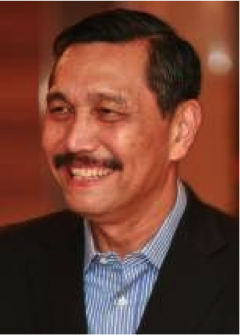
Since its formation in 2014, the administration of Indonesian President Joko Widodo (“Jokowi”) has faced opportunities and challenges in many sectors and on many issues: security and economy, terrorism and radicalism, maritime resources and incursions, not to mention foreign-policy dynamics with the US, China, and the rest of Southeast Asia. How has Indonesia responded to these chances and concerns? How will it manage them going forward? Few Indonesians are better equipped to address these questions than retired Brig. Gen. Pandjaitan, who has dealt with them daily since joining Jokowi’s administration in 2014 as the president’s chief of staff and in subsequent cabinet positions.

Image
luhut panjaitan
Luhut Binsar Pandjaitan began his current ministership in July 2016 after serving as Coordinating Minister for Political, Legal, and Security Affairs in 2015-16. Earlier civilian positions include vice-chair of the Golkar Party’s advisory council (2008-2014); founding president of a resources company (2004-2014); trade and industry minister (2000-01); and ambassador to Singapore (1999-2000). His Indonesian army service dates back in time from an assignment as training and education commander (1997-99) through a series of leadership positions to his award as the best graduate of the army academy (1970). Other honors include Ernst & Young Entrepreneur of the Year (2011) and a national best coaching award related to his work on behalf of karate in Indonesia (2001-2010). In 1990-91 he studied in Washington DC at the National Defense University and George Washington University, earning an MPA from GWU (1991), and he is an alumnus of the Indonesia Army Staff College (1983).


Presentation slides
Luhut B. Pandjaitan Coordinating Minister for Maritime Affairs, Republic of Indonesia
Seminars
Subscribe to International Relations