FSI researchers strive to understand how countries relate to one another, and what policies are needed to achieve global stability and prosperity. International relations experts focus on the challenging U.S.-Russian relationship, the alliance between the U.S. and Japan and the limitations of America’s counterinsurgency strategy in Afghanistan.
Foreign aid is also examined by scholars trying to understand whether money earmarked for health improvements reaches those who need it most. And FSI’s Walter H. Shorenstein Asia-Pacific Research Center has published on the need for strong South Korean leadership in dealing with its northern neighbor.
FSI researchers also look at the citizens who drive international relations, studying the effects of migration and how borders shape people’s lives. Meanwhile FSI students are very much involved in this area, working with the United Nations in Ethiopia to rethink refugee communities.
Trade is also a key component of international relations, with FSI approaching the topic from a slew of angles and states. The economy of trade is rife for study, with an APARC event on the implications of more open trade policies in Japan, and FSI researchers making sense of who would benefit from a free trade zone between the European Union and the United States.
The format of this presentation is each of the three speakers will have approximately 15 minutes to present their research. This will be followed by a short period of 5-10 minutes for any questions or comments from the audience.
In this session of the Global Affiliates Research Presentations, the following will be presented:
Hiroto Akai,Ministry of Finance, Japan, "FinTech and Japanese Banks: Implications for Fiscal Sustainability"
Although Japan has the world's largest government debt, the interest rate of the Japanese Government Bond (JGB) still remains lower than most major countries. In the JGB market, Japanese banks play a key role as massive investors. However, in recent years, many business environments surrounding Japanese banks have dramatically changed. One of the biggest changes is FinTech. Given the growth of FinTech, some researchers argue that it could disrupt traditional banking. In his research, Akai provides an overview of the FinTech phenomenon, especially in the U.S., and tries to analyze the relationship between FinTech and incumbent banks. Given the characteristics in Japan's financial market, Akai tries to clarify the impact of Fintech to the investment behavior of Japanese banks.
Yasuhito Ando,Kozo Keikaku Engineering, "Use of AI in Architectural Design: Defining Comfort in Residential Design"
Image
In the construction industry, the use of IT, AI, and robotics is advancing with many used to respond to labor shortages and reduce costs. However, the value of using a computer is not only to improve efficiency, but to possibly create new solutions beyond the limit of human established concepts. Computational design is expected to derive optimal solutions that humans have never imagined in complex conditions.
In the design of buildings, there are already examples of computer-based optimization of structure, design, cost and environment. However, there is no example of realizing comfortable planning. This is because the comfort is vague and difficult to design. In his research, Ando examines how to find comfort definitions from housing design data.
Takanori Tomozawa, Ministry of Economy, Trade & Industry, Japan, "Innovation for Energy Policy & Companies in Japan — Lessons Learned from Silicon Valley"
Image
In the energy field, innovation is becoming more and more essential under the trends of decarbonization, digitaliation, decentralization, and so on. Tomozawa's research objective is to find implications to improve the energy innovation capability of the Japanese government and companies. To do so, Tomozawa has scrutinized the activities of other countries' energy companies, the energy innovation ecosystem especially in the Silicon Valley, and the discussion about future electricity system reform in California. Silicon Valley is a place where high-technologies are developed before anywhere else in the world, where many emerging startups are created, and where there is a variety of opportunities to invest in innovations under the advanced legal system. In his presentation, Tomozawa will share the lessons he has learned from Silicon Valley to achieve his objective.
Hiroto Akai is a global affiliate visiting scholar at the Walter H. Shorenstein Asia-Pacific Research Center (Shorenstein APARC) for 2017-19. Akai has served various positions at the Japanese Ministry of Finance and the Financial Services Agency. Prior to joining Shorenstein APARC, he was Deputy Director of Policy Planning and Research Division, which is responsible for producing the Financial Statements Statistics of Japanese Corporations. He assumed several tasks related to financial markets during his career. He was Deputy Director of the Office of Foreign Exchange Reserve Management (2015-16), where he was responsible for portfolio management of Japan's FX reserves. He also worked for Foreign Exchange and Markets Division (2008-09), where he was in charge of foreign exchange market policy during the global financial crisis. He received a masters degree of economics from Hitotsubashi University in 2005.
Yasuhito Ando is a global affiliate visiting scholar at the Walter H. Shorenstein Asia-Pacific Research Center (Shorenstein APARC) for 2018-19. Ando is currently the Managing Executive Officer of Kozo Keikaku Engineering where he is in charge of the U.S. marketing department. While at KKE, he developed a system to calculate the structure of buildings and also consults on processes from development to design and construction. Most recently, he was engaged in the planning department focusing on business and personnel planning as well as involved in the information communication system development and management of IoE (Internet of Everything) business.
Takanori Tomozawa is a global affiliate visiting scholar at the Walter H. Shorenstein Asia-Pacific Research Center (Shorenstein APARC) for 2018-19. Tomozawa has served various positions at the Japanese Ministry of Economy, Trade and Industry. Prior to joining Shorenstein APARC, he was Deputy Director of Energy Strategy Office, which is responsible for revising the Strategic Energy Plan of Japan. He received his PhD degree in the Department of Technology Management for Innovation from the University of Tokyo in 2013.
The format of this presentation is each of the five speakers will have approximately 15 minutes to present their research. This will be followed by a short period of 5-10 minutes for any questions or comments from the audience.
In this session of the Global Affiliates Research Presentations, the following will be presented:
Jiazhong Fang, PetroChina, "Sustainable Development of the Petroleum Industry"
Climate change has become more and more critical to the survival of humans. If there is no appropriate control of the total greenhouse gas emissions over the next 10-20 years, emissions will drive global temperatures to rise 1.5-2oC. Impacts related to climate change can be found in many segments of society such as human health, agriculture and food security, water supply, transportation, etc. These same areas also impact the survival of the petroleum industry. In his research, Fang has analyzed different scenarios about future clean energy implementation and emission reduction. In this presentation, he shares potential solutions of the sustainable development of the petroleum industry.
Ryoji Miyawaki, AAKEL Technologies, "Technology to Realize Decarbonization"
Image
Decarbonization is one of the major issues of humanity. It is, however, very difficult to solve under rapid population growth and modernization without innovation. These days, many cleantech startups have been launched to aim to solve the issue with innovative approaches utilization cutting-edge technologies. Miyawaki intends to share his insights into the latest trends of cleantech, the context behinds the trends, and the difference between the trends and the past Green New Deal which crashed in the late 2000s.
Hiro Nishinaka, Ishin Co., Ltd. "The State of Japanese Corporate Venture Capitals in the Silicon Valley"
Image
Silicon Valley continues to attract attention as the center of tech startups and innovation. A growing proportion of the most valuable companies in the U.S. are tech companies such as Silicon Valley-based tech giants Apple, Alphabet, and Facebook. Therefore, many large Japanese enterprises have recently been organizing their own Corporate Venture Capitals (CVCs) to accelerate internal innovation, utilizing the Silicon Valley Startups' ecosystem. However, many of these Japanese CVCs face similar common difficulties. In his research, Nishinaka will share some insights into how large Japanese enterprises harness their CVCs to collaborate with startups to accelerate innovation effectively.
Hayato Watanabe, Hamamatsu Iwata Shinkin Bank, "The World of Japanese Manufacturing SMEs that Support Japan as a Manufacturing Powerhouse"
Japan's global market share is rapidly shrinking. As a regional financial institution, the Hamamatsu Iwata Shinkin Bank focuses on supporting small and medium-sized enterprises (SMEs) with a majority of their customers in the vehicle engine parts industry. There is an increasing possibility that the pyramid of parts supply centering on automobiles will collapse in the near future. In such an era, it will be necessary for Japanese manufacturing SMEs to change their way of business in order to survive. In his research, Watanabe shares his experience of proof of concept in Silicon Valley and provides suggestions on how Japanese manufacturing SMEs need to progress their business to expand their market share.
Kosuke Yokota, Future Corporation, "Success Factors of FinTech in Japan"
Image
The last decade has seen a disruption of the traditional banking industry, especially in the areas of payments, lending, wealth management, and retail banking. This disruption is FinTech and includes 39 unicorns in the world, although not one Japanese company. FinTech trends change every year. In 2019, with Japan's shrinking millennial population, the battle for millennial deposits will become more aggressive as FinTech account products hit the market. In his research, Yokota will share some insights into how Japan, which is an aging society, will proceed ahead of the world to accelerate FinTech innovation effectively.
Jiazhong Fang is a global affiliate visiting scholar at the Walter H. Shorenstein Asia-Pacific Research Center (Shorenstein APARC) for 2018-19. Fang works as the President and CEO of PetroKazakhstan Inc., a joint venture of PetroChina Company Ltd. and Kazkhstan national oil company, KazMunayGas (KMG). Prior to this position, he has over 20 years of experience working internationally for PetroChina Overseas in Africa and central Asia, mainly focusing on exploration and development of oilfields. He earned his PhD of Petroleum Engineering at the China Petroleum University, and his Master and Bachelor degree of Geology at Northwest University of China.
Ryoji Miyawaki is a global affiliate visiting scholar at the Walter H. Shorenstein Asia-Pacific Research Center (Shorenstein APARC) for 2018-19. Miyawaki has over 20 years of experience in the energy industry as a business consultant with a background in digital technology, business strategy, marketing strategy and change management. He was head of the utility industry at Accenture Japan from 2011 to 2018 as a management director. Currently, he is the CEO at AAKEL Technologies Inc., a company for realizing decarbonization utilizing digital innovation in Japan. His research interests cover energy market trading, P2P trading with blockchain, distributed energy resource optimization and artificial intelligence.
Kosuke Yokota is a global affiliate visiting scholar at the Walter H. Shorenstein Asia-Pacific Research Center (Shorenstein APARC) for 2018-19. Yokota is a section manager of Future Architect, Inc., an IT consulting firm in Japan. He has over 10 years of experience in IT consulting and system designing, specifically financial industry systems. Yokota graduated form Tohoku University with a masters degree in nuclear physics. While at Shorenstein APARC, his research will focus on the Silicon Valley tech innovation ecosystem and the organic collaboration between universities, startups, venture capital and government.
The format of this presentation is each of the four speakers will have approximately 15 minutes to present their research. This will be followed by a short period of 5-10 minutes for any questions or comments from the audience.
In this session of the Global Affiliates Research Presentations, the following will be presented:
Tetsuji Ito, Development Bank of Japan, "Major League Baseball Team Management and Their Contribution to Regional Economy — with Comparison and Suggestions to Japanese Professional Baseball"
The average annual salary of an MLB player has more than quadrupled since 1995 reaching the current high of over $4 million. Since 1995, the highest annual salary went from $10 million to now well over $30 million and is expected to continue to rise. This has been made possible by the growth of the MLB's market size itself - currently at $100 billion which is more than seven times higher than the 1995 levels. However, the average attendance per MLB game is decreasing and the average age of the MLB fan is increasing which could be a problem. On the other hand, the Japanese professional baseball market has grown by only 1.5 times over the same period. In his research, Ito analyzes MLB's growth factors and studies their contribution to the regional economy, as well as their implications for the Japanese professional baseball market and regional economy.
Yangming Li, PetroChina, "The Potential Uses of AI for China National Petroleum Corporation (CNPC)"
Image
Similar to other international oil and gas companies, the China National Petroleum Corporation (CNPC) is facing big challenges. At the same time, Artificial Intelligence (AI) technology has been adopted everywhere and will be applied widely to the oil and gas industry. These big companies, such as Shell and BP, are trying to rapidly scale and replicate AI technologies to improve their operational performances. In his research, Li analyzes CNPC's current situation and its corporate strategy. Li explains AI's application directions and benefits for CNPC's major business units such as enterprise management, oil exploration, refinery and gas stations, etc. In his presentation, he will provide suggestions that CNPC may take AI as a new kernel of corporate strategy and outlines some considerations when implementing AI.
Yuki Sakai, Mitsubishi Electric, "Software Quality Assurance for Collaboration with Startups"
Image
Advanced technology, especially Artificial Intelligence (AI) technology, accelerates the cycle of business innovation. Recently, many startups have developed AI-based software products. Automotive makers, their suppliers and others collaborate on software development with startups as partners for their new products. However, the gap of software requirements between the startups' products and automotive products can cause quality issues. What can firms do for the startups to ensure software quality? In his research, Sakai investigates software engineering for quality assurance for AI-based software products.
Col. Masahiro Shizu, Japan Air Self Defense Force, "Relation in Cross Domain Operations Between Japan and the U.S."
Image
The security environment surrounding the world is constantly changing. Under these circumstances, Japan has been continuously implementing various efforts to achieve peace, independence, and the stability of the region. However, with limited resources, it is difficult to respond to the current environment. Therefore, it is time for Japan to adopt and practice a new strategy rather than conventional strategy. This is the concept of the so-called "Cross Domain Operation" and is becoming more widely used around the world. In his research, Shizu will consider possible roles and ways of cooperation between Japan and the United States under the strong Japan-U.S. alliance.
Tetsuji Ito is a global affiliate visiting scholar at the Walter H. Shorenstein Asia-Pacific Research Center (Shorenstein APARC) for 2018-19. Ito joined the Development Bank of Japan in 1995, and has been in charge of financing various fields, such as railway companies, urban development projects, and airline industries, etc. Prior to joining APARC, he was Deputy General Manager and was responsible for planning corporate strategy and financing energy sectors, including the nuclear power related industry after the Great East Japan Earthquake. Ito received his bachelor's degree of law from Tokyo University in 1995.
Yangming Li is a global affiliate visiting scholar at the Watler H. Shorenstein Asia-Pacific Research Center (Shorenstein APARC) for 2018-19. Li has over 30 years of experience in the IT domain. Most recently, he was the President of Beijing Richfit Information Technology Co., Ltd., a subsidiary of China National Petroleum Corporation. He oversaw 3,000 employees and was responsible for developing and implementing a market-focused, platform-based and internationalize business strategy. He earned his bachelors degree in mathematics from Xiamen University and his MBA from Tsinghua University.
Yuki Sakai is a global affiliate visiting scholar at the Walter H. Shorenstein Asia-Pacific Research Center (Shorenstein APARC) for 2018-19. Sakai works for the research and development department at Mitsubishi Electric Corp., as an electric and electronic manufacturer in Japan. He is a researcher in software engineering and user interface design for car navigation systems. He received his PhD degree in Computer Science from Osaka University in 2013. During his fellowship at Shorenstein APARC, his research will focus on joint research and development with startups.
Col. Masahiro Shizu is a global affiliate visiting scholar at the Walter H. Shorenstein Asia-Pacific Research Center (Shorenstein APARC) for 2018-19. Shizu has almost 20 years of experience at the Japanese Ministry of Defense and the Ministry of Foreign Affairs. In his experience, he has been a member of the Joint Staff Office and the Air Staff Office as well as commanded units of the Japan Air Self Defense Force. Most recently, Shizu was part of the Defense Planning and Policy Department where he was responsible for acquisition of defense equipment and creating future military strategy, operational plans and capabilities.
North Korea is the land of punditry, controversy and bad intelligence. Policy debates swirl in Washington over how U.S. policy should address this foreign policy challenge. Much of these debates is informed by a mix of opinion, ideology and politics. How do we make sense of it all? Victor Cha and his Beyond Parallel microsite at CSIS try to cut through the noise to bring data to the study of North Korea and foreign policy. He will discuss five data points that are critical to an understanding of the North Korea problem today and its policy challenges.
Image
Victor Cha holds the D.S. Song-KF Professorship in Government and International Affairs at Georgetown University. In 2009, he was also named as Senior Adviser for Asia and Korea Chair at the Center for Strategic and International Studies in Washington, D.C. He left the White House in 2007 after serving since 2004 as Director for Asian Affairs at the National Security Council. At the White House, he was responsible primarily for Japan, the Korean peninsula, Australia/New Zealand and Pacific Island nation affairs. Dr. Cha was also the Deputy Head of Delegation for the United States at the Six Party Talks in Beijing, and received two Outstanding Service commendations during his tenure at the NSC. He is the author of five books, including the award-winning Alignment Despite Antagonism: The United States-Korea-Japan Security Triangle (Stanford University Press) (winner of the 2000 Ohira Book Prize), and The Impossible State: North Korea, Past and Future (Harper Collins Ecco, 2012) which was selected by Foreign Affairs as a “Best Book on the Asia-Pacific for 2012.” His newest book is Powerplay: Origins of the American Alliance System in Asia (Princeton University Press, 2016). He has testified before Congress numerous times on Asian security issues. In 2018, he joined NBC and MSNBC as a News Contributor. Prior to joining NBC, he had been a guest analyst for various media including CNN, ABC, NBC, CBS, The Colbert Report, Sports Illustrated, ESPN, Fox News, PBS, Huffington Post, Wall Street Journal, MSNBC, CNBC, BBC, and National Public Radio. His op-eds have appeared in the Washington Post, New York Times, Los Angeles Times, USA Today, Foreign Policy, Japan Times, and Financial Times. He holds a B.A., an M.I.A., and a Ph.D. from Columbia University, as well as an M.A. from Oxford University.
March 18 marks the fifth anniversary of Russia’s illegal annexation of Crimea, which capped the most blatant land grab in Europe since World War II. While the simmering conflict in Donbas now dominates the headlines, it is possible to see a path to resolution there. It is much more difficult with Crimea, which will remain a problem between Kyiv and Moscow, and between the West and Russia, for years—if not decades—to come.
THE TAKING OF CRIMEA
In late February 2014, just days after the end of the Maidan Revolution and Victor Yanukovych’s flight from Kyiv, “little green men”—a term coined by Ukrainians—began seizing key facilities on the Crimean peninsula. The little green men were clearly professional soldiers by their bearing, carried Russian weapons, and wore Russian combat fatigues, but they had no identifying insignia. Vladimir Putin originally denied they were Russian soldiers; that April, he confirmed they were.
By early March, the Russian military had control of Crimea. Crimean authorities then proposed a referendum, which was held on March 16. It proved an illegitimate sham. To begin with, the referendum was illegal under Ukrainian law. Moreover, it offered voters two choices: to join Russia, or to restore Crimea’s 1992 constitution, which would have entailed significantly greater autonomy from Kyiv. Those on the peninsula who favored Crimea remaining a part of Ukraine under the current constitutional arrangements found no box to check.
The referendum unsurprisingly produced a Soviet-style result: 97 percent allegedly voted to join Russia with a turnout of 83 percent. A true referendum, fairly conducted, might have shown a significant number of Crimean voters in favor of joining Russia. Some 60 percent were ethnic Russians, and many might have concluded their economic situation would be better as a part Russia.
It was not, however, a fair referendum. It was conducted in polling places under armed guard, with no credible international observers, and with Russian journalists reporting that they had been allowed to vote. Two months later, a member of Putin’s Human Rights Council let slip that turnout had been more like 30 percent, with only half voting to join Russia.
Regardless, Moscow wasted no time. Crimean and Russian officials signed a “treaty of accession” just two days later, on March 18. Spurred by a fiery Putin speech, ratification by Russia’s rubberstamp Federation Assembly and Federation Council was finished by March 21.
ATTEMPTS TO JUSTIFY
Moscow’s actions violated the agreement among the post-Soviet states in 1991 to accept the then-existing republic borders. Those actions also violated commitments to respect Ukraine’s sovereignty, territorial integrity, and independence that Russia made in the 1994 Budapest Memorandum on Security Assurances for Ukraine and 1997 Ukrainian-Russian Treaty of Friendship, Cooperation and Partnership.
In late March 2014, Russia had to use its veto to block a U.N. Security Council resolution that, among other things, expressed support for Ukraine’s territorial integrity (there were 13 yes votes and one abstention). The Russians could not, however, veto a resolution in the U.N. General Assembly. It passed 100-11, affirming Ukraine’s territorial integrity and terming the Crimean referendum invalid.
Russian officials sought to justify the referendum as an act of self-determination. It was not an easy argument for the Kremlin to make, given the history of the two bloody wars that Russia waged in the 1990s and early 2000s to prevent Chechnya from exercising a right of self-determination.
Russian officials also cited Western recognition of Kosovo as justification. But that did not provide a particularly good model. Serbia subjected hundreds of thousands of Kosovar Albanians to ethnic-cleansing in 1999; by contrast, no ethnic-cleansing occurred in Crimea. Kosovo negotiated with Serbia to reach an amicable separation for years before declaring independence unilaterally. There were no negotiations with Kyiv over Crimea’s fate, and it took less than a month from the appearance of the little green men to Crimea’s annexation.
The military seizure of Crimea provoked a storm of criticism. The United States and European Union applied visa and financial sanctions, as well as prohibited their ships and aircraft from traveling to Crimea without Ukrainian permission. Those sanctions were minor, however, compared to those applied on Russia after it launched a proxy conflict in Donbas in April 2014, and particularly after a Russian-provided surface-to-air missile downed a Malaysian Air airliner carrying some 300 passengers.
Whereas Ukrainian forces on Crimea did not resist the Russian invasion (in part at the urging of the West), Kyiv resisted the appearance of little green men in Donbas. Before long, the Ukrainians found themselves fighting Russian troops as well as “separatist” forces. That conflict is now about to enter its sixth year.
Finding a settlement in Donbas has taken higher priority over resolving the status of Crimea—understandable given that some 13,000 have died and two million been displaced in the fighting in eastern Ukraine. Moscow seems to see the simmering conflict as a useful means to pressure and distract Kyiv, both to make instituting domestic reform more difficult and to hinder the deepening of ties between Ukraine and Europe.
Resolving the Donbas conflict will not prove easy. For example, the Kremlin may not be prepared to settle until it has some idea of where Ukraine fits in the broader European order, that is, its relationship with the European Union and NATO. But Russia has expressed no interest in annexing Donbas. While the seizure of Crimea proved very popular with the broader Russia public, the quagmire in Donbas has not. The most biting Western economic sanctions would come off of Russia if it left Donbas. At some point, the Kremlin may calculate that the costs outweigh the benefits and consent to a settlement that would allow restoration of Ukrainian sovereignty there.
Moscow will not, on the other hand, willingly give up Crimea. Russians assert a historical claim to the peninsula; Catherine the Great annexed the peninsula in 1783 following a war between Russia and the Ottoman Empire. (That said, Crimea was transferred from the Russian Soviet Federative Socialist Republic to the Ukrainian Soviet Socialist Republic in 1954, and, as noted above, the republics that emerged from the wreckage of the Soviet Union in 1991 agreed to accept the borders as then drawn.)
Retaining Crimea is especially important to Putin, who can offer the Russian people no real prospect of anything other than a stagnant economy and thus plays the nationalism and Russia-as-a-great-power cards. He gained a significant boost in public popularity (much of which has now dissipated) from the rapid and relatively bloodless takeover of the peninsula. Moreover, it offers a vehicle for Russia to maintain a festering border dispute with Ukraine, which the Kremlin may see as discouraging NATO members from getting too close to Ukraine.
Kyiv at present lacks the political, economic, and military leverage to force a return. Perhaps the most plausible route would require that Ukraine get its economic act together, dramatically rein in corruption, draw in large amounts of foreign investment, and realize its full economic potential, and then let the people in Crimea—who have seen no dramatic economic boom after becoming part of Russia—conclude that their economic lot would be better off back as a part of Ukraine.
For the West, Russia’s seizure and annexation of Crimea pose a fundamental challenge to the European order and the norms established by the 1975 Helsinki Final Act. The United States and Europe should continue their policy of non-recognition of Crimea’s illegal incorporation. They should also maintain Crimea-related sanctions on Russia, if for no other reason than to signal that such land grabs have no place in 21st-century Europe.
Abstract: Ambassador Koster will address the following political-military issues during his lecture. How has the security environment in Europe evolved since 2014, with growing instability and insecurity in the North Africa and the Middle East, and an assertive Russia in the East? How has Europe and NATO reacted to these challenges? Policies, structures and capabilities have been adapted, but will it be enough to restore peace and stability in Europe ? How will the demise of the arms control architecture affect all of this in the years to come?
Speaker's Biography: Ambassador Timo S. Koster is a career diplomat at the Dutch Ministry of Foreign Affairs. As of November 2018, Mr. Koster assumed his position as Ambassador-at-large for Security Policy & Cyber. Prior to this, since 2012, he was Director for Defence Policy and Capabilities at NATO HQ in Brussels.
After finishing his law degree at the University of Amsterdam, Ambassador Koster joined the diplomatic academy of the Ministry of Foreign Affairs of the Netherlands in 1991. His first appointment was at the Royal Netherlands Embassy in Nairobi, Kenya. Back in The Hague from 1994, he served in several positions within the Ministry, including a stint as Private Secretary to the Minister for European Affairs, before moving to the Royal Netherlands Embassy in London, as Head of Economic Department, between 1998 and 2001.
In 2001, Ambassador Koster became Acting Director for European Integration at the Ministry of Economic Affairs, after which he served as a Project Director at the Ministry for Foreign Affairs. In 2003 Mr. Koster was appointed Deputy Ambassador at the Royal Netherlands Embassy in Athens, Greece. In 2008 he moved to Brussels where he served as Defence Advisor at the Netherlands Permanent Representation to NATO until 2012 when he moved to the position of Director Defence Policy & Capabilities in the NATO International Staff.
Ambassador Koster is affiliated to the Atlantic Council Washington DC as a non-resident Ambassadorial Fellow at the Brent Scowcroft Centre for International Strategy and Security.
Timo S. Koster is married with two sons and two daughters.
Timo Koster
Career Diplomat
Dutch Ministry of Foreign Affairs
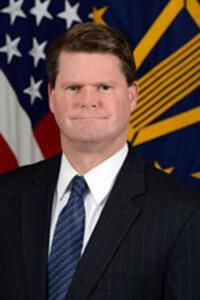
Mr. Randall Schriver is the Assistant Secretary of Defense for Indo-Pacific Security Affairs. Mr. Schriver was appointed as Assistant Secretary of Defense by President Donald Trump on 8 January 2018. Prior to his confirmation, Mr. Schriver was one of five founding partners of Armitage International LLC, a consulting firm that specializes in international business development and strategies. He was also CEO and President of the Project 2049 Institute, a non-profit research organization dedicated to the study of security trend lines in Asia.
Previously, Mr. Schriver served as Deputy Assistant Secretary of State for East Asian and Pacific Affairs. He was responsible for China, Taiwan, Mongolia, Hong Kong, Australia, New Zealand, and the Pacific Islands. From 2001 to 2003, he served as Chief of Staff and Senior Policy Advisor to the Deputy Secretary of State. From 1994 to 1998, he worked in the Office of the Secretary of Defense, including as the senior official responsible for the day-to-day management of U.S. bilateral relations with the People's Liberation Army and the bilateral security and military relationships with Taiwan.
Prior to his civilian service, he served as an active duty Navy Intelligence Officer from 1989 to 1991, including a deployment in support of Operation Desert Shield/Desert Storm. After active duty, he served in the Navy Reserves for nine years, including as Special Assistant to the Chairman of the Joint Chiefs of Staff and an attaché at U.S. Embassy Beijing and U.S. Embassy Ulaanbaatar.
Mr. Schriver has won numerous military and civilian awards from the U.S. government and was presented while at the State Department with the Order of the Propitious Clouds by the President of Taiwan for service promoting U.S.-Taiwan relations. Mr. Schriver received a Bachelor of Arts degree in history from Williams College and a Master of Arts degree from Harvard University.
Oksenberg Conference Room 616 Serra Mall Encina Hall, 3rd Floor, Central S350 Stanford, CA 94305
Randall Schriver
Assistant Secretary of Defense for Indo-Pacific Security Affairs
Most studies that look at whether democracy improves global health rely on measurements of life expectancy at birth and infant mortality rates. Yet those measures disproportionately reflect progress on infectious diseases — such as malaria, diarrheal illnesses and pneumonia — which relies heavily on foreign aid.
A new study led by Stanford Health Policy's Tara Templin and the Council on Foreign Relations suggests that a better way to measure the role of democracy in public health is to examine the causes of adult mortality, such as noncommunicable diseases, HIV, cardiovascular disease and transportation injuries. Little international assistance targets these noncommunicable diseases.
When the researchers measured improvements in those particular areas of public health, the results proved dramatic.
“The results of this study suggest that elections and the health of the people are increasingly inseparable,” the authors wrote.
“Democratic institutions and processes, and particularly free and fair elections, can be an important catalyst for improving population health, with the largest health gains possible for cardiovascular and other noncommunicable diseases,” the authors wrote.
Templin said the study brings new data to the question of how governance and health inform global health policy debates, particularly as global health funding stagnates.
“As more cases of cardiovascular diseases, diabetes and cancers occur in low- and middle-income countries, there will be a need for greater health-care infrastructure and resources to provide chronic care that weren’t as critical in providing childhood vaccines or acute care,” Templin said.
Image
Free and fair elections for better health
In 2016, the four mortality causes most ameliorated by democracy — cardiovascular disease, tuberculosis, transportation injuries and other noncommunicable diseases — were responsible for 25 percent of total death and disability in people younger than 70 in low- and middle-income countries. That same year, cardiovascular diseases accounted for 14 million deaths in those countries, 42 percent of which occurred in individuals younger than 70.
Over the past 20 years, the increase in democratic experience reduced mortality in these countries from cardiovascular disease, other noncommunicable diseases and tuberculosis between 8-10 percent, the authors wrote.
“Free and fair elections appear important for improving adult health and noncommunicable disease outcomes, most likely by increasing government accountability and responsiveness,” the study said.
What Templin and her co-authors found was democracy was associated with better noncommunicable disease outcomes. They hypothesize that democracies may give higher priority to health-care investments.
HIV-free life expectancy at age 15, for example, improved significantly — on average by 3 percent every 10 years during the study period — after countries transitioned to democracy. Democratic experience also explains significant improvements in mortality from cardiovascular disease, tuberculosis, transportation injuries, cancers, cirrhosis and other noncommunicable diseases, the study said.
Watch: Some of the authors of the study discuss the significant their findings:
What Templin and her co-authors found was democracy was associated with better noncommunicable disease outcomes. They hypothesize that democracies may give higher priority to health-care investments.
HIV-free life expectancy at age 15, for example, improved significantly — on average by 3 percent every 10 years during the study period — after countries transitioned to democracy. Democratic experience also explains significant improvements in mortality from cardiovascular disease, tuberculosis, transportation injuries, cancers, cirrhosis and other noncommunicable diseases, the study said.
Foreign aid often misdirected
And yet, this connection between fair elections and global health is little understood.
“Democratic government has not been a driving force in global health,” the researchers wrote. “Many of the countries that have had the greatest improvements in life expectancy and child mortality over the past 15 years are electoral autocracies that achieved their health successes with the heavy contribution of foreign aid.”
They note that Ethiopia, Myanmar, Rwanda and Uganda all extended their life expectancy by 10 years or more between 1996 and 2016. The governments of these countries were elected, however, in multiparty elections designed so the opposition could only lose, making them among the least democratic nations in the world.
Yet these nations were among the top two-dozen recipients of foreign assistance for health.
Only 2 percent of the total development assistance for health in 2016 was devoted to noncommunicable diseases, which was the cause of 58 percent of the death and disability in low-income and middle-income countries that same year, the researchers found.
“Although many bilateral aid agencies emphasize the importance of democratic governance in their policy statements,” the authors wrote, “most studies of development assistance have found no correlation between foreign aid and democratic governance and, in some instance, a negative correlation.”
Autocracies such as Cuba and China, known for providing good health care at low cost, have not always been as successful when their populations’ health needs shifted to treating and preventing noncommunicable diseases. A 2017 assessment, for example, found that true life expectancy in China was lower than its expected life expectancy at birth from 1980 to 2000 and has only improved over the past decade with increased government health spending. In Cuba, the degree to which its observed life expectancy has exceeded expectations has decreased, from four-to-seven years higher than expected in 1970 to three-to-five years higher than expected in 2016.
“There is good reason to believe that the role that democracy plays in child health and infectious diseases may not be generalizable to the diseases that disproportionately affect adults,” Bollyky said. Cardiovascular diseases, cancers and other noncommunicable diseases, according to Bollyky, are largely chronic, costlier to treat than most infectious diseases, and require more health care infrastructure and skilled medical personnel.
The researchers hypothesize that democracy improves population health because:
When enforced through regular, free and fair elections, democracies should have a greater incentive than autocracies to provide health-promoting resources and services to a larger proportion of the population;
Democracies are more open to feedback from a broader range of interest groups, more protective of media freedom and might be more willing to use that feedback to improve their public health programs;
Autocracies reduce political competition and access to information, which might deter constituent feedback and responsive governance.
Various studies have concluded that democratic rule is better for population health, but almost all of them have focused on infant and child mortality or life expectancy at birth.
Over the past 20 years, the average country’s increase in democracy reduced mortality from cardiovascular disease by roughly 10 percent, the authors wrote. They estimate that more than 16 million cardiovascular deaths may have been averted due to an increase in democracy globally from 1995 to 2015. They also found improvements in other health burdens in the countries where democracy has taken hold: an 8.9 percent reduction in deaths from tuberculosis, a 9.5 percent drop in deaths from transportation injuries and a 9.1 percent mortality reduction in other noncommunicable disease, such as congenital heart disease and congenital birth defects.
“This study suggests that democratic governance and its promotion, along with other government accountability measures, might further enhance efforts to improve population health,” the study said. “Pretending otherwise is akin to believing that the solution to a nation’s crumbling roads and infrastructure is just a technical schematic and cheaper materials.”
The other researchers who contributed to the study are Matthew Cohen, Diana Schoder, Joseph Dieleman and Simon Wigley, from CFR, the University of Washington-Seattle and Bilkent University in Turkey, respectively.
Funding for the research came from Bloomberg Philanthropies and the Bill & Melinda Gates Foundation. Stanford’s Department of Health Research and Policy also supported the work.
Hero Image
Election officials count the votes at a polling station on February 24, 2019 in Dakar, Senegal.
Abstract: Successful use of bots and trolls as tools of its expansionist foreign policy demonstrated the Russian government's superior capability in computational propaganda. Yet the main area of application for these tools remains inside Russia: to prop up Vladimir Putin's approval ratings and deny his opponents an opportunity to reach potential voters. In this paper, we use supervised machine learning algorithms for bot detection and sentiment analysis to do a first systematic survey of bot activity in the Russian segment of Twitter. We discover a high yet fluctuating volume of bot communication and presence of both pro- and anti-government as well as neutral bots. We also identify sources of information they spread and formulate testable hypotheses about the political strategy behind bots deployment. Finally, we discuss the implications of autocrats' reliance on domestic computational propaganda for the response to their activities abroad.
Speaker's Biography: Sergey Sanovich received his Ph.D. in Politics at NYU. He studies how autocrats use the power of persuasion to come to, and stay in, office. His ongoing research is focused on online censorship and propaganda by authoritarian regimes; elections and partisanship in electoral autocracies; and personalization of politics in both autocratic and democratic countries. To conduct his research, Sergey collects big data from social media, digitalizes archival documents, and runs field and survey experiments both online and offline.
Sergey Sanovich
Cyber Fellow
CISAC, Stanford University
Abstract: My research investigates the formal institutionalization of inter-governmental cooperation among the three major Northeast Asian powers – China, Japan, and the Republic of Korea—in the face of a continued North Korean threat. How much of a shadow, if any, has North Korea’s nuclear weapons cast over the development of multilateralism in the region? Since 1999, the Northeast Asian region has seen intensifying institutionalization of cooperation among its major powers. In a region where the realist logic of state-centric nationalism, sovereignty, and balance of power still prevails, this new development of trilateral cooperation among the former and potential adversaries deserves serious scholarly investigation. What started as economic and functional cooperation, trilateral cooperation has since been substantially expanded to include political and security agendas at the highest level of government. What explains the emergence and endurance of trilateral cooperation and to what extent has containing the North Korean nuclear crisis shaped its institutional trajectory and outcomes? By examining the evolution of trilateral cooperation, I address some critical gaps in our understanding of formal institution building and the economic-security nexus in one of the most dynamic regions in the world.
Speaker's Biography: Yeajin Yoon is a 2018-2019 MacArthur Nuclear Security Pre-doctoral Fellow at CISAC and a doctoral candidate in the Blavatnik School of Government at the University of Oxford. Her dissertation examines the evolution of trilateral cooperation among the most militarily and economically dominant states in Northeast Asia, namely, China, Japan and the Republic of Korea, and considers when and how their relations become implicated in the North Korean nuclear crisis.
Prior to entering academia, Yeajin travelled extensively across Asia and worked with national governments, international organisations, and NGOs in the region. She led the development of the inaugural issue of the 'Oxford Government Review’ and helped facilitate a Track II dialogue on wartime history issues in Asia at Stanford University. Previously, she worked as a founding member of the Trilateral Cooperation Secretariat, the official intergovernmental organisation for China, Japan, and the Republic of Korea and managed a development fund focused on the ASEAN region at the Korean Foreign Ministry.
Yeajin received a Bachelor of Arts in Political Science with Honors from Stanford University and a Master of Public Policy degree from Oxford University.
Yeajin Yoon
MacArthur Nuclear Security Pre-doctoral Fellow
CISAC, Stanford University

 FSI researchers strive to understand how countries relate to one another, and what policies are needed to achieve global stability and prosperity. International relations experts focus on the challenging U.S.-Russian relationship, the alliance between the U.S. and Japan and the limitations of America’s counterinsurgency strategy in Afghanistan.
 Although Japan has the world's largest government debt, the interest rate of the Japanese Government Bond (JGB) still remains lower than most major countries. In the JGB market, Japanese banks play a key role as massive investors. However, in recent years, many business environments surrounding Japanese banks have dramatically changed. One of the biggest changes is FinTech. Given the growth of FinTech, some researchers argue that it could disrupt traditional banking. In his research, Akai provides an overview of the FinTech phenomenon, especially in the U.S., and tries to analyze the relationship between FinTech and incumbent banks. Given the characteristics in Japan's financial market, Akai tries to clarify the impact of Fintech to the investment behavior of Japanese banks.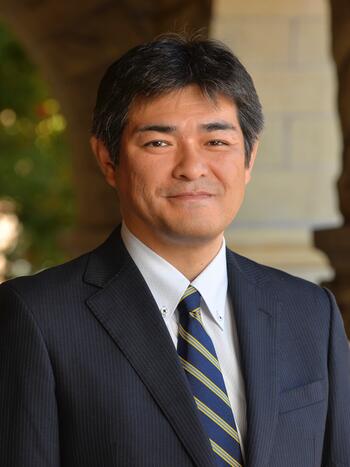

 Climate change has become more and more critical to the survival of humans. If there is no appropriate control of the total greenhouse gas emissions over the next 10-20 years, emissions will drive global temperatures to rise 1.5-2oC. Impacts related to climate change can be found in many segments of society such as human health, agriculture and food security, water supply, transportation, etc. These same areas also impact the survival of the petroleum industry. In his research, Fang has analyzed different scenarios about future clean energy implementation and emission reduction. In this presentation, he shares potential solutions of the sustainable development of the petroleum industry.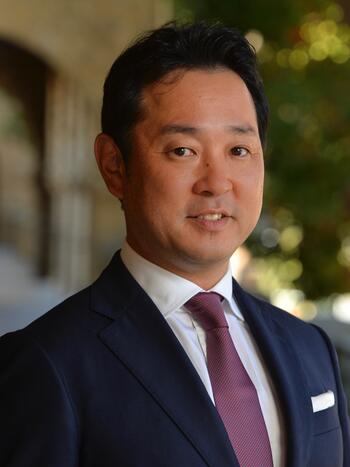

 Japan's global market share is rapidly shrinking. As a regional financial institution, the Hamamatsu Iwata Shinkin Bank focuses on supporting small and medium-sized enterprises (SMEs) with a majority of their customers in the vehicle engine parts industry. There is an increasing possibility that the pyramid of parts supply centering on automobiles will collapse in the near future. In such an era, it will be necessary for Japanese manufacturing SMEs to change their way of business in order to survive. In his research, Watanabe shares his experience of proof of concept in Silicon Valley and provides suggestions on how Japanese manufacturing SMEs need to progress their business to expand their market share.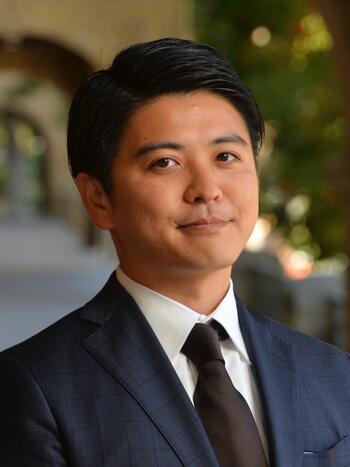
 The average annual salary of an MLB player has more than quadrupled since 1995 reaching the current high of over $4 million. Since 1995, the highest annual salary went from $10 million to now well over $30 million and is expected to continue to rise. This has been made possible by the growth of the MLB's market size itself - currently at $100 billion which is more than seven times higher than the 1995 levels. However, the average attendance per MLB game is decreasing and the average age of the MLB fan is increasing which could be a problem. On the other hand, the Japanese professional baseball market has grown by only 1.5 times over the same period. In his research, Ito analyzes MLB's growth factors and studies their contribution to the regional economy, as well as their implications for the Japanese professional baseball market and regional economy.