International Relations

FSI researchers strive to understand how countries relate to one another, and what policies are needed to achieve global stability and prosperity. International relations experts focus on the challenging U.S.-Russian relationship, the alliance between the U.S. and Japan and the limitations of America’s counterinsurgency strategy in Afghanistan.

Foreign aid is also examined by scholars trying to understand whether money earmarked for health improvements reaches those who need it most. And FSI’s Walter H. Shorenstein Asia-Pacific Research Center has published on the need for strong South Korean leadership in dealing with its northern neighbor.

FSI researchers also look at the citizens who drive international relations, studying the effects of migration and how borders shape people’s lives. Meanwhile FSI students are very much involved in this area, working with the United Nations in Ethiopia to rethink refugee communities.

Trade is also a key component of international relations, with FSI approaching the topic from a slew of angles and states. The economy of trade is rife for study, with an APARC event on the implications of more open trade policies in Japan, and FSI researchers making sense of who would benefit from a free trade zone between the European Union and the United States.

Authors
News Type
Blogs
Date
Paragraphs

Representing 14 different countries, the Ford Dorsey Master’s in International Policy (MIP) first-year class is a diverse group. Of the 8 men and 21 women, some have worked in government, some have served in the military, and others just completed their undergraduate degrees. Their academic interests range from migration; to clean energy; to women’s, children’s and LGBTQIA rights; and they spend their free time woodworking, practicing Kung Fu, and listening to true-crime podcasts.

The Freeman Spogli Institute for International Studies spoke to five of the incoming first-year students about their backgrounds, passions, and dreams for the future. These are their stories.

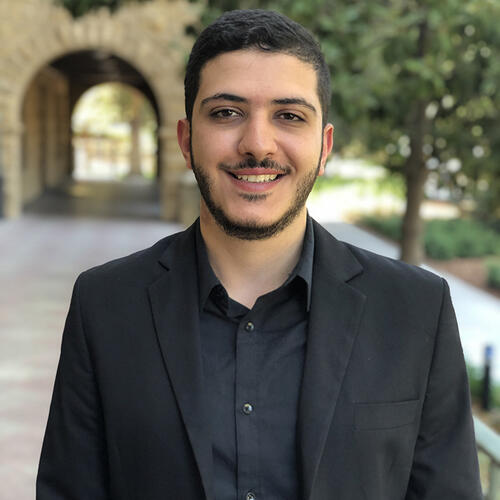
Serage Amatory, 22. (Chouf, Lebanon) 
Image
serage1

“I’ve been living in Egypt for the last four years and attending American University in Cairo, where I double-majored in political science and multimedia journalism. My background is in human rights, and I plan to keep working in human rights after school. I worked as a journalist at one of the few nonpartisan TV stations in Lebanon, and I also worked at the Ministry of Foreign Affairs in Lebanon.

I’ve also made two documentary films — one is about the transgender community in Cairo, and the second film tells the stories of five male victims of rape and sexual assault in Cairo. I enjoy talking about issues that other people don’t want to talk about. I get a lot of disapproval from people all the time, but that's what motivates me — I want to be speaking about people who don’t have someone speaking about them. Someone has to bring attention to things that aren't in the mainstream, and that's what I like to do.

The Master’s in International Policy program here is amazing, and I love that you have the option to specialize in a topic — I’d like to study something concrete and know exactly what I'm going to be doing with it after I graduate. I studied really general topics in undergrad, and now I feel like it's time to augment my general education with something that's more specific. I came in with the expectation that I'm going to be specializing in governance and development, and while I still want to do that, I also really think I might want to take some cyber classes now. So we’ll see — I’m just really happy to be here.”

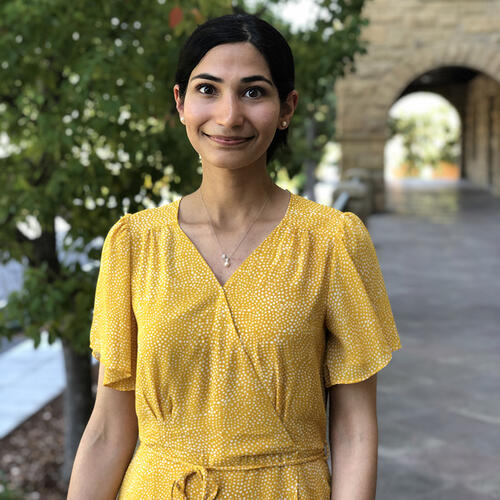
Maha Al Fahim, 21. (Vancouver, Canada and Abu Dhabi, United Arab Emirates) 
Image
maha1

“My interest in public policy started when I was 14. I wrote a nonfiction book about child abuse and gender discrimination, and it was based on my mother's story — she grew up in an abusive family. And in publishing that book, I really saw the power of writing to expose policy issues. When I went to Princeton for my undergraduate education, I wanted to hone my communication skills, because I saw communication as a really powerful tool. I wrote for the Daily Princetonian newspaper and Business Today magazine, and I was also chair of Princeton Writes, a program to promote writing among the community and celebrate the power of words.

Now I'm working on a novel. It's called "Shaolina", and it's set in China. The novel explores gender dynamics and financial and physical power. I traveled to China last summer to do research for the book, and I got to train with a Shaolin monk for 8 hours a day — we would wake up at 5 a.m. and run through the mountains, it was crazy. It was so cool to immerse myself in the experience like that. For me, Kung Fu is not just a sport, it’s a way of life. I've learned so many life lessons from Kung Fu: patience, perseverance, and balance, to name a few.

I love how Stanford is focusing on the future of policy, because as issues get more complex, you need not just qualitative skills, but also quantitative skills. And you need to be able to think creatively and innovatively. Our cohort is small — around 30 students — and I really like it. There are people here from very diverse backgrounds, and it has been really cool to hear so many different international perspectives.” 

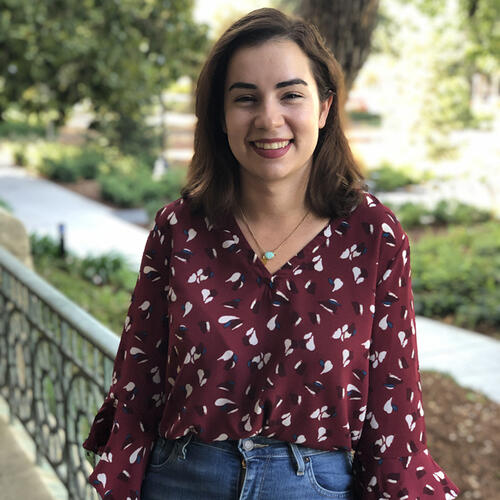
Angela Ortega Pastor, 25. (Madrid, Spain) 
Image
angela1

“I studied economics at NYU Abu Dhabi, and then I worked for three years in Paris for the Organization for Economic Co-operation and Development (OECD) as an energy data manager in oil and gas topics. I worked a lot with the different countries within the OECD as well as with other organizations to help collect data, and we put all of that data into comprehensive reports so that other people and companies can use it for analysis. I really liked working there. I liked the international dynamic - everybody came from very different backgrounds and different places, so it was very congenial to learn from other people.

I'm an economist by training, and that impacts the way I like to look at the problems within the energy field. Such as, 'How can we get consumers and companies to want to transition to clean energy? Does it mean that we need to put policies in place, or regulate the market? Or are pure economic incentives going to do the trick?' There are a lot of professors at Stanford who have done research in that sphere, so that was also a big push for me to come here.

I really like Stanford so far. I've found that people here are very welcoming and happy to help. I was a bit worried about that - when you move somewhere new, you sometimes worry about cliques and how focused people will be on their own lives. But everyone that I've encountered has been really nice and helpful. It's made feel like, 'OK - I can figure out how this place works and eventually feel at home.'”

Craig Nelson, 37. (Minneapolis, Minnesota) 

Image
craig1

“I'm an infantry officer in the U.S. Army. I graduated from West Point in 2006, and I'm in my 14th year of service. I've done eight deployments across both Iraq and Afghanistan, and I've also spent a good amount of time stationed in Europe. My wife, Michelle, and I just moved to Palo Alto from Vicenza, Italy, with our 2-year-old son, Max. Michelle and I love to travel, we love being stationed abroad, and we think that the best way to complete a 20-year career in the Army is to be abroad as much as possible and see parts of the world that we would not otherwise be exposed to.

Overall what I hope to learn here is a better way for the American Army to help to implement the policy that I was a part of as the U.S. Army's forward-deployed unit in Europe. I was able to see where policy derived by our elected officials is actually implemented at a tactical level. I’d like to go back to the Army and implement that policy with a refined understanding of where it comes from and how it's generated.

Before social media became as ubiquitous as it is now, I think people were in groups based largely on where they're from - a certain area code, or a neighborhood, or a school. Now it's possible to identify with a group completely without respect to geographic location, and I think that's because of social media. I'm interested in how that drives security policy - how does that change cyber security policy, and how does that change the way that my country interfaces with its allies and its partners?

When I go back to the Army, I hope to be in a position of greater responsibility and leadership. And I think that this experience will broaden me in a way that I would not have achieved if I had stayed in the operational Army and done a more traditional job following what I just did in Italy.”

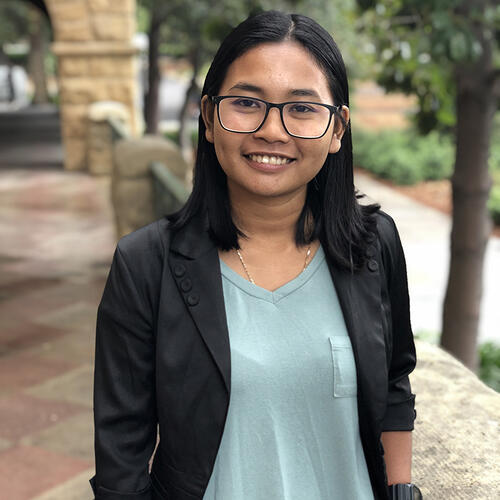
Sievlan Len, 23. (Toul Roveang Village, Cambodia) 
Image
sievlan1

“I earned my bachelor’s degree in global affairs from the American University of Phnom Penh in Cambodia. I did two internships before coming to Stanford: one was with a consulting firm, where I was working mainly on migration research and youth participation initiatives at the sub-national level. I also worked for a foundation that works on strengthening political parties in Cambodia. It was a really interesting experience, and it gave me the idea of doing my bachelor's thesis on migration.

My interests right now are in migration, development, and education. And I’m interested to learn about how the three interact, and how we can make the most out of migration. I'm so excited to explore the interdisciplinary aspects of the Master’s in International Policy program, because I've always felt that you can't separate these issues one from another — migration itself is very interdisciplinary, there is both a political and an economic side to it.

I come from a village in Cambodia, and I'm one of the luckiest in that I had the opportunity to pursue higher education. One of my dreams and goals is that everyone in Cambodia — including girls — have equal access to education, and at least to finish high school, and have the opportunity to pursue their dreams in universities if they’d like to. Where I grew up, I saw a lot of potential not being fulfilled because of people’s circumstances — poverty, or elders not valuing education. I really want to see that change. I want everyone to be able to reach their full potential.”

Hero Image
mipphotocropped
Vienna Exchange student Mourad Chouaki and Ford Dorsey Master’s in International Policy (MIP) first-year students Corie Wieland, Rehana Mohammed and Maria Fernanda Porras Jacobo on the grass of the Stanford Oval in September 2019. Photo: Maria Fernanda Porras Jacobo.
All News button
1
-

Livestream: This event will not be live-streamed or recorded.


Abstract: Despite a lull after the fall of the Soviet Union, grassroots activism in Russia is on the rise. The protests for free elections that swept across Russia in the summer of 2019 may have captured international headlines, but many other Russian grassroots groups have been actively organizing over the last decade. What types of civic movements exist in today’s Russia? What are the risks that civic activists face? How do they interact with the state or state-protected interest groups? Finally, what role could grassroots groups play in democratizing Russia? Russian activist Evgeniya Chirikova will shed light on these questions through her personal experience as an environmental activist and as a coordinator of Activatica.org, an online news platform covering grassroots activism across Russia.


Speaker's Biography:

Image
2012europe 111
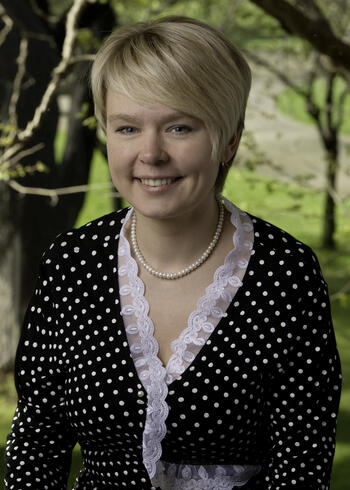
Evgeniya Chirikova is a Russian environmental activist, primarily known for opposing the building of a motorway through the Khimki forest near Moscow. She also played a prominent role in the 2011-2012 Russian protests following disputed parliamentary elections in Russia. In March 2011, she received the Woman of Courage Award, handed over by US Vice President Joe Biden. In 2012, she was a winner of the Goldman Environmental Prize. In November 2012, Foren Policy named Chirikova one of its 2012 Top 100 Global Thinkers. In 2015 Chirikova organized the portal activatica.org, and she is currently organizing media support for grassroots groups.

Evgeniya Chirikova Russian Environmental Activist
Seminars
Shorenstein APARCStanford UniversityEncina Hall E301Stanford, CA 94305-6055
0
Koret Fellow, 2019-20
Visiting Scholar at APARC
robert_king.png Ph.D.

Robert R. King was a Visiting Scholar, Koret Fellow at the Walter H. Shorenstein Asia-Pacific Research Center (Shorenstein APARC) during the 2019 fall term.  He is the former U.S. Special Envoy for North Korean Human Rights Issues at the U.S. Department of State (2009-2017).  He is Special Advisor to the Korea Chair at the Center for Strategic and International Studies (CSIS), a non-resident Fellow at the Korea Economic Institute, and a member of the board of the Committee for Human Rights in North Korea. 

Ambassador King’s research interests include North Korea human rights, Northeast Asia, U.S. foreign policy, and the Congressional role in U.S. foreign affairs.  During his time at Shorenstein APARC, he researched the United States efforts to promote human rights in North Korea.

Before assuming his position at the Department of State, King was Staff Director and Minority Staff Director of the Foreign Affairs Committee of the U.S. House of Representatives (2001-2009).  He served as Chief of Staff to Congressman Tom Lantos of California (1983-2008).  He was a White House Fellow on the staff of the National Security Council (1977-1978), and Senior Analyst and Assistant Director of Research at Radio Free Europe in Munich, Germany (1970-1977).

King holds a PhD and an MALD in international relations from the Fletcher School of Law and Diplomacy and a BA in political Science from Brigham Young University.

0
au_photo.jpg.png

Alice E.M. Underwood is a Research Scholar at the Project on Russian Power and Purpose in the 21st Century, housed within the Center on International Security and Cooperation. She completed her Ph.D. at Stanford University in the Department of Comparative Literature in 2019. Her dissertation, “Citizens of the Future, Subjects of the Past: Civic Identity and Aesthetic Deviance in Late-Soviet and Contemporary Russia,” works at the intersection of cultural and political studies to trace historical continuities in the Kremlin’s exploitation of citizenship as a legal and cultural tool for manipulating its subjects, alongside artists’ reclamation of civic identity through dissident practices. She was a Pre-Doctoral Fellow at the Center on Democracy, Development, and the Rule of Law; a Title VIII Fellow at the Kennan Institute of the Woodrow Wilson International Center for Scholars; and a Stanford Weiland Fellow. She has an A.B. from Harvard University in Slavic Literatures and Cultures.

-


This event is now full and we are unable to take any further reservations. However, if you would like to be added to the waitlist, please email us at sj1874@stanford.edu.

Human capital is fleeing Russia. Since President Vladimir Putin’s ascent to the presidency, between 1.6 and 2 million Russians – out of a total population of 145 million – have left for Western democracies. This emigration sped up with Putin’s return as president in 2012, followed by a weakening economy and growing repressions. It soon began to look like a politically driven brain drain, causing increasing concern among Russian and international observers. In this pioneering study, the Council’s Eurasia Center offers a comprehensive analysis of the Putin Exodus and its implications for Russia and the West. Based on the findings from focus groups and surveys in four key locations in the United States and Europe, it also examines the cultural and political values and attitudes of the new Russian émigrés.


Sergei Erofeev
Sergei Erofeev
is currently a lecturer at Rutgers University and the Principal Investigator of the project Tectonic Value Shifts in Post-Soviet Societies (Narxoz University, Almaty). He has been involved in the internationalization of universities in Russia since the early 1990s. Previously, Dr. Erofeev served as a vice president for international affairs at the Higher School of Economics in Moscow, the dean of international programs at the European University at Saint Petersburg, and the director of the Center for Sociology of Culture at Kazan Federal University in Russia. He has also been a Hubert H. Humphrey fellow at the University of Washington. Prior to his career in academia, Dr. Erofeev was a concert pianist, and has worked in the area of the sociology of the arts.


Co-sponsored by the Freeman Spogli Institute for International Studies, the Center for Russian, East European, and Eurasian Studies and the:

Image
Atlantic Council logo

Sergei Erofeev Rutgers University
Lectures
-

THE EVENT IS OPEN TO THE PUBLIC, BUT REGISTRATION IS REQUIRED. SEE BELOW FOR REGISTRATION LINK.

Japan and South Korea enjoyed a period of relatively stable trade and diplomatic relations, with expanding trade, deepening cultural and social ties, and a consistent but relatively managed level of friction. They both remain critical US allies in the region, with North Korea’s security threats and the rising power of China creating uncertainty in the regional security landscape. However, the sudden escalation of diplomatic and trade disputes between South Korea and Japan has alarmed numerous observers, angered people in both countries, and is generally confusing to many around the world to whom the two countries seem to have much to lose and little to gain by this escalation.

This event will shed light into the critical questions surrounding this current conflict. What has been the historical trajectory of the two countries’ diplomatic and trade relations? Is the current escalation part of the historical pattern of cycles of conflict and tension, or an aberration? What are the underlying forces at work that are driving the conflict? Are these new forces, or the same historical forces coming to a head? How much are factors from the international environment, such as the behavior of the United States, influencing the current escalation of trade conflict? What are the domestic political dynamics at work in each of the countries? What has been the historical role of the US in the South Korea-Japan relationship, and is it different this time? This conference brings together experts in the international affairs and trade relations of South Korea, Japan, and the United States. 

This event is sponsored jointly by Japan Program and Korea Program at the Shorenstein APARC, Stanford University.
 

AGENDA

1:00pm-1:05pm         Opening Remarks, Gi-Wook Shin, Director of Shorenstein APARC, Stanford University

1:05pm-2:25pm         Panel 1 – Diplomacy and International Relations

Panelists

Kak-Soo Shin, former Korean Ambassador to Japan

Hitoshi Tanaka, Chairman of the Institute for International Strategy at the Japan Research Institute, ltd.

Joseph Yun, former Deputy Assistant Secretary of the State for Korea and Japan; former Special Representative on North Korea

Kenji Kushida (Moderator), Research Scholar, Shorenstein APARC Japan Program, Stanford University

2:25pm-2:45pm         Panel 1 Audience Q&A

2:45pm-3:00pm         Break

3:00pm-4:20pm         Panel 2 - Trade Issues                   

Panelists

Yukiko Fukagawa, Professor, School of Political Science and Economics at Waseda University

Seokyoung Choi, former Korean Ambassador to WTO and UN in Geneva; former Deputy Minister for Trade

Aiko Lane, Executive Director of the US-Japan Business Council, U.S. Chamber of Commerce

Yong Suk Lee (Moderator), Deputy Director, Shorenstein APARC Korea Program, Stanford University

4:20pm-4:40pm         Panel 2 Audience Q&A

4:40pm-4:45pm         Closing Remarks, Gi-Wook Shin, Director of Shorenstein APARC


PARKING

Pay parking spaces for the event will be available in the Galvez Event Lot and parking instructions including walking directions from the Galvez Lot to Encina Hall will be sent out to all registered attendees the week of the event.

RSVP

Required by 10/17/19. Limited seating available.

Registration link: https://www.eventbrite.com/e/japan-south-korea-on-the-brink-escalating-friction-amidst-an-uncertain-world-tickets-72308158649

MEDIA

If you are part of the media and attending the event, please contact Noa Ronkin at noa.ronkin@stanford.edu

Bechtel Conference Center
Encina Hall, First floor, Central
616 Serra Mall, Stanford, CA 94305

Panel Discussions
-

Abstract: We have learned a great deal about Iraq since the fateful decision to invade the country in 2003. Given academic research on Iraqi society and politics over the past 16 years and hard won lessons from U.S. intervention in Iraq, what what are the lessons learned for contemporary U.S. policymakers? And, crucially, what role should Iraq play in current U.S. foreign policy and its regional strategy toward the Middle East?


Seminar Recording: https://youtu.be/4OBQOshr-gs


Speakers:

Colin H. Kahl Co-director of the Center for International Security and Cooperation, the inaugural Steven C. Házy Senior Fellow at the Freeman Spogli Institute for International Studies, and a Professor, by courtesy, in the Department of Political Science at Stanford University.

Brett McGurk Frank E. and Arthur W. Payne Distinguished Lecturer at the Freeman Spogli Institute and Center for Security and Cooperation at Stanford University.

With moderator: Lisa Blaydes
Professor of Political Science at Stanford University and a Senior Fellow at the Freeman Spogli Institute for International Studies


Speaker's Biography: 

Image
colin kahl
Colin H. Kahl is co-director of the Center for International Security and Cooperation, the inaugural Steven C. Házy Senior Fellow at the Freeman Spogli Institute for International Studies, and a Professor, by courtesy, in the Department of Political Science at Stanford University. He is also a Strategic Consultant to the Penn Biden Center for Diplomacy and Global Engagement.

From October 2014 to January 2017, he was Deputy Assistant to the President and National Security Advisor to the Vice President. In that position, he served as a senior advisor to President Obama and Vice President Biden on all matters related to U.S. foreign policy and national security affairs, and represented the Office of the Vice President as a standing member of the National Security Council Deputies’ Committee. From February 2009 to December 2011, Dr. Kahl was the Deputy Assistant Secretary of Defense for the Middle East at the Pentagon. In this capacity, he served as the senior policy advisor to the Secretary of Defense for Egypt, Iran, Iraq, Israel and the Palestinian territories, Saudi Arabia, Syria, Yemen, and six other countries in the Levant and Persian Gulf region. In June 2011, he was awarded the Secretary of Defense Medal for Outstanding Public Service by Secretary Robert Gates. 

From 2007 to 2017 (when not serving in the U.S. government), Dr. Kahl was an assistant and associate professor in the Security Studies Program at Georgetown University's Edmund A. Walsh School of Foreign Service. From 2007 to 2009 and 2012 to 2014, he was also a Senior Fellow at the Center for a New American Security (CNAS), a nonpartisan Washington, DC-based think tank. From 2000 to 2007, he was an assistant professor of political science at the University of Minnesota. In 2005-2006, Dr. Kahl took leave from the University of Minnesota to serve as a Council on Foreign Relations International Affairs Fellow in the Office of the Secretary of Defense, where he worked on issues related to counterinsurgency, counterterrorism, and responses to failed states. In 1997-1998, he was a National Security Fellow at the John M. Olin Institute for Strategic Studies at Harvard University.

Current research projects include a book analyzing American grand strategy in the Middle East in the post-9/11 era. A second research project focuses on the implications of emerging technologies on strategic stability.

He has published numerous articles on international security and U.S. foreign and defense policy in Foreign Affairs, Foreign Policy, International Security, the Los Angeles Times, Middle East Policy, the National Interest, the New Republic, the New York Times, Politico, the Washington Post, and the Washington Quarterly, as well as several reports for CNAS.

His previous research analyzed the causes and consequences of violent civil and ethnic conflict in developing countries, focusing particular attention on the demographic and natural resource dimensions of these conflicts. His book on the subject, States, Scarcity, and Civil Strife in the Developing World, was published by Princeton University Press in 2006, and related articles and chapters have appeared in International Security, the Journal of International Affairs, and various edited volumes.

Dr. Kahl received his B.A. in political science from the University of Michigan (1993) and his Ph.D. in political science from Columbia University (2000).


Image
mcgurk brett holden   official dos photo copy
Brett McGurk is the Frank E. and Arthur W. Payne Distinguished Lecturer at the Freeman Spogli Institute and Center for Security and Cooperation at Stanford University.

McGurk’s research interests center on national security strategy, diplomacy, and decision-making in wartime.  He is particularly interested in the lessons learned over the presidencies of George W. Bush, Barack Obama, and Donald Trump regarding the importance of process in informing presidential decisions and the alignment of ends and means in national security doctrine and strategy.  At Stanford, he will be working on a book project incorporating these themes and teaching a graduate level seminar on presidential decision-making beginning in the fall of 2019.  He is also a frequent commentator on national security events in leading publications and as an NBC News Senior Foreign Affairs Analyst. 

Before coming to Stanford, McGurk served as Special Presidential Envoy for the Global Coalition to Defeat ISIS at the U.S. Department of State, helping to build and then lead the coalition of seventy-five countries and four international organizations in the global campaign against the ISIS terrorist network.  McGurk was also responsible for coordinating all aspects of U.S. policy in the campaign against ISIS in Iraq, Syria, and globally.

McGurk previously served in senior positions in the George W. Bush and Barack Obama administrations, including as Special Assistant to President Bush and Senior Director for Iraq and Afghanistan, and then as Deputy Assistant Secretary of State for Iraq and Iran and Special Presidential Envoy for the U.S. campaign against the Islamic State under Obama.

McGurk has led some of the most sensitive diplomatic missions in the Middle East over the last decade. His most recent assignment established one of the largest coalitions in history to prosecute the counter-ISIS campaign. He was a frequent visitor to the battlefields in both Iraq and Syria to help integrate military and civilian components of the war plan. He also led talks with Russia over the Syria conflict under both the Trump and Obama administrations, initiated back-channel diplomacy to reopen ties between Iraq and Saudi Arabia, and facilitated the formation of the last two Iraqi governments following contested elections in 2014 and 2018.

In 2015 and 2016, McGurk led fourteen months of secret negotiations with Iran to secure the release of Washington Post reporter Jason Rezain, U.S. Marine Amir Hekmati, and Pastor Saad Abadini, as well as three other American citizens.

During his time at the State Department, McGurk received multiple awards, including the Distinguished Honor Award and the Distinguished Service Award, the highest department awards for exceptional service in Washington and overseas assignments.

McGurk is also a nonresident senior fellow in the Middle East Program at the Carnegie Endowment for International Peace.

McGurk received his JD from Columbia University and his BA from the University of Connecticut Honors Program.  He served as a law clerk to Chief Justice William H. Rehnquist on the U.S. Supreme Court, Judge Denis Jacobs on the U.S. Court of Appeals for the 2d Circuit, and Judge Gerard E. Lynch on the U.S. District Court for the Southern District of New York.


Colin Kahl Stanford University
Brett McGurk Stanford University
Seminars
Authors
News Type
News
Date
Paragraphs

In my mind, the Great Wall of China is an unprecedented feat of engineering that symbolizes an epic transformation - a structure that once was meant to keep people out, now welcomes millions into the country. In many ways, our knowledge of Rheology and our outlook on China went through a transformation of a similar scale over the course of the 2019 SCPKU rheology seminar.

Image
wechatimg96

The rheology seminar offered by Prof. Gerry Fuller, started in mid-July with 15 students from diverse backgrounds – eight from Stanford and seven from the Chinese universities of Peking, Tsingua and Beihang. Together, over the course of eight lectures, we learned the fundamentals of rheology and its indispensable applications. The ones that excited us include predicting the stability of therapeutic solutions, designing materials for 3D printing and stabilizing/destabilizing foams and emulsions. The lectures were accompanied by two field trips that complemented the lecture content. The first one took us to a research lab in Beihang university where we got to observe advanced rheometric tools used to measure properties of soft living matter. The second one took us to the upstream and downstream divisions of the CNPC – one of the largest oil and gas producers in the world. There we learned about industry-grade high-throughput machinery used for enhanced oil recovery and processing. To top it off, the last two days of class were devoted to individual research presentations from students. This final session gave us a clearer understanding of the diverse research topics pursued by each student and the creative utilization of the material in different specializations. Aside from a good grasp of rheology, the seminar fostered strong professional connections and research collaborations. In particular, I am excited about a research collaboration that has been established between the research groups of Prof. Masao Doi at Beihang university and that of Prof. Gerry Fuller at Stanford.

Image
wechatimg94

Along with the professional connections, what made the whole experience truly memorable were the close personal friendships that were formed. Right from day one, every Stanford student was paired with a student from one of the Chinese Universities. What followed were unforgettable experiences – be it a trip within the campus or around the forbidden city – there was never a wasted moment. The icing on the cake was undoubtedly the last day of class. After an exuberant dinner at SunLiTun, we all took off for an essential KTV party. We celebrated through the night, singing a mix of Chinese, Spanish and English. (My personal favorite was of course the trip to the Great Wall, and did I mention that all the Stanford students now have Chinese names?)

To sum it up, I would like to highlight the message delivered by the executive director of SCPKU on the first day of class, which I believe also embodies the vision of the SCPKU and its supporters. We need future leaders who can enhance international relationships, embrace diversity and encourage science. What better way to secure this future than to bring eager young minds from leading universities together and encourage them to live, love and learn with each other before they take on global responsibilities. 

With amazing programs like these, I am hopeful that any walls that are built in the future, like the Great Wall of China, will be to celebrate science and bring people together.

Image
wechatimg125
Image
wechatimg97

Hero Image
trip greatwall
All News button
1
Subscribe to International Relations