-

Image
Amb. Ivo Daalder
Ivo H. Daalder is president of The Chicago Council on Global Affairs. Founded in 1922, the Council is a leading independent, nonpartisan organization committed to educating the public and influencing the discourse on global issues of the day. Prior to joining the Council in July 2013, Daalder served as the Ambassador to the North Atlantic Treaty Organization for more than four years. Daalder also served on the National Security Council staff as director for European Affairs from 1995-97. 

Before his appointment as Ambassador to NATO by President Obama in 2009, Daalder was a senior fellow in foreign policy studies at the Brookings Institution, specializing in American foreign policy, European security and transatlantic relations, and national security affairs. Prior to joining Brookings in 1998, he was an Associate Professor at the University of Maryland’s School of Public Policy and director of research at its Center for International and Security Studies. Ambassador Daalder was educated at Oxford and Georgetown Universities, and received his PhD in political science from the Massachusetts Institute of Technology.


Ivo Daalder Speaker President of the Chicago Council on Global Affairs and former US Ambassador to NATO
Lectures

Image
Image of Professor Gerrhard Besier
Gerhard Besier is a theologian, historian and psychologist. He held Chairs in Contemporary (Church) History and European Studies  at the Universities of Berlin, Heidelberg and Dresden. He is currently the Director of the Sigmund Neumann Institute for the Research on Freedom, Liberty and Democracy. Professor Besier has published widely on the themes of German-Polish antagonisms, transformation processes in Europe since 1945, European dictatorships, confessional controversies in Germany, Europe and the USA, and on stereotypes and prejudices. His latest book Neither Good Nor Bad. Why Human Beings Behave How They Do was published in English by Cambridge Scholars Publishing (Newcastle upon Tyne) in June 2014.

Co-sponsored by the Department of History and The Europe Center.

Lane History Corner, Room 307

Gerhard Besier Director Speaker Sigmund Neumann Institute for the Research on Freedom, Liberty and Democracy, Dresden
Lectures
-

THOMAS FINGAR, Oksenberg-Rohlen Distinguished Fellow, Freeman Spogli Institute for International Studies, Stanford University

The Obama Administration’s “Re-Balance” to Asia has been poorly explained, widely misunderstood, and deliberately misconstrued by officials and commentators on both sides of the Pacific. Stanford Professor and former Assistant Secretary of State Thomas Fingar will analyze the origins and objectives of the Re-Balance and attempt to explain and address questions and concerns raised by the Chinese and others in the region.

From May 2005 through December 2008, Fingar served as the first Deputy Director of National Intelligence for Analysis and, concurrently, as Chairman of the National Intelligence Council. He served previously as Assistant Secretary of the State Department’s Bureau of Intelligence and Research (2004-2005), Principal Deputy Assistant Secretary (2001-2003), Deputy Assistant Secretary for Analysis (1994-2000), Director of the Office of Analysis for East Asia and the Pacific (1989-1994), and Chief of the China Division (1986-1989). 

Stanford Center at Peking University
The Lee Jung Sen Building
Langrun Yuan
Peking University
No.5 Yiheyuan Road
Haidian District
Beijing, P.R.China 100871

Maps/Directions

Thomas Fingar Oksenberg-Rohlen Distinguished Fellow, Freeman Spogli Institute for International Studies Stanford University
Lectures
-

TERRY LAUTZ, Visiting Professor, Syracuse University, and former Henry Luce Foundation Vice President

As the world has become more interconnected, modern governments have recognized the need for soft power and the value of cultural diplomacy. For these reasons, Japan, South Korea, and Taiwan have established active cultural diplomacy programs to enhance the study of Asia in other countries.  China now provides significant support for Chinese language and cultural studies overseas.  This talk, from an American perspective, will evaluate China’s soft power push and compare the practice of cultural diplomacy in East Asia and the United States. 

Terry Lautz graduated from Harvard College and holds a Ph.D. from Stanford University.  He is a trustee of the Harvard-Yenching Institute, a director of the National Committee on U.S.-China Relations, a member of the Council on Foreign Relations, and has served as trustee and board chair of the Lingnan Foundation and the Yale-China Association. His recent publications deal with U.S.-China educational and cultural relations. 

Stanford Center at Peking University
The Lee Jung Sen Building
Langrun Yuan
Peking University
No.5 Yiheyuan Road
Haidian District
Beijing, P.R.China 100871

Maps/Directions

Terry Lautz Visiting Professor, Syracuse University, and former Henry Luce Foundation Vice President Syracuse University
Lectures
-

KARL EIKENBERRY -  William J. Perry Fellow in International Security at the Center for International Security and Cooperation, Distinguished Fellow with the Shorenstein Asia-Pacific Research Center at Stanford University

The 2014 presidential election, if successfully concluded, will mark the first democratic transition of power in Afghanistan's political history.  The new president and his administration will face a daunting set of security, governance, and economic challenges, even as the U.S.-led NATO coalition continues the drawdown of its combat forces.  Karl Eikenberry, who previously served as U.S. Ambassador in Afghanistan and commanded international military forces in that country, has just returned from travel to Islamabad and Kabul, and will discuss Afghanistan's future prospects as well as possible areas for Sino-American cooperation. Ambassador Karl Eikenberry is an affiliated faculty member with Stanford’s Center for Democracy, Development, and Rule of Law, and researcher with The Europe Center. Prior to his arrival at Stanford, he served as the U.S. Ambassador to Afghanistan from May 2009 until July 2011, where he led the civilian surge directed by President Obama to reverse insurgent momentum and set the conditions for transition to full Afghan sovereignty. Before appointment as Chief of Mission in Kabul, Eikenberry had a thirty-five year career in the United States Army, retiring in April 2009 with the rank of Lieutenant General. 


Post-Karzai Arghanistan

Stanford Center at Peking University
The Lee Jung Sen Building
Langrun Yuan
Peking University
No.5 Yiheyuan Road
Haidian District
Beijing, P.R.China 100871

Maps/Directions

Karl Eikenberry William J. Perry Fellow in International Security at the Center for International Security and Cooperation, Distinguished Fellow with the Shorenstein Asia-Pacific Research Center Stanford University - Freeman Spogli Institute for International Studies
Lectures
-

Image
flyer weyant cropped


Stanford Center at Peking University
The Lee Jung Sen Building
Langrun Yuan
Peking University
No.5 Yiheyuan Road
Haidian District
Beijing, P.R.China 100871

Directions/Map

John P. Weyant Professor of Management Science and Engineering, Deputy Director of Precourt Institute for Energy Efficiency Stanford University
Lectures
-

Image

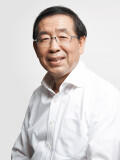
The Honorable Park Won Soon is the 35th mayor of Seoul, South Korea. He was initially elected in Oct. 2011, and recently reelected for another four-year term in June 2014. Park was elected as an indepedent candidate, with the support of the Democratic Party and Democractic Labor Party.

In his keynote speech, Mayor Park will share his philosophy on civic participation and local governance, reflecting on his career in- and outside government. He will explore communication strategies that local government can employ to better engage citizens and motivate collective action, using best practices from Seoul to illustrate his point.

Before assuming office, Park was a human rights lawyer and passionate activist who founded several NGOs. In his early university years at Seoul National University, Park was arrested and expelled for participating in a student rally against the military dictatorship of President Park Chung Hee, and was subsequently imprisoned for four months.

Park passed the state bar exam in 1980, and worked as a public prosecutor in the Daegu District Court in Gyeongsang Province (1982–3), afterward launching a private law practice in Seoul. In 2006, Park founded the Hope Institute, a think tank that aims to apply policy alternatives based on ideas generated by Korea’s citizens.

He also founded the People’s Solidarity for Participatory Democracy in 1994, a nonprofit organization dedicated to promoting justice and human rights in Korean society through civic participation.

In 2000, Park founded the Beautiful Foundation, a nonprofit organization that aims to promote a culture of philanthropy and a just society in Korea, and in 2002, the Beautiful Store, a secondhand store that raises funds for the Foundation’s initiatives.

Park holds a diploma in international law from the London School of Economics and Political Science and a bachelor’s degree in history from Dankook University. In 1993, he was a visiting research fellow in the Human Rights Program at the School of Law at Harvard University and from 2005-6 he was a distinguished practitioner at the Shorenstein Asia-Pacific Research Center, Stanford University.

This event is part of the Asia-Pacific Leaders Forum.

The video of this presentation is located on the Shorenstein APARC YouTube channel.

 

McCaw Hall

Stanford Alumni Association
Frances C. Arrillaga Alumni Center
326 Galvez Street
Stanford, CA 94305-6105
Parking, Map & Directions.


Park Won Soon Mayor of Seoul
Lectures
-
——北京大学斯坦福中心及北京大学美术学院联合举办———
 
在匠人和思想者之间:一个艺术家的创作实践
Between Craftsman and Thinker: My Practice as An Artist
讲者Speaker:谢晓泽 XIE XIAOZE  艺术家、斯坦福大学美术教授 Artist, Professor of Art, Stanford University
主持 Chair:     丁宁     DING NING   北京大学艺术学院教授 Vice Dean, School of Arts, Peking University
 
日期 Date:    2014年9月15日  Sep 15, 2014   
时间 Time:      17:00 - 18:15
地点 Venue: 北京大学斯坦福中心 Stanford Center at Peking University
 
谢教授将以大量幻灯介绍他20年来穿越绘画、装置和录像等媒介丰富的创作,
并探讨他的艺术理念、创作方式与过程、以及艺术品作为形式要素和劳动过程
的有机结合。名艺术家谢晓泽现担任斯坦福大学美术系教授。他的作品在休斯
顿美术馆、斯科茨代尔当代美术馆和圣何塞艺术博物馆永久收藏;曾获得琼·
切尔基金会和波洛克和克伦瑟基金会的资助,及凤凰城美术馆和达拉斯美术
馆等艺术大奖。
 
In this richly illustrated lecture, Xiaoze Xie will introduce his diverse 
bodies of work including painting, installation, video and photography over 
the past 20 years. The artist will share his creative process and discuss his 
ideas about the making of art as a unique combination of conceptual basis, 
formal elements and the process of labor. Xiaoze Xie is an internationally 
recognized artist who has exhibited extensively in the US and abroad. His 
work is in the permanent collection of the Museum of Fine Arts, Houston, 
the Scottsdale Museum of Contemporary Art and the San Jose Museum of 
Art. Xie received the Painter and Sculptor’s Grant from the Joan Mitchell 
Foundation, the Pollock-Krasner Foundation Grant and artist awards from 
Phoenix Art Museum and Dallas Museum of Art. Xie is the Paul L. & Phyllis 
Wattis Professor of Art at Stanford University.
 
 
网上报名 Online registration: http://scpku.fsi.stanford.edu/events/registration/217928
电邮咨询 Email inquiry:        lap.li@stanford.edu
电话咨询 Phone inquiry:        86 10 6276 5782
活动地图 Map:                         http://scpku.fsi.stanford.edu/content/traveling-scpku-and-beijing
进入校园须知 PKU entrance:
请携带身份证明文件从北京大学东侧门进入。我们将在东侧门摆放路牌引导大家走到斯坦福中心。
Please enter from the Northeast gate of Peking University with your photo ID. Directional signage will be available starting from this gate.


Stanford Center at Peking University
The Lee Jung Sen Building
Langrun Yuan
Peking University
No.5 Yiheyuan Road
Haidian District
Beijing, P.R.China 100871

Map/Directions

Lectures
-

*Please note the date has changed from September 23 to September 22*

A talk by Arnold Suppan, author of Hitler - Beneš - Tito: Conflict, War and Genocide in East Central and South East Europe. The monograph explores the development of the political, legal, economic, social, cultural and military “communities of conflict” within Austria-Hungary (especially in the Bohemian and South Slav lands); the convulsion of World War I and the Czech, Slovak and South Slav break with the Habsburg Monarchy; the difficult formation of successor states and the strong discussions at Paris 1919/20; the domestic and foreign policies of Czechoslovakia and Yugoslavia and the question of national minorities (Sudeten Germans, Magyars in Slovakia and the Vojvodina, Danube Swabians, Germans in Slovenia); Hitler’s destruction of the Versailles order; the Nazi policies of conquest and occupation in Bohemia, Moravia, Serbia, Bosnia-Herzegovina, and Slovenia; the genocide committed against the Jews in the Protectorate, Slovakia, the Ustaša-state and Serbia; the collaboration of the Tiso­- and Pavelić-regime with Nazi Germany; the retaliation against and expulsion of the Germans from Czechoslovakia and Yugoslavia; and finally the issue of history and memory east and west of the Iron Curtain as well as in the post-communist states at the end of the 20th century.

Sponsored by The Center for Russian, East European and Eurasian Studies and co-sponsored by The Europe Center and the Department of History.

Free and open to the public.


Pigott Hall (Building 260)
Room113

Arnold Suppan Professor of History University of Vienna
Lectures
-

Speaker: Shoucheng Zhang - JG Jackson and CJ Wood Professor of Physics at Stanford University

For the past 60 years, progress in information technology has been governed by Moore's law, which states that the number of transistors on a semiconductor chip doubles every 18 months. However, this remarkable trend is drawing to a close, mostly because the electrons that carry current in chips move like cars driving through a crowded marketplace, swerving around obstacles and dissipating too much of their energy as heat. The recent discovery of a new state of matter, the topological insulator, may lead to a new paradigm of information processing, in which electrons moving in opposing directions are separated into well-ordered lanes, like automobiles on a highway. This talk will explain the basic principles behind this amazing discovery.

Shoucheng Zhang was born in Shanghai and received his BS degree from the Free University of Berlin in 1983 and PhD from the State University of New York at Stony Brook in 1987. He joined the faculty at Stanford in 1993. He is a condensed matter theorist known for his work on topological insulators, spintronics and high temperature superconductivity. He is a fellow of the American Physical Society, a fellow of the American Academy of Arts and Sciences and a foreign member of the Chinese Academy of Science. He is the recipient of a number of awards including the Guggenheim fellowship in 2007, the Alexander von Humboldt research prize in 2009, the Johannes Gutenberg research prize in 2010, the Europhysics prize in 2010, the Oliver Buckley prize in 2012, the Dirac Medal and Prize in 2012 and the Physics Frontier Prize in 2013 for his theoretical prediction of the quantum spin Hall effect and topological insulators. 

Stanford Center at Peking University
The Lee Jung Sen Building
Peking University
No.5 Yiheyuan Road Haidian District
Beijing, P.R.China 100871

Directions/Maps

Lectures
Subscribe to Lectures