-

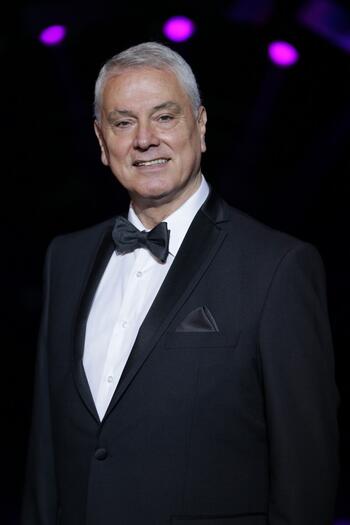
[[{"fid":"220174","view_mode":"crop_870xauto","fields":{"format":"crop_870xauto","field_file_image_description[und][0][value]":"Toomas Hendrik Ilves. Reception at the 36th Annual Conference of the Association of Philosophy and Literature.","field_file_image_alt_text[und][0][value]":"","field_file_image_title_text[und][0][value]":"","field_credit[und][0][value]":"Rene Riisalu","field_caption[und][0][value]":"Toomas Hendrik Ilves. Reception at the 36th Annual Conference of the Association of Philosophy and Literature.","field_related_image_aspect[und][0][value]":"","thumbnails":"crop_870xauto","pp_lightbox":false,"pp_description":false},"type":"media","attributes":{"width":"870","class":"media-element file-crop-870xauto"}}]]


Please RSVP. We will close registration once the attendance list reaches 250 people. 


Abstract:


On September 24, Stanford’s Center on Democracy, Development and the Rule of Law in partnership with The Atlantic Council will present a public address by President Toomas Ilves of Estonia on the future of technology in elections. Elections are set to take center stage in the coming year, in this country and abroad. As technology plays an increasingly large role in people’s lives, the discussion—moderated by CDDRL Director Francis Fukuyama— will explore its role in elections worldwide. President Ilves of Estonia—the only country in the world to use Internet voting for national elections— will discuss how technology can promote transparency, inclusion, and stronger democracies.

This event is a partnership between Stanford’s Center on Democracy, Development and the Rule of Law and The Atlantic Council, a DC-based think-tank committed to promoting constructive leadership and engagement in international affairs.


Bio:


Toomas Hendrik Ilves was elected President of the Republic of Estonia in 2006 and re-elected in 2011. He served as Chairman of the EU Task Force on eHealth from 2011 to 2012, and since November 2012 he became Chairman of the European Cloud Partnership Steering Board. His interest in computers stems from an early age – he learned to program at the age of 13 - and he has been promoting Estonia’s IT-development since the country restored its independence. Prior to his presidency, he served as Ambassador of Estonia to the United States of America and Canada (1993 -1996). In this position, he initiated the Tiger Leap initiative to computerize and connect all Estonian schools online. He also served as Minister of Foreign Affairs (1996-1998; 1998-2002) and Member of the Estonian Parliament (2002-2004). In recent years, President Ilves has spoken and written extensively on integration, transatlantic relations, e-government, and cyber security. He graduated from Columbia University in 1976 and received his Master’s degree in Psychology from the University of Pennsylvania in 1978. 


President Toomas Hendrik Ilves President Republic of Estonia
Lectures
-

In this talk, Wellington Shih will provide a historical and legal overview of the Republic of China’s territorial claims in the South China Sea. He will also review the latest developments in the ongoing dispute between the People’s Republic of China, the ROC on Taiwan, and other claimants in the region, including the Philippines, and discuss the South China Sea Peace Initiative proposed by the administration of President Ma Ying-jeou. 

The Possible Approaches for Defusing Tensions in the South China Sea: A Taiwanese Perspective
Download pdf
Visiting scholar Ministry of Foreign Affairs, Republic of China (Taiwan)
Lectures
-

Lecture in English

Chair:  Deng Minghua, School of Mathematical Science, Peking University

Speaker: Hua Tang, Associate Professor of Genetics, Courtesy Associate Professor of Statistics, Stanford University


Genome-wide association studies (GWAS) have become a standard approach for identifying loci influencing complex traits. However, GWAS in non-European populations are hampered by limited sample sizes and are thus underpowered. Can GWAS results in one population be exploited to boost the power of mapping loci relevant in another population? In this talk, I will describe a set of analyses, which address the question, “to what extent does the genetic architecture of a complex trait overlap between human populations?” I will next introduce an empirical Bayes approach, which improves the power of mapping trait loci relevant in a specific minority population through adaptively leveraging multi-ethnic evidence. A case study on plasma lipid concentration will be presented.

Bio: Hua Tang received her BS in Biology from Harvard, and PhD in Statistics, with a minor in Genetics, from Stanford University in 2002. From 2002 to 2006, she was on faculty in the PHS division at the Fred Hutchinson Cancer Research Center. Hua joined the Stanford Genetics Department in 2007. The goals of her research are to better understand the evolutionary forces that have shaped the pattern of genetic variation in humans, as well as to elucidate the genetic architecture of complex traits and diseases in the context of human evolution.

Lectures
-

Date 日期

July 13, 2015

Time 时间

19:00 – 20:30

Venue 地点

Stanford Center at Peking University

Tsachy Weissman is Professor of Electrical Engineering at Stanford University since 2003. His research focuses on Information Theory and Communications and Statistical Signal Processing. His is the recipient of NSF CAREER award and several best paper awards including the Horev fellowship for Leaders in Science and Technology, Henry Taub prize for excellence in research, incumbent of the STMicroelectronics Chair in the School of Engineering, and IEEE fellow. Weissman is serving on the editorial boards of the IEEE Transactions on Information Theory and Foundations and Trends in Communications and Information Theory. He is also the Founding Director of the Stanford Compression Forum.

In this lecture, Weissman will discuss information theory and statistical signal processing, the interplay between them, and their applications. He will survey some of the activity in his group pertaining to inference and data compression, including: Justification of inference under logarithmic loss; Estimation of the associated information measures from 'big data', and its applications; Compression under logarithmic loss; and Successively refinable lossy compression, with applications to genomic data. 

Stanford Center at Peking University

The Lee Jung Sen Building Peking University

No.5 Yiheyuan Road

Haidian District

Beijing, P.R.China 100871

Tsachy Weissman Professor Electrical Engineering, Stanford University
Lectures
-

Explaining the New Confrontation Between Russia and the West

Power. Policy. People 

July 6th, 2015

5:00 pm - 6:30 pm 

U.S.-Russia relations have reached a new low.  For thirty years, American presidents believed that the end of the Cold War ushered in a new era of cooperation with Moscow, and Russian integration into the West.   That hope has now ended. In parallel, Russian leaders also sought to deepen ties with the United States and build closer relations with Western institutions. Today, however, Russian leaders and commentators describe the United States as an adversary. In turn, American and European leaders have instituted unprecedented coercive measures against Russia in response to Russia’s intervention into Ukraine.  What happened?  How did we go from the end of the Cold War thirty years ago to a new period of confrontation? In his lecture, Professor McFaul will examine several explanations for this tragic set of developments, drawing on both his theoretical knowledge from his academic career as well as his practical experiences as a U.S. government official. 

Michael A. McFaul is the director of the Freeman Spogli Institute for International Studies, professor of political science, the Peter and Helen Bing Senior Fellow at the Hoover Institution, all at Stanford University. He also works as a news analyst for NBC News. McFaul served for five years in the Obama administration, first as Special Assistant to the President and Senior Director for Russian and Eurasian Affairs at the National Security Council at the White House (2009-2012) and then as U.S. Ambassador to the Russian Federation (2012-2014).  This summer, he is in residence at the Stanford Center at Peking University as a Mingde Distinguished SCPKU Visiting Fellow.  


Stanford Center at Peking University

The Lee Jung Sen Building Peking University

No.5 Yiheyuan Road

Haidian District

Beijing, P.R.China 100871

Michael McFaul Freeman Spogli Institute for International Studies Stanford University
Lectures
-

Over the last years, a paradigm shift in Heidegger research has been gaining momentum in the United States. The paradigm shift is motivated by and strictly based on the entirety of Heidegger's works, and especially the posthumous publications from 1989 to the present. It moves beyond the "classical paradigm" established by such scholars as William J. Richardson, Otto Pöggeler, and Friedrich-Wilhelm von Herrmann. This lecture lays out the main features of the paradigm shift and raises questions for discussion about how this reformulation of Heidegger's project might enter into dialogue with contemporary Chinese scholarship on Heidegger.
 

Thomas Sheehan, Ph.D., is professor of Religious Studies and, by courtesy, Philosophy at Stanford University. His field of specialization is contemporary phenomenology, especially Heidegger, as well as classical Greek and medieval philosophy. His doctorate was awarded by Fordham University, New York, where he studied under the renown Heidegger scholar William J. Richardson.

Thomas Sheehan Professor of Religious Studies Stanford University
Lectures
-

The video recording of this event can be watched on YouTube: https://www.youtube.com/watch?v=j57OuqbtD9Q&feature=youtu.be

In an age of terrorism, where should a democratic society draw the line on government surveillance? Edward Snowden’s explosive disclosures about the National Security Agency’s intelligence-collection operations have ignited an intense debate about the appropriate balance between security and liberty in America. In a special series this year, nationally prominent experts will explore the critical issues raised by the NSA’s activities, including their impact on our security, privacy, and civil liberties. This timely series will address one of the most challenging questions the nation faces today as it tries to strike the right balance between safety and liberty. The Security Conundrum will look behind and beyond the headlines, examining the history and implementation of the NSA operations, the legal questions generated by them, the media’s role in revealing them, and the responsibility of Congress to oversee them. It will also address the NSA’s uneasy and evolving relationship with Silicon Valley. Each session in the series is designed to explore these issues from a different vantage point. The guest speakers, in conversation with Stanford scholars, will probe the problems, explain the political, legal, and technological contours of the NSA actions, and outline ways to preserve the nation’s security without sacrificing our freedoms. 


An Evening with U.S. Senator Dianne Feinstein

Senator Dianne Feinstein has been at the vortex of the debate about Edward Snowden’s disclosures since he exposed an array of National Security Agency surveillance programs in 2013. As chair of the Senate Select Committee on Intelligence from 2009-2014, and now the ranking minority member, Senator Feinstein has tried to help the nation strike the appropriate balance between security and liberty as she and her Senate colleagues examined NSA practices in light of the Snowden materials. She also played a leading role in the Senate investigation of the Central Intelligence Agency detention and interrogation program following the terrorist attacks of Sept. 11, 2001. Senator Feinstein pressed to make the Senate report public. Some parts of the study were released in December 2014. A California Democrat and Stanford graduate, she has served in the Senate since 1993.

In her May 28 appearance at Stanford, Senator Feinstein will discuss the Congressional role in overseeing America’s intelligence agencies, including the NSA and CIA, and establishing the laws that govern their operations. The format for her appearance will be a colloquy with Philip Taubman, a consulting professor at Stanford’s Center for International Security and Cooperation and former Washington bureau chief of The New York Times. 

To register for a free ticket, please follow this link.

The Security Conundrum is co-sponsored by Stanford’s Freeman Spogli Institute for International Studies, the Center for International Security and Cooperation,the Hoover Institution, Stanford Continuing Studies, Stanford in Government, and the Stanford Law School.

CEMEX Auditorium

Knight Management Center

641 Knight Way, Stanford University

Dianne Feinstein U.S. Senator from California Speaker United States Senate
0
Affiliate
Taubman_Phil.jpg

Philip Taubman is affiliated with the Center for International Security and Cooperation at Stanford University. Before joining CISAC in 2008, Mr. Taubman worked at the New York Times as a reporter and editor for nearly 30 years, specializing in national security issues, including United States diplomacy, and intelligence and defense policy and operations. He served as Moscow bureau chief and Washington bureau chief, among other posts. He is author of Secret Empire: Eisenhower, the CIA, and the Hidden Story of America's Space Espionage (2003), The Partnership: Five Cold Warriors and Their Quest to Ban the Bomb (2012),  In the Nation's Service: The Life and Times of George P. Shultz (2023), as well as co-author (with his brother, William Taubman) of McNamara at War: A New History (2025).

Date Label
Philip Taubman Journalist Moderator CISAC
Lectures
-

Due to the high interest in this event, we have moved it to a larger room.  It is now in the Oksenberg Conference Room, Encina Hall, 3rd floor.


The February Minsk II agreement introduced a fragile ceasefire in eastern Ukraine, following a year of crisis and conflict between Kyiv and Moscow.  Ukrainian President Poroshenko needs to grapple with a daunting list of critical economic and political reforms.  Russian President Putin, however, appears intent on destabilizing the Ukrainian government and has the means, including military force, to do so.  What can we expect next in the Ukraine-Russia stand-off, and how should the West respond?

Image
Steven Pifer


Steven Pifer is a senior fellow at the Brookings Institution, where his work focuses on arms control, Ukraine and Russia. A retired Foreign Service officer, his more than 25 years with the State Department included assignments as deputy assistant secretary of state with responsibilities for Russia and Ukraine (2001-2004), ambassador to Ukraine (1998-2000), and special assistant to the president and senior director for Russia, Ukraine and Eurasia on the National Security Council (1996-1997).


Co-sponsored by the Freeman Spogli Institute for International Studies and The Europe Center.

Steven Pifer Senior Fellow Speaker the Brookings Institution
Lectures
-

Professor Jaeho Yeom, president of the elite Korea University in Seoul and a Stanford Political Science PhD will examine the historical development, current changes, and future course of East Asian universities. Drawing on his own experience at Korea University, where his initiatives include the "pioneering intellectuals" program to encourage and support student creativity, President Yeom will examine many aspects of higher education, including shifts in educational methodologies, demographics, the pressures of globalization, and changes in government and private funding. 
Professor Jaeho Yeom earned a PhD in political science at Stanford University for his research on Japanese industrial policy for high technology. He has taught public administration at Korea University since 1990. He was Executive Vice President of Korea University before being appointed President in March 2015. President Yeom has also taught or conducted research in Japan, Australia, China, and the United Kingdom. He served as an expert member of the Korean Presidential Commission of Science and Technology Policy and a board member of the Korea Science and Engineering Foundation. He also served as president of The Korean Association for Policy Studies in 2007 and of The Korean Association for Contemporary Japanese Studies in 2008. Currently, he is chairperson of the Policy Advisory Committee of the Ministry of Foreign Affairs and Trade, member of Public Service Evaluation Committee, and Editor in Chief of Asian Research Policy. President Yeom is the author of numerous books and studies, including Future Strategy for Test, Research, and Evaluation of Food and Drug (2011, NIFDS).

Jaeho Yeom <i>President, Korea University</i>
Lectures
-

Abstract:

Ballroom dancing legend Pierre Dulaine will discuss his 'Dancing Classrooms' method which he applied in his award winning documentary 'Dancing in Jaffa' to bring Arab and Jewish children together through dance. Mr. Dulaine will speak about the film, his journey into the world of dance and his experience as a Judge on the Arabic version of the TV show 'So You Think You Can Dance.'  Talk features audio-visual presentation and free lunch.

Speaker Bio:

Image
pierre dulaine 21

Pierre Dulaine was born in Jaffa, Palestine in 1944 to an Irish father and a Palestinian mother--both of whom fled the area in 1948.  After eight months of moving several times, Dulaine's family settled in Amman, Jordan. In 1956, the Suez Crisis forced Dulaine's parents to flee the country, eventually resettling in Birmingham, England.  In 1994 Dulaine founded the Dancing Classrooms program in New York City's public schools in which he encouraged children from various backgrounds to dance together. He later traveled to the city of his birth, Jaffa, to visit his childhood home and to make a film, 'Dancing in Jaffa,' where he brought Israeli Arabs and Jews together through dance and music.  His life was also fictionalized in the film Take the Lead starring Antonio Banderas.  More recently, Pierre Duaine has gained much acclaim in the Arab world for his role as Judge on the Arabic version of the TV show 'So You Think You Can Dance' where he encouraged young Arab men and women to pursue dance as way of dealing with difficult circumstances and certain outdated social taboos.

(See flyer for a list of the co-sponsors)


Note: A screening of 'Dancing in Jaffa' will take place on campus on May 29. For more information, click here.


[[{"fid":"218684","view_mode":"crop_870xauto","fields":{"format":"crop_870xauto","field_file_image_description[und][0][value]":"PD flyer","field_file_image_alt_text[und][0][value]":"","field_file_image_title_text[und][0][value]":"","field_credit[und][0][value]":"","field_caption[und][0][value]":"","field_related_image_aspect[und][0][value]":"","thumbnails":"crop_870xauto","pp_lightbox":false,"pp_description":false},"type":"media","attributes":{"height":1344,"width":870,"class":"media-element file-crop-870xauto"}}]]

Stanford Language Center,
Building 30-102,
Stanford, CA

Pierre Dulaine
Lectures
Subscribe to Lectures