Zouping Revisited: Change and Continuity in a Chinese County
PLEASE NOTE: EVENT START TIME IS NOW 2:00PM
The Oksenberg Lecture, held annually, honors the legacy of Professor Michel Oksenberg (1938–2001). A senior fellow at Shorenstein APARC and the Freeman Spogli Institute for International Studies, Professor Oksenberg served as a key member of the National Security Council when the United States normalized relations with China, and consistently urged that the United States engage with Asia in a more considered manner. In tribute, the Oksenberg Lecture recognizes distinguished individuals who have helped to advance understanding between the United States and the nations of the Asia-Pacific.
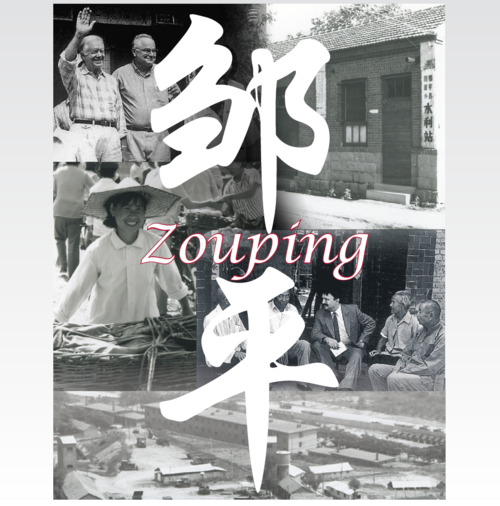
The conference will convene a panel of China specialists with deep personal and scholarly connections to Zouping who will provide insights into the unfolding history of doing research and fieldwork in China. The panel will also assess through this rural Shandong county the breathtaking as well as surprising changes China has experienced from the 1980s until the present.
For directions to the Jen-Hsun Huang Engineering Center, please click here.
Agenda
2:00-2:15 PM: Welcome and Introduction
2:15-3:35 PM:
Panel I: Doing Fieldwork in China: How We Got There and Its Impact
Chair: Prof. Steven Goldstein (Smith College)
· Prof. Mary Brown Bullock (Committee on Scholarly Communication with the PRC)
· Prof. Thomas Gold (U.C. Berkeley)
· Prof. Thomas Bernstein (Columbia University)
· Prof. Andrew Walder (Stanford University)
3:35-4:55 PM:
Panel II: A Window onto China: Understanding Continuity and Change
Chair: Prof. Jean Oi (Stanford University)
· Prof. Jean Oi (Stanford University)
· Dr. Douglas Grob (Albright Stonebridge Group)
· Prof. Charlotte Lee (Berkeley City College)
5:00-5:30 PM: Book signing and sale of Zouping Revisited: Adaptive Governance in a Chinese County
Speakers



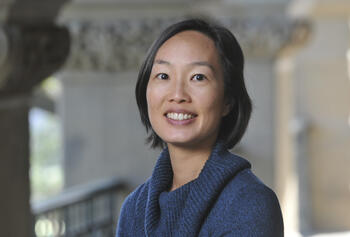
 Jean C. Oi, director of the Stanford China Program

Register here to secure your seat.
Related links:
China Daily Article on Zouping Research
Mackenzie Room
Jen-Hsun Huang Engineering Building, 3rd Floor
475 Via Ortega, Stanford, CA 94305
Charlotte Lee
Charlotte Lee was the associate director of the China Program at the Walter H. Shorenstein Asia-Pacific Research Center at Stanford University. Prior to that she was an assistant professor in the Department of Government at Hamilton College. From 2012-14, she was Minerva Chair in the Department of Political Science at the U.S. Air Force Academy. As Minerva Chair, she conducted research and briefings on issues in U.S.-China relations. In 2013, she was a visiting assistant professor at Stanford’s Shorenstein Asia-Pacific Research Center.
Her research on China has been published in peer-reviewed journals. She recently completed a book manuscript on reforms taking place in the Chinese Communist Party entitled Training the Party: Party Adaptation and Elite Training in Reform-Era China (forthcoming, Cambridge University Press).
She has taught classes on Chinese politics, international relations, geopolitics and comparative politics. She holds a doctorate and master’s degree in political science from Stanford, where she was an NSF Graduate Research Fellow. Her bachelor’s degree is in Asian studies and political economy from the University of California, Berkeley.
Jean C. Oi
Department of Political Science
Stanford University
616 Serra Street
Stanford, CA 94305-26044
Jean C. Oi is the William Haas Professor of Chinese Politics in the department of political science and a Senior Fellow of the Freeman Spogli Institute for International Studies at Stanford University. She is the founding director of the Stanford China Program at the Walter H. Shorenstein Asia-Pacific Research Center. Professor Oi is also the founding Lee Shau Kee Director of the Stanford Center at Peking University.
A PhD in political science from the University of Michigan, Oi first taught at Lehigh University and later in the Department of Government at Harvard University before joining the Stanford faculty in 1997.
Her work focuses on comparative politics, with special expertise on political economy and the process of reform in transitional systems. Oi has written extensively on China's rural politics and political economy. Her State and Peasant in Contemporary China (University of California Press, 1989) examined the core of rural politics in the Mao period—the struggle over the distribution of the grain harvest—and the clientelistic politics that ensued. Her Rural China Takes Off (University of California Press, 1999 and Choice Outstanding Academic Title, 1999) examines the property rights necessary for growth and coined the term “local state corporatism" to describe local-state-led growth that has been the cornerstone of China’s development model.
She has edited a number of conference volumes on key issues in China’s reforms. The first was Growing Pains: Tensions and Opportunity in China's Transformation (Brookings Institution Press, 2010), co-edited with Scott Rozelle and Xueguang Zhou, which examined the earlier phases of reform. Most recently, she co-edited with Thomas Fingar, Fateful Decisions: Choices That Will Shape China’s Future (Stanford University Press, 2020). The volume examines the difficult choices and tradeoffs that China leaders face after forty years of reform, when the economy has slowed and the population is aging, and with increasing demand for and costs of education, healthcare, elder care, and other social benefits.
Oi also works on the politics of corporate restructuring, with a focus on the incentives and institutional constraints of state actors. She has published three edited volumes related to this topic: one on China, Going Private in China: The Politics of Corporate Restructuring and System Reform (Shorenstein APARC, 2011); one on Korea, co-edited with Byung-Kook Kim and Eun Mee Kim, Adapt, Fragment, Transform: Corporate Restructuring and System Reform in Korea (Shorenstein APARC, 2012); and a third on Japan, Syncretism: The Politics of Economic Restructuring and System Reform in Japan, co-edited with Kenji E. Kushida and Kay Shimizu (Brookings Institution, 2013). Other more recent articles include “Creating Corporate Groups to Strengthen China’s State-Owned Enterprises,” with Zhang Xiaowen, in Kjeld Erik Brodsgard, ed., Globalization and Public Sector Reform in China (Routledge, 2014) and "Unpacking the Patterns of Corporate Restructuring during China's SOE Reform," co-authored with Xiaojun Li, Economic and Political Studies, Vol. 6, No. 2, 2018.
Oi continues her research on rural finance and local governance in China. She has done collaborative work with scholars in China, including conducting fieldwork on the organization of rural communities, the provision of public goods, and the fiscal pressures of rapid urbanization. This research is brought together in a co-edited volume, Challenges in the Process of China’s Urbanization (Brookings Institution Shorenstein APARC Series, 2017), with Karen Eggleston and Wang Yiming. Included in this volume is her “Institutional Challenges in Providing Affordable Housing in the People’s Republic of China,” with Niny Khor.
As a member of the research team who began studying in the late 1980s one county in China, Oi with Steven Goldstein provides a window on China’s dramatic change over the decades in Zouping Revisited: Adaptive Governance in a Chinese County (Stanford University Press, 2018). This volume assesses the later phases of reform and asks how this rural county has been able to manage governance with seemingly unchanged political institutions when the economy and society have transformed beyond recognition. The findings reveal a process of adaptive governance and institutional agility in the way that institutions actually operate, even as their outward appearances remain seemingly unchanged.
China’s Belt and Road Initiative
Learn moreFiscal Politics and Central-Local Relations in China
Learn moreStructural Change in China
Learn more
Andrew G. Walder
Shorenstein APARC
Stanford University
Encina Hall E301
Stanford, CA 94305-6055
Andrew G. Walder is the Denise O'Leary and Kent Thiry Professor at Stanford University, where he is also a senior fellow in the Freeman Spogli Institute for International Studies. Previously, he served as Chair of the Department of Sociology, Director of the Walter H. Shorenstein Asia-Pacific Research Center, and Head of the Division of International, Comparative and Area Studies in the School of Humanities and Sciences.
Walder has long specialized in the sources of conflict, stability, and change in communist regimes and their successor states. His publications on Mao-era China have ranged from the social and economic organization of that early period to the popular political mobilization of the late 1960s and the subsequent collapse and rebuilding of the Chinese party-state. His publications on post-Mao China have focused on the evolving pattern of stratification, social mobility, and inequality, with an emphasis on variation in the trajectories of post-state socialist systems. His current research is on the growth and evolution of China’s large modern corporations, both state and private, after the shift away from the Soviet-inspired command economy.
Walder joined the Stanford faculty in 1997. He received his Ph.D. in sociology at the University of Michigan in 1981 and taught at Columbia University before moving to Harvard in 1987. From 1995 to 1997, he headed the Division of Social Sciences at the Hong Kong University of Science and Technology.
Walder has received fellowships and grants from the Guggenheim Foundation, the National Science Foundation, the National Academy of Sciences, the Henry Luce Foundation, the Ford Foundation, the Social Science Research Council, and the Center for Advanced Study in the Behavioral Sciences. His books and articles have won awards from the American Sociological Association, the Association for Asian Studies, and the Social Science History Association. He is an elected member of the American Academy of Arts and Sciences.
His recent and forthcoming books include Fractured Rebellion: The Beijing Red Guard Movement (Harvard University Press, 2009); China Under Mao: A Revolution Derailed (Harvard University Press, 2015); Agents of Disorder: Inside China’s Cultural Revolution (Harvard University Press, 2019); and A Decade of Upheaval: The Cultural Revolution in Feng County (Princeton University Press, 2021) (with Dong Guoqiang); and Civil War in Guangxi: The Cultural Revolution on China’s Southern Periphery (Stanford University Press, 2023).
His recent articles include “After State Socialism: Political Origins of Transitional Recessions.” American Sociological Review 80, 2 (April 2015) (with Andrew Isaacson and Qinglian Lu); “The Dynamics of Collapse in an Authoritarian Regime: China in 1967.” American Journal of Sociology 122, 4 (January 2017) (with Qinglian Lu); “The Impact of Class Labels on Life Chances in China,” American Journal of Sociology 124, 4 (January 2019) (with Donald J. Treiman); and “Generating a Violent Insurgency: China’s Factional Warfare of 1967-1968.” American Journal of Sociology 126, 1 (July 2020) (with James Chu).