-


Image
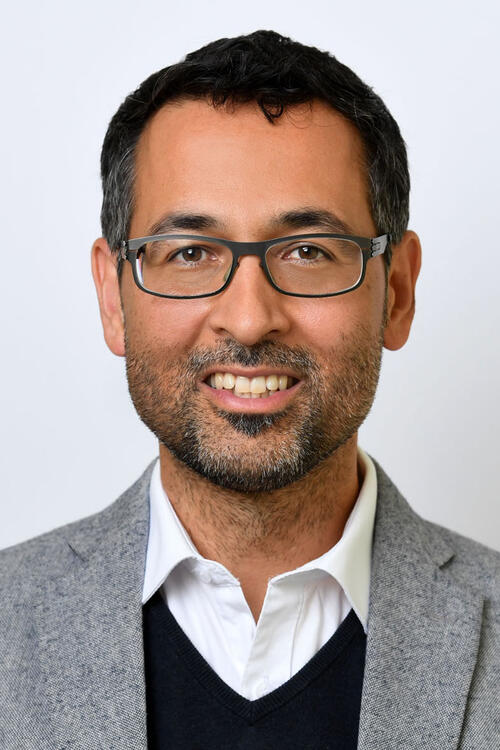
Matteo Renzi, former Prime Minister of Italy


Matteo Renzi was born in Florence in January 1975. In 2004 he was elected president of the province of Florence; five years later, in 2009, he was elected Mayor of Florence. In 2012 he ran in the primary elections for the centre-left, losing in the run-off. In 2013 he stood once again in the primaries, this time for leader of the Italian Democratic Party (Partito Democratico, PD), winning with 67.5% of the vote.

On February 22, 2014, following the resignation of Enrico Letta and after a vote by a large majority within the PD, he became President of the Council of Ministers (Prime Minister of Italy), the youngest in the history of Italy. After the negative result of the constitutional referendum on December 4, 2016, Matteo Renzi resigned as Prime Minister. 
 
In April 2017, almost two million voters took part in the primary elections for Secretary of the PD. Renzi was re-elected with 69% of the votes cast. Following the results of the Italian parliamentary election, in March 2018 he resigned as Leader of the PD.
 
Matteo Renzi is currently Senator for the Electoral College of Florence, Scandicci, Signa, Lastra a Signa and Impruneta. His activity as a politician has been accompanied by his writing, which includes the books Fuori! (2011), Stilnovo (2012), Oltre la rottamazione (2013), and Avanti! Perché l’Italia non si ferma (2017). He has also taught at Stanford's Florence campus in recent years. 
Matteo Renzi, former Prime Minister of Italy speaker
Lectures
-

Delphine Red Shirt is a lecturer at the Special Language Program of Stanford University.  She served as the Chairperson of the United Nations NGO Committee on the International Decade of the World's Indigenous People, and as the United Nations Representative for the Four Directions Council: International Indigenous Organization with access to the UN. She received her Master of Arts in Liberal Studies in Creative Writing from Wesleyan University and her Ph.D. from Arizona University. She is the author of Bead on an Anthill: A Lakota Childhood, Turtle Lung Woman’s Granddaughter, and George Sword's Warrior Narratives: Compositional Processes in Lakota Oral Tradition, which has been translated into Chinese for distribution in November 2018. Delphine is dedicated to the historical narrative and promotion of oral literature.

Registration:

http://web.stanford.edu/~lapli/delphineredshirt.fb


SCPKU, Peking University, 5 Yihueyuan Lu, Beijing, China 


DELPHINE RED SHIRT Lecturer, Special Language Program Speaker Stanford University
Hongbin Li James Liang Director, China Program, Stanford Center on Global Poverty and Development Chair Stanford University
Lectures
-

Sociologists have struggled to come up with systematic ways of thinking about, and defining, the important concept of taken for grantedness. It remains unclear what exactly gets taken for granted and what this means. A recent theoretical work, Concepts and Categories: Foundations for Sociological and Cultural Analysis, proposes a new approach tied closely to research on cognition. Hannan will discuss how the new line of research builds on a probabilistic notion of concepts, and how people use their concepts to form expectations about what kinds of features an instance of a concept is likely to have. He will also examine the use of concepts to make judgements about individual objects, whether an object is or is not an instance of the concept.

REGISTRATION LINK:     

http://web.stanford.edu/~lapli/michaelhannan.fb


SCPKU, Peking University, 5 Yiheyuan Lu, Beijing, China 

Michael T. Hannan Professor of Sociology, Emeritus Stanford University
Lectures
-

Olzak examines how different components of globalization affect the death toll from internal armed conflict. Conventional wisdom once held that the severity of internal conflict would gradually decline with the spread of globalization, but fatalities have remained high. Moreover, leading theories of civil war sharply disagree about how different aspects of globalization might affect the severity of ethnic and non-ethnic armed conflicts. Using arguments from a variety of social science perspectives on globalization, civil war, and ethnic conflict to guide the analysis. Olzak will discuss how economic globalization and cultural globalization significantly increase fatalities from ethnic conflicts, and the sociotechnical aspects of globalization which result in an increase of deaths from ethnic conflict but decrease deaths from non-ethnic conflict, and finally, regime corruption that increases fatalities from non-ethnic conflict, which supports explanations suggesting that the severity of armed conflict is greater in weak and corrupt state. Susan Olzak is Professor of Sociology at Stanford University, where she does research on armed conflict, ethnic violence, collective action, and social movement organizations.

REGISTRATION LINK:

http://web.stanford.edu/~lapli/suzanolzak.fb


SCPKU, Peking University, 5 Yiheyuan Lu, Beijing, China 


SUSAN OLZAK Professor of Sociology, Emerita Stanford University
Lectures
-

The paper that Mark Kayser will be presenting is co-authored by Matthias Orlowski (Humboldt University, Berlin) and Jochen Rehmert (Hertie School of Governance, Berlin).

Synopsis:  Policies are made with one eye cast to the future. As policy is most strongly influenced from within government, coalition inclusion prospects would seem predictive of the behavior of office- or policy-seeking parties. But, oddly, coalition models are poorly designed for empirical prediction. Most theoretical models rely predominantly on seat shares and ideological distance while empirical work tells us that other variables such as coalition history and anti-system parties matter as much; most empirical models predict coalition composition rather than individual parties’ coalition probabilities; neither calculate bargaining leverage between elections and neither test their predictions out of sample. We do. Combining empirical coalition formation models and a large set of political polls, we estimate coalition inclusion probabilities for parties in a sample of 20 parliamentary democracies at a monthly frequency over four decades. The probability of entering or remaining in an alternative government – i.e., bargaining leverage – serves as a strong predictor of party behavior, markedly superior to polls or expected seat shares. We demonstrate our measure’s utility with applications to no-confidence motions and financial policy reform.

Image
Photo of Mark Kayser, Hertie School of Governance, Berlin.

Mark Kayser teaches applied quantitative methods and comparative politics at the Hertie School of Governance in Berlin. His research generally centers on elections and political economy.  Current major projects focus on partisan responses to economic crisis, the electoral effects of media reporting of the economy, and the effect of electoral competitiveness on government responsiveness. Before coming to the Hertie School of Governance, he served as an Assistant Professor of Political Science at the University of Rochester.  He has also held a postdoctoral Prize Research Fellowship at Nuffield College, Oxford and will spend the 2018-19 academic year as a Fellow at the Center for Advanced Studies in the Behavioral Sciences (CASBS) at Stanford. He is the co-author of a book on the effect of electoral systems on regulation and price levels (Cambridge University Press, 2011) and the author or co-author of articles in the American Political Science Review, American Journal of Political Science, Political Analysis and other leading journals. He is a recipient of the 2013 GESIS/Klingemann research award, the 2007 best paper award from the APSA Section on European Politics and Society, the Senior Editor for Political Economy of the Oxford Research Encyclopdia and a member of several editorial boards.
Mark Kayser Professor of Applied Methods and Comparative Politics Speaker Hertie School of Governance, Berlin
Lectures

RSVP required by email to biancast@stanford.edu


This lecture is part of the French and Italian Department's Distiguised Lecture Series and will be conducted in French.

Co-sponsored by the Department of French and Italian and the Division of Literatures, Cultures, and Languages, the History Deprtment, the France-Stanford Center, the Center of Medieval and Modern Studies, and The Europe Center.

Building 260 (Pigott Hall)
Room 252

Patrick Boucheron Professor of History speaker Collège de France
Lectures
-

This event is full. Please email sj1874@stanford.edu to be placed on the Wait List.

To what extent do European citizens have a populist view of politics? Under what conditions are these populist attitudes more prevalent? What are their political consequences in terms of individual behavior? This talk will present an overview of the causes and consequences of populist attitudes in Europe using comparative and longitudinal survey data. The effect of economic conditions (both objective and perceived), emotional reactions of anger and fear, and internal political efficacy are explored. From our evidence populism is more related to sociotropic perceptions than to objective economic hardship, and to anger than to fear. Populist attitudes seem to be also powerful mobilisatory motivations for political engagement, particularly for people with low levels of income and education.

Eva Perea image


Eva Anduiza is professor of political science at the Universitat Autònoma de Barcelona where she is also ICREA Academia research fellow. She directs the research group on Democracy, Elections and Citizenship, and until recently she directed the Master in Political Science. She is currently 2018-19 Fellow at the Center for Advanced Study in the Behavioural Sciences at Stanford University.

Anduiza' s main areas of research deal with different aspects of citizens’ involvement in politics in advanced democracies. This includes an interest in the causes and consequences of electoral turnout, political protest, digital media and political attitudes. She is also interested in attitudes towards corruption and in survey and experimental methodology. Recently her research has focused on the attitudinal consequences of the economic crisis, with a special focus on populist attitudes. Her next project explores how individuals’ attitudes towards gender equality and feminism change over time.

Sponsored by the Global Populisms Project at The Europe Center

Sign up for The Europe Center's mailing list to hear about our upcoming events.


Eva Anduiza Speaker Universitat Autònoma de Barcelona
Lectures
-

Drell Lecture Recording: https://youtu.be/NKN6xLhTjIo


Drell Lecture Transcript: 


Speaker's Biography: Alex Stamos is a cybersecurity expert, business leader and entrepreneur working to improve the security and safety of the Internet through his teaching and research at Stanford University. Stamos is an Adjunct Professor at Stanford’s Freeman-Spogli Institute, a William J. Perry Fellow at the Center for International Security and Cooperation, and a visiting scholar at the Hoover Institution. As a Chief Security Officer at Facebook and Yahoo and a co-founder of iSEC Partners, Alex has investigated and responded to some of the most seminal events in the short history of cybersecurity, and has been called the “Forrest Gump of Info Sec” by friends. He is working on election security via the Defending Digital Democracy Project and advising NATO’s Cybersecurity Center of Excellence. He has spoken on six continents, testified in Congress, served as an expert witness for the wrongly accused, earned a BSEE from UC Berkeley and holds five patents.

Hauck Auditorium, David & Joan Traitel Building, Hoover Institution

435 Lasuen Mall, Stanford University


Alex Stamos Adjunct Professor, William J. Perry Fellow, Visiting Scholar (Hoover Institution) Stanford University
Lectures
-

On November 24, 2018, Taiwan's electorate will go to the polls to select thousands of ward chiefs, hundreds of council members, and dozens of mayors and county executives. This talk will cover the results of the election and discuss the implications for Taiwan's future, including party politics and cross-Strait relations.

Image
Kharis Templeman
Kharis Templeman is the Project Manager of the Taiwan Democracy and Security Project in the U.S.-Asia Security Initiative, and a social science research scholar at the Shorenstein Asia-Pacific Research Center (APARC) at Stanford University. His current research includes projects on party system institutionalization and partisan realignments, electoral integrity and manipulation in East Asia, the politics of defense spending in Taiwan, and the representation of Taiwan’s indigenous minorities.
 
His most recent publication is “When Do Electoral Quotas Advance Indigenous Representation?: Evidence from the Taiwanese Legislature,” in Ethnopolitics. He is also the editor (with Larry Diamond and Yun-han Chu) of Taiwan’s Democracy Challenged: The Chen Shui-bian Years (2016, Lynne Rienner Publishing). Other work has appeared in the Taiwan Journal of Democracy, Comparative Political Studies and APSA Annals of Comparative Democratization.
 

Philippines Conference Room
Encina Hall, 3rd Floor
616 Serra Mall, Stanford, CA 94305

Kharis Templeman <i>Project Manager, Taiwan Democracy & Security Project, U.S.-Asia Security Initiative, Stanford University</i>
Lectures
-
The Taiwan Relations Act (TRA) was enacted by Congress on April 10, 1979, and has served as the formal basis for U.S.-Taiwan relations ever since. In this talk, Professor Goldstein will provide an assessment of the TRA’s influence on America’s foreign policy in Asia as we approach the 40th anniversary of its adoption.
 
SPEAKER:
Image
Photograph of Steven M. Goldstein
Steven M. Goldstein was the Sophia Smith Professor of Government at Smith College from 1968 to 2016. He is now an Associate of the Fairbank Center and the director of the Taiwan Studies Workshop at Harvard University. He has been a visiting faculty member at the Fletcher School of Law and Diplomacy, Columbia University and United States Naval War College. Goldstein's research interest has been largely related to issues of Chinese domestic and foreign policy. He has published studies of Sino-American relations; Sino-Soviet relations; and the emergence of a Chinese Communist view of world affairs. His current research focus is on the relations between the mainland and Taiwan as well as the evolution of U.S.-Taiwan relations.

Philippines Conference Room
Encina Hall, 3rd Floor
616 Serra Mall, Stanford, CA 94305

Steven M. Goldstein <i>Director of the Taiwan Workshop at the Fairbank Center, Harvard University</i>
Lectures
Subscribe to Lectures