This event is part of Shorenstein APARC's winter webinar series "Asian Politics and Policy in a Time of Uncertainty."
In the 2010s, amid signs of rising illiberalism around the world, Indonesia seemed exceptional—an established democracy bucking the trend. In 2019, however, at a conference in Canberra, experts on Indonesia from Australia, Asia, and the United States argued otherwise. Their variously skeptical views were recently published in a book alarmingly entitled Democracy in Indonesia: From Stagnation to Recession? In this webinar, a co-editor of the volume will discuss its subtitle with an analyst of Indonesian politics who did not contribute to the book.
Panelists:
Image
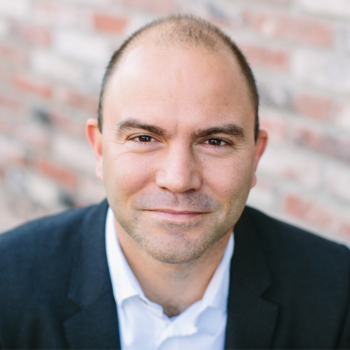
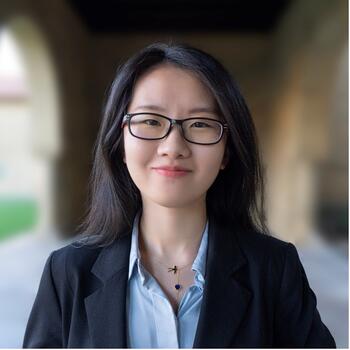
Eve Warburton is a Postdoctoral Fellow in the Asia Research Institute at the National University of Singapore. Her research interests include democratic representation, identity, and the political economy of policymaking in young democracies, with a focus on Southeast Asia and especially Indonesia. In addition to Democracy in Indonesia (2020), her work has appeared in the Bulletin of Indonesian Economic Studies, Contemporary Southeast Asia, Democratization, Electoral Studies, Pacific Affairs, the Journal of East Asian Studies, and as chapters in several books. She is currently working on her first book manuscript, Reclaiming What's Ours: The Business and Politics of Resource Nationalism in Indonesia. She received her doctorate in international studies from the Australian National University’s Coral Bell School of Asia and Pacific Affairs in 2018. Her master’s and undergraduate degrees are respectively from Columbia University and the University of Sydney.
Image
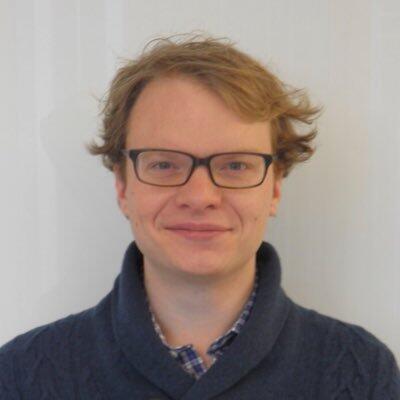
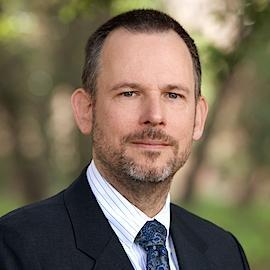
Tom Pepinsky is Tisch University Professor in the Department of Government at Cornell University and a Nonresident Senior Fellow at the Brookings Institution. His fields are comparative politics and international political economy, with a focus on emerging markets and a special interest in Southeast Asia. His work on Indonesia includes, as co-editor, Piety and Public Opinion: Understanding Indonesian Islam (2018). He has been published in the American Journal of Political Science, the Journal of Democracy, Perspectives on Politics, and World Politics, among other venues, including an online platform, New Mandala: New Perspectives on Southeast Asia. He is an active co-founder of the Southeast Asia Research Group (seareg.org), which showcases new research by young scholars on Southeast Asian politics, and he serves on the steering committee of the Association for Analytical Learning on Islam and Muslim Societies (aalims.org). His PhD in political science is from Yale University.
Southeast Asia Program Director Don Emmerson, who has also worked on Indonesia, will moderate the discussion.
Eve Warburton
Postdoctoral Fellow in the Asia Research Institute, the National University of Singapore.
Tom Pepinsky
Tisch University Professor in the Department of Government, Cornell University and a Nonresident Senior Fellow, the Brookings Institution.
A new administration and Congress provide a key opportunity to improve US cybersecurity and the governance of digital technologies. Yet the challenges appear daunting: viral disinformation, widespread privacy violations, algorithms biased by race, class and gender, ransomware running rampant, and unprecedented tech company scale and market dominance. Additionally, the US faces a persistent deficit in skilled cybersecurity workers, a lack of diversity in the field, and a public with wildly unequal broadband internet access. Meanwhile, competition among governance regimes, specifically between the United States, Europe and China, has raised the stakes over whether democracies or authoritarian governments will set the rules for the internet. The policy choices made by the new administration will play a pivotal role in shaping our global future. On February 24 at 10am PST, join Kelly Born and Marietje Schaake of Stanford’s Cyber Policy Center, Michael Daniel of the Aspen Institute’s Cyber Group, and Karen Kornbluh for the German Marshall Fund to discuss cyber policy priorities for the new administration.
Marietje Schaake is a non-resident Fellow at Stanford’s Cyber Policy Center and at the Institute for Human-Centered AI. She is a columnist for the Financial Times and serves on a number of not-for-profit Boards as well as the UN's High Level Advisory Body on AI. Between 2009-2019 she served as a Member of European Parliament where she worked on trade-, foreign- and tech policy. She is the author of The Tech Coup.
Non-Resident Fellow, Cyber Policy Center
Fellow, Institute for Human-Centered Artificial Intelligence
This event is part of Shorenstein APARC's winter webinar series "Asian Politics and Policy in a Time of Uncertainty."
Event Time Zones:
4:00pm-5:00pm California, 2 February 2021
7:00pm-8:00pm Washington DC, 2 February 2021
5:00am-6:00am Pakistan, 3 February 2021
11:00am-12:00pm Sydney, Australia 3 February 2021
To what extent will Pakistan’s multiple crises of governance and security change the way the country is governed? Several ongoing crises confront the government that is officially led by Prime Minister Imran Khan, but dominated by the Army. A new erstwhile coalition of opposition political parties, known as the Pakistan Democratic Movement, reflects a groundswell of resistance to the government’s increasingly undemocratic and repressive agenda. Meanwhile, the government must continue to manage the public health and economic effects of the pandemic, and constantly recalibrate its approach to anti-state insurgents and state-aligned terrorists. This webinar will consider whether these and other challenges prod the Army to rethink how it exercises political power and manages its security policies. It will also explore how the new Biden Administration should, in light of these crises, reset U.S. policy towards Pakistan and its neighbors.
Speakers:
Afzal2
Dr. Madiha Afzal is a David M. Rubenstein Fellow at the Brookings Institution. Her research lies at the intersection of political economy, development, and security, with a focus on Pakistan. She previously worked as an assistant professor of public policy at the University of Maryland, College Park. Afzal is the author of Pakistan Under Siege: Extremism, Society, and the State. In addition, she writes for publications including Foreign Affairs, Foreign Policy, the Washington Post, Dawn, and Newsweek, and is regularly interviewed by media outlets including BBC, NPR, and PBS. In addition, she has consulted for international organizations including the World Bank and UK’s Department for International Development. Afzal received her doctorate in economics from Yale University in 2008, specializing in development economics and political economy.
Image
Dr. Rabia Akhtar is Director, Centre for Security, Strategy and Policy Research, University of Lahore. She is the founding director of the School of Integrated Social Sciences at University of Lahore, Pakistan. Dr. Akhtar is a member of the Prime Minister’s Advisory Council on Foreign Affairs. She is a Nonresident Senior Fellow at the South Asia Center, Atlantic Council, Washington DC. Dr. Akhtar holds a PhD in Security Studies from Kansas State University. She is a Fulbright alumna (2010-2015). She has written extensively on South Asian nuclear security and deterrence dynamics. She is the author of a book titled The Blind Eye: U.S. Non-proliferation Policy Towards Pakistan from Ford to Clinton. Dr. Akhtar is also the Editor of Pakistan Politico, Pakistan’s first strategic and foreign affairs magazine.
Image
Ms. Elizabeth Threlkeld is a Senior Fellow and Deputy Director of the South Asia Program at the Stimson Center. Her research interests include South Asian geopolitics, crisis decision-making, and ethno-nationalist conflict. Before joining Stimson, she served as a Foreign Service Officer with the U.S. Department of State in Islamabad and Peshawar, Pakistan, and Monterrey, Mexico. Threlkeld previously worked in the Kurdish region of northern Iraq, where she managed development interventions on gender-based violence and ethno-sectarian reconciliation. She has additional work and educational experience in China, Taiwan, and Turkey, and began her career with the Center for a New American Security. Threlkeld holds an MPhil in Politics and International Relations from the University of Cambridge, and speaks Pashto, Mandarin, and Spanish.
Moderator:
Image
Dr. Arzan Tarapore is the South Asia research scholar at the Shorenstein Asia-Pacific Research Center at Stanford University, where he leads the newly-restarted South Asia research initiative. He is also a senior nonresident fellow at the National Bureau of Asian Research. His research focuses on Indian military strategy and contemporary Indo-Pacific security issues. He previously held research positions at the RAND Corporation, the Observer Research Foundation, and the East-West Center in Washington. Prior to his scholarly career, he served as an analyst in the Australian Defence Department, which included operational deployments as well as a diplomatic posting to Washington, DC. Tarapore holds a PhD in war studies from King’s College London.
To mark the 10-year anniversary of Egypt’s January 25 Uprising and the ouster of Hosni Mubarak, this panel examines the trajectory of authoritarianism in the country over the past decade. The panelists reflect on a variety questions including: How have political developments in Egypt and elsewhere in recent years informed our understanding of the January 25 Uprising and its significance? In what ways have authoritarian institutions adapted in the aftermath of the 2011 uprising and how have they shaped the prospects for political change and/or stability? Where are the sites of political contestation and resistance in today’s Egypt?
SPEAKERS BIOS
Image
Joel Beinin is the Donald J. McLachlan Professor of History and Professor of Middle East History, Emeritus at Stanford University. From 2006 to 2008 he served as Director of Middle East Studies and Professor of History at the American University in Cairo. In 2002 he served as president of the Middle East Studies Association of North America. Beinin’s research and writing focus on the social and cultural history and political economy of modern Egypt, Palestine, and Israel and on US policy in the Middle East. He has written or edited twelve books, most recently A Critical Political Economy of the Middle East and North Africa (Stanford University Press, 2020), co-edited with Bassam Haddad and Sherene Seikaly; Workers and Thieves: Labor Movements and Popular Uprisings in Tunisia and Egypt (Stanford University Press, 2015); and Social Movements, Mobilization, and Contestation in the Middle East and North Africa, 2nd edition (Stanford University Press, 2013) co-edited with Frédéric Vairel.
Image
Amr Hamzawy is currently a senior research scholar at the Center on Democracy, Development, and the Rule of Law at Stanford University. He studied political science and developmental studies in Cairo, The Hague, and Berlin. He was previously an associate professor of political science at Cairo University and a professor of public policy at the American University in Cairo. Between 2016 and 2017, he served as a senior fellow in the Middle East program and the Democracy and Rule of Law program at the Carnegie Endowment for International Peace, Washington, DC. His research and teaching interests as well as his academic publications focus on democratization processes in Egypt, tensions between freedom and repression in the Egyptian public space, political movements and civil society in Egypt, contemporary debates in Arab political thought, and human rights and governance in the Arab world. His new book On The Habits of Neoauthoritarianism – Politics in Egypt Between 2013 and 2019 appeared in Arabic in September 2019. Hamzawy is a former member of the People’s Assembly after being elected in the first Parliamentary elections in Egypt after the January 25, 2011 revolution. He is also a former member of the Egyptian National Council for Human Rights. Hamzawy contributes a weekly op-ed to the All Arab daily al-Quds al-Arabi.
Image
Nancy Okail is a visiting scholar at CDDRL. She has 20 years of experience working on issues of democracy, rule of law, human rights, governance and security in the Middle East and North Africa region. She analyzes these issues and advocates in favor of human rights through testimony to legislative bodies, providing policy recommendations to senior government officials in the U.S. and Europe. She is currently the president of the board of advisors of The Tahrir Institue for Middle East Policy (TIMEP), previously she was the Institute’s executive director since its foundation. Dr. Okail was the director of Freedom House’s Egypt program. She has also worked with the Egyptian government as a senior evaluation officer of foreign aid and managed programs for several international organizations. Dr. Okail was one of the 43 nongovernmental organization workers convicted and sentenced to prison in a widely publicized 2012 case for allegedly using foreign funds to foment unrest in Egypt. She holds a Ph.D. from the University of Sussex in the UK; her doctoral research focused on the power relations of foreign aid.
Amr Hamzawy is the director of the Carnegie Middle East Program. He studied political science and developmental studies in Cairo, The Hague, and Berlin. He was previously an associate professor of political science at Cairo University and a professor of public policy at the American University in Cairo.
His research and teaching interests as well as his academic publications focus on democratization processes in Egypt, tensions between freedom and repression in the Egyptian public space, political movements and civil society in Egypt, contemporary debates in Arab political thought, and human rights and governance in the Arab world. His new book On The Habits of Neoauthoritarianism – Politics in Egypt Between 2013 and 2019 appeared in Arabic in September 2019.
Hamzawy is a former member of the People’s Assembly after being elected in the first Parliamentary elections in Egypt after the January 25, 2011 revolution. He is also a former member of the Egyptian National Council for Human Rights. Hamzawy contributes a weekly op-ed to the Arab daily al-Quds al-Arabi.
About the Event: The Trump Presidency has changed transatlantic security relations permanently and fundamentally. Former UK Ambassador to NATO Sir Adam Thomson, currently Director of the European Leadership Network, will look at the implications for relations between NATO and the European Union at the start of President Biden’s term. Although some progress on NATO-EU cooperation has been made in the past few years, it was in the shadow of the challenges that Trump posed to both organizations. Washington and America’s European allies and partners will need to repair the damage to the transatlantic relationship and take a new approach to working together.
About the Speaker: Sir Adam Thomson has been the Director of the European Leadership Network since 2016. The ELN is an independent, non-partisan, network of leaders from all across the continent dedicated to a safer Europe.
Adam had a 38 year diplomatic career in the British Diplomatic Service. His final posting was as the UK Ambassador to NATO 2014 - 2016. From 2010 Adam served as British High Commissioner to Pakistan and between 2002 and 2006 he was British Ambassador and Deputy Permanent Representative to the United Nations in New York. Other postings included Moscow (1981-3), NATO (1983-6) and Washington DC (1991-5). He headed the Foreign Office’s Security Policy Department 1998 – 2002.
Virtual Seminar
Adam Thomson
Director
The European Leadership Network
An assessment of Russia that suggests that we should look beyond traditional means of power to understand its strength and capacity to disrupt international politics.
Too often, we are told that Russia plays a weak hand well. But, perhaps the nation's cards are better than we know. Russia ranks significantly behind the US and China by traditional measures of power: GDP, population size and health, and military might. Yet 25 years removed from its mid-1990s nadir following the collapse of the USSR, Russia has become a supremely disruptive force in world politics. Kathryn E. Stoner assesses the resurrection of Russia and argues that we should look beyond traditional means of power to assess its strength in global affairs. Taking into account how Russian domestic politics under Vladimir Putin influence its foreign policy, Stoner explains how Russia has battled its way back to international prominence.
From Russia's seizure of the Crimea from Ukraine to its military support for the Assad regime in Syria, the country has reasserted itself as a major global power. Stoner examines these developments and more in tackling the big questions about Russia's turnaround and global future. Stoner marshals data on Russia's political, economic, and social development and uncovers key insights from its domestic politics. Russian people are wealthier than the Chinese, debt is low, and fiscal policy is good despite sanctions and the volatile global economy. Vladimir Putin's autocratic regime faces virtually no organized domestic opposition. Yet, mindful of maintaining control at home, Russia under Putin also uses its varied power capacities to extend its influence abroad. While we often underestimate Russia's global influence, the consequences are evident in the disruption of politics in the US, Syria, and Venezuela, to name a few. Russia Resurrected is an eye-opening reassessment of the country, identifying the actual sources of its power in international politics and why it has been able to redefine the post-Cold War global order.
FSI
Stanford University
Encina Hall C140
Stanford, CA 94305-6055
(650) 736-1820
(650) 724-2996
0
kstoner@stanford.edu
Satre Family Senior Fellow, Freeman Spogli Institute for International Studies
kathryn_stoner_1_2022_v2.jpg
MA, PhD
Kathryn Stoner is the Mosbacher Director of the Center on Democracy, Development, and the Rule of Law (CDDRL), and a Senior Fellow at CDDRL and the Center on International Security and Cooperation at FSI. From 2017 to 2021, she served as FSI's Deputy Director. She is Professor of Political Science (by courtesy) at Stanford and she teaches in the Department of Political Science, and in the Program on International Relations, as well as in the Ford Dorsey Master's in International Policy Program. She is also a Senior Fellow (by courtesy) at the Hoover Institution.
Prior to coming to Stanford in 2004, she was on the faculty at Princeton University for nine years, jointly appointed to the Department of Politics and the Princeton School for International and Public Affairs (formerly the Woodrow Wilson School). At Princeton she received the Ralph O. Glendinning Preceptorship awarded to outstanding junior faculty. She also served as a Visiting Associate Professor of Political Science at Columbia University, and an Assistant Professor of Political Science at McGill University. She has held fellowships at Harvard University as well as the Woodrow Wilson Center in Washington, DC.
In addition to many articles and book chapters on contemporary Russia, she is the author or co-editor of six books: "Transitions to Democracy: A Comparative Perspective," written and edited with Michael A. McFaul (Johns Hopkins 2013); "Autocracy and Democracy in the Post-Communist World," co-edited with Valerie Bunce and Michael A. McFaul (Cambridge, 2010); "Resisting the State: Reform and Retrenchment in Post-Soviet Russia" (Cambridge, 2006); "After the Collapse of Communism: Comparative Lessons of Transitions" (Cambridge, 2004), coedited with Michael McFaul; and "Local Heroes: The Political Economy of Russian Regional" Governance (Princeton, 1997); and "Russia Resurrected: Its Power and Purpose in a New Global Order" (Oxford University Press, 2021).
She received a BA (1988) and MA (1989) in Political Science from the University of Toronto, and a PhD in Government from Harvard University (1995). In 2016 she was awarded an honorary doctorate from Iliad State University, Tbilisi, Republic of Georgia.
Encina Hall
616 Jane Stanford Way
Stanford, CA 94305-6055
0
Senior Fellow, Freeman Spogli Institute for International Studies
Ken Olivier and Angela Nomellini Professor of International Studies, Department of Political Science
Peter and Helen Bing Senior Fellow, Hoover Institution
mcfaul_headshot_2025.jpg
PhD
Michael McFaul is the Ken Olivier and Angela Nomellini Professor of International Studies in Political Science, Senior Fellow at the Freeman Spogli Institute for International Studies, and the Peter and Helen Bing Senior Fellow at the Hoover Institution, all at Stanford University. He joined the Stanford faculty in 1995 and served as FSI Director from 2015 to 2025. He is also an international affairs analyst for MSNOW.
McFaul served for five years in the Obama administration, first as Special Assistant to the President and Senior Director for Russian and Eurasian Affairs at the National Security Council at the White House (2009-2012), and then as U.S. Ambassador to the Russian Federation (2012-2014).
He is a recipient of numerous awards, including an honorary PhD from Montana State University; the Order for Merits to Lithuania from President Gitanas Nausea of Lithuania; Order of Merit of Third Degree from President Volodymyr Zelenskyy of Ukraine, and the Dean’s Award for Distinguished Teaching at Stanford University. In 2015, he was the Distinguished Mingde Faculty Fellow at the Stanford Center at Peking University.
McFaul was born and raised in Montana. He received his B.A. in International Relations and Slavic Languages and his M.A. in Soviet and East European Studies from Stanford University in 1986. As a Rhodes Scholar, he completed his D. Phil. in International Relations at Oxford University in 1991.
International Working Group on Russian Sanctions
The International Working Group on Russian Sanctions aims to provide expertise and experience to governments and companies around the world by assisting with the formulation of sanctions proposals that will increase the cost to Russia of invading Ukraine, and support democratic Ukraine in the defense of its territorial integrity and national sovereignty.
Moderator
<i>Director at the Freeman Spogli Institute for International Studies, Professor, Political Science Senior Fellow, Hoover Institution, Stanford University</i>
About the Event: This paper addresses a single question: What explains the lack of civil war recurrence in El Salvador since the 1992 Chapultepec Accords? This lack of recurrence presents a unique puzzle given the fact that the civil war’s underlying causes remain unresolved. A well-established body of scholarship has identified a host of variables critical in explaining civil war recurrence, but much less ink has been spilled to explain non-recurrence. As such, I examine the factors identified in scholarship to be correlated with civil war recurrence to determine what they might tell us about civil war non-recurrence. I argue that the civil war non-recurrence in El Salvador rests not only on the durability of the agreement’s coercive/military and political provisions but also on the rebel group’s organizational design. To test this argument, I process trace along the recurrence variables and find support for my argument.
About the Speaker: Meg K. Guliford is a Penn Provost Postdoctoral Fellow in residence at Perry World House. Her broad research agenda reflects an interest in political violence, conflict processes, and U.S. foreign policy. Her research has been supported by the U.S. Institute of Peace and the Eisenhower Institute. Guliford’s career in the federal government began as a Presidential Management Fellow for the U.S. Marine Corps Headquarters and has included a civilian deployment to Iraq and work for the Institute for Defense Analyses and the Under Secretary of Defense for Intelligence. Guliford will receive her Ph.D. in International Relations from Tufts University’s Fletcher School of Law and Diplomacy. She received her M.P.P. from the Harvard Kennedy School and a B.A. from the University of Pennsylvania.
Virtual Seminar
Meg K. Guliford
Provost Postdoctoral Fellow
University of Pennsylvania
This is a virtual event. Please click here to register and generate a link to the talk.
The link will be unique to you; please save it and do not share with others.
Since the death of Mao Zedong in 1976, the Communist Party of China (CCP) has been vexed by a simple question: What is it fighting for? As the country began to adopt market reforms in the 1980s and 1990s, CCP theorists were forced into contortions providing ideological justifications for policies that appeared overtly capitalist. Deng Xiaoping’s concept of “Socialism with Chinese characteristics” came to be seen as a theoretical fig leaf rather than a description of an egalitarian economic system, and by the 2000s, a consensus emerged that the CCP had completely abandoned any pretense of pursuing the Marxist vision it purported to hold. With the rise of Xi Jinping, however, the Party talks with renewed vigor about Marxism-Leninism and the goal of achieving actual, existing socialism. Has the CCP re-discovered communism? In this talk, CSIS Freeman Chair in China Studies Jude Blanchette will discuss the abandoned and existing legacies of Mao Zedong, Marxism-Leninism, and the CCP’s vision of socialism.
Image
Jude Blanchette holds the Freeman Chair in China Studies at the Center for Strategic and International Studies (CSIS). Previously, he was engagement director at The Conference Board’s China Center for Economics and Business in Beijing, where he researched China’s political environment with a focus on the workings of the Communist Party of China and its impact on foreign companies and investors. Prior to working at The Conference Board, Blanchette was the assistant director of the 21st Century China Center at the University of California, San Diego. Blanchette has written for a range of publications, including Foreign Affairs and Foreign Policy, and his Chinese translations have appeared in the Wall Street Journal and the Financial Times. His book, China’s New Red Guards: The Return of Radicalism and the Rebirth of Mao Zedong, was published by Oxford University Press in 2019.
Social media and digital technologies have come under fire for their contribution to the development of the groups that ultimately stormed the U.S. Capitol on January 6. Following the insurrection attempt, Facebook, Twitter, Google and other major platforms have banned or suspended President Trump’s accounts. Google and Apple removed Parler from their app stores, while Amazon removed the site from its cloud hosting service, putting an indefinite end to Parler’s reach. This panel will discuss the role of social media during the Trump presidency, including the role of platform policies in fomenting or responding to the recent violence, the benefits and risks posed by steps subsequently taken, and what this means for the future of speech online.
Panelists include:
Nate Persily, faculty co-director of the Stanford Cyber Policy Center, director of the Center’s Program on Democracy and the Internet, and Professor at Stanford Law School
Daphne Keller, Director of the Cyber Policy Center’s Program on Platform Regulation
Alex Stamos, Director of the Cyber Policy Center’s Internet Observatory
Renee DiResta, Research Manager at the Cyber Policy Center’s Internet Observatory
Moderated by Kelly Born, Executive Director of the Cyber Policy Center
Renée DiResta is the former Research Manager at the Stanford Internet Observatory. She investigates the spread of malign narratives across social networks, and assists policymakers in understanding and responding to the problem. She has advised Congress, the State Department, and other academic, civic, and business organizations, and has studied disinformation and computational propaganda in the context of pseudoscience conspiracies, terrorism, and state-sponsored information warfare.
You can see a full list of Renée's writing and speeches on her website: www.reneediresta.com or follow her @noupside.
Former Research Manager, Stanford Internet Observatory
Daphne Keller is the Director of Platform Regulation at the Stanford Program in Law, Science, & Technology. Her academic, policy, and popular press writing focuses on platform regulation and Internet users'; rights in the U.S., EU, and around the world. Her recent work has focused on platform transparency, data collection for artificial intelligence, interoperability models, and “must-carry” obligations. She has testified before legislatures, courts, and regulatory bodies around the world on topics ranging from the practical realities of content moderation to copyright and data protection. She was previously Associate General Counsel for Google, where she had responsibility for the company’s web search products. She is a graduate of Yale Law School, Brown University, and Head Start.
Stanford Law School
Neukom Building, Room N230
Stanford, CA 94305
650-725-9875
0
npersily@law.stanford.edu
James B. McClatchy Professor of Law at Stanford Law School
Senior Fellow, Freeman Spogli Institute
Professor, by courtesy, Political Science
Professor, by courtesy, Communication
headshot_3.jpg
Nathaniel Persily is the James B. McClatchy Professor of Law at Stanford Law School, with appointments in the departments of Political Science, Communication, and FSI. Prior to joining Stanford, Professor Persily taught at Columbia and the University of Pennsylvania Law School, and as a visiting professor at Harvard, NYU, Princeton, the University of Amsterdam, and the University of Melbourne. Professor Persily’s scholarship and legal practice focus on American election law or what is sometimes called the “law of democracy,” which addresses issues such as voting rights, political parties, campaign finance, redistricting, and election administration. He has served as a special master or court-appointed expert to craft congressional or legislative districting plans for Georgia, Maryland, Connecticut, New York, North Carolina, and Pennsylvania. He also served as the Senior Research Director for the Presidential Commission on Election Administration. In addition to dozens of articles (many of which have been cited by the Supreme Court) on the legal regulation of political parties, issues surrounding the census and redistricting process, voting rights, and campaign finance reform, Professor Persily is coauthor of the leading election law casebook, The Law of Democracy (Foundation Press, 5th ed., 2016), with Samuel Issacharoff, Pamela Karlan, and Richard Pildes. His current work, for which he has been honored as a Guggenheim Fellow, Andrew Carnegie Fellow, and a Fellow at the Center for Advanced Study in the Behavioral Sciences, examines the impact of changing technology on political communication, campaigns, and election administration. He is codirector of the Stanford Program on Democracy and the Internet, and Social Science One, a project to make available to the world’s research community privacy-protected Facebook data to study the impact of social media on democracy. He is also a member of the American Academy of Arts and Sciences, and a commissioner on the Kofi Annan Commission on Elections and Democracy in the Digital Age. Along with Professor Charles Stewart III, he recently founded HealthyElections.Org (the Stanford-MIT Healthy Elections Project) which aims to support local election officials in taking the necessary steps during the COVID-19 pandemic to provide safe voting options for the 2020 election. He received a B.A. and M.A. in political science from Yale (1992); a J.D. from Stanford (1998) where he was President of the Stanford Law Review, and a Ph.D. in political science from U.C. Berkeley in 2002.
This is a virtual event. Please click here to register and generate a link to the talk.
The link will be unique to you; please save it and do not share with others.
As US-China competition intensifies, experts debate the degree to which the current strategic environment resembles that of the Cold War. Those that argue against the analogy often highlight how China is deeply integrated into the US-led world order. They also point out that, while tense, US-China relations have not turned overtly adversarial. But there is another, less optimistic reason the comparison is unhelpful: deterring and defeating Chinese aggression is harder now than it was against the Soviet Union. In this talk, Dr. Mastro analyzes how technology, geography, relative resources and the alliance system complicate U.S. efforts to enhance the credibility of its deterrence posture and, in a crisis, form any sort of coalition.
Oriana Skylar Mastro is a Center Fellow at Stanford University’s Freeman Spogli Institute for International Studies (FSI). Within FSI, she works primarily in the Shorenstein Asia-Pacific Research Center (APARC) and the Center for International Security and Cooperation (CISAC) as well. She is also a fellow in Foreign and Defense Policy Studies at the American Enterprise Institute and an inaugural Wilson Center China Fellow.
Mastro is an international security expert with a focus on Chinese military and security policy issues, Asia-Pacific security issues, war termination, and coercive diplomacy. Her research addresses critical questions at the intersection of interstate conflict, great power relations, and the challenge of rising powers. She has published widely, including in Foreign Affairs, International Security, International Studies Review, Journal of Strategic Studies, The Washington Quarterly, The National Interest, Survival, and Asian Security, and is the author of The Costs of Conversation: Obstacles to Peace Talks in Wartime(Cornell University Press, 2019).
She also continues to serve in the United States Air Force Reserve, for which she works as a Strategic Planner at INDOPACOM. Prior to her appointment at Stanford in August 2020, Mastro was an assistant professor of security studies at the Edmund A. Walsh School of Foreign Service at Georgetown University. She holds a B.A. in East Asian Studies from Stanford University and an M.A. and Ph.D. in Politics from Princeton University.