-

For Fall Quarter 2021, FSI will be hosting hybrid events. Many events will be open to the public online via Zoom, and limited-capacity in-person attendance for Stanford affiliates may be available in accordance with Stanford’s health and safety guidelines.

                                                Register for Zoom                                                         Register for In-Person
                                                           (Open to all)                                                                    (Stanford affiliates only)              


Why is democracy so threatened in America and around the world? And what can we do about it? Join Ben Rhodes to explore the answers to these questions and discuss his recent book, After the Fall.

Image
Ben Rhodes

In 2017, as Ben Rhodes was helping Barack Obama begin his next chapter, the legacy they had worked to build for eight years was being taken apart. To understand what was happening in America, Rhodes decided to look outward. Over the next three years, he traveled to dozens of countries, meeting with politicians, activists, and dissidents confronting the same nationalism and authoritarianism that was tearing America apart. Part memoir and part reportage, After the Fall investigates how much America’s fingerprints are on a world we helped to shape, through our post–Cold War embrace of unbridled capitalism and our post-9/11 nationalism and militarism; our mania for technology and social media; and the racism that fueled the backlash to America’s first Black president. At the same time, Rhodes learns from stories of a diverse set of characters—from Barack Obama himself to Cuban rebels to a rising generation of international leaders—that looking squarely at where America has gone wrong makes clear how essential it is to fight for what America is supposed to be, for our own country and the entire world.

Ben Rhodes is a writer, political commentator, and national security analyst. He is currently a contributor for NBC News and MSNBC; co-host of Pod Save the World; a senior advisor to former President Barack Obama; and chair of National Security Action, which he co-founded with Jake Sullivan in 2018. From 2009-2017, Ben served as a Deputy National Security Advisor to President Obama. In that capacity, he participated in all of President Obama’s key decisions, and oversaw the President’s national security communications, speechwriting, and public diplomacy.

Writer, political commentator, and national security analyst
Ben Rhodes | Writer, political commentator, and national security analyst
Seminars
-

This is a virtual event. Please click here to register and generate a link to the talk. 
The link will be unique to you; please save it and do not share with others.

Co-sponsored by the Stanford Center at Peking University.

In honor of its release, contributors Mary Bullock, Thomas Fingar, and David M. Lampton will join editor Anne Thurston for a panel discussion of their volume Engaging China: Fifty Years of Sino-American Relations (Columbia University Press, 2021).

Recent years have seen the U.S.-China relationship rapidly deteriorate. Engaging China brings together leading China specialists—ranging from academics to NGO leaders to former government officials—to analyze the past, present, and future of U.S.-China relations. Bullock, Fingar, Lampton, and Thurston will reflect upon the complex and multifaceted nature of American engagement with China since the waning days of Mao’s rule. What initially motivated U.S.’ rapprochement with China? Until recent years, what logic and processes have underpinned the U.S. foreign policy posture towards China? What were the gains and the missteps made during five decades of America’s engagement policy toward China? What is the significance of our rapidly deteriorating bilateral relations today? Speakers will tackle these questions and more at this critical time when tensions between the U.S. and China continue to intensify.

For more information about Engaging China or to purchase a copy, please click here.


Image
Portrait of Mary Bullock
Mary Bullock, president emerita of Agnes Scott College, is an educator and scholar of U.S. – China relations. She served as the founding executive vice-chancellor of Duke Kunshan University from 2012-2015. Previous positions include distinguished visiting professor at Emory University, director of the Asia Program of the Woodrow Wilson Center, and director of the Committee on Scholarly Communication with the People’s Republic of China. She is vice-chair of the Asia Foundation, a trustee of the Henry Luce Foundation, and a member of the Schwarzman Academic Advisory Committee and the Council on Foreign Relations. She received her M.A. and Ph.D. in Chinese history from Stanford University. Her most recent publications include The Oil Prince’s Legacy: Rockefeller Philanthropy in China (2011) and, as co-editor, Medical Transitions in Twentieth Century China (2014).
 

Image
Portrait of Tom Fingar
Thomas Fingar is a Shorenstein APARC Fellow in the Freeman Spogli Institute for International Studies at Stanford University. He was the inaugural Oksenberg-Rohlen Distinguished Fellow from 2010 through 2015 and the Payne Distinguished Lecturer at Stanford in 2009. From 2005 through 2008, he served as the first deputy director of national intelligence for analysis and, concurrently, as chairman of the National Intelligence Council. Fingar served previously as assistant secretary of the State Department’s Bureau of Intelligence and Research (2000-01 and 2004-05), principal deputy assistant secretary (2001-03), deputy assistant secretary for analysis (1994-2000), director of the Office of Analysis for East Asia and the Pacific (1989-94), and chief of the China Division (1986-89). Between 1975 and 1986 he held a number of positions at Stanford University, including senior research associate in the Center for International Security and Arms Control.

Fingar's most recent books are The New Great Game: China and South and Central Asia in the Era of Reform, editor (Stanford, 2016), Uneasy Partnerships: China and Japan, the Koreas, and Russia in the Era of Reform (Stanford, 2017), and Fateful Decisions: Choices that will Shape China’s Future, co-edited with Jean Oi (Stanford, 2020).
 

Image
Portrait of David M. Lampton
David M. Lampton is Senior Fellow at the SAIS Foreign Policy Institute and Professor Emeritus at Johns Hopkins--SAIS. Immediately prior to his current post he was Oksenberg-Rohlen Fellow at Stanford University’s Asia-Pacific Research Center from 2019-2020. For more than two decades prior to that he was Hyman Professor and Director of China Studies at the Johns Hopkins University School of Advanced International Studies. Lampton is former Chairman of the The Asia Foundation, former President of the National Committee on United States-China Relations, and former Dean of Faculty at SAIS. Among many written works, academic and popular, his most recent book (with Selina Ho and Cheng-Chwee Kuik) is Rivers of Iron: Railroads and Chinese Power in Southeast Asia (University of California Press, 2020). He received his B.A., M.A., and Ph.D. degrees from Stanford University in political science where, as an undergraduate student, he was a firefighter. Lampton has an honorary doctorate from the Russian Academy of Sciences’ Institute of Far Eastern Studies. He is a Life Trustee on the Board of Trustees of Colorado College and was in the US Army Reserve in the enlisted and commissioned ranks.


Image
Portrait of Anne Thurston
Anne Thurston is the director of the Grassroots China Initiative, where she works with local NGOs in China. Thurston is a former associate professor at Johns Hopkins SAIS, assistant professor at Fordham University, and was a China staff member at the Social Science Research Council. She has been the recipient of fellowships from the Rockefeller Foundation, the John D. and Catherine T. MacArthur Foundation, the United States Institute of Peace, the Woodrow Wilson International Center for Scholars and the National Endowment for the Humanities. Thurston is also a member of the National Committee on US-China Relations. Thurston is the author of numerous publications, including The Noodle Maker of Kalimpong: The Untold Story of My Struggle for Tibet (2015), and Muddling Toward Democracy: Political Change in Grass Roots China (1998). She received her Ph.D. in political science from the University of California, Berkeley.

Via Zoom Webinar. Register at: https://bit.ly/38ME0m3

Mary Bullock <br>President Emerita, Agnes Scott College<br><br>
Thomas Fingar <br>Shorenstein APARC Fellow, Stanford University<br><br>
David M. Lampton <br>Professor Emeritus, Johns Hopkins School of Advanced International Studies (SAIS); Senior Fellow, SAIS Foreign Policy Institute<br><br>
Anne F. Thurston <br>Director, Grassroots China Initiative; China Studies Affiliated Scholar, Johns Hopkins--SAIS
Seminars
-

For fall quarter 2021, CISAC will be hosting hybrid events. Many events will offer limited-capacity in-person attendance for Stanford faculty, staff, fellows, visiting scholars, and students in accordance with Stanford’s health and safety guidelines, and be open to the public online via Zoom. All CISAC events are scheduled using the Pacific Time Zone. 

REGISTRATION


About the Event: Nuclear nonproliferation has been a pressing societal need since the development of nuclear weapons. Preventing the further spread of nuclear capabilities that could lead to a nuclear weapons program is a crucial mission that requires both technical and policy advances. Several international treaties have been put into place to curb the expansion of nuclear capabilities. Nevertheless, there are states that may be pursuing elements of an overt or covert nuclear weapons program. New science and technology developments are needed to verify the existing or proposed treaties in this area and to ensure that nuclear weapons are never used again.

In this presentation, I will discuss these challenges and some of the recent advances in science and technology that contribute to solving them. I will present our Consortium for Monitoring, Technology, and Verification (MTV), a consortium of 14 universities and 13 national laboratories working together on these issues. I will highlight research projects including our studies on the fundamental emissions from nuclear fission and the development of new detection systems for nuclear materials detection, localization, and characterization. These systems were shown to aid the International Atomic Energy Agency in its nuclear safeguards and verification activities that have direct relevance to nuclear security. I will also talk about our efforts in furthering diversity, equity, and inclusion, which are crucial for building teams that can successfully address these societal issues.


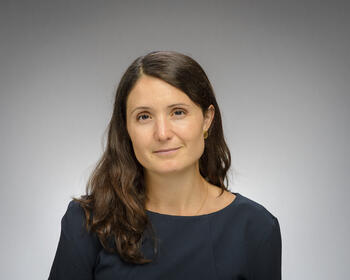
About the Speaker: Professor Sara Pozzi earned her M.S. and Ph.D. in nuclear engineering at the Polytechnic of Milan, Italy in 1997 and 2001, respectively. She is a Professor of Nuclear Engineering and Radiological Sciences and a Professor of Physics at the University of Michigan where she has graduated 25 Ph. D. students as advisor or co-advisor. Her research interests include the development of new methods for nuclear materials detection, identification, and characterization for nuclear nonproliferation, safeguards, and national security programs. She is the founding Director of the Consortium for Verification Technology (CVT) 2014-2019 and the Consortium for Monitoring, Technology, and Verification (MTV) 2019-2024, two large consortia of multiple universities and national laboratories working together to develop new technologies needed for nuclear treaty verification.

In 2018, Professor Pozzi was named the inaugural Director of Diversity, Equity, and Inclusion (DEI) for the UM College of Engineering. In this capacity, she heads the DEI implementation committee and works to ensure that the students, faculty, and staff are increasingly diverse, everyone is treated equally, and everyone is included.

She is the recipient of many awards, including the Institute of Nuclear Materials Management (INMM) Vince J DeVito Distinguished Service Award and the Department of Energy Outstanding Mentor Award, and is a Fellow of the American Nuclear Society, the INMM, and the IEEE.

Only those with an active Stanford ID with access to William J Perry Conference Room in Encina Hall may attend in person. This event will not be livestreamed.

Sara Pozzi Professor University of Michigan
Seminars
-

This is a virtual event. Please click here to register and generate a link to the talk. 
The link will be unique to you; please save it and do not share with others.


Peter Martin joins us to discuss his recent book, China's Civilian Army: The Making of Wolf Warrior Diplomacy. Chinese diplomacy in the past several years has become more assertive and its diplomats have used sharper language, earning them the title "wolf warriors." The book traces the roots of China's approach to diplomacy back to the communist revolution of 1949 and tells the story of how it's evolved through social upheaval, famine, capitalist reforms and China's rise to superpower status. It draws on dozens of interviews and -- for the first time -- on the memoirs of more than 100 retired Chinese diplomats.


Image
Portrait of Peter Martin
Peter Martin is a political reporter for Bloomberg News. He has written extensively on escalating tensions in the US-China relationship and reported from China's border with North Korea and its far-western region of Xinjiang. He previously worked for the consultancy APCO Worldwide in Beijing, New Delhi, and Washington, where he analyzed politics for multinational companies. In Washington, he served as chief of staff to the company's global CEO. His writing has been published by outlets including Foreign Affairs, the National Interest, the Guardian, the Jamestown China Brief, the Diplomat and the Christian Science Monitor. He holds degrees from the University of Oxford, Peking University and the London School of Economics.

Via Zoom Webinar. Register at: https://bit.ly/3zDZ3D0

Peter Martin Defense Policy and Intelligence Reporter, Bloomberg News
Seminars
-

Image
header for Technology and Geopolitics: EU Proposals for Regulating Rights, Security and Trade

The future of technology policy in Europe will be affected by growing nationalism and protectionism, cyber and national security threats, and great power rivalries. The Program on Democracy and the Internet invites you to a technology policy discussion led by International Policy Director, Marietje SchaakeJoin us on September 16th from 9 AM - 12 PM PST (6 PM - 9 PM CET), as we dive into conversations on EU legislative packages, digital trade rules, and cybersecurity & geopolitics. We hope to develop a more precise understanding of how the EU and its allies can collaborate to create compatible technology standards, build more resilient supply chains, and address novel opportunities and risks presented by emerging technologies.This event is organized by the Program on Democracy and the Internet (part of the Cyber Policy Center and the Center on Philanthropy and Civil Society) and co-sponsored by the Institute for Human-Centered Artificial Intelligence.

Moderators: 


Speakers:


Seminars
-

Tuesday, November 16, 2021 | 11:00am-12:15pm Pacific Time

A Confluence of Tech and Talent: Rural Online Entrepreneurship and Return Migration with Professors Chuck Eesley, Stanford University and Wesley Koo, INSEAD

Prior research indicates that the Internet can elevate the rural economy by connecting rural entrepreneurs to the wider market. In this study, we show that return migration is a crucial factor for the performance of e-commerce in rural areas. Using data from a leading ecommerce platform, we set up a natural experiment involving a provincial-level policy change that reduced the barriers for talented rural migrants to return and work in their home villages. In a difference-in-differences design, we find that after the policy change, rural e-commerce businesses in the province that implemented the policy change enjoyed a 22 percent performance gain relative to other rural businesses.


About the Speakers

Image
charles eesley
Chuck Eesley is an Associate Professor and W.M. Keck Foundation Faculty Scholar in the Department of Management Science and Engineering at Stanford University. As part of the Stanford Technology Ventures Program, his research focuses on the role of the institutional and university environment in high-growth, technology entrepreneurship. His research focuses on rethinking how the educational and policy environment shapes the economic and entrepreneurial impact of university alumni. His field research spans China, Japan, Chile, Bangladesh, Thailand and Silicon Valley and has received awards from the Schulze Foundation, the Technical University of Munich, and the Kauffman Foundation. He is a faculty affiliate at the Stanford Center for International Development, the Woods Institute for the Environment and the Stanford King Center on Global Development. He is also a member of the Editorial Board for the Strategic Management Journal. 

Image
Photo of Wesley Koo.
Wesley W. Koo is an Assistant Professor of Strategy at INSEAD. In his research, Wesley studies how digitization and platforms affect business and society. He is particularly interested in the "offline interface" - how an organization's offline environment shapes its online behavior and performance. For instance, he looks at how rural entrepreneurs' local information environment affects their ability to navigate algorithmic changes on digital platforms. During his Ph.D. at Stanford, Wesley's research was supported by the Stanford Technology Ventures Program, Stanford SEED, Accel Partners, Strategic Management Society, and Alibaba Group. Prior to Ph.D., he was a tech entrepreneur and received degrees in Environmental Engineering and Finance from MIT. He was among the Poets & Quants 40 under 40 Best Business School Professors in 2021.


Seminar Series Moderators:

Image
Headshot of Dr. Scott Rozelle

Scott Rozelle is the Helen F. Farnsworth Senior Fellow and Co-Director of Stanford Center on China's Economy and Institutions in the Freeman Spogli Institute for International Studies and Stanford Institute for Economic Policy Research at Stanford University. For the past 30 years, he has worked on the economics of poverty reduction. Currently, his work on poverty has its full focus on human capital, including issues of rural health, nutrition and education. For the past 20 year, Rozelle has been the chair of the International Advisory Board of the Center for Chinese Agricultural Policy, Chinese Academy of Sciences (CAS). In recent years Rozelle spends most of his time co-directing the Rural Education Action Project (REAP). In recognition of his outstanding achievements, Rozelle has received numerous honors and awards, including the Friendship Award in 2008, the highest award given to a non-Chinese by the Premier; and the National Science and Technology Collaboration Award in 2009 for scientific achievement in collaborative research.

Image
hongbin li headshot
Hongbin Li is the James Liang Senior Fellow and Co-Director of the Stanford Center on China's Economy and Institutions in Freeman Spogli Institute for International Studies and the Stanford Institute for Economic Policy Research. Hongbin obtained his Ph.D. in economics from Stanford University in 2001 and joined the economics department of the Chinese University of Hong Kong (CUHK), where he became full professor in 2007. He was also one of the two founding directors of the Institute of Economics and Finance at the CUHK. He taught at Tsinghua University in Beijing 2007-2016 and was C.V. Starr Chair Professor of Economics in the School of Economics and Management. He also founded and served as the Executive Associate Director of the China Social and Economic Data Center at Tsinghua University. He founded the Chinese College Student Survey (CCSS) in 2009 and the China Employer-Employee Survey (CEES) in 2014.

Hongbin’s research has been focused on the transition and development of the Chinese economy, and the evidence-based research results have been both widely covered by media outlets and well read by policy makers around the world . He is currently the co-editor of the Journal of Comparative Economics.


Register Here

Register once to receive the Zoom meeting link that will be used for all lectures in this series.

Professor Chuck Eesley
Seminars
-

The Effects of Chronic Disease Management in Primary Health Care: Evidence from Rural China

Health systems globally face increasing morbidity and mortality from chronic diseases, yet many - especially in low- and middle-income countries - lack strong chronic disease management in primary health care (PHC). We provide evidence on China’s efforts to promote PHC management using unique five-year panel data in a rural county, including health care utilization from medical claims and health outcomes from biomarkers.


Watch the recording now:


About the Speaker

Image
Karen Eggleston 4X4
Karen Eggleston is Senior Fellow at the Freeman Spogli Institute for International Studies (FSI) at Stanford University, and Director of the Stanford Asia Health Policy Program at FSI. She is also a Fellow with the Center for Innovation in Global Health at Stanford University School of Medicine, and a Faculty Research Fellow of the National Bureau of Economic Research (NBER). Eggleston earned her PhD in public policy from Harvard University and has MA degrees in economics and Asian studies from the University of Hawaii and a BA in Asian studies summa cum laude (valedictorian) from Dartmouth College. Eggleston studied in China for two years and was a Fulbright scholar in Korea. Her research focuses on government and market roles in the health sector and Asia health policy, especially in China, India, Japan, and Korea; healthcare productivity; and the economics of the demographic transition. She served on the Strategic Technical Advisory Committee for the Asia Pacific Observatory on Health Systems and Policies, and has been a consultant to the World Bank, the Asian Development Bank, and the WHO regarding health system reforms in the PRC.

Image
Headshot of Hui Ding.
Hui Ding is a six-year Ph.D. student in Economics at Stanford University. Before entering Stanford, she received her bachelor’s degree in Economics and double degree in Psychology from Peking University, China. She has strong interests in the healthcare markets of both U.S. and China. Her current work mainly focuses on the mental health of the elderly population, especially the geographic variation and gender differences in care utilization and suicide. She is also interested in the prevention and management of infectious diseases and chronic diseases, as well as the role of insurance in setting prices, promoting new technology, and adjusting patients’ and providers’ behavior. Hui is currently on the job market (2021-22) and is available for online interviews.


Seminar Series Moderators:

Image
Headshot of Dr. Scott Rozelle

Scott Rozelle is the Helen F. Farnsworth Senior Fellow and Co-Director of Stanford Center on China's Economy and Institutions in the Freeman Spogli Institute for International Studies and Stanford Institute for Economic Policy Research at Stanford University. For the past 30 years, he has worked on the economics of poverty reduction. Currently, his work on poverty has its full focus on human capital, including issues of rural health, nutrition and education. For the past 20 year, Rozelle has been the chair of the International Advisory Board of the Center for Chinese Agricultural Policy, Chinese Academy of Sciences (CAS). In recent years Rozelle spends most of his time co-directing the Rural Education Action Project (REAP). In recognition of his outstanding achievements, Rozelle has received numerous honors and awards, including the Friendship Award in 2008, the highest award given to a non-Chinese by the Premier; and the National Science and Technology Collaboration Award in 2009 for scientific achievement in collaborative research.

Image
hongbin li headshot
Hongbin Li is the James Liang Senior Fellow and Co-Director of the Stanford Center on China's Economy and Institutions in Freeman Spogli Institute for International Studies and the Stanford Institute for Economic Policy Research. Hongbin obtained his Ph.D. in economics from Stanford University in 2001 and joined the economics department of the Chinese University of Hong Kong (CUHK), where he became full professor in 2007. He was also one of the two founding directors of the Institute of Economics and Finance at the CUHK. He taught at Tsinghua University in Beijing 2007-2016 and was C.V. Starr Chair Professor of Economics in the School of Economics and Management. He also founded and served as the Executive Associate Director of the China Social and Economic Data Center at Tsinghua University. He founded the Chinese College Student Survey (CCSS) in 2009 and the China Employer-Employee Survey (CEES) in 2014.

Hongbin’s research has been focused on the transition and development of the Chinese economy, and the evidence-based research results have been both widely covered by media outlets and well read by policy makers around the world . He is currently the co-editor of the Journal of Comparative Economics.

Zoom Meeting

Professor Karen Eggleston
Hui Ding
Seminars
-

Tuesday, October 19, 2021 | 11:00am-12:15pm Pacific Time

Ethnic Discrimination in Criminal Sentencing in China (Joint work with Rory Truex)

We present the first analysis of ethnic discrimination in sentencing patterns in China, focusing on drug cases in Yunnan province. We posit the "problem minority" hypothesis, which holds that discrimination in an authoritarian system emerges when an ethnic group becomes. associated with behavior that generates social instability. On average, minority defendants in Yunnan receive sentences that are about 2.1 to 7.5 months longer than Han defendants that have committed similar drug crimes. Further analysis of data from all provinces reveals that this bias is largest for groups heavily involved in the drug trade, and in provinces with significant minority populations and drugs.


About the Speaker

Image
Headshot of Dr. Yue Hou
Yue Hou is the Janice and Julian Bers Assistant Professor in the Social Sciences in the department of political science at the University of Pennsylvania. Her research centers on the political economy of non-democracies, with a regional focus on China.  She is interested in how individual actors (e.g., citizens, firms) interact with the state and state agents that are not held accountable by elections, and how these interactions affect outcomes such as economic growth, government service, quality of institutions, and policy changes. Her book The Private Sector in Public Office: Selective Property Rights in China (October 2019, Cambridge University Press) examines strategies Chinese private entrepreneurs use to protect property from expropriation. Hou is a faculty affiliate of Penn's Center for the Study of Contemporary China (CSCC), Penn Identity and Conflict Lab (PIC Lab), and Penn Development Research Initiative (PDRI).


Seminar Series Moderators:

Image
Headshot of Dr. Scott Rozelle

Scott Rozelle is the Helen F. Farnsworth Senior Fellow and Co-Director of Stanford Center on China's Economy and Institutions in the Freeman Spogli Institute for International Studies and Stanford Institute for Economic Policy Research at Stanford University. For the past 30 years, he has worked on the economics of poverty reduction. Currently, his work on poverty has its full focus on human capital, including issues of rural health, nutrition and education. For the past 20 year, Rozelle has been the chair of the International Advisory Board of the Center for Chinese Agricultural Policy, Chinese Academy of Sciences (CAS). In recent years Rozelle spends most of his time co-directing the Rural Education Action Project (REAP). In recognition of his outstanding achievements, Rozelle has received numerous honors and awards, including the Friendship Award in 2008, the highest award given to a non-Chinese by the Premier; and the National Science and Technology Collaboration Award in 2009 for scientific achievement in collaborative research.

Image
hongbin li headshot
Hongbin Li is the James Liang Senior Fellow and Co-Director of the Stanford Center on China's Economy and Institutions in Freeman Spogli Institute for International Studies and the Stanford Institute for Economic Policy Research. Hongbin obtained his Ph.D. in economics from Stanford University in 2001 and joined the economics department of the Chinese University of Hong Kong (CUHK), where he became full professor in 2007. He was also one of the two founding directors of the Institute of Economics and Finance at the CUHK. He taught at Tsinghua University in Beijing 2007-2016 and was C.V. Starr Chair Professor of Economics in the School of Economics and Management. He also founded and served as the Executive Associate Director of the China Social and Economic Data Center at Tsinghua University. He founded the Chinese College Student Survey (CCSS) in 2009 and the China Employer-Employee Survey (CEES) in 2014.

Hongbin’s research has been focused on the transition and development of the Chinese economy, and the evidence-based research results have been both widely covered by media outlets and well read by policy makers around the world . He is currently the co-editor of the Journal of Comparative Economics.


Register Here

Register once to receive the Zoom meeting link that will be used for all lectures in this series.

Zoom Meeting
Registration Required 

Professor Yue Hou
Seminars
-

Controlling the Narrative: The Coordination & Disciplining Role of the People's Daily in China with Professor Joseph Piotroski, Stanford University

This seminar provides an overview of corporate news reporting in China, with a focus on understanding the political and market-based incentives behind Chinese newspapers' biased coverage of China's listed companies. And, given these prevailing incentives, we will explore how politicians in China use the Party's flagship newspaper, the People’s Daily, to coordinate the reporting of corporate news in China.


Image
Headshot of Dr. Joseph Piotroski
About the Speaker

Joseph Piotroski is the Robert K. Jaedicke Professor of Accounting at Stanford University’s Graduate School of Business, and a Senior Fellow at the Asian Bureau of Finance and Economic Research (ABFER). Professor Piotroski earned his PhD from the University of Michigan in 1999, an MBA from Indiana University in 1994, a BS in Accounting from the University of Illinois in 1989, and worked as a tax consultant for Coopers and Lybrand in Chicago. His research focuses on corporate transparency, governance, and regulation in a global context. His current research examines the impact of legal, political, and regulatory forces on capital market behavior and corporate decision-making, most notably in China and other emerging economies. His research has been published in scholarly journals in the areas of accounting, finance, and economics, and his research on value investing has been frequently cited in the popular press and is widely used in practice. 


Seminar Series Moderators:

Image
Headshot of Dr. Scott Rozelle

Scott Rozelle is the Helen F. Farnsworth Senior Fellow and Co-Director of Stanford Center on China's Economy and Institutions in the Freeman Spogli Institute for International Studies and Stanford Institute for Economic Policy Research at Stanford University. For the past 30 years, he has worked on the economics of poverty reduction. Currently, his work on poverty has its full focus on human capital, including issues of rural health, nutrition and education. For the past 20 year, Rozelle has been the chair of the International Advisory Board of the Center for Chinese Agricultural Policy, Chinese Academy of Sciences (CAS). In recent years Rozelle spends most of his time co-directing the Rural Education Action Project (REAP). In recognition of his outstanding achievements, Rozelle has received numerous honors and awards, including the Friendship Award in 2008, the highest award given to a non-Chinese by the Premier; and the National Science and Technology Collaboration Award in 2009 for scientific achievement in collaborative research.

Image
hongbin li headshot
Hongbin Li is the James Liang Senior Fellow and Co-Director of the Stanford Center on China's Economy and Institutions in Freeman Spogli Institute for International Studies and the Stanford Institute for Economic Policy Research. Hongbin obtained his Ph.D. in economics from Stanford University in 2001 and joined the economics department of the Chinese University of Hong Kong (CUHK), where he became full professor in 2007. He was also one of the two founding directors of the Institute of Economics and Finance at the CUHK. He taught at Tsinghua University in Beijing 2007-2016 and was C.V. Starr Chair Professor of Economics in the School of Economics and Management. He also founded and served as the Executive Associate Director of the China Social and Economic Data Center at Tsinghua University. He founded the Chinese College Student Survey (CCSS) in 2009 and the China Employer-Employee Survey (CEES) in 2014.

Hongbin’s research has been focused on the transition and development of the Chinese economy, and the evidence-based research results have been both widely covered by media outlets and well read by policy makers around the world . He is currently the co-editor of the Journal of Comparative Economics.


Register Here

Joseph Piotroski
Seminars
-

Download Transcript


On September 26, Germany elected a new parliament. With it a new coalition government will come to power and Angela Merkel will depart the political stage after serving for 16 years as federal chancellor. Who might succeed her? What will be the foreign policy priorities of the new government? And how do Germany’s European partners view Merkel’s legacy and Germany’s role in Europe?

Dr. Jana Puglierin and Rafael Loss of the European Council on Foreign Relations (ECFR) will discuss the results and implications of the German vote, and based on a recent 12-country public opinion poll, they will assess the expectations of Germany’s European partners toward Berlin and its new leadership.

Image
Jana Puglierin


Dr. Jana Puglierin has been the head of ECFR’s Berlin office and a senior policy fellow at the European Council on Foreign Relations since January 2020. She also directs ECFR’s Re:shape Global Europe project, which seeks to develop new strategies for Europeans to understand and engage with the changing international order.

Before joining ECFR, Puglierin headed the Alfred von Oppenheim Center for European Policy Studies at the German Council on Foreign Relations (DGAP). Prior to this, she was an advisor on disarmament, arms control, and non-proliferation in the German Bundestag, where she also worked on matters relating to German and European foreign and security policy. Between 2003 and 2010, she was researcher and lecturer to the chair of political science and contemporary history as well as in the program for North American studies at the University of Bonn.

In November 2017, Puglierin was a visiting fellow at the American-German Situation Room, a joint initiative of the AICGS and GMF. She is alumna of the Konrad-Adenauer-Foundation’s Working Group of Young Foreign Policy Experts (2007-2016), of the ZEIT Foundation Ebelin und Gerd Bucerius (2016), of the Manfred-Wörner-Seminar for German-American Relations (2009), and of the International Visitor Leadership Program (2015). She is a board member of the German Atlantic Society, European Movement Germany and a member of the extended board of Women in International Security (WIIS.de).

Puglierin earned a master’s degree and a doctorate in political science, international and European law, and sociology from the Friedrich-Wilhelms University of Bonn.


Image
Rafael Loss

Rafael Loss is the coordinator for pan-European data projects of the European Council on Foreign Relations’ Re:shape Global Europe project, which seeks to develop new strategies for Europeans to understand and engage with the changing international order. He also works on German and European foreign policy, security and defence, climate policy, transatlantic relations, and nuclear policy and arms control.

Prior to joining ECFR in 2020, Loss was a research associate at the Center for Global Security Research at Lawrence Livermore National Laboratory in Livermore, California. His essays and analyses have appeared in Internationale Politik Quarterly, War on the Rocks, and The Bulletin of the Atomic Scientists, among others.

Loss was a Fulbright fellow at the Fletcher School at Tufts University, where he earned an MA in international relations. He also holds a BA in political science from the University of Bremen.


*If you need any disability-related accommodation, please contact: Shannon Johnson by email: sj1874@stanford.edu or phone: 801-822-1334. Requests should be made by September 23, 2021.

Online via Zoom

Jana Puglierin speaker European Council on Foreign Relations
Rafael Loss speaker European Council on Foreign Relations
Seminars
Subscribe to Seminars