-

Image
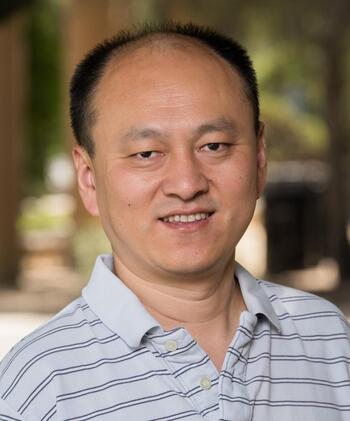
Soojong Kim event flyer for October 12th showing his face and name of event

PART OF THE FALL SEMINAR SERIES

Join us at the weekly Cyber Policy Center (CPC) seminar on Tue, October 12th from 12 PM - 1 PM PST featuring Soojong Kim, postdoctoral fellow at the Program on Democracy and the Internet. This session will be moderated by Co-Director of the CPC, Nate Persily. This is part of the fall seminar series organized by the Program on Democracy and the Internet, and the William and Flora Hewlett Foundation’s Cyber Initiative.

There has been growing concern about online misinformation and falsehood. It has been suspected that the proliferation of misleading narratives is especially severe on Facebook, the world’s largest social media site, but there has been a lack of large-scale systematic investigations on these issues. This talk will introduce a series of ongoing research projects investigating online groups promoting misleading narratives on Facebook, including anti-vaccine groups, climate change denialists, countermovements against racial justice movements, and conspiracy theorists. The presentation will discuss the prevalence, characteristics, ecosystem of misleading narratives on Facebook, and implications for potential interventions.


REGISTER


Speaker Profile:

Soojong Kim is a postdoctoral fellow, jointly affiliated with the Program on Democracy and the Internet (PDI) and the Digital Civil Society Lab (DCSL) at Stanford University. He received his Ph.D. at the Annenberg School for Communication, University of Pennsylvania. His research centers around digital media, social networks, and information propagation. As a former computer scientist, he is also interested in developing and applying computational methods, including online experiments, large-scale data analysis, and computational modeling.


Seminars
-

*For fall quarter 2021, CISAC will be hosting hybrid events. Many events will offer limited-capacity in-person attendance for Stanford faculty, staff, fellows, visiting scholars, and students in accordance with Stanford’s health and safety guidelines, and be open to the public online via Zoom. All CISAC events are scheduled using the Pacific Time Zone.

REGISTRATION


About the Event: With the counter-recovery and countervailing nuclear-targeting strategies, the United States embraced a massive expansion of the roles for nuclear weapons. Simultaneously, however, an accuracy revolution has quietly imbued conventional weapons with vastly improved target-killing capability. This raises the question: how many targets in the nuclear-war plan could just as effectively be dealt with using conventional weapons? In the last decade, the Russian security establishment has expressed concern about emerging U.S. conventional capabilities while the U.S. military has downplayed their strategic import. In this talk I will report on the early stages of a new project to investigate exactly how and if conventional forces might execute a strategic strike akin to the U.S. nuclear war plan and, conversely, whether an adversary could threaten the United States with unacceptable damage without ever escalating to nuclear use. I will discuss several target categories, the expected performance of conventional weapons, system considerations, and the consequences that “conventional strategic strike” may have for the future of deterrence.


About the Speaker: R. Scott Kemp is the MIT Class of '43 Associate Professor of Nuclear Science and Engineering, and director of the MIT Laboratory for Nuclear Security and Policy. His research combines physics, politics, and history to help create more resilient societies. His work has focused primarily on problems arising from weapons of mass destruction. His current research includes securing vulnerabilities in U.S. critical infrastructure and the redefining of strategic defense. In 2010, Scott served as Science Advisor in the U.S. State Department's Office of the Special Advisor for Nonproliferation and Arms Control where he was responsible for developing the technical framework for what became the Iran Nuclear Deal. Scott received his undergraduate degree in physics from the University of California, Santa Barbara, and his Ph.D. in Public and International Affairs from Princeton University. He is a Fellow of American Physical Society and recipient of the Sloan Research Fellowship in Physics.


Only those with an active Stanford ID with access to William J Perry Conference Room in Encina Hall may attend in person. This event will not be livestreamed.

Scott Kemp MIT
Seminars
-

For fall quarter 2021, CISAC will be hosting hybrid events. Many events will offer limited-capacity in-person attendance for Stanford faculty, staff, fellows, visiting scholars, and students in accordance with Stanford’s health and safety guidelines, and be open to the public online via Zoom. All CISAC events are scheduled using the Pacific Time Zone. 

REGISTRATION


About the Event: In January 2017 and again during his presidential campaign, then-Vice President Biden said that “I believe that the sole purpose of the U.S. nuclear arsenal should be deterring—and, if necessary, retaliating against—a nuclear attack.” The Biden Administration is now undertaking its Nuclear Posture Review (NPR), in which it is possible that the United States would, for the first time, formally adopt such a “sole purpose” or perhaps even “no first use” policy for its nuclear weapons. Yet some former government officials, as well as press accounts, have publicly reported that the possibility of a biological weapons attack that might cause casualties comparable to a nuclear attack blocked the adoption of a no-first-use or a sole-purpose policy in previous administrations’ NPRs. Should it do so again? I will present a technical and policy analysis of this question, with the aspiration of helping to bring systematic attention to this issue in the ongoing Nuclear Posture Review.


About the Speaker: Christopher Chyba is a professor of astrophysical sciences and international affairs at Princeton University, and past director of the Program on Science and Global Security. As an associate professor of geological sciences at Stanford University before coming to Princeton, he co-directed the Center for International Security and Cooperation and held the Sagan Chair at the SETI Institute. He has been a Marshall Scholar and a MacArthur Fellow.

During President Clinton’s first term, Chyba served on the staffs of the National Security Council and Office of Science and Technology Policy at the White House, entering as a White House Fellow. He served for a decade as a member of the National Academy of Sciences' Committee on International Security and Arms Control, and on President Obama’s Council of Advisors on Science and Technology (PCAST) from April 2009 through January 2017, on which he co-chaired the working groups on antibiotic resistance and on biodefense. In late 2020 to early 2021, Chyba served on the national security and foreign policy team for the Biden-Harris transition. His current policy-relevant research focuses on possible pathways to nuclear weapons use (for the past two years, he has co-chaired a project of the American Academy of Arts and Sciences on this topic), nonproliferation and strategic arms control issues, and biodefense -- including as a member of the OPCAST pandemic response group. 

Chyba's scientific research ranges across planetary science and exobiology, as well as work in classical electrodynamics. His published work has included dynamical modeling of the Neptune-Triton system, the role of impacts on the origin of life on Earth, the Tunguska atmospheric explosion and planetary defense, radar, seismic, and magnetometer sounding of Europa's ice shell, bioenergetic models for possible ecosystems on Europa, electromagnetic heating of planetary satellites, and planetary protection. 

Only those with an active Stanford ID with access to William J Perry Conference Room in Encina Hall may attend in person. This event will not be livestreamed.

Christopher Chyba Professor Princeton University
Seminars
-
This is a virtual event. Please click here to register and generate a link to the event.
The link will be unique to you, please save it and do not share with others.
 

The Taliban’s shock takeover of Kabul in August 2021 has implications for South Asia far beyond Afghanistan’s borders. The Taliban does not have transnational political ambitions, but it is closely tied to the Pakistan security establishment, and its victory will resonate among other networks of terrorists. This webinar will explore the regional geopolitical consequences of the Taliban takeover. It will examine the Taliban victory’s impact on Pakistan’s regional strategy, on security in disputed Kashmir, on the role of China in the region, and on the trajectory of Islamist groups across the region.

Image
Javid Ahmad
Javid Ahmad is a senior fellow with the Atlantic Council and was, until recently, Afghanistan’s ambassador to the UAE. He was previously a nonresident fellow with the Modern War Institute at West Point and worked with U.S. defense contractors, where he provided counterterrorism/economic analysis to U.S. government and business clients on South Asia/Central Asia. He has worked for the Pentagon’s AfPak Hands, the German Marshall Fund in Washington, and NATO in Brussels. He has written for Wall Street Journal, Washington Post, Foreign Affairs, New York Times, Foreign Policy, The National Interest, The Hill, and CNN. He studied at Beloit College and Yale University.

Image
C Christine Fair
C. Christine Fair is a Professor in the Security Studies Program within Georgetown University’s Edmund A. Walsh School of Foreign Service. Her most recent book is In Their Own Words: Understanding Lashkar-e-Tayyaba (OUP, 2019).  She has authored or co-edited several books, inter aliaFighting to the End: The Pakistan Army’s Way of War (OUP, 2014); Pakistan’s Enduring Challenges (UPenn, 2015), Policing Insurgencies (OUP, 2014); Political Islam and Governance in Bangladesh (Routledge, 2010); Treading on Hallowed Ground: (OUP, 2008); The Cuisines of the Axis of Evil and Other Irritating States (GlobePequot, 2008).  She has a PhD from the University of Chicago, Department of South Asian Languages and Civilization. She causes trouble in Hindi, Urdu and Punjabi.

Image
Avinash Paliwal
Avinash Paliwal is Senior Lecturer in International Relations and Deputy Director of the SOAS South Asia Institute. He specialises in South Asian strategic affairs. He is author of the much-acclaimed book My Enemy’s Enemy - India in Afghanistan from the Soviet Invasion to the US Withdrawal (2017), and is currently authoring a strategic history of India's near east. Avinash holds an MA and PhD in International Relations from King’s College London, and a BA (Hons) in Economics from the University of Delhi.

Moderator:

Image
Arzan Tarapore
Arzan Tarapore is the South Asia research scholar at the Shorenstein Asia-Pacific Research Center at Stanford University, where he leads the newly-restarted South Asia research initiative. He is also a senior nonresident fellow at the National Bureau of Asian Research. His research focuses on Indian military strategy and contemporary Indo-Pacific security issues. He previously held research positions at the RAND Corporation, the Observer Research Foundation, and the East-West Center in Washington. Prior to his scholarly career, he served as an analyst in the Australian Defence Department, which included an operational deployment to Afghanistan. Arzan holds a PhD in war studies from King’s College London.


via Zoom webinar

Register:  https://bit.ly/2ZveaS8


Javid Ahmad Senior Fellow Atlantic Council
C. Christine Fair Professor, Security Studies Program Georgetown University
Avinash Paliwal Senior Lecturer in Int'l Relations & Deputy Director SOAS South Asia Institute
Moderator: Arzan Tarapore South Asia Research Scholar, APARC Stanford University
Seminars
-

North Carolina time: 19 October, 2021, 8:00-9:30 pm; Singapore time: 20 October, 2021, 8:00-9:30am

Viewed alongside other world regions, Southeast Asia is uniquely vulnerable to major damage by global warming. Its coastlines are lengthy and subject to searise. Its urban centers of economic and political gravity are mainly riverine or deltaic. Its agriculture requires optimal levels and rhythms of waterflow, as do its polluted main veins, the Mekong and the Irrawaddy.  In already tropical conditions, heatwaves are especially enervating.  Nor has the region escaped extreme weather events.  The ten most afflicted countries worldwide in that regard include Myanmar, the Philippines, Thailand, and Vietnam.  With this background in mind, Angel Hsu and Melissa Low, two scholars with deep regional and policy knowledge will consider questions such as:  What has been and is being done, by whom, and with what chances of success?  Can currently worsening trends be reversed?  Mitigated?  Or is adaptation the sole plausible recourse?  Who will represent the interests of the unborn generations who will suffer the long-term consequences of present-day indifference and delay?  Will effective policy require authoritarian politics?  Given that the largest current and historical emitters of greenhouse gases are, respectively, China and the US, what roles should and will they play?  And how, if at all, will global versions of these questions be addressed and answered in November in Glasgow at COP26?

Image
Hsu, Angel
Angel Hsu founded and heads the University of North Carolina-Chapel Hill’s Data-Driven EnviroLab, an interdisciplinary research group that innovates quantitative approaches to pressing environmental issues.  Her research into the causes and consequences of climate change explores the interfacing of science and policy.  Her many publications include coverage of Malaysia, Viet Nam, and especially China.  In February 2021 she spoke on global climate trends before the US Senate Committee on Energy and Natural Resources, having addressed US-China climate relations at the University of Pennsylvania in 2020.  Illustrating Prof. Hsu’s commitment to public outreach was her selection as a TED 2018 Age of Amazement Speaker and earlier as an inaugural member of the Grist 50, an annual list of “emerging leaders” working on “fresh, real-world solutions” to the world’s “biggest challenges,” global warming included.  She holds a PhD in Environmental Policy from Yale University.

Image
Low, Melissa
Melissa Low has published, presented, and advised on climate change in multiple forums.  She is currently researching the relative transparency of climate action and reporting in Southeast Asia.  She provides policy analyses and conducts workshops to improve understanding of the Paris Agreement and track whether countries are keeping their promises.  For that work, in 2021, she received Singapore’s EcoFriend Award and its Public Service Medal.  Having taken part in the UN Framework Convention on Climate Change (UNFCCC) Conference of Parties for many years, she is now on the steering committee that coordinates NGOs under the UNFCCC. She holds a University of Strathclyde LLM (with distinction) in Climate Change Law and Policy and an MSc in Environmental Management at the National University of Singapore, where is pursuing a PhD in geography.  Her master’s thesis on the run-up to the Paris Agreement won NUS’s Shell Best Dissertation Award.

Image
CC-SeAP
This event is part of the 2021 Fall webinar series, Perfect Storm: Climate Change in Asia, sponsored by the Walter H. Shorenstein Asia-Pacific Research Center.

Via Zoom Webinar
Register: https://bit.ly/3ulj9jV

Angel Hsu Assistant Professor of Public Policy and the Environment, University of North Carolina at Chapel Hill
Melissa Low Research Fellow, Energy Studies Institute, National University of Singapore
Seminars
-

Asia Health Policy Program (AHPP) 2021-22 Colloquium series "Aligning Incentives for Better Health and More Resilient Health Systems in Asia”

Professor Mobarak will discuss his research on COVID-19 response in Bangladesh and beyond, including masking, vaccine equity, and appropriate pandemic response policies in low and middle income countries.

He will provide an overview of the coauthored MaskNorm study, a randomized-trial of community-level mask promotion in rural Bangladesh during COVID-19 that demonstrates a scalable and effective method to promote mask adoption and reduce symptomatic SARS-CoV-2 infections. He will also discuss efficient last-mile vaccine delivery in low-income countries and related research on the lower epidemiological and welfare value of social distancing in lower-income countries.

Image
Mobarak, Mushfiq
Ahmed Mushfiq Mobarak is a Professor of Economics at Yale University with concurrent appointments in the School of Management and in the Department of Economics.

Mobarak is the founder and faculty director of the Yale Research Initiative on Innovation and Scale (Y-RISE). He holds other appointments at Innovations for Poverty Action, the Jameel Poverty Action Lab (J-PAL) at MIT, the International Growth Centre (IGC) at LSE.

Mobarak has several ongoing research projects in Bangladesh, Brazil, Chile, Kenya, Malawi and Sierra Leone. He conducts field experiments exploring ways to induce people in developing countries to adopt technologies or behaviors that are likely to be welfare improving. He also examines the complexities of scaling up development interventions that are proven effective in such trials. For example, he is scaling and testing strategies to address seasonal poverty using migration subsidies or consumption loans in Bangladesh, Nepal and Indonesia. His research has been published in journals across disciplines, including Econometrica, Science, The Review of Economic Studies, the American Political Science Review, Proceedings of the National Academy of Sciences, and Demography, and covered by the New York Times, The Economist, Science, NPR, BBC, Wall Street Journal, the Times of London, and other media outlets around the world. He received a Carnegie Fellowship in 2017.

Mobarak is collaborating with the government of Bangladesh, NGOs and think-tanks such as BRAC and BIGD, the major Bangladeshi telecom providers, Innovations for Poverty Action, UNDP, other economists, epidemiologists, computer scientists, and public health researchers to devise evidence-based COVID response strategies for Bangladesh and for other developing countries. The approach and results have been covered by BBC, Foreign Policy, New York Times, Washington Post, Vox, and media in India, Pakistan, Bangladesh, Nigeria, Austria, Sweden, Denmark, among others.  The work is supported by the Bill and Melinda Gates Foundation, Givewell.org, the Global Innovation Fund, and Yale Macmillan Center.

Co-sponsored by


Image
South Asia logo
Image
South Asia logo

Via Zoom Webinar
Register: https://bit.ly/3ulFdLi

Ahmed Mushfiq Mobarak Professor of Economics, Yale University
Seminars
-

Image
out of the rabbit hole event flyer with photo of becca lewis

PART OF THE FALL SEMINAR SERIES

Join us on October 5th at the Cyber Policy Center seminar from 12 PM - 1 PM PST featuring Becca Lewis, PhD Candidate in Communication at Stanford University. The session will be moderated by Kelly Born, Director of the Cyber Initiative at the William and Flora Hewlett Foundation. 

Conventional wisdom suggests that conspiracy theories and far-right propaganda thrive mainly at the end of algorithmic rabbit holes, in the deep, dark corners of the internet. This presentation will show that the opposite is true by explaining how in fact, harmful ideas gain traction through the charisma and popularity of internet celebrities in mainstream social media contexts. Through her extensive research on far-right YouTubers, Becca Lewis argues that instead of merely focusing our responses on the threat of algorithmic rabbit holes, we must also understand the power of amplification through thriving alternative media systems on- and offline.


REGISTER


Speaker Profile:

Becca Lewis is a Stanford Graduate Fellow and PhD candidate in Communication at Stanford University, as well as a research affiliate at Data & Society Research Institute and the University of North Carolina’s Center for Information, Technology, and Public Life. Her research has been published in the journals Society Media + Society, Television and New Media, and American Behavioral Scientist, and her public writing has appeared in outlets including The Guardian, New York Magazine, and Columbia Journalism Review. She holds an MSc in Social Science from the Oxford Internet Institute.


Becca Lewis Stanford Graduate Fellow and PhD candidate in Communication at Stanford University
Seminars
-

This is a virtual event. Please click here to register and generate a link to the talk. 
The link will be unique to you; please save it and do not share it with others.

October 18, 4-5:00 p.m. California time/ October 19, 8-9:00 a.m. Japan time

The recent LDP Presidential Election ended with Fumio Kishida defeating Taro Kono in the final round to become the LDP President and then Prime Minister of Japan, succeeding Yoshihide Suga, who stepped down amidst mounting political challenges dealing with COVID and its economic consequences. This was a closer election than most other LDP Presidential elections with a great deal of intrigue about how the publicly popular Kono might fare against Kishida, who the senior LDP leadership preferred. What does this election process tell us about Japanese politics today, and how will LDP fare in the upcoming House of Representatives Election? Will Kishida last longer than Suga as Prime Minister, and what do opposition parties have to do to stop the dominant LDP to change Japanese politics? In this webinar, two leading experts on the topic, Rieko Kage (University of Tokyo) and Dan Smith (Columbia University), address these questions, moderated by Kiyoteru Tsutsui, Deputy Director of the Walter H. Shorenstein Asia-Pacific Research Center, where he is also Director of the Japan Program.

Panelists

Image
Photo of Rieko Kage
Rieko Kage is Professor of Political Science at the University of Tokyo.  She graduated from the Faculty of Law at Kyoto University and earned her Ph.D. from the Department of Government, Harvard University.  She is the author of Civic Engagement in Postwar Japan (2011) and Who Judges? Designing Jury Systems in Japan, East Asia, and Europe (2010), both of which have been published from Cambridge University Press, and she has published broadly on issues relating to judicial politics, political participation, and public opinion.  Her most recent article, "War, Democratization, and Generational Cohort Effects on Participation in Japan" is forthcoming from Electoral Studies.


Image
Photo of Dan Smith

Daniel M. Smith is the Gerald L. Curtis Visiting Associate Professor of Modern Japanese Politics and Foreign Policy in the Department of Political Science and School of International and Public Affairs at Columbia University. He is the author of Dynasties and Democracy (Stanford University Press, 2018), and numerous articles on Japanese politics, party politics, and elections. He is also a co-editor of the Japan Decides election series. From 2012 to 2013, he was a postdoctoral fellow at the Walter H. Shorenstein Asia-Pacific Research Center (APARC) at Stanford University.


Moderator

Image
Kiyoteru Tsutsui
Kiyoteru Tsutsui is the Henri H. and Tomoye Takahashi Professor, Professor of Sociology, Senior Fellow at the Freeman Spogli Institute for International Studies, and Deputy Director of the Walter H. Shorenstein Asia-Pacific Research Center, where he is also Director of the Japan Program. He is the author of Rights Make Might: Global Human Rights and Minority Social Movements in Japan (Oxford University Press, 2018), co-editor of Corporate Social Responsibility in a Globalizing World (Oxford University Press, 2016) and co-editor of The Courteous Power: Japan and Southeast Asia in the Indo-Pacific Era (University of Michigan Press, forthcoming 2021). 

Via Zoom Webinar
Register: https://bit.ly/3icfq3j


Rieko Kage <br><i>Professor of Political Science at the University of Tokyo</i><br><br>
Dan Smith <br><i>Gerald L. Curtis Visiting Associate Professor of Modern Japanese Politics and Foreign Policy at Columbia University</i><br><br>
Kiyoteru Tsutsui <br><i>Director of the Japan Program and Deputy Director of Shorenstein APARC</i><br><br>
Seminars
-

All CISAC events are scheduled using the Pacific Time Zone. This event is part of the year-long initiative on “Ethics & Political Violence” jointly organized by the Center for International Security and Cooperation (CISAC) and The McCoy Family Center for Ethics in Society. This event is hosted by CISAC and is co-sponsored by McCoy Family Center for Ethics in Society.

SEMINAR RECORDING

WJP - Virtual to Public. Only those with an active Stanford ID with access to William J Perry Conference Room in Encina Hall may attend in person. 

Samuel Moyn Yale University
Seminars
-

SEMINAR RECORDING

Virtual to Public. Only those with an active Stanford ID with access to William J Perry Conference Room in Encina Hall may attend in person. 

Kori Schake American Enterprise Institute (AEI)
Seminars
Subscribe to Seminars