-
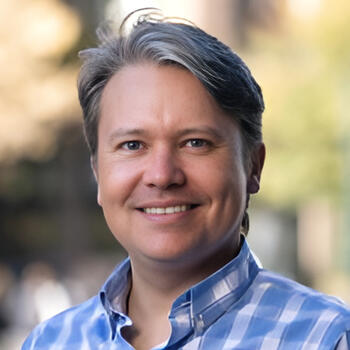
Ali Wyne Event Card

Following the launch of his new book, America's Great-Power Opportunity: Revitalizing U.S. Foreign Policy to Meet the Challenges of Strategic Competition, Wyne joins the China Program’s Author Series to discuss how the United States must avoid complacency and consternation in appraising China and Russia. Rather than attempting the unfeasible—countering their current and future initiatives and forestalling subsequent provocations—Wyne argues that Washington should formulate a more practical, creative, and sustainable foreign policy that can advance U.S. national interests regardless of what steps Beijing and Moscow take, and that recent competitive missteps give the U.S. space to undertake this task.

For more information about America's Great-Power Opportunity or to purchase a copy, please click here.

Speaker

Image
Ali Wyne Headshot
Ali Wyne is a Senior Analyst at the Eurasia Group’s Global Macro Geopolitics practice and Author of the brand-new book America’s Great Power Opportunity: Revitalizing U.S. Foreign Policy to Meet the Challenges of Strategic Competition.

Jean C. Oi

Virtual event via Zoom

Ali Wyne
Seminars
Image
Reshmaan Hussam, Harvard Business School

Negative Behavioral Transmission

Behavior change programs, including much of early education curricula, assume the positive transmission of behavior from one context to another. We randomize a hand hygiene edutain- ment program in schools in Bangladesh to trace school-to-home transmission of handwashing behavior and randomize the proportion of students who receive handwashing resources at home to track home-to-school transmission. We find that children induced to wash more at home exhibit less washing at school. Likewise, children induced to wash more at school wash less at home. This negative transmission spills over to other household members and non-school days, such that the cumulative impact of school edutainment on total washing is negative. Our results are consistent with the mechanisms of crowd-out, cue-based habit formation, and ‘reverse’ vertical transmission of behavior. They highlight an unintended consequence of behavior change interventions, like those often implemented in education, that presume complementarities in behavior across contexts but evaluate effects only at the site of intervening. 

Reshma Hussam, PhD, is an assistant professor of business administration in the Business, Government and International Economy Unit at Harvard Business School, a Faculty Research Fellow at the National Bureau of Economic Research (NBER), and a faculty affiliate at the Abdul Latif Jameel Poverty Action Lab (J-PAL) and the Bureau for Research and Economic Analysis of Development (BREAD).

Her research explores questions at the intersection of development and behavioral economics, with research in three areas: migration, health, and finance.  Her most recent work engages refugee populations including the Rohingya in Bangladesh, examining the psychosocial value of employment in contexts of mass unemployment, the role of home in migration decisionmaking, and refugee preferences for repatriation, integration, and resettlement. In her work in health, which involves field experiments across South Asia, she considers the puzzle of the ubiquitously low adoption of low cost, high return goods, behaviors, and technologies in the developing world, exploring the role of learning and habit formation in behavior change.

Stanford Health Policy

Conference Room 119

615 Crothers Way Encina Commons

Seminars
-
Mark Duggan is the Trione Director of SIEPR and the Wayne and Jodi Cooperman Professor of Economics at Stanford University. He received his B.S. and M.S. degrees in Electrical Engineering at M.I.T. in 1992 and 1994, respectively, and his Ph.D. in Economics from Harvard University in 1999. Professor Duggan's research focuses on the health care sector and also on the effects of government expenditure programs such as Social Security, Medicare, and Medicaid on the behavior of individuals and firms.
Mark Duggan


After registering, you will receive a confirmation email containing information about joining the meeting.

Registration


Hybrid Seminar: Lunch will be provided for on-campus participants.
Please register if you plan to attend, both for in-person and via Zoom.

Log in on your computer, or join us in person:
Encina Commons, Room 119
615 Crothers Way
Stanford, CA 94305

Seminars
-
Grant Miller is a Core Faculty Member at the Center for Health Policy and the Department of Health Policy. As a health and development economist based at the Stanford School of Medicine, Dr. Miller's overarching focus is research and teaching aimed at developing more effective health improvement strategies for developing countries.
Grant Miller


After registering, you will receive a confirmation email containing information about joining the meeting.

Registration


Hybrid Seminar: Lunch will be provided for on-campus participants.
Please register if you plan to attend, both for in-person and via Zoom.

Log in on your computer, or join us in person:
Encina Commons, Room 119
615 Crothers Way
Stanford, CA 94305

Seminars
-
Jeremy Goldhaber-Fiebert, PhD, is a Professor of Health Policy, a Core Faculty Member at the Center for Health Policy and the Department of Health Policy, and a Faculty Affiliate of the Stanford Center on Longevity and Stanford Center for International Development. His research focuses on complex policy decisions surrounding the prevention and management of increasingly common, chronic diseases and the life course impact of exposure to their risk factors.
Jeremy Goldhaber-Fiebert


After registering, you will receive a confirmation email containing information about joining the meeting.

Registration


Hybrid Seminar: Lunch will be provided for on-campus participants.
Please register if you plan to attend, both for in-person and via Zoom.

Log in on your computer, or join us in person:
Encina Commons, Room 119
615 Crothers Way
Stanford, CA 94305

Seminars
-

Maria Polyakova, PhD, is an Assistant Professor of Health Policy at the Stanford University School of Medicine. Her research investigates questions surrounding the role of government in the design and financing of health insurance systems. She received a BA degree in Economics and Mathematics from Yale University, and a PhD in Economics from MIT.

Maria Polyakova


After registering, you will receive a confirmation email containing information about joining the meeting.

Registration


Hybrid Seminar: Lunch will be provided for on-campus participants.
Please register if you plan to attend, both for in-person and via Zoom.

Log in on your computer, or join us in person:
Encina Commons, Room 119
615 Crothers Way
Stanford, CA 94305

Seminars
-
Maya Rossin-Slater is an Associate Professor of Health Policy at Stanford University School of Medicine. Rossin-Slater’s research includes work in health, public, and labor economics. She focuses on issues in maternal and child well-being, family structure and behavior, and policies targeting disadvantaged populations in the United States and other developed countries.
Maya Rossin-Slater


After registering, you will receive a confirmation email containing information about joining the meeting.

Registration


Hybrid Seminar: Lunch will be provided for on-campus participants.
Please register if you plan to attend, both for in-person and via Zoom.

Log in on your computer, or join us in person:
Encina Commons, Room 119
615 Crothers Way
Stanford, CA 94305

Seminars
-
Rebecca Staiger, PhD, is a health policy researcher and a postdoc in the School of Medicine at Stanford University. Her research combines approaches from healthcare economics, health policy, and health services research to better understand how vulnerable patients access and experience healthcare, particularly through their relationships with providers.
Rebecca Staiger


After registering, you will receive a confirmation email containing information about joining the meeting.

Registration


Hybrid Seminar: Lunch will be provided for on-campus participants.
Please register if you plan to attend, both for in-person and via Zoom.

Log in on your computer, or join us in person:
Encina Commons, Room 119
615 Crothers Way
Stanford, CA 94305

Seminars
-
Catlan Reardon seminar

Communal violence remains an enduring experience across many multi-ethnic societies. In these diverse communities, small-scale clashes can quickly escalate into severe cycles of violence. While tensions within these communities are nearly ubiquitous, the outbreak of violence is not. What accounts for these pockets of peace within conflict zones? I argue that violent outbreaks depend on the efficacy of local leaders—and citizen responses—in dispute resolution, which are shaped by the strength of ties leaders possess both within (bonding capital) and across (bridging capital) communities.

To examine my core theoretical predictions, I conducted a randomized controlled trial and surveys with local leaders and citizens across 88 communities in Nigeria. I find that leaders with cross-group ties perceive outgroup leaders with more credibility, report more successful dispute resolution and, ultimately, fewer violent events. In addition, I find that the residents who live under more bridged leaders are more likely to comply with decisions and report improved security.

ABOUT THE SPEAKER

Image
Catlan Reardon
Catlan Reardon is the Einstein-Moos Postdoctoral Fellow at CDDRL at Stanford University. She received her PhD in Political Science in August 2022. Her research lies at the intersection of elite political behavior, violence, and the political economy of development, with a focus on sub-Saharan Africa. Her book project explores how local leaders impact violence through examining their key roles as arbiters of local disputes, drawing primarily from field research in North-Central Nigeria. She is particularly interested in understanding the incentives behind local leader behavior within local conflict resolution and how this influences the extent to which small-scale clashes escalate into larger spirals of violence. She also has several projects examining the effect of top-down and bottom-up peacebuilding interventions on violence and social cohesion. She has conducted field work in India, Uganda, Kenya, and Nigeria.


Virtual to Public. Only those with an active Stanford ID with access to E008 in Encina Hall may attend in person.

Didi Kuo

Virtual to Public. Only those with an active Stanford ID with access to E008 in Encina Hall may attend in person.

0
Einstein-Moos Postdoctoral Fellow, 2022-23
catlan_reardon_2022.jpg

Catlan Reardon is a PhD candidate in Political Science and a Research Associate at the Center on the Politics of Development at the University of California, Berkeley. Her research lies at the intersection of elite political behavior, violence, and the political economy of development, with a focus on sub-Saharan Africa. Her dissertation and first book project, The Ties that Bind or Break: Local Leaders, Dispute Arbitration, and Violence in Nigeria, examines the influence of local leaders on mitigating or exacerbating violence through examining their key roles as arbiters of local disputes. She has conducted fieldwork in India, Uganda, Kenya, and Nigeria and has consulted on projects with USAID, DAI, and Mercy Corps.

Prior to graduate school, Catlan worked for Innovations for Poverty Action in Uganda and Kenya managing studies on micro-savings, health and governance, and technology diffusion. She also was a Research Manager at the Institution for Social and Policy Studies at Yale University. Catlan holds an M.A. in Political Science from Leiden University and a B.A. in Political Science from Wake Forest University.

Seminars
-
Geographies of Protest in Jordan

Protest has been a key method of political claim-making in Jordan from the late Ottoman period to the present day. More than moments of rupture within normal-time politics, protests have been central to challenging state power, as well as reproducing it—and the spatial dynamics of protests play a central role in the construction of both state and society.

In her new book, Jillian Schwedler considers how space and geography influence protests and repression and, in challenging conventional narratives of Hashemite state-making, offers the first in-depth study of rebellion in Jordan. Based on twenty-five years of field research, Schwedler examines protests as they are situated in the built environment, bringing together considerations of networks, spatial imaginaries, space and place-making, and political geographies at local, national, regional, and global scales. 

ABOUT THE SPEAKER

Image
Jillian Schwedler
Dr. Jillian Schwedler is Professor of Political Science at the City University of New York’s Hunter College and the Graduate Center and Nonresident Senior Fellow at the Crown Center for the Middle East at Brandeis University. Her books include the award-winning Faith in Moderation: Islamist Parties in Jordan and Yemen (2006) and (with Laleh Khalili) Policing and Prisons in the Middle East (2010). Her articles have appeared in numerous journals, including World Politics, Comparative Politics, Contention, and Social Movement Studies. Her newest book, Protesting Jordan: Geographies of Power and Dissent, was published by Stanford University Press in April 2022.

Virtual to Public. Only those with an active Stanford ID with access to E008 in Encina Hall may attend in person.

Didi Kuo

Virtual to Public. Only those with an active Stanford ID with access to E008 in Encina Hall may attend in person.

Dr. Jillian Schwedler Professor, Hunter College and the Graduate Center, City University of New York Professor, Hunter College and the Graduate Center, City University of New York
Seminars
Subscribe to Seminars