-

About the event: Why do some leaders reposition themselves on salient foreign policy issues in ways that may contradict their earlier behavior or rhetoric? I argue that expectations of how leaders ought to behave are tied to their reputations; however, leaders are also both strategic actors and reputationally mindful. In other words, leaders have strategic incentives to either maintain or moderate their reputations on salient foreign policy issues – a phenomenon I term reputation management. Using controlled case comparisons of eight cases of foreign policy position-taking across India, Israel, South Korea and the United States, I argue that two variables -- the salience of a moderation imperative, and the degree of electoral constraint circumscribing leader behavior -- determine the opportunity costs for leaders to either maintain or moderate their reputations, which outwardly manifests as behavioral consistency or inconsistency respectively.

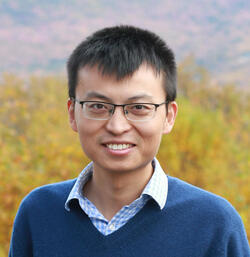
About the speaker: Fahd Humayun is a Stanton Nuclear Security Fellow at Stanford University’s Center for International Security and Cooperation (CISAC). He completed his PhD in Political Science from Yale University in 2022 before joining Tufts University as an Assistant Professor of Political Science. His research looks at the domestic sources of interstate conflict and crisis behavior, expanding on existing theories of democratic accountability and political representation as they pertain to domestic decision-making and crisis signaling. His book project, “Leaders, Reputation & War” uses case studies of foreign policy position-taking India, Israel, South Korea and the United States to explain why domestic politics compels some leaders to commit to unanticipated national security pathways. He also holds an MPhil from the University of Cambridge and a BSc in International History from the London School of Economics.

 All CISAC events are scheduled using the Pacific Time Zone.

William J. Perry Conference Room

0
Affiliate
Fahd Humayun Headshot CISAC

Fahd Humayun is an Assistant Professor of Political Science at Tufts University. He received his PhD in Political Science from Yale University in 2022. His research looks at the domestic sources of interstate crisis behavior, leader decision making and crisis signaling. During 2024-25 he was a Stanton Nuclear Security Fellow at Stanford University’s Center for International Security & Cooperation.

Date Label
Fahd Humayun
Seminars
Date Label
-

About the event: In nearly every country with sizable armed forces, debates persist about the relative effectiveness of military recruitment systems. Conventional wisdom asserts that volunteer armies fight more effectively in battle than conscript armies due to higher levels of training and motivation. I argue instead that conscript forces outperform their volunteer counterparts for several reasons. First, higher domestic political costs of sending draftees into combat incentivize leaders to vet military operations more carefully. Second, the leaders restrict conflicts to those that involve broadly recognized national interests, for which individual conscripts are highly motivated to bear real costs. Third, the average demographic makeup of conscript armies is superior to that of volunteer armies, which translates into advantages in battlefield skill acquisition. Democratic regime type and longer enlistment terms further bolster the battlefield effectiveness of conscript armies. I provide support for these propositions by analyzing cross-national battle-level data as well as American battlefield performance during the Vietnam War. My findings contribute to debates about military recruitment policy and civil–military relations.

About the speaker: Changwook Ju is a Postdoctoral Scholar at Stanford University’s Center for International Security and Cooperation. He specializes in International Relations and security studies, with a focus on military recruitment and effectiveness, China and global politics, and conflict-related sexual violence.

Changwook earned his Ph.D. in Political Science from Yale University in 2024. Before Yale, he received an M.P.P. from the University of Chicago Harris School of Public Policy in 2018. In 2015, he graduated from Sungkyunkwan University in Seoul, South Korea, with dual undergraduate degrees in public policy and political science.

From 2011 to 2013, Changwook served in the Republic of Korea Marine Corps, attaining the rank of sergeant.

 All CISAC events are scheduled using the Pacific Time Zone.

William J. Perry Conference Room

0
Affiliate
headshot_1.jpg

Changwook Ju is an Assistant Professor of International Relations in the Department of Political Science at Tulane University. Previously, he was a Postdoctoral Scholar at Stanford University’s Center for International Security and Cooperation and a Hans J. Morgenthau Fellow at the Notre Dame International Security Center. Changwook earned his Ph.D. in Political Science from Yale University in 2024. Before Yale, he received an M.P.P. from the University of Chicago Harris School of Public Policy in 2018. In 2015, he graduated from Sungkyunkwan University in Seoul, South Korea, with dual undergraduate degrees in public policy and political science. 

Changwook’s research spans international relations and security studies. He is primarily interested in military recruitment, battlefield effectiveness, civil–military relations, democracy and war, public nuclear attitudes, China and global politics, East Asian security, political violence, and conflict-related sexual violence. His research has been published in the American Journal of Political Science, Foreign Policy Analysis, International Studies Quarterly, International Studies Review, and the Journal of Conflict Resolution. His policy analysis and commentary have appeared in Chicago Policy Review, The Diplomat, and Foreign Policy. 

Prior to his academic career, Changwook served in the Republic of Korea Marine Corps from 2011 to 2013, attaining the rank of sergeant.

Date Label
Changwook Ju
Seminars
Date Label
-

About the event: Scholars have long debated why some conflicts spiral into prolonged cycles of hostility, while others fizzle out. Conventional wisdom suggests that states, when challenged, can demonstrate their resolve by retaliating militarily, thereby deterring future challenges. I argue that the desire for revenge, rather than deterrence concerns, shapes when individuals prefer military retaliation and why such actions provoke cyclical conflicts. Public support for military retaliation is primarily driven by a human desire to balance the suffering inflicted upon one's own ingroup, often without regard for the consequences. Consequently, instead of achieving deterrence, imposing costs on an adversary through military retaliation tends to provoke reciprocal retaliation. I test my theory using a preregistered survey experiment in which China attempts to deter U.S. intervention in a hypothetical Taiwan Strait crisis through retaliation. The results align with the logic of revenge. Rather than deterring the U.S., China's retaliation, which imposes greater suffering on the U.S., increases public support for further escalation, even in scenarios of secret U.S. retaliation with no deterrent benefit. This study contributes to the deterrence versus spiral model debate in two ways. First, it challenges the deterrence model, particularly theories of reputation for resolve. Second, it complements the spiral model by providing an alternative psychological microfoundation for the endogenous emergence of conflict spirals.

About the speaker: X Zhang is a predoctoral fellow at Stanford University's Center for International Security and Cooperation and a Ph.D. candidate in the Political Science Department at the University of Wisconsin-Madison. Zhang's research interests include the political psychology of interstate conflict, public opinion, and the domestic politics of foreign policy.

 All CISAC events are scheduled using the Pacific Time Zone.

William J. Perry Conference Room

0
Postdoctoral Fellow
X. Zhang Headshot

X received his PhD in the Department of Political Science at the University of Wisconsin–Madison. Prior to this, he received an MA from the University of Chicago's Committee on International Relations and a BIR from the Australian National University.

X's research focuses on the dynamics of revenge in international conflict. While conventional wisdom and strategic discourse often advocate for retaliation as a means of deterrence, he proposes that the real impetus frequently stems from an intrinsic desire for revenge. He argue that the primary trigger for revenge in international relations is the magnitude of suffering experienced by one’s national ingroup. Consequently, retaliatory actions are less about strategic deterrence and more about inflicting equivalent pain on the adversary, potentially setting off a cycle of revenge. Thus, in security crises and peace settlements, the key to escalation management and rivalry termination lies in reducing adversary suffering and the adversary public's desire for revenge.

As a hobby, X is writing a novel about disinformation and gaslighting in politics.

Date Label
X Zhang
Seminars
Date Label
-

About the event: Modern survey experiments indicate that in the event of a limited nuclear strike, the public in the targeted country, including a great democracy, would demand a decisive response. The implications for crisis stability are dire. Just at the moment when democratic decision makers would struggle to formulate a proportional response, they would also have to contend with an enraged populace shouting for vengeance. Public opinion as recently characterized is anathema to sound crisis management. The same mass sentiment that bolstered democratic resolve in the triumphal years after the Cold War now abandons presidents in the age of nuclear multipolarity to foredoomed strategies that overplay their hand. This, however, is not the whole story. Public opinion in real life also prevents leaders from throwing it all away or allowing crises to slip out of control. The Missiles of October in 1962 threatened international peace under different geopolitical circumstances, but the role of public opinion then has lessons for today. What might be called the Robert McNamara-Brent Scowcroft school still reigns. Rather than preclude crisis management, public opinion on net enables it: amplifying popular demand for peace and motivating extraordinary leader performance to preserve it.

About the speaker: Dr. Damon Coletta served as the endowed Scowcroft Professor of Political Science (2020-2021) at the United States Air Force Academy and director of the department’s Eisenhower Center for Space and Defense Studies (2022-2023).  Damon edits the peer-reviewed e-journal, Space & Defense (2012-2024) and serves as social sciences liaison to USAFA’s nationally recognized Nuclear Weapons & Strategy minor program.  He completed a book on science & technology policy and international security, Courting Science: Securing the Foundation for a Second American Century (Stanford, 2016), and coedited NATO’s Return to Europe (Georgetown, 2017).

 All CISAC events are scheduled using the Pacific Time Zone.

William J. Perry Conference Room

Damon Coletta
Seminars
Date Label
-

About the event: The Responsibility to Protect (R2P) has been invoked over one hundred times since its formal endorsement by the UN General Assembly in 2005. Although R2P was designed to protect populations around the world from mass atrocity, it is selectively applied to societies outside of the North. Cases of inaction are also observed over atrocities in the South that would otherwise qualify for intervention by UN standards. Why does the international community intervene in some cases and not others? I argue that R2P betrays a racialized bias whereby the legal principle of sovereignty is transformed into a conditional privilege withheld from most non-European countries all else equal. Debates over a peoples’ capacity for self-rule are historically framed or even justified by racism. Since R2P restores a similar debate wherein state sovereignty becomes contingent, it can affirm prevailing beliefs about race and capacity for self-governance as a means to political ends. I examine R2P cross-nationally by matching countries on characteristics that likely drive intervention. Using UN resolutions and original data on mass atrocity events, I measure the relationship between country racial majority and the decision to intervene. The results suggest that R2P is disproportionately invoked over societies racialized as non-white. To address variation in R2P invocation over countries in the South, I examine a set of cases qualitatively and show that inaction by the international community is racial as it is strategic. A theory of race deepens understanding of the contradictory values that cohere to shape international law and intervention. 

About the speaker: Bianca Freeman is a 2024-2026 UC President's Postdoctoral Fellow in the Travers Department of Political Science at UC Berkeley. She received her PhD from UC San Diego Political Science in the summer of 2024. Bianca’s research focuses on the politics of race and racism in international law. In her dissertation and book project, she examines norms and agreements between states as legal outcomes of racial hierarchy in world politics. Bianca has published or has work forthcoming in the Annual Review of Political Science, Security Studies, International Studies Review, International Politics, and Politics, Groups, and Identities. 

 All CISAC events are scheduled using the Pacific Time Zone.

William J. Perry Conference Room

Bianca Freeman
Seminars
Date Label
-


Alejandro Schuler

Talk Title: Free from the ATE: Defining and Estimating Your Own Causal Effects 

Alejandro Schuler is an Assistant Professor in Residence in the Division of Biostatistics at UC Berkeley with expertise in nonparametric statistics, causal inference, and machine learning.

Dr. Schuler is known for developing NGBoost, the selectively adaptive lasso, and prognostic adjustment, among other methods. Besides methods development, he collaborates with domain experts to translate their questions to mathematical formalisms and bring the right methods to bear on them.

He completed his PhD at Stanford in 2018 and worked as a postdoc with Mark van der Laan before starting on the faculty at Berkeley. His experiences working as a data scientist at Kaiser Permanente’s Division of Research and as an early employee of a health tech startup helped shape his research agenda into something with relevance beyond academia.


Health Policy Seminars are hybrid events open to the Stanford community. For more information, please reach out to healthpolicy-comms@stanford.edu

Encina Commons, Room 119
Department of Health Policy/Center for Health Policy   
615 Crothers Way, Stanford

Lunch will be provided

Seminars
Date Label
-


Steve Luby

Stephen Luby, MD, focuses on health in low and middle income countries and currently includes several themes.

His research group focuses on Human and Planetary Health and is engaged in a series of efforts to generate knowledge that will alter the way that bricks are manufactured across South Asia so that they generate less air pollution, less climate change and tens of thousands fewer deaths per year. This involves: 1) evaluating interventions in brick kilns to improve combustion efficiency and so simultaneously reduce coal costs for producers while generating less pollution and 2) using remote sensing to specify the location of brick kilns and ultimately evaluate their emissions. Another strand of his planetary health work looks at the release of lead into the environment in low and middle income countries, seeks to identify the sources of lead that is generating the greatest public health burden and develops and evaluates interventions to reduce this burden.


Health Policy Seminars are hybrid events open to the Stanford community. For more information, please reach out to healthpolicy-comms@stanford.edu

Encina Commons, Room 119
Department of Health Policy/Center for Health Policy   
615 Crothers Way, Stanford

Lunch will be provided

Seminars
Date Label
-


Lisa Ouellete

Talk Title: NIH Funding, Patents, and U.S. Drug Pricing Policy

Lisa Larrimore Ouellette is the Deane F. Johnson Professor of Law at Stanford Law School, as well as a Senior Fellow at the Stanford Institute for Economic Policy Research. Her scholarship addresses empirical and theoretical problems in intellectual property and innovation law. She takes advantage of her training in physics to explore policy issues such as how scientists use the technical information in patents, how scientific expertise might improve patent examination, the patenting of publicly funded research under the Bayh–Dole Act, and the integration of IP with other levers of innovation policy. She has applied these ideas to biomedical innovation challenges including the opioid epidemic, the COVID-19 pandemic, and pharmaceutical prices. She has also written about multiple legal issues in trademark law, about the evidentiary value of online surveys, and about the potential for different standards of review to create what she terms “deference mistakes” in numerous areas of law.

After registering, you will receive a confirmation email. For Zoom participants, the link will be in the confirmation email. 

Registration 

Hybrid Seminar: Lunch will be provided for on-campus participants.
Please register if you plan to attend, both for in-person and via Zoom.

Log in on your computer, or join us in person:
Encina Commons, Room 119
615 Crothers Way
Stanford, CA 94305

Seminars
Date Label
-


Jonathan Chen

Talk Title: Artificial Intelligence in Medicine - Real Magic or Technological Illusions? 

Jonathan H. Chen MD, PhD leads a clinical informatics research group to empower individuals with the collective experience of the many, combining human and artificial intelligence to deliver better care than either. Dr. Chen founded a company to translate his Computer Science graduate work into an AI system used by students around the world. His expertise is featured in the popular press with over 100 research publications and awards. Dr. Chen continues to practice medicine for the reward of caring for real people and to inspire his research to discover and distribute the latent knowledge embedded in clinical data.

Artificial Intelligence in Medicine - Real Magic or Technological Illusions?

Pandora’s box has opened in the form of publicly available generative AI systems for every imaginable (and many unintended) purposes. With a global scarcity of medical expertise against the unlimited demand of people in need, AI's potential to democratize healthcare knowledge, access, and to recover efficiencies is desperately needed. The opportunities and pitfalls will be reviewed in the context of specific projects around user-studies of physician+AI decision making, integration of chart summarization workflows, and personalized clinical decision support through data-driven prediction and recommender algorithms. The implications are vast as we converge upon a point in history where human vs. computer generated content can no longer be reliably distinguished. This session will review the attention and intention required for AI applications in the high-stakes world of healthcare as we distinguish real magic from convincing illusions.

After registering, you will receive a confirmation email. For Zoom participants, the link will be in the confirmation email. 

Registration 

Hybrid Seminar: Lunch will be provided for on-campus participants.
Please register if you plan to attend, both for in-person and via Zoom.

Log in on your computer, or join us in person:
Encina Commons, Room 119
615 Crothers Way
Stanford, CA 94305

Seminars
Date Label
-


Hawre Jalal

Dr. Hawre Jalal is the Director of the DASH Lab. He joined the School of Epidemiology and Public Health in January 2022. He is a physician (2003) by practice and holds a Masters (2008) and a PhD (2013) in health economic evaluations and decision sciences from the University of Minnesota.  After his PhD, he completed a postdoctoral fellowship at VA Palo Alto and Stanford University in 2015. He has been a faculty at University of Pittsburgh since 2015 prior to joining the University of Ottawa. His research uses quantitative methods to inform decision making under uncertainty, including health economic evaluations of medical treatments and public health policies and interventions.

Abstract:

This presentation explores the exponential rise in drug overdose deaths in the United States, offering insights from over four decades of data. By analyzing more than 1,000,000 overdose deaths since 1959, the research uncovers a persistent growth pattern shaped by shifting drug classes, demographic trends, and socio-environmental factors. The discussion will highlight innovative visualization techniques, such as hexamaps, that elucidate age, period, and cohort-specific patterns. Special attention will be given to the COVID-19 pandemic, which significantly accelerated overdose deaths due to factors such as social isolation, economic stress, and disruptions to healthcare and harm reduction services. This talk aims to provide insights into the structural drivers of the epidemic and the multi-faceted interventions required to address it.

After registering, you will receive a confirmation email. For Zoom participants, the link will be in the confirmation email. 

Registration 

Hybrid Seminar: Lunch will be provided for on-campus participants.
Please register if you plan to attend, both for in-person and via Zoom.

Log in on your computer, or join us in person:
Encina Commons, Room 119
615 Crothers Way
Stanford, CA 94305

Seminars
Date Label
Subscribe to Seminars