-
 

Technological advances have brought us to a potential tipping point in the delivery of financial services that will affect the individual, firm, the industry and the country. How important will this development be for potential growth in developed and developing countries? Will the changes occur without official intervention, or will they need the state’s guiding hand to ensure that they provide their benefits with minimal risk? What measures are needed from policy makers and regulatory authorities to clear the path for faster growth?

This seminar, co-sponsored by the Stanford Center for International Development and the Shorenstein Asia-Pacific Research Center, will look at how a group of companies, an industry and a country have effectively capitalized on conducive regulatory environment the opportunities offered by the technological advances and related disruptions. The talk will focus on the strategy of M-Pesa/Alibaba, Chinese Financial Sector and Singapore. The combination of Silicon Valley Technology and Smart Nation/City initiative may overcome some challenges of low productivity and low growth in many parts of the world especially in Asia and ASEAN.

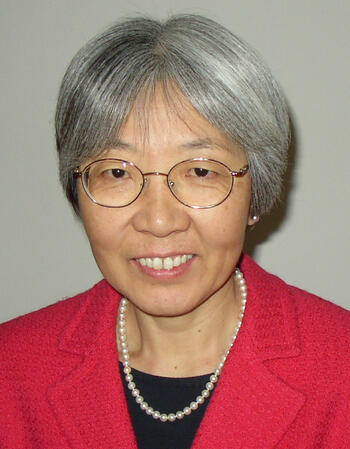
David LEE Kuo Chuen is a visiting scholar at the Walter H. Shorenstein Asia-Pacific Research Center (APARC) for the fall of 2015.  He is currently the Director of Sim Kee Boon Institute for Financial Economics.  He holds the appointment of Practice Professor of Quantitative Finance, Lee Kong Chian School of Business, in Singapore Management University.  He is also the founder of Ferrell Asset Management Group. His research interests encompass digital and Internet finance, digital banking, Asia finance, impact investing, financial inclusion and asset allocation. During his time as a Fulbright Scholar at Shorenstein APARC, his research will focus on harnessing Silicon Valley technology for connectivity and financial inclusion in ASEAN and Singapore. David is also an Independent Director of two SGX-listed companies and sits on the Investment Committee and Council of two charitable organizations. He is the Vice President of the Economic Society of Singapore.  He was the Founding Vice Chairman of the Alternative Investment Management Association (Singapore Chapter), a member of the SGX Security Committee, and MAS Financial Research Council.  He was also the Group Managing Director of OUE Limited and Auric Pacific Limited, as well as the Non-Executive Chairman of MAP Technology Limited. David speaks frequently in international conferences with occasional appearances in Bloomberg, Reuters and Channel NewsAsia.  He has published in Financial Analyst Journal, Journal of Investing, Journal of Wealth Management, Journal of Statistical Computation and Simulation, Applied Financial Economics, and several books and chapters on Household Economics and Hedge Funds.  His two books on Asia Finance focus on Banking, Sovereign Wealth Funds, REITs, Financial Trading & Markets, and Fund Performance. His latest book is on Digital Currency. He graduated from the London School of Economics and Political Science with a BSc (Econs), MSc (Mathematical Economics and Econometrics) and a PhD in Econometrics and Mathematical Economics.

Smart Nation, Silicon Valley Technology and Asia Growth Strategy
Download pdf
Philippines Conference Room3rd floor, Encina Hall616 Serra StreetStanford, CA 94305
David LEE Kuo Chuen, Director of Sim Kee Boon Institute for Financial Economics and APARC Visiting Scholar
Seminars
Date Label
-

Image
Mathias Hoffmann is Professor of Economics at the University of Zurich. His research focuses on the macroeconomic aspects of international financial integration and on the link between financial markets and the macro-economy more generally. His recent published articles include papers on the determinants of international capital flows and imbalances, the international transmission of business cycles, on international risk sharing and banking regulation. Prior to arriving in Zurich, he was Professor at the University of Dortmund in Germany and a Lecturer at Southampton University (UK). He holds a PhD in Economics from the European University Institute in Florence and obtained his undergraduate education in economics and mathematics at WHU School of Management, Brandeis University and the University of Bonn.

Mathias Hoffmann is a fellow of CESifo Munich and has held visiting positions, at the University of California at Berkeley, the Deutsche Bundesbank, the Hong Kong Monetary Authority and Keio University.

http://www.voxeu.org/person/mathias-hoffmann

http://www.econ.uzh.ch/faculty/hoffmann.html

Philippines Conference Room3rd floor, Encina Hall616 Serra StreetStanford, CA 94305
Mathias Hoffmann, Professor of International Trade and Finance, University of Zurich
Seminars
-

“Improving Symptoms and Quality of Life in Chronic Heart Failure”


Please note: All research in progress seminars are off-the-record. Any information about methodology and/or results is embargoed until publication.


*Please note the irregular time for this seminar*


Abstract

David Bekelman, MD, MPH is a visiting lecturer at Stanford University and the VA Palo Alto Health Care System.  He is an Associate Professor of Medicine and Nursing at the University of Colorado Anschutz Medical Campus.  Dr. Bekelman is a board-certified internist, psychiatrist, and palliative care specialist. In this talk, he will present his research related to measuring and improving quality of life, testing novel health care delivery interventions, and behavioral clinical trials.  He will describe his ongoing research that is examining ways to integrate palliative and psychosocial care into the primary care setting.  These interventions expand the “reach” of palliative care by combining training of nurses and social workers in basic palliative care with case review by palliative care specialists.  He will also discuss how his team has managed challenges in recruiting ill patients and their family caregivers into research, coordinating care, and integrating specialist care in the patient-centered medical home.

David Bekelman
Seminars
-

Abstract


Human rights groups have only two assets: people and information.  Learn about Benetech’s decade of putting information technology tools into the hands of human rights activists, with the goal of making these two assets more effective in advancing the global cause of human rights.   


Speaker bio


Jim Fruchterman is the founder and CEO of Benetech, a Silicon Valley nonprofit technology company that develops software applications to address unmet needs of users in the social sector. He is the recipient of numerous awards recognizing his work as a pioneering social entrepreneur, including the MacArthur Fellowship, Caltech’s Distinguished Alumni Award, the Skoll Award for Social Entrepreneurship, and the Migel Medal—the highest honor in the blindness field—from the American Foundation for the Blind. Since its founding in 1989, Benetech has touched the lives of hundreds of thousands of people. Its tools and services have transformed the ways in which people with disabilities access printed information, at-risk human rights defenders safely document abuse, and environmental practitioners succeed in their efforts to protect species and ecosystems. Through his work with Benetech and as a trailblazer in the field of social entrepreneurship, Jim continues to advance his vision of a world in which the benefits of technology reach all of humanity, not just the wealthiest and most able five percent.


Wallenberg Hall

Bulding 160

Room 124

Jim Fruchterman Founder and CEO Benetech
Seminars
-

How has the May 2014 coup in Thailand affected the country’s foreign policy? Has the junta realigned Thailand toward China and away from the US?  Some Western governments reacted to the coup by criticizing the military government of prime minister cum army general General Prayuth Chan-o-cha and subjecting it to downgrades and penalties. Washington bluntly called on the junta to return power to the Thai people. In reply, hoping to lessen the effects of Western pressure, Prayuth tried to diversify Thailand’s links and options in foreign affairs, including strengthening relations with nearby China, and with Myanmar, Cambodia, and Japan.

A January 2015 visit to Bangkok by US assistant secretary for East Asian and Pacific affairs Daniel R. Russel did not improve US-Thai relations. When Russel called on the junta to lift marshal law, the junta told him to mind his own business. Yet president Obama has not revoked Thailand’s status as Washington’s “major non-NATO treaty ally” nor has Prayuth aligned his country fully with Beijing. Pavin will sketch the changing contours of these among other relationships and relate their tenor and prospects to the political crisis that continues to unfold in Thailand.

Image
pavin4x6
Pavin Chachavalpongpun is an associate professor at the Center for Southeast Asian Studies in Kyoto University. His many publications include Reinventing Thailand: Thaksin and His Foreign Policy (2010) and A Plastic Nation: The Curse of Thainess in Thai-Burmese Relations (2005). He is chief editor of the multilingual on-line Kyoto Review of Southeast Asia. His PhD is from the University of London School of Oriental and African Studies. Following his fierce criticism of the 2014 coup in his country, the junta twice summoned him to Bangkok. Rather than comply, he reaffirmed his opposition to the coup. A warrant was eventually issued for his arrest, his Thai passport was revoked, and he was obliged to apply for refugee status in Japan.

Pavin Chachavalpongpun 2015-16 Lee Kong Chian National University of Singapore-Stanford University Distinguished Fellow on Southeast Asia
Seminars
-

Co-sponsored by the Japan Program

Prof. Booth will assess the socioeconomic consequences of Japanese colonialism in Taiwan, Korea, and Manchuria from 1910 to 1945. She will compare Japan’s policies with those implemented by other colonial powers in South and Southeast Asia. In particular she will address the writings of what has been termed the “Stanford School”—an influential group of scholars who published widely on Japanese colonial policies over the last fifty years. Their work has been used to support the argument that Japanese rule was more developmental than that of other colonial powers, and that it laid the foundations for the stellar economic performance of Taiwan and the Republic of Korea in the decades after 1950. She will challenge these conclusions by comparing economic and social indicators for Korea, Taiwan, and Manchuria with those from other Asian colonies and also from Thailand. While Japan’s colonies, especially Taiwan, do score well on some indicators, they do less well on others. The notion that Japanese rule was exceptionally “developmental” does not merit support.

Image
anne booth
Anne Booth has been an Asia-focused professor of economics in the School of Oriental and African Studies, University of London, since 1991. She studies the modern economic history of Southeast Asia with emphasis on the 20th century. Her many writings in this field include Colonial Legacies: Economic and Social Development in East and Southeast Asia. Her latest book, Economic Change in Modern Indonesia, is due from Cambridge University Press in April. Before coming to SOAS, she held research and teaching positions in Singapore and Australia. Her degrees are from Victoria University of Wellington (BA) and the Australian National University (PhD). Before 1991 she held research and teaching positions in Singapore and Australia. She grew up in New Zealand.

Anne Booth 2015-16 NUS-Stanford Lee Kong Chian Distinguished Fellow on Southeast Asia, Stanford University 2015-16 NUS-Stanford Lee Kong Chian Distinguished Fellow on Southeast Asia, Stanford University
Seminars
-

Abstract

The Internet has already changed many aspects of peoples’ lives in developed economies and has provided far-reaching economic and social benefits. Extending these opportunities is critical to accelerating economic and social growth in developing economies as well. Many international organizations have set ambitious plans to promote Internet access globally; they pore over reports and expend considerable money, time and talent exploring new ways to connect the unconnected (e.g., blimps, drones, satellites). But raw enthusiasm and aggregate statistics fail to capture the reality of the digital divide in the developing world. Facebook’s commitment to connecting the developing world includes a desire to understand the complexity of the issue as it relates to the cultural, structural and technological inequalities between and within countries. This approach requires bringing together insights from large number of publicly available data sources that employ different methodologies to understanding the multi-faceted nature of the digital divide, even when the assembled sources of data reach different conclusions.

In this talk, researchers from Facebook will discuss the difficulties and limitations often faced by aggregating numerous country-specific data sources together to measure the extent, cause and consequences of differences in Internet adoption between countries and populations. They will explain how Facebook evaluates the quality of existing publicly available data sources (e.g., national statistics, academic studies and industry reports), aggregates multiple sources to obtain relevant estimates and supplement data “holes” with original data collection efforts. The multi-faceted approach allows Facebook to conduct scalable and comprehensive comparative analyses at multiple levels, which in turn leads to more culturally-sensitive and context-specific approaches for bridging the digital divide.

Speaker Bio

Image
11404871 406765576173226 758980652 n 2
Lauren Bachan is a quantitative researcher on the Growth Population and Survey Science team at Facebook. Her current research focuses on understanding the social and cultural barriers to Internet use in developing countries. More broadly, she’s interested in how new technologies change social life and are adapted to fit long-standing cultural norms. Lauren received her PhD in Sociology and Demography from Penn State University, where she studied extended family childcare systems in sub-Saharan Africa. Lauren also holds a BA in International Relations from Mount Holyoke College and has previously worked in the fields of international development and market research.


Wallenberg Hall

Building 160, Room 124, Stanford, CA 94305

Lauren Bachan Growth Research Facebook
Seminars
-

ABSTRACT

A common assumption in political economy is that voters are self-regarding maximizers of material goods, choosing their preferred level of social spending accordingly. In contrast, students of American politics have emphasized the key role of an other-regarding motive that makes support for social transfers conditional on the perceived deservingness of recipients. The two motives often conflict as large portions of the poor (rich) find recipients undeserving (deserving). I argue that material self-interest overruns perceptions of deservingness when the share of income affected by social transfers is high. Using European data, I show that low (high) income individuals are less (more) likely to be driven by considerations of deservingness. Cross-nationally, the more working-age benefits are evenly spread across income groups, the less deservingness considerations  permeate public debates on welfare state reform.  This framework has important implications for understanding attitudinal change in two high inequality countries, the United States and Great Britain.


SPEAKER BIO

Image
cavaille
Charlotte Cavaille is a research fellow at the Institute of Advanced Studies in Toulouse. She received a PhD in Government and Social Policy from Harvard University in November 2014. Her work examines changes in mass attitudes toward redistributive policies in advanced capitalist countries. Her dissertation focuses on the disconnect between rising income inequality and stable levels of support for income redistribution in Great Britain and the United States. Some of her findings have been published in the Journal of Politics.

Deservingness, Self-interest and the Welfare State
Download pdf
Charlotte Cavaille Research Fellow, Institute of Advanced Studies in Toulous Research Fellow, Institute of Advanced Studies in Toulous
Seminars
-

**To RSVP, please email Jessie Brunner at jbrunner@stanford.edu.**

[[{"fid":"221010","view_mode":"crop_870xauto","fields":{"format":"crop_870xauto","field_file_image_description[und][0][value]":"","field_file_image_alt_text[und][0][value]":"","field_file_image_title_text[und][0][value]":"","field_credit[und][0][value]":"","field_caption[und][0][value]":"","field_related_image_aspect[und][0][value]":"","thumbnails":"crop_870xauto"},"type":"media","attributes":{"width":"870","class":"media-element file-crop-870xauto"}}]]

Abstract

As the protracted and chaotic conflict in Syria continues into its fifth year, Syrians of all backgrounds are being subjected to gross human rights violations. A growing number of parties to the conflict, including the Government and the Islamic State, display disregard for international legal conventions and employ tactics such as sexual violence, murder, and torture that have resulted in mass civilian casualties, large-scale displacement, and the destruction of Syria’s cultural heritage.


Peter Bouckaert

Peter Bouckaert is Human Rights Watch’s emergencies director, coordinating the organization’s response to major wars and other human rights crises. A Belgian-born Stanford Law School graduate, Bouckaert has conducted fact-finding missions around the world, including currently documenting Syrian refugees in Europe.

Sareta Ashraph

Sareta Ashraph specializes in international criminal, humanitarian, and human rights law and has served since 2012 as the Senior Analyst on the UN Commission of Inquiry on the Syrian Arab Republic, investigating and reporting on violations of international law in the context of ongoing events in Syria.


To RSVP, please email Jessie Brunner at jbrunner@stanford.edu.

Peter Bouckaert Director, Emergencies, Human Rights Watch
Sareta Ashraph Senior Analyst, UN Commission of Inquiry on the Syrian Arab Republic
Seminars
-

- This event is offered as a joint sponsorship with the Hoover Institution - 


Abstract: Writing on matters relating to the cyber era dominate government and academia alike.  Much of the focus tends to be on either the technical aspects or questions about cyber threats and warfare. Much less attention has been on the advent of the cyber era for the intelligence community. While there can be no doubt that the technological age in which we find ourselves today is new, there is a related question about the extent to which it has changed the work of the intelligence community. This talk argues that to find an answer, it is imperative to consider previous technological revolutions and consider how the intelligence community adapted. Only by doing so is it possible to address the issue of whether intelligence is the cyber era is a revolution or evolution.

About the Speaker: Professor Michael S. Goodman is a Professor in ‘Intelligence and International Affairs’ in the Department of War Studies, King's College London.  He has published widely in the field of intelligence history, including most recently The Official History of the Joint Intelligence Committee, Volume I: From the Approach of the Second World War to the Suez Crisis (Routledge, 2014), which was chosen as one of The Spectator’s books of the year.  He is series editor for ‘Intelligence and Security’ for Hurst/Columbia University Press and is a member of the editorial boards for five journals, including the three main intelligence ones. He is currently on secondment to the Cabinet Office where he is the Official Historian of the Joint Intelligence Committee.

Michael Goodman Professor in Intelligence and International Affairs Speaker King's College London
Seminars
Subscribe to Seminars