-

- Registration for this event is mandatory -

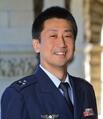
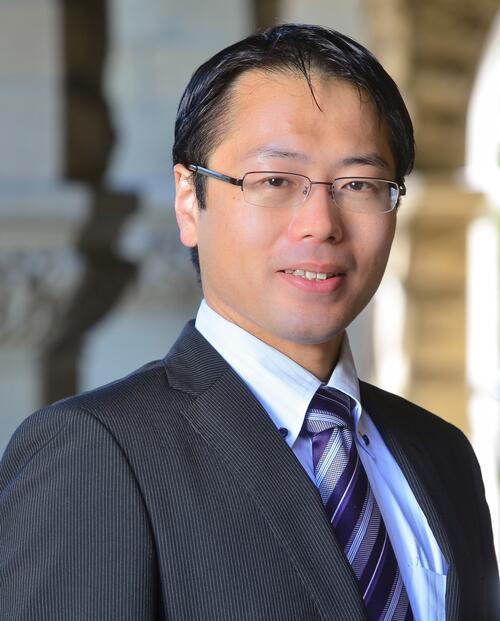
About the Speaker: Gen. John E. Hyten is Commander of U.S. Strategic Command (USSTRATCOM), one of nine Unified Commands under the Department of Defense. USSTRATCOM is responsible for the global command and control of U.S. strategic forces to meet decisive national security objectives, providing a broad range of strategic capabilities and options for the President and Secretary of Defense.

General Hyten attended Harvard University on an Air Force Reserve Officer's Training Corps scholarship, graduated in 1981 with a bachelor’s degree in engineering and applied sciences and was commissioned a second lieutenant. General Hyten’s career includes assignments in a variety of space acquisition and operations positions. He served in senior engineering positions on both Air Force and Army anti-satellite weapon system programs.  He commanded Air Force Space Command from Aug 2014-Oct 2016.

Encina Hall, 2nd floor

GEN John Hyten Commander, USSTRATCOM
Seminars
-

Abstract: What do emerging powers want from the international order? Are their intentions generally benign or potentially harmful to global order? What capabilities do emerging powers use to influence the international order and how? This book, Aspirational Power, examines these questions through the lens of Brazil’s historical and contemporary experience as an emerging power. Brazil has long aspired to grandeza (greatness) and to emerge to take its place among the major powers that influence and shape the international order. By history and by design, Brazil emphasizes soft power in its pursuit of a more democratic international order based on sovereign equality among nations. This book examines the domestic sources of Brazil’s international influence and how it attempts to use its particular set of capabilities to influence global order. It demonstrates how the weakness of Brazil’s domestic institutions and periodic internal crises repeatedly undermine its pursuit of major power status. The book concludes by examining how Brazil might take better advantage of existing opportunities in the international order to enhance its influence and how deepening ties to democratic emerging powers such as India and South Africa might better advance its global interests.

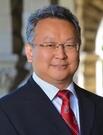
About the Speaker: Harold Trinkunas joins the Center as the successor to Lynn Eden in the concomitant role of Senior Research Scholar and Associate Director for Research. Harold comes to CISAC from the Brookings Institution, where he was the Charles W. Robinson Chair and Senior Fellow as well as Director of the Latin America Initiative. Previously, he served as Chair of the National Security Affairs Department at the Naval Postgraduate School, where he was also an Associate Professor. One of the nation's leading Latin America specialists, Harold's work has examined civil-military relations, ungoverned spaces, terrorist financing, emerging power dynamics, and global governance. His newest book, Aspirational Power: Brazil's Long Road to Global Influence, co-authored with David Mares of UCSD, was published this summer by Brookings Institution Press.

Harold brings to the Associate Director for Research role extensive experience in academic administration, program development, mentoring, teaching, and policy analysis. His leadership will continue to advance the Center's mission of training the next generation of international security specialists; developing original policy-relevant scholarship; and extending our outreach to global policymakers to improve the peace and security of our world.

Born and raised in Venezuela, Harold earned his doctorate in political science from Stanford University in 1999 and has been a predoctoral fellow and later a visiting professor at CISAC. 

Encina Hall, 2nd floor

CISAC
Stanford University
Encina Hall, E205
Stanford, CA 94305-6165

(650) 725-8035
0
Senior Research Scholar
rsd19_072_0081a.jpg

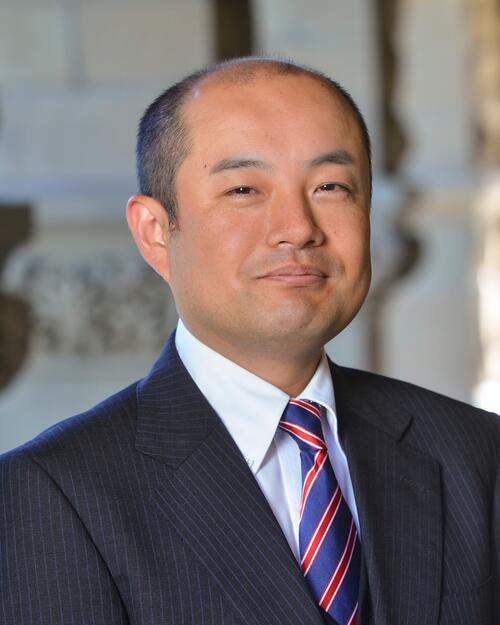
Harold Trinkunas is the Deputy Director and a Senior Research Scholar at the Center for International Security and Cooperation at the Freeman Spogli Institute for International Studies at Stanford University. Prior to arriving at Stanford, Dr. Trinkunas served as the Charles W. Robinson Chair and senior fellow and director of the Latin America Initiative in the Foreign Policy program at the Brookings Institution. His research focuses on issues related to foreign policy, governance, and security, particularly in Latin America. Trinkunas has written on emerging powers and the international order, ungoverned spaces, terrorism financing, borders, and information operations. 

Trinkunas has co-authored Militants, Criminals and Warlords: The Challenge of Local Governance in an Age of Disorder (Brookings Institution Press, 2017), Aspirational Power: Brazil’s Long Road to Global Influence (Brookings Institution Press, 2016) and authored Crafting Civilian Control of the Military in Venezuela (University of North Carolina Press, 2005). He co-edited and contributed to Oxford Handbook of Peaceful Change in International Relations (Oxford University Press, 2021), Three Tweets to Midnight: The Effect of the Global Information Ecosystem on the Risk of Nuclear Conflict  (Hoover Institution Press, 2020), American Crossings: Border Politics in the Western Hemisphere (Johns Hopkins University Press, 2015), Ungoverned Spaces: Alternatives to State Authority in an Era of Softened Sovereignty (Stanford University Press, 2010), Global Politics of Defense Reform (Palgrave MacMillan, 2008), and Terrorism Financing and State Responses (Stanford University Press, 2007).

Dr. Trinkunas also previously served as an associate professor and chair of the Department of National Security Affairs at the Naval Postgraduate School in Monterey, California. He received his doctorate in political science from Stanford University in 1999. He was born in Maracaibo, Venezuela. 


Deputy Director
CV
Date Label
CISAC
Seminars
-

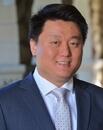
What is the logic of China’s foreign policy decision-making? Thomas Fingar explores how security and economic development have driven China’s foreign policy stance over the last 35 years. Even as the scope and scale of China’s engagement with the world has undergone a sea change, China’s calculus has remained consistent: How will a particular foreign policy choice cost or contribute to China’s economic growth and national security?


Multimedia for this event.


Image
Thomas Fingar is the Shorenstein APARC Fellow in the Freeman Spogli Institute for International Studies at Stanford University. From 2005 to 2008, he served concurrently as the first deputy director of national intelligence for analysis and as chairman of the National Intelligence Council. He served previously as assistant secretary of the State Department’s Bureau of Intelligence and Research (2004–2005), principal deputy assistant secretary (2001–2003), deputy assistant secretary for analysis (1994–2000), director of the Office of Analysis for East Asia and the Pacific (1989–1994), and chief of the China Division (1986–1989). Fingar’s most recent books are The New Great Game: China and South and Central Asia in the Era of Reform (Stanford University Press, 2016); and Uneasy Partnership: China and Japan, the Koreas, and Russia in the Age of Reform (Stanford University Press, 2017, forthcoming).


This event is part of the winter colloquia series entitled "China: Going Global" sponsored by Shorenstein APARC's China Program.

[[{"fid":"224946","view_mode":"crop_870xauto","fields":{"format":"crop_870xauto","field_file_image_description[und][0][value]":"","field_file_image_alt_text[und][0][value]":false,"field_file_image_title_text[und][0][value]":false,"field_credit[und][0][value]":"Economist.com","field_caption[und][0][value]":"","field_related_image_aspect[und][0][value]":"","thumbnails":"crop_870xauto"},"type":"media","field_deltas":{"1":{"format":"crop_870xauto","field_file_image_description[und][0][value]":"","field_file_image_alt_text[und][0][value]":false,"field_file_image_title_text[und][0][value]":false,"field_credit[und][0][value]":"Economist.com","field_caption[und][0][value]":"","field_related_image_aspect[und][0][value]":"","thumbnails":"crop_870xauto"}},"link_text":null,"attributes":{"width":"870","style":"margin-left: 0px; margin-right: 15px; padding: 5px; float: left; width: 350px; height: 194px;","class":"media-element file-crop-870xauto","data-delta":"1"}}]]China: Going Global

Beijing’s new Silk Road initiative links old trade corridors from Asia to Africa and Europe. Many perceive that President Xi Jinping’s “One Belt, One Road” initiative as well as China’s many other trade, investment and finance projects transcend their economic calculus and reflect Beijing’s geopolitical ambitions to reposition China’s standing on the global stage. The China Program brings leading experts to explore the drivers and motivators of China’s international initiatives, their reach and scope as well as the implications of China’s increasing activism on the world stage.

http://aparc.fsi.stanford.edu/research/china-going-global

Freeman Spogli Institute for International Studies
Stanford University
Encina Hall, C-327
Stanford, CA 94305-6055

(650) 723-9149 (650) 723-6530
0
Shorenstein APARC Fellow
Affiliated Scholar at the Stanford Center on China's Economy and Institutions
tom_fingar_vert.jpg PhD

Thomas Fingar is a Shorenstein APARC Fellow in the Freeman Spogli Institute for International Studies at Stanford University. He was the inaugural Oksenberg-Rohlen Distinguished Fellow from 2010 through 2015 and the Payne Distinguished Lecturer at Stanford in 2009.

From 2005 through 2008, he served as the first deputy director of national intelligence for analysis and, concurrently, as chairman of the National Intelligence Council. Fingar served previously as assistant secretary of the State Department’s Bureau of Intelligence and Research (2000-01 and 2004-05), principal deputy assistant secretary (2001-03), deputy assistant secretary for analysis (1994-2000), director of the Office of Analysis for East Asia and the Pacific (1989-94), and chief of the China Division (1986-89). Between 1975 and 1986 he held a number of positions at Stanford University, including senior research associate in the Center for International Security and Arms Control.

Fingar is a graduate of Cornell University (A.B. in Government and History, 1968), and Stanford University (M.A., 1969 and Ph.D., 1977 both in political science). His most recent books are From Mandate to Blueprint: Lessons from Intelligence Reform (Stanford University Press, 2021), Reducing Uncertainty: Intelligence Analysis and National Security (Stanford University Press, 2011), The New Great Game: China and South and Central Asia in the Era of Reform, editor (Stanford University Press, 2016), Uneasy Partnerships: China and Japan, the Koreas, and Russia in the Era of Reform (Stanford, 2017), and Fateful Decisions: Choices that will Shape China’s Future, co-edited with Jean Oi (Stanford, 2020). His most recent article is, "The Role of Intelligence in Countering Illicit Nuclear-Related Procurement,” in Matthew Bunn, Martin B. Malin, William C. Potter, and Leonard S Spector, eds., Preventing Black Market Trade in Nuclear Technology (Cambridge, 2018)."

Selected Multimedia

CV
Date Label
<i>Shorenstein APARC Fellow</i>, FSI, Stanford University
Seminars
-

Image
It is now commonplace to think of India's rise as a great power as inevitable. The Indian economy has demonstrated impressive growth during the last twenty-five odd years; India remains one of the few large economies that continues to grow at high single-digit rates despite the global economic slowdown; Indian military capabilities are significant, impressive and expanding; and not surprisingly then, New Delhi seeks a place at the high tables of global governance. The United States has in recent decades placed a strategic bet on India, supporting its rise in the expectation that this will advance American interests in Asia and globally. But will India meet these expectations? In fact, can India become the great power that it seeks to be or is it always destined to remain a great power in waiting, forever promised but never arriving?

Tellis will address this question and its consequences for peace, prosperity and security throughout the Indo-Pacific region.   


Image
Ashley J. Tellis is a senior fellow at the Carnegie Endowment for International Peace specializing in international security, defense, and Asian strategic issues. While on assignment to the U.S. Department of State as senior adviser to the under secretary of state for political affairs, he was intimately involved in negotiating the civil nuclear agreement with India.

Previously, he was commissioned into the Foreign Service and served as senior adviser to the ambassador at the U.S. embassy in New Delhi. He also served on the National Security Council staff as special assistant to the president and senior director for strategic planning and Southwest Asia.

Prior to his government service, Tellis was senior policy analyst at the RAND Corporation and professor of policy analysis at the RAND Graduate School.

He is the author of India’s Emerging Nuclear Posture (RAND, 2001) and co-author of Interpreting China’s Grand Strategy: Past, Present, and Future (RAND, 2000). He is the research director of the Strategic Asia Program at the National Bureau of Asian Research and co-editor of the program’s thirteen most recent annual volumes, including this year’s Strategic Asia 2016–17: Understanding Strategic Cultures in the Asia-Pacific. In addition to numerous Carnegie and RAND reports, his academic publications have appeared in many edited volumes and journals, and he is frequently called to testify before Congress.

Tellis is a member of several professional organizations related to defense and international studies including the Council on Foreign Relations, the International Institute of Strategic Studies, the United States Naval Institute, and the Navy League of the United States. He has earned a PhD and MA from the University of Chicago and an MA and BA from the University of Bombay. 

About the colloquia:

In 2014, Indian voters gave Narendra Modi and the BJP a mandate to accelerate India’s economic reforms and revitalize its foreign relations, in particular with the United States and with partners in East Asia. But the pace and depth of reforms and economic transformation have not met the high expectations, despite strong GDP performance. Economic growth remains uneven, job creation sluggish, and massive infrastructural and administrative problems continue to trouble many sectors of the economy. After twenty-five years of economic reforms, India’s potential as a new global industrial hub has still not been realized and its vast resources of labor and talent remain underdeveloped.

During the 2017 winter and spring quarters Shorenstein APARC and the Center for South Asia will host a series of lectures and discussions that explore what makes India democratic and dynamic, and the obstacles that prevent the country from realizing its enormous potential.

Also, in 2017, the next Global Entrepreneur Summit will be in India, sequel to the 2016 Stanford-hosted Summit. This colloquium will help prepare for that event by reaching out to scholars, students, interested stakeholders, business leaders and others in the Bay Area.

This colloquia is co-sponsored with the Stanford Center for South Asia 

Image
csa logorust cropped

Seminars
-
Abstract: From programing firmware for IoT devices to misoperations in the field and control room, humans have the potential to offer creative, collaborative, and highly efficient solutions to some of society’s greatest challenges. However, human errors can lead to software vulnerabilities, blackouts, and loss of public trust. As we strive to make infrastructures more robust and lives safer, paradoxically, we often put humans at increased risk of distraction and error. Growing system and market speeds, interconnectivities between critical infrastructures, fear of compliance violations, and public scrutiny create challenges for operators, increase risks and costs, and prevent the system from deriving the greatest benefit from its people. Organizations are complex sociotechnical systems with complex political hierarchies; techniques such as root cause analysis demonstrate how intertwined our people and organizations are with technical system outcomes. Michael Legatt will highlight his work as a human factors engineer, from an emergency operations center during the 2003 blackout, to ten years at ERCOT (the grid operator for most of Texas), to founder of a company focused on improving human-computer and human-organizational interfaces for critical infrastructure management.
 
About the Speaker: Michael Legatt is the CEO and Founder of ResilientGrid. He has been a programmer for over 20 years in the energy, financial, medical, neuroscience research, and educational sectors. He has a Ph.D. in Clinical Health Psychology/Neuropsychology, a Ph.D. in Energy Systems Engineering, and is a Certified Performance Technologist.
 
As an amateur radio operator, he received a commendation for helping to provide emergency communications during the 2003 blackout in the northeastern United States, which sparked his interest in the psychology of critical infrastructure management.
 
Prior to founding ResilientGrid, Michael spent a decade as Electric Reliability Council of Texas’ Principal Human Factors Engineer. There, his development of the Macomber Map® was featured in several news outlets, and was credited as being instrumental in helping ERCOT operators maintain grid reliability through severe weather and record-setting wind generation. He also works on the behavioral aspects of consumer electric use, electric vehicle to grid integration, behavioral aspects of conservation and consumer awareness in grid management, and the cybersecurity, behavioral, and reliability issues that arise with integrating new technologies across layers of the grid.

Encina Hall, 2nd floor

Michael Legatt CEO and Founder ResilientGrid
Seminars
-

Abstract:

When villages in China began to introduce local elections in the 1980s it was, for many, a moment of great optimism about the prospects for local democracy in the Peoples' Republic. Yet village self-government has not curbed the power of local officials in China to confiscate the wealth from the rural poor. Following the introduction of village elections, over 60 million villagers have had their land seized by their local governments. These land seizures amount to a redistribution of trillions of dollars of wealth from smallholders to the government. In this talk, I argue that local self-government in China is a strikingly effective tool for top-down authoritarian control. I focus on the consequences of including communal elites, like the leaders of lineages or religious groups, in village institutions of self-government. The view that local democracy nurtures accountability would suggest that the inclusion of communal elites in village government would strengthen villagers' land rights. After all, these communal elites face strong social expectations that they cooperate with their group and enact policies that benefit them. Drawing on case studies and a new dataset, I show that when communal elites join local institutions of self-government, the state is instead able to expropriate more land than when these elites remain outside of government. I argue that these communal elites are important intermediaries that help China's authoritarian state control and extract from their groups.


Speaker Bio:

Image
daniel embedded
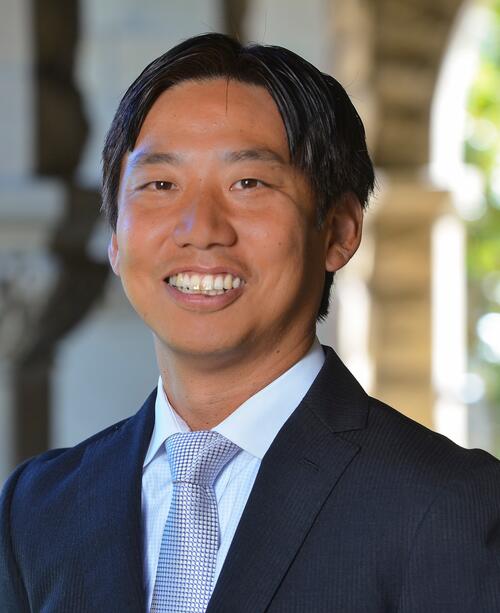
Daniel Mattingly is a Postdoctoral Fellow at the Center on Democracy, Development, and the Rule of Law at Stanford University. He received a Ph.D. in political science from the University of California, Berkeley in 2016. Starting in summer 2017, he will join the department of political science at Yale as an assistant professor. Dan’s dissertation focuses on the sources of state power in China, and shows how the ruling party uses democratic institutions to strengthen its political control over rural China. More broadly he is interested in local governance, state-building, authoritarian rule, and political accountability. His work appears in Comparative Political Studies and World Politics.

CDDRL Postdoctoral Fellow, 2016-17
Seminars
-

Abstract:

Media censorship is considered as the hallmark of authoritarian regimes. Why don’t citizens acquire uncensored info despite the low cost availability? What does it take to expose citizens to uncensored information, and how does exposure affect their beliefs, attitudes, and behaviors? We conduct a field experiment directly varying the supply of uncensored information (by providing free access to uncensored internet to university students in China), and students’ demand for information (by providing informational and monetary incentives) over the course of 18 months. We measure and trace students’ media consumption, beliefs and attitudes regarding media, as well as a broad range of economic and political attitudes and behaviors. We find that censorship successfully prevents information consumption due to the combination of restricted supply of and low demand for uncensored information. The low demand is primarily driven by students’ skeptical beliefs regarding uncensored media outlets, and such beliefs can be persistently changed after a period of exposure. Having exposed to uncensored information makes students more knowledgeable, more pessimistic of the Chinese economy, more critical of the government, and more likely to plan on leaving China in the near future.


Speaker Bio:

Image
david yang
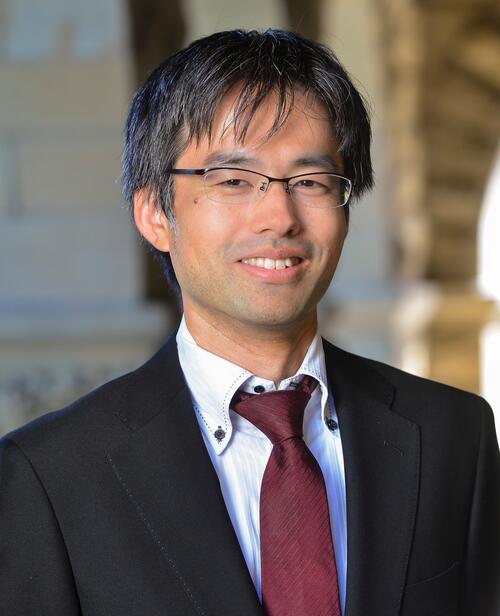
David Y. Yang is a PhD candidate in Economics at Stanford University. He received B.A. in statistics and B.S. in business administration from University of California, Berkeley. His research interests center on political economy, behavioral and experimental economics, and economic history. In particular, he is interested in the causes and consequences of political beliefs, attitudes, and preferences.

David Y. Yang PhD candidate in Economics at Stanford University
Seminars
-

Abstract:

Globalization, shifting great power dynamics, and the growing accessibility of Internet and communication technology has changed the environment within which autocrats operate. Many analysts have noted these changes and concluded that the masses now hold the upper hand and that dictators’ days are surely numbered. It may be true that 21st century autocrats face more and increasingly complex challenges to their rule. But current accounts of dictatorship seriously underestimate the adaptability of authoritarian systems. Since the end of the Cold War, dictators have evolved to survive and even thrive amid changes in their domestic and international environments. In this presentation, I examine the evolution of authoritarianism since the end of the Cold War. Since 1991 there have been substantial changes in the ways that dictators assume power, in the tactics they use to maintain power, and in the ways in which they lose power. Each of these changes has significant implications for the political dynamics in today’s autocracies.

Speaker Bio:

Image
andrea kendall taylor

Andrea Kendall-Taylor works at the National Intelligence Council, where she is a deputy national intelligence officer for Russia and Eurasia. During her seven years in the U.S. government, she has focused her research and analysis on the political dynamics of authoritarian regimes, political stability, democratization, and civil society, with a particular focus on Russia and Eurasia. Dr. Kendall-Taylor is also a non-resident Senior Associate at the Center for Strategic and International Studies in the Human Rights Initiative and an adjunct professor in political science at Georgetown and American Universities. Her work has been published in numerous political science journals, including the Journal of Peace Research, Democratization, and Journal of Democracy, as well as a number of policy outlets such as Foreign Affairs, the Washington Quarterly, and Foreign Policy. Dr. Kendall-Taylor received her B.A. in politics from Princeton University and her Ph.D. in political science from the University of California, Los Angeles.
Andrea Kendall-Taylor Deputy national intelligence officer for Russia and Eurasia
Seminars
-

Abstract:

Synthesizing the vanguard of economics research on the functioning of political markets, the World Bank’s Policy Research Report, Making Politics Work for Development, distils implications for policy and future research. It shows how political engagement—the processes through which citizens select and sanction the leaders who wield power in government—is fundamental to understanding and solving government failures to pursue good public policies. The confluence of political engagement with transparency can be a driving force for countries to transition toward better-functioning public sector institutions, starting from their own initial and contextual conditions. But good outcomes are far from guaranteed, with many risks of unhealthy political engagement by citizens and repressive responses by leaders. To harness the potential of these forces, the report offers ideas for policy actors to target transparency to improve citizens’ ability to hold leaders accountable for the public goods needed for development.


Speaker Bio:

Image
stuti khemani
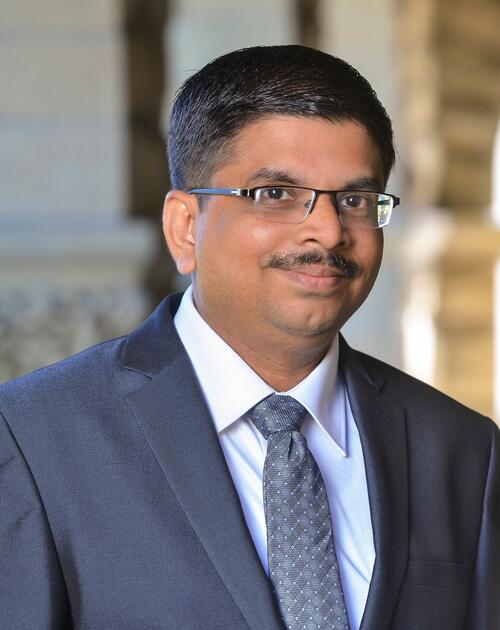
STUTI KHEMANI is a Senior Economist in the Development Research Group of the World Bank. She joined through the Young Professionals Program after obtaining a PhD in Economics from the Massachusetts Institute of Technology. Her area of research is the political economy of public policy choices, and institutional reforms for development. Her work is published in economics and political science journals, such as the American Economic Journal, Journal of Development Economics and American Political Science Review. She has studied the impact of electoral politics on fiscal policy and intergovernmental fiscal relations; drawn policy implications for the design of institutions to promote fiscal responsibility; and analyzed political constraints to efficient allocation of resources for health and education services. She is currently examining the role of mass media and local elections in building effective public sector institutions. She is also the lead author of the Policy Research Report Making Politics Work for Development: Harnessing Transparency and Citizen Engagement. Her research and advisory work spans a diverse range of countries, including Benin, China, India, the Philippines, Nigeria, Tanzania and Uganda.

Stuti Khemani Senior Economist in the Development Research Group of the World Bank
Seminars
-

Abstract:

Scholars of comparative politics have long examined political parties as organized vehicles of mass mobilization, interest mediation, and policy formation. But with mounting evidence that parties in the twenty-first century serve different purposes, how are we to understand the role of traditional, mainstream parties today? This talk examines factors driving a decline in traditional party organization, which includes an erosion of social and intermediary groups, insufficient state capacity, delegation of party functions to private interests, and ideological convergence between the mainstream parties. It argues for more rigorous conceptualization of the role parties serve in representative democracies, and greater theoretical examination of the link between parties and governance outcomes.


Speaker Bio:

[[{"fid":"224806","view_mode":"crop_epsa_crop","fields":{"format":"crop_epsa_crop","field_file_image_description[und][0][value]":"","field_file_image_alt_text[und][0][value]":false,"field_file_image_title_text[und][0][value]":false,"field_credit[und][0][value]":"","field_caption[und][0][value]":"","thumbnails":"crop_epsa_crop"},"type":"media","field_deltas":{"1":{"format":"crop_870xauto","field_file_image_description[und][0][value]":"","field_file_image_alt_text[und][0][value]":"","field_file_image_title_text[und][0][value]":"","field_credit[und][0][value]":"","field_caption[und][0][value]":"","thumbnails":"crop_870xauto"},"2":{"format":"crop_epsa_crop","field_file_image_description[und][0][value]":"","field_file_image_alt_text[und][0][value]":false,"field_file_image_title_text[und][0][value]":false,"field_credit[und][0][value]":"","field_caption[und][0][value]":"","thumbnails":"crop_epsa_crop"},"3":{"format":"crop_epsa_crop","field_file_image_description[und][0][value]":"","field_file_image_alt_text[und][0][value]":false,"field_file_image_title_text[und][0][value]":false,"field_credit[und][0][value]":"","field_caption[und][0][value]":"","thumbnails":"crop_epsa_crop"},"4":{"format":"crop_epsa_crop","field_file_image_description[und][0][value]":"","field_file_image_alt_text[und][0][value]":false,"field_file_image_title_text[und][0][value]":false,"field_credit[und][0][value]":"","field_caption[und][0][value]":"","thumbnails":"crop_epsa_crop"}},"attributes":{"style":"height: 200px; width: 150px; float: left;margin-right: 15px","class":"media-element file-crop-epsa-crop","data-delta":"4"},"link_text":null}]]Didi Kuo is the Program Manager of the Program on American Democracy in Comparative Perspective at the Center on Democracy, Development, and the Rule of Law at Stanford University. Her research interests include clientelism, democratization, and party politics, and she is completing a book manuscript on business interests and patronage in the nineteenth-century United States. She received her PhD in political science from Harvard University, an MSc from Oxford University, where she studied as a Marshall Scholar, and a BA from Emory University.

Encina Hall, C150
616 Jane Stanford Way
Stanford, CA 94305

0
Center Fellow, Freeman Spogli Institute for International Studies
didi_kuo_2023.jpg

Didi Kuo is a Center Fellow at the Freeman Spogli Institute for International Studies (FSI) at Stanford University. She is a scholar of comparative politics with a focus on democratization, corruption and clientelism, political parties and institutions, and political reform. She is the author of The Great Retreat: How Political Parties Should Behave and Why They Don’t (Oxford University Press) and Clientelism, Capitalism, and Democracy: the rise of programmatic politics in the United States and Britain (Cambridge University Press, 2018).

She has been at Stanford since 2013 as the manager of the Program on American Democracy in Comparative Perspective and is co-director of the Fisher Family Honors Program at CDDRL. She was an Eric and Wendy Schmidt Fellow at New America and is a non-resident fellow with the Carnegie Endowment for International Peace. She received a PhD in political science from Harvard University, an MSc in Economic and Social History from Oxford University, where she studied as a Marshall Scholar, and a BA from Emory University.

Date Label
Academic Research & Program Manager, Program on American Democracy in Comparative Perspective
Seminars
Subscribe to Seminars