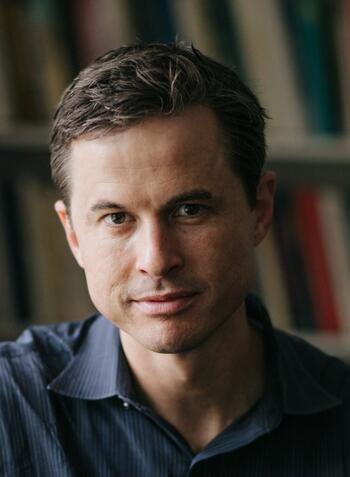
-

- This event is co-sponsored by Stanford Global Studies, The Europe Center, and the History Department - 

Abstract: By 1914, exploiting colonies was a well-established practice of even the most ‘liberal’ empires. Treating areas of Europe like colonies was not, except on the more remote peripheries. However, when the Central Powers occupied substantial parts of Europe during World War One, they applied harsh economic regimes while the British and French intensified the use of their empires. This paper will consider the comparisons – and the links - between these two forms of exploitation. It will suggest that both became ‘laboratories of autarky’ for kinds of economic regime (especially with regard to manpower) that were still not possible domestically for the nation-states fighting the war. The argument will be general but focus empirically on French North Africa and German-occupied France and Belgium. 

About the Speaker: John Horne is Leverhulme Visiting Professor at Oxford University (2016-17) and Emeritus Fellow and former Professor of Modern European History at Trinity College Dublin, where he founded the Centre for War Studies. He is a Fellow of the Royal Irish Academy and a board member of the Research Centre at the Historial de la Grande Guerre, Péronne (France). He is the author and editor of a number of books and over ninety chapters and articles, many relating to the history of the Great War. Among his latest publications are (ed.) A Companion to World War One (Oxford, Blackwell-Wiley, 2010); (ed.) Vers la guerre totale: le tournant de 1914-1915 (Paris, Tallandier, 2010); and with Robert Gerwarth (ed.) War in Peace: Paramilitary Violence in Europe after the Great War (Oxford University Press, 2012). He is currently working on a history of the French experiences of the First World War.

Encina Hall, 2nd floor

John Horne Leverhulme Visiting Professor Oxford University Oxford University and Trinity College Dublin
Seminars
-

The venue of this event has been moved to the Okimoto Conference room.

Dr. Ruger, a leading scholar of global and domestic health policy and public health, will speak about global and national health inequities, drawing from her research in Asia --including India, Indonesia, Malaysia, South Korea, Vietnam -- and Africa. With training in political economy, health policy, international relations, comparative social research and law, Dr. Ruger crosses disciplines to reexamine the principles and values that underlie health policy and public health and apply these principles empirically.  She created the health capability paradigm, challenging existing approaches and illuminating optimal health policies and she has developed an empirical approach to evaluate public health programs and health policies as they measure up to that paradigm.  Dr. Ruger’s scholarship has critically scrutinized the existing global health architecture in order to identify more effective global health policy responses linking public policy and law to global health theory at the global and national levels.  Dr. Ruger studies critical health policy and public health problems such as the equity and efficiency of health system access, financing, resource allocation, policy reform and the social determinants of health.  Her forthcoming book, Global Health Justice and Governance (OUP, in press), advances a theory of global health justice and governance called provincial globalism.

Image
jennifer prah ruger
Dr. Ruger received a bachelor’s degree in the honors program in political economy from the University of California-Berkeley, master’s degrees from Oxford University, the Fletcher School of Law and Diplomacy and Yale University, a doctoral degree from Harvard University, and completed a post-doctoral fellowship at Harvard's Center for Population and Development. Dr. Ruger has authored over 100 publications and is internationally recognized for her leadership and work, which has been cited by the United Nations, World Bank, World Health Organization and United States Government.  She has been Principal Investigator and Co-Investigator on awards from the National Institutes of Health, Fogarty International Center, Hewlett Foundation, Henry J. Kaiser Family Foundation and she was awarded a Guggenheim Fellowship to complete Global Health Justice and Governance (OUP, in press).

Other papers:

1. Coping with Health Care Expenses Among Poor Households: Evidence from a Rural Commune in Vietnam: https://papers.ssrn.com/sol3/papers.cfm?abstract_id=1435832

2. Impact of Health Insurance on Health Care Treatment and Cost in Vietnam: A Health Capability Approach to Financial Protection: https://papers.ssrn.com/sol3/papers.cfm?abstract_id=1515733

3. Effect of Health Expenses on Household Capabilities and Resource Allocation in a Rural Commune in Vietnam: https://papers.ssrn.com/sol3/papers.cfm?abstract_id=1435820

4. The Changing Donor Landscape in Health Sector Aid to Vietnam: A Qualitative Case Study: http://www.sciencedirect.com/science/article/pii/S0277953615001719

5. An Alternative Framework for Analyzing Financial Protection in Health: https://papers.ssrn.com/sol3/papers.cfm?abstract_id=2139693

Jennifer Prah Ruger Amartya Sen Professor of Health Equity, Economics, and Policy, School of Social Policy and Practice, University of Pennsylvania
Seminars
-

Abstract:

Nika Gilauri, has recently published a book Practical Economics: Economic Transformation and Government Reform in Georgia 2004-2012. Former Prime Minister discusses why the Georgian case is exemplary and relevant for countries in transition. He describes how Georgia managed a breakthrough in the fight against corruption, rightsizing of government, creation of business-friendly environment, tax and customs reform, privatization of state-owned companies, etc. During the seminar, Mr. Gilauri will try to answer a question: how do you manage a transformation to bring about fast and sustainable growth? And he will approach this question from two angles: What is the right size for a government, both in terms of its regulatory footprint and in terms of its budget in relation to the size of the economy? How do you ensure a government’s efficiency in terms of its decision making, its interaction with the private sector, financial flows, and the services it provides?


Speaker Bio:

Image
nika gilauri
Mr. Gilauri has been a managing partner of Reformatics since 2012 and a senior advisor to McKinsey & Company since 2014. Earlier, he spent 8 years in the Georgian government, where he served as Minister of Energy (2004-2007), Minister of Finance (2007-2009) and Prime Minister (2009-2012). Mr. Gilauri’s term as Prime Minister was notably marked by rapid economic recovery and growth in the aftermath of the 2008-2009 global economic crisis: Georgia’s GDP rose from - 9.0% when Mr. Gilauri was appointed (Q2 2009) to +8.1% when his term came to an end (Q2 2012). Georgia’s budgetary deficit also decreased during his term as prime minister, dropping from 9% in 2009 to 3% in 2012.

During his time in government, Mr. Gilauri also guided reforms in the energy sector, fiscal policy, healthcare, customs, education and other spheres of economic development, and contributed to efforts to improve Georgia’s overall business environment. His greatest achievement as Minister of Energy was to transform Georgia from being a country of semi- permanent blackouts into a net exporter of electricity to all its neighbors.

In his more recent capacity as managing partner of Reformatics, Mr. Gilauri has been involved in over 20 advisory assignments on three continents for various high-ranking government officials and politicians including presidents and prime ministers. Mr Gilauri holds a BA in Economics and Finance from the University of Limerick (Ireland) and an MA in International Business Management from Temple University (USA).

Nika Gilauri Founder & Managing Partner of Reformatics, Senior Advisor to McKinsey and Company Former Prime-Minister of Georgia (’09-’12)
Seminars
-

Image
Martin Kenney is a Distinguished Professor of Community and Regional Development at the University of California, Davis; a Senior Project Director at the Berkeley Roundtable on the International Economy; and Senior Fellow at the Research Institute for the Finnish Economy.  He has been a visiting scholar at the Copenhagen Business School, Cambridge, Hitotsubashi, Kobe, Stanford, Tokyo Universities, and UC San Diego. His scholarly interests are in entrepreneurial high-technology regions, technology transfer, the venture capital industry, and the impacts of online platforms on corporate strategy, industrial structures and labor relations. He co-authored or edited seven books and 150 scholarly articles. His first book Biotechnology: The University-Industrial Complex was published by Yale University Press. His most recent edited books Public Universities and Regional Growth, Understanding Silicon Valley, and Locating Global Advantage were published by Stanford University Press where he edits the book series Innovation and Technological Change in the Global Economy.  His co-edited book Building Innovation Capacity in China was published by Cambridge University Press in 2016 and has been translated into Chinese. He is a receiving editor at the world’s premier innovation research journal, Research Policy and edits a Stanford University book series.  In 2015, he was awarded University of California Office of the President’s Award for Outstanding Faculty Leadership in Presidential Initiatives.  His research has been funded by the NSF, the Kauffman, Sloan, and Matsushita Foundations, among others.  He has given over 500 talks at universities, government agencies, and corporations in Europe, Asia, and North and South America.

Agenda

4:15pm: Doors open
4:30pm-5:30pm: Talk and Discussion
5:30pm-6:00pm: Networking


Martin Kenney, Professor of Community and Regional Development, University of California, Davis and Senior Project Director, Berkeley Roundtable on the International Economy
Seminars
-

Abstract:

This paper provides an account of the strategies of extortion and co-optation used by drug trafficking organizations (DTOs) toward civil society in Mexico. Our theoretical approach focuses on levels of territorial contestation among armed actors, as well as state capture by DTOs, to explain variation in co-opting or coercing civil society. Through the use of list experiments in a nationally representative survey, the paper measures extortion and assistance by DTOs in Mexico. We find that territorial contestation among rival DTOs increases predation on civil society while reducing DTOs assistance, which is found to occur in uncontested municipalities. Additionally, we find that extortion is higher in municipalities where DTOs have captured the state. These results suggest that territorial contestation and state capture are important in determining the strategy toward civil society during drug wars.


Speaker Bio:

Image
gustavo
Gustavo Robles is a Research Scholar for the Program on Poverty and Governance (POVGOV) at CDDRL. He finished his PhD in Political Science at Stanford University in 2017 with specialization in Political Methodology and Comparative Politics. His PhD dissertation focused on the dynamics and consequences of drug-related violence in Mexico. His research interests include the economics of crime and violence in Latin America, political economy of development, and legislative studies. He is involved in POVGOV’s projects on police accountability and use of force, crime and security, and violence prevention in Brazil and Mexico. He holds a M.A. in Economics from Stanford University and a BA in Economics and Political Science from ITAM.

Research Scholar for the Program on Poverty and Governance (POVGOV) at CDDRL
Seminars
-

Please note: All research in progress seminars are off-the-record by default. Any information about methodology and/or results are embargoed until publication.

Over the last several decades, Emergency Medical Service (EMS) has become an important component of health care service. The main performance indicator in the EMS setting is the response time, i.e. the time to reach the patient once an ambulance is requested. Policy makers adopt a response time criteria to set the standards of this service, and the push to reduce it is justified by the assumed link between longer response time and worse health outcomes. However, current literature finds weak to no relation and this knowledge gap has been recently attributed to the endogeneity of response time. Indeed, the ambulance driver may take actions that result in shorter responses for most critical cases, and this unobserved behavior creates a downward bias in the results up to the point of finding zero effect. In line with previous literature, my analysis is performed on patients affected by cardiovascular disease, i.e. the time sensitive pathology adopted by policy makers to set the EMS standards in terms of response times and the main cause of death in developed countries. In my work I exploit changes in the amount of hourly rainfall and rationalization of emergency personnel during night shifts (i.e. 8pm to 7am) as instruments for response time. I document that a minute increase in response time results in a 2% increase in the probability of highly severe health conditions at the ambulance arrival on the scene and by 0.4% rise in the probability of death by the arrival at the hospital. Finally, I discuss and rank alternative solutions that may be implemented by policy makers to improve EMS performances.

117 Encina Commons, Room 116
Stanford, CA 94305-6006

(650) 725-8634
0
Visiting Scholar at the Center for Health Policy and the Department of Health Policy
dsc_0143.jpg PhDc, MS, BBA

Elena Lucchese is a Ph.D. student in Economics at the University of Bologna (Italy). She is currently doing research at Stanford University in the Center for Health Policy and the Center for Primary Care and Outcomes Research (CHP/PCOR). Her research interests are applied micro-economics, health economics and economics of education. In 2016, she was awarded a "Young Researcher Best Paper Award" by the Italian Health Economics Association for her work on the Effect of Ambulance Response Time on Cardiovascular Severity. In 2014, she also received a 14,000 euros grant from Eurizon Capital SGR as a Principal Investigator for her research project on the Efficiency of Public Spending in Europe. She is the president of the association "L'Osteria Volante", funded by the University of Padova, which promotes debates on economics, politics, and environmental issues (www.losteriavolante.it).

CV
Elena Lucchese
Seminars
-

Abstract:

As the number of migrants in Europe has risen in recent years, far right parties have fuelled voters’ fears concerning what the influx will mean for their nations. This project utilizes paired pre-election polls and actual vote shares across state and regional elections pre- and postmigrant crisis to provide evidence that far right sympathists often practiced preference falsification prior to this legitimizing shock, but that the crisis reshaped the political conversation such that far right identification is no longer deemed politically shameful. Although the theoretical framework surrounding preference falsification is well developed in the social movement literature as well as in American politics, Laura Jakli argues that it has untapped parallels in the study of Europe's far right. She also embeds priming and list experiments in a Facebook survey to determine whether there is a significant difference between subjects' willingness to identify with the far right using explicit versus implicit measurement approaches.


Speaker Bio:

Image
headshot jakli
Laura Jakli is a PhD student and FLAS fellow at UC Berkeley. Her research focuses on the intersection of modern European politics and political behavior. She has designed and implemented field experiments, internet-based survey experiments, and interview-based research in the US, Greece, and Hungary. Her dissertation examines the relationship between digital media polarization and individual-level attitude strength as well as aggregate-level electoral mobilization. The overall goal of her dissertation is to explain why recent far right voter turnout has been remarkably high relative to the underlying distribution of ideological adherents across the West. She holds a BA from Cornell University and an MA from UC Berkeley.

Laura Jakli PhD student and FLAS fellow at UC Berkeley
Seminars
-

Abstract:

The Allied occupation of Japan is remembered as the "good occupation." An American-led coalition successfully turned a militaristic enemy into a stable and democratic ally. Of course, the story was more complicated, but the occupation did forge one of the most enduring relationships in the postwar world. Recent events, from the occupations of Iraq and Afghanistan to protests over American bases in Japan to increasingly aggressive territorial disputes between Asian nations over islands in the Pacific, have brought attention back to the subject of the occupation of Japan. But where did occupation policy come from? This talk considers the role of presidents, bureaucrats, think tanks, the media, and Congress as part of an informal policy network created to manage the postwar world during World War II.


Speaker Bio:

Image
dbarnes1
Dr. Dayna Barnes is a specialist in 20th century international history, American foreign policy, and East Asia. She is a visiting scholar at Stanford University's Center on Democracy, Development and Rule of Law, and is an incoming assistant professor of history at City, University of London. Her book, Architects of Occupation: American Experts and the Planning for Postwar Japan, was published in Cornell University Press in March 2017.

Dana Barnes Visiting scholar at CDDRL
Seminars
-

Abstract:

In India, the world’s largest democracy, the symbiotic relationship between crime and politics raises complex questions. For instance, how can free and fair democratic elections exist alongside rampant criminality? Why do political parties actively recruit candidates with reputations for wrongdoing? Why do voters elect (and even reelect) them, to the point that a third of state and national legislators assume office with pending criminal charges? In a new book, When Crime Pays: Money and Muscle in Indian Politics, Milan Vaishnav takes readers deep into the marketplace for criminal politicians by drawing on fieldwork on the campaign trail, large surveys, and an original database on politicians’ backgrounds. The result is the first systematic study of an issue that has profound implications for democracy both with and beyond India’s borders.


Speaker Bio:

Image
milan vaishnav
Milan Vaishnav is a senior fellow in the South Asia Program at the Carnegie Endowment for International Peace. His primary research focus is the political economy of India, and he examines issues such as corruption and governance, state capacity, distributive politics, and electoral behavior. He is the author of When Crime Pays: Money and Muscle in Indian Politics (Yale University Press, 2017) and co-editor (with Pratap Bhanu Mehta and Devesh Kapur) of Rethinking Public Institutions in India (Oxford University Press, 2017). He was previously a fellow at the Center for Global Development and has taught at Columbia, Georgetown, and George Washington Universities. He holds a Ph.D. in political science from Columbia University.

Milan Vaishnav Senior Fellow, South Asia Program Carnegie Endowment for International Peace
Seminars
-

About the Event: Despite much current talk about “America First,” the United States has a vital interest in global health that is rooted in both practical necessity and humanitarian traditions.  There is growing recognition of the complex problem of direct and indirect threats to the health and security of U.S. populations and people around the globe related to the state of health in all countries, the risk of disease spread into this country, the reality of emerging or resurging infections, most recently Ebola, Zika or a pandemic flu, and the growing possibility that biological agents might be deliberately used to do harm.  Perhaps less well-recognized are the significant health and safety risks posed by the growing number of products that flow across borders. In our increasingly globalized world, the benefits of a global marketplace can be seen in greater choice for consumers and new opportunities for business and innovation, but it has also created many new challenges for product oversight and protection of complex supply chains. Harmful products result from poor quality manufacturing, production, and distribution, contamination, and even from intentional adulteration, fraud and counterfeiting. Success in protecting the public now depends on reaching beyond our borders, and working effectively with regulatory authorities, industry, and intergovernmental and international organizations to build a global product safety net for consumers and patients around the world.  

About the Speaker: Dr. Hamburg is an internationally recognized leader in public health and medicine. As Foreign Secretary of the National Academy of Medicine, the health arm of the National Academy of Sciences, Engineering and Medicine, Dr. Hamburg serves as senior advisor on international matters and is the liaison with other Academies of Medicine around the world. She is also President-elect of the American Association for the Advancement of Science

Dr. Hamburg earned her A.B. from Harvard College, her M.D. from Harvard Medical School and completed her medical residency at Weill Cornell Medical Center. Following completion of her formal medical training, Dr. Hamburg went to Washington to explore the world of health policy. She soon took on the role of Assistant Director of the National Institute of Allergy and Infectious Diseases (NIAID) of the National Institutes of Health (NIH).

In 1991, Dr. Hamburg was named Commissioner of the New York City Department of health. During her six-year tenure there, she implemented rigorous public health initiatives that tackled the city’s most pressing crises head-on — including improved services for women and children, an internationally recognized tuberculosis control program, a needle-exchange program to combat HIV transmission, and the nation’s first public health bio-terrorism preparedness program.       

In 1997, President Clinton named Dr. Hamburg Assistant Secretary for Planning and Evaluation in the U.S. Department of Health and Human Services, the lead policy position in the Department. She later became founding Vice President for Biological Programs at the Nuclear Threat Initiative, a foundation dedicated to reducing the threat to public safety from nuclear, chemical, and biological weapons.

In 2009, President Obama nominated Dr. Hamburg for the post of FDA Commissioner. In that role, Dr. Hamburg emphasized the critical need for innovation in meeting medical care and public health needs. As Commissioner, she provided leadership on many groundbreaking activities, including: new authority to regulate tobacco products; implementation of the Food Safety Modernization Act designed to transform food safety to a preventive system rather than simply responding when outbreaks occur; and modernization of the system for the evaluation and approval of medical products. Dr. Hamburg also worked hard to reposition FDA as an agency prepared for the challenges of globalization and was very active in efforts to establish new mechanisms for global governance of regulatory systems, including enhanced communication, collaboration and regulatory harmonization.

Dr. Hamburg currently sits on a number of Boards, including for the Commonwealth Fund, the Simons Foundation, the Parker Institute for Cancer Immunotherapy,  the Global Alliance for Vaccines and Immunization, the Urban Institute, and the American Museum of Natural History. She is also a member of the Harvard University Global Advisory Council, the Harvard Medical School Board of Fellows, the World Dementia Council and the Global Health Scientific Advisory Committee for the Bill and Melinda Gates Foundation. Dr Hamburg formerly served on the Boards of the Rockefeller Foundation, the Rockefeller University, the Nathan Cummings Foundation, Conservation International and Henry Schein Inc. Dr. Hamburg is an elected member of the Council on Foreign Relations and the National Academy of Medicine, and a Fellow of the American Association for the Advancement of Science and the American College of Physicians. She is the recipient of multiple honorary degrees and numerous awards.


Encina Hall, 2nd floor

Margaret A. Hamburg Foreign Secretary National Academy of Medicine
Seminars
Subscribe to Seminars