-

This talk will be in Chinese (Mandarin).

In this talk, Professor Ge Zhaoguang (葛兆光) will take on fundamental questions on the evolution of “China” as a historical entity (“何谓中国”). His talk will problematize the concept of “China”, discuss issues related to Chinese identity and the “inner” and “outer” historical changes over time. These issues are examined in the context of China’s distinct transformation from a traditional dynasty into a modern state. Professor Ge will provide his reflections of understanding China from a comparative perspective.

This event is free and open to the public. Please RSVP here.


About the Speaker
 

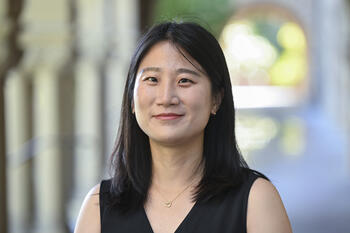
Ge Zhaoguang headshot.

Professor Ge Zhaoguang is a University Distinguished Professor of Fudan University in Shanghai, China. An eminent historian and public intellectual, he has published influential works in the areas of social thoughts, intellectual history, global history, and histography of China and Asia Studies. Many of His works are translated into English, including What Is China?: Territory, Ethnicity, Culture, and History (Harvard University Press, 2018); An Intellectual History of China (two volumes) (Brill, 2014, 2018). He is the recipient of many honors, including first “Princeton Global Scholar (2009), “Asia and Pacific Award” (2014) in Japan, “Paju Book Award” (2014) in South Korea, and HongKong Book Award (2015).


This talk is co-sponsored by Center for East Asian Studies (CEAS), the Department of East Asian Language and Civilization (EALC) and Stanford Center on China’s Economy and Institutions (SCCEI).


Gunn Building (SIEPR), Koret-Taube Conference Center
366 Galvez Street, Stanford, CA 94305

Ge Zhaoguang, Fudan University
Seminars
Date Label
-

Encina Commons, 123
615 Crothers Way, Stanford

0
CDDRL Visiting Scholar, 2024-25
01_ali_carkoglu_08_-_ali_carkoglu.jpg

I am a political scientist specializing in elections, voting behavior, public opinion, and Turkish politics. I have led and participated in major cross-national and national projects such as the Turkish Election Study (TES), Turkish Giving Behaviour Study, International Social Survey Program (ISSP), and Comparative Study of Electoral Systems (CSES). I took part in the planning committees for Modules 5 and 6 in CSES and ISSP modules on family and changing gender roles (2012, 2022), religion (2018), and social networks (2017). I am the founding PI in TES and developed the campaign media content data program, which documents daily campaign content for over ten national newspapers since 2002. My work can be accessed here.

My current research is an exploration of the secularization process in Turkey, a topic where the evidence has so far been mixed. Some scholars find the Turkish experience to possess reflections of secularization, as expected following classical modernization theory, while others present evidence that contradicts these expectations. The most recent contributions to this literature now focus on outliers where resistance to secularization exists, and one even finds a resurgence of religiosity in various dimensions of social life. I focus on Turkey, which can be considered an outlier. In the past, I have contributed to this literature through several projects and articles and touched upon the enduring influence of religion in political life.

My main argument in this project is that Turkish society's dual character, where a potentially secularizing group faces an increasingly resacralizing group, is responsible for the contrasting findings about secularization and creating the Turkish outlier. I follow historical and quantitative research, bringing together comprehensive data that focus on the country's critical areas of social development. I argue that underlying Turkish ideological and affective polarization is the dual character of Turkish society with opposing secularization trends.

Date Label
Seminars
Date Label
-
Can the Impeachment Crisis Lead to Political Reform in South Korea?

The abrupt declaration of martial law by South Korean President Yoon Suk Yeol triggered a political crisis marked by immediate and decisive legislative condemnation, public protests for and against the president, and general political instability due to the vacuum in leadership. South Korea's Constitutional Court has upheld Yoon's impeachment and removed him from office, and it was just announced that the country will hold a presidential election on June 3. Yet public opinion remains highly polarized, reflecting a deeply divided nation.

In this talk, Kim Jin-Pyo, former Speaker of the National Assembly of the Republic of Korea, takes stock of the current moment while providing clear and tangible suggestions for constitutional reforms designed to strengthen the foundations of South Korea's democracy.

portrait of Speaker Jin-Pyo Kim

Speaker Kim Jin-Pyo served 5 terms as a Member of National Assembly for two decades (2004-24). He previously served  as Deputy Prime Minister of Economy (2003-04) and Deputy Prime Minister of Education (2005-06), and had held various high-level government offices.

This talk event will be moderated by Gi-Wook Shin, William J. Perry Professor of Contemporary Korea and director of Shorenstein Asia-Pacific Research Center at Stanford University.

Directions and Parking > 

Gi-Wook Shin

Philippines Conference Room (C330)
Encina Hall, 3rd Floor
616 Jane Stanford Way, Stanford, CA 94305

Kim Jin-Pyo, former Speaker of the National Assembly of the Republic of Korea
Seminars
Date Label
-
drew cingel

Join the Cyber Policy Center on May 20th from 1PM–2PM Pacific for Adding Nuance in the Debate on Adolescent Social Media Use and Mental Health with Drew Cingel, Associate Professor and Graduate Advisor for the Department of Communication at UC Davis. It will be moderated by Jeff Hancock. 

Stanford affiliates are invited to join us at 12:40 PM for lunch, prior to the seminar.  The Spring Seminar Series continues through the end of May; see our Spring Seminar Series page for speakers and topics.

About the Talk:

In this talk, Dr. Drew Cingel will discuss and present recent studies aimed at understanding the nuance in how adolescents' mental health is uniquely affected by social media use. His talk will touch on individual differences in use, cultural differences in use, and differences based on algorithmic recommendations. Overall, this talk will shed light on the adolescents that are susceptible to both positive and negative effects of social media use on mental health, with implications for ongoing policy discussions.

About the Speaker:

Drew Cingel (PhD, Northwestern University) is an Associate Professor in the Department of Communication at the University of California, Davis, and a member of the Human Development Graduate Group. He is the Director of the Human Development and Media Lab. He studies the interaction between human development and media effects. He is particularly interested in understanding how facets of child and adolescent development influence media choice and the effects of exposure to media, including the areas of social media use on adolescent mental health and social-emotional development, children’s learning from media, including television and tablet computers, and the influence of media on child and adolescent moral development. His work has been published in journals such as the Journal of Communication, Communication Research, New Media & Society, Media Psychology, and Human Communication Research, among others. He currently serves as Chair of the Children, Adolescents, and Media division of the International Communication Association, and is Co-Editor of Media Psychology.

Stanford Law School Building, Manning Faculty Lounge (Room 270)
559 Nathan Abbott Way Stanford, CA 94305

Drew Cingel
Seminars
Date Label
-
katy decelles

Join the Cyber Policy Center on May 6th from 1PM–2PM Pacific for Scale Dichotomization Reduces Customer Racial Discrimination and Income Inequality, with Katy DeCelles, a 2024-2025 Fellow at Stanford's Center for Advanced Study in the Behavioral Sciences. It will be moderated by Jeff Hancock. 

Stanford affiliates are invited to join us at 12:40 PM for lunch, prior to the seminar.  The Spring Seminar Series continues through the end of May; see our Spring Seminar Series page for speakers and topics.

About the Seminar:
 

Dr. DeCelles will present three studies from her collaborative work recently published in Nature. This research examines racial discrimination in online platforms. Online platforms are rife with racial discrimination but current interventions focus on employers rather than customers. We propose a customer-facing solution: changing to a two-point rating scale (dichotomization). Compared with the ubiquitous five-star scale, we argue that dichotomization reduces modern racial discrimination by focusing evaluators on the distinction between ‘good’ and ‘bad’ performance, thereby reducing how personal beliefs shape customer assessments. Our research offers a promising intervention for reducing customers’ subtle racial discrimination in a large section of the economy and contributes to the interdisciplinary literature on evaluation processes and racial inequality.

About the Speaker:


Katherine (Katy) DeCelles holds the Secretary of State Professorship of Organizational Effectiveness at the Rotman School of Management at the University of Toronto, and is the VMware Women’s Leadership Lab Fellow. DeCelles  plans to use her time at CASBS focused on designing effective randomized control interventions that leverage recent advances in technology to help reduce harmful discrimination occurring in the precarious platform labor market and during high-stakes interactions between police and community members. Her research seeks to understand the psychological mechanisms that explain how individuals and organizations grapple with interpersonal and societal conflict, crime, and various forms of inequality. She takes an interdisciplinary approach to social science that uses experimental, archival, video and qualitative methods, and she is known for her research on conflict in extreme contexts such as in prisons, airplanes, protests, and robbery.


Stanford Law School Building, Manning Faculty Lounge (Room 270)
559 Nathan Abbott Way Stanford, CA 94305

Katy DeCelles
Seminars
News Feed Image
katy-decelles.png
Date Label
-
jonathan chen MD

Join the Cyber Policy Center on April 29th from 1PM–2PM Pacific for Artificial Intelligence in Medicine - Real Magic or Technological Illusions? with Jonathan H. Chen MD, PhD, Assistant Professor of Medicine (Biomedical Informatics) and of Biomedical Data Science at Stanford University. It will be moderated by Jeff Hancock. 

Stanford affiliates are invited to join us at 12:40 PM for lunch, prior to the seminar.  The Spring Seminar Series continues through the end of May; see our Spring Seminar Series page for speakers and topics.

About the Seminar:

Pandora’s box has opened in the form of publicly available generative AI systems for every imaginable (and many unintended) purposes. With a global scarcity of medical expertise against the unlimited demand of people in need, AI's potential to democratize healthcare knowledge, access, and to recover efficiencies is desperately needed. The implications are vast as we converge upon a point in history where human vs. computer generated content can no longer be reliably distinguished. This session will review the attention and intention required for AI applications in the high-stakes world of healthcare as we distinguish real magic from convincing illusions.

About the Speaker:

Jonathan H. Chen MD, PhD leads a research group to empower individuals with the collective experience of the many, combining human and artificial intelligence approaches to deliver better care than either alone. Dr. Chen continues to practice medicine for the concrete rewards of caring for real people and to inspire this research focused on discovering and distributing the latent knowledge embedded in clinical data.

Before his medical training, Chen co-founded a company to translate his Computer Science graduate work into an expert system for organic chemistry, with applications from drug discovery to an education tool for students around the world. His expertise is regularly featured in popular press outlets with over 100 publications in leading clinical and informatics venues and awards from the NIH, National Library of Medicine, American Medical Informatics Association, International Brotherhood of Magicians and more.

In the face of ever escalating complexity in medicine, informatics solutions are the only credible approach to systematically address challenges in healthcare. Tapping into real-world clinical data like electronic medical records with machine learning and data analytics will reveal the community's latent knowledge in a reproducible form. By delivering this back to clinicians, patients, and healthcare systems as clinical decision support, he aims to uniquely close the loop on a continuously learning health system.

Stanford Law School Building, Manning Faculty Lounge (Room 270)
559 Nathan Abbott Way Stanford, CA 94305

Jonathan Chen
Seminars
Date Label
-
Amy Zegart

Join the Cyber Policy Center on April 15th from 1PM–2PM Pacific for The Unforgiving Hour: New Technologies, Old Ideas, and the Fragility of American Power, a seminar with Amy Zegart, Senior Fellow at the Freeman Spogli Institute for International Studies and the Morris Arnold and Nona Jean Cox Senior Fellow at the Hoover Institution. It will be moderated by Jeff Hancock. 

Stanford affiliates are invited to join us at 12:40 PM for lunch, prior to the seminar.  The Spring Seminar Series continues through the end of May; see our Spring Seminar Series page for speakers and topics.

About the Seminar:

The foundations of American power are eroding due to a failure to adapt to a new era in which knowledge and technological innovation are the primary sources of national strength. Traditional measures of power—military might, natural resources, and economic scale—are increasingly insufficient. Instead, intangible assets such as education, research capacity, and control over emerging technologies determine long-term geopolitical influence. The United States is losing ground in these areas, with declining K–12 educational outcomes, reduced federal investment in basic research, outdated immigration policies, and growing reliance on private-sector actors whose interests may diverge from national objectives. Meanwhile, global competitors—particularly China—are rapidly expanding their innovation capacity. The U.S. must look toward a strategic shift in policy to enhance knowledge power through educational reform, immigration modernization, increased public research funding, and improved coordination between government, academia, and industry.

About the Speaker:

Amy Zegart is the Morris Arnold and Nona Jean Cox Senior Fellow at the Hoover Institution and Professor of Political Science (by courtesy) at Stanford University. She is also a Senior Fellow at Stanford's Human-Centered Artificial Intelligence Institute and the Freeman Spogli Institute for International Studies.  Zegart is an internationally recognized expert in U.S. intelligence, emerging technologies, and global political risk management. At Hoover, Zegart currently serves as the Director of the Robert and Marion Oster National Security Affairs fellows program and as Director of the Technology Policy Accelerator, which produces the annual Stanford Emerging Technology Review. She frequently advises senior U.S. officials on intelligence and emerging technology matters. She is the author of five books, including the bestseller Spies, Lies, and Algorithms: The History and Future of American Intelligence. Zegart holds a bachelor’s degree in East Asian studies from Harvard University and a doctorate in political science from Stanford University.

Stanford Law School Building, Manning Faculty Lounge (Room 270)
559 Nathan Abbott Way Stanford, CA 94305

Amy Zegart
Seminars
Date Label
-
jo robinson

Join the Cyber Policy Center on April 8th from 1PM–2PM Pacific for Social Media and Youth Suicide Prevention, a seminar with Jo Robinson. It will be moderated by Jeff Hancock. 

Stanford affiliates are invited to join us at 12:40 PM for lunch, prior to the seminar.  The Spring Seminar Series continues through the end of May; see our Spring Seminar Series page for speakers and topics.

About the Seminar

Concerns exist regarding the relationship between social media, self-harm and suicide. However, social media is commonly used, in particular by young people, and research has identified several potential benefits, such as the potential for connection, seeking help and support and helping others. Therefore, we need to identify ways to minimize the risks without diminishing the benefits. Potential levers for maintaining safe online environments include equipping users to keep themselves and others safe; policy approaches, whereby governments develop and implement legislation to support online safety; and industry approaches whereby the social media industry takes responsibility for maximizing safety on its platforms.

In this presentation Prof Robinson will present a body of work that has examined the role of social media in suicide prevention. It will include three brand new studies that together have led to a suite of recommendations for both industry professionals and policymakers regarding approaches to online safety. She will also present a case study of one evidence-based educational approach to supporting young people to engage with self-harm and suicide-related content safely on social media. This approach has been tested widely and is now supported by governments across Australia and New Zealand as well as overseas.

About the Speaker:

Professor Jo Robinson leads Orygen’s suite of research programs around suicide prevention. She currently coordinates several research projects in collaboration with Australian and overseas universities. Some of the projects underway include a randomised controlled trial of an internet-based program for at-risk secondary school students, a study examining the role of social media in suicide prevention, and the evaluation of a gatekeeper-training program designed to assist school staff to identify and support students at risk. Robinson's work focuses on improving our knowledge about the best approaches to reduce suicide risk among young people. This includes developing programs, testing novel approaches that specifically target at-risk youth, and translating the research evidence into practice and policy.

Stanford Law School Building, Manning Faculty Lounge (Room 270)
559 Nathan Abbott Way Stanford, CA 94305

Jo Robinson
Seminars
Date Label
-
sandy pentland

Join the Cyber Policy Center on April 1st from 1PM–2PM Pacific for Human-Compatible AI for Digital Media, a seminar with Sandy Pentland. It will be moderated by Jeff Hancock. 

Stanford affiliates are invited to join us at 12:40 PM for lunch, prior to the seminar.  The Spring Seminar Series continues through the end of May; see our Spring Seminar Series page for speakers and topics.

About the Seminar

Human beliefs and norms evolve through a process of collective search and evaluation; the practice of science is a classic example of this sort of collective abductive reasoning.  We can accelerate this search process while protecting human human agency by using AI to accelerate the laborious or inefficient aspects of collective search. We have built and tested social media style systems that support improved belief and norm development in the domains of science, patents, law, finance, and democratic deliberation without unduly replacing human judgement. Finally, we have just embarked on a project called “consumer champions” that inverts the standard social media advertising model by using these same methods.
 

About the Speaker:

Sandy Pentland is a Center Fellow at Stanford's HAI. He directs MIT’s Human Dynamics Laboratory and the MIT Media Lab Entrepreneurship Program, co-leads the World Economic Forum Big Data and Personal Data initiatives, and is a founding member of the Advisory Boards for Nissan, Motorola Mobility, Telefonica, and a variety of start-up firms. He has previously helped create and direct MIT’s Media Laboratory, the Media Lab Asia laboratories at the Indian Institutes of Technology, and Strong Hospital’s Center for Future Health. 

Stanford Law School Building, Manning Faculty Lounge (Room 270)
559 Nathan Abbott Way Stanford, CA 94305

Sandy Pentland
Seminars
Date Label
-

About the event: Autonomous weapons systems (AWS) have sparked significant debate in international politics and research, especially regarding their ‘critical functions’ of target selection and engagement without human intervention or control. As a response to potential ethical and legal concerns, as well as security-related risks, AWS have been subject to an ongoing international regulation process at the United Nations since 2014. The primary focus of this process has been on maintaining human control over the use of force. However, since its initiation more than a decade ago, no regulatory framework has been agreed upon and core concepts, such as human control, are still highly contested.

Anna's research investigates why the regulation of AWS have not been successful (so far) by analyzing the co-production of weapons technology and arms control politics. In this talk, she shows that it is not solely determined by state interests. Rather, it is influenced by a complex interplay of knowledge production practices and discourses both within and outside of these processes. Moreover, with recent developments in and applications of artificial intelligence (AI), new questions about the nature of human-machine relations in war come to the fore, further complicating the regulatory landscape.

About the speaker: Anna-Katharina Ferl is a Postdoctoral Fellow at the Center for International Security and Cooperation (CISAC) and the Stanford Existential Risk Initiative (SERI) at Stanford University. Her research focuses on the regulation of artificial intelligence and autonomy as well as the practices of knowledge production in international security. Anna received her PhD from the University of Frankfurt in 2024 and previously worked as a researcher at the Peace Research Institute Frankfurt (PRIF). In addition to academic publications, she has also contributed to several policy reports on topics such as German arms control policies and gender-specific aspects of new technologies in international security.

 All CISAC events are scheduled using the Pacific Time Zone.

No filming or recording without express permission from speaker.

William J. Perry Conference Room

0
Post-doctoral Fellow
rsd25_073_0426a.jpg

Before joining CISAC, Anna worked as a researcher at the Peace Research Institute Frankfurt (PRIF) and completed her PhD in Political Science at Goethe University Frankfurt. During her doctoral studies, she was a research fellow at the German Federal Foreign Office, Cornell University, and the University of Southern Denmark. Anna has also conducted field research at the United Nations in Geneva.

Anna’s research focuses on the intersection between politics, international security, and technology, with a specific focus on military applications of AI and autonomy. She is interested in how these technological developments shape human-machine relations and how they change understandings of the human role in future warfare. This also influences how AI technologies could be politically regulated and governed.

Date Label
Anna-Katharina Ferl
Seminars
Date Label
Subscribe to Seminars