-

Abstract:

Fukuyama (1989) was right: a centuries-old argument about government should be over. Liberal democracy is the best regime known to us. It isn’t close: for life’s important aspects, including health, wealth, liberty, and peace, democracy dominates all known alternatives. Empirically, however, the argument is not over. Indeed, there is widespread concern that many citizens (and, sadly, some academics) are less enthusiastic about democracy than the evidence warrants. I argue that when we search for solutions to complex problems (e.g., the design of governments) we often make a serious error in our mental representation of the choice problem: instead of using the criterion of the best feasible option, we ignore important constraints and look for an alternative that satisfies certain value-standards. When these standards are unrealistic, as they often are, we can become disillusioned with the best possible option. Robert Michels was wrong; Voltaire, and Henny Youngman, were right.


Speaker Bio:

Image
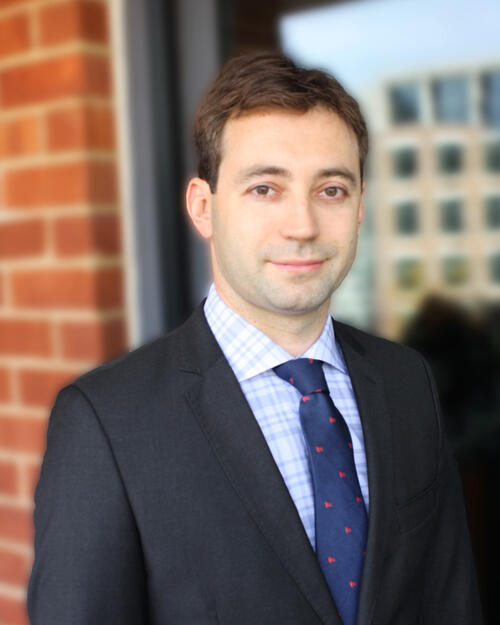
bendor jonathan
Jonathan Bendor is the Walter and Elise Haas Professor of Political Economy and Organizations at the Graduate School of Business, Stanford University.His research focuses on models of adaptive behavior and bounded rationality, evolutionary analyses of norms and preferences, organizational decision making under uncertainty, and the modernization of bureaucracy. Most of his current research is on organizational problem solving, with a particular focus on institutional methods for easing or finessing the cognitive constraints faced by individual decision makers. He is working on a book on the evolution of modern problem solving in military organizations.Bendor was a Fellow of the Center for Advanced Study in the Behavioral Sciences in 1999-2000 and in 2004-2005.  He is a member of the American Academy of Arts and Sciences.    

Jonathan Bendor Walter and Elise Haas Professor of Political Economy and Organizations at the Graduate School of Business
Seminars
-

Abstract:

Foreign intervention sometimes enters by domestic invitation. Recently, the Malian government asked international actors to send troops to help stabilize and strengthen its rule of law, specifically as it faltered after the country’s coup. In this case, explanations for the intervention by invitation tend to revolve around the relative strength of the government, which was weak compared to the somewhat sophisticated militants that opposed it. Such an explanation, however, is unlikely shed much light on the situation since there are many weak governments with faltering or failing rule of law that do not request or receive such governance assistance, at least as far as reporting on these cases suggests. As the United States and its allies withdraw from the major conflicts of the past decade, the focus of international intervention in conflict and post-conflict contexts is likely to occur in cooperation with host states. This project examines an important set of arrangements for weak states: it identifies and explains when states invite other states to intervene for governance assistance—agreements between sovereign entities—specifically with regard to the security sector. These illustrations and tests draw on new quantitative and qualitative data.


Speaker Bio:

Image
aila matancok
Aila M. Matanock is an Assistant Professor of Political Science at the University of California, Berkeley. Her research addresses the ways in which international actors engage in conflicted and weak states. She uses case studies, survey experiments, and cross-national data in this work. She has conducted fieldwork in Colombia, Central America, the Pacific, Southeast Asia, and elsewhere. She has received funding for these projects from many sources, including the National Science Foundation (NSF), the Minerva Research Initiative, the National Center for the Study of Terrorism and the Response to Terrorism (START), and the Center for Global Development (CGD). Her 2017 book, Electing Peace: From Civil Conflict to Political Participation, was published by Cambridge University Press. It is based on her dissertation research at Stanford University, which won the 2013 Helen Dwight Reid award from the American Political Science Association. Her work has also been published by Governance, International Security, the Journal of Politics, and elsewhere. She has worked at the RAND Corporation before graduate school, and she has held fellowships at the Hoover Institution at Stanford University and the Institute on Global Conflict and Cooperation at UCSD since. She received her Ph.D. in political science from Stanford University and her A.B. magna cum laude from Harvard University.

Aila Matanock Assistant Professor of Political Science, UC Berkeley
Seminars
-

Abstract: Rising powers often seek to reshape the world order, triggering confrontations with those who seek to defend the status quo. In recent years, as international institutions have grown in prevalence and influence, they have increasingly become central arenas for international contestation. In this seminar, Phillip Lipscy will describe the main findings from his book, which examines how international institutions evolve as countries seek to renegotiate the international order. He offers a new theory of institutional change and explains why some institutions change flexibly while others successfully resist or fall to the wayside. The book uses a wealth of empirical evidence - quantitative and qualitative - to evaluate the theory from international organizations such as the International Monetary Fund, World Bank, European Union, League of Nations, United Nations, the International Telecommunications Satellite Organization, and Internet Corporation for Assigned Names and Numbers. The book will be of particular interest to scholars interested in the historical and contemporary diplomacy of the United States, Japan, and China.

Speaker bio: Phillip Y. Lipscy is the Thomas Rohlen Center Fellow at the Freeman Spogli Institute for International Studies and Assistant Professor of Political Science at Stanford University. His fields of research include international and comparative political economy, international security, and the politics of East Asia, particularly Japan.

Lipscy’s book from Cambridge University Press, Renegotiating the World Order: Institutional Change in International Relations, examines how countries seek greater international influence by reforming or creating international organizations. His research addresses a wide range of substantive topics such as international cooperation, the politics of energy, the politics of financial crises, the use of secrecy in international policy making, and the effect of domestic politics on trade. He has also published extensively on Japanese politics and foreign policy.

Lipscy obtained his PhD in political science at Harvard University. He received his MA in international policy studies and BA in economics and political science at Stanford University. Lipscy has been affiliated with the Reischauer Institute of Japanese Studies and Weatherhead Center for International Affairs at Harvard University, the Institute of Social Science at the University of Tokyo, the Institute for Global and International Studies at George Washington University, the RAND Corporation, and the Institute for International Policy Studies.

For additional information such as C.V., publications, and working papers, please visit Phillip Lipscy's homepage.

Phillip Lipscy Thomas Rohlen Fellow Walter H. Shorenstein Asia-Pacific Research Center
Seminars
-

This talk will be conducted off the record.

This paper introduces the concept of "Thugs-For-Hire" (TFH) as a form of third-party state coercion. Violence or threat of violence, which is essential to the thugs' actions, helps to push through unpopular policies and subjugate recalcitrant population. Third-party violence as a form of privatized covert repression also allows the state to evade responsibility. Weak states are more likely to deploy TFH than strong states do, mostly for the purpose of bolstering their coercive capacity. Yet, state-TFH relationship is functional only in so far as the state is able to maintain an upper hand in exerting control over the violent agents. Third-party violent coercion is also detrimental to state legitimacy. Focusing on China, a seemingly paradoxical case as it is traditionally seen as a strong state, I examine how local states frequently deploy TFH to evict homeowners, enforce one-child policy, collect exorbitant exactions, and to deal with petitioners and protestors.


Image
Lynette Ong
Lynette H. Ong is an associate professor of political science at the University of Toronto, with a joint appointment at the Munk School of Global Affairs. She writes about authoritarian politics, contentious politics and the political economy of development. She is the author of Prosper or Perish: Credit and Fiscal Systems in Rural China (Cornell University Press, 2012). Her publications have appeared or are forthcoming in Perspectives on Politics, Comparative Politics, International Political Science Review, China Quarterly, China Journal, among others. Her writings have also appeared in the Washington Post, Foreign Affairs and New Mandala.


Image
China Toolkit
This event is part of the 2018 Winter Colloquia; An Expanding Toolkit: The Evolution of Governance in China

China has undergone historic economic, social and cultural transformations since its Opening and Reform. Leading scholars explore expanding repertoires of control that this authoritarian regime – both central and local – are using to manage social fissures, dislocation and demands. What new strategies of governance has the Chinese state devised to manage its increasingly fractious and dynamic society? What novel mechanisms has the state innovated to pre-empt, control and de-escalate contention? China Program’s 2018 Winter Colloquia Series highlights cutting-edge research on contemporary means that various levels of the Chinese state are deploying to manage both current and potential discontent from below.

Lynette Ong <i>Associate Professor, Department of Political Science and Asian Institute, Munk School of Global Affairs, University of Toronto</i>
Seminars
-

China has pivoted away from export-oriented development towards a strategy of domestic urban and infrastructural construction.  This pivot is especially visible in rural China, where migrant laborers withstand uniquely low wages by relying on subsistence farming practices.  Yet, at the same time, this low-waged labor system is disrupted by an ongoing urbanization boom which terminates rural land-use rights.  I argue that two political institutions prop up contradictory developmental dynamics.  First, China’s localized welfare policies strip rural workers of social rights in cities, which compel them to maintain rural households to supplement their low urban wages.  China’s decentralized fiscal system, however, simultaneously requires rural governments to fund social expenditures for a labor force employed elsewhere, which they do by commoditizing and acquiring financing through rural land sales.  Such land commoditization disrupts rural-urban labor migration, however, because it removes the rural wage supplement that enables migrants to withstand low wages.


[[{"fid":"229452","view_mode":"crop_870xauto","fields":{"format":"crop_870xauto","field_file_image_description[und][0][value]":"","field_file_image_alt_text[und][0][value]":false,"field_file_image_title_text[und][0][value]":false,"field_credit[und][0][value]":"","field_caption[und][0][value]":"","thumbnails":"crop_870xauto","alt":"","title":""},"type":"media","field_deltas":{"3":{"format":"crop_870xauto","field_file_image_description[und][0][value]":"","field_file_image_alt_text[und][0][value]":false,"field_file_image_title_text[und][0][value]":false,"field_credit[und][0][value]":"","field_caption[und][0][value]":"","thumbnails":"crop_870xauto","alt":"","title":""}},"link_text":null,"attributes":{"style":"margin-left: 0px; margin-right: 15px; padding: 0px; float: left; width: 300px; height: 281px;","class":"media-element file-crop-870xauto","data-delta":"3"}}]]Julia Chuang is Assistant Professor in the Department of Sociology at Boston College. Her research uses ethnography to show how the movement of people shapes global economic processes. Her book manuscript, The Changing Foundations of Chinese Development, applies this method to the Chinese economy. It follows labor brokers and migrant workers as they move between the villages where they live and the cities where they work. Her book shows how their migrations reflect ongoing tensions and changes in the way Chinese markets – and their reliance on labor and land in particular – operate today. Publications from this project have appeared in Gender & Society, Journal of Peasant Studies and The China Quarterly.

Professor Chuang received a PhD in 2014 from the Department of Sociology at the University of California, Berkeley. From 2014 to 2016 she was a Postdoctoral Fellow at the Watson Institute for International and Public Affairs at Brown University.


Image
China Toolkit
This event is part of the 2018 Winter Colloquia; An Expanding Toolkit: The Evolution of Governance in China

China has undergone historic economic, social and cultural transformations since its Opening and Reform. Leading scholars explore expanding repertoires of control that this authoritarian regime – both central and local – are using to manage social fissures, dislocation and demands. What new strategies of governance has the Chinese state devised to manage its increasingly fractious and dynamic society? What novel mechanisms has the state innovated to pre-empt, control and de-escalate contention? China Program’s 2018 Winter Colloquia Series highlights cutting-edge research on contemporary means that various levels of the Chinese state are deploying to manage both current and potential discontent from below.

Julia Chuang <i>Assistant Professor, Department of Sociology, Boston College, Morrissey College of Arts and Sciences</i>
Seminars
-

Abstract:

While populism takes different forms in different countries, the success of populist parties and leaders comes from their ability to represent grievances. Current analyses emphasize the personality, background and rhetoric of populist leaders, but, often neglect the intermediary mechanisms that help populists not only address and represent but also generate “the people” from a diverse set of constituencies. By focusing on the authoritarian populist context of Turkey, this paper examines the role of pro- government and government-organized NGOs in helping the ruling Justice and Development Party connect with, represent, and shape the youth public in the aftermath of the uprisings across the wider Middle East. The paper argues that the making of authoritarian Turkey and the resilience of President Erdoğan should be traced as much to the mechanisms of consent-building as to the mechanisms of coercion.


Speaker Bio:

Image
ayca alemdaroglu
Ayça Alemdaroğlu is a research assistant professor of sociology and the associate director of the Keyman Modern Turkish Studies Program at Northwestern University. She previously worked as a postdoctoral researcher in the Department of Anthropology and a teaching fellow in the Thinking Matters Program at Stanford. Her research engages with a broad range of theoretical and ethnographic issues including youth culture and politics, gender and sexuality, constructions of space and place, nationalism, eugenics, and higher education. She has B.Sc. and M.A. in Political Science and Public Administration from the Middle East Technical University and Bilkent University, and Ph.D. in sociology from the University of Cambridge.

Ayça Alemdaroğlu Visiting Scholar, CDDRL
Seminars
-

Abstract: This research investigates why and how regional nuclear powers come to develop specific kind of nuclear delivery systems, especially a submarine-based ballistic missile (SSBN) force. In the second nuclear age, as new nuclear states develop sophisticated delivery systems including SSBNs, understanding the logic and process of their nuclear force development is essential for both regional and international security. The origins and development process of India’s nuclear submarine program suggests that nuclear force development is a historically contingent process. This data-driven research, based on newly declassified archival documents from the Indian archives and extensive oral history interviews, refutes teleological narratives that either argue for technological determinism or the need for projecting nuclear deterrence as the primary causal variables. By situating India’s nuclear submarine program in the organizational routines of its nuclear scientific bureaucracy, bureaucratic politics of its military-scientific complex and the military socialization of the Indian Navy, this research explains India’s most secretive military-scientific programs. This comprehensive empirical research, currently based on a single case study, also addresses an important theoretical question in the field of international security studies: why states develop specific kinds of weapon systems, including those for nuclear weapons delivery?  

Speaker bio: Prior to joining CISAC as a Nuclear Security Postdoctoral Fellow, Yogesh Joshi was an Associate Fellow in the Strategic Studies Program at the Observer Research Foundation, New Delhi. He recently received his PhD from Jawaharlal Nehru University specializing in Indian foreign and security policy. 

At CISAC, Yogesh is finishing a book manuscript on the history of India's nuclear submarine program. His research traces the origins, process and development of India's nuclear submarine program using multi-archival sources and extensive oral history interviews. Yogesh’s data-driven research posits that India’s nuclear submarine program was riddled with shifting motivations, ambivalent rationales and halting progress. Rather than being driven by a single coherent strategic plan, India stumbled upon a submarine-based nuclear deterrent. By situating the nuclear submarine program in India’s Cold War security policy, its nuclear policy, its naval strategy in the Indian Ocean, the bureaucratic politics of its military-scientific complex and its quest for technological prestige, this research is an attempt to understand path-dependency in one of India’s most secretive military-scientific programs. It not only has implications for explaining India's nuclear program and policy but also provides an avenue to explain the process of decision-making behind state's pursuance of specific kinds of nuclear delivery systems. This research is supported by the MacArthur foundation. 

He has held fellowships at George Washington University, King’s College London and Carnegie Endowment for International Peace, Washington DC. His research has appeared or is under review in Asian Security, International History Review, International Affairs, Survival, US Naval War College Review, Comparative Strategy, Harvard Asia Quarterly, India Review, Asia Policy, Journal of Asian Security and International Affairs, War on the Rocks, World Politics Review and The Diplomat. He has co-authored two books: The US ‘Pivot’ and Indian Foreign Policy: Asia's Emerging Balance of Power (Palgrave Macmillan, 2015) and India in Nuclear Asia: Regional Forces, Perceptions and Policies (Orient Blackswan (South Asia), forthcoming 2018; also forthcoming in fall 2018 by Georgetown University Press for the rest of the world). A short introduction on India’s Nuclear Policy was recently commissioned by Oxford University Press and has been accepted for publication in 2018. A monograph titled 'India’s Evolving Nuclear Force and Implications for U.S. Strategy in the Asia-Pacific' was published by the Strategic Studies Institute, US Army War College in 2016. 

Yogesh Joshi Nuclear Security Postdoctoral Fellow CISAC
Seminars
-
Abstract: This paper explores Iraqi signaling after the 1991 Gulf War. The conventional wisdom argues that Iraq sent mixed signals to the outside world due to Saddam’s desire to balance deterrence and compliance with Security Council resolutions. Drawing on Iraqi primary sources, I explore how Iraqi officials debated their options, crafted signals, and how they interpreted the reception of these signals in the outside world. I argue that Iraqi regime was more rational, but also more dysfunctional, than previous work suggests.
  
Speaker bio: Målfrid Braut-Hegghammer is Associate Professor of Political Science at the University of Oslo. She has previously been a Junior Faculty Fellow at CISAC, Stanford University, and a pre- and post-doctoral fellow at the Belfer Center, Harvard University. She received her doctoral degree from London School of Economics in 2009, which received the Michael Nicholson Thesis Prize from BISA in 2010. She recently published Unclear Physics: Why Iraq and Libya failed to build nuclear weapons (Cornell University Press, 2016), which was reviewed in The New York Review of Books, Foreign Affairs, Survival, International Affairs, HDiplo, Babylon, and Internasjonal Politikk. Her work has been published in International Security, The Middle East Journal, the New York Times (online), International Herald Tribune, Monkey Cage and War on the Rocks.

Not in residence

0
Affiliate
Braut-Hegghammer,_Malfrid.jpg

Målfrid Braut-Hegghammer is an Associate Professor of Political Science at the University of Oslo. She first joined CISAC as a visiting associate professor and Stanton nuclear security junior faculty fellow in September 2012, and was a Stanford MacArthur Visiting Scholar between 2013-15. Between 2008 and 2010 she was a predoctoral and postdoctoral fellow at Harvard University's Belfer Center for Science and International Affairs. Braut-Hegghammer received her PhD, entitled “Nuclear Entrepreneurs: Drivers of Nuclear Proliferation” from the London School of Economics in 2010. She received the British International Studies Association’s Michael Nicholson Thesis Prize that same year for her work.


CV
Associate Professor of Political Science University of Oslo
Seminars
-

Abstract: In the fifty years following World War II, Argentina and Brazil constructed advanced nuclear energy programs that far outpaced those of other countries in Latin America. However, their more memorable and lasting contribution to nuclear energy history may well be diplomatic, rather than technical. Beginning in 1974 with an Argentine delegation’s tour of carefully selected Brazilian nuclear facilities, and vice versa, the two countries – under military rule and in a centuries-long competition for regional influence and dominance – began a rapprochement around nuclear energy as gradual as it was unlikely. A watershed presidential summit in 1980 pledged the neighbors to cooperation in specific areas of nuclear energy. It took until 1991, however, for a growing system of informal inspections to coalesce into the world’s only bilateral nuclear safeguards organization, known as ABACC. This talk will focus primarily on the contributions of the scientific and technical communities, and their close work with the two foreign ministries, within this delicate seventeen-year process.

Speaker bio: Chris Dunlap is a Nuclear Security Postdoctoral Fellow at CISAC. His research is funded by the MacArthur Foundation. His book project, developed from his dissertation, focuses on the fundamental role of nuclear energy technology and diplomacy in shaping modern Brazil and Argentina and their bilateral relationship. The paths taken to develop nuclear energy in the South American neighbor countries also illustrate the impact that these nations and their key actors, often left out of global energy history, made upon the physical, legal, and diplomatic structures of the Atomic Age. By 1995, both nations had ceased early-stage efforts toward a nuclear explosion, accepted full safeguards and international verification of all fuel cycle activities, and transformed the "imported magic" of nuclear technology into their own. How this happened, and why, is the history at the heart of the parallel power play that defined Brazil and Argentina's engagement with Atomic Age diplomacy and technology.  

Chris received his Ph.D. in history from the University of Chicago in 2017, and also holds a B.A. in history with high distinction, B.S. in biochemistry, and M.A. in history from the University of Virginia.
Christopher Dunlap CISAC Nuclear Security Postdoctoral Fellow
Seminars
-

Abstract: In crisis management operations, strategic errors can cost lives. Some international organizations (IOs) learn from these failures whereas others tend to repeat them. Given that they have high rates of turnover, how is it possible that any IO retains knowledge about the past? The book NATO's Lessons in Crisis introduces an argument for how and why IOs develop institutional memory from their efforts to manage crises. Findings indicate that the design of an IO’s learning infrastructure (e.g. lessons learned offices and databases) can inadvertently disincentivize IO elites from using it to share knowledge about strategic errors. Elites – high-level officials in IOs - perceive reporting to be a risky endeavour. In response, they develop institutional memory by creating and using informal processes, including transnational interpersonal networks, private documentation and conversations during crisis management exercises. The result is an institutional memory that is highly dependent on only a handful of individuals. The book draws on the author’s interviews and a survey experiment with 120 NATO elites across four countries. Cases of NATO crisis management in Afghanistan, Libya and Ukraine further illustrate the development of institutional memory. Findings challenge existing research on organizational learning by suggesting that formal learning processes alone are insufficient for ensuring that learning happens. The book also offers recommendations to policymakers for strengthening the learning capacity of IOs.

 
Speaker bio: Heidi Hardt is an Assistant Professor of Political Science at the University of California, Irvine. Her research examines effectiveness, knowledge and change in international organizations, particularly in the area of international conflict management. She has expertise in NATO, the EU, UN, international cooperation, crisis management, military operations, organizational learning, organizational culture and gender mainstreaming. Hardt has published the book Time to React: The Efficiency of International Organizations in Crisis Response (Oxford University Press, 2014) and has a second book NATO’s Lessons in Crisis: Institutional Memory in International Organization under contract with Oxford University Press (Forthcoming 2018). Hardt’s research has also been published in journals such as Global Governance, Review of International Organizations, European Security and African Security. She has received grants from the National Science Foundation, the Fulbright Commission, the American Political Science Association and NATO Science for Peace and Security. She has also interviewed more than 250 political and military elites. Hardt received her Ph.D. from the Graduate Institute of International and Development Studies, Geneva and her MSc in European Studies from the London School of Economics. 


Heidi Hardt Assistant Professor of Political Science University of California, Irvine
Seminars
Subscribe to Seminars