-

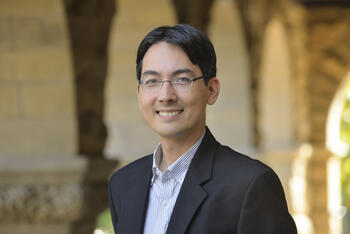
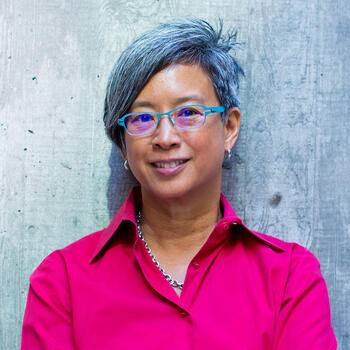
Hate propaganda has been a feature of politics in India, Indonesia, and other Asian democracies long before the recent surge in interest in so-called “fake news” and intolerant populism in the West. This presentation dissects the political strategy of “hate spin,” which includes not only the use of hate speech or incitement, but also the creative manufacture of righteous indignation and popular mobilization framed as responses to victimhood. Examples include the “love jihad” conspiracy theory in India and blasphemy allegations in Indonesia, which have been used to devastating effect by religious nationalists. Existing religious-offense laws have backfired, while incitement laws, though necessary, are systemically incapable of dealing with hate propagandists’ highly sophisticated and distributed disinformation campaigns.  The speaker's book on this topic, Hate Spin, will be available for sale at his talk.

Image
cherian george 2018 4x6
Cherian George is a professor of media studies at Hong Kong Baptist University. He is the author of Hate Spin: The Manufacture of Religious Offense and its Threat to Democracy (2016), which was named on Publishers Weekly’s list of the 100 best books of 2016. Prof. George’s PhD is from Stanford University’s Department of Communication (2003). He was previously a journalist with The Straits Times in his native Singapore. His latest book on Singapore is the self-published Singapore, Incomplete: Reflections on a First World Nation’s Arrested Political Development (2017).

Cherian George Professor of Media Studies, Hong Kong Baptist University
Seminars
-

Abstract:

In 2002 and 2003, Americans pointed to Japan after the Second World War as a model which proved that enemy countries could be remade into stable democratic allies through short military occupation. Planners and politicians drew on their understanding of events in Japan to learn "lessons" for a post-Saddam Iraq. In the years since, it has become common to blame the failures of intervention in Iraq on American ignorance and insufficient planning. But is that popular characterization correct? This talk discusses whether and how the planning phases for Japan and Iraq differed, and with what implications for the occupied countries.


Speaker Bio:

Image
dbarnes1
Dr. Dayna Barnes is a specialist in 20th century international history, American foreign policy, and East Asia. She is a visiting scholar at Stanford University's Center on Democracy, Development and Rule of Law, and assistant professor of history at City, University of London. Her book, Architects of Occupation: American Experts and the Planning for Postwar Japan, was published in Cornell University Press in March 2017.

Visiting Scholar at CDDRL
Seminars
-

Abstract:

The South African democratic process has crossed two significant milestones. One is political legitimacy in the sense that there is no significant threat to the constitution or political systems that the country adopted in 1996. Secondly, the systemic instability threat arising from the counter-revolutionary apartheid forces is now something of the past. There is simply no imminent threat of a retreat to the country’s authoritarian and racist past. The elusive goals remain in the economic arena – namely inclusive growth, widening inequality and slow development. How is the country shaping up to these challenges?


Speaker Bio:

Image
maphai
Professor Vincent Maphai an unusual and distinguished career in academia, private sector and public service. He is currently a visiting Professor at Williams College, Massachusetts, Center for Global Studies. In an academic career spanning two decades, he studied and taught at various universities both locally. He was professor extraordinaire in the Department of Political Science at the University of South Africa (UNISA).. who held fellowships at Harvard (1988), Princeton (1989) and Stanford (1995). From 1991 to 1994 he was associate professor and head of the political science department at the University of the Western Cape. He also served as a Research Executive Director of social dynamics at the HSRC for three years..

Vincent Maphai Visiting Professor at Williams College
Seminars
-


Speaker Bio:

Beatriz Magaloni Beatriz Magaloni
Beatriz Magaloni is an Associate Professor in the Department of Political Science and a Senior Fellow at the Freeman Spogli Institute for International Studies (FSI) at Stanford University. She is also an affiliated faculty member of the Woods Institute of the Environment (2011-2013) and a Faculty Fellow at the Stanford Center for International Development. Her first book, Voting for Autocracy: Hegemonic Party Survival and its Demise in Mexico (Cambridge University Press, 2006), won the Best Book Award from the Comparative Democratization Section of the American Political Science Association and the 2007 Leon Epstein Award for the Best Book published in the previous two years in the area of political parties and organizations. Her second book, Strategies of Vote Buying: Democracy, Clientelism, and Poverty Relief in Mexico (co-authored with Alberto Diaz Cayeros and Federico Estévez), studies the politics of poverty relief. Why clientelism is such a prevalent form of electoral exchange, how it distorts policies aimed at aiding the poor, and when it can be superseded by more democratic and accountable forms of electoral exchange are some of the central questions that the book addresses.

Dept. of Political Science
Encina Hall, Room 436
Stanford University,
Stanford, CA

(650) 724-5949
0
Senior Fellow at the Freeman Spogli Institute for International Studies
Graham H. Stuart Professor of International Relations
Professor of Political Science
beatriz_magaloni_2024.jpg MA, PhD

Beatriz Magaloni Magaloni is the Graham Stuart Professor of International Relations at the Department of Political Science. Magaloni is also a Senior Fellow at the Freeman Spogli Institute, where she holds affiliations with the Center on Democracy, Development and the Rule of Law (CDDRL) and the Center for International Security and Cooperation (CISAC). She is also a Stanford’s King Center for Global Development faculty affiliate. Magaloni has taught at Stanford University for over two decades.

She leads the Poverty, Violence, and Governance Lab (Povgov). Founded by Magaloni in 2010, Povgov is one of Stanford University’s leading impact-driven knowledge production laboratories in the social sciences. Under her leadership, Povgov has innovated and advanced a host of cutting-edge research agendas to reduce violence and poverty and promote peace, security, and human rights.

Magaloni’s work has contributed to the study of authoritarian politics, poverty alleviation, indigenous governance, and, more recently, violence, crime, security institutions, and human rights. Her first book, Voting for Autocracy: Hegemonic Party Survival and its Demise in Mexico (Cambridge University Press, 2006) is widely recognized as a seminal study in the field of comparative politics. It received the 2007 Leon Epstein Award for the Best Book published in the previous two years in the area of political parties and organizations, as well as the Best Book Award from the American Political Science Association’s Comparative Democratization Section. Her second book The Politics of Poverty Relief: Strategies of Vote Buying and Social Policies in Mexico (with Alberto Diaz-Cayeros and Federico Estevez) (Cambridge University Press, 2016) explores how politics shapes poverty alleviation.

Magaloni’s work was published in leading journals, including the American Political Science Review, American Journal of Political Science, Criminology & Public Policy, World Development, Comparative Political Studies, Annual Review of Political Science, Cambridge Journal of Evidence-Based Policing, Latin American Research Review, and others.

Magaloni received wide international acclaim for identifying innovative solutions for salient societal problems through impact-driven research. In 2023, she was named winner of the world-renowned Stockholm Prize in Criminology, considered an equivalent of the Nobel Prize in the field of criminology. The award recognized her extensive research on crime, policing, and human rights in Mexico and Brazil. Magaloni’s research production in this area was also recognized by the American Political Science Association, which named her recipient of the 2021 Heinz I. Eulau Award for the best article published in the American Political Science Review, the leading journal in the discipline.

She received her Ph.D. in political science from Duke University and holds a law degree from the Instituto Tecnológico Autónomo de México.

Director, Poverty, Violence, and Governance Lab
Co-director, Democracy Action Lab
CV
Date Label
Associate Professor in the Department of Political Science and a Senior Fellow at the Freeman Spogli Institute for International Studies (FSI) at Stanford University
Seminars
-

Abstract:

Financial markets expose individuals to the broader economy. Does participation in fi nancial markets also lead individuals to re-evaluate the costs of conflict, their views on politics and even their votes? Prior to the 2015 Israeli elections, we randomly assigned fi nancial assets from Israeli and Palestinian companies to likely voters and gave them incentives to actively trade for up to seven weeks. Opportunities to trade in fi nancial markets systematically shifted vote choices and increased support for peace initiatives. These effects persist a year after the experiment, and appear consistent with fi nancial market exposure leading to increased awareness of the economic risks of conflict.


Speaker Bio:

Image
saumitra jha
Along with being a Senior Fellow at FSI, Saumitra Jha is an Associate Professor of Political Economy at the Stanford Graduate School of Business, by courtesy, of Economics and of Political Science, and a Senior Fellow at SIEPR. Saum holds a BA from Williams College, master’s degrees in economics and mathematics from the University of Cambridge, and a PhD in economics from Stanford University. Prior to returning to Stanford, he was an Academy Scholar at Harvard University. Saum has been a Fellow of the Niehaus Center for Globalization and Governance and the Center for the Study of Democratic Politics at Princeton University and received the Michael Wallerstein Award for best published article in Political Economy from the American Political Science Association in 2014 for his research on ethnic tolerance. Saumitra has consulted on economic and political risk issues for the United Nations/ WTO, the World Bank and other organizations. Having grown up in England, Scotland and the Indian Himalaya, Saum's research interests now take him to Israel, Japan, Mexico and elsewhere.

Saumitra Jha Associate Professor of Political Economy at Stanford’s Graduate School of Business
Seminars
-

Modern-day markets do not arise spontaneously or evolve naturally. Rather they are crafted by individuals, firms, and most of all, by governments. Thus "marketcraft" represents a core function of government comparable to statecraft and requires considerable artistry to govern markets effectively. Just as real-world statecraft can be masterful or muddled, so it is with marketcraft. 

In his new book, Steven Vogel builds his argument upon the recognition that all markets are crafted then systematically explores the implications for analysis and policy. In modern societies, there is no such thing as a free market. Markets are institutions, and contemporary markets are all heavily regulated. The "free market revolution" that began in the 1980s did not see a deregulation of markets, but rather a re-regulation. Vogel looks at a wide range of policy issues to support this concept, focusing in particular on the US and Japan. He examines how the US, the "freest" market economy, is actually among the most heavily regulated advanced economies, while Japan's effort to liberalize its economy counterintuitively expanded the government's role in practice. 

Marketcraft demonstrates that market institutions need government to function, and in increasingly complex economies, governance itself must feature equally complex policy tools if it is to meet the task. In our era-and despite what anti-government ideologues contend-governmental officials, regardless of party affiliation, should be trained in marketcraft just as much as in statecraft.

SPEAKER

Image
42

Steven K. Vogel, Il Han New Professor of Asian Studies and a Professor of Political Science at the University of California, Berkeley

BIO

Steven K. Vogel is the Il Han New Professor of Asian Studies and a Professor of Political Science at the University of California, Berkeley. He specializes in the political economy of the advanced industrialized nations, especially Japan. He recently completed a book, entitled Marketcraft: How Governments Make Markets Work (Oxford, 2018), which argues that markets do not arise spontaneously but rather are crafted by individuals, firms, and most of all by governments.  Thus “marketcraft” represents a core function of government comparable to statecraft.  The book systematically reviews the implications of this argument, critiquing prevalent schools of thought and presenting lessons for policy.  Vogel is also the author of Japan Remodeled: How Government and Industry Are Reforming Japanese Capitalism (Cornell, 2006) and co-editor (with Naazneen Barma) of The Political Economy Reader: Markets as Institutions (Routledge, 2008). His first book, Freer Markets, More Rules: Regulatory Reform in Advanced Industrial Countries  (Cornell, 1996), won the Masayoshi Ohira Memorial Prize. He edited his mother’s book, Suzanne Hall Vogel, The Japanese Family in Transition: From the Professional Housewife Ideal to the Dilemmas of Choice(Rowman & Littlefield, 2013), and a volume on U.S.-Japan Relations in a Changing World(Brookings, 2002).  He won the Northern California Association of Phi Beta Kappa Teaching Excellence Award in 2002, and the UC Berkeley Faculty Award for Outstanding Mentorship of Graduate Student Instructors in 2005.  He has been a columnist for Newsweek-Japan and the Asahi Shimbun, and he has written extensively for the popular press.  He has worked as a reporter for the Japan Times in Tokyo and as a freelance journalist in France. He has taught previously at the University of California, Irvine and Harvard University. He has a B.A. from Princeton University and a Ph.D. in Political Science from the University of California, Berkeley.

Steven K. Vogel, Il Han New Professor of Asian Studies and a Professor of Political Science at the University of California, Berkeley
Seminars
-

NOTE: Seminar room changed to Oksenberg Conference Room

Encina Hall, 3rd floor 


This is an APARC-CISAC joint event.

With all eyes on the upcoming Inter-Korean Summit and the planned Kim-Trump Summit, it is important to have a comprehensive understanding of how the North’s nuclear program evolved and the effects of diplomacy and other governmental actions had on its development.

About the speakers:

Image
sig

Siegfried S. Hecker is a professor emeritus (research) in the Department of Management Science and Engineering and a senior fellow emeritus at the Freeman Spogli Institute for International Studies (FSI). He was co-director of the Center for International Security and Cooperation (CISAC) from 2007-2012. From 1986 to 1997, he served as the fifth Director of the Los Alamos National Laboratory. Hecker is an internationally recognized expert in plutonium science, global threat reduction, and nuclear security.

Hecker’s current research interests include plutonium science, nuclear weapons policy, nuclear security, and the safe and secure expansion of nuclear energy. Over the past 25 years, he has fostered cooperation with the Russian nuclear laboratories to secure and safeguard the vast stockpile of ex-Soviet fissile materials.

Hecker’s research projects at CISAC focus on reducing the risks of nuclear terrorism worldwide and the challenges of nuclear India, North Korea, Pakistan, and the nuclear aspirations of Iran. In June 2016, the Los Alamos Historical Society published two volumes edited by Dr. Hecker. The works, titled Doomed to Cooperate, document the history of Russian-U.S. laboratory-to-laboratory cooperation since 1992.

Image
bob2

Robert L. Carlin is a Visiting Scholar at CISAC with a forty-plus year history of working on North Korea issues. From both in and out of government, he has been following North Korea since 1974 and has made numerous trips there.

Carlin served as senior policy advisor at the Korean Peninsula Energy Development Organization (KEDO) from 2002-2006, leading numerous delegations to the North for talks and observing developments in-country during the long trips that entailed.

From 1989-2002, Carlin was chief of the Northeast Asia Division in the Bureau of Intelligence and Research, U.S. Department of State. During much of that period, he also served as Senior Policy Advisor to the Special Ambassador for talks with North Korea, and took part in all phases of US-DPRK negotiations from 1992-2000. From 1971-1989, Carlin was an analyst at the Central Intelligence Agency, where he received the Exceptional Analyst Award from the Director of Central Intelligence. 


Siegfried S. Hecker <i>Senior Fellow Emeritus, FSI, Stanford University</i>
Robert L. Carlin <i>Visiting Scholar, CISAC, FSI, Stanford University</i>
Seminars
-

Speaker(s) Bio:

Image
Dr. Stephen J. Stedman
Stephen Stedman is a Freeman Spogli senior fellow at the Center on Democracy, Development, and the Rule of Law and FSI, an affiliated faculty member at CISAC, and professor of political science (by courtesy) at Stanford University. In 2011-12 Professor Stedman served as the Director for the Global Commission on Elections, Democracy, and Security, a body of eminent persons tasked with developing recommendations on promoting and protecting the integrity of elections and international electoral assistance. The Commission is a joint project of the Kofi Annan Foundation and International IDEA, an intergovernmental organization that works on international democracy and electoral assistance.


Image
algee hewitt
Mark Algee-Hewitt is Assistant Professor of English and Director of the Literary Lab at Stanford, where he currently holds an Annenberg Faculty Fellowship. His research, which has been supported by grants from the National Endowment for the Humanities and the Social Sciences and Humanities Research Council of Canada, focuses on the eighteenth and early nineteenth centuries in England and Germany and seeks to combine literary criticism with digital and quantitative analyses of literary texts. Professor Algee-Hewitt directs the Literary Text Mining cluster of the Digital Humanities Minor.


Image
whitney
Whitney McIntosh is a Research Assistant for the Stanford Program on American Democracy in Comparative Perspective, within the Center on Democracy, Development and the Rule of Law. She is a recent graduate from Stanford University, where she studied both International Relations and English, and received interdisciplinary honors through CDDRL. Her honors thesis explored the evolution and internationalization of the concept of security during the interwar period in France, from 1919-1933. Her research interests currently include global populism, post-truth democracy, and the conceptual evolution of security.

CDDRL
Encina Hall, C152
616 Jane Stanford Way
Stanford, CA 94305-6055

(650) 725-2705 (650) 724-2996
0
Senior Fellow at the Freeman Spogli Institute for International Studies
Professor, by courtesy, of Political Science
Stedman_Steve.jpg PhD

Stephen Stedman is a Senior Fellow at the Freeman Spogli Institute for International Studies (FSI) and the Center on Democracy, Development and the Rule of Law (CDDRL), an affiliated faculty member at CISAC, and professor of political science (by courtesy) at Stanford University. He is director of CDDRL's Fisher Family Honors Program in Democracy, Development and Rule of Law, and will be faculty director of the Program on International Relations in the School of Humanities and Sciences effective Fall 2025.

In 2011-12 Professor Stedman served as the Director for the Global Commission on Elections, Democracy, and Security, a body of eminent persons tasked with developing recommendations on promoting and protecting the integrity of elections and international electoral assistance. The Commission is a joint project of the Kofi Annan Foundation and International IDEA, an intergovernmental organization that works on international democracy and electoral assistance.

In 2003-04 Professor Stedman was Research Director of the United Nations High-level Panel on Threats, Challenges and Change and was a principal drafter of the Panel’s report, A More Secure World: Our Shared Responsibility.

In 2005 he served as Assistant Secretary-General and Special Advisor to the Secretary- General of the United Nations, with responsibility for working with governments to adopt the Panel’s recommendations for strengthening collective security and for implementing changes within the United Nations Secretariat, including the creation of a Peacebuilding Support Office, a Counter Terrorism Task Force, and a Policy Committee to act as a cabinet to the Secretary-General.

His most recent book, with Bruce Jones and Carlos Pascual, is Power and Responsibility: Creating International Order in an Era of Transnational Threats (Washington DC: Brookings Institution, 2009).

Director, Fisher Family Honors Program in Democracy, Development and Rule of Law
Director, Program in International Relations
Affiliated faculty at the Center for International Security and Cooperation
Date Label
Deputy Director, Center on Democracy, Development and Rule of Law
Mark Algee-Hewitt Assistant Professor, Department of English
Research Assistant for the Stanford Program on American Democracy in Comparative Perspective
Seminars
-

No longer "estranged democracies," relations between the United States and India have been on a steady upward trajectory in recent years, though at times have fallen short of the lofty expectations set by others.  As we look ahead, the significance of a true U.S.-India security and economic partnership is just now coming into focus, and it is clear the potential is enormous.  Indeed, the positive ripple effects of a convergence between the world's two largest democracies would reverberate across Asia.  This opportunity, however, comes amid uncertain times in Asia.  China's march for primacy continues. Dangers from nuclear proliferation and rogue regimes loom large. The fractionalization of states and humanitarian crises are all too common.  We must then ask – what role can the United States and India play together to promote peace and stability, uphold and reinforce the post-World War II order, and shape and build new institutions across Asia and beyond? These are some of the questions Ambassador Verma will tackle in his remarks, while also providing historical context on the issues that have limited U.S.-India ties to-date. He will also provide insight on the future trajectory of the relationship, looking at how the United States and India -- two non-allies -- can work together to promote peace, economic growth, and democratic values during these uncertain times.


Image
rich verma bio pic 4x6
Richard Verma is Vice Chairman and Partner at The Asia Group.  He previously served as the U.S. Ambassador to India from 2014 to 2017, where he led one of the largest U.S. diplomatic missions and championed historic progress in bilateral cooperation on defense, trade, and clean energy. Ambassador Verma also oversaw an unprecedented nine meetings between President Obama and Prime Minister Modi – leading to over 100 new initiatives and more than 40 government-to-government dialogues.

Ambassador Verma was previously the Assistant Secretary of State for Legislative Affairs, and also served for many years as the Senior National Security Advisor to the Senate Majority Leader.  He was a member of the WMD and Terrorism Commission and a co-author of their landmark report, “World at Risk.” He is a veteran of the U.S. Air Force, and his military decorations include the Meritorious Service Medal and Air Force Commendation Medal.

In addition to his role at The Asia Group, Ambassador Verma is a Centennial Fellow at Georgetown University’s Walsh School of Foreign Service, and he co-chairs the Center for American Progress’ U.S.-India Task Force.  Ambassador Verma is the recipient of the State Department’s Distinguished Service Award, the Council on Foreign Relations International Affairs Fellowship, and was ranked by India Abroad as one of the 50 most influential Indian Americans. He holds degrees from the Georgetown University Law Center (LLM), American University’s Washington College of Law (JD), and Lehigh University (BS).

This colloquia is co-sponsored with the Stanford Center for South Asia

Image

Richard Verma Vice Chair and Partner, The Asia Group, Former U.S. Ambassador to India (2014-2017)
Seminars
-

The event is jointly sponsored by the Japan Program at the Shorenstein Asia-Pacific Research Center and the Japan Foundation Center for Global Partnership.


Japan is one of the world’s most prominent military space powers around. With the inescapable ambiguity of dual-use, Japan has acquired its impressive capabilities in full view of a pacifist public and under constitutional constraints. At this stage, as the country races to keep abreast of the latest space technology trends, its national security trajectories are openly and officially sanctioned in both law and policy. These realities are not well understood by Japan’s allies or rivals, which limits our appreciation about where Japan is headed in its own national interest in the region, the world, and beyond.  


Image
ds1 0550
Saadia M. Pekkanen works on outer space security, law, and policy. Her regional expertise is in the international relations of Japan/Asia. She earned Master’s degrees from Columbia University and Yale Law School, and a doctorate from Harvard University in political science. She holds the Job and Gertrud Tamaki Professorship at the University of Washington (UW). She has published a half-dozen books on space technology and geopolitics, and is working now on The Age of Newspace. She serves as Co-Chair of the U.S. Japan Space Forum, directs both the Space Security Initiative (SSI) and the project on Emerging Frontiers in Space at UW, and is the founding co-director of the Space Policy and Research Center (SPARC) at UW. She is passionate about contributing to the educational ecosystem for fostering the space sector through bridge-the-gap activities, and is a member of the Washington State Space Coalition (WSSC). She is also a contributor for Forbes on the space industry (https://www.forbes.com/sites/saadiampekkanen/#5897783f7d3f).

Saadia Pekkanen, Professor, University of Washington
Seminars
Subscribe to Seminars