-

Abstract: President Trump may talk about the Middle East differently than Obama did. But the two seem to share the view that the United States is too involved in the region and should devote fewer resources and less time to it. The reduced appetite for U.S. engagement in the region reflects, not an ideological predilection or an idiosyncrasy of these two presidents, but a deeper change in both regional dynamics and broader U.S. interests. Despite this, the United States exists in a kind of Middle Eastern purgatory—too distracted by regional crises to pivot to other global priorities but not invested enough to move the region in a better direction. This worst-of-both-worlds approach exacts a heavy price. It sows uncertainty among Washington’s Middle Eastern partners, which encourages them to act in risky and aggressive ways. It deepens the American public’s frustration with the region’s endless turmoil, as well as with U.S. efforts to address it. It diverts resources that could otherwise be devoted to confronting a rising China and a revanchist Russia. And all the while, by remaining unclear about the limits of its commitments, the United States risks getting dragged into yet another Middle Eastern conflict. 

 
It is time for Washington to put an end to wishful thinking about its ability to establish order on its own terms or to transform self-interested and shortsighted regional partners into reliable allies—at least without incurring enormous costs and long-term commitments. That means making some ugly choices to craft a strategy that will protect the most important U.S. interests in the region, without sending the United States back into purgatory. Karlin and Wittes will outline the choices before the next U.S. president and their view of a realistic, sustainable strategy for the United States in the Middle East. 
 
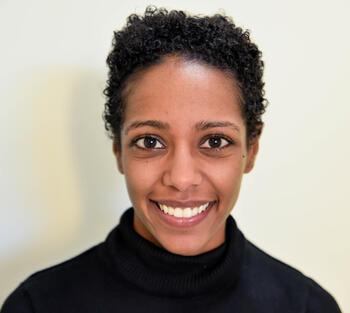
Tamara Wittes' Biography: Tamara Cofman Wittes is a senior fellow in the Center for Middle East Policy at Brookings. Wittes served as deputy assistant secretary of state for Near Eastern affairs from November of 2009 to January 2012, coordinating U.S. policy on democracy and human rights in the Middle East during the Arab uprisings. Wittes also oversaw the Middle East Partnership Initiative and served as deputy special coordinator for Middle East transitions.


Wittes is a co-host of Rational Security, a weekly podcast on foreign policy and national security issues. She writes on U.S. Middle East policy, regional conflict and conflict resolution, the challenges of global democracy, and the future of Arab governance. Her current research is for a forthcoming book, Our SOBs, on the tangled history of America’s ties to autocratic allies.


Wittes joined Brookings in December of 2003. Previously, she served as a Middle East specialist at the U.S. Institute of Peace and director of programs at the Middle East Institute in Washington. She has also taught courses in international relations and security studies at Georgetown University. Wittes was one of the first recipients of the Rabin-Peres Peace Award, established by President Bill Clinton in 1997.


Wittes is the author of "Freedom’s Unsteady March: America’s Role in Building Arab Democracy" (Brookings Institution Press, 2008) and the editor of "How Israelis and Palestinians Negotiate: A Cross-Cultural Analysis of the Oslo Peace Process" (USIP, 2005). She holds a bachelor's in Judaic and Near Eastern studies from Oberlin College, and a master's and doctorate in government from Georgetown University. She serves on the board of the National Democratic Institute, as well as the advisory board of the Israel Institute, and is a member of the Council on Foreign Relations and Women in International Security.


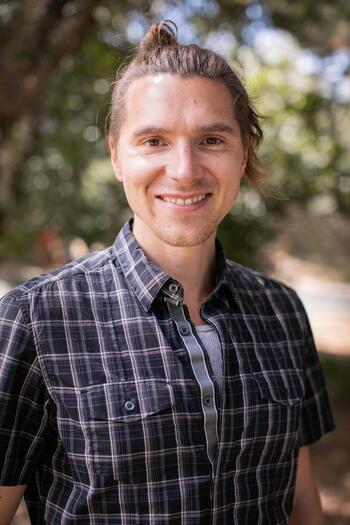
Mara Karlin's Biography: Mara Karlin, PhD, is Director of Strategic Studies at Johns Hopkins University’s School of Advanced International Studies (SAIS). She is also an Associate Professor at SAIS and a nonresident senior fellow at The Brookings Institution. Karlin has served in national security roles for five U.S. secretaries of defense, advising on policies spanning strategic planning, defense budgeting, future wars and the evolving security environment, and regional affairs involving the Middle East, Europe, and Asia. Most recently, she served as the deputy assistant secretary of defense for strategy and force development.  Karlin has been awarded Department of Defense Medals for Meritorious and Outstanding Public Service, among others. She is the author of Building Militaries in Fragile States: Challenges for the United States (University of Pennsylvania Press; 2018).

Tamara Wittes Senior fellow, Center for Middle East Policy Brookings
Mara Karlin Senior fellow,Center for 21st Century Security and Intelligence SAIS and Brookings
Seminars
-

Image
sagan 3x2 copy
The volatile relationship between the United States and North Korea has left the American public questioning whether North Korea is a threat or not. Existing polls suffer from poor design and, thus, provide a confusing and often contradictory narrative of U.S. public opinion on North Korea. As a result, a number of critical questions remain unanswered: Are Americans willing to live with the North Korean nuclear threat? Under what conditions would the public support using military force to accomplish what sanctions and diplomacy have not? What are the characteristics of the individuals willing to risk war against North Korea today? Professor Scott D. Sagan will discuss the findings of a recent survey experiment and offer a unique perspective to the ongoing public debate.

Scott D. Sagan is the Caroline S.G. Munro Professor of Political Science, the Mimi and Peter Haas University Fellow in Undergraduate Education, and Senior Fellow at the Center for International Security and Cooperation and the Freeman Spogli Institute at Stanford University. Before joining the Stanford faculty, Sagan was a lecturer in the Department of Government at Harvard University. From 1984 to 1985, he served as special assistant to the director of the Organization of the Joint Chiefs of Staff in the Pentagon. Sagan has also served as a consultant to the office of the Secretary of Defense and at the Sandia National Laboratory and the Los Alamos National Laboratory. In 2017, he received the International Studies Association’s Susan Strange Award which recognizes the scholar whose “singular intellect, assertiveness, and insight most challenge conventional wisdom and intellectual and organizational complacency" in the international studies community. Sagan was also the recipient of the National Academy of Sciences William and Katherine Estes Award in 2015, for his pioneering work addressing the risks of nuclear weapons accidents and the causes of nuclear proliferation.     


Okimoto Conference Room
Encina Hall, 3rd Floor
616 Serra Street, Stanford

Scott D. Sagan <i>Caroline S.G. Munro Professor of Political Science, Stanford University</i>
Seminars
-

Abstract:

Efforts are underway in South Africa to turn around a decade of governance reversal. But progress in addressing an underlying cause of  the reversals remains very limited – extreme, racially-tinged inequality, with missing ladders of opportunity into the middle class. In this seminar, Brian Levy will explore some interactions between shortfalls in inclusion and institutional pressures, including an in-depth focus on one key challenge – improving the learning outcomes of South Africa’s poorly performing system of basic education.   The findings from his recent co-authored book, The Politics and Governance of Basic Education: A Tale of Two South African Provinces  suggest that a narrow focus on  ‘fixing the bureaucracy’ can only go so far. Re-balancing focus away from narrowly top-down approaches towards the evocation of agency  offers a variety of  added possibilities for creative and constructive action. 


Speaker Bio:

Image
brian levy
Brian Levy is Professor of the Practice of International Development, School of Advanced International Studies, Johns Hopkins University; and Academic Director, Nelson Mandela School of Public Governance, University of Cape Town. He worked at the World Bank from 1989 to 2012, including as head of the secretariat responsible for the design and implementation of the World Bank Group's governance and anti-corruption strategy. He has published widely on the interactions among institutions, political economy and development policy, including Working with the Grain: Integrating Governance and Growth in Development Strategies (Oxford U Press, 2014; info at www.workingwiththegrain.com) and, as lead editor and author, The Governance and Politics of Basic Education: A Tale of Two South African Provinces (Oxford U Press, 2018). He completed his Ph.D in economics at Harvard University in 1983.

Goldman conference room
Encina Hall East, 4th floor
Room E409

Brian Levy Professor of the Practice of International Development, School of Advanced International Studies, Johns Hopkins University
Seminars
-

Image
16 04 29 solomonhsiang 04 bkm
RSVP

On April 16, Solomon Hsiang, the Chancellor's Associate Professor of Public Policy at the University of California, Berkeley, and the Center's Noosheen Hashemi Visiting Scholar, will lead a discussion on data for adaption to climate change, moderated by Marshall Burke. A reception will be held from 4:30 - 5:00 pm. The main event begins at 5:00 pm.

About the speaker:

Solomon Hsiang combines data with mathematical models to understand how society and the environment influence one another. In particular, he focuses on how policy can encourage economic development while managing the global climate. His research has been published in Nature, Science, and the Proceedings of the National Academy of Sciences. 

Hsiang earned a BS in Earth, Atmospheric and Planetary Science and a BS in Urban Studies and Planning from the Massachusetts Institute of Technology, and he received a PhD in Sustainable Development from Columbia University. He was a Post-Doctoral Fellow in Applied Econometrics at the National Bureau of Economic Research (NBER) and a Post-Doctoral Fellow in Science, Technology and Environmental Policy at Princeton University. Hsiang is currently the Chancellor's Associate Professor of Public Policy at the University of California, Berkeley and a Research Associate at the NBER.


Contact: 
I Lin Chen
(650) 724-5482
ilinchen@stanford.edu


Event Sponsors: 
Stanford Center on Global Poverty and Development, Stanford Center on Food Security and the Environment
Center on Global Poverty and Development Speaker Series


Koret-Taube Conference Center

Seminars
-

Abstract:


How do memory and forgetting shape politics in autocracies? We combine the logic of collective action with a theory of informational politics, in which autocrats have three instruments: propaganda, threats of violence embedded within propaganda, and censorship. For citizens, we argue that historical memory drives the calendar of protest. In turn, the likelihood of historical forgetting drives the informational strategy of repressive governments. We test our theory in the context of China. The most powerful focal points for protest, we find, are anniversaries of the regime's crimes against citizens. Those most likely to be forgotten -- those that occurred decades ago -- are subject to censorship, while those too fresh to be forgotten are subject to propaganda as well. Explicit threats of violence are reserved for China's ethnic minorities, and coincide with anniversaries of failed separatist movements. We conclude with evidence that propaganda-based threats of violence generate a short-term reduction in protest.


Speaker(s) Bio:


Image
erin baggott
Erin Baggott Carter is an Assistant Professor at the School of International Relations at the University of Southern California. She received a Ph.D. in Government from Harvard University and was previously a fellow at the Stanford Center for International Security and Cooperation. Her research focuses on Chinese foreign policy and propaganda. She recently completed a book manuscript on autocratic propaganda in global perspective and is currently working on another on how the United States and China attempt to shape each other’s domestic politics.


Image
carter brett
Brett Carter is Assistant Professor in the School of International Relations at the University of Southern California. He received a Ph.D. in Political Science from Harvard University, where he was a Graduate Fellow at the Harvard Academy for International and Area Studies. He was previously a fellow at Stanford University's Center on Democracy, Development, and the Rule of Law, as well as the Hoover Institution. He recently finished a book about propaganda in the world’s autocracies and is currently working on another book project about autocratic survival in Central Africa.

Reuben Hills Conference room, E207

Erin Baggott Carter Assistant Professor at the School of International Relations at the University of Southern California
Brett Carter Assistant Professor at the School of International Relations at the University of Southern California
Seminars
-
Professor Justin Gest will present an unique study of immigration governance across 30 countries in Europe, North America, Latin America, East Asia, Oceania, and the Middle East. Relying on a database of immigration demographics in the world’s most important immigrant destinations, he will present a taxonomy and an analysis of what drives different approaches to immigration policy over space and time. In an era defined by inequality, populism, and fears of international terrorism, he will show how governments are converging toward a “Market Model” that seeks immigrants for short-term labor with fewer outlets to citizenship— an approach that resembles the increasingly contingent nature of labor markets worldwide.
 
Image
Justin Gest

Justin
Gest
is an Assistant Professor of Public Policy at George Mason University’s Schar School of Policy and Government. He studies immigration and the politics of demographic change. He is the author of four books: Apart: Alienated and Engaged Muslims in the West (Oxford University Press/Hurst 2010); The New Minority: White Working Class Politics in an Age of Immigration and Inequality (Oxford University Press 2016); The White Working Class: What Everyone Needs to Know (Oxford University Press 2018); and Crossroads: Comparative Immigration Regimes in a World of Demographic Change (Cambridge University Press 2018). He has authored peer-reviewed articles in journals including Comparative Political Studies, Ethnic and Racial Studies, and the International Migration Review. He has also provided reporting or commentary for BBC, CNN, The Guardian, Los Angeles Times, NPR, The New York Times, Politico, Reuters, Vox, and The Washington Post. Professor Gest received the 2014 Joseph R. Levenson Memorial Teaching Prize, Harvard’s highest award for faculty teaching. In 2013, he received the 2013 Star Family Prize for Student Advising, Harvard’s highest award for student advising. In 2007, he co-founded the Migration Studies Unit at the London School of Economics (LSE).
 
Co-sponsored by the Global Populisms Project
 
Justin Gest Speaker George Mason University
Seminars
-

Abstract:

Democracies are in danger. Around the world, a rising wave of populist leaders threatens to erode the core structures of democratic self rule. In the United States, the election of Donald Trump marked a decisive turning point for many. What kind of president calls the news media the “enemy of the American people,” or sees a moral equivalence between violent neo-Nazi protesters in paramilitary formation and residents of a college town defending the racial and ethnic diversity of their homes? Yet, whatever our concerns about the current president, we can be assured that the Constitution offers safeguards to protect against lasting damage—or can we?  How to Save a Constitutional Democracy mounts an urgent argument that we can no longer afford to be complacent. Constitutional rules can either hinder or hasten the decline of democratic institutions. The checks and balances of the federal government, a robust civil society and media, and individual rights—such as those enshrined in the First Amendment—do not necessarily succeed as bulwarks against democratic decline. Rather, the sobering reality for the United States is that, to a much greater extent than is commonly realized, the Constitution’s design makes democratic erosion more, not less, likely. But we—and the rest of the world—can do better. The authors conclude by laying out practical steps for how laws and constitutional design can play a more positive role in managing the risk of democratic decline.

Speaker Bio:

Image
ginsburg tom

Tom Ginsburg is Leo Spitz Professor of Law, University of Chicago, and a professor of political science.  He is also director of the Comparative Constitutions Project   He focuses on comparative and international law from an interdisciplinary perspective. He holds BA, JD, and PhD degrees from the University of California at Berkeley. His books include Judicial Review in New Democracies (2003), which won the C. Herman Pritchett Award from the American Political Science Association; The Endurance of National Constitutions (2009), which also won a best book prize from APSA; Constitutions in Authoritarian Regimes (2014); and Law and Development in Middle-Income Countries (2014)..


Image
aziz huq 200x300
Aziz Huq is is the Frank and Bernice J. Greenberg Professor of Law at the University of Chicago. His scholarship focuses on how institutional design influences individual rights and liberties. He clerked for Judge Robert D. Sack of the U.S. Court of Appeals for the Second Circuit and then for Justice Ruth Bader Ginsburg of the Supreme Court of the United States. Before teaching, he led the Brennan Center’s project on Liberty and National Security and was a senior consultant analyst for the International Crisis Group.

Encina Hall, 4th floor East Wing

Goldman conference room (E409)

Tom Ginsburg Leo Spitz Professor of International Law, Ludwig and Hilde Wolf Research Scholar, Professor of Political Science
Aziz Huq Frank and Bernice J. Greenberg Professor of Law, Mark Claster Mamolen Teaching Scholar
Seminars
-

Abstract: In efforts to halt the Syrian government’s use of chemical weapons (CW) in that country’s civil war the United States and other outside powers applied coercive strategies, in both a deterrent and compellent mode. Outcomes varied: compellence achieved a partial success in getting Syria to give up much of its chemical stockpile, but there were multiple deterrence failures. This paper examines this record to draw lessons about factors associated with the effectiveness of coercion. Its analysis points to the interplay of three factors: credibility, motivation, and assurance. Regarding credibility, the case demonstrates that threats fulfilling many of the traditional criteria for establishing credibility can still fail. In Syria, this is partly because there were ambiguities in the scope of what was covered by deterrent warnings and partly because other factors also affect coercive outcomes. In the Syria case two additional factors were especially important. First, the domestic political motivations of the target affect whether external threats provide coercive leverage. In this case Syrian President Assad’s concern with regime survival led him to perceive the value of CW use as outweighing the likely costs even if outside powers followed through on retaliatory threats. Second, where regime survival is a concern, it is vital to pair coercive threats with appropriate assurances. Here, the case suggests that it is possible not only to provide too little assurance, but also too much. Whereas the Obama administration found it hard to offer credible assurances to Assad, the Trump administration initially conveyed assurances that were too robust, creating a sense that Syria could use CW with impunity. This analysis suggests there may have been a potentially viable path to effective coercion of the Assad regime, but the path would have involved intense tradeoffs that largely prevented decision makers from embracing it. Decision makers and outside commentators alike turned instead to a familiar schema that implies credibility is established by demonstrating a willingness to impose costs using airpower – a script that can be labeled the “resolve plus bombs” formula. Despite the frequent tendency to equate coercion with the threat or limited use of air strikes, this approach was not sufficient to change Syria’s calculations regarding chemical arms.


Speaker's Biography: Jeff Knopf is a professor at the Middlebury Institute of International Studies (MIIS) in Monterey, California, where he serves as chair of the M.A. program in Nonproliferation and Terrorism Studies and a senior research associate with the Center for Nonproliferation Studies (CNS). He is on sabbatical for the 2018-19 academic year and is spending the year as a visiting scholar at CISAC. This is his second stint at CISAC. Dr. Knopf received his Ph.D. in Political Science from Stanford and was previously a pre-doctoral fellow at CISAC in the days when it was still located in the old Galvez House. His most recently completed project is a forthcoming book volume he co-edited on Behavioral Economics and Nuclear Weapons. While at CISAC, Dr. Knopf will primarily be working on a project titled “Coercing Syria on Chemical Weapons.” This project examines efforts by the United States and other countries to apply deterrent and compellent strategies in attempts to stop the Syrian government from using chemical weapons and to dismantle its chemical arsenal. Dr. Knopf will also be working on a paper that explores cognitive aspects of the nuclear taboo.

Jeffrey Knopf Professor Middlebury Institute of International Studies (MIIS)
Seminars
-

Abstract: To drastically reduce emissions of greenhouse gases and expand energy access, nuclear energy may play a significant role in decarbonizing electrical grids. To the extent that this expansion involves developing new and advanced nuclear fuel cycle technologies, concerns about nonproliferation concurrently grow. To address at least one nonproliferation concern, a safeguards assessment was conducted on a conceptual nuclear waste processing technology, called pyroprocessing, using a traditional safeguards technique, called the neutron balance method. The safeguards assessment revealed that the fundamental requirements needed for the neutron balance method to work were not always observed. The diversion scenario modeled resulted in the undetected diversion of several kilograms of plutonium. The assessment found that traditional safeguards assumptions and techniques might not be adequate to meet nuclear material accountancy requirements. New approaches developed from fundamental research are needed to ensure new facilities are only being used for peaceful purposes.


Speaker's Biography: Chantell Murphy is a Nuclear Security Postdoctoral Fellow at CISAC. Chantell Murphy earned her PhD in nuclear engineering from the University of New Mexico in 2018 and holds a MS in health physics from Georgetown University and a BS in physics from Florida State University.

Chantell Murphy worked as a graduate research assistant at Los Alamos National Laboratory supporting the nuclear engineering and nonproliferation division (NEN-5) and worked in the national security office (NSO). During her time at LANL Ms. Murphy investigated safeguards approaches for pyroprocessing facilities and helped develop an acquisition path analysis software tool called APAT for the International Atomic Energy Agency (IAEA). Ms. Murphy worked on safeguards approaches for advanced reactor designs like thorium fueled reactors, worked on knowledge retention issues for future warhead verification campaigns, and participated in and gave talks at several international safeguards and nuclear policy related workshops around the US and in Europe. Ms. Murphy also worked as a visiting scientist at the Forschungszentrum Jülich in Germany for three months developing the IAEA’s state level approach and acquisition path analysis with the Nuclear Waste Management and Reactor Safety group in the Institute of Energy and Climate Research.

Chantell Murphy’s previous experience also includes an internship at the Managing the Atom project at the Belfer Center for Science and International Affairs and work for the Congressional Commission on the Strategic Posture of the United States.

Chantell Murphy Nuclear Security Postdoctoal Fellow CISAC, Stanford University
Seminars
-
 
Abstract: 
Why were Western expectations about how Russia would develop after the Soviet collapse so misplaced? How has Putin's Russia, with a GDP less than that of Italy, managed to reassert itself so effectively on the world stage? And how should the West respond to Russia going forward? Angela Stent will discuss her new book, focusing on how Russia's relations with Europe have evolved and how Europe-- caught between Putin's Russia and Trump's America--is reassessing its options.
 
Speaker's Biography:

Angela Stent is Professor of Government and Foreign Service at Georgetown University and directs its Center for Eurasian, Russian and East European Studies. She has also served in the State Department’s Office of Policy Planning and as National Intelligence Officer for Russia and Eurasia at the National Intelligence Council. She is the author of Russia and Germany Reborn: Unification, the Soviet Collapse and the New Europe; The Limits of Partnership: U.S-Russian Relations in the Twenty-First Century and Putin’s World: Russia Against the West and with the Rest.


Angela Stent Professor of Government and Foreign Service Georgetown University
Seminars
Subscribe to Seminars