-

This seminar will present empirical evidence about policies to promote healthy lifestyles in China from a professor and a policymaker from the PRC.

As a result of economic growth, urbanization, lifestyle change, and population aging, Noncommunicable Diseases (NCDs) have become China’s leading cause of death, accounting for 86.6% of annual deaths. Almost two-thirds of NCDs can be prevented by reducing unhealthy lifestyle choices such as tobacco use, physical inactivity, harmful use of alcohol, and unhealthy diets. In particular, dietary risk factors and insufficient physical activity increasingly contribute to the surging burden of obesity in China and globally.

In 2016, President Xi Jinping announced the “Healthy China 2030” Blueprint. Three years later, a corresponding action plan was released and encompassed 15 goals, including reducing obesity, increasing overall physical activity, and preventing NCDs. The presenters will discuss results of research on the determinants of healthy diet, physical activity, obesity, and noncommunicable diseases, and provide evidence for implementation of Healthy China 2030. Their research includes aspects on (1) unhealthy food and beverage marketing to children; (2) the link between green space, physical activity, and health outcomes; (3) a strategy to involve government and non-health sectors in the prevention and control of NCDs in China; and (4) preventive vaccinations and primary care management for individuals living with NCDs like diabetes.

Image
bai di
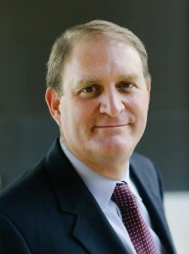
Juan Zhang is Associate Professor at School of Public Health, Peking Union Medical College (PUMC) & China Academy of Medical Science (CAMS). She conducts research on risk factors of noncommunicable disease (NCD), such as obesity, hypertension, diabetes, nutrition, physical activity, using policy, socio-ecological, and behavioral approaches. She currently is principal investigators to (1) assessing mass media (mainly television) food advertisement, (2) investigate underlying family environment, school policy and environment of preschool children overweight and obesity, (3) evaluate the implementation and impact of government-led programs to prevent and control NCD. Prior to joining PUMC, Dr. Zhang has had diverse working experience over 10 years across national government agency, WHO, academic institutions, and multinational pharmaceutical company.

Dr. Juan ZHANG holds a Ph.D. in Health Behavior from the Indiana University Bloomington. She has published in the areas of chronic disease epidemiology, economic cost and behavioral determinants of obesity, and public health program evaluation. She serves as members of several professional societies, like Committee of Diabetes Prevention and Control of Chinese Preventive Medicine Association (CPMA), Committee of NCD Disease Prevention and Control of CPMA, Committee of Health Communication of China Health Education Association, and Committee of Student Nutrition and Health, Chinese Student Nutrition and Health Promotion Federation.

Image
photo of xiangyuchen 4x6
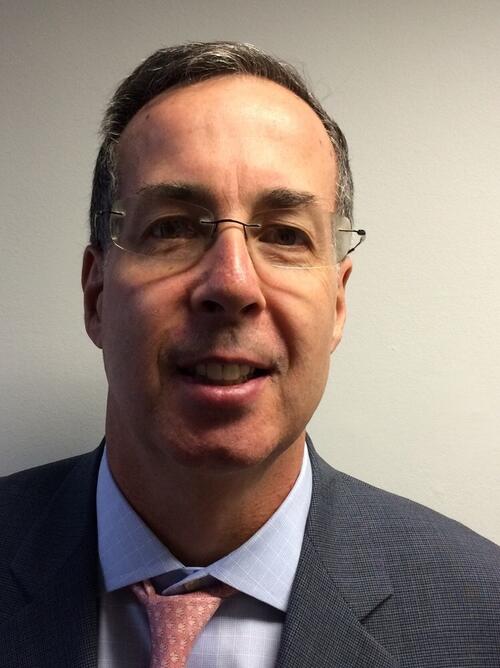
Xiangyu Chen is a working staff from Non-communicable Disease (NCDs) Control and Prevention Department in Zhejiang Provincial Center for Disease Control and Prevention. He is a public health physician and his ongoing areas of research include development of risk prediction models using health check-up data, and cost-effectiveness evaluation for flu shots among the diabetes. He completed his MS in Epidemiology and BA in Preventive Medicine at Soochow University.

Juan Zhang Associate Professor, School of Public Health, Peking Union Medical College (PUMC) & China Academy of Medical Science (CAMS)
Xiangyu Chen Non-communicable Disease (NCDs) Control and Prevention Department, Zhejiang Provincial Center for Disease Control and Prevention
Seminars
-

Vic Baines Vic Baines

Abstract:

Predicting the future is a fool's errand. Or is it? Technology has proved an agent of unprecedented disruption in recent years, but the instinct of some humans to do harm to others remains a constant. Cyber attacks continue to take the global community by surprise, and government actors still have a tendency to describe cybercrime as a new phenomenon. Knowing what we know about criminal modi operandi ​and motivations, can we speculate on the future of cybercrime in a way that enables governments, businesses and citizens to anticipate and prepare for the threats to come? Vic will present her ongoing work to review a past cybersecurity futures exercise, and a new project that aims to see further.

Vic Baines Bio

Downloable Flyer: The Cyber Policy Center Lunch Seminar Series


Seminars
-

Seminar Recording: https://youtu.be/8JDHuY0HMCM


Abstract: The motivation to develop nuclear energy waned in the latter part of the twentieth century. Technologies such as very-high-temperature gas-cooled reactors and fast-neutron liquid-metal reactors had been pursued for the purpose of recycling used nuclear fuel from water-cooled reactors, or for the purpose of supplying high-temperature process heat to the chemical industry or for hydrogen production. While both worthwhile causes, one could argue that the important missing element of all of these advanced nuclear reactor technologies was a business case: how were nuclear power plants to be profitable? With the more widely recognized need for decarbonizing energy production, the new driver for developing nuclear energy became cost. Can nuclear power be economically competitive with natural gas and coal, in order to provide an economic driver for the displacement of fossil fuel? This became the new motivation for nuclear energy development in the twenty-first century, and over the last decade the unthinkable happened: a growing and striving ecosystem of nuclear energy start-up companies. Many of these start-up companies pursue the development of liquid-fuel molten salt reactors, fueled by thorium or uranium fuel. Other start-up companies develop solid-fuel reactors cooled by salt, or even fusion reactors cooled by salt. The common feature of nuclear reactors that utilize molten salt is the operation at high-temperature and atmospheric pressure. The high temperature leads to doubled power efficiencies, compared to conventional water-cooled reactors. The atmospheric pressure leads to a safety case that is arguably easier to demonstrate, and hence that would enable a faster commercialization time.  On the other hand, there remain many technical risks and time-line uncertainties for the development of salt nuclear technologies. There remain also questions of policy, licensing, and compatibility with local industry and local culture, necessary elements for the global development of such nuclear reactors. This talk will explore some of the challenges faced by the global deployment of molten-salt and salt-cooled reactors, and some of the challenges faced by nuclear start-up companies in order to change the innovation cycle for nuclear energy technology from thirty years to a much shorter time frame.


Speaker's Biography:

Image
screen shot 2019 10 03 at 1 23 12 pm
Raluca Scarlat is an assistant professor at UC Berkeley, in the Department of Nuclear Engineering. Raluca Scarlat’s research focuses on chemistry, electrochemistry and physical chemistry of high-temperature inorganic fluids and their application to energy systems. Her research includes safety analysis, licensing and design of nuclear reactors and engineering ethics, and she has extensive experience in design and  safety analysis of fluoride-salt-cooled high-temperature reactors (FHRs) and Molten Salt Reactors (MSRs). Professor Scarlat has a Ph.D. in Nuclear Engineering from UC Berkeley, a certificate in Management of Technology from the Hass School of Business, and a B.S. in Chemical and Biomolecular Engineering from Cornell University. Scarlat has published articles in Electrochemical Society Journal, Journal of Fluorine Chemistry, Journal of Nuclear Materials, Nuclear Engineering and Design, Nuclear Instruments and Methods, Journal of Engineering for Gas Turbines and Power, Nuclear Technology, and Progress in Nuclear Energy.

Raluca Scarlat UC Berkeley
Seminars
-

Daphne Keller Daphne Keller
Abstract:

Facebook recently announced its own version of the Supreme Court: a 40-member board that will make final decisions about user posts that Facebook has taken down. The announcement came after extended deliberations that have been described as Facebook’s “constitutional convention.” Sweeping terms such as Supreme Court and constitution are not commonly used to describe the operation of private companies, but here they seem appropriate given the platforms’ importance for the many people who use them in place of newspapers, TV stations, the postal service, and even money. Yet private platforms aren’t really the public square, and internet companies aren’t governments. That’s exactly why they are free to do what so many people seem to want: set aside the First Amendment’s speech rules in favor of new, more restrictive ones. 

Mimicking a few government systems will not make internet platforms adequate substitutes for real governments, subject to real laws and real rights-based constraints on their power. Compared with democratic governments, platforms are far more capable of restricting speech. And they are far less accountable than elected officials for their choices. In this talk, I will delve into the differences we should be considering before urging platforms to take on greater roles as arbiters of speech and information.

Daphne Keller Bio


Lunch Seminar Series Flyer
  • E207, Encina Hall
  • 616 Serra Mall, Stanford, CA 94305


0
top_pick_rsd25_070_0254a.jpg

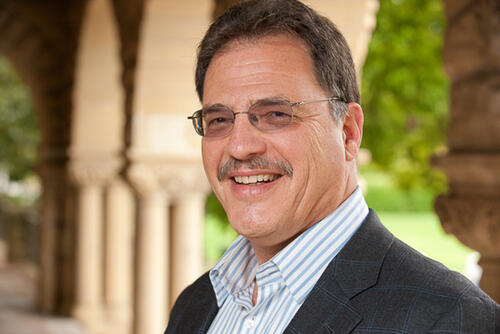
Daphne Keller is the Director of Platform Regulation at the Stanford Program in Law, Science, & Technology. Her academic, policy, and popular press writing focuses on platform regulation and Internet users'; rights in the U.S., EU, and around the world. Her recent work has focused on platform transparency, data collection for artificial intelligence, interoperability models, and “must-carry” obligations. She has testified before legislatures, courts, and regulatory bodies around the world on topics ranging from the practical realities of content moderation to copyright and data protection. She was previously Associate General Counsel for Google, where she had responsibility for the company’s web search products. She is a graduate of Yale Law School, Brown University, and Head Start.

SHORT PIECES


ACADEMIC PUBLICATIONS


POLICY PUBLICATIONS


FILINGS

  • U.S. Supreme Court amicus brief on behalf of Francis Fukuyama, NetChoice v. Moody (2024)
  • U.S. Supreme Court amicus brief with ACLU, Gonzalez v. Google (2023)
  • Comment to European Commission on data access under EU Digital Services Act
  • U.S. Senate testimony on platform transparency


PUBLICATIONS LIST

Director of Platform Regulation, Stanford Program in Law, Science & Technology (LST)
Social Science Research Scholar
Date Label
Director of Intermediary Liability Center for Internet and Society
Seminars
-

CISAC will be canceling all public events and seminars until at least April 5th due to the ongoing developments associated with COVID-19.

------------------------------------------------------------------------------------------------------------------------------------------------------


About this Event: Somatic (i.e. non-heritable) genome editing is already in clinical trials for the treatment of diseases ranging from certain cancers to sickle cell anemia.  But public fascination has largely focused on germline editing, especially with the startling late 2018 announcement that human embryos had been edited and then used for a pregnancy resulting in two live-born girls.  This talk will highlight key scientific and political responses since that announcement, and offer insights into ongoing debates and ongoing work by international commissions looking at whether there are any conditions under which such experiments could be done responsibly in the future.


About the Speaker:

R. Alta Charo, J.D., is a 2019-2020 Berggruen Fellow at the Stanford Center for Advanced Study in the Behavioral Sciences and the Warren P. Knowles Professor of Law and Bioethics at the University of Wisconsin.  She was co-chair of the National Academies’ 2017 report on human genome editing, and a member of the organizing committee for the 2019 international summit on genome editing in Hong Kong.  At present, she serves on the  World Health Organization committee developing global governance standards for genome editing, and on the steering committee of the International Society for Stem Cell Research effort to revise and expand ethical guidelines for research and development of both heritable and non-heritable human genome editing.


Alta Charo Professor of Law University of Wisconsin, and Stanford Center for Advanced Study in the Behavioral Sciences
Seminars
-

Click here to RSVP


Livestream: This event will not be live-streamed or recorded.


Abstract: The West’s sanctions regime on Russia is unprecedented. Russia is the largest economy ever to be subject to major sanctions. And for the first time, the West is now the major constraint on Russia’s participation in the global economy. This experience is driving adaptation and innovation in both Russian public policy and Western sanctions practice.

What do Russian sanctions reveal about both Russia and sanctions? What count as good and bad tests of sanctions’ efficacy? What implications do sanctions hold for Russia’s domestic evolution and its relationship with the West?


Speaker's Biography:

Image
headshot colour 04 19
Nigel Gould-Davies is an Associate Fellow at the Royal Institute of International Affairs (Chatham House). He teaches at Mahidol University International College in Thailand.

Nigel taught at Oxford University before joining the British Foreign Office, where his roles included Ambassador to Belarus. From 2010-14 he was Vice President, Policy and Corporate Affairs for BG Group in Asia.

He is the author of Tectonic Politics: Global Political Risk in an Age of Transformation (Brookings Institution, 2019). He received his B.A. and M.Phil. from Oxford and his Ph.D. from Harvard.


Nigel Gould-Davies Associate Fellow at the Royal Institute of International Affairs Chatham House
Seminars
-

Image
education of an idealist small cover
The Education of an Idealist traces Power’s distinctly American journey, from Irish immigrant to human rights activist to United States Ambassador to the United Nations. Power began her career as a war correspondent and as a vocal critic of US foreign policy, and then put her ideals into practice while working with Obama in the Senate, on the campaign trail, and throughout his presidency. Power’s perspective on government is unique, as she takes us from the streets of war-torn Bosnia to the Situation Room and out into the world of high-stakes diplomacy. In her characteristically gripping prose, Power illuminates the messy and complex worlds of politics and geopolitics while laying bare the searing battles and defining moments of her life. She also reveals what it’s like to juggle the demands of a 24/7 national security job with raising two young children. And, in the face of great challenges, she shows us not just how the United States can lead, but why there is always something each of us can do to advance the cause of human dignity. The Education of an Idealist is a humorous, stirring, and ultimately unforgettable account of the world-changing power of idealism -- and of one person’s fierce determination to make a difference.

Samantha Power is a Professor of Practice at the Harvard Kennedy School and Harvard Law School. From 2013-2017, Power served as the U.S. Ambassador to the United Nations and a member of President Obama's cabinet. From 2009-2013, Power served on the National Security Council as Special Assistant to the President for Multilateral Affairs and Human Rights. Power began her career as a journalist, reporting from places such as Bosnia, East Timor, Kosovo, Rwanda, Sudan, and Zimbabwe, and she was the founding executive director of the Carr Center for Human Rights Policy at the Kennedy School.  Power's book, "A Problem from Hell": America and the Age of Genocide won the Pulitzer Prize in 2003. She is also the author of the New York Times bestseller Chasing the Flame: Sergio Vieira de Mello and the Fight to Save the World. Her most recent book, The Education of an Idealist, was published by Harper Collins in September 2019. Power earned a B.A. from Yale University and a J.D. from Harvard Law School.

Click here to register by October 9, 2019

Books will be available for sale. Ambassador Power has graciously agreed to sign books

Dinkelspiel Auditorium

471 Lagunita Drive

Stanford, CA 94305

Ambassador Samantha Power Professor of Practice at the Harvard Kennedy School and Harvard Law School
Seminars
-

Abstract: In 2013, the Obama Administration’s “Nuclear Employment Strategy” guidance announced that all war plans and operations would be “consistent with the fundamental principles of the Law of Armed Conflict” (LOAC). The Trump Administration’s 2018 Nuclear Posture Review repeated this commitment. The literature on nuclear strategy and deterrence in political science however, has either ignored these legal requirements or misunderstood them. The legal literature on nuclear weapons, however, has largely ignored the technical revolution regarding improved accuracy and lower-yield nuclear weapons and the different strategic contexts in which the U.S. might contemplate nuclear use. This paper analyzes how proper application of the Law of Armed Conflict should constrain U.S. nuclear doctrine and war planning and how knowledge of strategic considerations is fundamental to proper legal analysis. We argue that the principle of proportionality can permit “counter-force” targeting— most clearly when such attacks can prevent or significantly reduce the expected damage to U.S. and allied populations with lower foreign collateral damage. We also argue that the legal requirement to take “feasible precautions” to protect non-combatants means the U.S. must use conventional weapons or the lowest yield nuclear weapons possible in any counterforce attack. Finally, we contend that the prohibition against deliberate targeting of civilians has gained the status of customary international law and that the U.S. government should therefore reverse its traditional position and reject the doctrine of “belligerent reprisal” against foreign civilians. This prohibition means that it is illegal for the United States, contrary to what is implied in the 2018 NPR and explicitly maintained by prominent U.S. Air Force lawyers, to either intentionally target civilians in reprisal to a strike against U.S. or allied civilians, or launch attacks against legitimate military targets if the intent to is cause incidental civilian harm.


Speaker's Biography:

Image
sagan scott 2012 photo
Scott D. Sagan is the Caroline S.G. Munro Professor of Political Science, the Mimi and Peter Haas University Fellow in Undergraduate Education, and Senior Fellow at the Center for International Security and Cooperation and the Freeman Spogli Institute at Stanford University. He also serves as Chairman of the American Academy of Arts and Sciences’ Committee on International Security Studies. Before joining the Stanford faculty, Sagan was a lecturer in the Department of Government at Harvard University and served as special assistant to the director of the Organization of the Joint Chiefs of Staff in the Pentagon. Sagan has also served as a consultant to the office of the Secretary of Defense and at the Sandia National Laboratory and the Los Alamos National Laboratory. 

Sagan is the author of Moving Targets: Nuclear Strategy and National Security (Princeton University Press, 1989); The Limits of Safety: Organizations, Accidents, and Nuclear Weapons (Princeton University Press, 1993); and, with co-author Kenneth N. Waltz, The Spread of Nuclear Weapons: An Enduring Debate (W.W. Norton, 2012). He is the co-editor of Learning from a Disaster: Improving Nuclear Safety and Security after Fukushima (Stanford University Press, 2016) with Edward D. Blandford and co-editor of Insider Threats (Cornell University Press, 2017) with Matthew Bunn. Sagan was also the guest editor of a two-volume special issue of Daedalus: Ethics, Technology, and War (Fall 2016) and The Changing Rules of War (Winter 2017).

Recent publications include “Armed and Dangerous: When Dictators Get the Bomb” in Foreign Affairs (November/December 2018); “Not Just a War Theory: American Public Opinion on Ethics in Combat” with Benjamin A. Valentino in International Studies Quarterly (Fall 2018); The Korean Missile Crisis” in Foreign Affairs (November/December 2017); “Revisiting Hiroshima in Iran: What Americans Really Think About Using Nuclear Weapons and Killing Noncombatants” with Benjamin A. Valentino in International Security (Summer 2017); and “Atomic Aversion: Experimental Evidence on Taboos, Traditions, and the Non-Use of Nuclear Weapons” with Daryl G. Press and Benjamin A. Valentino in the American Political Science Review (February 2013).

In 2018, Sagan received the Andrew Carnegie Fellowship from the Carnegie Corporation of New York. In 2017, he received the International Studies Association’s Susan Strange Award which recognizes the scholar whose “singular intellect, assertiveness, and insight most challenge conventional wisdom and intellectual and organizational complacency" in the international studies community. Sagan was also the recipient of the National Academy of Sciences William and Katherine Estes Award in 2015, for his work addressing the risks of nuclear weapons and the causes of nuclear proliferation. The award, which is granted triennially, recognizes “research in any field of cognitive or behavioral science that advances understanding of issues relating to the risk of nuclear war.” In 2013, Sagan received the International Studies Association's International Security Studies Section Distinguished Scholar Award. He has also won four teaching awards: Stanford’s 1998-99 Dean’s Award for Distinguished Teaching; Stanford's 1996 Hoagland Prize for Undergraduate Teaching; the International Studies Association’s 2008 Innovative Teaching Award; and the Monterey Institute for International Studies’ Nonproliferation Education Award in 2009.


Image
weiner allen
Allen S. Weiner, JD ’89, is an international legal scholar with expertise in such wide-ranging fields as international and national security law, the law of war, international conflict resolution, and international criminal law (including transitional justice). His scholarship focuses on international law and the response to the contemporary security threats of international terrorism, the proliferation of weapons of mass destruction, and situations of widespread humanitarian atrocities. He also explores assertions by states of “war powers” under international law, domestic law, and just war theory in the context of asymmetric armed conflicts between states and nonstate armed groups and the response to terrorism. In the realm of international conflict resolution, his highly multidisciplinary work analyzes the barriers to resolving violent political conflicts, with a particular focus on the Israeli-Palestinian conflict. Weiner’s scholarship is deeply informed by experience; he practiced international law in the U.S. Department of State for more than a decade advising government policymakers, negotiating international agreements, and representing the United States in litigation before the International Criminal Tribunal for the former Yugoslavia, the International Court of Justice, and the Iran-United States Claims Tribunal.

Senior Lecturer Weiner is director of the Stanford Program in International and Comparative Law and co-director of the Stanford Center on International Conflict and Negotiation. Before joining the Stanford Law School faculty in 2003, Weiner served as legal counselor to the U.S. Embassy in The Hague and attorney adviser in the Office of the Legal Adviser of the U.S. Department of State. He was a law clerk to Judge John Steadman of the District of Columbia Court of Appeals.


Scott Sagan Professor of Political Science Stanford University
Allen Weiner Stanford University
Seminars
Subscribe to Seminars