-

Livestream: This event will not be live-streamed or recorded.


Abstract: When U.S. Senator Arthur Vandenberg famously told President Harry Truman that he’d have to “scare the hell out of the American people” to secure support for the coming Cold War, Vandenburg was tapping into a tried and true tradition of strategically cultivating fear to influence attitudes and change behavior. While this tactic has a long history of use, strikingly little has been written on precisely how, why, and when it actually works. In this talk, Professor Kelly M. Greenhill offers just such an explanation. Drawing upon findings from her next book, Fear and Present Danger: Extra-factual Sources of Threat Conception and Proliferation, Greenhill describes how and why cognitive and psychological biases can be triggered and strategically manipulated as means to political and military ends.


Greenhill further explains why actors engaged in this particular kind of cognitive hacking frequently eschew fact-based arguments in favor of “truthier” alternatives, such as rumors, conspiracy theories, propaganda, fiction and so-called fake news, sources she collectively refer to as “extra-factual information” (EFI). She identifies the conditions under which policymakers and the public tend to find EFI-infused threat narratives persuasive, and, drawing upon a wide array of historical examples, show that while information content and delivery platforms have changed, the underlying mechanisms that make this tool such an effective instrument of political influence, and EFI, such a useful handmaiden to it, have not. Greenhill highlights the implications of historical cases for our contemporary, EFI-saturated political environment and what current trends may portend for the future.


Speaker’s Biography: Kelly M. Greenhill (PhD, MIT) is a professor and Director of International Relations at Tufts University and Research Fellow at Harvard University’s Kennedy School. Greenhill has published four books, including Weapons of Mass Migration: Forced Displacement, Coercion, and Foreign Policy (winner of ISA’s Best Book of the Year Award); Sex, Drugs, and Body Counts: The Politics of Numbers in Global Crime and Conflict; The Use of Force: Military Power and International Politics; and Coercion: The Power to Hurt in International Politics. Outside of academia, Greenhill has consulted for the US government, UN, UNHCR, World Bank and Ford Foundation and worked as an analyst for the U.S. Defense Department. 


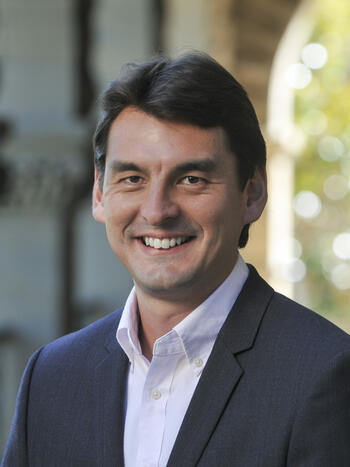
Kelly Greenhill Professor and Director of International Relations Tufts University
Seminars
-

Seminar Recording: ​https://youtu.be/vwmgYCTUJ3o


About this Event: Scholars and practitioners have long argued that compliance with international rules often requires building institutions or other mechanisms to ease access to information about possible violations. This book introduces a different information problem -- disclosure dilemmas -- that requires equipping IOs with secrecy. States and firms often possess private information that sheds detailed light on the compliance of others with international rules. Yet fears of revealing intelligence sources or helping commercial rivals can deter them from disclosing it. Building a “confidentiality system” in an international organization can allow the institution to receive and protect such sensitive details, enabling disclosure without wider dissemination. This, in turn, elicits the sharing of unique and sensitive information which fills evidentiary gaps and makes cooperation more effective. For example, targeted intelligence disclosures to the IAEA can fill in gaps about hidden nuclear weapons programs. Similarly, targeted disclosures of internal firm documentation to the WTO can clarify whether trade barriers have caused damage to foreign firms. The book offers a unified, multi-method approach to understanding international cooperation and how institutions work, spanning economic and security domains from nuclear proliferation to trade to human rights. In addition to practical lessons about how to improve compliance with international rules, the book recasts the role of institutions in International Relations and identifies a source of tension between cooperation and normative goals like global governance transparency.


Speaker's Biography: Austin Carson is assistant professor in the Department of Political Science at the University of Chicago. His first book, Secret Wars: Covert Conflict in International Politics (Princeton UP 2018), argues that secrecy helps great powers meddle in conflicts while keeping war limited. It was recently award the Lepgold Book Prize for best book in 2018. A second book with Allison Carnegie, Secrets in Global Governance: Disclosure Dilemmas and the Challenge of International Cooperation (Cambridge UP forthcoming), shows how secrecy allows international organizations to use sensitive information to assess compliance. His research has appeared in International Organization, American Journal of Political Science, and Security Studies.

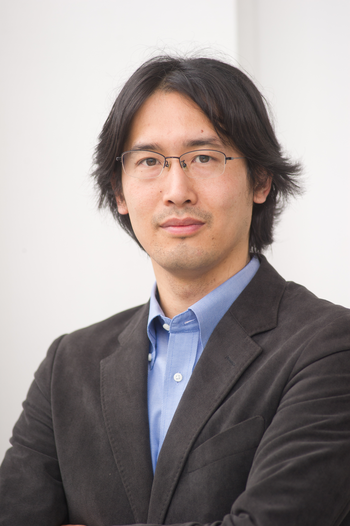
Austin Carson University of Chicago
Seminars
-

U.S.-China relations have evolved from past templates of  "responsible stakeholder" and "G2" to new ones emphasizing strategic competition.  What is the impact of this competition for broader stability in East Asia?  How does the ongoing U.S.-China trade war impact U.S. allies in Asia?   In particular, how does strategic competition between these two power affect the choices of key allied states like Korea?  Professor Cha will present some research-in-progress on these topics that seeks a broader conceptualization of the costs and benefits behind the latest turn in U.S.-China relations.

Image
victor cha small 1 3x2
Victor Cha is a 2019-20 Koret Fellow at Stanford's Shorenstein Asia-Pacific Research Center during the winter quarter.  He is Vice Dean and holds the D.S. Song-KF Chair in Government and International Relations at Georgetown University, and is also Senior Adviser at the Center for Strategic and International Studies (CSIS) in Washington D.C. He formerly served on the National Security Council staff and as the US Deputy head of delegation for the Six Party talks. Professor Cha received a PhD in political science and a master's in international affairs from Columbia University; an MA in philosophy, politics, and economics from the University of Oxford; and an AB in economics from Columbia University.

Victor Cha <i>Professor of Government, Georgetown University</i>
Seminars
-

Seminar Recording: https://youtu.be/HFZJj01vC3U


Abstract: By most accounts, the most important political space in the world's largest country is the four inches between Vladimir Putin’s ears. In a new book, Graeme Robertson and Sam Greene challenge the idea that Putin has shaped Russia in his own image, arguing instead that it his power flows from a particular relationship he has developed with his citizens -- and that his citizens have developed with one another. The result is a view of Russian politics as something much more fluid and fragile than we generally understand, a shifting landscape in which Putin's power -- and that of whoever succeeds him -- is continually negotiated and renegotiated between the Kremlin and the public, even in the confines of an increasingly authoritarian state. In this discussion, Greene and Robertson explore the social and political imperatives, challenges and dilemmas Putin and Russia face as he rounds out his fourth term and wonders about a fifth.


Speakers' Biography:


Sam Greene is reader in Russian politics and Director of the Russia Institute at King's College London. His research focuses on the relationships between citizens and the state in Russia, and in societies experiencing social, economic and political transformation more broadly. His first book, Moscow in Movement: Power and Opposition in Putin's Russia, was published by Stanford University Press in 2014. More recently, he is co-author with Graeme Robertson of Putin v the People: The Perilous Politics of a Divided Russia, published by Yale University Press in 2019. He also serves as Associate Fellow in the Russian and Eurasian Programme of the International Institute for Security Studies and a Visiting Professor at the UK Defence Academy.


Graeme Robertson is a Professor of Political Science at the University of North Carolina at Chapel Hill and Director of the Center for Slavic, Eurasian and East European Studies. His work focuses on political protest and regime support in authoritarian regimes.

Graeme’s new book (with Samuel A. Greene) is Putin v. The People, published by Yale University Press in June 2019. The book presents a fresh new look at the social bases of support for and opposition to authoritarian rule in Russia. Graeme is also the author of Revolution and Reform in Ukraine, published by PONARS Eurasia (with Silviya Nitsova and Grigore Pop-Eleches) and The Politics of Protest in Hybrid Regimes: Managing Dissent in Post-Communist Russia, published by Cambridge University Press. He has published articles in many academic journals including the American Political Science Review, the American Journal of Political Science, The Journal of Politics and the British Journal of Political Science, as well as contributing regularly to the media on Russia and Ukraine. Graeme currently serves as the Associate Editor for Comparative Politics for the American Journal of Political Science.

Sam Greene King's College London
Graeme Robertson University of North Carolina
Seminars
-

Seminar Recording: https://youtu.be/5c8Un2Y9-sw


Abstract: Over the last fifteen years, the Russian government has invested significantly in improving Russia’s education and health care systems and in reversing the health and demographic catastrophes of the 1990s. This discussion will assess the extent to which those investments have paid off and the continued challenges Putin faces in aligning Russia’s human capital resources with his political, economic, and foreign policy ambitions. It will also examine the ways that health and social policy have been used as political tools – not always successfully – by the Putin regime.


Speaker Biography: Judy Twigg is a professor of political science at Virginia Commonwealth University; senior associate (non-resident) with the Center for Strategic and International Studies; consultant for the evaluation units of the World Bank and the Inter-American Development Bank; and adjunct professor at the Walsh School of Foreign Service, Georgetown University. Twigg’s work focuses on issues of health, human capital, and health systems reform in Eurasia, as well as evaluations of human development and public sector management assistance projects globally. She has been a consultant for John Snow, Inc., UNICEF, USAID, the Eurasia Foundation, and the Social Science Research Council. Twigg was a 2005 recipient of the State Council on Higher Education in Virginia Outstanding Faculty Award. She holds a B.S. in physics from Carnegie Mellon University, an M.A. in political science and Soviet studies from the University of Pittsburgh, and a Ph.D. in political science and security studies from MIT.


Judy Twigg Professor of Political Science Virginia Commonwealth University
Seminars
-

WE HAVE REACHED VENUE CAPACITY AND ARE NO LONGER ACCEPTING RSVPS


Authoritarian governments around the world are developing increasingly sophisticated technologies for controlling information. In the digital age, many see these efforts as futile, as they are easily thwarted by savvy Internet users who quickly find ways to evade and circumvent them. In this talk, Professor Roberts demonstrates that even censorship that is easy to circumvent is enormously effective. Censorship acts like a tax on information, requiring those seeking information to spend more time and money if they want access. By creating small inconveniences that are easy to explain away, censorship powerfully influences the spread of information and, in turn, what people know about politics. Through analysis of Chinese social media data, online experiments, nationally representative surveys, and leaks from China’s Propaganda Department, Professor Roberts find that when Internet users notice blatant censorship they are willing to compensate for better access.  But subtler censorship, such as burying search results or introducing distracting information on the web, is more effective because users are less aware of it. Roberts challenges the conventional wisdom that online censorship is undermined when it is incomplete and shows instead how censorship’s porous nature is used strategically to divide the public and target influencers. 

Image
Portrait of Margaret E. Roberts
Margaret E. Roberts is an Associate Professor at the U.C. San Diego Department of Political Science. Her research interests lie in the intersection of political methodology and the politics of information, specifically focused on automated text analysis and understanding censorship and propaganda in China. Her work has appeared in venues such as the American Journal of Political Science, American Political Science Review, Political Analysis and Science. Her recent book Censored: Distraction and Diversion Inside China’s Great Firewall was listed as one of the Foreign Affairs Best Books of 2018, was honored with the Goldsmith Book Award, and has been awarded the Best Book Award in the Human Rights Section and Information Technology and Politics Section of the American Political Science Association.  She received her Ph.D. from Harvard University, an M.S. in statistics from Stanford University, and a B.A. in Economics and International Relations from Stanford.

Advisory on Novel Coronavirus (COVID-19)

In accordance with university guidelines, if you (or a spouse/housemate) have returned from travel to mainland China in the last 14 days, we ask that you DO NOT come to campus until 14 days have passed since your return date and you remain symptom-free. For more information and updates, please refer to the Stanford Environmental Health & Safety website: https://ehs.stanford.edu/news/novel-coronavirus-covid-19


Image
Image of red flag over the Shanghai Bund
This event is part of the 2020 Winter/Spring Colloquia series, The PRC at 70: The Past, Present – and Future?, sponsored by APARC's China Program.


Margaret E. Roberts Associate Professor, Department of Political Science, U.C. San Diego
Seminars
-

In 2015, Beijing issued a set of Guiding Opinions as part of a program to reform China’s state-owned enterprises (SOEs). The new policy requires SOEs to amend their corporate charters to formalize and elevate the leadership role of the Chinese Communist Party in their corporate governance. To better grasp the contours of political conformity in Chinese corporate governance, Curtis Milhaupt will empirically examine the patterns of “party-building” (dangjian) charter amendments adopted in response to this policy by all listed nonfinancial Chinese firms in the four-year period from 2015-2018. He will also analyze the wide, substantive variation in the adoption of this dangjian policy within and across firm types, including privately-owned enterprises.

Image
Portrait of Curtis Millhaupt
Curtis J. Milhaupt is the William F. Baxter-Visa International Professor of Law, Stanford Law School and a Senior Fellow, by courtesy, Freeman Spogli Institute for International Studies.  He is a Research Associate of the European Corporate Governance Institute and a member of the American Law Institute.  His research and teaching interests include comparative corporate governance, the legal systems of East Asia, and state capitalism.  In addition to numerous scholarly articles, he has co-authored or edited seven books, including Regulating the Visible Hand? The Institutional Implications of Chinese State Capitalism (Oxford, 2016), Law and Capitalism: What Corporate Crises Reveal about Legal Systems and Economic Development Around the World (Chicago, 2008) and Transforming Corporate Governance in East Asia (Routledge, 2008).  Prior to Stanford, Professor Milhaupt held chaired professorships in comparative corporate law and Japanese law at Columbia Law School, where he served on the faculty for nearly two decades.  Before entering academia, Professor Milhaupt practiced corporate law in New York and Tokyo with a major law firm.  He holds a J.D. from Columbia Law School and a B.A. from the University of Notre Dame, and conducted graduate studies in law and international relations at the University of Tokyo.

Curtis J. Milhaupt William F. Baxter-Visa International Professor of Law, Stanford Law School
Seminars
-

This event is co-sponsored by the Program in History and Philosophy of Science; Program in Science, Technology, and Society; and Stanford Center for Law and History.


Livestream: This event will not be live-streamed or recorded


Abstract: How have national practices of nuclear security produced local conditions of insecurity? After World War II, the United States’ nuclear testing program transformed the Marshall Islands into an experimental site for testing both new weapons and forms of territorial governance. During the same period, the Hunters Point Shipyard in southeast San Francisco became the launching point and return site for ships, scientists, and military personnel circulating between the mainland and the Pacific tests. These activities not only incorporated the Marshall Islands and Hunters Point into networks of militarization and scientific knowledge production, but also resulted in widespread radiological contamination. Professors Mary Mitchell and Helen Kang will discuss the entangled legal, environmental, and social legacies of radiological contamination at these two sites, shedding light on the consequential damages of the Cold War and ongoing efforts to demand accountability from the United States government.


Helen Kang Biography: Helen H. Kang is Professor of Law at Golden Gate University School of Law and Director of the school’s Environmental Law and Justice Clinic, which has received recognition for its work from the American Bar Association and the Clinical Legal Education Association, among others. She has devoted most of her legal career to environmental protection, first as Trial Attorney with the Environmental Enforcement Section of the U.S. Department of Justice. Since joining the clinic in 2000, she and her students have successfully represented community and environmental groups, prevailing against agencies such as U.S. EPA and large sources of pollution, including power plants. The clinic’s work has contributed to developments in environmental law, reducing pollution in communities most affected by pollution in California and beyond, and improving public participation and regulatory accountability. Helen’s achievements include successfully arguing in the California Supreme Court to defend the California Environmental Quality Act from federal preemption and compelling California, after decades of abdication, to meaningfully regulate agricultural pollution. She graduated from Berkeley Law, University of California at Berkeley, and Yale University.


Mary Mitchell Biography: Mary X. Mitchell is an Assistant Professor of History at Purdue University where she works on issues at the intersection of environmental inequality and law. During the spring of 2020, Mitchell will be a faculty fellow at Princeton University's Shelby Cullom Davis Center. She earned her PhD in History and Sociology of Science from the University of Pennsylvania in 2016 and was an Atkinson Fellow in Sustainability at Cornell University from 2016-2018. Previously, she practiced law in Pennsylvania and served as a law clerk to Judge Anthony J. Scirica of the United States Court of Appeals for the Third Circuit.


Helen Kang Professor of Law Golden Gate University School of Law
Mary Mitchell Assistant Professor of History Purdue University
Seminars
-
Title: Why Do Data-Use Agreements Take So Long? A Study of Top-50 Research Universities
 
Dr. Michelle M. Mello, M.Phil., Ph.D., J.D.
 
Professor of Law
Professor of Medicine (Health Services Research)
 
Michelle Mello is a leading empirical health law scholar. Her research is focused on understanding the effects of law and regulation on health care delivery and population health outcomes. She has authored over 190 articles and book chapters on the medical malpractice system, medical errors and patient safety, public health law, regulation of pharmaceuticals, biomedical research ethics and governance, obesity policy, in addition to other topics. She was elected to the National Academy of Medicine at the age of 40 and is the recipient of a number of awards for her research.
 
Dr. Mello teaches courses in torts and public health law. She received a J.D. from the Yale Law School, a Ph.D. in Health Policy and Administration from the University of North Carolina at Chapel Hill, an M.Phil. from Oxford University, where she was a Marshall Scholar. She also holds a B.A. from Stanford University.
 
 
David M Studdert, LLB, ScD, MPH
 
Professor of Law
Professor of Medicine (PCOR)
 
 
David M. Studdert is a distinguished expert in the fields of health law and empirical legal research. His scholarship explores how the legal system influences the health and well-being of populations. A prolific scholar, he has authored more than 150 articles and book chapters, and his work appears frequently in leading international medical, law, and health policy publications.
 
Professor Studdert joined Stanford Law School faculty on November 1, 2013, in a joint appointment as Professor of Medicine (PCOR/CHP) and Professor of Law. Before joining the Stanford faculty, Professor Studdert was on the faculty at the University of Melbourne (2007-13) and the Harvard School of Public Health (2000-06). He has also worked as a policy analyst at the RAND Corporation, a policy advisor to the Minister for Health in Australia, and a practicing attorney.
 
Professor Studdert has received the Alice S. Hersh New Investigator Award from AcademyHealth, the leading organization for health services and health policy research in the United States. He was awarded a Federation Fellowship (2006) and a Laureate Fellowship (2011) by the Australian Research Council. He holds a law degree from University of Melbourne and a doctoral degree in health policy and public health from the Harvard School of Public Health.
 

CHP/PCOR Conference Room
Encina Commons, Room 119
615 Crothers Way, Stanford, CA 94305

Seminars
-

Image
Ashish Goel
Abstract:

While the Internet has revolutionized many aspects of our lives, there are still no online alternatives for making democratic decisions at large scale as a society. In this talk, we will describe algorithmic and market-inspired approaches towards large scale decision making that our research group is exploring. We will start with a model of opinion dynamics that can potentially lead to polarization, and relate that to commonly used recommendation algorithms. We will then describe the algorithms behind Stanford's participatory budgeting platform, and the lessons that we learnt from deploying this platform in over 70 civic elections. We will use this to motivate the need for a modern theory of social choice that goes beyond voting on candidates. We will then describe ongoing practical work on an automated moderator bot for civic deliberation (in collaboration with Jim Fishkin's group), and ongoing theoretical work on deliberative approaches to decision making. We will conclude with a summary of open directions, focusing in particular on fair advertising. 

Ashish Goel Bio

Lunch Seminar Series Flyer
  • E207, Encina Hall
  • 616 Jane Stanford Way, Stanford, CA 94305
 
0
ashish_goel.jpg
Ashish Goel is a Professor of Management Science and Engineering and (by courtesy) Computer Science at Stanford University, and a member of Stanford's Institute for Computational and Mathematical Engineering. He received his PhD in Computer Science from Stanford in 1999, and was an Assistant Professor of Computer Science at the University of Southern California from 1999 to 2002. His research interests lie in the design, analysis, and applications of algorithms; current application areas of interest include social networks, participatory democracy, Internet commerce, and large scale data processing. Professor Goel is a recipient of an Alfred P. Sloan faculty fellowship (2004-06), a Terman faculty fellowship from Stanford, an NSF Career Award (2002-07), and a Rajeev Motwani mentorship award (2010). He was a co-author on the paper that won the best paper award at WWW 2009, and an Edelman Laureate in 2014. Professor Goel was a research fellow and technical advisor at Twitter, Inc. from July 2009 to Aug 2014.
Ashish Goel Professor of Management Science and Engineering
Seminars
Subscribe to Seminars