-

Presidential impeachment is becoming increasingly common in democracies around the world; however, the public’s understanding of impeachment both as a legal and a political process and how it fits into the overall political picture is relatively low.

In February this year, the United States Senate voted to acquit President Donald Trump on both articles of impeachment, bringing the three-week long impeachment trial to an end. Three years earlier in March 2017, the South Korean Constitutional Court made a unanimous decision to remove then President Park Geun-hye from office, putting an end to its three-month long trial. The fate of the two impeached presidents was in part influenced by the different political systems and impeachment mechanisms in the U.S. and South Korea.

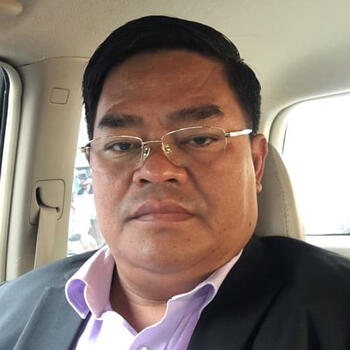
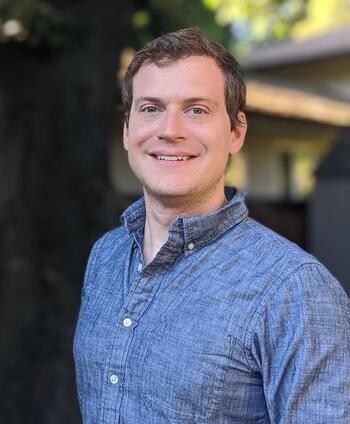
Mira Yoo, a senior rapporteur judge, served as a spokesperson during the impeachment inquiry and trial in South Korea. In this talk, Yoo will share her assessment of the two impeachment cases in the U.S. and South Korea by discussing both the legal and the political factors that helped shape how the impeachment process and proceedings played out in the two impeachment regimes. Drawing on the similarities and differences in several important dimensions, she will discuss the broader implications of presidential impeachment, both the process and its legacy, to promote a better understanding of the historical gravity of the issue.

Image
Mira Yoo joined the Walter H. Shorenstein Asia-Pacific Research Center (APARC) as a visiting scholar for the winter and spring quarters of 2020 from the Constitutional Court of the Republic of Korea, where she serves as rapporteur judge, as well as director of the Basic Rights Research Team at the Constitutional Court's Research Institute.  At APARC, she is conducting research on Korea's international relations in politics through the lens of the constitutional adjudication.

Via Zoom

Mira Yoo <i>Visiting Scholar</i>, APARC, Stanford University
Seminars
-

This is a virtual event. Please click here to register and generate a link to the talk. 
The link will be unique to you; please save it and do not share with others.


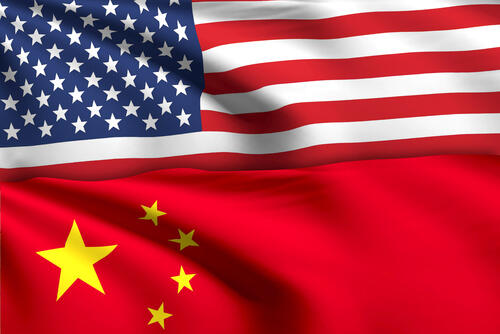
China’s role in the COVID-19 outbreak has elicited a growing global backlash, including dueling Republican and Democratic campaign ads, alongside praise for China’s success in curbing the coronavirus and sending medical assistance overseas. How will the pandemic reshape China’s domestic and international standing, and what lies ahead for U.S.-China relations? Weiss will discuss the Chinese government’s pandemic response and what it reveals about the CCP’s domestic and international intentions.

Image
Jessica Chen Weiss
Jessica Chen Weiss is an associate professor of Government at Cornell University, China/Asia political science editor at the Washington Post Monkey Cage blog and a nonresident Senior Associate at the Center for Strategic and International Studies.  She is the author of Powerful Patriots: Nationalist Protest in China’s Foreign Relations (Oxford University Press, 2014).  Her research appears in International Organization, China Quarterly, International Studies Quarterly, Journal of Conflict Resolution, Security Studies, Journal of Contemporary China, and Review of International Political Economy, as well as in the New York Times, Foreign Affairs, and Washington Quarterly.  She was previously an assistant professor at Yale University and founded FACES, the Forum for American/Chinese Exchange at Stanford, while an undergraduate at Stanford University.  Born and raised in Seattle, Washington, she received her Ph.D. from the University of California, San Diego in 2008, where her dissertation won the 2009 American Political Science Association Award for best dissertation in international relations, law and politics.  Weiss is a term member of the Council on Foreign Relations.


Image of red flag over the Shanghai BundThis event is part of the 2020 Winter/Spring Colloquia series, The PRC at 70: The Past, Present – and Future?, sponsored by APARC's China Program.


Via Zoom Webinar.
Register at: https://bit.ly/3erPfSn 

Jessica Chen Weiss Associate Professor of Government, Cornell University
Seminars
-

ABSTRACT

Democracy promotion has been a longstanding goal of US foreign policy in the Middle East and elsewhere. President George W. Bush championed democracy promotion as a way to counter the ideology and extremism that led to the September 11, 2001 terror attacks against the United States. After Bush’s attempts ended in abject failure, President Barack Obama sought to repair relations with the Muslim world but also withdraw the US footprint in the Middle East. But Obama was forced to take a far more hands-on approach with the outbreak of the 2010-2011 uprisings known as the Arab Spring. President Donald Trump, who has displayed an almost allergic aversion to Obama’s policies, has openly embraced the region’s autocrats with little regard for their abuse of human rights or absence of attention to political or economic freedom. How the United States approaches the region matters – both for aspiring democrats and for those who wish to silence them. Despite the rise of Russia and China, the United States remains the sole superpower, with the loudest voice on the world stage. Thus, the shift from democracy promoter – albeit reluctantly at times – to authoritarian enabler has made the task of democratic political reform far more challenging for people across the Middle East. This discussion will examine the recent democracy promotion efforts of the United States, with a focus on the Obama and Trump years.

SPEAKER BIO

Image
yerkes color large 2017
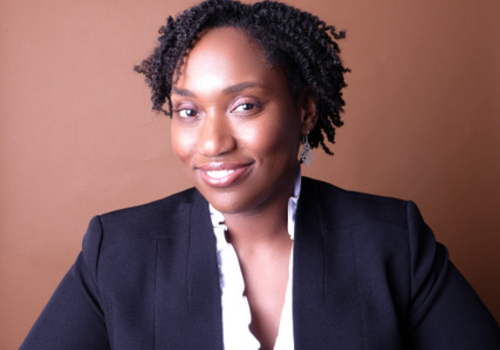
Sarah Yerkes is a fellow in the Carnegie Endowment for International Peace’s Middle East Program, where her research focuses on Tunisia’s political, economic, and security developments as well as state-society relations in the Middle East and North Africa.  She has been a visiting fellow at the Brookings Institution and a Council on Foreign Relations international affairs fellow and has taught in the Security Studies Program at Georgetown University and at the Elliott School of International Affairs at the George Washington University. Yerkes is a former member of the State Department’s policy planning staff, where she focused on North Africa. Previously, she was a foreign affairs officer in the State’s Department’s Office of Israel and Palestinian affairs. Yerkes also served as a geopolitical research analyst for the U.S. military’s Joint Staff Strategic Plans and Policy Directorate (J5) at the Pentagon, advising the Joint Staff leadership on foreign policy and national security issues.

Online, via Zoom: REGISTER

Sarah Yerkes Carnegie Endowment for International Peace
Seminars
-

This is a virtual event. Please click here to register and generate a link to the talk. 
The link will be unique to you; please save it and do not share with others.

Much recent commentary on US relations with China claims that the policy of “Engagement” was a foolish and failed attempt to transform the People’s Republic into an American style democracy that instead created an authoritarian rival. This narrative mocks the policies of eight US administrations to justify calls for “Decoupling” and “Containment 2.0.” Fingar’s talk will challenge this narrative by examining the origins, logic, and achievements of Engagement and explain why Decoupling is neither wise nor attainable.

Image
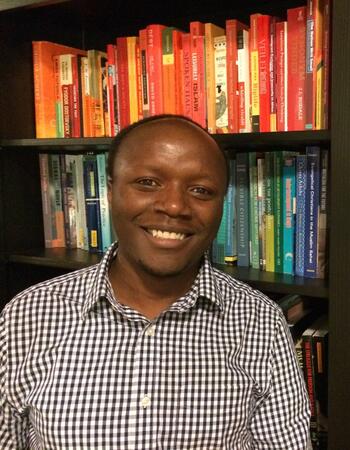
Dr. Thomas Fingar
Thomas Fingar is a Shorenstein APARC Fellow in the Freeman Spogli Institute for International Studies at Stanford University. He was the inaugural Oksenberg-Rohlen Distinguished Fellow from 2010 through 2015 and the Payne Distinguished Lecturer at Stanford in 2009. From 2005 through 2008, he served as the first deputy director of national intelligence for analysis and, concurrently, as chairman of the National Intelligence Council. Fingar served previously as assistant secretary of the State Department’s Bureau of Intelligence and Research (2000-01 and 2004-05), principal deputy assistant secretary (2001-03), deputy assistant secretary for analysis (1994-2000), director of the Office of Analysis for East Asia and the Pacific (1989-94), and chief of the China Division (1986-89). Between 1975 and 1986 he held a number of positions at Stanford University, including senior research associate in the Center for International Security and Arms Control.

Fingar is a graduate of Cornell University (A.B. in Government and History, 1968), and Stanford University (M.A., 1969 and Ph.D., 1977 both in political science). His most recent books are The New Great Game: China and South and Central Asia in the Era of Reform, editor (Stanford, 2016), Uneasy Partnerships: China and Japan, the Koreas, and Russia in the Era of Reform (Stanford, 2017), and Fateful Decisions: Choices that will Shape China’s Future, co-edited with Jean Oi (Stanford, 2020).

Via Zoom Webinar. Register at: https://bit.ly/3ecduEe

Thomas Fingar Shorenstein APARC Fellow, Stanford University
Seminars
-

On May 20th please join us for Perspectives on Science Communication, Misinformation, and the COVID-19 Infodemic, featuring University of Washington scholars Kate Starbird, Jevin West and Ryan Calo, in conversation with Cyber Policy Center Director Kelly Born, as they discuss a new project exploring how scientific findings and science credentials are mobilized in the spread of misinformation.

Kate Starbird and Jevin West will present emerging research into how scientific findings and science credentials are mobilized within the spread of false and misleading information about COVID-19. Ryan Calo will explore proposals to address COVID-19 through information technology—the subject of a recent Senate Commerce hearing at which he testified—with particular attention to the ways contact tracing apps could prove a vector for misinformation and disinformation. 


May 20, 10am-11am (PST)
Join via Zoom 

Kate StarbirdKate Starbird is an Associate Professor in the Department of Human Centered Design & Engineering (HCDE) and Director of the Emerging Capacities of Mass Participation (emCOMP) Laboratory. She is also adjunct faculty in the Paul G. Allen School of Computer Science & Engineering and the Information School and a data science fellow at the eScience Institute. 

Kate's research is situated within human-computer interaction (HCI) and the emerging field of crisis informatics — the study of how information-communication technologies (ICTs) are used during crisis events. Her research examines how people use social media to seek, share, and make sense of information after natural disasters (such as earthquakes and hurricanes) and man-made disasters (such as acts of terrorism and mass shooting events). More recently, her work has shifted to focus on the spread of disinformation in this context. 

Ryan Calo
Ryan Calo
 is the Lane Powell and D. Wayne Gittinger Associate Professor at the University of Washington School of Law. In addition to co-founding the UW Center for an Informed Public, he is a faculty co-director (with Batya Friedman and Tadayoshi Kohno) of the UW Tech Policy Lab---a unique, interdisciplinary research unit that spans the School of Law, Information School, and Paul G. Allen School of Computer Science and Engineering where Calo also holds courtesy appointments. Calo is widely published in the area of law and emerging technology. 


Jevin WestJevin West is an Associate Professor in the Information School at the University of Washington. He is the co-founder of the DataLab and the new Center for an Informed Public at UW. He holds an Adjunct Faculty position in the Paul G. Allen School of Computer Science & Engineering and Data Science Fellow at the eScience Institute. His research and teaching focus on misinformation in and about science. He develops methods for mining the scientific literature in order to study the origins of disciplines, the social and economic biases that drive these disciplines, and the impact the current publication system has on the health of science. 


Kelly Born
Kelly Born
 is the Executive Director of Stanford’s Cyber Policy Center. The center’s research and teaching focuses on the governance of digital technology at the intersection of security, geopolitics and democracy. Born collaborates with the center’s program leaders to pioneer new lines of research, policy-oriented curriculum, and outreach to key decision-makers globally. Prior to joining Stanford, Born helped to launch and lead The Madison Initiative at the William and Flora Hewlett Foundation, one of the largest philanthropic undertakings working to reduce polarization and improve U.S. democracy. There, she designed and implemented strategies focused on money in politics, electoral reform, civic engagement and digital disinformation. Kelly earned a master’s degree in international policy from Stanford University. 

Kate Starbird
Ryan Calo
Jevin West
Seminars
-

Links to Event Materials:


The Stanford Cyber Policy Center continues its online Zoom series: Digital Technology and Democracy, Security & Geopolitics in an Age of Coronavirus. These webinars will take place every other Wednesday at 10am PST. 

The next event, Digital Disinformation and Health: From Vaccines to the Coronavirus, will take place Wednesday, April 8, at 10am PST with Kelly Born, Executive Director of the Cyber Policy Center, in conversation with Professor David Broniatowski, from George Washington University, Professor Kathleen M. Carley, from Carnegie Mellon University, and Professor Jacob N. Shapiro, from Princeton University. 

In particular, Professor Broniatowski will discuss the results of new studies regarding bots and trolls in the vaccine debate, as well as what makes messages go viral from the standpoint of Fuzzy Trace TheoryProfessor Carley will explore how information moves from country to country, with a look at both the differences in who is broadcasting certain types of disinformation and the role bots play in the spread. Professor Shapiro will speak to trends and themes we are seeing in coronavirus disinformation narratives and in news reporting on COVID-related misinformation.


David Broniatowski 
Professor David Broniatowski conducts research in decision-making under risk, group decision-making, system architecture, and behavioral epidemiology. This research program draws upon a wide range of techniques including formal mathematical modeling, experimental design, automated text analysis and natural language processing, social and technical network analysis, and big data. Current projects include a text network analysis of transcripts from the US Food and Drug Administration's Circulatory Systems Advisory Panel meetings, a mathematical formalization of Fuzzy Trace Theory -- a leading theory of decision-making under risk, derivation of metrics for flexibility and controllability for complex engineered socio-technical systems, and using Twitter data to conduct surveillance of influenza infection and the resulting social response. 
Professor Kathleen M. Carley 
Professor Kathleen M. Carley is Director of the Center for Informed Democracy and Social-cybersecurity (IDeaS) and the director of the center for Computational Analysis of Social and Organizational Systems (CASOS). She specializes in network science, agent-based modeling, and text-mining within a complex socio-technical system, organizational and social theory framework. In her work, she examines how cognitive, social and institutional factors come together to impact individual, organizational and societal outcomes. Using this lens she has addressed a number of policy issues including counter-terrorism, human and narcotic trafficking, cyber and nuclear threat, organizational resilience and design, natural disaster preparedness, cyber threat in social media, and leadership.   
Professor Jacob N. Shapiro 
Professor Jacob N. Shapiro is professor of Politics and International Affairs at Princeton University and directs the Empirical Studies of Conflict Project, a multi-university consortium that compiles and analyzes micro-level data on politically motivated violence in countries around the world. His research covers conflict, economic development, and security policy. He is author of The Terrorist’s Dilemma: Managing Violent Covert Organizations and co-author of Small Wars, Big Data: The Information Revolution in Modern Conflict. His research has been published in broad range of academic and policy journals as well as a number of edited volumes. He has conducted field research and large-scale policy evaluations in Afghanistan, Colombia, India, and Pakistan.

Kelly BornKelly Born is the Executive Director of Stanford’s Cyber Policy Center, where she collaborates with the center’s program leaders to pioneer new lines of research, policy-oriented curriculum, policy workshops and executive education. Prior to joining Stanford, she helped to launch and lead The Madison Initiative at the William and Flora Hewlett Foundation, one of the largest philanthropic undertakings working to reduce polarization and improve U.S. democracy.  There, she designed and implemented strategies focused on money in politics, electoral reform, civic engagement and digital disinformation. Kelly earned a master’s degree in international policy from Stanford University.

Online, via Zoom: REGISTER

Professor David Broniatowski George Washington University
Professor Kathleen M. Carley Carnegie Mellon University
Professor Jacob N. Shapiro Princeton University
Seminars
-

Speaker Bio:

Image
kathryn stonerweiss
Kathryn Stoner is the Deputy Director at the Freeman Spogli Institute for International Studies at Stanford University and a Senior Fellow at the Center on Democracy, Development, and the Rule of Law, and the Center on International Security and Cooperation at FSI. She teaches in the Department of Political Science at Stanford, and in the Program on International Relations, as well as in the Ford Dorsey Master's in International Policy Program. Prior to coming to Stanford in 2004, she was on the faculty at Princeton University for nine years, jointly appointed to the Department of Politics and the Woodrow Wilson School for International and Public Affairs. At Princeton she received the Ralph O. Glendinning Preceptorship awarded to outstanding junior faculty. She also served as a Visiting Associate Professor of Political Science at Columbia University, and an Assistant Professor of Political Science at McGill University. She has held fellowships at Harvard University as well as the Woodrow Wilson Center in Washington, DC. 

In addition to many articles and book chapters on contemporary Russia, she is the author or co-editor of five books: "Transitions to Democracy: A Comparative Perspective," written and edited with Michael A. McFaul (Johns Hopkins 2013);  "Autocracy and Democracy in the Post-Communist World," co-edited with Valerie Bunce and Michael A. McFaul (Cambridge, 2010);  "Resisting the State: Reform and Retrenchment in Post-Soviet Russia" (Cambridge, 2006); "After the Collapse of Communism: Comparative Lessons of Transitions" (Cambridge, 2004), coedited with Michael McFaul; and "Local Heroes: The Political Economy of Russian Regional" Governance (Princeton, 1997). She is currently finishing a book project entitled "Russia Resurrected: Its Power and Purpose in a New Global Order" (Oxford University Press, forthcoming).

She received a BA (1988) and MA (1989) in Political Science from the University of Toronto, and a PhD in Government from Harvard University (1995). In 2016 she was awarded an honorary doctorate from Iliad State University, Tbilisi, Republic of Georgia. 


Online, via Zoom: REGISTER

FSI
Stanford University
Encina Hall C140
Stanford, CA 94305-6055

(650) 736-1820 (650) 724-2996
0
Satre Family Senior Fellow, Freeman Spogli Institute for International Studies
kathryn_stoner_1_2022_v2.jpg MA, PhD

Kathryn Stoner is the Mosbacher Director of the Center on Democracy, Development, and the Rule of Law (CDDRL), and a Senior Fellow at CDDRL and the Center on International Security and Cooperation at FSI. From 2017 to 2021, she served as FSI's Deputy Director. She is Professor of Political Science (by courtesy) at Stanford and she teaches in the Department of Political Science, and in the Program on International Relations, as well as in the Ford Dorsey Master's in International Policy Program. She is also a Senior Fellow (by courtesy) at the Hoover Institution.

Prior to coming to Stanford in 2004, she was on the faculty at Princeton University for nine years, jointly appointed to the Department of Politics and the Princeton School for International and Public Affairs (formerly the Woodrow Wilson School). At Princeton she received the Ralph O. Glendinning Preceptorship awarded to outstanding junior faculty. She also served as a Visiting Associate Professor of Political Science at Columbia University, and an Assistant Professor of Political Science at McGill University. She has held fellowships at Harvard University as well as the Woodrow Wilson Center in Washington, DC. 

In addition to many articles and book chapters on contemporary Russia, she is the author or co-editor of six books: "Transitions to Democracy: A Comparative Perspective," written and edited with Michael A. McFaul (Johns Hopkins 2013);  "Autocracy and Democracy in the Post-Communist World," co-edited with Valerie Bunce and Michael A. McFaul (Cambridge, 2010);  "Resisting the State: Reform and Retrenchment in Post-Soviet Russia" (Cambridge, 2006); "After the Collapse of Communism: Comparative Lessons of Transitions" (Cambridge, 2004), coedited with Michael McFaul; and "Local Heroes: The Political Economy of Russian Regional" Governance (Princeton, 1997); and "Russia Resurrected: Its Power and Purpose in a New Global Order" (Oxford University Press, 2021).

She received a BA (1988) and MA (1989) in Political Science from the University of Toronto, and a PhD in Government from Harvard University (1995). In 2016 she was awarded an honorary doctorate from Iliad State University, Tbilisi, Republic of Georgia.

Download full-resolution headshot; photo credit: Rod Searcey.

Mosbacher Director, Center on Democracy, Development and the Rule of Law
Professor of Political Science (by courtesy), Stanford University
Senior Fellow (by courtesy), Hoover Institution
CV
Date Label
Deputy Director at Freeman Spogli Institute for International Studies (FSI)
Seminars
-

Speaker Bio:

Image
laurajakli
Laura Jakli is a Pre-doctoral Fellow at the Center on Democracy, Development and the Rule of Law at Stanford University, and a Ph.D. Candidate in the Department of Political Science at the University of California, Berkeley. Her dissertation draws on digital survey and ad experiments, machine learning, and qualitative fieldwork to examine the relationship between digital politics and political radicalization. Her related research examines how digital networks shape migration patterns and refugee behavior. She holds a Master of Arts in Political Science with Distinction from the University of California, Berkeley. Her undergraduate degree is from Cornell University, where she graduated Magna Cum Laude and Phi Beta Kappa.


Online, via Zoom: REGISTER

Encina Hall, C147 616 Jane Stanford Way Stanford, CA 94305-6055
0
CDDRL Predoctoral Fellow, 2018-20
Fellow, Program on Democracy and the Internet, 2018-20
jakli.jpg

​I am a Junior Fellow at the Harvard Society of Fellows. Starting in 2023, I will be an Assistant Professor at Harvard Business School's Business, Government and the International Economy (BGIE) unit.

My research examines political extremism, destigmatization, and radicalization, focusing on the role of popularity cues in online media. My related research examines a broad range of threats to democratic governance, including authoritarian encroachment, ethnic prejudice in public goods allocation, and misinformation. 

​My dissertation won APSA's Ernst B. Haas Award for the best dissertation on European Politics. I am currently working on my book project, Engineering Extremism, with generous funding from the William F. Milton Fund at Harvard.

My published work has appeared in the American Political Science Review,  Governance,  International Studies QuarterlyPublic Administration Review, and the Virginia Journal of International Law, along with an edited volume in Democratization (Oxford University Press). My research has been featured in KQED/NPRThe Washington Post, and VICE News.

I received my Ph.D. in Political Science at the University of California, Berkeley in 2020. I was a Predoctoral Research Fellow at the Center on Democracy, Development and the Rule of Law at Stanford University and the Stanford Program on Democracy and the Internet. I hold a B.A. (Magna Cum Laude; Phi Beta Kappa) from Cornell University and an M.A. (with Distinction) from the University of California, Berkeley.

CV
Predoctoral Fellow at Center on Democracy, Development and the Rule of Law
Seminars
-

Image
Maiko Ichihara
Speaker Bio:

Maiko Ichihara is Associate Professor in the Graduate School of Law and the School of International and Public Policy at Hitotsubashi University, Japan, and a Visiting Scholar at the Center on Democracy, Development and the Rule of Law at Stanford University. She is a committee member of the World Movement for Democracy, East Asia Democracy Forum, and Partnership for Democratic Governance (Japan), and is a co-chair of Democracy for the Future project at the Japan Center for International Exchange. Throughout her career, she has undertaken research on international relations, democracy support, and Japanese foreign policy. She earned her Ph.D. in political science from the George Washington University and her M.A. from Columbia University. Her recent publications include: “Universality to Plurality? Values in Japanese Foreign Policy,” in Yoichi Funabashi and G. John Ikenberry, eds., The Crisis of Liberalism: Japan and the International Order (Washington DC: Brookings Institution Press, forthcoming); “International Power Structure and Strategic Motivations: Democracy Support by Japan and Indonesia,” JICA-RI Working Paper, No. 194 (August 2019); and Japan’s International Democracy Assistance as Soft Power: Neoclassical Realist Analysis (New York and London: Routledge, 2017).

Online, via Zoom: REGISTER

Visiting Scholar at Center on Democracy, Development and the Rule of Law
Seminars
Subscribe to Seminars