-

**Please note all CDDRL events are scheduled using the Pacific Time Zone


About the Event:   As we enter the stretch run of the 2020 US election campaign, join us for an inside look at how public policy is formulated on political campaigns, and the key policy debates animating the election.


Image
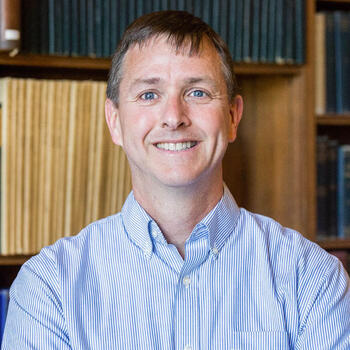
Lanhee Chen
About the Speaker:  Lanhee J. Chen, Ph.D. is the David and Diane Steffy Fellow in American Public Policy Studies at the Hoover Institution; Director of Domestic Policy Studies and Lecturer in the Public Policy Program at Stanford University; and an affiliated faculty member of the Center on Democracy, Development and the Rule of Law at Stanford’s Freeman Spogli Institute. 

A veteran of several high-profile political campaigns, Chen has worked in government, the private sector, and academia. 

Chen has advised numerous major campaigns, including four presidential efforts.  In 2012, he was policy director of the Romney-Ryan campaign, serving as Governor Mitt Romney’s chief policy adviser and a senior strategist on the campaign.  Chen also advised Florida Senator Marco Rubio’s 2016 bid; Romney’s 2008 effort; and the Bush-Cheney reelection campaign in 2004.  In the 2014 and 2018 campaign cycles, he was the Senior Adviser on Policy to the National Republican Senatorial Committee (NRSC). 

He earned his Ph.D. in Political Science, A.M. in Political Science, J.D. cum laude, and A.B. magna cum laude in Government, all from Harvard University.   

Online, via Zoom: REGISTER

the David and Diane Steffy Fellow in American Public Policy Studies at the Hoover Institution; Director of Domestic Policy Studies and Lecturer in the Public Policy Program at Stanford University
Seminars
-

**Please note all CDDRL events are scheduled using the Pacific Time Zone


About the Event: How does the widespread frustration that often accompanies democratic transitions shape the political cleavages underlying the party systems that emerge from them? Nine years after the 2010–11 uprising, Tunisia’s 2019 elections took place against a backdrop of widespread frustration with the party system that emerged during the ensuing transition. The elections presented opportunities to a diverse set of outsiders, many of whom brandished antiparty system messages, including unapologetic boosters of the former ruling party, a would-be plutocrat jailed on charges of corruption, and a broad set of antiparty independents. Drawing upon campaign materials and a nationally representative postelection survey, this presentation will describe the differences in the antiparty system messages and the ways that nostalgia underlies them. Through this analysis, I will consider a set of theoretical propositions arising from the literature on the dynamics of political cleavages in party systems in new democracies. 


About the Speaker: 

Image
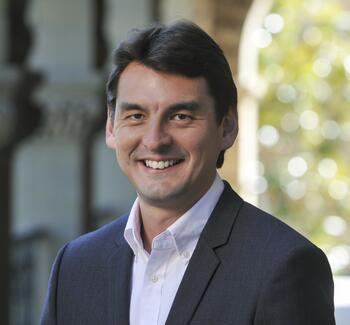
Nathan Grubman
Nate Grubman is a Postdoctoral Fellow at the Center on Democracy, Development, and the Rule of Law at Stanford University. In the fall, he will receive his PhD in political science from Yale University. His dissertation uses the case of postuprising Tunisia to explore the question of why party systems in many new democracies furnish few economic policy choices, as well as the consequences of this absence of choice. More broadly, his research focuses on political nostalgia, ideology, corruption, and authoritarian legacies in new democracies. 

Online, via Zoom: REGISTER

0
CDDRL Postdoctoral Scholar, 2020-21
nate.jpg

I am a teaching fellow in Civic, Liberal, and Global Education (COLLEGE) at Stanford University. I teach courses focused on democracy, citizenship, and the politics of development. My research focuses on party systems, ideology, nostalgia, and corruption during transitions from authoritarian rule, especially in North Africa. My book manuscript focuses on the question of why democratization in Tunisia failed to address the social and economic grievances that precipitated it. My work has appeared in the Journal of Democracy, MERIP Middle East Report Online, and Washington Post Monkey Cage

I received my PhD in political science (with specialties in comparative politics, quantitative methods, and political economy) from Yale University in December 2020. I have a BA in international relations from Tufts University, an MS in applied economics from Johns Hopkins University, and an MA and MPhil in political science from Yale. I have spent more than three years living in Egypt, Morocco, and Tunisia. My CV is available here.

Postdoctoral Fellow at the Center on Democracy, Development, and the Rule of Law at Stanford University.
Seminars
-

**Please note all CDDRL events are scheduled using the Pacific Time Zone

About the Event:

Can intergroup contact build social cohesion after war? I randomly assigned Iraqi Christians displaced by the Islamic State of Iraq and Syria (ISIS) to an all-Christian soccer team or to a team mixed with Muslims. The intervention improved behaviors toward Muslim peers: Christians with Muslim teammates were more likely to vote for a Muslim (not on their team) to receive a sportsmanship award, register for a mixed team next season, and train with Muslims 6 months after the intervention. The intervention did not substantially affect behaviors in other social contexts, such as patronizing a restaurant in Muslim-dominated Mosul or attending a mixed social event, nor did it yield consistent effects on intergroup attitudes. Although contact can build tolerant behaviors toward peers within an intervention, building broader social cohesion outside of it is more challenging.


About the Speaker:

Image
mousa
Salma Mousa is an Egyptian scholar of migration, conflict, and social cohesion.  Prior to joining CDDRL, Salma held fellowships at the U.S. Institute of Peace, Stanford's Immigration Policy Lab, the Freeman Spogli Institute, the Stanford Center for International Conflict and Negotiation, the McCoy Center for Ethics in Society, and the Stanford Center on Philanthropy and Civil Society.  Her research is forthcoming as a cover article in Science, and has been covered by The Economist, the BBC, and Der Spiegel, and featured on the front page of the Times of London and PBS NOVA.  Salma received a PhD in Political Science from Stanford in 2020.


Online, via Zoom: REGISTER


0
CDDRL Postdoctoral Scholar, 2020-21
mousa.jpg

An Egyptian-Canadian raised in Saudi Arabia, the UAE, Qatar, and Canada, Salma Mousa received her PhD in Political Science from Stanford University in 2020. A scholar of comparative politics, her research focuses on migration, conflict, and social cohesion.  Salma's dissertation investigates strategies for building trust and tolerance after war. Leveraging field experiments among Iraqis displaced by ISIS,  American schoolchildren, and British soccer fans, she shows how intergroup contact can change real-world behaviors — even if underlying prejudice remains unchanged.   A secondary research agenda tackles the challenge of integrating refugees in the United States. Combining a meta-analytic review, ethnographic fieldwork, and field experiments with resettlement agencies, this project identifies risk factors and promising policies for new arrivals.  Salma has held fellowships at the U.S. Institute of Peace, Stanford’s Immigration Policy Lab, the Freeman Spogli Institute, the Stanford Center for International Conflict and Negotiation, the McCoy Center for Ethics in Society, and the Stanford Center on Philanthropy and Civil Society. Her work has been supported by the Abdul Latif Jameel Poverty Action Lab (JPAL), the Innovations for Poverty Action Lab (IPA), the King Center on Global Development, the Institute for Research in the Social Sciences (IRiSS), the Program on Governance and Local Development (GLD), and the Abbasi Program in Islamic Studies. Her research has been featured by The Economist, BBC, and Der Spiegel,  on the front page of the Times of London and on PBS NOVA.

CV
CDDRL Postdoctoral Scholar
Seminars
-

**Please note all CDDRL events are scheduled using the Pacific Time Zone

About the Event:

What are the costs of the Chinese regime's fixation on quelling dissent in the name of political order, or “stability”? Using novel datasets and a variety of methodologies, Welfare for Autocrats shows how China has reshaped its major social assistance program, Dibao, around this preoccupation, turning an effort to alleviate poverty into a tool of surveillance and repression. This distortion of Dibao damages perceptions of government competence and legitimacy and can trigger unrest among those denied benefits. Welfare for Autocrats traces how China's approach to enforcing order transformed at the turn of the 21st century and identifies the phenomenon of seepage whereby one policy—in this case, quelling dissent—alters the allocation of resources and goals of unrelated areas of government. These findings challenge the view that concessions and repression are distinct strategies in authoritarian regimes and departs from the assumption that all tools of repression were originally designed as such.


About the Speaker:

Image
JenPan
Jennifer Pan is an Assistant Professor of Communication, and an Assistant Professor, by courtesy, of Political Science and Sociology at Stanford University. Her research resides at the intersection political communication and authoritarian politics, showing how authoritarian governments try to control society, how the public responds, and when and why each is successful. Her work has appeared in peer-reviewed publications such as the American Political Science ReviewAmerican Journal of Political ScienceComparative Political StudiesJournal of Politics, and Science.

Online, via Zoom: REGISTER

Jennifer Pan Assistant Professor of Communication, and an Assistant Professor, by courtesy, of Political Science and Sociology at Stanford University
Seminars
-

**Please note all CDDRL events are scheduled using the Pacific Time Zone

About the Event:

On November 3, in the midst of a pandemic, America elects its next President. CDDRL scholars will discuss the election results (or election challenges), Trump and Biden, key Congressional races, and what to expect between November and Inauguration Day. Join Bruce Cain, Nate Persily, Hakeem Jefferson, and Didi Kuo.

About the Speakers:

Bruce E. Cain is a Professor of Political Science at Stanford University and Director of the Bill Lane Center for the American West. He received a BA from Bowdoin College (1970), a B Phil. from Oxford University (1972) as a Rhodes Scholar, and a Ph D from Harvard University (1976). He taught at Caltech (1976-89) and UC Berkeley (1989-2012) before coming to Stanford. Professor Cain was Director of the Institute of Governmental Studies at UC Berkeley from 1990-2007 and Executive Director of the UC Washington Center from 2005-2012. His areas of expertise include political regulation, applied democratic theory, representation and state politics.

Nathaniel Persily is the James B. McClatchy Professor of Law at Stanford Law School, with appointments in the departments of Political Science, Communication and FSI.  Prior to joining Stanford, Professor Persily taught at Columbia and the University of Pennsylvania Law School, and as a visiting professor at Harvard, NYU, Princeton, the University of Amsterdam, and the University of Melbourne. Professor Persily’s scholarship and legal practice focus on American election law or what is sometimes called the “law of democracy,” which addresses issues such as voting rights, political parties, campaign finance, redistricting, and election administration. He has served as a special master or court-appointed expert to craft congressional or legislative districting plans for Georgia, Maryland, Connecticut, and New York, and as the Senior Research Director for the Presidential Commission on Election Administration. In addition to dozens of articles (many of which have been cited by the Supreme Court) on the legal regulation of political parties, issues surrounding the census and redistricting process, voting rights, and campaign finance reform.

Hakeem Jefferson is an Assistant Professor of Political Science at Stanford University. His research interests move at the intersection of American politics and social psychology. In particular, his current work examines the conditions under which members of stigmatized groups punish group members who transgress social norms. Moving beyond a study of identity that centers largely on the attitudes and predilections of dominant social groups, his work explores the psychological and instrumental considerations stigmatized individuals bring to bear in response to “bad” (negatively stereotyped) behavior from within their own group. Using African-Americans as the test case, this work builds on scholarship about the politics of respectability and in-group policing to inform conversations about Blacks’ attitudes toward punitive social policies.

Didi Kuo is the Associate Director for Research and Senior Research Scholar at the Center on Democracy, Development, and the Rule of Law at Stanford University. She is a scholar of comparative politics, with a focus on democratization, corruption and clientelism, political parties and institutions, and political reform. Her recent work examines changes to party organization, and the impact these changes have on the ability of governments to address challenges posed by global capitalism. She is the author of Clientelism, Capitalism, and Democracy: the rise of programmatic politics in the United States and Britain (Cambridge University Press, 2018), which examines the role of business against clientelism and the development of modern political parties in the nineteenth-century.

Online, via Zoom: REGISTER

Bruce Cain Professor of Political Science at Stanford University
Stanford Law School Neukom Building, Room N230 Stanford, CA 94305
650-725-9875
0
James B. McClatchy Professor of Law at Stanford Law School
Senior Fellow, Freeman Spogli Institute
Professor, by courtesy, Political Science
Professor, by courtesy, Communication
headshot_3.jpg

Nathaniel Persily is the James B. McClatchy Professor of Law at Stanford Law School, with appointments in the departments of Political Science, Communication, and FSI.  Prior to joining Stanford, Professor Persily taught at Columbia and the University of Pennsylvania Law School, and as a visiting professor at Harvard, NYU, Princeton, the University of Amsterdam, and the University of Melbourne. Professor Persily’s scholarship and legal practice focus on American election law or what is sometimes called the “law of democracy,” which addresses issues such as voting rights, political parties, campaign finance, redistricting, and election administration. He has served as a special master or court-appointed expert to craft congressional or legislative districting plans for Georgia, Maryland, Connecticut, New York, North Carolina, and Pennsylvania.  He also served as the Senior Research Director for the Presidential Commission on Election Administration. In addition to dozens of articles (many of which have been cited by the Supreme Court) on the legal regulation of political parties, issues surrounding the census and redistricting process, voting rights, and campaign finance reform, Professor Persily is coauthor of the leading election law casebook, The Law of Democracy (Foundation Press, 5th ed., 2016), with Samuel Issacharoff, Pamela Karlan, and Richard Pildes. His current work, for which he has been honored as a Guggenheim Fellow, Andrew Carnegie Fellow, and a Fellow at the Center for Advanced Study in the Behavioral Sciences, examines the impact of changing technology on political communication, campaigns, and election administration.  He is codirector of the Stanford Program on Democracy and the Internet, and Social Science One, a project to make available to the world’s research community privacy-protected Facebook data to study the impact of social media on democracy.  He is also a member of the American Academy of Arts and Sciences, and a commissioner on the Kofi Annan Commission on Elections and Democracy in the Digital Age.  Along with Professor Charles Stewart III, he recently founded HealthyElections.Org (the Stanford-MIT Healthy Elections Project) which aims to support local election officials in taking the necessary steps during the COVID-19 pandemic to provide safe voting options for the 2020 election. He received a B.A. and M.A. in political science from Yale (1992); a J.D. from Stanford (1998) where he was President of the Stanford Law Review, and a Ph.D. in political science from U.C. Berkeley in 2002.   

CV
Date Label
James B. McClatchy Professor of Law at Stanford Law School
Hakeem Jefferson Assistant Professor of Political Science at Stanford University

Encina Hall, C150
616 Jane Stanford Way
Stanford, CA 94305

0
Center Fellow, Freeman Spogli Institute for International Studies
didi_kuo_2023.jpg

Didi Kuo is a Center Fellow at the Freeman Spogli Institute for International Studies (FSI) at Stanford University. She is a scholar of comparative politics with a focus on democratization, corruption and clientelism, political parties and institutions, and political reform. She is the author of The Great Retreat: How Political Parties Should Behave and Why They Don’t (Oxford University Press) and Clientelism, Capitalism, and Democracy: the rise of programmatic politics in the United States and Britain (Cambridge University Press, 2018).

She has been at Stanford since 2013 as the manager of the Program on American Democracy in Comparative Perspective and is co-director of the Fisher Family Honors Program at CDDRL. She was an Eric and Wendy Schmidt Fellow at New America and is a non-resident fellow with the Carnegie Endowment for International Peace. She received a PhD in political science from Harvard University, an MSc in Economic and Social History from Oxford University, where she studied as a Marshall Scholar, and a BA from Emory University.

Date Label
Associate Director for Research and Senior Research Scholar at the Center on Democracy, Development, and the Rule of Law at Stanford University.
Seminars
-

**Please note all CDDRL events are scheduled using the Pacific Time Zone


About the Event:

Please join CDDRL as we kick off our 2020-21 seminar series with a panel on American democracy and the 2020 elections. Julia Azari (Marquette University), Ted Johnson (Brennan Center), and David Brady (Hoover Institute) will discuss the critical issues heading in to the Presidential elections this November.


About the Speakers:

Image
Julia Azari
Julia Azari is Associate Professor and Assistant Chair in the Department of Political Science at Marquette University. She holds Ph.D., M.A. and M.Phil. degrees in political science from Yale University, and a B.A. in political science from the University of Illinois at Urbana-Champaign. Her research and teaching interests include the American presidency, American political parties, the politics of the American state, and qualitative research methods.


Image
Theodore Johnson
Theodore R. Johnson is a senior fellow at the Brennan Center for Justice. In this role, he explores the intersection of race, politics, and public policy outcomes related to democratic reform. Prior to joining the Brennan Center, Dr. Johnson was a career military officer, research manager at Deloitte, and a national fellow at New America.

His work has appeared in The New York Times Magazine, The Washington Post, The Atlantic, and other national and niche publications. He is the author of the forthcoming book When the Stars Begin to Fall, which explores how national solidarity can help overcome the effects of racism. As a military officer served as a speechwriter to the Chairman of the Joint Chiefs of Staff and as a White House Fellow during the Obama administration, among other roles.
 
Dr. Johnson holds a B.S. in mathematics from Hampton University, an A.L.M. with a concentration in International Relations from Harvard University, and a Doctorate of Law and Policy from Northeastern University.


Image
David Brady
David Brady is deputy director and senior fellow at the Hoover Institution. He is also the Bowen H. and Janice Arthur McCoy Professor of Political Science and Ethics in the Stanford Graduate School of Business and professor of political science in the School of Humanities and Sciences at the university.  Brady is an expert on the U.S. Congress and congressional decision making.

Online, via Zoom: REGISTER


Julia Azari Associate Professor and Assistant Chair in the Department of Political Science at Marquette University
Theodore (Ted) R. Johnson Senior fellow at the Brennan Center for Justice

Hoover Memorial Bldg, Room 350
Stanford, California, 94305-6010

(650) 723-9702 (650) 723-1687
0
Morris M. Doyle Centennial Professor in Public Policy, Bowen H. & Janice Arthur McCoy Professor in Leadership Values, Professor of Political Science
brady.jpg

David Brady is deputy director and senior fellow at the Hoover Institution. He is also the Bowen H. and Janice Arthur McCoy Professor of Political Science and Ethics in the Stanford Graduate School of Business and professor of political science in the School of Humanities and Sciences at the university.

Brady is an expert on the U.S. Congress and congressional decision making. His current research focuses on the political history of the U.S. Congress, the history of U.S. election results, and public policy processes in general.

His recent publications include, with John Cogan, "Out of Step, Out of Office," American Political Science Review, March 2001; with John Cogan and Morris Fiorina, Change and Continuity in House Elections (Stanford University Press, 2000); Revolving Gridlock: Politics and Policy from Carter to Clinton (Westview Press, 1999); with John Cogan and Doug Rivers, How the Republicans Captured the House: An Assessment of the 1994 Midterm Elections (Hoover Essays in Public Policy, 1995); and The 1996 House Elections: Reaffirming the Conservative Trend (Hoover Essays in Public Policy, 1997). Brady is also author of Congressional Voting in a Partisan Era (University of Kansas Press, 1973) and Critical Elections in the U.S. House of Representatives (Stanford University Press, 1988).

Brady has been on continuing appointment at Stanford University since 1987. He was associate dean from 1997 to 2001 at Stanford University; a fellow at the center for Advanced Study in the Behavioral Sciences from 1985 to 1986 and again in 2001-2; the Autrey Professor at Rice University, 1980-87; and an associate professor and professor at the University of Houston, 1972-79.

In 1995 and 2000 he received the Congressional Quarterly Prize for the "best paper on a legislative topic." In 1992 he received the Dinkelspiel Award for Excellence in Undergraduate Teaching from Stanford University, and in 1993 he received the Phi Beta Kappa Award for best teacher at Stanford University.

Brady taught previously at Rice University, where he was honored with the George Brown Award for Superior Teaching. He also received the Richard F. Fenno Award of the American Political Science Association for the "best book on legislative studies" published in 1988-89.

He is a member of the American Academy of Arts and Sciences.

Brady received a B.S. degree from Western Illinois University and an M.A. in 1967 and a Ph.D. in 1970 from the University of Iowa. He was a C.I.C. scholar at the University of Michigan from 1964 to 1965.

Deputy director and senior fellow at the Hoover Institution
Seminars
-

* Please note all CDDRL events are scheduled using the Pacific Time Zone

About the event: Ahmet T. Kuru will talk about his award-winning new book Islam, Authoritarianism, and Underdevelopment: A Global and Historical Comparison (Cambridge University Press, 2019). Why do Muslim-majority countries have high levels of authoritarianism and low levels of socio-economic development in comparison to world averages? Kuru elaborates an argument about the ulema-state alliance as the cause of these problems in the Muslim world from the eleventh century to the present. Criticizing essentialist, post-colonialist, and new institutionalist alternative explanations, Kuru focuses on the relations between intellectual, economic, religious, and political classes in his own explanation.


Image
Ahmet Kuru
About the speaker:  Ahmet T. Kuru is Porteous Professor of Political Science at San Diego State University. Kuru received his PhD from the University of Washington and held a post-doc position at Columbia University. He is the author of award-winning Secularism and State Policies toward Religion: The United States, France, and Turkey (Cambridge UP) and the co-editor (with Alfred Stepan) of Democracy, Islam, and Secularism in Turkey (Columbia UP). His works have been translated into Arabic, Bosnian, Chinese, French, Indonesian, and Turkish. His 2019 book, Islam, Authoritarianism, and Underdevelopment: A Global and Historical Comparison (Cambridge UP) became the co-winner of the American Political Science Association's International History and Politics Section Best Book Award.


Ahmet Kuru Porteous Professor of Political Science at San Diego State University
Seminars
-

**Please note all CDDRL events are scheduled using the Pacific Time Zone


About the event: Governments in sub-Saharan Africa face tough choices in COVID-19 policy response. They have scarce resources but are under intense pressure to balance pandemic control with ensuring people have basic necessities -- while also staving off violence and political instability among distrustful publics. Until a vaccine is widely available, the primary way to combat COVID-19 is encouraging cooperation with non-pharmaceutical interventions (NPIs). Our research provides African governments with evidence on how to increase voluntary cooperation with NPIs. I will present preliminary results from ongoing data collection efforts designed to provide policy-relevant information for government decision makers in Nigeria, Sierra Leone, and Uganda. Evidence from endorsement, list, and vignette experiments offer insights into citizen compliance with health policies, the gap between individual attitudes and perceptions of peers' behavior, and the dangers of COVID-related misinformation.


Leah R. Rosenzweig

About the speaker: Leah is a postdoctoral fellow at Stanford University’s Center on Democracy Development and Rule of Law (CDDRL) and the Graduate School of Business in the Golub Capital Social Impact Lab. She received her Ph.D. in Political Science from the Massachusetts Institute of Technology, where she was a National Science Foundation Graduate Research Fellow. Her research centers on topics in comparative politics and the political economy of development. Her focus on the micro-foundations of political behavior to gain leverage on macro-political questions. How do autocrats survive? How can citizen-state relations be improved and government accountability strengthened? Can shared identities mitigate out-group animosity? Adopting a multi-method approach, use lab-in-the-field and online experiments, surveys, and in-depth field research to examine these questions in sub-Saharan Africa and the US. Her current book project reexamines the role of elections in authoritarian endurance and explains why citizens vote in elections with foregone conclusions in Tanzania and Uganda. Moving beyond conventional paradigms, her theory describes how a social norm of voting and accompanying social sanctions from peers contribute to high turnout in semi-authoritarian elections. In other ongoing projects, Her study is how national and pan-African identification stimulated through national sports games influence attitudes toward refugees, the relationship between identity, emotions, and belief in fake news, and how researchers can use Facebook as a tool for social science research.


Online, via Zoom: REGISTER


0
CDDRL Postdoctoral Scholar, 2020-21
thumbnail_leah1_small.jpg

My research centers on topics in comparative politics and the political economy of development. I focus on the micro-foundations of political behavior to gain leverage on macro-political questions. How do autocrats survive? How can citizen-state relations be improved and government accountability strengthened? Can shared identities mitigate out-group animosity? Adopting a multi-method approach, I use lab-in-the-field and online experiments, surveys, and in-depth field research to examine these questions in sub-Saharan Africa and the US. My current book project reexamines the role of elections in authoritarian endurance and explains why citizens vote in elections with foregone conclusions in Tanzania and Uganda. Moving beyond conventional paradigms, my theory describes how a social norm of voting and accompanying social sanctions from peers contribute to high turnout in semi-authoritarian elections. In other ongoing projects, I study how national and pan-African identification stimulated through national sports games influence attitudes toward refugees, the relationship between identity, emotions, and belief in fake news, and how researchers can use Facebook as a tool for social science research.

Postdoctoral fellow at Center on Democracy, Development and the Rule of Law
Seminars
-

**Please note all CDDRL events are scheduled using the Pacific Time Zone


About the Event:  American democracy has been more prone to crisis than we commonly recognize. Comparative studies of democracy suggest that four threats imperil democracy: political polarization, conflict over who belongs as a full member of society, high and rising economic inequality, and excessive executive power. We survey five periods of American history in which these threats have appeared in different configurations, posing recurring challenges to American democracy. When even one threat was present – as in the 1790s, the 1930s, or the 1970s – the nation risked backsliding. Twice – in the 1850s and again in the 1890s – three threats converged, leading to civil war and then precipitating the disenfranchisement of millions of African American men. Today, all four threats are present for the first time, presenting unprecedented danger to the American experiment.

Image

About the Speaker:  Robert C. Lieberman is Krieger-Eisenhower Professor of Political Science at Johns Hopkins University. He is the author of several award-winning books on American politics and previous served as provost of Johns Hopkins and dean of Columbia University’s School of International and Public Affairs.


Image
Image

Suzanne Mettler is the John L. Senior Professor of American Institutions in the Government Department at Cornell. She is the author five previous books, including, most recently, The Government-Citizen Disconnect and Degrees of Inequality: How the Politics of Higher Education Sabotaged the American Dream. She was recently awarded a Radcliffe Fellowship and a Guggenheim Award, and inducted into the American Academy of Arts and Sciences.


Image
Image

Online, via Zoom: REGISTER

Robert Liberman Krieger-Eisenhower Professor of Political Science at Johns Hopkins University
Suzanne Mettler John L. Senior Professor of American Institutions in the Government Department at Cornell University
Seminars
Subscribe to Seminars