-

* Please note all CISAC events are scheduled using the Pacific Time Zone.


Register in advance for this webinar: https://stanford.zoom.us/webinar/register/8416226562432/WN_WLYcdRa6T5Cs1MMdmM0Mug


About the Event: Is there a place for illegal or nonconsensual evidence in security studies research, such as leaked classified documents? What is at stake, and who bears the responsibility, for determining source legitimacy? Although massive unauthorized disclosures by WikiLeaks and its kindred may excite qualitative scholars with policy revelations, and quantitative researchers with big-data suitability, they are fraught with methodological and ethical dilemmas that the discipline has yet to resolve. I argue that the hazards from this research—from national security harms, to eroding human-subjects protections, to scholarly complicity with rogue actors—generally outweigh the benefits, and that exceptions and justifications need to be articulated much more explicitly and forcefully than is customary in existing work. This paper demonstrates that the use of apparently leaked documents has proliferated over the past decade, and appeared in every leading journal, without being explicitly disclosed and defended in research design and citation practices. The paper critiques incomplete and inconsistent guidance from leading political science and international relations journals and associations; considers how other disciplines from journalism to statistics to paleontology address the origins of their sources; and elaborates a set of normative and evidentiary criteria for researchers and readers to assess documentary source legitimacy and utility. Fundamentally, it contends that the scholarly community (researchers, peer reviewers, editors, thesis advisors, professional associations, and institutions) needs to practice deeper reflection on sources’ provenance, greater humility about whether to access leaked materials and what inferences to draw from them, and more transparency in citation and research strategies.

View Written Draft Paper


About the Speaker: Christopher Darnton is a CISAC affiliate and an associate professor of national security affairs at the Naval Postgraduate School. He previously taught at Reed College and the Catholic University of America, and holds a Ph.D. in Politics from Princeton University. He is the author of Rivalry and Alliance Politics in Cold War Latin America (Johns Hopkins, 2014) and of journal articles on US foreign policy, Latin American security, and qualitative research methods. His International Security article, “Archives and Inference: Documentary Evidence in Case Study Research and the Debate over U.S. Entry into World War II,” won the 2019 APSA International History and Politics Section Outstanding Article Award. He is writing a book on the history of US security cooperation in Latin America, based on declassified military documents.

Virtual Seminar

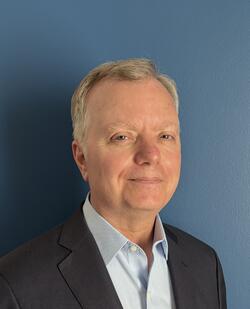
Christopher Darnton Associate Professor of National Security Affairs Naval Postgraduate School
Seminars
-
Title slide for seminar

Join the Tech Impact and Policy Center on November 10th from 12PM–1PM Pacific for a seminar with Isabelle Hau.

Stanford affiliates are invited to join us at 11:40 AM for lunch, prior to the seminar. The Fall Seminar Series continues through December; see our Fall Seminar Series page for speakers and topics. Sign up for our newsletter for announcements.

About the Seminar:

As AI reshapes how we learn, work, and connect, understanding and strengthening human relationships has become an urgent scientific and societal priority. This session invites researchers across disciplines to explore Relational Intelligence (RQ), our capacity to build trust, cultivate belonging, navigate differences, and form meaningful connections. Together, we will examine emerging scientific questions, identify opportunities for interdisciplinary research, and imagine new ways to measure, develop, and strengthen relational capacities. How might we build a future in which advances in artificial intelligence are matched by advances in human connection?
 

About the Speaker:

Isabelle C. Hau is the executive director of the Stanford Accelerator for Learning, where she brings together learning & brain science, technology, and innovation to advance effective, inclusive, and human-centered approaches to learning.

Previously an impact investor, Isabelle led the U.S. education practice at Omidyar Network and Imaginable Futures, investing in mission-driven organizations that have reached millions of learners. She is the author of Love to Learn and a pioneer of Relational Intelligence (RQ), a framework for understanding and strengthening the human capacities to flourish in an age of AI.

Isabelle serves on the boards of Design Tech High School and EDC, as well as the EdSAFE AI Alliance steering committee, the Brookings Institution Global AI Taskforce, and the World Economic Forum’s Education 4.0 Alliance. Her honors include recognition by Harvard Business School as one of its 100 most inspiring women, being named a 2026 World Education Medal finalist, and receiving the 2026 ASU+GSV Power of Women Award and the 2026 ISTE/ASCD Impact Award. She has also been recognized for her contributions to early childhood education and human-centered AI. She once co-starred with Grover of Sesame Street.

Isabelle earned an MBA from Harvard Business School and graduated from ESSEC and Sciences Po Paris. Her lifelong professional goal is simple: to bring the love of learning to each and every child.

Jeff Hancock

McClatchy Hall, S40 Studio
450 Serra Mall, Stanford, CA 94305

For those attending the in-person seminar, please bring your Stanford ID card/mobile ID to enter the building. 

Isabelle Hau Executive Director Stanford Accelerator for Learning
Seminars

Relational Intelligence (RQ): Building Relational Futures in the Age of AI

News Feed Image
2026_fall_seminar_series_3.png
Date Label
-

A Talk with Scott C. Walker, Former U.S. Consul General in Shanghai
Moderator, Mark Lambert, China Program Fellow

Few Americans have observed the U.S.-China relationship as closely as Scott Walker. He was the U.S. government's spokesperson in Beijing from 2018 to 2021, and he served as U.S. Consul General in Shanghai, China's commercial capital, from 2023 to 2026. How has the relationship changed in recent years, and what is driving the latest shifts? How do these changes look from Shanghai compared with Beijing? And what might come next for Washington and Beijing?

Join the China Program at Stanford APARC for a conversation with Mr. Walker, part of our ongoing series "Navigating U.S.-China Commercial & Diplomatic Realities." Mr. Walker recently concluded a 24-year career in the Foreign Service. He will reflect on his years in China and share his view of where U.S.-China relations stand today and where they may be heading.

Scott Walker

Speaker: Scott C. Walker was a U.S. Foreign Service Officer from 2002 to 2026, most recently serving as U.S. Consul General in Shanghai from 2023 to 2026. Previously, he was Director of the Office of Korean and Mongolian Affairs (2021–2023) and spokesperson at the U.S. Embassy in Beijing (2018–2021). Over the course of his Foreign Service career, Walker held a range of diplomatic and public affairs positions in the United States and abroad, including assignments in Seoul, Shanghai, and Toronto, as well as multiple roles in the Office of Korean Affairs in Washington. He also served as a Pearson Fellow on Capitol Hill. A native of Fresno, California, Walker holds a BA from UC Santa Cruz and an MA from San Francisco State University.


Directions and Parking > 

Philippines Conference Room (C330)
Encina Hall, 3rd Floor
616 Jane Stanford Way, Stanford, CA 94305

Seminars
Date Label
-
Title Slide for seminar

Join the Tech Impact and Policy Center on October 20th from 12PM–1PM Pacific for a seminar with Matt Deverna.

Stanford affiliates are invited to join us at 11:40 AM for lunch, prior to the seminar. The Fall Seminar Series continues through December; see our Fall Seminar Series page for speakers and topics. Sign up for our newsletter for announcements.

About the Seminar:

People increasingly turn to AI systems to make sense of the news and to answer questions about their health. What happens when the answers we get about politics and our own health come from AI? In this talk, I will present two projects on AI and political fact-checking. The first is an experiment testing how AI-generated fact-checks of political news headlines affect people's ability to tell true headlines from false ones. The second is an audit of how well 15 large language models fact-check 6,000 political claims rated by PolitiFact. I will also share ongoing work examining how six AI systems (Google's AI Overviews, Gemini, ChatGPT, Claude, Grok, and Perplexity) respond to general health questions. Together, these studies shed light on when AI helps people separate fact from fiction, where it falls short, and what this means for the growing number of people who rely on it.
 

About the Speaker:

Matt DeVerna is a computational social scientist studying the societal impacts of artificial intelligence, with a focus on how people find information online to form beliefs and make decisions. His research spans human-centered and system-level analysis, pairing large-scale audits of AI systems, such as language models and search engines, with experiments and observational analysis of social media. This work centers on high-stakes domains like news, politics, and public health, where these systems can strengthen or erode both public understanding and public institutions. It aims to help researchers, platforms, and policymakers ensure AI makes our digital spaces more trustworthy and resilient. Matt is a postdoctoral scholar at Stanford University’s Tech Impact and Policy Center. He holds a Ph.D. in Informatics from Indiana University and an M.A. in Psychology from New York University.

Sunny Xun Liu

McClatchy Hall, S40 Studio
450 Serra Mall, Stanford, CA 94305

For those attending the in-person seminar, please bring your Stanford ID card/mobile ID to enter the building. 

0
top_pick_rsd25_070_0523a.jpg PhD

Matt DeVerna is a computational social scientist who examines how artificial intelligence is transforming information access and online communication, with a particular focus on social media and search. His research combines large-scale data analysis, experimental methods, and direct interrogation of AI systems to explore the societal consequences of AI-mediated interactions and understand their role in contemporary information ecosystems. He holds a Ph.D. in Informatics from Indiana University and an M.A. in Psychology from New York University.


Postdoctoral Scholar
Date Label
Seminars

Between You and the Facts: AI for Political Fact-Checking and General Health Information

News Feed Image
2026_fall_seminar_series_4.png
Date Label
-
11.2.26_book_talk_chrystia_freeland.png

How should allies deal with a superpower they can no longer rely on? Former Canadian Deputy Prime Minister Chrystia Freeland joins CDDRL to discuss her new book, "Unreliable Boyfriend: An Insider's View of Dealing with a Chaotic Superpower, Plutocrats, and Other Complicated People."

Freeland has seen these questions from two sides. As a foreign correspondent, she covered the rise of Russia's oligarchs in the 1990s. As a senior Canadian official, she helped renegotiate the trade agreement between Canada, the U.S. and Mexico. The book draws on both careers to examine how power operates inside government, why trade, security and democracy can no longer be treated separately, and how democracies might build coalitions strong enough to resist authoritarian states and domestic oligarchs.

Freeman Spogli Institute (FSI) Satre Family Senior Fellow and Mosbacher Director of CDDRL, Kathryn Stoner will moderate the conversation, focusing on democratic resilience, international political economy, U.S. foreign policy, Russia and Ukraine.  Audience Q&A will follow. Books will be available for purchase at the event.  

ABOUT THE SPEAKER

Chrystia Freeland is Canada’s former Deputy Prime Minister, Foreign Minister, and Minister of Finance. With a background in Russian history, she first gained international acclaim as a foreign correspondent and editor for the Financial Times and Reuters, and later served as the deputy editor of The Globe and Mail. Her first book, Sale of the Century, told the story of the struggle between reformers and oligarchs in 1990s Russia. Her book, Plutocrats, established her as a leading voice on global economic inequality. After over a decade in federal politics, including a pivotal role in renegotiating the CUSMA, Freeland resigned from Parliament in early 2026. She has since served as a Resident Fellow at Harvard's Institute of Politics and an unpaid economic adviser to the Ukrainian government.

Kathryn Stoner
Kathryn Stoner

Only those with an active Stanford ID and access to the William J. Perry Conference Room in Encina Hall may attend in person. Others may attend virtually, via Zoom.

Registration required.

Chrystia Freeland Canada’s former Deputy Prime Minister, Foreign Minister, and Minister of Finance
Seminars
News Feed Image
11.2.26_book_talk_chrystia_freeland.png
Date Label
-

In this seminar, we will hear from Alice Siu, Associate Director of Stanford's Deliberative Democracy Lab, about their recently completed project: a 2026 "Industry-wide Forum" inviting public input for the future of AI agents through public deliberation.

​Read the paper here: https://fsi.stanford.edu/news/people-shaping-ai-groundbreaking-industry-wide-forum-invites-public-input-future-ai-agents

​In this seminar, Alice will share their method of Deliberative Polling using the AI-assisted Stanford Online Deliberation Platform developed by Stanford's Crowdsourced Democracy Team. "This method involves providing balanced information to participants, facilitated expert Q&A sessions, and small-group discussions."

​She will also share how the project managed to organize and mobilize the large company participants, including Microsoft, Meta, Oracle, PayPal, DoorDash, and Cohere. She will also cover some of the regional results from both the US national and India national projects... and probably so much more. We're looking forward to hosting Alice and learning from this exciting work!

​The seminar is intended for researchers and practitioners in online governance, broadly defined. We welcome guests and curious members of the public. Note that the discussion is moderated.

This event is hosted by Metagov, a nonprofit research-to-infrastructure laboratory advancing community sovereignty, network governance, and statecraft in the age of AI.

Online. Registration required.

Encina Hall, E103
616 Jane Stanford Way
Stanford, CA 94305

0
Senior Research Scholar
alice_siu.png

Siu received her Ph.D. from the Department of Communication at Stanford University, with a focus in political communication, deliberative democracy, and public opinion, and her B.A. degrees in Economics and Public Policy and M.A. degree in Political Science, also from Stanford.

Siu has advised policymakers and political leaders around the world, at various levels of government, including leaders in China, Brazil, and Argentina. Her research interests in deliberative democracy include what happens inside deliberation, such as examining the effects of socio-economic class in deliberation, the quality of deliberation, and the quality of arguments in deliberation.

Associate Director, Deliberative Democracy Lab
Alice Siu
Seminars
Date Label
-
The Rise and Fall of Tunisian Democracy: Populism, Polarization, and the Perils of Power-Sharing

After the Arab Spring, Tunisia emerged as the one success story to transition to democracy, winning a Nobel Peace Prize in 2015 for its focus on inclusion and power-sharing. How, then, did its democracy collapse in 2021?

Drawing on unique interviews with senior Tunisian officials, alongside three nationally representative surveys of the population, The Rise and Fall of Tunisian Democracy points to an overemphasis on compromise, consensus, and power-sharing. Although power-sharing institutions can be useful at the start of a transition, the book finds that extending them beyond that point can lead democracy to unravel by frustrating voters and spurring the rise of populists and extremists. The book takes an in-depth look at Tunisia's transition and then explores how far the theory travels through a quantitative analysis of all democratic transitions between 1942–2020. Overall, the book reveals the dark side of power-sharing, broadening our understanding of the causes of populism, polarization, and democratic breakdown.

ABOUT THE SPEAKER

Sharan Grewal (PhD, Princeton 2018) is an Associate Professor of Government at American University and a Nonresident Senior Fellow at the Brookings Institution. His research examines revolutions and democratic transitions, particularly in the Arab world. His first book, Soldiers of Democracy? Military Legacies and the Arab Spring (Oxford University Press, 2023), explores why militaries support or thwart democratic transitions. It received APSA’s Best Book in MENA Politics Award and the Robert Jervis Best International Security Book Award. His second book, The Rise and Fall of Tunisian Democracy: Populism, Polarization, and the Perils of Power-Sharing, is forthcoming with Cambridge University Press in October 2026. His work has also been published in the American Political Science Review, American Journal of Political Science, and British Journal of Political Science, among other journals. His research has received funding from the National Science Foundation, the Henry Luce Foundation, the John Templeton Foundation, the Smith Richardson Foundation, and the Defense Security Cooperation University.

Hesham Sallam
Hesham Sallam

Virtual to Public. If prompted for a password, use: 123456

Only those with an active Stanford ID with access to William J. Perry Conference Room in Encina Hall may attend in person.

Sharan Grewal Associate Professor of Government at American University Presenter American University
Seminars

Wednesday, November 4, 4:00-5:15 pm. Click here to register.

News Feed Image
ARD - Sharan Grewal - 11.4.26 (3).jpg
Date Label
-
11.03.26 Hanna Note Book Talk

How has Russia sustained its confrontation with the West since 2022, and at what cost? In her new book, Hanna Notte argues the Kremlin is waging a war not only on Ukraine but over the global order itself.

Notte traces how Russia adapted after the invasion. It worked around sanctions, built new partnerships, cultivated support across the Global South and tried to deepen divisions within Western democracies. Her account combines policy analysis with field reporting from more than a dozen countries and interviews with officials, facilitators and ordinary people drawn into Russia's agenda.

The book also examines the domestic consequences. Notte finds that Putin's focus on confronting the West has distorted Russia's economy and moved the country from a tacit dictatorship toward a full one. She suggests Putin may outlast the West, but has gambled Russia's future in the process.

Satre Family Senior Fellow and Mosbacher Director of CDDRL, Kathryn Stoner will moderate the discussion, which will cover Russian statecraft, the durability of autocratic regimes under pressure and what Russia's strategy means for the U.S., Europe and the Global South. Audience Q&A will follow.

ABOUT THE SPEAKER

Hanna Notte is the Director of the Eurasia Nonproliferation Program at the James Martin Center for Nonproliferation Studies. She is also a senior associate (non-resident) with the Center for Strategic and International Studies and with the Kennan Institute. Notte's expertise is in Russia's foreign and security policy. She holds a doctorate and Master's degree in international relations from Oxford University and a BA in social and political sciences from Cambridge University. During her doctoral studies, she was a visiting researcher with the Institute of Oriental Studies of the Russian Academy of Sciences and the Carnegie Moscow Center. Based in Berlin, she regularly writes for outlets such as the Financial Times, Foreign Affairs, the New York Times, and ZEIT, among others.

Kathryn Stoner
Kathryn Stoner

Only those with an active Stanford ID and access to the William J. Perry Conference Room in Encina Hall may attend in person. Others may attend virtually, via Zoom.

Registration required.

Hanna Notte Eurasia Program Director James Martin Center for Nonproliferation Studies
Seminars
News Feed Image
11.3.26_book_talk_hanna_notte_2.png
Date Label
-
Title slide for talk

Join the Tech Impact and Policy Center on October 27th from 12PM–1PM Pacific for a seminar with Susan Sawyer

Stanford affiliates are invited to join us at 11:40 AM for lunch, prior to the seminar.  The Fall Seminar Series continues through December; see our Fall Seminar Series page for speakers and topics. Sign up for our newsletter for announcements. 

About the Seminar:

In December 2025, the Australian Government implemented novel legislation aimed at restricting under 16-year-olds from accessing social media. This presentation will 1) review the prevalence of poor mental health in Australian adolescents; 2) present longitudinal data on the causal links between frequent social media use and poor mental health; and 3) provide insights into what has (and what has not) changed as a result of Australia's social media legislation.

About the Speaker:

Professor Susan M Sawyer AM MBBS MD FRACP FAAHMS holds the Geoff and Helen Handbury Chair of Adolescent Health at The University of Melbourne and is director of the Centre for Adolescent Health, a WHO collaborating centre for adolescent health at the Royal Children’s Hospital and Murdoch Children’s Research Institute. Widely published (>450 peer review publications, >55 book chapters, >66,500 citations, H-index 106), her research, education and advocacy efforts have advanced the field of adolescent health in Australia, the Asia Pacific region, and globally. Susan’s leadership shaped two series on Adolescent Health for The Lancet (2007, 2012), as well as two Lancet Commissions on Adolescent Health and Wellbeing (2016, 2025) - she is currently co-leading a Lancet Commission on the health of China’s adolescents. She was president of the International Association for Adolescent Health (president, 2017-21) and chaired the International Pediatric Association’s Specialist Advisory Group for Adolescent Medicine (2021-23). She is a member of the Australian eSafety Commission’s Academic Evaluation Committee that is overseeing the evaluation of Australia’s novel social media legislation. She leads a longitudinal cohort known as CATS, the Child to Adult transition Study, that has annually collected information on 1200 nine-year-olds for the past 15 years, including data on social media and mental health.

McClatchy Hall, S40 Studio
450 Serra Mall, Stanford, CA 94305

For those attending the in-person seminar, please bring your Stanford ID card/mobile ID to enter the building. 

Susan Sawyer Geoff and Helen Handbury Chair of Adolescent Health The University of Melbourne
Seminars
News Feed Image
2026_fall_seminar_series_1.png
Date Label
Subscribe to Seminars