News Type
News
Date
Paragraphs

In a video by PBS NewsHour, three Ukrainian alumni of the CDDRL's Draper Hills Summer Fellows Program provide comments on the struggle for political change and stability in their country two years after the Maidan protests drove President Yanukovych out of Ukraine. Alumni members Sergii Leshchenko, Mustafa Nayyem, and Svitlana Zalishchuk currently serve as Members of Parliament in Ukraine. Nayyem: "It was very easy to be heroes on the Maidan. It is much more difficult to be heroes in the Parliament."


Hero Image
Statue of the Founders of Kiev during the Maidan Revolution Reuters
All News button
1
-

Due to the high interest in this event, we have moved it to a larger room.  It is now in the Oksenberg Conference Room, Encina Hall, 3rd floor.


The February Minsk II agreement introduced a fragile ceasefire in eastern Ukraine, following a year of crisis and conflict between Kyiv and Moscow.  Ukrainian President Poroshenko needs to grapple with a daunting list of critical economic and political reforms.  Russian President Putin, however, appears intent on destabilizing the Ukrainian government and has the means, including military force, to do so.  What can we expect next in the Ukraine-Russia stand-off, and how should the West respond?

Image
Steven Pifer


Steven Pifer is a senior fellow at the Brookings Institution, where his work focuses on arms control, Ukraine and Russia. A retired Foreign Service officer, his more than 25 years with the State Department included assignments as deputy assistant secretary of state with responsibilities for Russia and Ukraine (2001-2004), ambassador to Ukraine (1998-2000), and special assistant to the president and senior director for Russia, Ukraine and Eurasia on the National Security Council (1996-1997).


Co-sponsored by the Freeman Spogli Institute for International Studies and The Europe Center.

Steven Pifer Senior Fellow Speaker the Brookings Institution
Lectures
Authors
Christian E. Ollano
News Type
Q&As
Date
Paragraphs


Svitlana Zalishchuk (’11), an alumna of the Draper Hills Summer Fellow Program (DHSFP) at Stanford’s Center on Democracy, Development and the Rule of Law reflects on the challenges and motives behind her decision to run for public office in Ukraine. Amidst a transitional moment in her country’s history, Zalishchuk won a seat in Ukraine’s Parliament alongside DHSFP alumni Sergii Leshchenko ('13) and Mustafa Nayyem ('14). Before joining government, Zalishchuk led the Ukrainian NGO, Centre UA, which works to reassert citizens' influence on politics and restore freedom of speech in Ukraine.


1) What are the top challenges Ukraine faces today?

Ukraine is currently confronted with challenges on two fronts. The first is in the east of the country – the war with Russia. The second challenge is with the old system of government against corrupt and rotten institutions ­­ both struggles are an attempt to break up with Ukraine’s Soviet past.

There is an essential interdependence between these two battles. With the war in Donbass (in the east of Ukraine) it is much more difficult to implement the reforms. At the same time, without reforms it is impossible to win the war in the East.

In the end, Putin’s aim is not to control two Ukrainian regions, but to make the European idea a failed idea in Ukraine. The reunion of the Ukrainian territories in the long-term will be based on the people’s wish to live better lives in a free and democratic European country. Reforms are the most powerful weapon against this post-Soviet front.


2) How has civil society responded to the new leadership under President Petro Poroshenko?

President Petro Poroshenko was elected with more than 50 percent support of the voters. But to be a leader of a country, which has a military conflict with one of the biggest powers in the world and is going through one of the most difficult economic crises since its independence, is a monumental task.

Ukrainian society has high expectations of the new president, government and parliament – institutions that represent the shift of the political elites after the Euromaidan protests in Kyiv. But it is almost impossible to meet these expectations. The country’s decision to move toward democratic development has been made at the expense of thousands of Ukrainian lives.

Currently, the government has been facing harsh criticism for countless mistakes, a slow reform process, and lack of effort to combat corruption. Society continues to live through unprecedented self-organization. Groups of volunteers have formed across the country to perform various tasks that the state sometimes is unable to execute - such as the creation of volunteer battalions, the financing of the army, and the construction of housing for refugees. 

Still, it is a bit early to answer this question. Society is still waiting for the results of this leadership: reforms and a peaceful settlement of the conflict.


3) What challenges do you face, currently, as a member of parliament? What kind of changes do you hope to implement in your current role?

The biggest challenge is to justify people’s expectations that a new generation in politics will be able to change the country. People need to realize that real changes do not come with new faces in the government - and not even with newly adopted bills - but with well-functioning institutions. Building these will take time.

Nevertheless, we have to show that reforms are possible even in times of military conflict and economic crisis. New anti-corruption policies and measures; judicial and police reform; deregulation; constitutional reform that decentralizes the country to allow more power to local communities – these are the first steps of a long journey toward our European goal.

In the long-term, politicians with roots tracing back to the Euromaidan protests have to build their political identities alongside new political parties. The legacy of the Euromaidan protests has to be institutionalized.


4) What prompted you to run for parliament? How would you describe the transition from a journalist to politician?

Having experienced censorship for many years in Ukraine, we have chosen to fight for the freedom of speech. This meant doing a little more outside the normal responsibilities of a journalist.

We have been advocating for the Freedom of Information Bill for five years. We were demanding reform in the media sphere for ten. We were fighting against corruption not only by writing about it, but also by initiating nation-wide civic campaigns. We were on the frontline of both revolutions – Orange in 2004 and Euromaidan in 2014. After this, pursuing a career in politics seemed like a logical next step to transform this fight into a constructive continuation of reforms.


5) How has the Draper Hills Summer Fellows Program contributed – if at all- towards your new role in government?

One of the most important experiences from the Draper Hills Summer Fellows Program was the recalibration and transformation of my local way of thinking into a global way of thinking. I was able to move from only seeing a national (Ukrainian) perspective on the problems with democratic and economic reforms to seeing an understanding of how all these challenges have been faced by many countries in the world.


6) Do you have any advice for alumni members who are seeking to run for office?

I have three personal conclusions. First, politics is a team game. It is important to build or find a circle of trustworthy and like-minded people. Second, goal-oriented strategy is essential for long-term political journeys. And finally, cooperation with civil society, continuous engagement with voters and communication with people is crucial.

Pursuing a career in politics was a difficult decision for my friends and I. But life proved that there are no right decisions. You make the decisions and then you make them right.


Hero Image
svitlana
All News button
1
-

At the NATO Summit in Wales in September 2014, NATO leaders were clear about the security challenges on the Alliance’s borders. In the East, Russia’s actions threaten our vision of a Europe that is whole, free and at peace.  On the Alliance’s southeastern border, ISIL’s campaign of terror poses a threat to the stability of the Middle East and beyond.  To the south, across the Mediterranean, Libya is becoming increasingly unstable. As the Alliance continues to confront theses current and emerging threats, one thing is clear as we prepare for the 2016 Summit in Warsaw: NATO will adapt, just as it has throughout its 65-year history.

Image
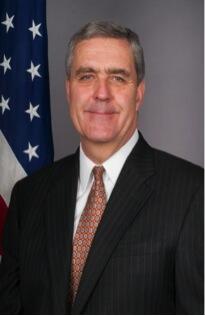
Douglas Lute, Ambassador of the United States to NATO


In August 2013, Douglas E. Lute was sworn-in as the Ambassador of the United States to the North Atlantic Treaty Organization (NATO).  From 2007 to 2013, Lute served at the White House under Presidents Bush and Obama, first as the Assistant to the President and Deputy National Security Advisor for Iraq and Afghanistan, and more recently as the Deputy Assistant to the President focusing on Afghanistan, Pakistan and India.  In 2010, AMB Lute retired from the U.S. Army as a Lieutenant General after 35 years on active duty.  Prior to the White House, he served as the Director of Operations on the Joint Staff, overseeing U.S. military operations worldwide. He served multiple tours in NATO commands including duty in Germany during the Cold War and commanding U.S. forces in Kosovo.  He holds degrees from the United States Military Academy and Harvard University.

A light lunch will be provided.  Please plan to arrive by 11:30am to allow time to check in at the registration desk, pick up your lunch and be seated by 12:00 noon.

Co-sponsored by The Europe Center, the Freeman Spogli Institute for International Studies, the Center for International Security and Cooperation and the Center for Russian, East European and Eurasian Studies.


Douglas Lute United States Ambassador to NATO Speaker
Lectures
Encina Hall616 Serra StreetStanford, CA 94305-6055
0
Visiting Scholar, Jan. - Mar. 2015
yulia_website_photo.jpg

Before the Ukrainian revolution Yulia was a PhD candidate in Ukrainian literature at Taras Shevchenko University in Kyiv.  But after participating in the revolution and experienced first-hand an opportunity for major change, she became adamant to help create a true democracy in her country, create methods of fighting entrenched corruption and anti-democratic practices, and helping develop a transparent and de-centralized government.  Her work as a consultant to the government ministries has given her an opportunity to present new ideas to new leaders, while an opening exists to help formulate government structures and programs.  She hopes to leave Stanford filled with powerful ideas and knowledge for helping implement positive changes in her country.

-

***Note LOCATION CHANGE to GUNN 101 in Stanford Business School.***


Speaker Bio

 
Image
1622480 770675586338644 9108557166476577753 o
Serhiy Kvit, Rector of the National University of Kyiv-Mohyla Academy and outspoken blogger on higher education reform, became Ukraine’s Minister of Education and Science in March 2014.  He worked quickly with the Verkhovna Rada (Ukraine’s Parliament) to enact the Law on Higher Education, to give much greater autonomy to the country’s universities and bring Ukrainian universities into compliance with the Bologna Agreement.  The military conflict in Ukraine’s Donbas has since caused internal displacement of university scholars and students and scientific researchers, while economic crisis hampers the government’s ability to implement needed reforms.  Minister Kvit will discuss the conditions and prospects for Ukrainian education and science in a time of economic and security uncertainty.
 

Serhiy Kvit has been Ukraine’s Minister of Education and Science since February of 2014. He became President of the National University of Kyiv-Mohyla Academy in 2007 and was Dean of Social Studies from 2002 to 2007. He founded the Kyiv-Mohyla School of Journalism in 2001 and became president of the Media Reform Centre, which was founded to initiate open debate and promote transparency in government media. He also served as chair of the Consortium on University Autonomy from 2005 to 2010. Kvit has a Ph.D from the Ukrainian Free University and also holds a doctorate in philology. He was the recipient of a Fulbright scholarship to Ohio University in 2006 and 2007, a Kennan Institute scholarship winner at the Woodrow Wilson International Center for Scholars in Washington DC in 2009, and held a DAAD (German Academic Exchange Service) scholarship at the University of Cologne in 2010. He has published several books and numerous articles and, prior to his appointment as Minister, maintained a regular blog for University World News.


*This event is co-sponsored with the Center for Russian, East European and Eurasian Studies.*

GUNN Building 101

Stanford Graduate School of Business

Serhiy Kvit Minister of Education and Science of Ukraine Minister of Education and Science of Ukraine
Seminars
-

Speaker Bio:

Image
leonid gozman 3
After graduating from the Moscow State University’s Department of Psychology, Leonid Gozman worked for the MSU Department of Social Psychology, specializing in interpersonal relations and political psychology. He defended his thesis at MSU in 1983. Gozman lectured in the United States in 1993 (as Professor of Psychology and Russian Research, Dickinson College, Carlisle, Pennsylvania). In 1992, he served as aide to acting First Deputy Prime Minister Yegor Gaidar and aide to Anatoly Chubais in the Presidential Executive Office and the Government of Russia. In 1999–2008, he was member of the board of RAO UES of Russia and its representative responsible for liaisons with government authorities and public organizations. In 2008–2013, he was on the board of RUSNANO.

Gozman has written eight books and appears in the media on a regular basis. He has lectured at the Moscow State University throughout his career in the Government, RAO UES of Russia and RUSNANO. He is married with a daughter and two grandsons. 


This event is hosted by the Center on Democracy, Development and the Rule of Law and the Center for Russian, East European and Eurasian Studies. 


[[{"fid":"216916","view_mode":"crop_870xauto","fields":{"format":"crop_870xauto","field_file_image_description[und][0][value]":"Gozman Flyer","field_file_image_alt_text[und][0][value]":"","field_file_image_title_text[und][0][value]":"","field_credit[und][0][value]":"","field_caption[und][0][value]":"","field_related_image_aspect[und][0][value]":"","thumbnails":"crop_870xauto","pp_lightbox":false,"pp_description":false},"type":"media","attributes":{"height":1344,"width":870,"class":"media-element file-crop-870xauto"}}]]

Leonid Gozman President Perspective Foundation
Seminars
News Type
News
Date
Paragraphs

The Europe Center Graduate Student Grant Competition

Call for Proposals:

The Europe Center is pleased to announce the Fall 2014 Graduate Student Grant Competition for graduate and professional students at Stanford whose research or work focuses on Europe. Funds are available for Ph.D. candidates from across a wide range of disciplines in the humanities and social sciences to prepare for dissertation research and to conduct research on approved dissertation projects. The Europe Center also supports early graduate students who wish to determine the feasibility of a dissertation topic or acquire training relevant for that topic. Moreover, funds are available for professional students whose interests focus on some aspect of European politics, economics, history, or culture; the latter may be used to support an internship or a research project. Grants range from $500 to $5000.

Additional information about the grants, as well as the online application form, can be found here.  The deadline for this Fall’s competition is Friday, October 17th. Recipients will be notified by November 7th. A second competition is scheduled for Spring 2015.
 

Highlights from 2013-2014:

In the 2013-2014 academic year, the Center awarded grants to 26 graduate students in departments ranging from Linguistics to Political Science to Anthropology. We would like to introduce you to some of the students that we support and the projects on which they are working. Our featured students this month are Michela Giorcelli (Economics) and Orysia Kulick (History).

Giorc

Image
elli’s project, “The Effects of Management and Technology on Firms’ Productivity: Lesson from the US Marshall Plan in Italy,” explores the role of productivity in the process of economic growth and development. It is typically difficult to isolate the causal effect of management training programs and technology transfer programs on business productivity because these measures are often endogenous to other unobservable factors. To overcome this concern, Giorcelli employed a unique research design to analyze the effects of the Marshall Plan’s transfer of US management and technology to Italian firms in the aftermath of WWII. 

Image
Image of Archivio
Giorcelli collected and digitized balance sheets data for 6,035 Italian firms eligible to receive the US management and technology support between 1930 to 1970. She then exploited an exogenous change in policy implementation that randomly determined which firms actually received Marshall Plan support. Preliminary results show that all firms that received either support significantly increased their productivity. Moreover, firms that received both sets of support simultaneously showed an additional increase in productivity, suggesting that management and technology are complementary in production. (Inset: The archives where Giorcelli conducted her research)

Image
Kulick’s project, “Regionalism in Ukraine and the Long Collapse of the Soviet Union, 1954--2014,” used original historical evidence collected from Ukrainian archives to study the political nexus between party elites in Kiev and in Moscow. For example, Kulick gleaned insights about the political economy of postwar industrial reconstruction from local archives in Dnipropetrovsk, a metallurgical powerhouse in the region. Previously inaccessible primary sources indicate that as the Soviet economy grew more complex, the state apparatus became more independent. Consequently, managerial specialists needed more autonomy to meet deadlines and quotas, making them--rather than the party--the source of innovation in postwar Ukraine. 

Image
According to Kulick, “my research this summer opened up new ways of thinking about the relationship between the party and the institutions that made up the Soviet state and economy.” Kulick used insights from Soviet-era KGB documents to shed new light on the current propaganda emanating out of the Kremlin. For example, she found that the long-term pull toward greater improvisation has had ongoing consequences. The current conflict is not just about Ukraine’s geopolitical orientation; it is also the byproduct of the dissolution of intransigent and poorly understood late Soviet-era institutions. (Inset: Kulick documents military mobilization during her summer in Ukraine)


Undergraduate Internship Program: Highlights

The Europe Center sponsored four undergraduate student internships with leading think tanks and international organizations in Europe in Summer 2014.  Laura Conigliaro (International Relations, 2015) joined the Centre for European Policy Studies (CEPS), while Elsa Brown (Political Science, 2015), Noah Garcia (BA International Relations and MA Public Policy, 2015), and Jana Persky (Public Policy, 2016) joined Bruegel, a leading European think tank. Our featured student this month is Laura Conigliaro.

Image
During her time at CEPS, Conigliaro worked on a 68-page research paper on genetically modified organisms (GMO) policy in the European Union. In the paper, she traces E.U. legislation and policy development on GMOs from 1990 onward, and also offers conclusions for the future trajectory of the E.U.’s GMO policy. Conigliaro argues that the evolution of the E.U.’s GMO policy is a topic of extreme relevance--and difficulty--because it is the source of high-level trade conflicts between Europe and the United States. Consequently, the study of GMO policymaking can help advance our understanding of E.U. institutions, E.U. “comitology” (policy process), and E.U.-U.S. bilateral relations. 

Image
Image of CEPS signage.
Conigliaro plans to incorporate the summer fellowship experience into her Stanford academic career, for example, by presenting research findings at Stanford’s Symposia of Undergraduate Research and Public Service (SURPS). Looking ahead, she writes: “I hope to use the knowledge and experience gained of the E.U. Institutions and policy process through the lens of the GMO issue to broaden and diversify my potential career opportunities and areas from my traditional area of concentration, East Asia, to also include the European Union.”


Recap:  Panel on Europe-Russia Relations and EU expansion

On September 30, 2014, Miroslav Lajčák, the Deputy Prime Minister and the Minister of Foreign and European Affairs of the Slovak Republic, participated in a panel discussion in which he shared his thoughts and opinions about Europe’s relationship with Russia, and about the E.U.’s management of its future membership and associations. The Minister’s viewpoints were of particular interest, given his role in the E.U. foreign policy establishment, and the Slovak Republic’s role in the E.U. and NATO.

“The fact is that E.U.-Russia relations have worsened dramatically. That cannot be denied. But it’s not E.U. enlargement that played a major role in this.”  According to the Minister, Russia did not view E.U. enlargement with hostility, in part, because enlargement remained a transparent process. “But it all changed when Europe decided to enter into Russia’s immediate neighborhood...the former Soviet Republics. And this was something that

Image
Miroslav Lajčák
was seen by Russia as a hostile activity, and this was what Russia fiercely resisted.” The Minister spoke candidly about the potential conflicts of concepts between the E.U.’s Eastern Partnership policy, Russia’s Near Abroad policy, and the idea of a Eurasian Union. A fundamental and ongoing source of tension pertains to the geopolitical position of Russia’s immediate neighbors: “The fact is that Russia never accepted the full sovereignty of the former Soviet Republics.” Apart from discussing the escalation of tensions between the E.U. and Russia, the Minister spoke about the role of sanctions and reforms as a path for moving forward and achieving lasting peace in Europe.

Minister Lajčák’s brought a variety of experiences to the panel. He served as the European Union Chief Negotiator for the E.U.-Ukraine and E.U.-Moldova Association Agreements, and was the European Union Special Representative for Bosnia and Herzegovina, and Sarajevo. Additionally, he was previously the Ambassador of the Slovak Republic to the Former Republic of Yugoslavia, Albania and the Former Yugoslav Republic of Macedonia. 

After Minister Lajčák spoke, he was followed by comments by Michael McFaul, Professor of Political Science and Senior Fellow, Hoover Institute and Freeman Spogli Institute; Norman Naimark, the Robert and Florence McDonnell Professor in East European Studies in the History Department and The Director of Stanford Global Studies; and Kathryn Stoner, Senior Fellow at the Freeman Spogli Institute and Faculty Director of the Susan Ford Dorsey Program in International Studies.


Introducing “Immigration and Integration in Europe” Policy Lab

The Europe Center would like to introduce a new research project entitled, “Immigration and Integration in Europe:  A Public Policy Perspective,” led by Professors David Laitin and Jens Hainmueller. Duncan Lawrence has recently joined Stanford University to help direct the project. The project is part of the new Policy Implementation Lab at the Freeman Spogli Institute for International Studies.

The social and economic integration of its diverse and ever growing immigrant populations is one of the most fundamental and pressing policy issues European countries face today. Success or failure in integrating immigrants is likely to have a substantial effect on the ability of European countries individually and collectively as members of the European Union to achieve objectives ranging from the profound such as sustaining a robust democratic culture to the necessary such as fostering economic cooperation between countries. Various policies have been devised to address this grave political dilemma, but despite heated public debates we know very little about whether these policies achieve their stated goals and actually foster the integration of immigrants into the host societies. (Inset: David Laitin)

Professor Jens Hainmueller.The goal of this research program is to fill this gap and create a network of leading immigration scholars in the US and Europe to generate rigorous evidence about what works and what does not when it comes to integration policies. The methodological core of the lab’s research program is a focus on systematic impact evaluations that leverage experimental and quasi-experimental methods with common study protocols to quantify the social and economic returns to integration policies across Europe, including polices for public housing, education, citizenship acquisition, and integration contracts for newcomers. This work will add to the quality of informed public debate on a sensitive issue, and create cumulative knowledge about policies that will be broadly relevant. (Inset: Jens Hainmueller)


The Europe Center Sponsored Events

We invite you to attend the following events sponsored or co-sponsored by The Europe Center:

Additional Details on our website
October 8-10, 2014
“War, Revolution and Freedom: the Baltic Countries in the 20th Century”
Stauffer Auditorium, Hoover Institution
9:00 AM onward

Save the Date
April 24-25, 2015
Conference on Human Rights

A collaborative effort between the International Human Rights and Conflict Resolution Clinic at Stanford Law School (IHRCRC), the Research Center for Human Rights at Vienna University (RCHR), and The Europe Center. The conference will focus on the pedagogy and practice of human rights. 

Save the Date
May 20-22, 2015
TEC Lectureship on Europe and the World 
Joel Mokyr
Robert H. Strotz Professor of Arts and Sciences, and Professor of Economics and History, Northwestern University

We welcome you to visit our website for additional details.

All News button
1
-


Please click on the image below to view the video recording of this event.


Co-sponsored by The Europe Center and the Center for Russian, East European and Eurasian Studies.


Barnes/McDowell/Cranston Room
Fisher Conference Center at the Arrillaga Alumni Center

Miroslav Lajcak Deputy Prime Minister and Foreign Minister Speaker Slovak Republic

Encina Hall
616 Jane Stanford Way
Stanford, CA 94305-6055

0
Senior Fellow, Freeman Spogli Institute for International Studies
Ken Olivier and Angela Nomellini Professor of International Studies, Department of Political Science
Peter and Helen Bing Senior Fellow, Hoover Institution
mcfaul_headshot_2025.jpg PhD

Michael McFaul is the Ken Olivier and Angela Nomellini Professor of International Studies in Political Science, Senior Fellow at the Freeman Spogli Institute for International Studies, and the Peter and Helen Bing Senior Fellow at the Hoover Institution, all at Stanford University. He joined the Stanford faculty in 1995 and served as FSI Director from 2015 to 2025. He is also an international affairs analyst for MSNOW.

McFaul served for five years in the Obama administration, first as Special Assistant to the President and Senior Director for Russian and Eurasian Affairs at the National Security Council at the White House (2009-2012), and then as U.S. Ambassador to the Russian Federation (2012-2014).

McFaul has authored ten books and edited several others, including, most recently, Autocrats vs. Democrats: China, Russia, America, and the New Global Disorder, as well as From Cold War to Hot Peace: An American Ambassador in Putin’s Russia, (a New York Times bestseller) Advancing Democracy Abroad: Why We Should, How We Can; and Russia’s Unfinished Revolution: Political Change from Gorbachev to Putin.

He is a recipient of numerous awards, including an honorary PhD from Montana State University; the Order for Merits to Lithuania from President Gitanas Nausea of Lithuania; Order of Merit of Third Degree from President Volodymyr Zelenskyy of Ukraine, and the Dean’s Award for Distinguished Teaching at Stanford University. In 2015, he was the Distinguished Mingde Faculty Fellow at the Stanford Center at Peking University.

McFaul was born and raised in Montana. He received his B.A. in International Relations and Slavic Languages and his M.A. in Soviet and East European Studies from Stanford University in 1986. As a Rhodes Scholar, he completed his D. Phil. in International Relations at Oxford University in 1991. 

CV
Date Label
Professor of Political Science, and Senior Fellow, the Freeman Spogli Institute and the Hoover Institution Speaker Stanford University

CISAC
Stanford University
Encina Hall, C235
Stanford, CA 94305-6165

(650) 723-6927 (650) 725-0597
0
Senior Fellow, by courtesy, at the Freeman Spogli Institute for International Studies
Robert & Florence McDonnell Professor of East European Studies
Professor of History
Professor, by courtesy, of German Studies
Senior Fellow at the Hoover Institution
Naimark,_Norman.jpg MS, PhD

Norman M. Naimark is the Robert and Florence McDonnell Professor of East European Studies, a Professor of History and (by courtesy) of German Studies, and Senior Fellow of the Hoover Institution and (by courtesy) of the Freeman-Spogli Institute for International Studies. Norman formerly served as the Sakurako and William Fisher Family Director of the Stanford Global Studies Division, the Burke Family Director of the Bing Overseas Studies Program, the Convener of the European Forum (predecessor to The Europe Center), Chair of the History Department, and the Director of Stanford’s Center for Russian, East European, and Eurasian Studies.

Norman earned his Ph.D. in History from Stanford University in 1972 and before returning to join the faculty in 1988, he was a professor of history at Boston University and a fellow of the Russian Research Center at Harvard. He also held the visiting Catherine Wasserman Davis Chair of Slavic Studies at Wellesley College. He has been awarded the Officer's Cross of the Order of Merit of the Federal Republic of Germany (1996), the Richard W. Lyman Award for outstanding faculty volunteer service (1995), and the Dean's Teaching Award from Stanford University for 1991-92 and 2002-3.

Norman is interested in modern Eastern European and Russian history and his research focuses on Soviet policies and actions in Europe after World War II and on genocide and ethnic cleansing in the twentieth century. His published monographs on these topics include The History of the "Proletariat": The Emergence of Marxism in the Kingdom of Poland, 1870–1887 (1979, Columbia University Press), Terrorists and Social Democrats: The Russian Revolutionary Movement under Alexander III (1983, Harvard University Press), The Russians in Germany: The History of The Soviet Zone of Occupation, 1945–1949 (1995, Harvard University Press), The Establishment of Communist Regimes in Eastern Europe (1998, Westview Press), Fires of Hatred: Ethnic Cleansing In 20th Century Europe (2001, Harvard University Press), Stalin's Genocides (2010, Princeton University Press), and Genocide: A World History (2016, Oxford University Press). Naimark’s latest book, Stalin and the Fate of Europe: The Postwar Struggle for Sovereignty (Harvard 2019), explores seven case studies that illuminate Soviet policy in Europe and European attempts to build new, independent countries after World War II.


Affiliated faculty at The Europe Center
Affiliated faculty at the Center on Democracy, Development and the Rule of Law
The Sakurako and William Fisher Family Director of the Stanford Global Studies Division and Robert and Florence McDonnell Professor in East European Studies Speaker Stanford University
Kathryn Stoner Faculty Director, Susan Ford Dorsey Program in International Policy Studies and Senior Fellow, Freeman Spogli Institute Speaker Stanford University
News Type
News
Date
Paragraphs

In this Wall Street Journal commentary by William J. Perry and George P. Shultz, the Stanford scholars argue that Russia has completely ignored the Budapest Memorandums on Security Assurances of 1994. They say Russia has taken Crimea and is actively stirring trouble in the eastern part of that country, a blatant violation of solemn vows.

The commentary can be read here.


Hero Image
ukraine gun site Reuters
All News button
1
Subscribe to Ukraine