-

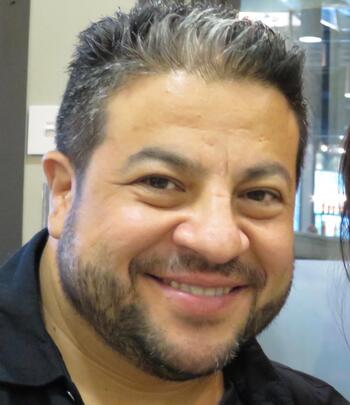
Despite the increasing state control over free speech, the Russian media market is still alive — and huge. There are tens of independent online media with a multimillion audience and each year we get more. How do you survive on the internet when it is controlled by the state? How do you find professional journalists when there are no decent schools of journalism? How do you manage a media outlet when you do not know what is going to happen tomorrow? Publisher of the popular Russian language online media outlet Meduza Ilia Krasilshchik will explain how the world of Russian media works.

Image
Image of Ilia Krasilshchik

After dropping out of university at 21, in 2008 Ilya Krasilshchik became the editor of the then most influential Moscow entertainment and city life magazine Afisha. During his five-year tenure, Afisha published more than 100 issues, including specials like “Oral History of the Russian
Media” and “Oral History of the Russian Internet” and a “Coming Outs” issue (as an answer to the ”LGBT propaganda” law adopted by the Russian State Duma). He stepped down in 2013 to become the Product Director at Afisha publishing company, launching three separate web-based media and а TV streaming service in one year. In October 2014, he finally left Afisha, and together with two partners launched Meduza, a groundbreaking Russian language web news outlet based in Riga, Latvia. By December 2015 the monthly readership of Meduza exceeded 3.5 million unique visitors, with 320,000 app downloads and more than 500,000 followers on social media. Seventy percent of Meduza’s audience is based in Russia.


Ilia Krasilshchik Publisher Speaker Meduza.io
Lectures
Authors
News Type
News
Date
Paragraphs

A shadowy terror group smuggles a crude nuclear bomb into the United States, then detonates it right in the heart of Washington D.C., setting off a 15 kiloton explosion.

Eighty thousand Americans are killed instantly, including the president, vice president and most of the members of Congress, and more than a hundred thousand more are seriously wounded.

News outlets are soon broadcasting a message they’ve all received from a group claiming responsibility.

It says there are five more bombs hidden in five different cities across the America, and one bomb will be set off each week for the next five weeks unless all American troops based overseas are ordered to immediately return to the U.S. homeland.

The nation is thrown into chaos, as millions scramble to flee the cities, clogging roads and choking telecommunications systems.

The stock market crashes, before trading is halted altogether.

Martial law is declared, amid widespread looting and violence.

That was just one of the nightmare scenarios for a potential nuclear disaster that former U.S. Secretary of Defense William J. Perry vividly described as he delivered the Center for International Security and Cooperation’s annual Drell Lecture on Wednesday.

“My bottom line is that the likelihood of a nuclear catastrophe today is greater than it was during the Cold War,” Perry said.

Most people were “blissfully unaware” of the danger that simmering conflicts in geopolitical flash points around the globe – including Russia, China, North Korea, Iran and Pakistan – could easily turn nuclear, Perry told the Stanford audience.

A new nuclear arms race with Russia

Perry said he had tried to foster closer cooperation between the U.S. and Russia when he headed the Pentagon during the mid ‘90s and helped oversee the joint dismantling of four thousand nuclear weapons.

“When I left the Pentagon, I believed we were well on the way to ending forever that Cold War enmity, but that was not to be,” he said.


William J. Perry shares a video depicting the threat of nuclear terrorism with a Stanford audience. William J. Perry shares a video depicting the threat of nuclear terrorism with a Stanford audience.

Since then, relations between the West and Russia have soured badly, prompting Russia to modernize its nuclear arsenal and assume a more aggressive nuclear posture.


“They’re well advanced in rebuilding their Cold War nuclear arsenal, and it is Putin’s stated first priority,” Perry said.

“And they have dropped their former policy of no first use of nuclear weapons, and replaced it with a policy that says nuclear weapons will be their weapon of choice if they are threatened.”

While Perry said he believed Russian president Vladimir Putin did not want to engage in a military conflict with NATO forces, he said he was concerned about the possibility of Russia making a strategic miscalculation and stumbling into a conflict where they might resort to the use of tactical nuclear weapons.

“If they did that there’s no way of predicting or controlling the escalation that would follow thereafter,” Perry said.

Chinese economic problems increasing tensions

In Asia, a slowing Chinese economy could exacerbate domestic political tensions over issues such as wealth inequality and pollution, and encourage Chinese leaders to divert attention from problems at home by focusing on enemies abroad.

“China has had more than 10 percent growth now for almost three decades, but I think there’s trouble ahead,” Perry said.

“The time-proven safety valve for any government that’s in trouble is ultra-nationalism, which in the case of China translates into anti-Americanism and anti-Japanese.”

China has seen a major growth in military expenditures over the last decade, and it has used that investment to build a blue water navy and develop effective anti-ship missiles designed to drive the U.S. Navy hundreds of miles back from the Chinese coastline.

One potential flash point for a conflict between China and the U.S. are the artificial islands that China has been building in the disputed waters of the South China Sea.

“In a sense, China is regarding the South China Sea as a domestic lake, and we regard it and most other countries regard it as international waters, so their actions have been challenged by the U.S. Navy and will continue to be challenged,” Perry said.

North Korea’s growing nuclear threat

Meanwhile, China’s neighbor North Korea has continued to defy the international community and conducted another nuclear test in January.

“North Korea is today building a nuclear arsenal, and I would say clearly it’s of the highest priority in their government, and they have adopted outrageous rhetoric about how they might use those nuclear weapons,” Perry said.

William J. Perry delivers the Drell Lecture in an address entitled "A National Security Walk Around the World." William J. Perry delivers the Drell Lecture in an address entitled "A National Security Walk Around the World."
North Korea followed up its latest nuclear test with a satellite launch earlier this month – an important step towards developing an intercontinental ballistic missile that could threaten the United States mainland.

“These missiles today have only conventional warheads that are of no significant concern, but they are developing nuclear warheads,” Perry said.

“They already have developed a nuclear bomb, and the latest test, as well as tests to come, will be designed to perfect a bomb small enough and compact enough and durable enough to fit into a warhead. If they succeed in doing that, then the bluster will become a real threat.”

Perry said he hoped China and the United States could combine forces and adopt a “carrot and stick” diplomatic approach to force North Korea to abandon its nuclear weapons program – with the United States offering aid and international recognition, and China threatening to cut off supplies of food and aid.

He said he expected to see “more acting out” from the North Korean regime in the coming months, in the form of further nuclear and rocket tests.

Like it or not, the Iran deal is the only deal we’ll get

The landmark deal reached last year, where Iran agree to curtail its nuclear program in exchange for the lifting of economic sanctions, was a better resolution than Perry had expected to the negotiations, but it has met with significant resistance from groups he described as “strange bedfellows.”

“The opposition in Israel and the United States opposed the deal because they fear it will allow Iran to get a bomb,” Perry said.

“Whereas the opposition in Iran opposed the deal because they fear it will prevent Iran from getting a bomb. Both cannot be right.”

Many Republican presidential hopefuls have publicly stated on the campaign trail that they would withdraw from the deal if they got elected to the White House, but Perry said that would be a strategic mistake.

“The opposition in the United States has a simple formula – we should withdraw from the deal, we should reinstate sanctions, and we should renegotiate a better deal,” Perry said.

“Let me be as blunt as I can, this is a pure fantasy. There is not the remotest possibility that the sanction could be reapplied if the United States withdraws from this deal, because the day we withdraw from the deal, our allies are gone, the sanctions are gone, there will be no renegotiations without sanctions, so this deal, like it or not, is the only deal we will ever get.”

Another “Mumbai” attack could spark regional nuclear war

Nuclear rivals India and Pakistan have more than a hundred nuclear weapons on each side, as well as the missiles to deliver them, and a conventional military conflict between them could quickly escalate into a regional nuclear war, Perry said.

Another large-scale terror attack, like the coordinated assault in Mumbai that killed more than 163 people in 2008, could lead India to retaliate militarily against Pakistan (which India blames for encouraging the terror groups operating in Pakistani territory).

Perry said he was concerned that Pakistan would then use tactical nuclear weapons against invading Indian troops, and that India might then respond with a nuclear attack of its own on Pakistan.

“So this is the nightmare scenario of how a regional nuclear war could start,” Perry said.

“A nightmare that would involve literally tens of millions of deaths, along with the possibility of stimulating a nuclear winter that would cause widespread tragedies all over the planet.”

A ray of hope

Despite all the potential for nuclear disaster in the current geopolitical environment, Perry said he was still hopeful that nuclear catastrophe could be avoided.

"While much of my talk today has a doomsday ring to it, that truly is not who I am,” Perry said.

“I’m basically an optimist. When I see a cloud, I look for a ray to shine through that cloud.”

One important step toward reducing the nuclear threat would be improving relations between the U.S. and Russia, he said.

“My ray of sunshine, my hope, is I believe we can still reverse the slide in U.S. Russia relations, he said.

“We must begin that by restoring civil dialog. We must restore cooperation between the United States and Russia in areas where we have mutual interest…If we succeed in doing that, then we can work to stop and reverse the drift to a greater and greater dependence on nuclear weapons.”

Perry ended his speech by urging the audience to keep striving to rid the world of the threat of nuclear weapons.

“We must pursue our ideals in order to keep alive our hope – hope for a safer world for our children and for our grandchildren,” he said.


Hero Image
William J. Perry answers questions from the audience during the annual Drell Lecture at Stanford, as CISAC co-director David Relman (right) looks on.
Rod Searcey
All News button
1
-

Abstract

After five years of political support for the regime of Bashar Al-Asad in its war against the opposition, Russia intervened militarily on his behalf in September 2015 and suddenly later this year Russian President Vladimir Putin announced the withdrawal of the Russian troops from Syria. While Moscow claims that its intervention was aimed at destroying ISIS and other terrorists groups, but the vast majority of its air strikes seem to target the moderate armed opposition, which has fought ISIS on the ground. This presentation assesses the outcome of Russia’s intervention, arguing that it neither achieved its goal of destroying ISIS nor did it tip the balance favor of Asad. Instead, the intervention had resulted in the killing of Syrian civilians, complicated the conflict in Syria, and constrained the prospects for a political solution by empowering Asad on the ground.

Speaker Bio

Image
radwan
Radwan Ziadeh is a senior analyst at the Arab Center in Washington D.C. He is the founder and director of the Damascus Center for Human Rights Studies in Syria and co-founder and executive director of the Syrian Center for Political and Strategic Studies in Washington, D.C. He is a Visiting Scholar at the Center for the Study of Human Rights at Columbia University, and Fellow at the Institute for Social Policy and Understanding (ISPU) in Washington D.C. Ziadeh was the managing editor of the Transitional Justice Project in the Arab World, and the Head of the Syrian Commission for Transitional Justice, which was established on November 14, 2013 by the Syrian Interim Government. He was also involved in the Syrian political opposition. He was elected in October 2011 as director of the Foreign Relations Office of the Syrian National Council until he resigned from the position in November 2012. He wrote more than twenty books in English and Arabic. His most recent book is Syria's Role in a Changing Middle East: The Syrian-Israeli Peace Talks (I.B.Tauris, 2016). Ziadeh holds a D.D.S in Dentistry from Damascus University, Diploma in international Human Rights Law from College of Law at the American University in Washington D.C, an MA in Democracy and Governance from Georgetown University in Washington D.C, and an MS in Finance from Kogod School of Business at the American University in Washington D.C.


[[{"fid":"222587","view_mode":"crop_870xauto","fields":{"format":"crop_870xauto","field_file_image_description[und][0][value]":"Radwan Ziadeh flyer","field_file_image_alt_text[und][0][value]":"","field_file_image_title_text[und][0][value]":"","field_credit[und][0][value]":"","field_caption[und][0][value]":"","field_related_image_aspect[und][0][value]":"","thumbnails":"crop_870xauto"},"type":"media","attributes":{"width":"870","style":"width: 870px;","class":"media-element file-crop-870xauto"}}]]


CISAC Central Conference Room
Encina Hall, 2nd Floor
616 Serra St
​Stanford, CA 94305

Radwan Ziadeh Arab Center, Washington, DC
Seminars
-

Abstract: Once limited by concerns about its technological feasibility, affordability and destabilizing potential, today, missile defense is becoming a multinational enterprise deployed on a global scale. The 21st century renaissance of missile defense technology has been powered by the belief that the capability to defend against ballistic missiles will reduce nuclear risks in the post-cold-war era. The assumptions that underpin this conclusion are challenged by a shift in the international security environment – the re-emergence of Russia, a major nuclear power, as a regional threat to the United States and its European allies. Both Cold War and more recent scholarship cannot fully explain contemporary dynamics. I will provide an overview of the current U.S., NATO and Russian missile defense programs and discuss their strategic, operational and technical dimensions. I will explain why we need a new understanding of the relationship between missile defense and nuclear weapons in the current strategic environment.


About the Speaker: Ivanka Barzashka is a MacArthur Nuclear Security Fellow at CISAC. Her research focuses on how ballistic missile defense (BMD) affects nuclear risks in the changing strategic environment. She is concurrently a researcher at the Department of War Studies of King’s College London (KCL). As a visiting scholar at the Bulgarian Academy of Sciences, Barzashka examined options for Bulgarian active participation in NATO’s BMD system, for which she did fieldwork at NATO’s Joint Forces Training Center in Poland. She also assessed technical options for BMD cooperation between NATO and Russia in collaboration with American, European and Russian scientists. Barzashka continued that project at the Centre for Science and Security Studies at KCL, where she developed a physics-based model for assessing BMD effectiveness for policy applications.

MacArthur Nuclear Security Predoctoral Fellow CISAC
Seminars
-

Abstract: How do leaders win power struggles in Leninist regimes? The political science literature emphasizes the importance of institutions in such polities: institutionalization allegedly provides a mechanism for distributing patronage, prevents the military and secret police from playing a special role, and strictly delineates the group that selects the leadership. This project instead argues that the defining feature of one-party states is the lack of institutionalization. Power struggles are therefore determined by prestige and sociological ties, politicized militaries and secret police, and the manipulation of multiple decision-making bodies. I test the relative explanatory value of these two competing sets of hypotheses by examining the power struggles fought by Nikita Khrushchev, Deng Xiaoping, and Kim Ilsung. The historic failure to institutionalize leadership selection had a tragic legacy: its absence is crucial for understanding the origins of stagnation, the tragedy at Tiananmen Square in 1989, and the Kim family multi-generational personality cult. 

About the Speaker: Joseph Torigian is a Ph.D. student at MIT interested in Chinese, Russian, and North Korean elite politics and qualitative methods. His current research uses archival material to investigate how war affects political authority in authoritarian regimes. Before coming to MIT, Joseph worked at the Council on Foreign Relations and studied China's policies towards Central Asia as a Fulbright Scholar at Fudan University in Shanghai. He has conducted dissertation research at the Higher School of Economics in Moscow and as a visiting scholar at the Institute for Security and Conflict Studies at George Washington University. He received his BA in Political Science at the University of Michigan and speaks Chinese and Russian.

Predoctoral Fellow CISAC
Seminars
-

Abstract: The 1995 launch of a sounding rocket from Andoya in Norway allegedly misinterpreted as an attack in Russia and the so-called "Cuban Missile Crisis" in 1962 have one thing in common: they have both been referred to as "the closest we came to nuclear war." The 1962 crisis has mostly been studied from an American perspective due to the availability of documentary evidence and of the Kennedy tapes, until the 1990s when Cuba and the Soviet Union were given a voice, with the rest of the world still largely absent from the understanding of the event. The 1995 close call has been controversial and is remembered in conflicting ways: an alarmist and an untroubled one.

In this presentation, I will offer new findings on those two cases, based on previously untapped primary sources on the experience of and threat perception during the so-called "Cuban Missile Crisis" in 13 countries worldwide and on an oral history workshop I organized in London for the 20th anniversary of the 1995 "Black Brant event", which gathered for the first time Norwegian, American and Russian participants in the event. By focusing on those two events as exemplary cases of near use of nuclear weapons, I will outline a research program on such cases and its implication for social sciences and for the teaching of post-1945 world history to the next generations.


About the Speaker: Benoît Pelopidas is a CISAC affiliate and lecturer in International Relations at the School of Sociology, Politics and International Studies (SPAIS), University of Bristol. He was a postdoctoral fellow at CISAC for the 2011-2012 academic year.

He received his Ph. D. in political science from Sciences Po (Paris) and the University of Geneva in 2010 and was a postdoctoral fellow at the James Martin Center for Nonproliferation Studies in 2010-2011. Since 2005, he has been teaching international relations at Sciences Po (Paris), the University of Geneva and the Monterey Institute of International Studies (Graduate School of International Policy and Management).

In 2010, he won the "outstanding student essay prize" from the Doreen and Jim McElvany Nonproliferation Essay Competition and in 2011, he was awarded the "Best Graduate Paper 2010" from the International Security Studies Section of the International Studies Association. Also in 2011, he won the SNIS Award 2010 for the Best Thesis in International Studies from the Swiss Network for International Studies. A book based on his dissertation is forthcoming in French by Sciences Po University Press.

He published When Empire Meets Nationalism: Power Politics in the US and Russia (with Didier Chaudet and Florent Parmentier; Ashgate, 2009) as well as articles in The Nonproliferation Review, the European Journal of Social Sciences, the Swiss Political Science Review, and the French Yearbook of International Relations. His research focuses on epistemic communities in international security, renunciation of nuclear weapons as a historical possibility, the uses of nuclear history and memory and French nuclear policies.

Lecturer in International Relations at the School of Sociology, Politics and International Studies (SPAIS) University of Bristol, United Kingdom
Seminars
News Type
News
Date
Paragraphs

In a recent piece with Stanford News, FSI Senior Fellow Kathryn Stoner remarks on recent Russian military interventions in the Syrian conflict, suggesting that this re-engagement with the Middle East is a signal to Western powers of Putin's aim to become a global power. To read more, please click here

Hero Image
syria news (Photo: eXpose / Shutterstock)
All News button
1
Authors
Michael A. McFaul
News Type
Commentary
Date
Paragraphs

In an opinion piece published on October 23, 2015 in the New York Time, FSI director and senior fellow Michael McFaul shares his latest comentary on Russian President Vladimir Putin.

Read Professor McFaul's Op Ed in the New York Times: http://www.nytimes.com/2015/10/23/opinion/the-myth-of-putins-strategic-….

Hero Image
nytlogobiggerbackground
All News button
1
-

The fate of a soldier serving in the Russian army in the First World War largely depended on luck and circumstances. But even though his own means of influencing his fate were limited, there were available certain active choices – such as shirking and desertion – that could turn his life around in both positive and negative ways. For Russian civil and military authorities, of course, desertion was a nuisance that was fought against by all available means. Sometimes, such as with physical punishment, these means only succeeded in lowering the already low morale and increasing the number of deserters.

Dr. Mart Kuldkepp's presentation will focus on a small and somewhat exceptional group of deserters from the Russian army: the soldiers who served in the border guard regiments in Northern Finland and deserted alone or in small groups over the border to neutral Sweden. He will consider their motivation in doing so, and their subsequent fate, as much as it is known. At the same time, he will also look at how Sweden administratively handled this very unforeseen phenomenon and how the deserters were treated by Swedish authorities.

Mart Kuldkepp completed his PhD dissertation at University of Tartu, Estonia, in 2014 and joined University College London in 2015. Dr. Kuldkepp has been active as an academic in the field of Scandinavian Studies since 2007. Dr. Kuldkepp’s primary research focus is on 20th century Scandinavian political history, with a particular interest in contacts between the Scandinavian and the Baltic states, but also has interest in the history of secret services and espionage and Old Norse-Icelandic literature and culture. His teaching has mostly concerned the history of Scandinavian culture, society, and politics from the earliest times up to today. He has taught subjects related to Old Norse studies and overview courses in humanities.

Organized by the Center for Russian, East European and Eurasian Studies and co-sponsored by The Europe Center and Stanford University Libraries

Mart Kuldkepp Lecturer Speaker Scandinavian Studies, University College London
Lectures
Subscribe to Russia