-

This event is co-sponsored by the Center for Russian, East European and Eurasian Studies


Seminar recording: https://youtu.be/WWP-FueMOJ8


Abstract: Russia’s ability to challenge Europe and the West will depend in no small measure on the performance of its economy. Dr. Anders Åslund will discuss his book, Russia’s Crony Capitalism. The Path from Market Economy to Kleptocracy. The book explores how Vladimir Putin has consolidated his rule over Russia, including by appointing close associates as heads of state enterprises and securing control of the Federal Security Service and judiciary, enriching his business friends from Saint Petersburg in the process with preferential government deals. Thus, Putin has created a super wealthy and loyal plutocracy that owes its existence to his brand of authoritarianism. Dr. Åslund assesses Putin’s personal wealth and discusses what this system means for Russia and Russian power.


Speaker's Biography: 

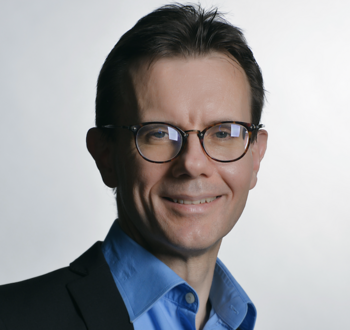
Image
anders aslund 2016 11 2
Anders Åslund is a senior fellow at the Atlantic Council and an adjunct professor at Georgetown University. He is a leading specialist on East European and post-Soviet economies and the author of 15 books, most recently Russia’s Crony Capitalism: The Path from Market Economy to Kleptocracy.  Dr. Åslund has worked as an economic adviser to several governments, including the Russian and Ukrainian governments.  He has also been a professor at the Stockholm School of Economics and was the founding director of the Stockholm Institute of Transition Economics. He earned his Ph.D. from the University of Oxford.

Anders Åslund Adjunct professor at Georgetown University’s School of Foreign Service Georgetown University
Seminars
-

Seminar Recording: https://youtu.be/W7EFBKGMXkI


Abstract: If before 2014 Russia was widely dismissed by the international community as a regional power whose global influence had died with the Soviet Union, its recent muscle flexing abroad has shown that reports of its death as a global power have been greatly exaggerated. From its seizure of the Crimean Peninsula from Ukraine in 2014 and military deployment in Syria in 2015 to cyber interventions in a number of democratic countries, most notably the alleged interference in the United States elections in 2016, Russia has reasserted itself as a major global power. This has taken many analysts and policy makers by surprise. But perhaps Russia’s status as a “phoenix state” should not have been unanticipated,

A common argument has been that Russia has a weak hand, but plays it well. The book on which this talk is based argues that Russia’s cards may not be as weak as we in the West think they are—that instead, the West might be playing bridge, while Russia plays poker.  Too great an emphasis has been placed on traditional, realist means of power (like the strength of Russia's economy, its population, and its military) and this has led scholars and policy makers to discount Russia’s ability to influence international politics. In important ways, Russia has reestablished itself on the global stage, doing so as a great disrupter rather than a great power. It doesn’t have as much by way of means in realist terms as the United States or China, but it does have the ability to exercise influence, to get other countries to do what they might not otherwise do. This is because Russia today is unencumbered by a domestic political system that might exercise a brake on the ambitions of the current regime. It doesn’t have to be a great power, but it can be good enough to do a great deal to alter the post war global order. Indeed, it already has.


Click

to read chapter one. 


Speaker's Biography:

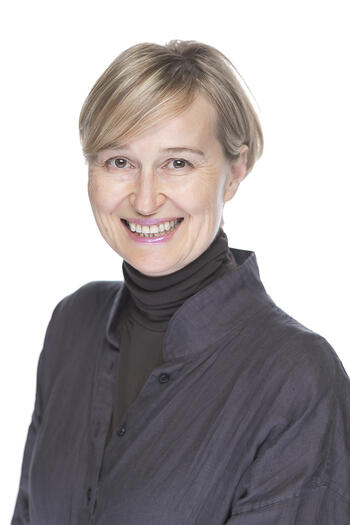
Image
kswsfdd08pic
Kathryn Stoner is the Deputy Director at the Freeman Spogli Institute for International Studies at Stanford University and a Senior Fellow at the Center on Democracy, Development, and the Rule of Law, as well as the Deputy Director of the Ford Dorsey Master's in International Policy at Stanford University. She teaches in the Department of Political Science at Stanford, and in the Program on International Relations, as well as in the Ford Dorsey Program. Prior to coming to Stanford in 2004, she was on the faculty at Princeton University for nine years, jointly appointed to the Department of Politics and the Woodrow Wilson School for International and Public Affairs. At Princeton she received the Ralph O. Glendinning Preceptorship awarded to outstanding junior faculty. She also served as a Visiting Associate Professor of Political Science at Columbia University, and an Assistant Professor of Political Science at McGill University. She has held fellowships at Harvard University as well as the Woodrow Wilson Center in Washington, DC. 

In addition to many articles and book chapters on contemporary Russia, she is the author or co-editor of five books: Transitions to Democracy: A Comparative Perspective, written and edited with Michael A. McFaul (Johns Hopkins 2013);  Autocracy and Democracy in the Post-Communist World, co-edited with Valerie Bunce and Michael A. McFaul (Cambridge, 2010);  Resisting the State: Reform and Retrenchment in Post-Soviet Russia (Cambridge, 2006); After the Collapse of Communism: Comparative Lessons of Transitions (Cambridge, 2004), coedited with Michael McFaul; and Local Heroes: The Political Economy of Russian Regional Governance (Princeton, 1997). She is currently finishing a book project entitled Resurrected? The Domestic Determinants of Russia’s Return as a Global Power that will be published in 2017.

She received a BA (1988) and MA (1989) in Political Science from the University of Toronto, and a PhD in Government from Harvard University (1995). In 2016 she was awarded an honorary doctorate from Iliad State University, Tbilisi, Republic of Georgia. 

FSI
Stanford University
Encina Hall C140
Stanford, CA 94305-6055

(650) 736-1820 (650) 724-2996
0
Satre Family Senior Fellow, Freeman Spogli Institute for International Studies
kathryn_stoner_1_2022_v2.jpg MA, PhD

Kathryn Stoner is the Mosbacher Director of the Center on Democracy, Development and the Rule of Law (CDDRL) and the Satre Family Senior Fellow at the Freeman Spogli Institute for International Studies (FSI). From 2017 to 2021, she served as FSI's Deputy Director. She is Professor of Political Science (by courtesy) at Stanford and teaches in the Department of Political Science, the Program on International Relations, and the Ford Dorsey Master's in International Policy Program. She is also a Senior Fellow (by courtesy) at the Hoover Institution.

Prior to coming to Stanford in 2004, she was on the faculty at Princeton University for nine years, jointly appointed to the Department of Politics and the Princeton School for International and Public Affairs (formerly the Woodrow Wilson School). At Princeton, she received the Ralph O. Glendinning Preceptorship, awarded to outstanding junior faculty. She also served as a Visiting Associate Professor of Political Science at Columbia University and an Assistant Professor of Political Science at McGill University. She has held fellowships at Harvard University as well as the Woodrow Wilson Center in Washington, D.C. 

In addition to many articles and book chapters on contemporary Russia, she is the author or co-editor of six books: Transitions to Democracy: A Comparative Perspective, written and edited with Michael A. McFaul (Johns Hopkins 2013);  Autocracy and Democracy in the Post-Communist World, co-edited with Valerie Bunce and Michael A. McFaul (Cambridge, 2010);  Resisting the State: Reform and Retrenchment in Post-Soviet Russia (Cambridge, 2006); After the Collapse of Communism: Comparative Lessons of Transitions (Cambridge, 2004), coedited with Michael McFaul; and Local Heroes: The Political Economy of Russian Regional Governance (Princeton, 1997); and Russia Resurrected: Its Power and Purpose in a New Global Order (Oxford University Press, 2021).

She received a BA (1988) and MA (1989) in Political Science from the University of Toronto, and a PhD in Government from Harvard University (1995). In 2016, she was awarded an honorary doctorate from Ilia State University in Tbilisi, the Republic of Georgia.

Download full-resolution headshot; photo credit: Rod Searcey.

Mosbacher Director, Center on Democracy, Development and the Rule of Law
Professor of Political Science (by courtesy), Stanford University
Senior Fellow (by courtesy), Hoover Institution
CV
Date Label
Kathryn Stoner Deputy Director at the Freeman Spogli Institute for International Studies Stanford University
Authors
News Type
Commentary
Date
Paragraphs

This piece originally appeared in The National Interest.

Significant progress has been made in improving the defense situation in the Baltic states since 2014, but NATO can take some relatively modest steps to further enhance its deterrence and defense posture in the region, according to a report by Michael O’Hanlon and Christopher Skaluba, which was based on an Atlantic Council study visit to Lithuania. The Atlantic Council was kind enough to include me on the trek, which began in Lithuania’s capital, Vilnius, and included visits to troops in the field and the port of Klaipeda. I largely concur with Mike and Chris’s comments and supplement them below with several additional observations.

First, one can understand the preoccupation of Lithuania’s senior political and military leadership with the country’s security situation. Lithuania has had a difficult history with the Soviet Union and Russia. Some in Vilnius believe that Moscow regards the Baltic states as “temporarily lost territory.”

A Russian military invasion of the Baltic states is not a high probability. However, the Lithuanians cannot ignore a small probability, especially in light of the Kremlin’s recent rhetoric, the Russian military’s ongoing modernization of its conventional forces and exercise pattern of the past five years, and Russia’s use of military force to seize Crimea and conduct a conflict in Donbas.

When the Lithuanian Ministry of National Defense (MNOD) looks around its neighborhood, it can see specific reasons for concern. Russia is upgrading its military presence in the Kaliningrad exclave on Lithuania’s southwestern border. The MNOD now counts Kaliningrad as hosting some twenty thousand Russian military personnel, including a naval infantry unit and substantial anti-access, area denial capabilities, such as advanced surface-to-air missiles. The Lithuanians assess that the Russian military could mount a large ground attack from Belarus, to the east of Lithuania (the border is less than twenty miles from downtown Vilnius). These forces are backed by an additional 120,000 personnel in Russia’s Western Military District, including a tank army. Russia has substantial air assets in the region as well as warships in the Baltic Sea.

For its part, Lithuania can muster fourteen thousand soldiers and sailors (four thousand of whom are conscripts serving just nine months). They are backed up by five thousand volunteers, similar to the U.S. National Guard. Under NATO’s enhanced forward presence program, a German-led NATO battlegroup adds 1,300 troops, mainly from Germany, the Netherlands and the Czech Republic. In addition, NATO member air forces rotate small fighter squadrons into Lithuania to provide air policing for the Baltic states.

Second, Lithuania has a logical plan to enhance its defense capabilities. The MNOD is making good use of its defense dollars (Lithuania now meets NATO’s two percent of gross domestic product goal, having tripled its defense expenditures over the past six years). Eschewing shiny objects such as F-16 jets, the MNOD focuses on upgrading the capabilities of its two primary ground units, a mechanized brigade and a recently-established motorized brigade. The main procurement programs of the past three years have purchased infantry fighting vehicles, self propelled artillery and short-range surface-to-air missiles to equip the brigades.

In the event of war, the forces in Lithuania would likely fight a defensive holding action while awaiting NATO reinforcements. The MNOD and Ministry of Transport are working together to enhance the country’s ability to flow in NATO forces, including by upgrading the rollon/roll-off capacity at the port of Klaipeda and building a European standard gauge railroad line from Poland to the main base of Lithuania’s mechanized brigade. The railroad line, which o obviates the need to change the railroad gauge at the Polish-Lithuanian border, a cumbersome process involving changing out the wheels of railcars, ultimately will be extended north to Latvia and Estonia.

Third, the Lithuanians value NATO’s enhanced forward presence in the form of the NATO battlegroup. The battlegroup is fully integrated into Lithuania’s Iron Wolf Brigade, and in wartime would come under the tactical control of the brigade. The rotational NATO force is based with and trains side-by-side with major elements of that brigade.

One potential question is, if Russian forces were to cross the border and the Iron Wolf Brigade deployed, then how quickly would the NATO battlegroup take the field with it? The latter would need a NATO command to do so, and likely also national authorizations from Berlin, The Hague and Prague. Hopefully, those authorizations would be transmitted early as a crisis developed so that the NATO battlegroup could deploy immediately. It adds significantly to Lithuanian combat capabilities, including by providing the only armor unit in the country.

Fourth, as pleased as Vilnius is to have a NATO military presence, the Lithuanians very much would like to add a U.S. component to it. With a U.S. armored brigade combat team deployed in Poland on a rotational basis, the U.S. military has the assets to consider periodically rotating an armored company to Lithuania (and to Latvia and Estonia). These rotations would be useful military exercises in case there is a crisis that requires a reinforcement move from Poland to Lithuania through the Suwalki Gap.

Lithuania is moving in the right direction in bolstering its defense capabilities, with prudent steps taken over the past six years and sensible plans for the future. As Mike and Chris point out, modest steps by NATO and, I would argue, the United States could significantly add to the Alliance’s deterrence and defense posture in the Baltics.


Hero Image
steven pifer 0
All News button
1
Authors
Siegfried S. Hecker
News Type
News
Date
Paragraphs

As we witness the increasingly detrimental effects of global climate change, the role that nuclear power could play globally to mitigate its effects continues to be debated. The series of articles featured in the Bulletin in December 2016 aired a broad spectrum of opinions, ranging in assessment of the role of nuclear power from insignificant to mandatory. In this series, we present the perspective of a new crop of nuclear professionals who collectively represent two of the world leaders in nuclear power—the United States and Russia.

These young professionals work together to exchange views and ideas as part of the U.S.-Russia Young Professionals Nuclear Forum that we created in May 2016 to encourage dialogue on critical nuclear issues of concern to both countries. As most official avenues of US-Russia cooperation on nuclear issues were being shut down in pace with the deteriorating political relations between Washington and Moscow, our objective was to turn to the younger generation, because those in it will have to live with the consequences of a world in which their countries no longer cooperate to mitigate global nuclear dangers.

In the United States, our efforts are organized within the Center for International Security and Cooperation at Stanford University, although we reach out to universities and other organizations across the country. In Russia, we were fortunate to find the Moscow Engineering Physics Institute (MEPhI), Russia’s flagship research university in nuclear engineering, to be an enthusiastic partner. Its rector, Professor Mikhail Strikhanov, has an unwavering international outlook that stresses the need for cooperation, especially in higher education and research. The young professionals are students, postdoctoral fellows, and early career professionals.

Hecker has previously written in the Bulletin about the remarkable period of post-Cold War nuclear cooperation between Russian and American nuclear weapon scientists and how the termination of that cooperation by our governments threatens our collective security. We viewed engaging young professionals from the two countries as one of the few avenues of continued cooperation. It has the potential of being particularly effective because at the forum meetings, the young Russians and Americans interact in an educational and non-adversarial environment.

The first three forum meetings focused primarily on issues of nuclear non-proliferation and countering nuclear terrorism. They featured exercises in which the young professionals worked in small groups side by side to explore solutions to vexing nuclear problems. One was a simulation conducted at Stanford in May 2018 just a few weeks before the historic Trump-Kim Singapore Summit. The other was an exercise in Moscow in October 2018 to advise their governments on a hypothetical crisis related to the US withdrawal from the Iran nuclear deal.

At the Moscow forum, we also asked the young professionals to explore what the two countries could do to promote the benefits of nuclear energy around the globe, while cooperating to mitigate the associated risks.

Preparation for the forum included online lectures by senior mentors as well as lectures and discussion sessions in Moscow by both Russian and American specialists. In the nuclear power exercise, we assigned eight key questions to 24 young professionals. We divided them into eight teams, each composed of Russian and American participants. The central question was whether or not an expansion of global nuclear power is necessary to help mitigate the danger of global climate change. Individual groups examined issues of supply and demand around the globe and some of the big challenges posed by an expansion of nuclear power—those of economics, safety and security, potential proliferation of nuclear weapons, and the disposition of nuclear waste.

The young professionals conducted research prior to the meeting, deliberated and debated within their teams during the meeting, and presented their findings to the larger group and the panel of senior mentors at the end of the exercise. During the past six months they have captured the essence of their findings in the eight articles featured in this special presentation in the Bulletin.

Their findings are generally pro-nuclear, which is not surprising considering that most of them have strong educational and research backgrounds in either nuclear technologies or nuclear security. But we found that their views were primarily driven by their serious concerns about the dangers of global climate change and the urgent need to confront these dangers.

Their articles are of interest not so much in that they break new ground in these areas, particularly since many other  established experts have tried to tackle these issues for decades. They are of interest because they represent the views of some of the younger generation of professionals working together across cultural and disciplinary divides. We were struck by the following comment in one of the papers  that reflects on the perceived urgency of the task at hand: “We are the first generation that is experiencing the dramatic effects of global climate change and likely the last that can do something about it to avoid catastrophic consequences for the Earth and its people.”

We also note that the articles uniformly reveal that the young professionals across the board firmly believe that the benefits and risks of expanding nuclear power globally must be pursued and tackled in a concerted effort of major nuclear powers (especially the United States and Russia), other developed nations, the International Atomic Energy Agency, and all stakeholders. These younger voices stated: “The most important shift necessary to facilitate [nuclear power] expansion is an increase in international cooperation and multilateralization in the form of, for example, international reactor supply contracts, multinational enrichment conglomerates, nondiscriminatory fuel banks, and international waste repositories.”

We believe the readers will find the sentiments and opinions of the young Russian and American professionals interesting and encouraging. We certainly have found them eager and able to work together effectively—a lesson that the more senior professionals and the governments need to relearn.

Editor’s note: The Young Professionals Nuclear Forum cooperation is supported by the John D. and Catherine T. MacArthur Foundation and the Carnegie Corporation of New York.


Read the articles here:


Hero Image
rsd19 023 0010a
Rod Searcey
All News button
1
Authors
News Type
News
Date
Paragraphs

In early May, CISAC convened the fifth Young Professional Nuclear Forum (YPNF), a program sponsored by the Center for International Security and Cooperation at Stanford University and the Moscow Engineering and Physics Institute (MEPhI). The program brought together a lively group of young Russians and Americans working on nuclear issues over three days.

Since 2016, the forum has alternated between Moscow and Stanford.  

By 2016, US and Russian governments closed almost every door on opportunities that previously allowed experienced nuclear professionals on both sides to cooperate with each other.  Stanford Professor Siegfried Hecker saw that at least one door - that of cooperation on the university level - was still open. He started the YPNF to foster interaction between the younger generation of Russians and Americans who study, do research, or start a career in the nuclear power or nonproliferation fields.

This year’s agenda focused on two major areas: US-Russian arms control and the future of nuclear power.

The American group included a new cohort of six incoming young professionals from Los Alamos National Laboratory, UC Berkeley, Center for Arms Control and Non-Proliferation, and Vienna Center for Disarmament and Non‑Proliferation. They were joined by CISAC research staff members Gaby Levikow and Elliot Serbin and current and former fellows Chantell Murphy, Kristin Ven Bruusgaard, and Cameron Tracy. The Russian group from MEPhI brought a team of 12 young professionals most of whom are pursuing their graduate degrees in nuclear physics and engineering and software engineering, along with junior professionals in international relations and nuclear fields.  The team of experts included Professor Hecker, Dr. James Toevs, Dr. Ning Li, Ambassador Steven Pifer, Professor David Holloway, Dr. Larry Brandt, Dr. Chaim Braun, Dr. Pavel Podvig, and Dr. Mona Dreicer, —all of whom provided advice and feedback during the exercise.

Participants come from loosely defined “technical” and “policy” fields, and the forum agenda has traditionally included one nuclear-power related and one policy-focused subject. Forum activities vary between lectures, expert briefings, discussions, and table-top exercises, but the small-group work during the exercises is the core form of interaction.

By design, this agenda exposes each participant to new fields, new counterparts, some fun interactive time off - and encourages a lot of cultural learning. Forum after forum, we hear back that the group work and social time are the most exciting aspects of the forum experience. Participants noted they learned, among other things, “general ideas and thoughts of American participants and their attitudes to the present American policy, new words and abbreviations … [and] a great deal about new reactor designs and their implications for nuclear energy and security policy.”  Still more participants enjoyed “learning to collaborate in groups of Americans and Russians but also between policy and technical experts on topics of both camps,” and some “got new friends.”

Encouragingly, participants requested more interaction between the bi-annual meetings and a variety of topics in yet untapped – or suspended - areas of cooperation between Russia and the US.

New work continues to emerge from the forum. Eight short articles written by the young professionals to showcase the results of the projects from the Moscow meeting in November 2017 was published in the Bulletin of the Atomic Scientists in June 2019. The next meeting will be held in Moscow this November.


Hero Image
rsd19 023 0010a
Rod Searcey
All News button
1
Authors
News Type
Commentary
Date
Paragraphs

This article originally appeared at Brookings.

Ukrainian President Volodymyr Zelenskiy visited Brussels on June 4 and 5, where he met with the leadership of the European Union and NATO. He reaffirmed Kyiv’s goal of integrating into both institutions—goals enshrined earlier this year as strategic objectives in Ukraine’s constitution.

At their April meeting to mark NATO’s 70th anniversary, NATO foreign ministers noted their commitment to the alliance’s “open door” policy for countries that aspire to membership. Russian aggression over the past five years has only solidified domestic support within Ukraine for membership, though the path to achieving that objective faces serious obstacles.

GROWING SUPPORT FOR NATO IN UKRAINE

When NATO leaders in July 1997 invited Poland, the Czech Republic, and Hungary to join the alliance, they also stated the “open door” policy. That reaffirmed Article 10 of the Washington Treaty that established NATO, which reads in part: “The Parties may, by unanimous agreement, invite any other European state in a position to further the principles of this Treaty and to contribute to the security of the North Atlantic area to accede to this Treaty.”

President Leonid Kuchma publicly declared Ukraine’s interest in NATO membership in May 2002. Washington expressed support while noting that Kyiv had to do its homework, that is, it had to adopt the kinds of democratic, economic, and military reforms that the alliance asked of other aspirants. During the remainder of Kuchma’s time in office, however, Ukraine made little tangible progress in those areas.

In 2006, President Victor Yushchenko attached high priority to securing a NATO membership action plan (MAP). By summer, Kyiv looked on course to attain a MAP when alliance foreign ministers met that December. Curiously, Moscow did not come out hard against the idea. The prospective MAP derailed, however, after Yushchenko appointed Victor Yanukovych as prime minister. During a September visit to Brussels, Yanukovych said he did not want a MAP. The proposal died given the divided position of Ukraine’s executive branch.

Yushchenko called for a MAP again in January 2008, this time with the support of Prime Minister Yuliya Tymoshenko and Rada (parliament) Speaker Arseniy Yatseniuk. Moscow came out in full opposition. When Yushchenko visited the Russian capital that February, he had to stand alongside and listen to President Vladimir Putin threaten to target nuclear missiles on Ukraine. Instead of lobbying allies to support a MAP for Kyiv, Washington waited until the April Bucharest summit, where President George W. Bush attempted to persuade his counterparts to grant Ukraine (and Georgia) a MAP. However, a number of allied leaders by then had made up their minds and opposed the idea. Concern about Russian opposition undoubtedly played a role.

When Yanukovych became president in early 2010, he reiterated his lack of interest in NATO membership, and the issue went dormant. That changed after the 2014 Maidan Revolution, Yanukovych’s flight to Russia, Russia’s use of military force to seize Crimea, and Russian aggression in the eastern region of Donbas. President Petro Poroshenko increasingly stressed the importance of Ukraine joining the alliance.

In February 2019, the Rada overwhelmingly approved an amendment to the constitution that fixed membership in the European Union and NATO as strategic goals for Ukraine. While opinion polls prior to 2014 showed, at best, lukewarm public support for NATO membership, that has shifted with the continuing fighting in Donbas. Polls over the past four years have shown pluralities—in some cases, even a majority—favoring joining the alliance. For example, a January 2019 survey had 46 percent in favor as opposed to 32 percent against.

President Zelenskiy, who assumed office on May 20, also expresses support for NATO membership. In Brussels he stated that he would continue Kyiv’s “strategic course to achieve full-fledged membership in the EU and NATO.”

THE ELEPHANT IN THE ROOM: RUSSIA

Ukraine still has much to do to meet the criteria for NATO membership. MAPs are intended to serve as guides for prospective members to fulfill those criteria. Objectively, Ukraine is as far along as countries that received MAPs in 1999. What has blocked Ukraine’s MAP ambition is Russia and the deference that some NATO members give to Moscow’s views.

Another reason for the alliance’s reluctance to grant a MAP is that MAPs do not convey an Article 5 security guarantee. (Article 5, the heart of the NATO treaty, provides that an attack against one member will be considered as an attack against all.) NATO lacks a good response to the question: What does the alliance do if an aspirant receives a MAP and then—before it becomes a full member—comes under attack?

The Kremlin clearly wants to return Ukraine to Russia’s orbit, though its actions over the past five years have had the opposite effect. Russia’s illegal annexation of Crimea and its ongoing aggression in Donbas, which has taken more than 13,000 lives, have persuaded Ukraine’s political elite and much of its population of the need to anchor Ukraine solidly in European and trans-Atlantic institutions and reduce relations with Moscow.

If the Kremlin cannot return Ukraine to its orbit, Plan B apparently is to break it. That would explain Russia’s hybrid war and economic sanctions against Kyiv as well as continued fueling of the fighting in Donbas. Moscow aims to pressure, distract, and destabilize the Ukrainian government in order to hinder its efforts to adopt a full set of reforms that would spur economic growth; to frustrate Ukraine’s ability to implement the provisions of the Ukraine-EU association agreement; and to make Ukraine appear an unattractive partner for the West.

Russia pursues this course despite its professed adherence to the principles of the 1975 Helsinki Final Act. Those principles include “the right to belong or not to belong to international organizations, to be or not to be party to bilateral or multilateral treaties including the right to be or not to be a party to treaties of alliance.” Moscow plainly does not want to allow Kyiv the right to choose whether or not to be a party to NATO.

Moscow plainly does not want to allow Kyiv the right to choose whether or not to be a party to NATO.

The Kremlin’s backing away from this (and other principles) of the Helsinki Final Act reflects a conclusion in Moscow that the post-Cold War European security order has evolved in ways that disadvantage Russia’s interests. The Russian leadership thus has set out to disrupt that order (Crimea has its antecedents in Transnistria, South Ossetia, and Abkhazia). Russian officials may well have taken note of NATO’s September 1995 study of the how and why of enlargement. That study said: “Resolution of [ethnic disputes or external territorial disputes] would be a factor in determining whether to invite a state to join the Alliance.” The Kremlin has sought to create territorial disputes in the post-Soviet space, and some NATO members fear that giving Ukraine membership now would confront the alliance with an immediate Article 5 contingency against Russia.

It may well be that Moscow requires some idea of what a future European security order might look like, including the relationship between Ukraine and NATO, before it moves to resolve the conflict in Donbas. At this point, however, it does not appear that any Track I channels are discussing that question. Nothing suggests that it has come up in the Normandy configuration involving officials from Ukraine, Russia, Germany, and France.

This is an extraordinarily difficult question. In thinking about a European security order, how can one reconcile the view of Kyiv—and of most of the West—that Ukraine, a sovereign and independent state, should have the right to choose its own foreign policy course, with Russia’s demand for a sphere of influence that includes Ukraine?

Some have offered solutions to this dilemma. My Brookings colleague, Michael O’Hanlon, has proposed establishing a zone of permanently neutral states running from Sweden and Finland in the north down to the Black Sea and the Caucasus, with their security guaranteed by both NATO and Russia. Russia would withdraw its forces from Georgia, Ukraine, and Moldova, and the West would lift economic sanctions on Russia. NATO would abandon further enlargement, though states in the neutral zone could join the European Union.

This is an interesting “outside-the-box” idea, but it would not work. Many of those states (not just Ukraine and Georgia, but also Sweden and Finland) would not agree to be consigned to such a zone. And Moscow opposes EU membership for post-Soviet states; the Russians pressed Yanukovych not to sign the association agreement with the European Union when he had made clear his lack of interest in deepening relations with NATO.

The best idea that I have been able to come up with is that Ukraine, Russia, and NATO agree that Ukrainian membership in the alliance is a matter of not now, but not never. That would likely please neither Kyiv nor Moscow, but it could offer a way to kick a difficult can down the road.

NATO membership for Ukraine is unlikely in the near term. For the foreseeable future, Ukraine should continue to deepen its practical cooperation with the alliance. Much, if not all, of a MAP can be put into Kyiv’s annual action plans. Moscow’s principal objection appears to be to the name of the plan, not the content. The focus then should be on implementation. Ukraine should seek to prepare itself as much as possible—not just in terms of defense and security reforms, but also in solidifying its embrace of the democratic and market economy values of the alliance. That will put Ukraine in position to take advantage if/when an opportunity emerges and NATO is ready to consider membership.


Hero Image
steven pifer 0
All News button
1
Authors
News Type
Commentary
Date
Paragraphs

If voters in Ukraine elect television star Volodymyr Zelensky president Sunday, as seems almost certain, that should please the Kremlin, which in the course of supporting rebels in the eastern regions of Ukraine has made clear its dislike for incumbent Petro Poroshenko. Zelensky, a political neophyte who plays a teacher unexpectedly elected president in the TV show “Servant of the People,” handily won the first round of the election March 31. Polls suggest he will beat the president in the runoff by as many as 30 points, and to the Kremlin, he must seem like a much more malleable figure.

That doesn’t mean he will be. Champagne corks popped in Moscow in November 2016 when Donald Trump unexpectedly won, and he has been a major disappointment for Putin, who wanted a change in Washington’s Russia policy. Zelensky could foil the Russians in exactly the same way.

Zelensky has no policy track record. During the campaign, he avoided detailed platform proposals, media interviews or political rallies, preferring instead to let his TV persona define his image. He could make mistakes — huge mistakes — as president. But he is no dummy: He built a successful business empire, and he may not be as prone to manipulation as Putin would want.

Read the rest at The Washington Post.

Hero Image
steven pifer 0
All News button
1
Authors
News Type
Commentary
Date
Paragraphs

This article originally appeared in the American Ambassadors Review (Spring 2019).

For nearly five decades, Washington and Moscow have engaged in negotiations to manage their nuclear competition. Those negotiations produced a string of acronyms—SALT, INF, START—for arms control agreements that strengthened strategic stability, reduced bloated nuclear arsenals and had a positive impact on the broader bilateral relationship.

That is changing. The Intermediate-range Nuclear Forces (INF) Treaty is headed for demise. The New Strategic Arms Reduction Treaty (New START) has less than two years to run, and the administration of Donald Trump has yet to engage on Russian suggestions to extend it. Bilateral strategic stability talks have not been held in 18 months.

On its current path, the U.S.-Russia nuclear arms control regime likely will come to an end in 2021. That will make for a strategic relationship that is less stable, less secure and less predictable and will further complicate an already troubled bilateral relationship.

Fifty Years of Arms Control

Bilateral nuclear arms control talks between Washington and Moscow began in 1969 with the Strategic Arms Limitation Talks (SALT). They resulted from a growing understanding that negotiated limits on the superpowers’ nuclear arms competition served the interests of both. Over the next five decades, arms control treaties and unilateral force decisions led the sides to reduce their active arsenals to 4,000-4,500 nuclear weapons each—down from a U.S. peak of more than 30,000 in the 1960s and a Soviet/Russian peak that exceeded 40,000 in the 1970s.

Early treaties such as the 1972 Interim Offensive Agreement and the 1979 SALT II Treaty (which never entered into force but whose limits were observed into the mid-1980s) merely slowed the growth of nuclear arsenals. Later treaties had a more dramatic impact. The 1987 INF Treaty banned the entire class of U.S. and Soviet land-based missiles with ranges between 500 and 5,500 kilometers. The 1991 START Treaty required the sides to reduce their accountable strategic nuclear warheads by some 40 percent while cutting strategic missile launchers and bombers by about 30 percent.

Arms control agreements often had a beneficial impact on the broader relationship. SALT helped advance détente in the early 1970s; progress on INF and START spurred an improvement in the overall U.S.-Soviet relationship in the late 1980s; and the relatively quick conclusion of New START gave a positive impulse to the Obama administration’s reset with Russia, even though the reset proved short-lived.

Today, the U.S.-Russian relationship has hit its lowest point since the end of the Cold War. Arms control, or the looming collapse of arms control, rather than helping, may contribute to a further deterioration of relations.

The Demise of the INF Treaty

The INF Treaty is on a death course. Russia violated the treaty by developing and deploying the 9M729, a prohibited intermediate-range cruise missile. Neither the Obama nor the Trump administration employed an effective strategy to persuade Moscow to return to compliance.

On October 20, 2018, President Trump announced that the United States would terminate the treaty, surprising allies and administration officials alike. NATO subsequently backed the U.S. decision, though European officials privately grumbled about a fait accompli. In early February, U.S. officials stated that they had suspended U.S. treaty obligations and given Russia the required six months’ notice of the U.S. intention to withdraw from the agreement. Russia then suspended its treaty obligations.

The United States could not remain forever in a treaty that Russia has violated. However, the way the Trump administration handled its departure amounted to diplomatic malpractice. Washington will get blamed for the treaty’s end.

There was a smarter way. First, U.S. officials should have informed their European counterparts in early 2018 that the United States would have no choice in 12–24 months but to leave the treaty if Russia did not correct its violation and urge them to apply political heat on the Kremlin, including at the highest level. Russia’s intermediate-range missiles cannot reach the United States; they threaten Europe and Asia.

Second, the U.S. military should have deployed conventionally armed air- and sea-launched cruise missiles to the European region to show that the Russian violation would not go unchallenged.

Third, NATO should have begun a study of long-term countermeasures, with one option being deployment in Europe of a conventionally armed U.S. intermediate-range ballistic missile. While the Alliance likely could not have found consensus to adopt that option, discussing it would have reminded military leaders in Moscow how much they disliked the U.S. Pershing II, whose deployment in West Germany in the 1980s proved key to securing the INF Treaty.

Fourth, U.S. officials should have indicated to their Russian counterparts that, if they addressed U.S. concerns about the 9M729 violation, the United States would consider ways to address Russian concerns that the Aegis Ashore missile defense facility in Romania could launch offensive missiles.

Would such steps have brought Russia back into compliance? Perhaps not, but they certainly would have increased the odds. Even if they did not succeed, they would have positioned Washington far better with its allies and put it in a stronger position to lay blame for the treaty’s end where it belonged—on Russia.

In the actual event, the Trump administration hardly tried. In January, Russian officials offered to exhibit the 9M729 to U.S. experts. U.S. officials could have taken that proposal and insisted on procedures for a meaningful exhibition. Instead, they flat out turned it down.

Much of the problem on the American side may lie with National Security Advisor John Bolton. He generally disdains arms control agreements as constraining U.S. capabilities and options (which is true, but they also constrain Russian capabilities and options). He had previously called for U.S. withdrawal from the INF Treaty.

Exhibitions of the 9M729 and Aegis Ashore facility could have opened a path to resolve each side’s compliance concerns, but Moscow and Washington have not shown the needed political will. It looks like the treaty will meet its demise in August.

Questions about the Future of New START

In contrast to the INF Treaty, Russia has complied with the limits of the 2010 New START Treaty, which required reductions by each country to no more than 1,550 deployed strategic warheads and no more than 700 deployed strategic missiles and bombers by February 2018. The United States also met the limits, though Russian officials question the adequacy of measures the U.S. military took to remove some strategic systems from treaty accountability.

New START by its terms will expire in February 2021, though the treaty allows extension for up to five years. Russian officials have proposed discussion of extension. In 2017, Trump administration officials said they would first have to complete the new nuclear posture review and see whether Russia met the February 2018 limits. Both of those boxes were checked more than a year ago. U.S. officials now say they are studying the question and see no rush.

New START extension should be a no-brainer. First, it would extend to 2026 the limits on Russian strategic forces and provide a mechanism to address new nuclear systems that the Russian military has under development. Second, extension would not affect U.S. strategic modernization plans, which the Pentagon designed to fit within New START’s limits. Third, extension would continue the flow of information that the U.S. military and intelligence community receive about Russian strategic forces from data exchanges, notifications and on-site inspections. That information lets the U.S. military make smarter decisions about how to equip and operate U.S. strategic forces.

When asked about extension, however, Bolton has raised two alternatives: renegotiation of New START or a treaty modeled on the 2002 Strategic Offensive Reductions Treaty (SORT). Neither holds much promise.

Renegotiation would allow Washington to try to improve New START, perhaps with additional verification measures or expanded limits to capture nuclear weapons not now covered by the treaty. But Moscow would seek changes as well, starting with limits on missile defense and conventional strike systems, both of which are anathema to the Trump administration. Renegotiation would take a long time and have, at best, an uncertain prospect of success.

As for the SORT model, SORT limited just warheads (though with no verification measures); it did not constrain strategic missiles and bombers. While Moscow accepted such an agreement in 2002, Russian officials since 2008 have made clear that a strategic arms control agreement must limit missiles and bombers, as does New START.

Bolton opposed New START when the Senate discussed its ratification back in 2010. Neither Secretary of State Mike Pompeo nor Acting Secretary of Defense Patrick Shanahan seem to be advocates for the treaty. Although extension would be very much in the U.S. interest, the Trump administration appears inclined to let it expire.

No Strategic Stability Talks

U.S. and Russian officials in the past have held strategic stability talks to take a broad look at developments that affect their strategic relationship. Such talks are useful, particularly when new developments, such as those in the cyber and space domains, emerge and when Russian nuclear doctrine has provoked concern in Washington and led to changes in the U.S. nuclear posture. Even if strategic stability talks do not spin off specific negotiations, they provide a venue for the sides to exchange views and better understand the concerns of the other.

During the Trump administration, a one-day session of strategic stability talks took place in September 2017. As of March 2019, it has not agreed to a second meeting.

An Unsettling Future

For most of the five decades of U.S.-Soviet/Russian arms control negotiations, the American side took the lead. Moscow often struck a pose not of disinterest, but of less interest—likely for bargaining purposes. That is no longer the case. The Kremlin now faces a White House that attaches as little priority to reducing arms as it does—perhaps less. The U.S. President evinces no understanding of arms control, while his national security advisor apparently seeks to end it.

With the INF Treaty all but dead, New START’s fate uncertain after 2021 and no sign of new initiatives on either side, arms control as practiced for some 50 years may be coming to an end or, at a minimum, to a pause. That occurs at a time when Russia and the United States have significant nuclear modernization programs underway. While the bulk of those programs aim primarily to replace old weapons with new ones, the sides are also developing nuclear capabilities that neither previously had in its arsenal. Economic constraints may limit an all-out arms race, but the strategic nuclear relationship seems headed for uncharted territory.

The end of the U.S.-Russian nuclear arms control regime would have wider impacts. If the two nuclear superpowers no longer are reducing—and no longer limiting—their nuclear arms, what credibility will they have to insist that other countries, such as North Korea, forgo nuclear weapons or that third countries sanction proliferating states? Will China decide to adjust its nuclear posture and move from its current modest stockpile of under 300 weapons toward a larger and more diverse arsenal?

The current course will lead to a less stable and secure world. The United States and Russia will be less able to predict future developments on the other side and thus will have to make expensive worst-case assumptions. It will make for a more complex and dangerous relationship. Perhaps then they will recall the lessons of the 1960s and 1980s that arms control, however imperfect, can offer a useful tool for managing great power competition.


Hero Image
steven pifer 0
All News button
1
-

Abstract: President Trump may talk about the Middle East differently than Obama did. But the two seem to share the view that the United States is too involved in the region and should devote fewer resources and less time to it. The reduced appetite for U.S. engagement in the region reflects, not an ideological predilection or an idiosyncrasy of these two presidents, but a deeper change in both regional dynamics and broader U.S. interests. Despite this, the United States exists in a kind of Middle Eastern purgatory—too distracted by regional crises to pivot to other global priorities but not invested enough to move the region in a better direction. This worst-of-both-worlds approach exacts a heavy price. It sows uncertainty among Washington’s Middle Eastern partners, which encourages them to act in risky and aggressive ways. It deepens the American public’s frustration with the region’s endless turmoil, as well as with U.S. efforts to address it. It diverts resources that could otherwise be devoted to confronting a rising China and a revanchist Russia. And all the while, by remaining unclear about the limits of its commitments, the United States risks getting dragged into yet another Middle Eastern conflict. 

 
It is time for Washington to put an end to wishful thinking about its ability to establish order on its own terms or to transform self-interested and shortsighted regional partners into reliable allies—at least without incurring enormous costs and long-term commitments. That means making some ugly choices to craft a strategy that will protect the most important U.S. interests in the region, without sending the United States back into purgatory. Karlin and Wittes will outline the choices before the next U.S. president and their view of a realistic, sustainable strategy for the United States in the Middle East. 
 
Tamara Wittes' Biography: Tamara Cofman Wittes is a senior fellow in the Center for Middle East Policy at Brookings. Wittes served as deputy assistant secretary of state for Near Eastern affairs from November of 2009 to January 2012, coordinating U.S. policy on democracy and human rights in the Middle East during the Arab uprisings. Wittes also oversaw the Middle East Partnership Initiative and served as deputy special coordinator for Middle East transitions.


Wittes is a co-host of Rational Security, a weekly podcast on foreign policy and national security issues. She writes on U.S. Middle East policy, regional conflict and conflict resolution, the challenges of global democracy, and the future of Arab governance. Her current research is for a forthcoming book, Our SOBs, on the tangled history of America’s ties to autocratic allies.


Wittes joined Brookings in December of 2003. Previously, she served as a Middle East specialist at the U.S. Institute of Peace and director of programs at the Middle East Institute in Washington. She has also taught courses in international relations and security studies at Georgetown University. Wittes was one of the first recipients of the Rabin-Peres Peace Award, established by President Bill Clinton in 1997.


Wittes is the author of "Freedom’s Unsteady March: America’s Role in Building Arab Democracy" (Brookings Institution Press, 2008) and the editor of "How Israelis and Palestinians Negotiate: A Cross-Cultural Analysis of the Oslo Peace Process" (USIP, 2005). She holds a bachelor's in Judaic and Near Eastern studies from Oberlin College, and a master's and doctorate in government from Georgetown University. She serves on the board of the National Democratic Institute, as well as the advisory board of the Israel Institute, and is a member of the Council on Foreign Relations and Women in International Security.


Mara Karlin's Biography: Mara Karlin, PhD, is Director of Strategic Studies at Johns Hopkins University’s School of Advanced International Studies (SAIS). She is also an Associate Professor at SAIS and a nonresident senior fellow at The Brookings Institution. Karlin has served in national security roles for five U.S. secretaries of defense, advising on policies spanning strategic planning, defense budgeting, future wars and the evolving security environment, and regional affairs involving the Middle East, Europe, and Asia. Most recently, she served as the deputy assistant secretary of defense for strategy and force development.  Karlin has been awarded Department of Defense Medals for Meritorious and Outstanding Public Service, among others. She is the author of Building Militaries in Fragile States: Challenges for the United States (University of Pennsylvania Press; 2018).

Tamara Wittes Senior fellow, Center for Middle East Policy Brookings
Mara Karlin Senior fellow,Center for 21st Century Security and Intelligence SAIS and Brookings
Seminars
News Type
News
Date
Paragraphs

Kleptocracy--well-organized elite corruption--has come to characterize Russia and much of the post-Communist space and is one of the chief obstacles to democratic development as well as economic growth in Russia and Ukraine. This panel features three experts who have focused on anti-corruption measures in these countries and will discuss the origins, effects, and future of kleptocracy in the region.

Speakers:

Charles Davidson, the publisher of The American Interest and Director of The Kleptocracy Initiative at the George Mason School of Public Policy.

Jeffrey Gedmin, the editor of The American Interest, who previously was president of the Legatum Institute in London and of Radio Liberty/Radio Free Europe in Prague.

Oleksandra Ustinova, Ukrainian Emerging Leaders Fellow 2019 and a leading Ukrainian anti-corruption activist for a conversation on kleptocracy in Russia and Ukraine and how it is abetted by American institutions.

Moderator: Francis Fukuyama, CDDRL Mosbacher Director and FSI Olivier Nomellini Senior Fellow.

Watch the video here.

Hero Image
img 7950
All News button
1
Subscribe to Russia