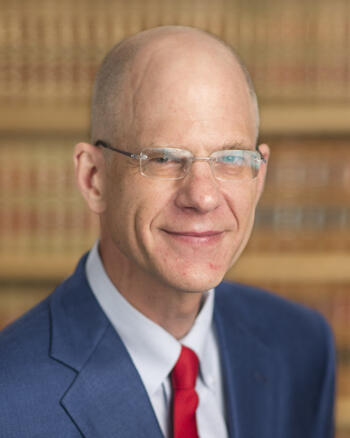
[[{"fid":"221894","view_mode":"crop_870xauto","fields":{"format":"crop_870xauto","field_file_image_description[und][0][value]":"Herbert Abrams","field_file_image_alt_text[und][0][value]":"Herbert Abrams","field_file_image_title_text[und][0][value]":"Herbert Abrams","field_credit[und][0][value]":"","field_caption[und][0][value]":"Herbert Abrams","field_related_image_aspect[und][0][value]":"","thumbnails":"crop_870xauto"},"type":"media","attributes":{"alt":"Herbert Abrams","title":"Herbert Abrams","width":"870","style":"width: 400px; height: 500px; float: right; margin-left: 15px","class":"media-element file-crop-870xauto"}}]]Renowned radiologist Herbert Leroy Abrams, who co-founded the Nobel Prize-winning organization International Physicians for the Prevention of Nuclear War, died Jan. 20 at his Palo Alto home. He was 95.
Abrams was a professor emeritus of radiology at Stanford University, a senior fellow at Stanford's Freeman Spogli Institute for International Studies, and an affiliated faculty member at the Center for International Security and Cooperation (CISAC).
Abrams' illustrious, multi-faceted career embraced what he called the "four dimensions of bio-medicine" – patient care, research, teaching and advocacy.
"For as long as I have known him, I could only describe Herb Abrams as a class act," said Sanjiv "Sam" Gambhir, professor and chair of radiology at Stanford. "It is upon the shoulders of giants such as Herb that we ourselves stand today at the cutting edge of radiology."
Former U.S. Secretary of Defense and CISAC colleague William J. Perry praised Abrams for his "wisdom and carefully chosen words" in his advocacy for better control of nuclear weapons.
"The forces maintaining nuclear weapons and creating the danger that we might use them are very powerful and very hard to stop, and Herb and the International Physicians for the Prevention of Nuclear War were an early voice of sanity in this field, " Perry said.
Visionary pioneer in radiology
Born in 1920 in New York to immigrant parents, Abrams declined to go into the family hardware business. He graduated from Cornell University in 1941 and earned his medical degree from Long Island College of Medicine in 1946.
According to his family, Abrams had planned to become a psychiatrist until he was captivated by radiological imaging, which provided the road map for virtually all surgical and many medical therapies.
Abrams, his wife, Marilyn, and daughter, Nancy, moved to the West Coast in 1948. Their son, John, was born a year later. Abrams completed his residency in radiology at Stanford in 1952 and joined the faculty as an assistant professor in the department in 1954.
While Abrams rose to become director of diagnostic radiology at Stanford, he and Marilyn raised their children in the Bay Area during what his children say he often called "The Golden Years" – rich with deep friendships, youthful exuberance, guitar-playing, family adventures, and professional success.
Abrams was an internationally known authority on cardiovascular radiology and wrote more than 190 articles and seven books on cardiovascular disease and health policy.
For many years he served as editor-in-chief of Postgraduate Radiology, and he was founding editor-in-chief of the journal Cardiovascular and Interventional Radiology.
In 1961 he published Angiography, the first comprehensive volume on the subject, which now is in its fourth edition (edited by Stanley Baum) under the title Abrams' Angiography: Vascular and Interventional Radiology.
"Under his guidance, Stanford pioneered in the fields of coronary artery imaging and the diagnosis of adult and congenital heart diseases, as well as vascular diseases, such as renal artery narrowing as a cause of hypertension," said Lewis Wexler, professor emeritus of radiology at Stanford, who was a resident under Abrams.
"For many years, I referred to him as 'Dr. Abrams,' even though he requested a less formal address," Wexler added. "I think I waited until I was a full professor before I called him 'Herb.' His wife and a number of his old friends from San Francisco called him 'Hoppy,' an endearment that aptly describes his energy, excitement and ability to jump effortlessly from discussing radiology [to discussing] health policy, politics, religion, art and music."
The Boston years
In 1967, with their children pursuing their own paths, Abrams and his wife moved to Boston, where he became the Philip H. Cook Professor of Radiology at Harvard Medical School and radiologist-in-chief at Brigham and Women's Hospital and at the Dana Farber Cancer Center. The intellectual environment of Boston invigorated him and he devoted himself to building a great radiology department, a new research institute, and an outstanding teaching center. During their time in Boston he and Marilyn also began a long love affair with Martha's Vineyard, where they built a house in 1975.
Steven Seltzer, chair of the Department of Radiology at Brigham and Women's Hospital, who holds the Philip Cook professorship at Harvard Medical School, which Abrams previously held, remembers his longtime mentor as a visionary who helped broaden the scope of radiology as a discipline.
When Seltzer arrived at Brigham and Women's in 1976 to do his radiology residency in what was then a very small department, he recalled being "incredibly impressed with the professional growth opportunities and the values and quality of the program that Abrams was building." He added that radiology was "still growing up" at that time and that Abrams had a vision that began during his years at Stanford and developed during his years in Boston.
"He was a very determined man. I fully bought into that vision. I thought this is a good person to have as a mentor and a role model, because I also aspired to live in a world that had similar characteristics that Herb had dreamed of," Seltzer said.
As a mentor and teacher, Seltzer remembered, Abrams pursued and demanded excellence and sometimes exhibited impatience. During the time that Seltzer held the post of chief resident in radiology at Brigham and Women's, the hospital scored one of the first CT scanners in the city. The device operated 18 hours a day, seven days a week, and was staffed by residents after hours and on weekends. This was in addition to the residents' regular on-call duties. When the residents balked, Seltzer approached his boss and questioned the fairness of the arrangement and suggested that the residents be compensated with a stipend. "He just looked at me and said, 'Steve, you're doing this. This is your responsibility, and you need to get the residents comfortable with it.'"
During their 40-year relationship, Seltzer got to know another side of Abrams, whose approach to being a grandfather and great-grandfather was far different from the "tough love" he doled out to his students.
Anti-nuclear advocacy
Toward the end of the Boston years, in the early eighties, Abrams developed a keen interest in the effects of ionizing radiation and nuclear weapons and the problems of accidental or inadvertent nuclear war, which led to the next phase of his career as an anti-nuclear activist.
"He leveraged his training in radiology to become one of the leading experts on the health effects of low-dose radiation," said David Relman, professor of medicine at Stanford and current co-director of CISAC.
"It's a problem that doesn't get as much attention as the catastrophic effects of a nuclear blast, but the long-term consequences of low-dose radiation was something that Herb … helped promote as a serious issue, worthy of attention and study," Relman added.
Abrams discussed the threats posed by radiation in a story published in the Spring 1986 issue of Stanford Medicine magazine. He said that, for physicians, nuclear weapons and nuclear war were "the central health issue of the 20th century."
"We need to educate not only our colleagues and our students, but our constituents – the patients – and ultimately policymakers about the consequences of nuclear war," Abrams said in the article. "Medical students are seldom taught about the effects of radiation. It's important because there have been radiation disasters unrelated to nuclear weapons, and there will be more in the future."
He was founding vice president of International Physicians for the Prevention of Nuclear War (IPPNW), which won the Nobel Peace Prize in 1985, just five years after the organization was established. He also served for many years on the national board of directors and as national co-chair of Physicians for Social Responsibility (PSR), a U.S. affiliate of IPPNW.
"His contributions were huge," said Scott Sagan, Caroline S.G. Munro professor of political science at Stanford. Sagan added that under Abrams' leadership the IPPNW "did yeoman's work to try to educate the public and world leaders about the consequences of nuclear war at a time when many, including some in the Reagan administration, were minimizing the consequences of nuclear weapons use."
Abrams returned to Stanford in 1985 as a professor of radiology, but spent most of his time in research at CISAC, working to link various disciplines and philosophies in the political, international and academic arenas to create a better understanding of international security during the nuclear age.
Presidential disability
In the 1990s Abrams began to focus on presidential disability and its potential impact on decision-making.
In 1992 he published The President Has Been Shot: Disability, Confusion and the 25th Amendment, which brought together important issues at the intersection of medicine, politics and humanism.
"[H]is contributions to our intellectual life and to our knowledge of the presidency and so much more were significant and lasting," said CISAC co-founder John Lewis, who invited Abrams to join CISAC after he returned to Stanford.
Near the end of his long life, Abrams wrote about the effects of aging, not only on leaders but also on himself.
Sagan said Abrams "continued to make both scholarly and policy contributions" even toward the end of his long career.
"Herb lectured every year at Stanford on how the physical and psychological health of leaders influenced their decision-making about war and peace," Sagan said.
CISAC co-director Amy Zegart said Abrams "was vibrant to the end," attending seminars and "asking hard-hitting questions."
"He had an incredible mind and an incredible heart, and I think everybody saw both of those things in him, which is why he was such a bedrock of our community for such a long time," Zegart said.
A vibrant family life
Always at the core of Abrams' life was bringing together his family to travel, to ski, to play tennis, and to celebrate birthdays and holidays.
On his 95th birthday Abrams played four-generation tennis with his son, grandson, and great-grandson on Martha's Vineyard, where his family spent summers for 45 years. Until the last month of his life, he played doubles three times a week.
In addition to Marilyn, to whom he was married for 73 years, daughter Nancy (Richard Eilbert), of Lincoln, Mass. and son John (Christine) of West Tisbury, Mass. ,Abrams is survived by three grandchildren (Pinto and Sophie Abrams, and Natasha Eilbert) and three great-grandchildren (Kalib, Silas, and Axel Abrams).
Memorial donations in memory of Abrams may be made to Physicians for Social Responsibility 1111 14th St. NW, Suite 700, Washington, DC, 20005, or by visiting that organization's website at www.PSR.org.
A service to celebrate his life will be held on the Stanford campus on March 19; details will be announced.