0
Adjunct Lecturer, Ford Dorsey Master's in International Policy
Adjunct Lecturer, Department of Computer Science
Former Research Affiliate
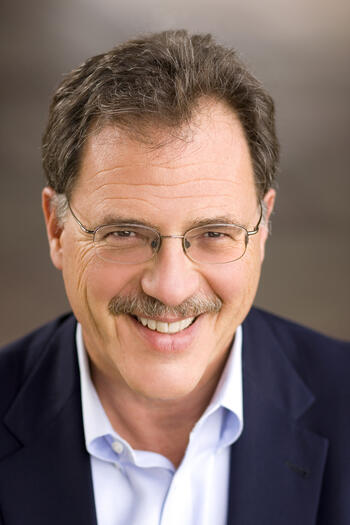
jerry_kaplan_headshot_7.jpeg

Jerry Kaplan is widely known as an Artificial Intelligence expert, serial entrepreneur, technical innovator, educator, bestselling author, and futurist. He invented several ground-breaking technologies including handheld tablet computers, online auctions, and electronic keyboard musical instruments.

A renowned Silicon Valley veteran, Jerry Kaplan founded several storied technology companies over his 35-year career, two of which became public companies. Kaplan may be best known for his key role in defining the tablet computer industry as the founding CEO of GO Corporation in 1987. Prior to GO, Kaplan co-founded Teknowledge, Inc., one of the first Artificial Intelligence companies to commercialize Expert Systems, which went public in 1986. In 1994, Kaplan co-founded Onsale, Inc., the world's first Internet auction website, which went public in 1997. In 2004, he pioneered the emerging market for social games by starting Winster.com, where he served as CEO for eight years.

Jerry Kaplan is an Adjunct Lecturer in Computer Science and the Ford Dorsey Master's in International Policy program at the Freeman Spogli Institute for International Studies at Stanford University. His research and teaching focusses on the social and economic Impact of Artificial Intelligence. He is an inventor on more than a dozen patents, and has published over twenty refereed papers in academic journals and conference proceedings. Kaplan holds a PhD in Computer and Information Science from the University of Pennsylvania, and a BA in History and Philosophy of Science from the University of Chicago.

Kaplan is the author of four books, including the best-selling classic "Startup: A Silicon Valley Adventure" (Houghton-Mifflin).  Selected by Business Week as one of the top ten business books of 1995, Startup was optioned to Sony Pictures.  "Humans Need Not Apply: A Guide to Wealth and Work in the Age of Artificial Intelligence” (Yale University Press) was honored by The Economist as one of the top ten science and technology books of 2015. His books "Artificial Intelligence: What Everyone Needs to Know" (Oxford University Press, 2016) and “Generative Artificial Intelligence: What Everyone Needs to Know” (Oxford University Press, 2024) were both Amazon new release #1 best sellers in Artificial Intelligence.

He is a frequent public speaker and commentary contributor to major newspapers and magazines. His opinion pieces have been published in the New York Times, Wall Street Journal, and Washington Post, among other publications. He has been profiled in The New York Times, The Wall Street Journal, Forbes, Business Week, Red Herring, and Upside. He received the 1998 Ernst & Young Emerging Entrepreneur of the Year Award, Northern California; served on the Governor's Electronic Commerce Advisory Council Member under Pete Wilson, Governor of California (1999); and received an Honorary Doctorate of Business Administration from California International Business University, San Diego, California (2004). 

Date Label
News Type
News
Date
Paragraphs
 
CDDRL is pleased to announce that Jerry Kaplan, who teaches social and economic impact of artificial intelligence in the Stanford computer science department, has been appointed to the position of adjunct professor at CDDRL. He will be working with Francis Fukuyama and Larry Diamond on issues related to the Internet, social media and democracy.
 

Image
jerry kaplan headshot 7

Kaplan is widely known as an artificial intelligence expert, serial entrepreneur, technical innovator and bestselling author. He is currently a fellow at the Center for Legal Informatics at Stanford University and a visiting lecturer in the computer science department, where he teaches social and economic impact of artificial intelligence.
 
Kaplan founded several technology companies over his 35-year career, two of which became public companies. He is the author of the best-selling classic “Startup: A Silicon Valley Adventure” (Houghton-Mifflin, 1995); “Humans Need Not Apply: A Guide to Wealth and Work in the Age of Artificial Intelligence” (Yale University Press, 2015); and “Artificial Intelligence: What Everyone Needs to Know (Oxford Press, 2016). Kaplan has been profiled in The New York Times, The Wall Street Journal, Forbes, and Business Week. He holds a BA in the history and philosophy of science from the University of Chicago and a PhD in computer science from the University of Pennsylvania.
 
Read his full bio here.
Hero Image
jerry kaplan headshot 7
All News button
1
Paragraphs

One of the greatest challenges in monitoring food security is to provide reliable crop yield information that is temporally consistent and spatially scalable. An ideal yield dataset would not only extend globally and across multiple years, but would also have enough spatial granularity to characterize productivity at the field and subfield level. Rapid increases in satellite data acquisition and platforms such as Google Earth Engine that can efficiently access and process vast archives of new and historical data offer an opportunity to map yields globally, but require efficient and robust algorithms to combine various data streams into yield estimates. We recently introduced a Scalable satellite-based Crop Yield Mapper (SCYM) that combines crop models simulations with imagery and weather data to generate 30 m resolution yield estimates without the need for ground calibration. In this study, we tested new large-scale implementations of SCYM, focusing on three regions with varying crops, field sizes and landscape heterogeneity: maize in the U.S. corn belt (390,000 km2), maize in Southern Zambia (86,000 km2), and wheat in northern India (450,000 km2). As a benchmark, we also tested a simpler empirical approach (PEAKVI) that relates yield to the peak value of a time series of spatially aggregated vegetation indices, similar to methods used in current operational monitoring. Both SCYM and PEAKVI were applied to data from all Landsat's sensors and MODIS for more than a decade in each region, and evaluated against ground-based estimates at the finest available administrative level (e.g., counties in the U.S.). We found consistently high correlations (R2 ≥ 0.5) between the spatial pattern of ground- and satellite-based estimates in both U.S. maize and India wheat, with small differences between methods and source of satellite data. In the U.S., SCYM outperformed PEAKVI in tracking temporal yield variations, likely owing to its explicit consideration of weather. In India, both methods failed to track temporal yield changes, with various possible explanations discussed. In Zambia, the PEAKVI approach applied to MODIS tracked yield variations much better (R2 > 0.5) than any other yield estimate, likely because the frequent cloud cover in this region confounds the other approaches. Overall, this study demonstrates successful approaches to yield estimation in each region, and illustrates the importance of distinguishing between accuracy for spatial and temporal variation. The 30 m resolution of Landsat-based SCYM does not appear to offer large benefits for tracking aggregate yields, but enables finer scale analyses than possible with the other approaches.


All Publications button
1
Publication Type
Journal Articles
Publication Date
Journal Publisher
Remote Sensing of Environment
Authors
George Azzari
David Lobell

Encina Hall
616 Jane Stanford Way
Stanford, CA 94305-6055

(650) 721-5345 (650) 724-2996
0
eileen_head_shot_2024.jpeg

Eileen Donahoe is the co-founder and an affiliated scholar at the Global Digital Policy Incubator (GDPI) at Stanford University's Center on Democracy, Development and the Rule of Law. (Previously, she served as GDPI’s executive director.) GDPI is a global multi-stakeholder collaboration hub for the development of policies that reinforce human rights and democratic values in a digitized society. Current research priorities include: international trends in AI governance, technical methods for aligning AI with democratic norms and standards, evolution of digital authoritarian policies and practices, and emerging blockchain and AI-enabled tools to support democracy.

Eileen served in the Biden administration as US Special Envoy for Digital Freedom at the Department of State. She also served in the Obama administration as the first US Ambassador to the UN Human Rights Council in Geneva during a period of significant institutional reform and innovation. After the Obama administration, she joined Human Rights Watch as Director of Global Affairs, where she represented the organization worldwide on human rights foreign policy, with special emphasis on digital rights, cybersecurity, and internet governance. Earlier in her career, she was a technology litigator at Fenwick & West in Silicon Valley.

Eileen serves as Vice Chair of the National Endowment for Democracy Board of Directors; on the Carnegie Endowment for International Peace Board of Directors; and on the Dartmouth College Board of Trustees. She is a member of the Global Network Initiative (GNI), the World Economic Forum AI Governance Alliance, and the Resilient Governance and Regulation working group. Previously, she served on the Transatlantic Commission on Election Integrity, the University of Essex Advisory Board on Human Rights, Big Data and Technology, the NDI Designing for Democracy Advisory Board, and the Freedom Online Coalition Advisory Network. Degrees: BA, Dartmouth; J.D., Stanford Law School; MA East Asian Studies, Stanford; M.T.S., Harvard; and Ph.D., Ethics & Social Theory, GTU Cooperative Program with UC Berkeley. She is a member of the Council on Foreign Relations.

CDDRL Affiliated Scholar
Date Label
Paragraphs

In the month of April, I found myself saying “I agree with Trump” more than anytime ever. On China, Russia, NATO and Syria, President Trump signaled radical changes in policy, nearly the complete opposite of what he said as a candidate. All were changes for the good — that is, new policy positions that advance American security, prosperity and values. The lingering question is whether these recent statements signal a fundamental change in Trump’s thinking about foreign policy or rather short-term reversals that could be reversed again. Is he learning or ad-libbing? It’s too early to tell.

All Publications button
1
Publication Type
Commentary
Publication Date
Journal Publisher
The Washington Post
Authors
Michael A. McFaul
Paragraphs

After the vote results came in last November, many Russians close to the Kremlin celebrated. “Our Trump” — or #TrumpNash, as they tweeted — had been elected president of the United States... Of course, many factors combined to produce Trump’s victory, but Putin’s intervention most certainly played a contributing role.

All Publications button
1
Publication Type
Commentary
Publication Date
Journal Publisher
The Washington Post
Authors
Michael A. McFaul
News Type
News
Date
Paragraphs

This talk was given during the Stanford's "Disruption: Challenges of a New Era" conference organized by Fundacion RAP,  in March 2017. Beatriz Magaloni, a Senior Fellow at the Freeman Spogli Institute for International Studies, presents results of her work on social order and violence in Latin America, with a focus on her research in Brazil and Mexico.


Production: Roger Winkelman, Freeman Spogli Institute for International Studies, Stanford. 


Hero Image
magaloni
All News button
1
Paragraphs

The Allied occupation of Japan is remembered as the "good occupation." An American-led coalition successfully turned a militaristic enemy into a stable and democratic ally. Of course, the story was more complicated, but the occupation did forge one of the most enduring relationships in the postwar world. Recent events, from the occupations of Iraq and Afghanistan to protests over American bases in Japan to increasingly aggressive territorial disputes between Asian nations over islands in the Pacific, have brought attention back to the subject of the occupation of Japan.

In Architects of Occupation, Dayna L. Barnes exposes the wartime origins of occupation policy and broader plans for postwar Japan. She considers the role of presidents, bureaucrats, think tanks, the media, and Congress in policymaking. Members of these elite groups came together in an informal policy network that shaped planning. Rather than relying solely on government reports and records to understand policymaking, Barnes also uses letters, memoirs, diaries, and manuscripts written by policymakers to trace the rise and spread of ideas across the policy network. The book contributes a new facet to the substantial literature on the occupation, serves as a case study in foreign policy analysis, and tells a surprising new story about World War II.

All Publications button
1
Publication Type
Books
Publication Date
Journal Publisher
Cornell University Press
Authors
Subscribe to North America