-

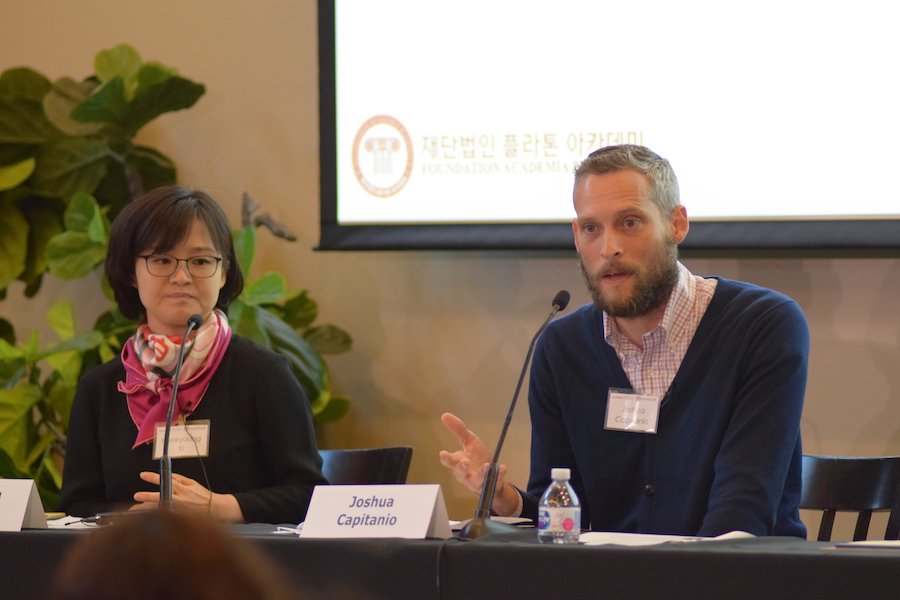
The 11th Annual Koret Workshop

A dramatic opening created by the unique strategic outlooks and personalities of Moon Jae-in, Kim Jong Un and Donald Trump instigated a series of highly symbolic summits in the early months of 2018. The process kicked off by those summits has bogged down, however, as the necessary compromises for an agreement between the United States and North Korea have proved elusive. This year's Koret Workshop will therefore invite experts from a variety of areas in order to reflect on what the stumbling blocks have been as well as prospects for overcoming them. Conference participants will work towards better understanding and supporting potential emerging solutions to the persistent conflict on the Korean Peninsula.

The workshop will consist of three sessions:

Session I: Assessments of Summit Diplomacy

Session II: Challenges and Opportunities in Media Coverage

Session III: Prospects and Pitfalls in the Near-Term

NOTE: During the conference, a keynote address is open to the general public. Please click here to register for the public event on March 15.
 
The annual Koret Workshop is made possible through the generous support of the Koret Foundation.

Bechtel Conference Center
Encina Hall, 616 Serra Street
Stanford University

Conferences
Authors
News Type
News
Date
Paragraphs

Stanford e-Japan is a distance-learning course sponsored by the Stanford Program on International and Cross-Cultural Education (SPICE), Freeman Spogli Institute for International Studies (FSI) at Stanford University. The Spring 2018 session was supported by the Capital Group and the Stanford Silicon Valley-New Japan Project, Japan Program, Shorenstein Asia-Pacific Research Center, FSI. Offered for the first time in 2015, Stanford e-Japan presents a creative and innovative approach to teaching Japanese high school students about U.S. society and culture and U.S.–Japan relations, and most importantly, the course introduces both U.S. and Japanese perspectives on many historical and contemporary issues. The Spring 2018 cohort was the sixth group of students to complete Stanford e-Japan.


In August 2019, three of the top students of the Spring 2018 Stanford e-Japan session will be honored at an event at Stanford University. The three Stanford e-Japan Day honorees—Naoya Chonan (Waseda University Senior High School), Miki Fujito (Senri International School of Kwansei Gakuin), and Luana Ichinose (Shibuya Senior High School)—will be recognized for their coursework and exceptional research essays that focused respectively on “Two Possible Ways to Adopt a Flipped Learning Method into Japanese High School Classrooms,” “Differing Views on the A-bomb in Japan and the U.S.,” and “A Comparative Analysis of the Right to Resist in Japan and the U.S.”

Anna Oura (Tokyo Gakugei University International Secondary School) received Honorable Mention for her research paper on “A Comparative Study on Japanese and U.S. History Textbooks.”

Applications for the Spring 2019 session of Stanford e-Japan will be accepted online from January 10 to February 24, 2019.

To stay informed of news about Stanford e-Japan and SPICE’s other programs, join our email list and follow us on Facebook and Twitter.


Related articles:


Hero Image
Research papers of students in the Spring 2018 cohort of Stanford e-Japan
Compilation of the final research papers of students in the Spring 2018 cohort of Stanford e-Japan
All News button
1
Authors
News Type
News
Date
Paragraphs

To prescribe or not prescribe? In the realm of the nation’s opioid epidemic, it’s an important question.

Research has shown that inappropriate use of prescription opioids is part of the reason behind a dramatic rise in opioid-related deaths since 2000. By 2015, the amount of opioids prescribed in the U.S. had tripled — enough for every American to be medicated around the clock for three weeks, at 5 milligrams of hydrocodone every four hours. 

Now, new research by a trio of Stanford scholars shows how different insurance strategies affect the volume of opioid use and could help stem inappropriate prescribing behaviors. 

The study, released in a working paper by the National Bureau of Economic Research, was co-authored by Stanford Health Policy’s Laurence C. BakerM. Kate Bundorf, and Daniel P. Kessler. Baker and Bundorf are professors in the Department of Health Research and Policy at the Medical School; Kessler is a professor in the Law School and Graduate School of Business, and a senior fellow at the Hoover Institution.  All are also senior fellows at the Stanford Institute for Economic Policy Research (SIEPR).

Their study — the first to investigate the effect of the form of Medicare drug coverage on opioid use — found that enrollment in Medicare Advantage, a combined medical and drug insurance plan, significantly reduces the likelihood of beneficiaries filling an opioid prescription, as compared to enrollment in a stand-alone drug plan.

Compared to beneficiaries enrolled in stand-alone plans, those enrolled in the integrated Medicare Advantage plan were 37 percent less likely to get an opioid prescription, according to their analysis of drug claims from 2014.

The researchers also found that enrollment in integrated insurance coverage under Medicare Advantage had a disproportionate effect on the likelihood of filling an opioid prescription from the nation’s highest opioid-prescribing doctors — the top 1 percent of prescribers in Medicare Part D. The lower likelihood of prescriptions from these high prescribers to Medicare Advantage enrollees accounted for more than half of the reduction, according to their findings.

To understand the scope of this health plan-related effect and what’s at stake, consider the backdrop laid out in the study:

Since its implementation in 2006, Medicare Part D has become the nation’s largest purchaser of prescription opioids. More than 42 million Americans are enrolled in Medicare Part D — either under the stand-alone drug plan or the integrated Medicare Advantage plan.

What’s more, opioid prescriptions are concentrated among a relatively small group of “high prescribers.” 

According to research published in the 2016 edition of JAMA Internal Medicine, more than one-third of opioid prescriptions under Medicare Part D were made by about 8,000 doctors, making up the top 1 percent of prescribers. And according to the Office of the Inspector General of the Department of Health and Human Services, “extreme use” and “questionable prescribing” have put almost 90,000 beneficiaries at serious risk for opioid misuse or overdose.

Because the researchers did not examine patient health outcomes, they could not definitively determine that enrollment in Medicare Advantage reduced only inappropriate opioid use. However, because the reduction in opioid use came disproportionately from high prescribers, and previous work has found that Medicare Advantage enrollees had higher prescription drug use overall, the reduction in use that the researchers found was targeted rather than a result of a broader effort to restrict access to treatment.  

The researchers’ results support the conclusions of previous work that integration of prescription drug coverage with the other benefits provided by Medicare Advantage plans

improves the quality of care. Further study will be needed to drill deeper into the reasons behind the impact of Medicare Advantage plans, and whether a similar effect occurs in non-elderly populations, the researchers said.

Hero Image
gettyimages opioid bottles Getty Images
All News button
1
News Type
Commentary
Date
Paragraphs

"The way that the economy has developed over the past generation is actually gone contrary to a lot of the existing economic models. The Simon Kuznetz phenomenon says it's not just globalization, it's economic growth. As the country is modernizing, as it's growing economically, it does lead to an increase in inequality. When you reach a  certain level of income, the inequality starts to decrease. That was the experience in Europe, in the 19th and 20th century, that was the case in the United States and so forth. That has not been the case of the countries that have been growing rapidly in recent years, where inequality has continued to increase," says CDDRL Mosbacher Director Francis Fukuyama. Watch here

Hero Image
screen shot 2018 12 20 at 2 26 56 pm
All News button
1
-

This is part 2 of a talk presenting how innovative large Japanese companies are harnessing Silicon Valley. It is a review of the fireside chats and panels presented at the Silicon Valley – New Japan Summit last November at Stanford, which was in Japanese. The talk adds some historical context, and introduces through many of the company cases from the summit, including Panasonic, Fuji Film, Itochu, Rakuten, Obayashi, Nomura Holdings, Sourcenext, Komatsu, SMBC, and Toyota Research Institute.

The current surge of large Japanese companies into Silicon Valley is focused on firms aiming to identify new opportunities to collaborate with the startup ecosystem in order to understand future technological and industry trajectories, to facilitate new forms of “open” innovation within the company, and in some cases to even redefine how to add value to their core offerings. However, given a vast differently economic context from their core operations in Japan, many of the large Japanese firms’ initial forays tend to fall into patterns of “worst practices” that are ineffective. Yet, a small but growing number of innovative Japanese companies are producing novel and valuable collaborations with a variety of Silicon Valley firms, investors, and ecosystem players. The talk will survey a range of strategic options available to Japanese companies, with implications for how to better adapt companies from Japan to Silicon Valley, and more broadly from different political economic systems.

SPEAKER:

Kenji Kushida, Research Scholar, Shorenstein APARC Japan Program and Stanford Silicon Valley-New Japan Project Leader

BIO:

Kenji E. Kushida is the Japan Program Research Scholar at the Shorenstein Asia-Pacific Research Center at Stanford University (APARC), Project Leader of the Stanford Silicon Valley – New Japan Project (Stanford SV-NJ), research affiliate of the Berkeley Roundtable on the International Economy (BRIE), International Research Fellow at the Canon Institute for Global Studies (CIGS), and Visiting Researcher at National Institute for Research Advancement (NIRA). He holds a PhD in political science from the University of California, Berkeley, an MA in East Asian studies and BAs in economics and East Asian studies, all from Stanford University.

Kushida’s research streams include 1) Information Technology innovation, 2) Silicon Valley’s economic ecosystem, 3) Japan’s political economic transformation since the 1990s, and 4) the Fukushima nuclear disaster. He has published several books and numerous articles in each of these streams, including “The Politics of Commoditization in Global ICT Industries,” “Japan’s Startups Ecosystem,” “Cloud Computing: From Scarcity to Abundance,” and others. His latest business book in Japanese is “The Algorithmic Revolution’s Disruption: a Silicon Valley Vantage on IoT, Fintech, Cloud, and AI” (Asahi Shimbun Shuppan 2016).

He has appeared in media including The New York Times, Washington Post, Nihon Keizai Shimbun, Nikkei Business, NHK, PBS NewsHour, and NPR.

He is also a trustee of the Japan ICU Foundation, a fellow of the US-Japan Leadership Program, an alumni of the Trilateral Commission David Rockefeller Fellows, and a member of the Mansfield Foundation Network for the Future.

AGENDA:

4:15pm: Doors open
4:30pm-5:30pm: Talk and Discussion
5:30pm-6:00pm: Networking

RSVP REQUIRED:

Register to attend at http://www.stanford-svnj.org/12819

For more information about the Silicon Valley-New Japan Project please visit: http://www.stanford-svnj.org/


0
Former Research Scholar, Japan Program
kenji_kushida_2.jpg MA, PhD
Kenji E. Kushida was a research scholar with the Japan Program at the Walter H. Shorenstein Asia-Pacific Research Center from 2014 through January 2022. Prior to that at APARC, he was a Takahashi Research Associate in Japanese Studies (2011-14) and a Shorenstein Postdoctoral Fellow (2010-11).
 
Kushida’s research and projects are focused on the following streams: 1) how politics and regulations shape the development and diffusion of Information Technology such as AI; 2) institutional underpinnings of the Silicon Valley ecosystem, 2) Japan's transforming political economy, 3) Japan's startup ecosystem, 4) the role of foreign multinational firms in Japan, 4) Japan's Fukushima nuclear disaster. He spearheaded the Silicon Valley - New Japan project that brought together large Japanese firms and the Silicon Valley ecosystem.

He has published several books and numerous articles in each of these streams, including “The Politics of Commoditization in Global ICT Industries,” “Japan’s Startup Ecosystem,” "How Politics and Market Dynamics Trapped Innovations in Japan’s Domestic 'Galapagos' Telecommunications Sector," “Cloud Computing: From Scarcity to Abundance,” and others. His latest business book in Japanese is “The Algorithmic Revolution’s Disruption: a Silicon Valley Vantage on IoT, Fintech, Cloud, and AI” (Asahi Shimbun Shuppan 2016).

Kushida has appeared in media including The New York Times, Washington Post, Nihon Keizai Shimbun, Nikkei Business, Diamond Harvard Business Review, NHK, PBS NewsHour, and NPR. He is also a trustee of the Japan ICU Foundation, alumni of the Trilateral Commission David Rockefeller Fellows, and a member of the Mansfield Foundation Network for the Future. Kushida has written two general audience books in Japanese, entitled Biculturalism and the Japanese: Beyond English Linguistic Capabilities (Chuko Shinsho, 2006) and International Schools, an Introduction (Fusosha, 2008).

Kushida holds a PhD in political science from the University of California, Berkeley. He received his MA in East Asian Studies and BAs in economics and East Asian Studies with Honors, all from Stanford University.
Authors
Beth Duff-Brown
News Type
News
Date
Paragraphs

The national opioid epidemic has grown at such breakneck speed that public health experts have been left scrambling to keep up. Though they understand the reasons behind the abuse — the solutions are complicated and costly.

Yet there appears to be some success at reducing at least one area of opioid abuse.

In new research by Health Research and Policy’s Eric Sun, the risk for chronic opioid use among patients with musculoskeletal pain actually decreased slightly between 2008 and 2014. 

The Stanford Medicine assistant professor of anesthesiology and pain medicine found that measures such as avoiding opioid use soon after diagnosis can further reduce the risk of addiction, especially among patients at highest risk for chronic opioid use.

"We found that early opioid use after diagnosis is predictive of opioid use longer term, suggesting that it may be prudent to minimize opioid use where possible for patients with musculoskeletal pain,” said Sun, whose research was published earlier this week in the Annals of Internal Medicine.

His co-authors are Jasmin Moshfegh, who is working on her PhD in health policy, and Steven Z. George, director of musculoskeletal research at Duke University School of Medicine.

Patients with lower back or chronic neck, shoulder and knee pain are at the highest risk for opioid abuse since pain meds are typically prescribed to help ease their spasms. 

Patients who suffer musculoskeletal pain may unwittingly transition to chronic opioid use, which means filling 10 or more prescriptions or having a supply for at least 120 days. The prescription drugs include hydrocodone, hydromorphone, methadone, morphine, oxymorphone, and/or oxycodone. Those don’t include heroin and synthetic opioids such as fentanyl.

Sun and his fellow researchers at the Stanford University School of Medicine used a large health-care database to assess the risk and risk factors for chronic opioid use among more than 400,000 “opioid-naïve” patients — those who have never been prescribed painkillers before — recently diagnosed with pain in the knee, neck, lower back or shoulder. 

The sample was restricted to privately insured patients, thereby excluding other policy-relevant populations, such as those who were prescribed pain medications under Medicare or Medicaid.

They found that risk for chronic opioid use ranged from 0.3 percent for knee pain to 1.5 percent for multiple-site pan and decreased for some anatomical regions during the timeframe studied. They discovered a relative decline of 25 to 50 percent across all pain types from 2008 to 2014.

Opioid Abuse

Opioid abuse has its roots in the late 1990s when pharmaceutical companies assured the medical community that patients would not become addicted to pain relievers. Clinicians began prescribing them at greater rates because they worked so well and seemed safe.

Today, more than 130 people die every day from opioid-related drug overdoses from prescription pain relievers, heroin and synthetic opioids such as fentanyl, according to the U.S. Department of Health and Human Services, From 2002 to 2017, there was more than a fourfold increase in opioid deaths, with some 49,000 people dying in 2017.

The Centers for Disease Control and Prevention estimates that the total economic burden of prescription opioid misuse alone in the United States is $78.5 billion a year, including the costs of health care, lost productivity, addiction treatment and criminal justice involvement.

“While our research found that only about 1 percent of patients with musculoskeletal pain progress to chronic opioid use, this is potentially concerning because it’s an extremely common diagnosis,” Sun said. “By pointing out the scope of the issue and identifying factors that place patients at risk, we hope this research will guide further efforts aimed at reducing opioid use among patients with musculoskeletal pain.” 

Hero Image
gettyimages backpain Getty Images
All News button
1
News Type
Commentary
Date
Paragraphs
China’s increased capacity is not incompatible with U.S. interests, says APARC Fellow Thomas Fingar in a recent video interview, a production of the Shanghai Institute of American Studies and the Center for American Studies of Fudan University, together with Chinese digital media outlet The Paper.
 
The video is part of the project “40 People on 40 Years: An Interview Series Commemorating the 40th Anniversary of China-U.S. Diplomatic Normalization.” January 1, 2019 marks that 40th anniversary of the establishment of diplomatic relations between China and the United States.
 
The project features exclusive interviews with 40 renowned experts (20 from the United States, 20 from China) and aims to closely examine the diplomatic path leading the two countries to where they are today, while also exploring the potential to strengthen mutual understanding and enhance collaboration.
 
Watch an edited recording of Fingar’s interview below. A more complete written account is available online.


Hero Image
Tom Fingar appearing in documentary "40 on 40"
Shorenstein APARC Fellow Thomas Fingar appearing in "40 People on 40 Years: An Interview Series Commemorating the 40th Anniversary of China-US Diplomatic Normalization"
All News button
1
-

The Longitudinal Study of Handgun Ownership and Transfer (LongSHOT)
David Studdert, LLB, ScD, MPH
Professor of Medicine
Professor of Law
Stanford University

The prevalence of civilian-owned guns in the US is the highest in the world, and the incidence of firearm-related injury is among the world’s highest.  Evidence that the relationship between these two phenomena is causal has grown, but still has major gaps.  We recently completed assembly of a large cohort of California residents.  Our goal is to assess firearm ownership as a risk factor for firearm-related mortality in this population.  The seminar will outline the project and describe results of some preliminary analyses.


David M. Studdert is a leading expert in the fields of health law and empirical legal research. His scholarship explores how the legal system influences the health and well-being of populations. A prolific scholar, he has authored more than 150 articles and book chapters, and his work appears frequently in leading international medical, law, and health policy publications.

Professor Studdert joined Stanford Law School faculty on November 1, 2013, in a joint appointment as Professor of Medicine (PCOR/CHP) and Professor of Law.

Before joining the Stanford faculty, Professor Studdert was on the faculty at the University of Melbourne (2007-13) and the Harvard School of Public Health (2000-06). He has also worked as a policy analyst at the RAND Corporation, a policy advisor to the Minister for Health in Australia, and a practicing attorney.

Professor Studdert has received the Alice S. Hersh New Investigator Award from AcademyHealth, the leading organization for health services and health policy research in the United States. He was awarded a Federation Fellowship (2006) and a Laureate Fellowship (2011) by the Australian Research Council. He holds a law degree from University of Melbourne and a doctoral degree in health policy and public health from the Harvard School of Public Health.

Seminars
Paragraphs

On November 1-2, 2018, the two-day conference "Future Visions: Opportunities and Challenges of Korean Studies in North America" was convened by Shorenstein APARC's Korea Program to examine the current state of Korean studies and consider the current challenges and opportunities. This report summarizes the discussions of the six panels on history, literature, the social sciences, language education, library collections and services, and the Korean Wave.

All Publications button
1
Publication Date
Authors
Noa Ronkin
News Type
News
Date
Paragraphs

While Americans may be well acquainted with China’s quest for influence through the projection of power in the diplomatic, economic, and military spheres, they are less aware of the various ways in which Beijing has more recently been exerting cultural and informational influence. According to a new report, some of these ways challenge and even undermine our democratic processes, norms, and institutions.

With a growing realization that the ambition of Chinese influence operations requires far greater scrutiny than it has been getting, a group of American scholars and policy practitioners set out to document the extent of China’s influence-seeking activities in American society. The working group, co-chaired by Larry Diamond, senior fellow at the Freeman Spogli Institute for International Studies and at the Hoover Institution, and Orville Schell, Arthur Ross director of the Asia Society’s Center on U.S.-China Relations, just released its findings and recommendations in a report that has drawn much attention, “Chinese Influence and American Interests: Promoting Constructive Vigilance.” On December 4, Diamond and Schell discussed the report’s findings and implications at a special roundtable organized by Shorenstein APARC’s U.S.-Asia Security Initiative (USASI).

Diamond and Schell described the report’s detailing of a range of assertive and opaque “sharp power” activities that China has stepped up within the United States in multiple sectors, including Congress, state and local government, universities, think tanks, media, corporations, technology and research, and the Chinese American community. These activities, they argue, penetrate deeply the social and political fabric of our democratic society and exploit its openness. Unlike legitimate “soft power” efforts within the realm of normal public diplomacy, they constitute improper interference that demands greater awareness and a calibrated response.

“The report was born out of a recognition that things have changed,” said Schell. “Our engagement with China has either failed or is teetering on the brink of failure. The report aims to put the question of our interaction and exchange with China within the context of policy.”

Diamond noted that “The question at least has to be asked whether there is a threat to U.S. national interests.” He emphasized that the members of the working group that produced the report seek a productive relationship between China and the United States. The report therefore advocates for perspective and framework that are built on three principles regarding U.S.-China relations: transparency, institutional integrity, and reciprocity.

Diamond and Schell were joined at the panel by Hwang Ji-Jen, a Taiwanese scholar in the Institute for East Asian Studies at the University of California - Berkeley, who helped situate the forms and effects of Chinese “sharp power” in the United States in comparison to its practice in and toward Taiwan. Karl Eikenberry, director of USASI, chaired the discussion.

The event was co-sponsored by the US-Asia Security Initiative in the Asia-Pacific Research Center, and FSI’s Center on Democracy, Development, and the Rule of Law.

Audio from the event is available for download or streaming:


Hero Image
Larry Diamond, Orville Schell, and Karl Eikenberry speak to audience members during 12/4 panel on China's Sharp Power
(Left to right) Larry Diamond, Orville Schell, and Karl Eikenberry speak to audience members during 12/4 panel on China's Sharp Power
Noa Ronkin, APARC
All News button
1
Subscribe to North America