-

Many observers, and many investors, believe that young people are especially likely to produce the most successful new firms. Integrating administrative data on​ firms, workers, and owners, we study startups systematically in the U.S. and find​ that successfull entrepreneurs are middle-aged, not young. The mean age at​ founding for the 1-in-1,000 fastest growing new ventures is 45.0. The findings are​ similar when considering high-technology sectors, entrepreneurial hubs, and​ successful firm exits. Prior experience in the specific industry predicts much greater​ rates of entrepreneurial success. These findings strongly reject common hypotheses​ that emphasize youth as a key trait of successful entrepreneurs.

Speaker:

Image
dsc 0355 javier miranda

Javier Miranda, Principal Economist, Economy-Wide Statistics Division, US Census Bureau

Bio:

Javier Miranda is Principal Economist at the U.S. Census Bureau where he began his career in 1998. Javier received his Ph.D. in Economics from American University in 2004. Previous to joining the Census Javier was a research consultant at the World Bank and the Urban Institute. Javier has published papers in the areas of industrial organization, technological change, job creation, entrepreneurship and firm financing. Among his publications are articles in the American Economic Review, Journal of Economic Literature, American Economic Journal Macroeconomics, Review of Economic and Statistics, IMF Review, World Bank Economic Review, Journal of Business Valuation and Economic Loss, NBER Macroeconomics Annual, and multiple books and chapters.  Javier received the Director's Award for Innovation (2007) and the U.S. Department of Commerce Bronze Medal (2011). His contributions to data infrastructure are notable. Javier Miranda is responsible for the development of the Longitudinal Business Database and the Business Dynamics Statistics and is the Synthetic Longitudinal Business Database v3. Together with the USPTO Javier has led the development the Business Dynamics Statistics of Innovative Firms a longitudinal database of firms, patents, and inventors. Javier Miranda is also President of the Board of SEM an adult education and job readiness program designed to address the root causes of poverty, illiteracy, and violence in Washington DC.

Advisory on Novel Coronavirus (COVID-19)

In accordance with university guidelines, if you (or a spouse/housemate) have returned from travel to mainland China or South Korea in the last 14 days, we ask that you DO NOT come to campus until 14 days have passed since your return date and you remain symptom-free. For more information and updates, please refer to the Stanford Environmental Health & Safety website: https://ehs.stanford.edu/news/novel-coronavirus-covid-19.


Javier Miranda, Principal Economist, Economy-Wide Statistics Division, US Census Bureau
Seminars
-

Seminar Recording: https://youtu.be/Se8UcB6HFNo


About this Event: Based on his recent experience in Kyiv, Ambassador Taylor will evaluate current US policy toward Ukraine and make recommendations for future initiatives.  He will argue that now is the time to re-engage with Ukraine to strengthen US-Ukrainian relations and boost US security.  He will address the two main threats to the Zelenskyy administration — the Kremlin and corrupt oligarchs.


About the Speaker:

Ambassador William B. Taylor served as the Chargé d'Affaires at the US embassy in Kyiv from June 2019 to January 2020. Previously, he served as the executive vice president at the U.S. Institute of Peace and the special coordinator for Middle East Transitions in the U.S. State Department during the Arab Spring.  He served as the U.S. ambassador to Ukraine from 2006 to 2009.

He also served as the U.S. government’s representative to the Mideast Quartet, which facilitated the Israeli disengagement from Gaza and parts of the West Bank, led by Special Envoy James Wolfensohn in Jerusalem. Prior to this assignment, he served in Baghdad as Director, Iraq Reconstruction Management Office (2004-2005), in Kabul as coordinator of USG and international assistance to Afghanistan (2002-2003) and in Washington with the rank of ambassador as coordinator of USG assistance to the former Soviet Union and Eastern Europe (1992-2002).

Ambassador Taylor spent five years in Brussels as the Special Deputy Defense Advisor to the U.S. Ambassador to NATO, William Taft and earlier directed an in-house Defense Department think tank at Fort McNair in Washington, D.C.  He served for five years on the staff of Senator Bill Bradley and earlier directed the Department of Energy’s Office of Emergency Preparedness.

In the Army, he fought in Vietnam as a rifle platoon leader and combat company commander in the 101st Airborne Division and flew reconnaissance missions along the West German border with Czechoslovakia in the 2nd Armored Cavalry Regiment.

William B. Taylor Former Chargé d'Affaires at the US embassy in Kyiv
Seminars
News Type
Commentary
Date
Paragraphs

"Freedom is inseparable from human dignity," says LarryDiamond for Bertelsmann Foundation talks on "How to Fix Democracy." The crisis is “bad, deepening, accelerating,” but he suggests several steps we can take to reverse the trend, such as ranked-choice voting to tackle the two-party system, and spreading “motor voter” laws to increase the number of registered voters. Watch the video here

Hero Image
screen shot 2020 02 03 at 11 11 47 am
All News button
1
-

Seminar Recording: https://youtu.be/yIthWPC99bI


About this Event: Since the United States left the Iran nuclear deal in May 2018, the Trump administration has pursued a maximum economic pressure campaign toward Iran. The U.S. use of sanctions has gone far beyond what previous administrations have done to try to change Iran's policies, targeting large swathes of the Iranian economy, high-ranking Iranian government officials, and threatening other countries if they do not curtail their own private sector's activities with Iran. The economic consequences of these measures, particularly for Iran's domestic economy, Iran's ability to procure food and medicine from abroad, and for Iran's flagship energy industry, have been profoundly disruptive. The U.S. economic pressure strategy has also had direct impacts on the global shipping and energy industries. To better understand the impacts of the current U.S. strategy toward Iran, Elizabeth Rosenberg will discuss how the Trump administration has used unprecedented economic coercion, and how U.S. partners and adversaries have responded. She will focus on what role sanctions are likely to play going forward and whether they will be used now as a form of deescalation or escalation in U.S.-Iran tensions, which are particularly heightened following the U.S. killing of Qods Force commander Qasem Soleimani. 


About the Speaker: Elizabeth Rosenberg is a Senior Fellow and Director of the Energy, Economics, and Security Program at the Center for a New American Security. In this capacity, she publishes and speaks on the national security and foreign policy implications of the use of sanctions and economic statecraft as well as energy market shifts. Current geographic areas of focus include Iran, Russia, China, North Korea, and Venezuela. She has testified before Congress on an array of banking and trade issues, and on energy geopolitics and markets topics. She is widely quoted by leading media outlets in the United States and abroad.

From May 2009 through September 2013, Ms. Rosenberg served as a Senior Advisor at the U.S. Department of the Treasury, to the Assistant Secretary for Terrorist Financing and Financial Crimes, and then to the Under Secretary for Terrorism and Financial Intelligence. In these senior roles, she helped to develop and implement financial and energy sanctions. Key initiatives she helped to oversee include the tightening of global sanctions on Iran, the launching of new, comprehensive sanctions against Libya and Syria and modification of Burma sanctions in step with normalization of diplomatic relations. She also helped to formulate anti-money laundering and counter-terrorist and counter-proliferation financing policy and oversee financial regulatory enforcement activities.

Prior to her service in the U.S. government Ms. Rosenberg was an energy policy correspondent at Argus Media in Washington D.C., analyzing U.S and Middle Eastern energy policy, regulation and trading. She spoke and published extensively on OPEC, strategic reserves, energy sanctions and national security policy, oil and natural gas investment and production, and renewable fuels.

Ms. Rosenberg received an MA in Near Eastern Studies from New York University and a BA in Politics and Religion from Oberlin College.

Outside CNAS, Elizabeth Rosenberg is providing exclusive advice on foreign policy and national security as an informal advisor to the Elizabeth Warren campaign.

Elizabeth Rosenberg Senior Fellow and Director of the Energy, Economics, and Security Program Center for a New American Security
Seminars
-

Seminar Recording: https://youtu.be/qanfBvhmTQM


About this Event: In Do Morals Matter?, Joseph S. Nye, Jr., one of the world's leading scholars of international relations, provides a concise yet penetrating analysis of the role of ethics in US foreign policy during the post-1945 era.

Working through each presidency from Truman to Trump, Nye scores their foreign policy on three ethical dimensions: their intentions, the means they used, and the consequences of their decisions. Alongside this, he evaluates their leadership qualities, elaborating on which approaches work and which ones do not.

Since we so often apply moral reasoning to foreign policy, Nye suggests how to do it better. Crucially, presidents must factor in both the political context and the availability of resources when deciding how to implement an ethical policy--especially in a future international system that presents not only great power competition from China and Russia, but transnational threats as borders become porous to everything from drugs to infectious diseases to terrorism to cyber criminals and climate change.


About the Speaker: Joseph S. Nye, Jr. is University Distinguished Service Professor Emeritus and former Dean of Harvard’s Kennedy School of Government. He received his bachelor's degree summa cum laude from Princeton University, won a Rhodes Scholarship to Oxford, and earned a Ph.D. in political science from Harvard. He has served as Assistant Secretary of Defense for International Security Affairs, Chair of the National Intelligence Council, and a Deputy Under Secretary of State, and won distinguished service awards from all three agencies. His books include The Future of Power,  The Power Game: A Washington Novel, and (forthcoming) Do Morals Matter? He is a fellow of the American Academy of Arts and Sciences, the British Academy, and the American Academy of Diplomacy. In a recent survey of international relations scholars, he was ranked as the most influential scholar on American foreign policy, and in 2011, Foreign Policy named him one of the top 100 Global Thinkers. In 2014, Japan awarded him the Order of the Rising Sun.

Joseph S. Nye, Jr. University Distinguished Service Professor Emeritus Harvard’s Kennedy School
Seminars
-

Livestream: Registration is required and will close 24 hours before the event. Click here to register.

This event is available only to CISAC faculty, fellows, staff, and honors students.


About this Event: Jeopardizing U.S. research enterprises, provoking regional nationalism, and building a technological panopticon to rate every citizen's behavior: these assumptions about China fuel US foreign policy shadow-boxing with misplaced concerns. Our panel challenges prevalent narratives on China, providing informed, nuanced investigations that cut across a range of research methods. Julien de Troullioud's argues that the rise of China in science and technology is not a threat to the US but instead an opportunity to jointly work to solve global issues. Data shows that the current policies to protect the US research enterprise in science is hurting American and international scientific research. Xinru Ma finds that nationalism in China and in Southeast Asia are not necessarily all anti-foreign, and is more of a liability rather than an asset for domestic regimes, according to evidences from formal modeling and social media data. Shazeda Ahmed's interviews with Chinese government officials, tech firm representatives, and legal scholars reveal that the Chinese social credit system is more limited in its data collection and fragmented in its on-the-ground implementation than the dystopic institution its foreign critics presume it to be. Our research presents new data and fresh perspectives for rethinking US-China dynamics.


About the Speakers:

Shazeda Ahmed is a Ph.D. student at the University of California, Berkeley who researches how tech firms and the Chinese government are collaboratively constructing the country's social credit system. She will be joining CISAC and the Stanford Institute for Human-Centered Artificial Intelligence in Fall 2019 as a pre-doctoral Fellow. Shazeda has worked as a researcher for the Citizen Lab, the Mercator Institute for China Studies, and the Ranking Digital Rights corporate transparency review by New America. In the 2018-19 academic year she was a Fulbright fellow at Peking University's law school.


Xinru Ma is currently a Ph.D. candidate at Political Science and International Relations (POIR) program at University of Southern California, and will join CISAC as a Postdoctoral Fellow for 2019-2020. Originally from China, Xinru is interested in combining formal modeling and computational social science with research on nationalist protests and maritime disputes, with a regional focus on East and Southeast Asia. Her research is informed by extensive field research in Vietnam, Philippines and China, during which she interviewed protestors, think tanks, diplomats, government officials, and foreign business owners that were impacted by nationalist protests. In addition to informing her of the complicated strategic interaction between mass mobilization, government repression and foreign policy-making, the field research further motivated her to focus on the methodological challenges for causal inference that stem from strategic conflict behavior. More broadly, Xinru is interested in public opinion and new methods of measuring it, foreign policy formation, alliance politics, East Asian security dynamics, and the historical relations of East Asia. 


Julien de Troullioud de Lanversin will be joining CISAC as a Stanton Postdoctoral Fellow. Julien is finishing his Ph.D. at Princeton University’s Program on Science and Global Security. He is interested in how to verify and reconstruct past fissile material production programs with scientific tools. To that end, he developed innovative methods that use isotopic analysis from nuclear reactors to gain information on their past operation (nuclear archeology) and designed an open source software that can compute the istopic composition of fissile materials from nuclear reactors. His current research looks at the various modalities of the production of plutonium and tritium in production reactors and how transparency on tritium could be used to improve estimates on plutonium stockpiles. Julien also studies security questions related to civil and military nuclear programs in Northeast Asia through the lens of fissile material, with a focus on China and North Korea. Julien visited the Institute of Nuclear and New Energy Technologies at Tsinghua University for one semester in 2018 to collaborate with Chinese experts on work related to nuclear engineering and arms control. Julien’s work on nuclear archaeology has been published in the Journal of Science and Global Security. He received his Diplôme d’Ingénieur (M.Sc. And B.Sc.Eng.) from Ecole Centrale de Marseille in 2014. The same year he also obtained a M.Sc. in Nuclear Science and Engineering from the University of Tsinghua where he was a recipient of the Chinese Government Scholarship. Julien speaks and uses Chinese in his research and is a native French speaker.

Virtual Seminar

Shazeda Ahmed, Xinru Ma, Julien de Troullioud de Lanversin
Seminars
Authors
News Type
Commentary
Date
Paragraphs

Speaking on Monday about Donald Trump’s impeachment trial, Ukraine’s foreign minister said “please don’t drag us into your [America’s] internal political processes.”  Unfortunately, Republicans appear intent on doing precisely that, as they repeat the false Russian claim that the Ukrainian government interfered in the 2016 US election.

Republicans see this as part of their effort to defend President Trump. In doing so, they put at risk America’s long-standing support for its Ukrainian partner.

The US government and large bipartisan majorities in Congress have backed Ukraine since the early 1990s, when it regained independence following the Soviet Union’s collapse. By the end of the decade, Congressionally-approved assistance for Ukraine had reached USD 300-400 million per year.

When Ukrainians took to the streets in the 2004 Orange Revolution and the 2013-2014 Revolution of Dignity, their striving for democracy won interest and support from both sides of the aisle on Capitol Hill.

Such Congressional support offered Kyiv grounds for comfort when Trump became president in 2017. Candidate Trump had suggested he might recognize the illegal 2014 annexation of Crimea by Russia. He also questioned the sanctions imposed on Moscow for its seizure of Crimea and subsequent aggression in eastern Ukraine.

Despite Trump’s apparent skepticism about Ukraine and his reluctance to criticize Vladimir Putin (or Russian actions), Congress continued to back Ukraine. It regularly voted by wide margins to approve funding for reform and military assistance for Kyiv while pressing the administration to bolster sanctions on Russia.

Things took a turn last September with the revelation of Trump’s effort to extort Ukraine’s president into investigating his possible 2020 political opponent by withholding an Oval Office visit and military assistance. The president’s alleged abuse of power led to his impeachment by the House of Representatives in December.

I visited Kyiv in late October during the period between the private depositions of US officials about Trump’s actions and the public House hearings. While in Kyiv, I spoke with a number of Ukrainians including senior officials. Developments in Washington make them nervous about the depth and resilience of US support, especially as Kyiv sees the United States as the only geopolitical counterweight to its aggressive Russian neighbor.

I tried to assure my Ukrainian interlocutors that, whatever President Trump did, they had an ace in the hole: the bipartisan support their country enjoyed from both Democrats and Republicans in Congress. This was support that, if necessary, would produce veto-proof votes to aid Ukraine. Today, I am not so sure.

It has long been clear that Trump buys Moscow’s disinformation line that Ukraine, not Russia, interfered in the 2016 US election. It is true that individual Ukrainian officials criticized candidate Trump, just as officials from many European countries did. But it was Russian intelligence agencies, with Putin’s approval, that hacked the Democratic National Committee’s e-mails and gave them to Wikileaks. It is Russia’s Internet Research Agency that used social media to sow division among Americans.

However, in November and December as they sought to defend Trump against impeachment, Republicans began to make the Russian argument that Ukraine had interfered. There were many examples of this from Republicans who will sit in judgment as the Senate conducts the impeachment trial. Senator John Kennedy (R-LA) commented, “I think both Russia and Ukraine meddled in the 2016 election.” Meanwhile, Senator Richard Burr (R-NC) argued, “There’s no difference in the way Russians put their finger early on, on the scale and how Ukrainian officials did it,” and Senator Ted Cruz (R-TX) stated bluntly, “Ukraine blatantly interfered in our election.”

We can expect more such charges in the coming days. Republicans have put themselves on a slippery slope as regards support for Ukraine.


Will Republicans who assert that the Ukrainian government interfered in the US election vote in the future to approve assistance for Ukraine? And, if they can separate their espousal of the Kremlin’s talking point from their votes on assistance, how do they defend to constituents and others less sympathetic to Ukraine a vote to assist the country that they say interfered in the 2016 US election?

This is dangerous ground that could undermine US support for a country whose success is in America’s national interest.

Steven Pifer, a William Perry research fellow at Stanford’s Center for International Security and Cooperation, is a former US ambassador to Ukraine.


Read the Rest at The Atlantic Council

Hero Image
gettyimages 951695684
All News button
1
News Type
News
Date
Paragraphs

Stanford e-Japan is an online course that teaches Japanese high school students about U.S. society and culture and U.S.–Japan relations. The course introduces students to both U.S. and Japanese perspectives on many historical and contemporary issues. It is offered biannually by the Stanford Program on International and Cross-Cultural Education (SPICE). Stanford e-Japan is currently supported by the Yanai Tadashi Foundation. The Spring 2019 cohort was the eighth group of students to complete Stanford e-Japan.


In Summer 2020, three of the top students of the Spring 2019 Stanford e-Japan online course will be honored at an event at Stanford University. The three Stanford e-Japan Day honorees—Rinko Kawamoto (UWC ISAK Japan, Nagano), Renee Ohnuki (Senior High School at Sakado, University of Tsukuba, Saitama), and Kota Watanabe (Waseda University Senior High School, Tokyo)—will be recognized for their coursework and exceptional research essays that focused respectively on “Hollywood and U.S. Society: A Study Through the Ages,” “U.S.–Japan Drone Technology Collaboration and Its Application to Photocatalytic Technology to Resolve Air and Water Pollution,” and “A More Sufficient Language Learning Environment for Foreign Students in Japan: A Comparison with the American ESL Education System.”

Isshin Yunoki (Kaisei Academy, Tokyo) received an Honorable Mention for his research paper on “The Characteristics and Social Influence of Traditional Music in Japan and America.”

In the Spring 2019 session of Stanford e-Japan, students from the following schools successfully completed the course: Canadian Academy (Hyogo); Clark Memorial International High School (Osaka); Fudooka High School (Saitama); Hiroo Gakuen High School (Tokyo); Hiroshima Jogakuin Senior High School (Hiroshima); Hiroshima University High School (Hiroshima); Hokkaido Sapporo Minami High School (Hokkaido); Ichikawa Gakuen Senior High School (Chiba); Inagakuen Comprehensive High School (Saitama); Kaisei Academy (Tokyo); Kaishi Kokusai High School (Niigata); Kaiyo Academy (Aichi); Katayama Gakuen Senior High School (Toyama); Katoh Gakuen Gyoshu Senior High School (Shizuoka); Keio Shonan Fujisawa High School (Kanagawa); Komaba Toho Senior High School (Tokyo); Kwansei Gakuin Senior High School (Hyogo); Kyuyou High School (Okinawa); Senior High School at Otsuka, University of Tsukuba (Tokyo); Senior High School at Sakado, University of Tsukuba (Saitama); Shiba Junior and Senior High School (Tokyo); Tokyo Metropolitan Mita High School (Tokyo); Tokyo Minamitama Secondary Education School (Tokyo); UWC ISAK Japan (Nagano); and Waseda University High School (Tokyo).

For more information about the Stanford e-Japan Program, please visit stanfordejapan.org.

To stay informed of news about Stanford e-Japan and SPICE’s other programs, join our email list and follow us on Facebook, Twitter, and Instagram.


SPICE offers separate courses for U.S. high school students. For more information, please see the Reischauer Scholars Program (online course about Japan), Sejong Scholars Program (online course about Korea), and China Scholars Program (online course about China).


Related articles:


Hero Image
Renee Ohnuki giving her final presentation for Stanford e-Japan
Renee Ohnuki giving her final presentation for Stanford e-Japan. Ohnuki is one of the three student honorees for Spring 2019.
All News button
1
Paragraphs

In Live Long and Prosper?, a new eBook edited by David Bloom, AHPP director Karen Eggleston contributes the chapter "Understanding 'Value for Money' in Healthy Ageing," in which she advocates for and explains the concept of "net value of medical care," a metric that helps quantify the social value of spending on healthcare. Understanding value for money, Eggleston writes, is a way of "determining which services and technologies are unnecessary and which are of high value," a determination that is of increasing importance for aging societies, in which "spending for chronic diseases represents a large and increasing part of public and private budgets." 

All Publications button
1
Publication Type
Books
Publication Date
Authors
Lisa Lee
News Type
News
Date
Paragraphs

Jointly with partners throughout Asia, the Asia Health Policy Program (AHPP) at Shorenstein APARC has developed comparative research on health care use, medical spending, and clinical outcomes for patients with diabetes in the region and other parts of the world as a lens for understanding the economics of chronic disease management. Karen Eggleston, AHPP director and APARC deputy director, recently traveled to South Korea, where she led three project-related events.

On November 29, a workshop on Net Value Diabetes Management was held at Seoul National University (SNU) School of Medicine. This was the third such workshop convened through the project, following two previous ones held in Beijing at the Stanford Center at Peking University. Another workshop, on diabetes modeling, hosted by the Mt. Hood Diabetes Challenge Network, was held at Chung Ang University on December 1. Finally, on December 5, Eggleston held an information session, titled Comparative Economics Research on Diabetes, during the 2019 International Diabetes Federation (IDF) at BEXCO in Busan. These events were also made available through video conferencing to enable remote participation by collaborators who were unable to travel to Korea.

[Learn more about AHPP’s Net Value in Diabetes Management research project]

Diabetes Net Value Workshop

The workshop brought together team members from multiple health systems — including South Korea, Japan, Taiwan, Hong Kong, Thailand, India, the Netherlands, and the United States — to discuss comparative research on the economics of diabetes control. Eggleston shared the results of a study outlined in a working paper on the net value of diabetes management in Japan, the Netherlands, Taiwan, and Hong Kong. This research is part of a broader series of studies aimed to help address the policy challenge of finding the best strategies to improve health through cost effective prevention and healthcare productivity in chronic disease management.

The key to this research was to measure changes in quality or health outcomes over time by predicting mortality risk using blood pressure, blood sugar, and other factors amenable to patient and provider control and improvement (controlling for age and duration of diabetes diagnosis). The research seeks to understand how we can control cost and eliminate waste without cutting out the things that are valuable and improving people’s quality of life. Further studies probe determinants of relative net value of a pay-for-performance program in Taiwan, adherence to medications and vertical integration in Japan, and net value based on a randomized controlled trial in India.

Image
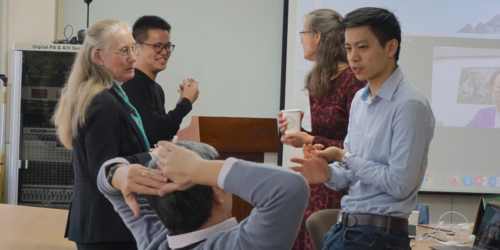
Two women and three men talking with each other in a conference room

Karen Eggleston (left) with workshop participants.

Young Kyung Do of SNU reported that according to his evaluation project for diabetes care, the quality of care and treatment in South Korea has improved and is similar to Hong Kong and Singapore. The goal of the program is to provide more comprehensive care to diabetes patients.

Talitha Feestra of the Netherlands net value team presented her proposal for joint research to develop new prediction models for specific populations as a core component of health economics decision models in Diabetes. Feestra will take the lead to develop the plan and time frame for the continuation of this research in 2020.

Several additional comparative studies were proposed and discussed. Participants who attended the workshop and contributed to discussion included Junfeng Wang from the Netherlands net value team; Jianchao Quan and Carmen Ng from Hong Kong University; Daejung Kim from the Korea Institute for Health and Social Affairs (KIHASA); Taehoon Lee, Eun Sil Yoon, and Hongsoo Kim from SNU; Piya Hanvoravongchai from Chulalongkorn University; and Gregory Ang from National University of Singapore. Remote participants included Vismanathan Baskar from Madras Diabetes Research Foundation; Wasin Laohavinij from Chulalongkorn University (visiting Stanford University autumn quarter); and Rachel Lu from Chang Gung University.

Mt. Hood Diabetes Challenge Workshop on Diabetes Modeling

Philip Clarke from the Health Economics Research Center, University of Oxford, presented the history of insulin as a cure for diabetes and discussed in detail methods for economic modeling of diabetes, including quality of life and diabetes cost, drawing from his rich experience developing the UK Prospective Diabetes Study outcomes model. The second presenter was Andrew Palmer of University of Tasmania, Australia. His presentation included many additional economic modeling pointers, especially regarding drawing in the literature for building models.

Image
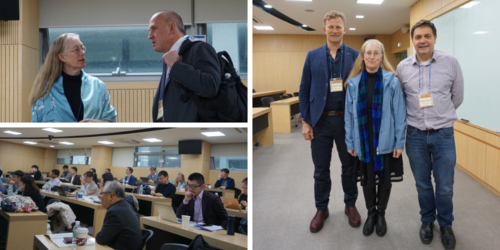
Collage of three photos showing people posing to the camera and seated in a lecture hall

Karen Eggleston with participants at the Mt. Hood Diabetes Challenge Workshop; (right hand side) from left to right: Andrew Palmer, Karen Eggleston, Philip Clarke.

We are grateful to Professors Clarke and Palmer for graciously allowing the AHPP network researchers to join the workshop both in person and remotely, adding to their chronic disease modeling skills, and for inviting Karen Eggleston to present a keynote at the Mt Hood conference that took place before the modeling workshop.

Information Session: Comparative Economics Research on Diabetes

The third and final component of the diabetes research events was held on December 5 as part of the International Diabetes Federation congress in Busan, Korea, and presented the network to clinicians and public health researchers. Participants from China, India, and Australia attended. They shared updates on their individual projects and discussed methods and ideas for future collaboration.

Hero Image
A group of people posing to the camera
All News button
1
Subscribe to North America