Images of children on the battlefield or posing for a ‘last will and testament’ poster before a suicide operation suggest the extent to which ISIS has weaponized children. The use of children in terrorist propaganda has become a regular feature of their strategic messaging and has accelerated over time. While tasking children with a variety of support functions – scouts, drummers, or couriers is not new, the ways in which terrorist organizations have deployed children has evolved. The exploitation of children represents a relatively new development, both tactically and strategically. Attacks in Afghanistan, Iraq, Pakistan, and Syria show that the median age of suicide bombers is decreasing. This presentation will provide evidence that terrorist groups have increased their use of children on the front lines despite assertions to the contrary and that important variation exists across groups based on location, country of origin, and the gender of the children with a particular emphasis on ISIS in Syria and Iraq.
Speaker's Biography:
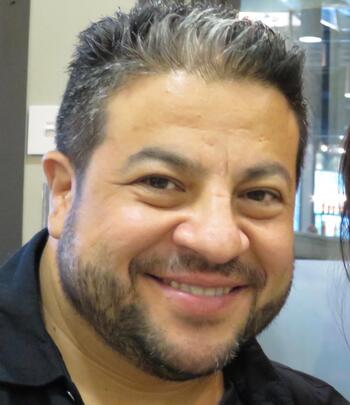
Image
Mia Bloom is Professor of Communication at Georgia State University. She conducts ethnographic field research in Europe, the Middle East and South Asia and speaks eight languages. She has authored books and articles on terrorism and violent extremism including Dying to Kill: The Allure of Suicide Terror (2005), Living Together After Ethnic Killing (2007) and Bombshell: Women and Terror (2011). Bloom is a former term member of the Council on Foreign Relations and has held appointments at Princeton, Cornell, Harvard and McGill Universities. Bloom’s newest book is Small Arms: Children and Terror (2019). Bloom has a PhD in political science from Columbia University, a Masters in Arab Studies from Georgetown University and a Bachelor’s degree from McGill in Russian, Islamic and Middle Eastern Studies.
Mia Bloom
Professor of Communication
Georgia State University
Abstract: Sound strategy requires alignment of ends, ways, and means. A significant gap in ends (the objectives to be achieved) and means (the resources to be applied towards that objective) result in risk and likely policy failure. Few policies over the last decade have had a wider gap between ends and means than Syria. Declared U.S. objectives – “Assad must go” – were not matched by the resources for achieving that objective nor considered thought as to how it might realistically be achieved. This situation has worsened in the Trump administration as the declared objectives have increased but the available resources and political commitment have decreased. McGurk will discuss Syria policy across both administrations based on his own experience leading the U.S. response to ISIS. He has traveled to Syria extensively and calls for an urgent realignment of ends and means to drawn down risk to the United States. The lessons to be drawn are then applied to other foreign policy challenges and offer a ready formula for assessing the declared objectives of U.S. policy. The talk will be based on McGurk’s recent article in the May/June issue of Foreign Affairs magazine.
Speaker's Biography: Brett McGurk is the Frank E. and Arthur W. Payne Distinguished Lecturer at the Freeman Spogli Institute and Center for Security and Cooperation at Stanford University.
McGurk’s research interests center on national security strategy, diplomacy, and decision-making in wartime. He is particularly interested in the lessons learned over the presidencies of George W. Bush, Barack Obama, and Donald Trump regarding the importance of process in informing presidential decisions and the alignment of ends and means in national security doctrine and strategy. At Stanford, he will be working on a book project incorporating these themes and teaching a graduate level seminar on presidential decision-making beginning in the fall of 2019. He is also a frequent commentator on national security events in leading publications and as an NBC News Senior Foreign Affairs Analyst.
Before coming to Stanford, McGurk served as Special Presidential Envoy for the Global Coalition to Defeat ISIS at the U.S. Department of State, helping to build and then lead the coalition of seventy-five countries and four international organizations in the global campaign against the ISIS terrorist network. McGurk was also responsible for coordinating all aspects of U.S. policy in the campaign against ISIS in Iraq, Syria, and globally.
McGurk previously served in senior positions in the George W. Bush and Barack Obama administrations, including as Special Assistant to President Bush and Senior Director for Iraq and Afghanistan, and then as Deputy Assistant Secretary of State for Iraq and Iran and Special Presidential Envoy for the U.S. campaign against the Islamic State under Obama.
McGurk has led some of the most sensitive diplomatic missions in the Middle East over the last decade. His most recent assignment established one of the largest coalitions in history to prosecute the counter-ISIS campaign. He was a frequent visitor to the battlefields in both Iraq and Syria to help integrate military and civilian components of the war plan. He also led talks with Russia over the Syria conflict under both the Trump and Obama administrations, initiated back-channel diplomacy to reopen ties between Iraq and Saudi Arabia, and facilitated the formation of the last two Iraqi governments following contested elections in 2014 and 2018.
In 2015 and 2016, McGurk led fourteen months of secret negotiations with Iran to secure the release of Washington Post reporter Jason Rezain, U.S. Marine Amir Hekmati, and Pastor Saad Abadini, as well as three other American citizens.
During his time at the State Department, McGurk received multiple awards, including the Distinguished Honor Award and the Distinguished Service Award, the highest department awards for exceptional service in Washington and overseas assignments.
McGurk is also a nonresident senior fellow in the Middle East Program at the Carnegie Endowment for International Peace.
McGurk received his JD from Columbia University and his BA from the University of Connecticut Honors Program. He served as a law clerk to Chief Justice William H. Rehnquist on the U.S. Supreme Court, Judge Denis Jacobs on the U.S. Court of Appeals for the 2d Circuit, and Judge Gerard E. Lynch on the U.S. District Court for the Southern District of New York.
Brett McGurk
Payne Distinguished Lecturer
Center for International Security and Cooperation
Scholars Corner is an ongoing SPICE initiative to share FSI’s cutting-edge social science research with high school and college classrooms nationwide and international schools abroad.
This Scholars Corner video features New York Times bestselling author Francis Fukuyama discussing the recent rise of identity politics, both in the United States and around the world. “In the 20th century we had a politics that was organized around an economic axis, primarily. You had a left that worried about inequality…and you had a right that was in favor of the greatest amount of freedom,” summarizes Fukuyama. “[N]ow we are seeing a shift in many countries away from this focus on economic issues to a polarization based on identity.”
According to Fukuyama, this shift in politics is reflected in such domestic social movements as Black Lives Matter and #MeToo, as well as in international movements like the Catalan independence movement, white nationalism, and even the Islamic State.
The rise of identity politics may have troubling implications for modern democracies. “In the United States, for example, the Republican party increasingly has become a party of white people, and the Democratic party has become increasingly a party of minorities and women. In general, I think the problem for a democracy is that you’ve got these specific identities…[but] you need something more than that. You need an integrative sense of national identity [that’s] open to the existing diversity of the society that allows people to believe that they’re part of the same political community,” says Fukuyama.
“That, I think, is the challenge for modern democracy at the present moment.”
To hear more of Dr. Fukuyama’s analysis, view the video here: “The Rise and Implications of Identity Politics.” For other Scholars Corner episodes, visit our Scholars Corner webpage. Past videos have covered topics such as cybersecurity, immigration and integration, and climate change.
"Identity" hardcover book by Francis Fukuyama
Francis Fukuyama is a Senior Fellow at FSI and the Mosbacher Director of the Center on Democracy, Development, and the Rule of Law. This video is based on his recent book Identity: The Demand for Dignity and the Politics of Resentment, which was recognized as The Times (UK) Best Books of 2018, Politics, and Financial Times Best Books of 2018.
Abstract: In efforts to halt the Syrian government’s use of chemical weapons (CW) in that country’s civil war the United States and other outside powers applied coercive strategies, in both a deterrent and compellent mode. Outcomes varied: compellence achieved a partial success in getting Syria to give up much of its chemical stockpile, but there were multiple deterrence failures. This paper examines this record to draw lessons about factors associated with the effectiveness of coercion. Its analysis points to the interplay of three factors: credibility, motivation, and assurance. Regarding credibility, the case demonstrates that threats fulfilling many of the traditional criteria for establishing credibility can still fail. In Syria, this is partly because there were ambiguities in the scope of what was covered by deterrent warnings and partly because other factors also affect coercive outcomes. In the Syria case two additional factors were especially important. First, the domestic political motivations of the target affect whether external threats provide coercive leverage. In this case Syrian President Assad’s concern with regime survival led him to perceive the value of CW use as outweighing the likely costs even if outside powers followed through on retaliatory threats. Second, where regime survival is a concern, it is vital to pair coercive threats with appropriate assurances. Here, the case suggests that it is possible not only to provide too little assurance, but also too much. Whereas the Obama administration found it hard to offer credible assurances to Assad, the Trump administration initially conveyed assurances that were too robust, creating a sense that Syria could use CW with impunity. This analysis suggests there may have been a potentially viable path to effective coercion of the Assad regime, but the path would have involved intense tradeoffs that largely prevented decision makers from embracing it. Decision makers and outside commentators alike turned instead to a familiar schema that implies credibility is established by demonstrating a willingness to impose costs using airpower – a script that can be labeled the “resolve plus bombs” formula. Despite the frequent tendency to equate coercion with the threat or limited use of air strikes, this approach was not sufficient to change Syria’s calculations regarding chemical arms.
Speaker's Biography: Jeff Knopf is a professor at the Middlebury Institute of International Studies (MIIS) in Monterey, California, where he serves as chair of the M.A. program in Nonproliferation and Terrorism Studies and a senior research associate with the Center for Nonproliferation Studies (CNS). He is on sabbatical for the 2018-19 academic year and is spending the year as a visiting scholar at CISAC. This is his second stint at CISAC. Dr. Knopf received his Ph.D. in Political Science from Stanford and was previously a pre-doctoral fellow at CISAC in the days when it was still located in the old Galvez House. His most recently completed project is a forthcoming book volume he co-edited on Behavioral Economics and Nuclear Weapons. While at CISAC, Dr. Knopf will primarily be working on a project titled “Coercing Syria on Chemical Weapons.” This project examines efforts by the United States and other countries to apply deterrent and compellent strategies in attempts to stop the Syrian government from using chemical weapons and to dismantle its chemical arsenal. Dr. Knopf will also be working on a paper that explores cognitive aspects of the nuclear taboo.
Jeffrey Knopf
Professor
Middlebury Institute of International Studies (MIIS)
Islamism has imitated, or colluded with, the state autocracies it claims to oppose. It has failed to suggest its own answers to economic problems, social justice, education or corruption, writes Hicham Alaoui in Le Monde diplomatique. Click here to read the full article, which is based on research that Alaoui presented at UC Berkeley and CDDRL on October 10 and 11, respectively.
Hero Image
Supporters of former Egyptian President Mohammed Morsi at a Muslim Brotherhood rally. December 12, 2012. | Yuli Weeks for VOA
How can we make sense of the tragedy in Syria? Northwestern University political scientist Wendy Pearlman has conducted open-ended interviews with more than 300 displaced Syrians across the Middle East and Europe from 2012 to 2017. She has brought together these personal stories in the acclaimed new book, We Crossed a Bridge and It Trembled: Voices from Syria (HarperCollins 2017). In a talk dated February 7, 2018, Pearlman shared a selection of voices from the book, along with her own commentary and analysis, to explain the origins and evolution of the Syrian conflict, as well as what it has been like for the ordinary people who have lived its unfolding. Co-hosted by the Program on Arab Reform and Democracy and the Abbasi Program in Islamic Studies, the talk offered a humanistic interpretation of the current conflict in Syria and how it has transformed those who have experienced it. The video of the talk is available through the link below.
My research examines political extremism, destigmatization, and radicalization, focusing on the role of popularity cues in online media. My related research examines a broad range of threats to democratic governance, including authoritarian encroachment, ethnic prejudice in public goods allocation, and misinformation.
My dissertation won APSA's Ernst B. Haas Award for the best dissertation on European Politics. I am currently working on my book project, Engineering Extremism, with generous funding from the William F. Milton Fund at Harvard.
My published work has appeared in the American Political Science Review, Governance, International Studies Quarterly, Public Administration Review, and the Virginia Journal of International Law, along with an edited volume in Democratization (Oxford University Press). My research has been featured in KQED/NPR, The Washington Post, and VICE News.
I received my Ph.D. in Political Science at the University of California, Berkeley in 2020. I was a Predoctoral Research Fellow at the Center on Democracy, Development and the Rule of Law at Stanford University and the Stanford Program on Democracy and the Internet. I hold a B.A. (Magna Cum Laude; Phi Beta Kappa) from Cornell University and an M.A. (with Distinction) from the University of California, Berkeley.
Max Fisher and Amanda Taub, in their New York Times column Interpreter from October 8, are exploring the idea that the United States of America are in a moral position to address the state of democracy in the world. CDDRL Mosbacher Director Francis Fukuyama said this began with America’s founding fathers, who “had this idea that the success of democracy in the world would depend on its success here.” Read the whole article here.
Hero Image
Syrian pro-government soldiers patrol the Uwaija neighborhood as they advance in Aleppo's rebel-held areas, on October 8, 2016. | GEORGE OURFALIAN/AFP/Getty Images
By now, those following the news on Syria have been saturated with analysis, data, information, and misinformation on developments there since 2011. Yet we observe an increasing gravitation to mutually exclusive narratives that adorn websites and publications on the situation in Syria: (a) the narrative of pure and consistent revolution versus that of (b) external conspiracy/designs on Syria. Both narratives carry grains of truth, but are encumbered by maximalist claims and fundamental blindspots that forfeit various potentials for enduring cease-fires and/or transitions, let alone mutual understanding. This talk will address these competing narratives in the context of international escalation marked by increasing US-Russian tension and continued multi-layered conflicts on the battlefield. It closes with addressing a framework for understanding and gauging potential prospects despite conflicting declarations by all parties involved.
The coordinated suicide bombings that killed more than 30 people and wounded 250 more at an international airport and downtown subway station in Brussels on Tuesday were “shocking but not surprising” and shared many of the hallmarks of previous European terror attacks, according to Stanford terrorism experts.
“My research shows that in general, terrorist plots in Europe involve larger numbers of conspirators than do plots in the United States,” said Martha Crenshaw, a senior fellow at Stanford’s Center for International Security and Cooperation (CISAC).
Belgian authorities said that as many as five people may have been directly involved in the bombings, including two Belgian-born brothers with violent criminal records, and that several suspects were linked to the same terrorist network that carried out the deadly Paris attacks last November.
“It is common for terrorist conspiracies anywhere to be formed from prior social groupings – friends and relatives,” said Crenshaw.
“The bonds that link individuals are not entirely ideological by any means. Criminal backgrounds are also not surprising. Indeed prison radicalization is a well-known phenomenon.”
A Notorious Neighborhood
Many of the suspects in the Brussels bombings had ties to the inner-city neighborhood of Molenbeek, a majority Muslim enclave of mostly Moroccan descent with a long history as a logistical base for jihadists.
[[{"fid":"222520","view_mode":"crop_870xauto","fields":{"format":"crop_870xauto","field_file_image_description[und][0][value]":"Belgian police stand guard in the Molenbeek district in Brussels during an operation to arrest Paris attacks suspect Salah Abdeslam on March 18, 2016.","field_file_image_alt_text[und][0][value]":"Belgian police stand guard in the Molenbeek district in Brussels during an operation to arrest Paris attacks suspect Salah Abdeslam on March 18, 2016.","field_file_image_title_text[und][0][value]":"Belgian police stand guard in the Molenbeek district in Brussels during an operation to arrest Paris attacks suspect Salah Abdeslam on March 18, 2016.","field_credit[und][0][value]":"John Thys/AFP/Getty Images","field_caption[und][0][value]":"Belgian police stand guard in the Molenbeek district in Brussels during an operation to arrest Paris attacks suspect Salah Abdeslam on March 18, 2016.","field_related_image_aspect[und][0][value]":"","thumbnails":"crop_870xauto"},"type":"media","attributes":{"alt":"Belgian police stand guard in the Molenbeek district in Brussels during an operation to arrest Paris attacks suspect Salah Abdeslam on March 18, 2016.","title":"Belgian police stand guard in the Molenbeek district in Brussels during an operation to arrest Paris attacks suspect Salah Abdeslam on March 18, 2016.","width":"870","style":"width: 550px; float: right; height: 366px; margin-left: 15px;","class":"media-element file-crop-870xauto"}}]]French and Belgian police arrested Salah Abdesalam, who had been identified as the last surviving member of the ten-man team responsible for the Paris attacks and an apparent associate of the Brussels bombers, near his family home in Molenbeek just four days before the Brussels attacks.
“Brussels and particularly Molenbeek is one of those places that comes up a lot when you’re talking about counter terrorism,” said Terrence Peterson, a postdoctoral fellow at CISAC.
“You do have terrorism networks that use these areas, in the same way that organized crime does, to thrive…It seems to be the place where all the networks are locating in part because Belgian security hasn’t been very effective in fighting terrorism.”
Foreign Fighters Bring the War Home
Belgium is a small nation, with a population of around 11 million people, but it has the highest per capita percentage of any Western country of foreign fighters who have joined the battle in Iraq and Syria, according to a recent report, which estimated the total number at 440.
“People were even saying it was not a matter of if, but when Belgium was attacked,” said Joe Felter, a CISAC senior research scholar and former Colonel in the U.S. Army Special Forces.
“You’ve got a high concentration of radicalized individuals in that neighborhood of Brussels, so logistically it was easier for them to recruit, plan and coordinate the execution of these attacks. Local residents loading up explosive packed suitcases in a cab and driving across town to the airport exposes them to much less risk of compromise than would a plot requiring cross border preparation and movement by foreign citizens.”
Felter said he was concerned that the Brussels bombings, for which the Islamic State group has claimed responsibility, would inspire copycat attacks in other countries.
“The real risk now is these home-grown, self-directed terrorist attacks,” he said.
“A successful attack like this, with all its media attention and publicity, is only going to inspire and motivate more attempts going forward.”
Former U.S. Secretary of State and presidential candidate Hillary Clinton delivers a foreign policy address at Stanford's Freeman Spogli Institute for International Studies on March 23, 2016.
Former U.S. Secretary of State and presidential candidate Hillary Clinton said European nations needed to do a better job of sharing intelligence to track foreign fighters as they returned home, during a foreign policy speech at Stanford’s Freeman Spogli Institute for International Studies on Wednesday.
“The most urgent task is stopping the flow of foreign fighters to and from the Middle East,” Clinton said.
“Thousands of young recruits have flocked to Syria from France, Germany, Belgium and the United Kingdom. Their European passports make it easier for them to cross borders and eventually return home, radicalized and battle-hardened. We need to know the identities of every fighter who makes that trip and start revoking their passports and visas.”
Turkey’s president announced at a press conference on Wednesday that his country had deported one of the suspected Brussels bombers back to the Netherlands last year with a clear warning that he was a jihadi.
Identifying Hot Spots
Clinton said authorities also needed to work to improve social conditions in problem areas such as Molenbeek.
“There…has to be a special emphasis on identifying and investing in the hot spots, the specific neighborhoods, prisons and schools where recruitment happens in clusters as we’ve seen in Brussels,” Clinton said.
Other European countries such as Denmark, which has also been struggling to deal with a high percentage of foreign fighters, are trying to proactively to discourage citizens from travelling to Syria to fight, said Anja Dalgaard-Nielsen, former executive director of the Danish Security and Intelligence Service and a CISAC affiliate.
“Politicians are likely to talk about tougher legislation, but there are also measured voices, calling for a strong, long term preventive effort against radicalization to prevent problems from growing out of hand,” said Dalgaard-Nielsen.
Cover of the book "Why Muslim Integration Fails in Christian-Heritage Societies" co-authored by Stanford Political Science professor David Laitin.
“Police need to prioritize community outreach and long term trust building to try to ensure the collaboration of minority groups and socioeconomically disadvantaged communities in the effort against terrorism.”
Stanford political science professor David Laitin, who recently published the book “Why Muslim Integration Fails in Christian-Heritage Societies,” in collaboration with Claire Adida and Marie-Anne Valfort, said his research found that Muslims faced higher discrimination in the economy, in society and in the political process compared to Christians from similar immigrant backgrounds.
“But there is no evidence that higher degrees of discrimination lead Muslims into the unspeakable acts that members of an inhuman cult are performing in the name of Islam,” said Laitin, who is the James T. Watkins IV and Elise V. Watkins professor in the School of Humanities and Sciences.
“From what we have tragically seen, the attractiveness of the present murderous cult does not derive from everyday discrimination," he said. "Research has shown that it is not the poor and downtrodden who are radicalized in this way; but rather reasonably educated second-generation immigrants from largely secular backgrounds.”
Europe Divided
Laitin said he expected to see many European countries tighten their border controls in response to the Brussels attacks, as well as greater support in the United Kingdom for the movement to leave the European Union in the upcoming referendum.
“The biggest short-term effect, in my judgment, will be the erosion of one of the great achievements of European integration, namely Schengen, which promised open borders throughout the continent,” Laitin said.
“I foresee greater security walls that will come to divide European countries.”
Fighting a Hostile Ideology
Felter said that while it was undoubtedly important to improve intelligence sharing and invest in greater security measures as part of concerted efforts to target ISIS and interdict future terrorist plots, the key to undermining support for and defeating ISIS was combating its perverted version of Islam.
And, he said, that effort would have to come largely from within the Islamic community itself.
“The symptoms may be suicide bombers in airports, but the root cause is this hostile ideology that’s being pushed on these at-risk individuals through aggressive radicalization and recruitment efforts carried out largely via the internet that then inspires them to carry out these self-directed, ISIS-inspired attacks,” Felter said.
“There’s got to be a longer-term effort to address the root causes of this, to discredit and delegitimize the appeal of this ideology that they’re promulgating online and through social media that’s inspiring these young men and women to go off and commit these horrible acts in the misguided belief that it is their religious obligation to do so.”
Hero Image
A woman arrives with flowers at a cordoned-off area near Maelbeek subway station in Brussels on March 23, 2016, a day after bomb attacks in the Belgian capital killed about 35 people and left more than 200 people wounded. | Kenzo Tribouillard/AFP/Getty Images


 "Identity" hardcover book by Francis Fukuyama


 Former U.S. Secretary of State and presidential candidate Hillary Clinton delivers a foreign policy address at Stanford's Freeman Spogli Institute for International Studies on March 23, 2016.
 Cover of the book "Why Muslim Integration Fails in Christian-Heritage Societies" co-authored by Stanford Political Science professor David Laitin.
