News Type
News
Date
Paragraphs

In an announcement released on October 7, the Norwegian Nobel Committee named three parties as joint recipients of the 2022 Nobel Peace Prize medal: human rights advocate Ales Bialiatski from Belarus, the Russian human rights organization Memorial, and the Ukrainian human rights organization Center for Civil Liberties.

The recognition of the Center for Civil Liberties and Memorial is particularly meaningful for the community of fellows at the Center on Democracy, Development and the Rule of Law (CDDRL), who share a personal connection to the leadership of both organizations.

Oleksandra Matviichuk, a 2018 graduate of the Ukrainian Emerging Leaders program, is head of the Center for Civil Liberties in Ukraine. Tonya Lokshina, who graduated from the Draper Hills Summer Fellow program in 2005, co-led Russia-based Memorial before it was forced to close by the Russian government in December 2021.

The Freeman Spogli Institute for International Studies, where CDDRL is based, has a long history of supporting democracy and civil society activists through its selective leadership development programs. Since 2005, CDDRL has trained and educated more than 225 Ukrainians through the Ukrainian Emerging Leaders Program, which has transitioned to become the Strengthening Ukrainian Democracy and Development (SU-DD) Program; the Draper Hills Summer Fellows Program; and the Leadership Academy for Development (LAD). The Draper Hills Summer Fellows program trains global leaders working on the front lines of democratic change, including 25 from Russia.

"We are all so excited by this morning’s news that organizations headed by three alumnae of CDDRL’s practitioner-based training programs have received the Nobel Peace Prize,” shared Kathryn Stoner, Mosbacher Director of CDDRL. “This recognition is very well-deserved. Both the Center for Civil Liberties in Ukraine and Memorial in Russia are on the front lines of the battle to protect human rights and liberties, and their work and bravery should be acknowledged and rewarded. We are proud to have supported some of their work here at CDDRL."

The Center for Civil Liberties in Ukraine and Memorial in Russia are on the front lines of the battle to protect human rights and liberties. We are proud to have supported some of their work here at CDDRL.
Kathryn Stoner
Mosbacher Director at CDDRL

According to the Nobel Committee announcement, the recipients “represent civil society in their home countries. They have for many years promoted the right to criticize power and protect the fundamental rights of citizens. They have made an outstanding effort to document war crimes, human right abuses and the abuse of power. Together they demonstrate the significance of civil society for peace and democracy.”

Oleksandra Matviichuk, the head of Ukraine’s Center for Civil Liberties board, was a visiting scholar in the Ukrainian Emerging Leaders Program from 2017-2018. The activities of the Center for Civil Liberties are aimed at protecting human rights and building democracy in Ukraine and the region encompassed by the Organization for Security and Cooperation in Europe. The work of the Center for Civil Liberties is currently focused on documenting alleged war crimes by the Russian military.

Tonya Lokshina participated in the Draper Hills program in 2005, and had a leadership role at the Memorial Human Rights Center. The center was the largest human rights NGO in Russia before being disbanded, working to provide legal aid and consultation for refugees and asylum seekers, monitoring human rights violations in post-conflict zones, and advocating for a human-rights based approach in fighting terrorism.

The Draper Hills program is a three-week intensive academic training program that is hosted annually at the Center on Democracy, Development, and the Rule of Law. The program brings together a group of 25 to 30 non-academic mid-career practitioners in law, politics, government, private enterprise, civil society, and international development from all regions of the world. Fellows participate in academic seminars led by Stanford faculty that expose them to the theory and practice of democracy, development, and the rule of law.

“I am thrilled for our former fellows!” said FSI Director Michael McFaul.  “We at FSI and CDDRL have admired their courageous work in the fight for truth and justice for a long time. It's nice to see that the rest of the world now knows about them too.”

Read More

Some of the original Ukrainian alumni from the Draper Hills Summer Fellowship gather in Kyiv in 2013.
News

A History of Unity: A Look at FSI’s Special Relationship with Ukraine

Since 2005, the Freeman Spogli Institute for International Studies has cultivated rich academic ties and friendships with Ukrainian scholars and civic leaders as part of our mission to support democracy and development domestically and abroad.
A History of Unity: A Look at FSI’s Special Relationship with Ukraine
FSI Director Michael McFaul introduces President Volodymyr Zelenskyy at a live video address on May 27, 2022.
News

FSI Director Michael McFaul Honored by the Government of Ukraine with State Award

FSI Director Michael McFaul Honored by the Government of Ukraine with State Award
Larry Diamond, Kathryn Stoner, Erik Jensen and Francis Fukuyama at the opening session of the 2022 Draper Hills Fellows Program
News

Stanford summer fellowship crafts next generation of global leaders

The Draper Hills Summer Fellows Program reconvened in person for the first time, bringing budding leaders together with the world’s most influential democracy scholars.
Stanford summer fellowship crafts next generation of global leaders
Hero Image
A Nobel Peace Prize medal
Oleksandra Matviichuk, Anna Dobrovolskaya, and Tonya Lokshina are former CCDRL fellows who are leaders, members, and organizers of Ukraine’s Center for Civil Liberties and Memorial in Russia, two human rights organizations which have been awarded the 2022 Nobel Peace Prize.
Wikimedia Commons
All News button
1
Subtitle

The Norwegian Nobel Committee has awarded the 2022 Nobel Peace Prize to two human rights organizations, Ukraine’s Center for Civil Liberties, led by Oleksandra Matviichuk, and Memorial in Russia, which was co-led by Tonya Lokshina.

Date Label
Display Hero Image Wide (1320px)
No
Authors
News Type
News
Date
Paragraphs

New research by Stanford economist Ran Abramitzky studies Norwegian immigrants to the U.S. during the late 19th and early 20th centuries who chose to return to Europe. Return migrants hailed from poorer backgrounds but ended up holding higher-paid occupations back home.


Image
Image of Ran Abramitzky
Today’s conversation about immigration and the role of immigrants in America is not so different from the conversations that took place more than 100 years ago, when European immigrants settled in cities and on farms in the United States.

That’s why Stanford economist Ran Abramitzky and his colleagues spent the past decade analyzing data on immigrants in the United States between 1850 and 1913, which was the time of the country’s largest wave of migration.

His latest research explores return migrants, those who eventually chose to come back to Europe, and how they fared when they got home. The study focuses on migrants from Norway – made possible by the availability of comprehensive new data on their activities. The research compares return migrants to both Norwegian immigrants who chose to stay in the U.S. and to the Norwegian population that never moved abroad.

The researchers found that Norwegian immigrants who returned home in the late 19th and early 20th centuries were more likely to have held lower-skilled occupations, compared with both Norwegians who never moved and those who stayed in the United States.  But upon returning to Norway, the return migrants held higher-paying occupations than Norwegians who never moved.

The findings are contrary to the popular belief that return migration mostly resulted from bad shocks, such as an illness or unemployment, said Abramitzky, an associate professor of economics at Stanford and co-author of the recently published article in the Industrial and Labor Relations Review. Instead, it appears that return migrants already hailed from poorer backgrounds before their move.

“Moving permanently to the New World was one strategy that poor European immigrants used to achieve economic success,” Abramitzky said of his joint work with Leah Boustan of Princeton University and Katherine Eriksson of the University of California, Davis. “This research suggests that temporary movement to the United States in order to accumulate savings and invest in the home country was another option available to the poor.”

Reasons for return migration

The study on return migrants is the latest piece in Abramitzky’s larger research project, which he began with his co-authors about 10 years ago, on immigration in the U.S. between 1850 and 1913.

About 30 million Europeans immigrated during the period, which scholars call the Age of Mass Migration, as America maintained open, largely unrestricted borders for European migrants until about 1914. By 1910, 22 percent of the country’s labor force was foreign-born, compared to 17 percent of today’s working population.

The same period also saw a high rate of return migration. One in three immigrants returned to their home country.

To learn which immigrants moved back and how they fared economically, Abramitzky and his colleagues needed comprehensive data on immigrants from a single country.

“It is challenging to study these types of questions because systematic data on return migrants are not typically collected,” Abramitzky said.

But Norway, which experienced a high rate of out-migration during this period, was a unique case. The country’s 1910 census asked respondents whether they spent some time in the United States, and, if so, the dates of their arrival and departure, last state of residence and last occupation held.

Because Norway recently released digital versions of those census datasets, Abramitzky and his research team chose to focus on the Scandinavian country, conducting an unprecedented analysis of individual data on return migrants to Europe during that period.

Abramitzky, Boustan and Eriksson linked the American and Norwegian census data sets to compare Norwegian migrants still living in the U.S. in 1910 with Norwegian immigrants who returned after a couple of years – as well as to Norwegians who stayed in Norway throughout this period.

The data showed that immigrants who held low-paid occupations or who came from rural parts of Norway were more likely to come back after moving to America. Once back home, the return migrants held higher-paid occupations than the Norwegians who never moved, despite hailing from poorer backgrounds.

That return migrants climbed to a higher rung on the occupational ladder may have been the result of savings accrued in the U.S., according to the researchers. Many return migrants worked as farmers, often in their town of birth. When these men – who had started out as poor farm laborers – returned to Norway, they were more likely than the non-movers to purchase and work on their own farms, a more lucrative profession made possible by the increased land they were able to buy with their savings.

These temporary moves might have been necessary, the researchers wrote, because it was difficult to borrow money in Norway, which was not as advanced financially as the U.S.

Immigration then and now

During the Age of Mass Migration, politicians and the public raised questions about immigrants that are similar to those discussed today. Can immigrants successfully integrate into America’s society and economy? Or do they remain isolated long after they settle?

Abramitzky’s past work on immigrants from 16 sending European countries provides some clues. A 2014 study showed that European immigrants arrived in the U.S. with occupations comparable to native-born Americans, and his 2016 research on cultural assimilation documented that immigrants who arrived in the early 20th century chose less foreign names for their sons and daughters as they spent more time in the United States.

Abramitzky and his collaborators are now working on a book on their years of research on immigration during that period, which may offer lessons for today’s migration policy debate.

“If we want to know how today’s newcomers will fare, we can find important clues by examining what happened to those who arrived on our shores during the greatest surge of immigration in U.S. history,” Abramitzky said. “Comparing our findings with contemporary studies can illuminate the effect of modern immigration policy on migrant selection and migrant assimilation.”


Media Contacts

Ran Abramitzky, Department of Economics: (650) 723-9276, ranabr@stanford.edu

Alex Shashkevich, Stanford News Service: (650) 497-4419, ashashkevich@stanford.edu


This article was originally published in the Stanford Report on September 12, 2017.


Hero Image
Emigrants Norway image
All News button
1
News Type
News
Date
Paragraphs

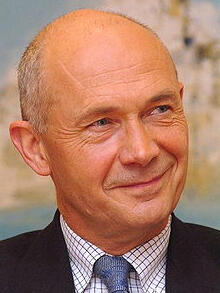
Special Event:  Pascal Lamy Lecture

“World Trade and Global Governance”

 
The Europe Center invites you to a special lecture by Pascal Lamy, the former Director-General of the World Trade Organization.
 
Image
Image of Pascal Lamy
Date: February 10, 2014 
Time: 4:00 - 5:30 p.m.
Venue: Bechtel Conference Center, Encina Hall
RSVP by February 5, 2014                       
  
Mr. Lamy will speak on the necessary mix of economic, social, and political policies that will determine the efficacy of free trade as an engine of global economic growth. In particular, he will outline a statement of his own thinking about the future of global governance and international trade, and describe what remains to be done in addressing the challenges of globalization. Additionally, Mr. Lamy will reflect on the features of modern politics that create governance gridlock and thwart global oversight, and will identify how progress can be made in overcoming impediments to policy action at the international level. 
 
My Lamy served as the Director-General of the World Trade Organization from 2005-2013. He is currently the Honorary President of the Paris-based think tank, Notre Europe.


Meet our Visiting Scholars:  Bjørn Høyland 

 
In each newsletter, The Europe Center would like to introduce you to a visiting scholar or collaborator at the Center. We welcome you to visit the Center and get to know our guests.
 
Bjør
Image
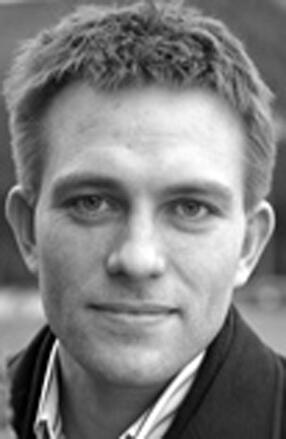
Image of Bjorn Hoyland
n Høyland (PhD, London School of Economics, 2005) is Professor of Political Science at the University of Oslo, Norway. He is currently visiting Professor and Anna Lindh Fellow at The Europe Center, Freeman Spogli Institute for International Studies and Stanford Global. The focus of his research is European Union politics and comparative legislative politics. Professor Høyland’s list of journal publications includes the American Political Science Review, Annual Review of Political Science, British Journal of Political Science, and European Union Politics. His textbook (with Simon Hix) The Political System of the European Union (3rd ed) is the standard text for advanced courses on the European Union.

Workshop Schedules  

 
The Europe Center invites you to attend the talks of speakers in the following workshop series: 
 

Europe and the Global Economy

 
January 23, 2014
David Dreyer Lassen, Professor of Economics, University of Copenhagen
RSVP by Jan 20, 2014 
 
February 20, 2014
Alan Deardorff, John W. Sweetland Professor of International Economics & Prof. of Economics and Public Policy, University of Michigan
RSVP by Feb 17, 2014
 
Mar 6, 2014
Sophie Meunier, Research Scholar, Woodrow Wilson School and Co-Director, EU Program at Princeton, Princeton University
RSVP by Mar 3, 2014
 
Mar 13, 2014
Randy Stone, Professor of Political Science, University of Rochester
RSVP by Mar 10, 2014
 
Apr 3, 2014
Kåre Vernby, Associate Professor, Department of Government, Uppsala University
RSVP by Mar 31, 2014
 
Apr 17, 2014
Mark Hallerberg, Professor of Public Management and Political Economy, Hertie School of Governance 
RSVP by Apr 4, 2014
 
May 15, 2014
Christina Davis, Prof. of Politics and International Affairs, Princeton University
RSVP by May 12, 2014

European Governance

 
February 6, 2014
Matthew Gabel, Professor of Political Science, Washington University at St. Louis
RSVP by Feb 3, 2014
 
May 22, 2014
Wolfgang Ischinger, Former German Ambassador to the U.S.; Chairman, Munich Security Conference
RSVP by May 19, 2014
 
May 29, 2014
Simon Hug, Professor of Political Science, University of Geneva
RSVP by May 26, 2014

Other Events

 
The Europe Center also invites you to attend the following events of interest:
 
January 27, 2014
Vassil Terziev, Co-founder & CEO, Telerik (BG); and Japec Jakopin, Co-founder & CEO, Seaway (SI)
“Worldclass Enterprise Software and Design Firms in SouthEast and Balkans Europe” 
Sponsor: European Entrepreneurship & Innovation Thought Leaders Seminar
 
January 30, 2014
Ken Schultz, Professor of Political Science, Stanford University
“Making and Breaking Territorial Agreements: Explaining European Exceptionalism”
Sponsor: CISAC Social Science Seminar; co-sponsored by The Europe Center
 
 
All News button
1
-

For nearly 70 years, CARE has been serving individuals and families in the world's poorest communities. Today, they work in 84 countries around the world, with projects addressing issues from education and healthcare to agriculture and climate change to education and women's empowerment. Helene Gayle, president and CEO of CARE USA, will discuss her work with CARE and her experiences in the field of international development. Dr. Gayle will discuss how access to global health is integral to CARE's effort in addressing the underlying causes of extreme global poverty.

Dr. Michele Barry, director of the Center for Innovation in Global Health, will moderate a conversation between CARE President and CEO, Dr. Helene Gayle and former Prime Minister of Norway and United Nations Special Envoy, Dr. Gro Brundtland. 

This event is sponsoredy by CARE USA, the Center on Democracy, Development and the Rule of Law and the Haas Center for Public Service.

A reception will follow the event. 


Dr. Gro Brundtland Bio:

Dr. Gro Harlem Brundtland is the former prime minister of Norway and the current deputy chair of The Elders, a group of world leaders convened by Nelson Mandela and others to tackle the world’s toughest issues. She was recently appointed as the Mimi and Peter E. Haas Distinguished Visitor for spring 2014 at the Haas Center for Public Service at Stanford University. Dr. Brundtland has dedicated over 40 years to public service as a doctor, policymaker and international leader. She was the first woman and youngest person to serve as Norway’s prime minister, and has also served as the former director-general of the World Health Organization and a UN special envoy on climate change.

Her special interest is in promoting health as a basic human right, and her background as a stateswoman as well as a physician and scientist gives her a unique perspective on the impact of economic development, global interdependence, environmental issues and medicine on public health.


 Dr. Helene Gayle Bio:

Helene D. Gayle joined CARE USA as president and CEO in 2006. Born and raised in Buffalo, New York, she received her B.A. from Barnard College of Columbia University, her M.D. from the University of Pennsylvania and her M.P.H. from Johns Hopkins University. After completing her residency in pediatric medicine at the Children's Hospital National Medical Center in Washington, D.C., she entered the Epidemic Intelligence Service at the Centers for Disease Control and Prevention, followed by a residency in preventive medicine, and then remained at CDC as a staff epidemiologist.

At CDC, she studied problems of malnutrition in children in the United States and abroad, evaluating and implementing child survival programs in Africa and working on HIV/AIDS research, programs and policy. Dr. Gayle also served as the AIDS coordinator and chief of the HIV/AIDS division for the U.S. Agency for International Development; director for the National Center for HIV, STD, and TB Prevention, CDC; director of CDC's Washington office; and health consultant to international agencies including the World Health Organization, UNICEF, the World Bank and UNAIDS. Prior to her current position, she was the director of the HIV, TB and reproductive health program for the Bill and Melinda Gates Foundation.


Hewlett 201
Hewlett Teaching Center
370 Serra Mall
Stanford, CA 94305

Dr. Gro Brundtland Mimi and Peter E. Haas Distinguished Visitor Panelist Haas Center for Public Service, Stanford University
Dr. Helene Gayle President and CEO Panelist CARE USA
Michele Barry Director Moderator Center for Innovation in Global Health
Conferences
Paragraphs

The OECD and the WTO have accumulated systematic data on the magnitude of support going to farmers as a result of farm policies. The datasets are collected for different purposes, but give a detailed picture of the evolution of these policies. This paper extends recent work on the compatibility of these two classification systems with a focus on Norway, Switzerland, the US and the EU. The results show how the OECD data set, particularly with respect to the link between direct payments and production requirements, complements that of the WTO. Many payments classified as in the WTO Green Box require production, raising the possibility that they may not be trade-neutral. Though the issue of correct notifications to the WTO is the province of lawyers, the implications for modeling and policy analysis is more interesting to economists. And the broader question of improving the consistency of the two datasets is of importance in the quest for transparency.


This work was undertaken while Mittenzwei was a Research Fellow at the Europe Center.

All Publications button
1
Publication Type
Working Papers
Publication Date
Journal Publisher
Norwegian Agriultural Economics Research Institute
Authors
Klaus Mittenzwei
Authors
News Type
Q&As
Date
Paragraphs

Security concerns at the Olympics have dominated headlines over the past month after private contractor G4S failed to recruit the number of guards it had promised. The British government responded by deploying military personnel, and now there are more British troops guarding the streets of London than in Afghanistan.

Martha Crenshaw, a senior fellow at the FSI and CISAC, explains what kinds of threats exist at the Games, the challenges of securing such a large event and whether the failure by G4S will make the Olympics an easier or more attractive target.

What motivates terrorists?

Terrorists want to make a political statement. So you have to ask, "What kind of political statement would attacking the Olympics be?" Al-Qaida could regard the Olympics the way they regard the United Nations. They attacked U.N. headquarters in Iraq and a U.N. agency in Algiers. They regard the U.N. as a tool of the oppressor. That said, they don't talk about the Olympics the way they do about the U.S. – the great Satan, etc. And Muslim countries are competing in the Olympics. Of course they oppose many of the regimes of those countries, like Saudi Arabia.

But I'm not aware of any specific threat to the Olympics or chatter about the Olympics.

Is al-Qaida the only terrorist group to be concerned about?

People will be concerned about Hezbollah now because of the series of foiled attacks against Israel and the successful attack in Bulgaria. Hezbollah and al-Qaida have global reach. But when we talk about al-Qaida, we can't forget the groups affiliated with the main organization: al-Qaida in Iraq and al-Qaida in Yemen, for example. There's also the Pakistani Taliban and other al-Qaida linked groups there.

What kinds of terrorist attacks are of most concern?

We've tended to think, and I stress think, that al-Qaida wants spectaculars. In terms of their attacks in general, targets have often been public transportation. Think of Madrid and London. They're also fond of multiple targets at once, and as regards the U.S., it seems they're still focused on airplanes. We could be dead wrong and they could do something that's totally different but this is the pattern. 

It could be that they'd like a big explosion in the middle of Trafalgar Square, but it wouldn't have to be during the Olympics. There are crowds in Trafalgar Square all the time.  However, if Britain were the target, terrorists might think it's particularly embarrassing and spectacular to attack during the Olympics because it would heighten the fear factor.  On the other hand, it's easier to mount an attack when there is not the high level of Olympics security.

Has there always been a great fear of attacks at Olympics?

The hostage taking in Munich in 1972 (of Israeli athletes) and then the bombing in Atlanta in 1996 have made us afraid that something would happen at the Olympics because it's so prominent.

A recent study concludes that security has been effective. But we don't really know that entirely. We don't know what the terrorists are thinking. We don't know whether they looked at all of the security precautions and said, "This is going to take a lot of work and we will probably fail because security is so good. Let's do something else."

Is London exceptional, because of its size or politics?

From the point of view of this year's Olympics, London could be as much of a target as the Olympics themselves.  But Britain was attacked in 2005 because of their involvement in the war in Iraq, now over. I'm not sure if that changes Britain's vulnerability. We're in the realm of speculation because we don't really know how the adversary is thinking about this. So there is a risk in London but if I were in London I'd be more afraid of a traffic jam.

What does the failure by G4S to provide enough guards say about using private contractors to protect public safety?

Outsourcing security is widespread. A lot of people who were with the military in Iraq and are in Afghanistan are contractors. Everybody contracts out security these days.

But, the question deserves to be looked at. Is it a good idea to rely on these private firms? Would it be a good idea even if all of their people showed up? Are their guards reliable, are they trustworthy, or do they pose a security problem? Have they all been properly vetted to ensure they haven't been infiltrated by al-Qaida and don't include people who are mentally unstable? It raises a lot of questions about who provides security against terrorism for very large international events.

Does the use of military personnel at the last minute create vulnerabilities?

It's possible to imagine that some very determined and nefarious groups would look at this situation and say it's not really going to win us much fame and glory to go shooting a bunch of private security guards, but now the military is a target by being deployed on the streets of London. If someone wanted to attack them, they might think here is the opportunity.

But this switch also means that anybody who decided now that they wanted to target the military or the Olympics won’t have much time to plan. Typically, not always but typically, attacks that cause large numbers of casualties and a lot of destruction have been elaborately planned for a long time – even the lone wolf types like Anders Breivik in Norway or the recent attack in Colorado. Individuals or groups plan in advance and work to get the weapons and explosives, which is not easy. So even if somebody got the idea of doing something it wouldn't be so simple in this short time to come up with a plan and acquire the right materials.

How hard is it to guard a place like London, as well as the Olympics?

It's hard to protect lots of people in a big city. There are lots of crowds, lots of movement. It's not as though you can extend a perimeter; it's a moving target all the time. The Olympics might be a target, London has been a target, so the combination of the two could cancel each other out but I'm sure security officials are worried.

Yet, at this point, if I were the British government dealing with the fallout of the security firm's lack of preparedness, I'd much rather rely on soldiers who have been vetted and have experience than security officers who were quickly brought together.

Brooke Donald is a writer for the Stanford News Service.

All News button
1

117 Encina Commons
Room 186
Stanford, CA

0
ivar.jpg MD, MPH

Ivar S. Kristiansen is a professor of public health at the Department of Health Management and Health Economics, University of Oslo, Norway and adjunct professor of pharmacoeconomics at the University of Southern Denmark at Odense. He is visiting scholar at Stanford Health Policy 2011-12.

Kristiansen’s research focuses on technology assessment, cost-effectiveness analysis, and valuation of health outcomes. Also, he has worked for many years on the topic of risk communication in the context of chronic diseases when time is a crucial factor. He is one of the founders of Odense Risk Group.

Kristiansen received an MD from the University of Oslo in 1972, completed his internship at the University Hospital of Trondheim and then worked for 10 years as a combined family physician/public health officer in two remote communities in Norway. He received an MPH degree from Harvard University i 1986 and a PhD from University of Tromsø, Norway in 1996. Kristiansen is a past-President of the Norwegian Public Health Association and has served on numerous public committees in Norway.

Adjunct Affiliate at the Center for Health Policy and the Department of Health Policy
Paragraphs

National oil companies (NOCs) produce most of the world’s oil and natural gas and bankroll governments across the globe. Although NOCs superficially resemble private-sector companies, they often behave in very different ways. To understand these pivotal state-owned enterprises and the long shadow they cast on world energy markets, the Program on Energy and Sustainable Development (PESD) at Stanford University commissioned Oil and Governance: State-owned Enterprises and the World Energy Supply. The 1000-page volume, edited by David Victor, David Hults, and Mark Thurber, explains the variation in the performance and strategy of NOCs, and provides fresh insights into the future of the oil industry as well as the politics of the oil-rich countries where NOCs dominate. It comprises fifteen case studies, each following a common research design, of NOCs based in the Middle East, Africa, Asia, Latin America, and Europe. The book also includes cross-cutting pieces on the industrial structure of the oil industry and the politics and administration of NOCs.

NOCs are distinguished from private companies by their need to respond to state goals beyond profit maximization. Governments seeking to retain their hold on power use NOCs to deliver benefits to influential elites (“private goods”) or to the broader population (“social goods”). Oil and Governance finds a strong correlation between such non-hydrocarbon burdens on the NOC—which include providing employment, subsidizing fuel, or handing out plum jobs to the politically connected—and deficiencies in oil and gas performance. The highest-performing NOCs, like Norway’s Statoil and Brazil’s Petrobras, face relatively circumscribed non-oil demands from their governments.

How governments administer their oil sectors also proves to be a crucial determinant of NOC performance. Democracies (e.g., Norway, Brazil) and autocracies (e.g., Saudi Arabia, Angola) alike are capable of grooming successful NOCs. What matters most for outcomes is not regime type per se but rather that governance systems provide unified signals to the NOC. (By contrast, regime type is observed to be an important driver of whether governments nationalize their oil sectors in the first place, or privatize existing NOCs.) Fragmented governance, in which multiple government actors assert their interests but no one assumes strategic responsibility, appears uniformly fatal to NOC performance. Nascent democracies like Mexico’s can be particularly vulnerable to oil sector dysfunction stemming from fragmentation. Governance systems must also be matched to a country’s institutional and political realities. Nigeria has arguably set back its progress in oil through attempts to slavishly imitate Norway’s forms of oil organization in the absence of Norway’s mature political and civil service institutions.

The close ties between the NOC and its government can have a detrimental effect on the ability of the NOC to manage the risks that are so characteristic of the oil and gas industry. Whereas private companies are forced to hone their geological knowledge and skills through global competition for capital and hydrocarbon licenses, NOCs for the most part are comfortably sheltered from competitive threats at home. They therefore fail to develop the global reach that helps private players (the international oil companies, or IOCs) manage risk by means of a diversified global portfolio and the ability to link resources to customers around the world. (Some NOCs have begun to internationalize in recent years, but it is striking that none of the NOCs studied in Oil and Governance went down this path until forced to by domestic resource scarcity, or at least of the perception of future scarcity.) The soft budget constraint faced by the NOC also discourages the cost efficiencies that help mitigate risk.

This gulf in risk management capabilities between IOCs and most NOCs suggests that the resource dominance of NOCs does not pose an existential threat to private oil companies. Private players will continue to play a key role in the frontiers of oil and gas development—frontiers like shale gas, oil sands, and the remote Arctic. NOCs will continue to control low-cost oil around the world, while a select few of the most focused and unencumbered among them start to build up their own risk management skills through partnerships with IOCs.

NOC control over resources has important implications for the world oil price. The NOCs studied in the book produce their reserves at half the rate of the major IOCs—whether due to lower performance or a deliberate attempt to preserve resources for the future. Moreover, governments tend to rely most heavily on the risk management skills of IOCs when prices are low and then swing back towards NOCs in high price periods when they can afford to focus on delivering benefits to favored constituencies. The result of this dynamic, which is observed in the case studies of Oil and Governance, can be “backward bending supply curves” that exaggerate price volatility in the world oil market.

This effect of NOCs on global oil supply and price appears to be much more important than any geopolitical fallout from NOC primacy around the world. Oil and Governance finds very little evidence that NOCs act as effective foreign policy weapons on behalf of their host states. Even where politicians may desire to employ NOCs in this way, the incentives of the NOC itself are usually strongly opposed to such an exercise of power. As one example, Europe’s Gazprom depends overwhelmingly on revenues from gas exports to Europe because gas is so heavily subsidized in Russia. When NOCs do venture abroad, as in the case of China’s CNPC, they are often motivated to do so precisely by the desire to achieve more autonomy from their political masters at home.

All Publications button
1
Publication Type
Books
Publication Date
Journal Publisher
Cambridge University Press
Authors
David G. Victor
David Hults
Mark C. Thurber

Center on Food Security and the Environment
Encina Hall East E400
Stanford, CA 94305-6055

0
Research Associate
Fedor_Profile_cropped.jpg MS

Chris Fedor is a research assistant in the Center on Food Security and the Environment. He received his BS/MS in Earth Systems from Stanford in 2011, with a focus on environmental geography and land use modeling.

While a student, Chris worked two years as a teaching assistant for Roz Naylor’s and Wally Falcon’s World Food Economy course. Almost all of his other previous endeavors seemed to have circulated around food as well. Those range from a summer spent with a hand held camera in Norway eating whale steaks and producing a movie about modern arctic whaling, to assisting CIMMYT in attempts to measure maize yields via remote sensing data in the Yaqui Valley of Mexico. He prefers burritos. 

Subscribe to Norway