News Type
News
Date
Paragraphs

Applications open today for the China Scholars Program (CSP), Sejong Korean Scholars Program (SKSP), and Reischauer Scholars Program (RSP) on Japan—three intensive online courses offered by SPICE, Stanford University, to high school students across the United States. All three applications can now be viewed at https://spicestanford.smapply.io/. Interested students must submit their completed application (including an essay and letter of recommendation) by the deadlines listed below.


Spring 2020 Online Course Application Deadlines

China Scholars Program: October 15, 2019
Sejong Korean Scholars Program: October 15, 2019
Reischauer Scholars Program: October 15, 2019


All three online courses are currently accepting applications for the Spring 2020 term, which will begin in February and run through June. Designed as college-level introductions to East Asia, these academically rigorous courses present high school students the unique opportunity to engage in a guided study of China, Korea, or Japan directly with leading scholars, former diplomats, and other experts from Stanford and beyond. High school students with a strong interest in East Asia and/or international relations are especially encouraged to apply.

“Our students always come hungry to learn,” says Dr. Tanya Lee, instructor of the China Scholars Program. “The ones who choose to apply to these kinds of online courses are typically looking for an academic challenge beyond what their normal school can offer. We’re incredibly fortunate to have Stanford faculty conducting world-class research on Korea, Japan, and China willing to share their knowledge directly with our students.”

Rising high school sophomores, juniors, and seniors in the United States are eligible to apply to any of the three programs. Students who are interested in more than one program can apply to two or three and rank their preferences on their applications; those who are accepted into multiple programs will be invited to enroll in their highest-preference course.

For more information on a specific course, please refer to its individual webpage at chinascholars.org, sejongscholars.org, or reischauerscholars.org.

9/9/19 EDIT: Application deadlines updated. The deadlines for the SKSP and RSP were previously October 4, 2019. All three application deadlines are now October 15, 2019.


The RSP, SKSP, and CSP are SPICE’s online courses for high school students. In addition, we offer online courses for high school students in Japan (Stanford e-Japan) and China (Stanford e-China). To be notified when the next application period opens, join our email list or follow us on Facebook and Twitter.


Related articles:


Hero Image
Stanford block 'S' on the Stanford University campus
View of the Stanford block 'S' on the Oval | Ian Terpin / University Communications
All News button
1
Authors
News Type
News
Date
Paragraphs

The Stanford China Scholars Program (CSP) is about to launch its fifth session this fall, with 20 high school students from across the country participating in the online course. The Northeast, South, Midwest, Pacific Northwest, Texas, and California are all represented in this cohort of 10th through 12th graders. Thursday evenings, these high school students will log in and join a real-time session with a scholar from Stanford or another university to discuss an aspect of contemporary China—the U.S.–China trade war, perhaps, or the legacy of the Mao era, or internet censorship and surveillance technologies in China, or China’s efforts to combat pollution and climate change. The rest of the week is filled with readings on that theme, discussed online with classmates.

The Stanford CSP’s focus on contemporary China means that the course material is constantly changing, to keep up with the ever-shifting political landscape under the leadership of Xi and Trump. It also requires the students to engage with the idea of China as not only a thoroughly modern nation but a forward-looking one, challenging the tendency to essentialize China as an ancient civilization mired in the past. Former CSP student Angela Yang (Fall 2018) credits the online course with helping her “contextualize China’s transformation as it’s happening, which is something you wouldn’t really be able to study in any other kind of course.”

Although all of the high school students are exceptionally well prepared academically, their background knowledge on China at the beginning of the online course varies considerably. Some bring strong knowledge of international issues generally, but little specific to China; some have already studied China in some depth. A few come from Chinese families, and a third to a half of the students have been studying Chinese language for several years.

Over the past year, attention has gravitated towards the U.S.–China trade war, perhaps inevitably, and its roots and possible outcomes, as well as the PRC’s ramping up of censorship and surveillance technologies, particularly in Xinjiang. Yet overall, discussions with our guest experts and among the students are fundamentally optimistic: constructive change is possible, and the United States and China have far more to gain from peace than from conflict.

The students round out the program with an independent research paper. Students’ chosen research topics in 2018–19 were as diverse as they were. Example research papers included a discussion of the United Nations Convention on the Law of the Sea as it applies to China’s claims in the South China Sea; the mental health of rural “left-behind” children; China’s economic expansion in Africa; rock ‘n’ roll in the democracy movement of the 1980s; the international effects of China’s restrictions on imported waste for recycling; and many others. 

In synthesizing knowledge this diverse, students come to understand just how complex China and the challenges it faces are. They can no longer reduce China to simple generalizations. “The truth is that all of China’s problems aren’t just limited to numbers, statistics or graphs,” Junhee Park (CSP Spring 2018) wrote in response to a documentary film on migrant workers. “They affect everyone of us, whether we are Chinese or not.”


To be notified when the next China Scholars Program application period opens, join our email list or follow us on Facebook and Twitter.

The China Scholars Program is one of several online courses for high school students offered by SPICE, Stanford University, including the Sejong Scholars Program (on Korea) and the Reischauer Scholars Program (on Japan).


Related articles:


Hero Image
In the CSP online course, high school students study various aspects of modern China.
Jackal Pan
All News button
1
0
CDDRL Postdoctoral Scholar, 2019-20
carothers_headshot.jpeg

I am a scholar of comparative politics and currently a postdoctoral fellow at the University of Pennsylvania’s Center for the Study of Contemporary China. My research is on authoritarianism and corruption control with a regional focus on East Asia—especially China, the Koreas, and Taiwan. My first book, Corruption Control in Authoritarian Regimes: Lessons from East Asia (Cambridge University Press, 2022), is about why some autocrats are motivated to curb corruption, why their efforts succeed or fail, and what the political consequences of such efforts are. I received my Ph.D. in Government from Harvard University in 2019.

My writing has been published or is forthcoming in numerous academic and policy journals, including Perspectives on Politics, Government and Opposition, the Journal of Democracy, Politics and Society, the Journal of Contemporary China, the Journal of East Asian Studies, Foreign Affairs, Foreign Policy, the China Leadership Monitor, and The National Interest.

Before academia, I lived and traveled in East Asia for several years, learning Chinese and Korean along the way. I worked for The Wall Street Journal Asia in Hong Kong, taught English in Xinjiang, and studied Korean in Seoul. I received my B.A. (summa cum laude), also from Harvard, in Social Studies and East Asian Studies.

Authors
Ketian Zhang
News Type
Commentary
Date
Paragraphs

On March 31, Taiwan’s Ministry of Foreign Affairs reported that two Chinese Air Force (PLAAF) J-11 jets crossed the median line of the Taiwan Strait. This violated the long-held tacit agreement between China and Taiwan that neither side should cross the median line.

Taiwan deemed this “an intentional, reckless & provocative action,” which triggered “a 10-minute standoff” in the air. As Asia security expert Bonnie S. Glaser notes that, if intentional, this would be the first PLAAF crossing of the median line in about 20 years. In this case, it’s likely that Taiwan, not the South China Sea, prompted Beijing’s actions.

An unresolved issue from the Chinese civil war, Taiwan has always been a “core interest” to party leaders in Beijing. Here are some key takeaways from my research on China-Taiwan relations…

Read the full article in The Washington Post.


To hear more from Ketian, don't miss her recently posted video Q&A. In addition, be sure to RSVP for her April 16 seminar "Killing the Chicken to Scare the Monkey: Explaining Coercion by China in the South China Sea."

Hero Image
The marines of China navy participate in the annual military training on January 3, 2018 in Zhanjiang,
ZHANJIANG, CHINA - JANUARY 03: The marines of China navy participate in the annual military training on January 3, 2018 in Zhanjiang, Guangdong Province of China. | Pu Haiyang/VCG via Getty Images
All News button
1
News Type
Q&As
Date
Paragraphs

We sat down with our 2018-19 Shorenstein Postdoctoral Fellow in Contemporary Asia Ketian Zhang to discuss China's use of coercion in foreign policy; her research on  South China Sea disputes; her forthcoming articles; and the fellowship experience in general. To hear more from Ketian, RSVP for her April 16 seminar "Killing the Chicken to Scare the Monkey: Explaining Coercion by China in the South China Sea."

Hero Image
Ketian Zhang participating in Q&A
Thom Holme, APARC
All News button
1
-
Image
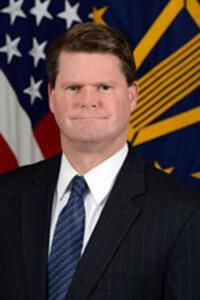
Randy Schriver
Mr. Randall Schriver
is the Assistant Secretary of Defense for Indo-Pacific Security Affairs. Mr. Schriver was appointed as Assistant Secretary of Defense by President Donald Trump on 8 January 2018. Prior to his confirmation, Mr. Schriver was one of five founding partners of Armitage International LLC, a consulting firm that specializes in international business development and strategies. He was also CEO and President of the Project 2049 Institute, a non-profit research organization dedicated to the study of security trend lines in Asia.
 
Previously, Mr. Schriver served as Deputy Assistant Secretary of State for East Asian and Pacific Affairs. He was responsible for China, Taiwan, Mongolia, Hong Kong, Australia, New Zealand, and the Pacific Islands. From 2001 to 2003, he served as Chief of Staff and Senior Policy Advisor to the Deputy Secretary of State. From 1994 to 1998, he worked in the Office of the Secretary of Defense, including as the senior official responsible for the day-to-day management of U.S. bilateral relations with the People's Liberation Army and the bilateral security and military relationships with Taiwan.
 
Prior to his civilian service, he served as an active duty Navy Intelligence Officer from 1989 to 1991, including a deployment in support of Operation Desert Shield/Desert Storm. After active duty, he served in the Navy Reserves for nine years, including as Special Assistant to the Chairman of the Joint Chiefs of Staff and an attaché at U.S. Embassy Beijing and U.S. Embassy Ulaanbaatar.
 
Mr. Schriver has won numerous military and civilian awards from the U.S. government and was presented while at the State Department with the Order of the Propitious Clouds by the President of Taiwan for service promoting U.S.-Taiwan relations. Mr. Schriver received a Bachelor of Arts degree in history from Williams College and a Master of Arts degree from Harvard University.
 

Oksenberg Conference Room
616 Serra Mall
Encina Hall, 3rd Floor, Central S350
Stanford, CA 94305

Randall Schriver Assistant Secretary of Defense for Indo-Pacific Security Affairs
Authors
Thomas Holme
News Type
News
Date
Paragraphs

An air of uncertainty remains prevalent in the Indo-Pacific region. The South China Sea continues to be in contention, with six governments exerting claims on overlapping areas. The threat of a full-blown trade war between China and the United States puts the stability of the regional (and global) economy in question. Meanwhile, the Korean peninsula appears to swing between the brink of conflict to the possibility of dramatic diplomatic breakthroughs. It was in the midst of this precarious period for the region that the third annual gathering of the U.S.-Japan Security and Defense Dialogue Series took place in Tokyo from January 30 to February 1.

The 2019 meeting was co-sponsored by the Sasakawa Peace Foundation and APARC’s U.S.-Asia Security Initiative (USASI). For the past three years, the series has convened senior Japanese and American policymakers, military leaders, scholars, and regional experts to discuss Japan's security strategy and the alliance between Japan and the United States. Support for the workshop came from the Carnegie Corporation of New York.

Since its inception in 2016, the dialogue series has provided a venue for in-depth discourse on contemporary Asia-Pacific security issues, and has helped build bridges between American and Asian academics, government and military officials, and other defense and security policy specialists. “We have continued to expand the range of attendees from the Japanese and U.S. government and military,” said USASI Director Karl Eikenberry. “This has ensured for our dialogue even greater policy relevance with each iteration.”

“The U.S.-Japan security dialogue is unique because it combines civilians and military officers, both retired and serving, which simply does not take place elsewhere,” observed Stanford Lecturer in International Policy Daniel Sneider, a regular participant. “It also avoids the sometimes-empty rhetoric about our alliance in favor of an operational, but strategically informed, approach that gets at not only what is being accomplished, but where the gaps exist in our alliance.”

Threats, Challenges, and the Appropriate Responses

L to R: Amb. Karl Eikenberry and Lt. General Noboru Yamaguchi (Workshop Co-Chairs)

The 2019 dialogue opened with a day of discussions on many of the challenges facing the U.S.-Japan security alliance, including an assessment of the latest security trends in the Indo-Pacific, as well as Japan’s new National Defense Program Guidelines (NDPG). Passed by the Japanese Cabinet only a month earlier, the NDPG was the focus of two sessions on day one, including a discussion of its implications for Indo-Pacific security, as well as a session on the guideline’s ramifications for concepts of Integrated Air and Missile Defense and Archipelagic Defense

“Unsurprisingly, the global rise of China—along with the U.S. and Japan’s separate and combined responses to PRC strategy in the Indo-Pacific Region—helped shape both our agenda and the selection of participants,” observed Eikenberry. “We were specifically interested in the implications for the maritime domain and certain operational aspects of the U.S.-Japan security alliance.”

The day one closing ceremony featured remarks from the U.S. Ambassador to Japan, the Honorable William Hagerty.


L to R: Dan Sneider, Amb. William Hagerty, and Lt. General Noboru Yamaguchi
 

Developing Policy Recommendations, Meeting with Policymakers

L to R: Major Rodger Welding and Colonel Daniel Munter (United States Pacific Air Forces), and Lt. Colonel Yuka Nakazato, (Japan Air Self-Defense Force)

Days two and three were designed for small group sessions. Referred to as “Core Group”, its U.S. and Japanese members met the morning of January 31 to review the preceding day’s workshop and develop corresponding policy recommendations. The quality and depth of the conversations underscored just how great an impact the expanded range of participants had on the resulting policy.

“Participants weren't afraid to address sensitive, big-picture questions,” said Phillip Lipscy, a Center Fellow at the Freeman Spogli Institute for International Studies at Stanford, “like the slow growth of Japanese military spending in the face of increasing regional threats and the challenges posed by unpredictable US administration policies.”

“Even as an expert of Japanese politics, I found the dialogue extremely informative and stimulating,” shared Lipscy.

Sneider agreed as well. “One thing that stood out this year, in contrast to the previous years, was a greater willingness on the part of our Japanese colleagues to air their sense of unease about and even opposition to the direction of American foreign and security policy under the Trump administration,” he said. “In the past, the American participants were much more open about their criticism of their own government, the Japanese tended to be polite—not so much this year, which made for a lively exchange on many issues.”

In the afternoon, core U.S. participants again met with the US Ambassador, along with his embassy team, as well as with senior Cabinet Office officials from the government of Japan.

Field Testing Ideas

During the second annual gathering in 2018, the dialogue began including a visit by the core workshop participants to a combined U.S. military—Japanese Self Defense facility. As part of the 2019 dialogue, the Core Group spent their third and final day visiting Yokota Air Base, the headquarters of both United States Forces Japan and Japan Air Self Defense Force Air Defense Command.

“These visits allow us to better understand Alliance operational challenges in the field,” noted Eikenberry. “Just as importantly, it affords us an immediate opportunity to test out some of the very ideas discussed during the preceding days.”

http://www.japantimes.co.jp/wp-content/uploads/2015/05/n-yokota-a-20150514.jpg

Yokota Air Base, Japan

Chatham House Rules applied to the dialogue, but a workshop report is forthcoming.

View the reports from the first and second annual workshops.

The U.S.-Asia Security Initiative is part of Stanford University’s Walter H. Shorenstein Asia-Pacific Research Center (APARC). Led by former U.S. Ambassador and Lieutenant General (Retired) Karl Eikenberry, USASI seeks to further research, education, and policy relevant dialogues at Stanford University on contemporary Asia-Pacific security issues.

(L to R: Karl Eikenberry, Michael McFaul, Major Marcus Morgan (U.S. Army LNO to Japan Ground Self Defense Force Northern Army and Stanford University Center for East Asian Studies MA ’18), Phillip Lipscy, Daniel Sneider)



Hero Image
2019 US Japan Defense and Security dialogue 4 1
All News button
1
-

We are sorry that the registration is now closed. It has reached the limit of the room capacity.

Brent Christensen is the Director of the American Institute in Taiwan’s Taipei office. Mr. Christensen has been in the United States Foreign Service for more than 29 years and has extensive experience in senior positions related to Taiwan and China.  Mr. Christensen previously served as Deputy Director of the American Institute in Taiwan’s Taipei office.  Prior to that, he was Director of the State Department’s Office of Taiwan Coordination, where he had a primary role in formulating U.S. policy toward Taiwan.  He has served three assignments at the U.S. Embassy in Beijing, the most recent being Environment, Science, Technology and Health Counselor.

Mr. Christensen has also served as a Senior Level Career Development Advisor in the State Department’s Human Resources Bureau.  Prior to that assignment, he served as the Foreign Policy Advisor at the Asia-Pacific Center for Security Studies (APCSS).  Other overseas postings include Hong Kong and South Africa.  Mr. Christensen also served as a Congressional Fellow on the staff of Senator Olympia Snowe.  Prior to joining the Foreign Service, he was a captain in the U.S. Air Force.

Mr. Christensen is a career member of the Senior Foreign Service and holds the personal rank of Minister-Counselor.  Mr. Christensen earned an M.A. in East Asian Studies from the George Washington University, a B.A. in Chinese language and literature from Brigham Young University, and a Doctor of Medical Dentistry degree from the Oregon Health and Sciences University.  Mr. Christensen is married to Brenda Barrus Christensen and has three children.  He is a native of Provo, Utah.

Oksenberg Conference Room Encina Hall, 3rd Floor 616 Serra Mall, Stanford, CA 94305
Brent Christensen Director, American Institute in Taiwan
Seminars
-

We are sorry that the registration is now closed. It has reached the limit of the room capacity.

A conversation about Taiwan’s economic future, moderated by Larry Diamond, Senior Fellow, Hoover Institution and the Freeman Spogli Institute for International Studies.

Image
eric chu chopped 2017
Eric Chu was the first Mayor of the newly-created Special Municipality of New Taipei, a position he held from 2010-2018. He has also served in several other elected offices and government posts in Taiwan during his career, including as a member of the Legislative Yuan (1999-2001), Magistrate of Taoyuan County (2001-2009), and Vice Premier of the Republic of China (2009-2010). In 2015, he became the chairman of the Chinese Nationalist Party (Kuomintang), and he was the party’s nominee in the January 2016 presidential election.

Dr. Chu holds a bachelor’s degree in management from National Taiwan University, and a master’s degree in finance and a Ph.D. in accounting from New York University. He taught as an assistant professor at City University of New York before returning to Taiwan and joining the faculty of National Taiwan University, where he was promoted with tenure in 1997.

Philippines Conference Room Encina Hall, 3rd Floor 616 Serra Mall, Stanford, CA 94305
Mayor Eric Chu
Authors
Noa Ronkin
News Type
News
Date
Paragraphs

While Americans may be well acquainted with China’s quest for influence through the projection of power in the diplomatic, economic, and military spheres, they are less aware of the various ways in which Beijing has more recently been exerting cultural and informational influence. According to a new report, some of these ways challenge and even undermine our democratic processes, norms, and institutions.

With a growing realization that the ambition of Chinese influence operations requires far greater scrutiny than it has been getting, a group of American scholars and policy practitioners set out to document the extent of China’s influence-seeking activities in American society. The working group, co-chaired by Larry Diamond, senior fellow at the Freeman Spogli Institute for International Studies and at the Hoover Institution, and Orville Schell, Arthur Ross director of the Asia Society’s Center on U.S.-China Relations, just released its findings and recommendations in a report that has drawn much attention, “Chinese Influence and American Interests: Promoting Constructive Vigilance.” On December 4, Diamond and Schell discussed the report’s findings and implications at a special roundtable organized by Shorenstein APARC’s U.S.-Asia Security Initiative (USASI).

Diamond and Schell described the report’s detailing of a range of assertive and opaque “sharp power” activities that China has stepped up within the United States in multiple sectors, including Congress, state and local government, universities, think tanks, media, corporations, technology and research, and the Chinese American community. These activities, they argue, penetrate deeply the social and political fabric of our democratic society and exploit its openness. Unlike legitimate “soft power” efforts within the realm of normal public diplomacy, they constitute improper interference that demands greater awareness and a calibrated response.

“The report was born out of a recognition that things have changed,” said Schell. “Our engagement with China has either failed or is teetering on the brink of failure. The report aims to put the question of our interaction and exchange with China within the context of policy.”

Diamond noted that “The question at least has to be asked whether there is a threat to U.S. national interests.” He emphasized that the members of the working group that produced the report seek a productive relationship between China and the United States. The report therefore advocates for perspective and framework that are built on three principles regarding U.S.-China relations: transparency, institutional integrity, and reciprocity.

Diamond and Schell were joined at the panel by Hwang Ji-Jen, a Taiwanese scholar in the Institute for East Asian Studies at the University of California - Berkeley, who helped situate the forms and effects of Chinese “sharp power” in the United States in comparison to its practice in and toward Taiwan. Karl Eikenberry, director of USASI, chaired the discussion.

The event was co-sponsored by the US-Asia Security Initiative in the Asia-Pacific Research Center, and FSI’s Center on Democracy, Development, and the Rule of Law.

Audio from the event is available for download or streaming:


Hero Image
Larry Diamond, Orville Schell, and Karl Eikenberry speak to audience members during 12/4 panel on China's Sharp Power
(Left to right) Larry Diamond, Orville Schell, and Karl Eikenberry speak to audience members during 12/4 panel on China's Sharp Power | Noa Ronkin, APARC
All News button
1
Subscribe to Taiwan