-


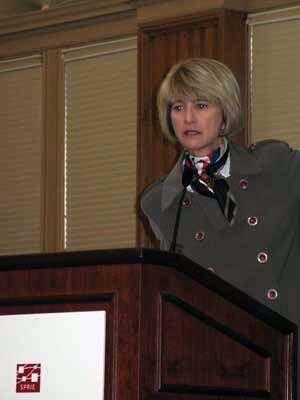
Lyushun Shen earned his doctorate in International Relations from the University of Pennsylvania. He started his career at the School of Law, University of Maryland before deciding to become a professional diplomat.  He has enjoyed a distinguished career serving Taiwan in its overseas missions in America and Europe, including in Washington D.C., Kansas City, Geneva and Brussels.  Prior to his current appointment he was Taiwan’s representative to the European Union. His publications include:  “The Republic of China’s Perspective on the US Omnibus Trade and Competitiveness Act of 1988” (The Chinese Yearbook of International Law and Affairs, 1989), The Issue of US Arms Sales and Peking’s Policy toward Taiwan (Taipei, 1986), “Is Peking’s Claim over Taiwan Internationally Recognized?” Monograph Series of the Asia and World Forum (Taipei, 1984), “The Washington-Peking Controversy over US Arms Sales to Taiwan: Diplomacy of Ambiguity and Escalation” (The Chinese Yearbook of International Law and Affairs, 1982), and “The Taiwan Issue in Peking’s Foreign Policy during the 1970’s, A Systematic Review” (The Chinese Yearbook of International Law and Affairs, 1981).

In this special event, Vice Foreign Minister Shen will reflect on the century-long relationship between the Republic of China and the United States, and address the future prospects and challenges of this relationship. 

Bechtel Conference Center

Lyushun Shen Vice Foreign Minister Speaker Ministry of Foreign Affairs, Republic of China (Taiwan)
Conferences

Image
This two-day international forum at Stanford University brought together experts from academia, government, and industry to analyze leading cases of current institutional models for innovation in smart and green industries. Cases included multi-company collaborations, public-private partnerships, and government-funded consortia. To enable more focus and comparative analysis, sectors selected for focus included the built environment and intelligent transportation.

FORUM Speakers & DISCUSSANTS (listed in alphabetical order)

  • Rohit T. Aggarwala, Special Advisor to the Chair, C40 Cities Climate Leadership Group
  • Alan Beebe, Managing Director, China Greentech Initiative
  • Sven Beiker, Executive Director, Center for Automotive Research at Stanford (CARS)
  • Ann Bordetsky, North America Market Development, Better Place
  • Dennis Bracy, cEO, US-China Clean Energy Forum
  • Curtis R. Carlson, President and CEO, SRI International
  • Jaching Chou, Senior Transportation Analyst, Institute of Transportation
  • Stephen J. Eglash, Executive Director, Energy and Environment Affiliates Program, Stanford University
  • Henry Etzkowitz, President of Triple Helix Association; Senior Researcher, Human Sciences and Technology Advanced Research Institute (H-STAR), Stanford University; Visiting Professor at University of Edinburgh Business School
  • Gordon Feller, Director of Urban Innovation, Cisco Systems
  • TJ Glauthier, President, TJG Energy Associates, LLC
  • Russell Hancock, President & Chief Executive Officer, Joint Venture: Silicon Valley Network
  • Ted Howes, Business for Social Responsibility
  • Asim Hussain, Director of Product Marketing, Bloom Energy
  • Paul Chao-Chia Huang, Deputy General Director, Service Systems Technology Center, Industrial Technology Research Institute, Taiwan
  • Kristina M. Johnson, Former Under Secretary of Energy, U.S. Department of Energy
  • Jeffrey Heller, President, Heller Manus Architects
  • Allan King, Senior Manager, Institute for Information Industry, Taiwan
  • Michael Marlaire, Director, NASA Research Park
  • David Nieh, General Manager, Shui On Land Limited
  • Jon Sandelin, Senior Associate Emeritus, Office of Technology and Licensing, Stanford University
  • Gerald Sanders, CEO & Chairman, SkyTran
  • Tim Schweikert, President & CEO, China Region for GE Technology Infrastructure, GE
  • Jonathan Thorpe, Senior Vice President, Gale International
  • Kung Wang, Professor, China University of Technology
  • Sean Wang, President, ITRI International Inc.
  • Jonathan Woetzel, Director, McKinsey & Co; Co-Chair, Urban China Initiative

Questions for presentations and discussion included:

  • What roles are public-private partnerships and other forms of collaboration playing to advance innovations in smart green industries, such as in the built environment or intelligent transportation?
  • What innovations - not only in technologies and products but also in processes, models and platforms - are leading the way?
  • What results are emerging from living labs, leading cities, or other outstanding examples of public-private partnerships around the world?
  • How do results stack up against economic, energy and social metrics, e.g. economic productivity, quality of life, energy impact, financial payback, user response, etc.?
  • What are implications for business strategies?
  • What government policies are effectively nurturing advancement in these areas?

Outcomes will include policy recommendations as well as highlights to be included in a book published by SPRIE at Stanford.

Workshops
-

Dr. Brian Chen's research has examined the tradeoffs between moral hazard and efficiencies in the integration of physician and non-physician medical services in the presence of asymmetric information. He has looked at a policy intervention in Taiwan that prohibited self-referrals of patients to physician-owned pharmacies unless the physician group integrated pharmacy services into the clinic by hiring an onsite pharmacist. He found that the policy reduced drug expenditures by close to thirty percent among physicians that did not have an onsite pharmacist. However, these physicians responded by increasing the overprovision of diagnostic services not covered by the policy, thereby reducing the effectiveness of the policy. Forty-five percent of the clinics that did not have an onsite pharmacist prior to the policy hired one subsequent to the implementation of the policy. Overall, after integration, the policy applied to only seventeen percent of clinics, and only reduced average discretionary expenditures by about two-point-five percent. Chen's research also shows that despite the reduction in drug utilization, patients treated at clinics without an onsite pharmacist did not have greater observable adverse health events than patients treated at integrated clinics. His results show that moral hazard costs of self-referral incentives are large, that the “safe harbor” exemption severely reduces the effectiveness of the policy, and that the exemption explains much of the recent integration of ancillary services into physician offices.

Dr. Brian Chen recently completed his Ph.D. in business administration in the Business and Public Policy Group at the Haas School of Business, University of California at Berkeley. He received a Juris Doctor from Stanford Law School in 1997, and graduated summa cum laude from Harvard College in 1992.

Daniel and Nancy Okimoto Conference Room

Shorenstein APARC
Stanford University
Encina Hall, Room E-301
Stanford, CA 94305-6055

(650) 736-0771 (650) 723-6530
0
2011 AHPP/CEAS Visiting Scholar
IMG_5703.JPG JD, PhD

Dr. Brian Chen is currently a visiting scholar with the Asia Health Policy Program and Center for East Asian Studies at Stanford University. He was recently Shorenstein Asia-Pacific Research Center's 2009-2010 postdoctoral fellow in Comparative Health Policy. As a visiting scholar, Dr. Chen will conduct collaborative research about health of the elderly and chronic disease in China.

As an applied economist, Chen’s research focuses on the impact of incentives in health care organizations on provider and patient behavior. For his dissertation, Chen empirically examined how vertical integration and prohibition against self-referrals affected physician prescribing behavior. His job market paper was selected for presentation at the American Law and Economics Association’s Annual Meeting, the Academy of Management, the Canadian Law and Economics Association, the Conference on Empirical Legal Studies, and the First Annual Conference on Empirical Health Law and Policy at Georgetown Law Center in 2009.  The paper was also nominated for best paper based on a dissertation at the Academy of Management.

Chen comes to the Shorenstein Asia-Pacific Research Center not only with a multidisciplinary law and economics background, but also with an international perspective from having lived and worked in Taiwan, Japan, and France. He has a particularly intimate knowledge of the Taiwanese health care system from his experience as an assistant to the hospital administrator at a medical college in Taiwan.

During his past residence as a postdoctoral fellow with the Asia Health Policy Program, Chen conducted empirical research on cost containment policies in Taiwan and Japan and how those policies impacted provider behavior. His work also contributed to the program’s research activities on comparative health systems and health service delivery in the Asia-Pacific, a theme that encompasses the historical evolution of health policies; the role of the private sector and public-private partnerships; payment incentives and their impact on patients and providers; organizational innovation, contracting, and soft budget constraints; and chronic disease management and service coordination for aging populations.

Dr. Brian Chen recently completed his Ph.D. in Business Administration in the Business and Public Policy Group at the Haas School of Business, University of California at Berkeley. He received a Juris Doctor from Stanford Law School in 1997, and graduated summa cum laude from Harvard College in 1992.

Brian Chen 2011 AHPP/CEAS Visiting Scholar Speaker Stanford University
Seminars
News Type
News
Date
Paragraphs

How do you effectively advise senior-level policymakers when a political crisis emerges? Stanford students taking the course U.S. Policy Towards Northeast Asia (IPS 244), sponsored by the Walter H. Shorenstein Asia-Pacific Research Center (Shorenstein APARC), are learning and putting into practice these very skills. Over the ten weeks of the 2011 winter quarter, students will learn about contemporary U.S. policy towards Japan, China, and Korea, and about how to write and present policy-style memoranda to top-level government decision makers. They will also take part in an in-class simulation of a Six-Party meeting to negotiate North Korea's nuclear program.

Students cover a great deal of content in a short amount of time. "Ten weeks goes by pretty quickly," says course leader Michael H. Armacost, the Shorenstein Fellow at FSI and a former U.S. Ambassador to Japan and the Philippines. The real-world approach to the course is similar to what you would find in a professional international relations school, he explains. In previous years, Armacost has taught the course both alone and as part of a team with other former U.S. senior-level policy officials. The current course has been offered in the Ford Dorsey Program in International Policy Studies (IPS) for the last three years. It is co-taught with Daniel C. Sneider, the associate director for research at Shorenstein APARC and a former long-time foreign correspondent in Asia; David Straub, the associate director of the Stanford Korean Studies Program and a former U.S. senior foreign service officer; and Thomas Fingar, the Oksenberg/Rohlen Distinguished Fellow at FSI and a former Chairman of the National Intelligence Council.

In addition to providing a strong understanding of the U.S. foreign policymaking process, each week of the course is dedicated to a different aspect of the relationship of the United States with the countries of Northeast Asia, including Taiwan and the Russian Federation. Students will closely examine the history and dynamics between the great powers of the region; U.S. security relations with Japan and China; East Asian regionalism; democratization in South Korea; the North Korean nuclear crisis; and economics and human rights in China.

Although the case studies that the policy-writing exercises are based upon are hypothetical, they are closely tied to real-world issues and events. A previous year's case study dealt with tensions between China and Japan over rival claims to the Senkaku/Diaoyu Islands, anticipating the September 2010 conflict between Japan and China in the waters around these islands. The simulation exercise, another highlight of the course when students have the opportunity to collaborate with one another, is also closely tied to current regional events.

In addition to the rich content of the course and the expertise of its instructors, the diverse background of the students lends itself to the overall learning experience. Some of the students are pursuing a master's degree through IPS or the Center for East Asian Studies, while others come from the Graduate School of Business and various other Stanford units. Each year, there are always a few undergraduate students, who Armacost describes as "very strong," as well as early-career foreign affairs and military officials from Northeast Asia.

Interest in the course remains strong each year, and Shorenstein APARC will continue to offer it in order to provide solid, real-world policy training for the next generation of scholars and government officials.

Hero Image
ArmacostNewsfeed
Michael H. Armacost, course leader for IPS 244, talks to students about the history of U.S. policy towards Northeast Asia. | Sarah Lin Bhatia
All News button
1
News Type
News
Date
Paragraphs
The countries of Northeast Asia and the United States share a twenty-year legacy of war, beginning with the outbreak of the Sino-Japanese War in 1931 until the formal conclusion of the Pacific War in 1951. Historical memories of this period are often conflicting, as reflected by the master narratives presented in textbooks, and serve to impede effective, lasting reconciliation. In its groundbreaking new publication History Textbooks and the Wars in Asia: Divided Memories (Routledge Press, 2011), edited by Gi-Wook Shin and Daniel C. Sneider, the Walter H. Shorenstein Asia-Pacific Research Center examines the evolution of master narratives in China, Japan, South Korea, Taiwan, and the United States in an effort to help lay the foundation for eventual historical reconciliation in the region. This is the first in a series of three books dealing with wartime memories and reconciliation.
Hero Image
divided memories cover1
All News button
1
-

On January 1, 2010, China and the ten-member Association of Southeast Asian Nations (ASEAN) finally, formally launched a China-ASEAN Free Trade Agreement (CAFTA) that encompasses nearly two billion people engaged in trade worth some $200 billion. For China the agreement is a way of securing supplies of raw materials, while the ASEAN countries hope the agreement will open opportunities in China's huge domestic market. When CAFTA  was first signed in November 2002, Beijing promised that Southeast Asia would reap an “early harvest” of its benefits. Yet the Southeast Asian response to CAFTA in the agreement’s first year has been less than enthusiastic, especially in the Philippines and Indonesia. Is CAFTA a bonanza? A blunder? Something in between? Prof. Mendoza will assess the agreement, its implementation, and the implications for China’s role and image in Southeast Asia going forward.

Amado M. Mendoza, Jr. is a leading policy scholar in the Philippines, where he also serves as the treasurer of Economic, Social, and Cultural Rights (ESCR) Asia, Inc., an NGO dedicated to the promotion of socio-economic and cultural rights. He is the Philippines’ lead contributor to the soon-to-be-released 2010 Global Integrity Report on governance and corruption. Other subjects of his current research include Asian regional integration; Asian summitry and economic crisis management; Philippine economic diplomacy; and China-Taiwan relations within a regional context. In addition to his academic career, he has a background in journalism, banking, and development.

Daniel and Nancy Okimoto Conference Room

Amado M. Mendoza, Jr. Professor of Political Science and International Studies Speaker University of the Philippines, Diliman, Quezon City
Seminars
-

In this special seminar event, Dr. Szu-yin Ho will examine the current Taiwan-China relations within the framework of international relations theory. He will elaborate how both sides of the Taiwan Strait perceive this relationship, what the implications for the building of new institutions are after President Ma Ying-jeou took office, and what kind of signals these new institutions have delivered. Dr. Ho will also give his concerns and predictions about the future relationship across the Taiwan Strait. In this special seminar, Professor Wei-chin Lee from Wake Forest University will comment on Dr. Ho's speech.

Szu-yin Ho is Professor of Political Science at the National Chengchi University. He received his BA degree (1978) in English Literature from National Taiwan University, MA (1983) and Ph.D. (1986) in Political Science from the University of California at Santa Barbara. After receiving doctoral degree, Professor Ho first joined the Academia Sinica, then moved to the Institute of International Relations, National Chengchi University, Taipei, Taiwan. He later served as the Deputy Director of the Institute from 1994 to 1999 and the Director from 1999-2003. From 2003 to 2008 he served as the Director of International Affairs of the KMT, Taiwan's current ruling party. After the presidential election in 2008, he moved to become the Deputy Secretary-General of the National Security Council in the Presidential Office, overseeing the country's foreign affairs. After two years of service in government, Mr. Ho went back to academia. Professor Ho specializes on international relations, comparative political economy, sampling survey, and Chinese politics. He had published books and articles, in both Chinese and English, along these lines of research.

Wei-chin Lee received his Ph.D. in Political Science from University of Oregon. He is Professor of Political Science at Wake Forest University in North Carolina. He has published several books, including the latest edited volume on Taiwan's Politics in the 21th Century (2010). His articles have appeared in various scholarly journals. His teaching and research interests include foreign policy and domestic politics of China and Taiwan, US policy toward East Asia, international security, and international institutions. He is currently serving as an advisor to the Taiwan Benevolent Association of America.

This is a special event cosponsored by CDDRL and Taiwan Benevolent Association of  America.

Frances C. Arrillaga Alumni Center

Szu-yin Ho Professor Speaker National Chengchi University, Taiwan

CDDRL
Stanford University
Encina Hall, C147
616 Jane Stanford Way
Stanford, CA 94305-6055

(650) 724-6448 (650) 723-1928
0
Mosbacher Senior Fellow in Global Democracy at the Freeman Spogli Institute for International Studies
William L. Clayton Senior Fellow at the Hoover Institution
Professor, by courtesy, of Political Science and Sociology
diamond_encina_hall.png MA, PhD

Larry Diamond is the William L. Clayton Senior Fellow at the Hoover Institution, the Mosbacher Senior Fellow in Global Democracy at the Freeman Spogli Institute for International Studies (FSI), and a Bass University Fellow in Undergraduate Education at Stanford University. He is also professor by courtesy of Political Science and Sociology at Stanford, where he lectures and teaches courses on democracy (including an online course on EdX). At the Hoover Institution, he co-leads the Project on Taiwan in the Indo-Pacific Region and participates in the Project on the U.S., China, and the World. At FSI, he is among the core faculty of the Center on Democracy, Development and the Rule of Law, which he directed for six and a half years. He leads FSI’s Israel Studies Program and is a member of the Program on Arab Reform and Development. He also co-leads the Global Digital Policy Incubator, based at FSI’s Cyber Policy Center. He served for 32 years as founding co-editor of the Journal of Democracy.

Diamond’s research focuses on global trends affecting freedom and democracy and on U.S. and international policies to defend and advance democracy. His book, Ill Winds: Saving Democracy from Russian Rage, Chinese Ambition, and American Complacency, analyzes the challenges confronting liberal democracy in the United States and around the world at this potential “hinge in history,” and offers an agenda for strengthening and defending democracy at home and abroad.  A paperback edition with a new preface was released by Penguin in April 2020. His other books include: In Search of Democracy (2016), The Spirit of Democracy (2008), Developing Democracy: Toward Consolidation (1999), Promoting Democracy in the 1990s (1995), and Class, Ethnicity, and Democracy in Nigeria (1989). He has edited or coedited more than fifty books, including China’s Influence and American Interests (2019, with Orville Schell), Silicon Triangle: The United States, China, Taiwan the Global Semiconductor Security (2023, with James O. Ellis Jr. and Orville Schell), and The Troubling State of India’s Democracy (2024, with Sumit Ganguly and Dinsha Mistree).

During 2002–03, Diamond served as a consultant to the US Agency for International Development (USAID) and was a contributing author of its report, Foreign Aid in the National Interest. He has advised and lectured to universities and think tanks around the world, and to the World Bank, the United Nations, the State Department, and other organizations dealing with governance and development. During the first three months of 2004, Diamond served as a senior adviser on governance to the Coalition Provisional Authority in Baghdad. His 2005 book, Squandered Victory: The American Occupation and the Bungled Effort to Bring Democracy to Iraq, was one of the first books to critically analyze America's postwar engagement in Iraq.

Among Diamond’s other edited books are Democracy in Decline?; Democratization and Authoritarianism in the Arab WorldWill China Democratize?; and Liberation Technology: Social Media and the Struggle for Democracy, all edited with Marc F. Plattner; and Politics and Culture in Contemporary Iran, with Abbas Milani. With Juan J. Linz and Seymour Martin Lipset, he edited the series, Democracy in Developing Countries, which helped to shape a new generation of comparative study of democratic development.

Download full-resolution headshot; photo credit: Rod Searcey.

Former Director of the Center on Democracy, Development and the Rule of Law
Faculty Chair, Jan Koum Israel Studies Program
Date Label
Larry Diamond Director Moderator CDDRL
Wei-chin Lee Professor Commentator Wake Forest University
Conferences
-

Asian Biotech:  Ethics and Communities of Fate is the title of a new book that Prof. Ong has co-edited with Nancy N. Chen.  It offers the first overview of Asia’s emerging initiatives in the biosciences.  Its case studies include blood collection in Singapore and China; stem-cell research in Singapore, South Korea, and Taiwan; genetically modified foods in China; and clinical trials in India.  Such projects vary by country, as do the policies that are associated with them.  Discernible nevertheless is a significant trend toward state entrepreneurialism in Asian biotechnology.  Prof. Ong will also explore how political thinking and ethical reasoning are converging around the biosciences in Asia.  Copies of Asian Biotech will be available for signing and purchase at the talk.

Aihwa Ong studies how the interactions of capitalism, technology, politics, and ethics crystallize global situations, frame spaces of problematization, and generate situated solutions.  With these matters in mind, she has done field research in Southeast Asia, Southern China, and California.  A forthcoming volume is Worlding Cities:  Asian Experiments and the Art of Being Global.  Prior publications include Spirits of Resistance and Capitalist Discipline (2nd ed., 2010); Privatizing China:  Socialism from Afar (co-edited, 2008); Global Assemblages: Technology, Politics, and Ethics as Anthropological Problems (co-edited, 2005); Flexible Citizenship:  The Cultural Logics of Transnationality (1999); Neoliberalism as Exception:  Mutations in Citizenshipand Sovereignty (2006); and Buddha is Hiding:  Refugees, Citizenship, the New America (2003).  Prof. Ong has received many awards and has lectured at universities around the world.  She chairs of the US National Committee for the Pacific Science Association.  Her 1982 PhD is from Columbia University.

Philippines Conference Room

Aihwa Ong Professor of Socio-cultural Anthropology and Asian Studies Speaker University of California, Berkeley
Seminars
Subscribe to Taiwan