
-

The U.S.-North Korean “Leap Day” deal of February 29 was thrown into question by the North’s recent announcement of a satellite launch between April 12 and 16 to celebrate the centenary of Kim il Sung’s birth. As the opening of the launch window nears, an intense international brouunfolds with, amazingly, the US, Russia, China, Japan, and South Korea on the same page, dead set against a launch; and an isolated North Korea defiantly planning to celebrate the centenary with a satellite launch on or by April 15. In this presentation, the three speakers will provide a brief background of the successes and failures of North Korea’s previous satellite launches (score: 0 for 3 by Western count, 2 for 2 by DPRK count) and what has been learned from these; an expected timeline of activities of the countdown; and a guide and comparison of the new Sohae Western launch complex to the older Tonghae Eastern launch complex.


About the speakers:

Lewis Franklin is a long-time CISAC Affiliate, joining CISAC in 1992 as a Visiting Scholar after retiring as a TRW vice president, and previously vice president and co-founder of ESL, a defense intelligence company. Upon retirement he was awarded the CIA's Gold Medal for career-long contributions to foreign weapons assessment and national technical means capabilities. At CISAC his work focused on technical intelligence related problems, including wmd proliferation, export controls, defense conversion, and especially conversion of retired ICBMs for low-cost space launches.

Nick Hansen is a CISAC Affiliate. He graduated with a BA in Geography from Syracuse University in 1964.  His career in national intelligence spans 43 years first as an Army imagery analyst, and then in industry with GTE-EDL, ESL/TRW, Tera Research as a cofounder Vice Pres. and then again at ESL (now TRW/Northrop-Grumman) as a Director. He has also served in an SES position at the Navy's NIOC-Suitland, MD, as an image technology expert associated with Pennsylvania State University.  He has been twice nominated for the NRO's Pioneer award for innovative imagery uses and techniques development and is an expert in foreign weapons systems and test ranges. 

Allison Puccioni is an expert in remotely-sensed imagery and geospatial intelligence at IHS Janes. She was honored for her innovative intelligence in response to Sept. 11, and has been recognized by the Department of Defense and international armed forces for her outstanding strategic and tactical analysis. 

CISAC Conference Room

Lewis Franklin CISAC Affiliate Speaker
Nick Hansen CISAC Affiliate Speaker
Allison Puccioni IHS Janes Imagery Analyst Speaker
Seminars
Authors
News Type
News
Date
Paragraphs
Beyond North Korea: Future Challenges to South Korea's Security (Shorenstein APARC, 2011) takes a broad, long-term look at the security of South Korea. A recent International Affairs review calls it: "an excellent examination of the dynamism that characterizes contemporary South Korea."
Hero Image
WindmillNEWSFEED
Windmills in Yeongdeok, South Korea, Jun. 2011. Energy is one of many factors related to South Korea's security.
Flickr/briancolella
All News button
1
Authors
News Type
Q&As
Date
Paragraphs

After stirring international media attention and drawing criticism from its neighbors and the United States, North Korea’s controversial launch of a rocket under the guise of installing an “Earth observation” satellite in orbit took place on Apr. 13.

David Straub, associate director of Stanford’s Korean Studies Program, assesses the likely responses of the United States and other concerned countries, and provides historical context for the actions of North Korea’s leadership.

How is the launch going to impact North Korea’s relations with the United States and other countries?

We have already “been there, done that.” This will be the third North Korean test of a long-range rocket in six years. Shortly after the launches in 2006 and 2009, the North Koreans tested their first nuclear devices. The concern is that they will again use the expected international condemnation of their launch as a pretext for conducting another nuclear test.

But sometimes experience changes perspective. The United States and other countries will want to try to respond to the rocket test in a way that complicates any North Korean effort to justify a new nuclear test.

The international community really cannot remain silent, because United Nations Security Council (UNSC) Resolution 1874, which was passed in 2009, forbids North Korea from conducting precisely this kind of launch. I anticipate the UNSC will meet to discuss the situation but will not be able to issue a formal resolution. It will probably wind up issuing only a UNSC presidential statement criticizing the launch. China is the main obstacle. It does not approve of North Korea’s activities, but it is more concerned that putting great pressure on North Korea will result in instability. 

The United States, South Korea, and Japan will continue to consult and coordinate closely with one another. They may take additional measures to collect intelligence about North Korea’s nuclear and missile programs. They may also look to bolster their cooperation on missile defense, and take further steps to restrict North Korea’s access to nuclear- and missile-related materials and technology. They may apply additional economic sanctions to show their disapproval of North Korea’s actions.

Do you think the launch is going make it more difficult for North Korea to conduct trade and obtain aid and development assistance?

North Korea’s behavior now is part and parcel of its behavior over the past several decades. For the North Korean regime, the wellbeing of its people is clearly a secondary priority compared to its own survival.

At least since the end of the cold war, North Korea has faced a dilemma: Open up or fail, or open up and fail. In other words, it needs to open up to receive outside investment and technology if it is ever to have a successful economy. If it does not do that, the regime is unsustainable over the long run. But North Korea’s leaders fear that opening to the outside world would bring down their regime because it will expose the country’s weaknesses to its people. In order to get out of this dilemma, they have reached for weapons of mass destruction—particularly nuclear devices and the missiles they hope eventually can carry them. That is why there is no indication the North Korean leadership is prepared to completely give up those programs, at least on any terms that the United States, Japan, or South Korea could accept.

This is a long-term challenge for the United States and its allies. We have to see the situation for what it is, and deal with it accordingly. That means we must never “accept” North Korea’s possession of nuclear weapons and long-range missiles. As long as North Korea maintains these programs, we must make it clear that we will not establish diplomatic relations or ease sanctions. But that also does not mean that we should not continue to hold out to North Korea the possibility of a negotiated settlement, should it really be prepared to completely give up these programs.  

What are some of the key things to keep in mind about North Korea’s recent actions and about the country in general?

To understand what North Korea is doing, we have to get back to basics. The fundamental situation stems from the 1945 division of the Korean Peninsula into two separate states. North Korea’s Stalinist-style system developed into a totalitarian dictatorship with a personality cult, and it has been spectacularly unsuccessful, especially compared to its rival state South Korea.

The leaders in North Korea are reasonably well-informed and intelligent people. They saw what happened to the Soviet Union and its satellite states in the late 1980s and early 1990s, and decided it would not happen to them. For them, the lesson was: Do not open up or even receive aid, unless it is completely controlled to minimize outside influences. Most of the North Korean elite believes their regime is the legitimate Korean regime. They also understand that regime collapse could well mean absorption of the North by the South, and the possibility that they could go on trial for crimes against their own people. I anticipate that most of the elite will try very hard to hold the regime together in the coming years, even if it means continuing to pursue nuclear and missile programs and threatening and even attacking South Korea again.

But sooner or later major change is inevitable in such a rigid system. This requires the concerned countries to have a clear-headed analysis of the situation, take a long-term perspective, and consistently implement a principled policy. It is very challenging to do this with so many countries involved. But it can be done. Over the long term, the strengths of democracies far outweigh their weaknesses in dealing with countries like North Korea.  

Hero Image
NK Celebrate NEWSFEED
Kim Il Sung leads a cheering crowd in a North Korea propaganda painting, Aug. 2011.
Flickr/Joseph Ferris III
All News button
1
-

On April 11, South Koreans go to the polls to select all 299 members of their unicameral National Assembly. Politicians, journalists, and scholars are closely observing the election for what it may say about the direction of the country, one of Asia's most dynamic democracies. A coalition of progressive parties is hoping for a major win, which would greatly increase the left's influence after four years of conservative party domination and also boost its chances in the December 19 presidential election. Progressives are calling for increased social welfare spending at home and a new sunshine policy toward North Korea; meanwhile, conservatives are stressing fiscal responsibility and insisting that North Korea must move toward denuclearization before receiving aid from the South.

Daniel C. Sneider, associate director for research at Stanford's Walter H. Shorenstein Asia-Pacific Research Center (Shorenstein APARC), will lead a conversation with Professor Gi-Wook Shin to analyze the effect of regional, generational, and economic divides on the election outcome, and the implications for the presidential campaign and South Korea's future domestic and external policies, including relations with the United States.

Sneider currently directs the Center's project on Nationalism and Regionalism and the Divided Memories and Reconciliation project, a three-year comparative study of the formation of historical memory in East Asia. His own research is focused on current U.S. foreign and national security policy in Asia, and on the foreign policy of Japan and Korea. Sneider was named a National Asia Research Fellow by the Woodrow Wilson International Center for Scholars and the National Bureau of Asian Research in 2010. He is the co-editor, with Shin, of History Textbooks and the Wars in Asia: Divided Memories, from Routledge, 2011. In addition, he is the co-editor of Cross Currents: Regionalism and Nationalism in Northeast Asia, Shorenstein APARC, distributed by Brookings Institution Press, 2007; of First Drafts of Korea: The U.S. Media and Perceptions of the Last Cold War Frontier, 2009; as well as of Does South Asia Exist?: Prospects for Regional Integration, 2010. Prior to coming to Stanford, Sneider was a long-time foreign correspondent. His twice-weekly column for the San Jose Mercury News looking at international issues and national security from a West Coast perspective was syndicated nationally on the Knight Ridder Tribune wire service. Previously, Sneider served as national/foreign editor of the Mercury News. From 1990 to 1994, he was the Moscow bureau chief of the Christian Science Monitor, covering the end of Soviet Communism and the collapse of the Soviet Union. From 1985 to 1990, he was Tokyo correspondent for the Monitor, covering Japan and Korea. Prior to that he was a correspondent in India, covering South and Southeast Asia. He also wrote widely on defense issues, including as a contributor and correspondent for Defense News, the national defense weekly.

Shin is the director of Shorenstein APARC; the Tong Yang, Korea Foundation, and Korea Stanford Alumni Chair of Korean Studies; the founding director of the Korean Studies Program; a senior fellow of the Freeman Spogli Institute for International Studies; and a professor of sociology, all at Stanford University. As a historical-comparative and political sociologist, Shin's research has concentrated on areas of social movements, nationalism, development, and international relations.

He is the author/editor of numerous books and articles. His books include Beyond North Korea: Future Challenges to South Korea's Security (2011); U.S.-DPRK Educational Exchanges: Assessment and Future Strategy (2011); History Textbooks and the Wars in Asia: Divided Memories (2011); South Korean Social Movements: From Democracy to Civil Society (2011); One Alliance, Two Lenses: U.S.-Korea Relations in a New Era (2010); First Drafts of Korea: The U.S. Media and Perceptions of the Last Cold War Frontier (2009); Cross Currents: Regionalism and Nationalism in Northeast Asia (2007); Rethinking Historical Injustice and Reconciliation in Northeast Asia (2006); Ethnic Nationalism in Korea: Genealogy, Politics, and Legacy (2006); North Korea: 2005 and Beyond (2006); Contentious Kwangju (2004); Colonial Modernity in Korea (1999); and Peasant Protest and Social Change in Colonial Korea (1996), for which he received an Honorable Mention from the American Sociological Association. Due to the wide popularity of his publications, many of them have been translated and distributed to Korean audiences. His articles have appeared in academic journals including the American Sociological Review, the American Journal of SociologyNations and NationalismComparative Studies in Society and HistoryInternational SociologyPacific AffairsAsian Survey, and Asian Perspectives.

Philippines Conference Room

Shorenstein APARC
Encina Hall E301
616 Jane Stanford Way
Stanford, CA 94305-6055
(650) 724-8480 (650) 723-6530
0
Senior Fellow at the Freeman Spogli Institute for International Studies
Professor of Sociology
William J. Perry Professor of Contemporary Korea
Professor, by Courtesy, of East Asian Languages & Cultures
Gi-Wook Shin_0.jpg PhD

Gi-Wook Shin is the William J. Perry Professor of Contemporary Korea in the Department of Sociology, senior fellow at the Freeman Spogli Institute for International Studies, and the founding director of the Korea Program at the Walter H. Shorenstein Asia-Pacific Research Center (APARC) since 2001, all at Stanford University. In May 2024, Shin also launched the Taiwan Program at APARC. He served as director of APARC for two decades (2005-2025). As a historical-comparative and political sociologist, his research has concentrated on social movements, nationalism, development, democracy, migration, and international relations.

In Summer 2023, Shin launched the Stanford Next Asia Policy Lab (SNAPL), which is a new research initiative committed to addressing emergent social, cultural, economic, and political challenges in Asia. Across four research themes– “Talent Flows and Development,” “Nationalism and Racism,” “U.S.-Asia Relations,” and “Democratic Crisis and Reform”–the lab brings scholars and students to produce interdisciplinary, problem-oriented, policy-relevant, and comparative studies and publications. Shin’s latest book, The Four Talent Giants, a comparative study of talent strategies of Japan, Australia, China, and India to be published by Stanford University Press in the summer of 2025, is an outcome of SNAPL.

Shin is also the author/editor of twenty-seven books and numerous articles. His books include The Four Talent Giants: National Strategies for Human Resource Development Across Japan, Australia, China, and India (2025)Korean Democracy in Crisis: The Threat of Illiberalism, Populism, and Polarization (2022); The North Korean Conundrum: Balancing Human Rights and Nuclear Security (2021); Superficial Korea (2017); Divergent Memories: Opinion Leaders and the Asia-Pacific War (2016); Global Talent: Skilled Labor as Social Capital in Korea (2015); Criminality, Collaboration, and Reconciliation: Europe and Asia Confronts the Memory of World War II (2014); New Challenges for Maturing Democracies in Korea and Taiwan (2014); History Textbooks and the Wars in Asia: Divided Memories (2011); South Korean Social Movements: From Democracy to Civil Society (2011); One Alliance, Two Lenses: U.S.-Korea Relations in a New Era (2010); Cross Currents: Regionalism and Nationalism in Northeast Asia (2007);  and Ethnic Nationalism in Korea: Genealogy, Politics, and Legacy (2006). Due to the wide popularity of his publications, many have been translated and distributed to Korean audiences. His articles have appeared in academic and policy journals, including American Journal of SociologyWorld DevelopmentComparative Studies in Society and HistoryPolitical Science QuarterlyJournal of Asian StudiesComparative EducationInternational SociologyNations and NationalismPacific AffairsAsian SurveyJournal of Democracy, and Foreign Affairs.

Shin is not only the recipient of numerous grants and fellowships, but also continues to actively raise funds for Korean/Asian studies at Stanford. He gives frequent lectures and seminars on topics ranging from Korean nationalism and politics to Korea's foreign relations, historical reconciliation in Northeast Asia, and talent strategies. He serves on councils and advisory boards in the United States and South Korea and promotes policy dialogue between the two allies. He regularly writes op-eds and gives interviews to the media in both Korean and English.

Before joining Stanford in 2001, Shin taught at the University of Iowa (1991-94) and the University of California, Los Angeles (1994-2001). After receiving his BA from Yonsei University in Korea, he was awarded his MA and PhD from the University of Washington in 1991.

Selected Multimedia

Director of the Korea Program and the Taiwan Program, Shorenstein Asia-Pacific Research Center
Director of Stanford Next Asia Policy Lab, APARC
Date Label
Gi-Wook Shin Director, Shorenstein APARC; Director, Korean Studies Program; Professor of Sociology Speaker Stanford University

Stanford University
Encina Hall, Room E301
Stanford, CA 94305-6055

0
Lecturer in International Policy at the Ford Dorsey Master’s in International Policy
2011_Dan_Sneider_2_Web.jpg MA

Daniel C. Sneider is a lecturer in international policy at Stanford's Ford Dorsey Master’s in International Policy and a lecturer in East Asian Studies at Stanford. His own research is focused on current U.S. foreign and national security policy in Asia and on the foreign policy of Japan and Korea.  Since 2017, he has been based partly in Tokyo as a Visiting Researcher at the Canon Institute for Global Studies, where he is working on a diplomatic history of the creation and management of the U.S. security alliances with Japan and South Korea during the Cold War. Sneider contributes regularly to the leading Japanese publication Toyo Keizai as well as to the Nelson Report on Asia policy issues.

Sneider is the former Associate Director for Research at the Walter H. Shorenstein Asia-Pacific Research Center at Stanford. At Shorenstein APARC, Sneider directed the center’s Divided Memories and Reconciliation project, a comparative study of the formation of wartime historical memory in East Asia. He is the co-author of a book on wartime memory and elite opinion, Divergent Memories, from Stanford University Press. He is the co-editor, with Dr. Gi-Wook Shin, of Divided Memories: History Textbooks and the Wars in Asia, from Routledge and of Confronting Memories of World War II: European and Asian Legacies, from University of Washington Press.

Sneider was named a National Asia Research Fellow by the Woodrow Wilson International Center for Scholars and the National Bureau of Asian Research in 2010. He is the co-editor of Cross Currents: Regionalism and Nationalism in Northeast Asia, Shorenstein APARC, distributed by Brookings Institution Press, 2007; of First Drafts of Korea: The U.S. Media and Perceptions of the Last Cold War Frontier, 2009; as well as of Does South Asia Exist?: Prospects for Regional Integration, 2010. Sneider’s path-breaking study “The New Asianism: Japanese Foreign Policy under the Democratic Party of Japan” appeared in the July 2011 issue of Asia Policy. He has also contributed to other volumes, including “Strategic Abandonment: Alliance Relations in Northeast Asia in the Post-Iraq Era” in Towards Sustainable Economic and Security Relations in East Asia: U.S. and ROK Policy Options, Korea Economic Institute, 2008; “The History and Meaning of Denuclearization,” in William H. Overholt, editor, North Korea: Peace? Nuclear War?, Harvard Kennedy School of Government, 2019; and “Evolution or new Doctrine? Japanese security policy in the era of collective self-defense,” in James D.J. Brown and Jeff Kingston, eds, Japan’s Foreign Relations in Asia, Routledge, December 2017.

Sneider’s writings have appeared in many publications, including the Washington Post, the New York Times, Slate, Foreign Policy, the New Republic, National Review, the Far Eastern Economic Review, the Oriental Economist, Newsweek, Time, the International Herald Tribune, the Financial Times, and Yale Global. He is frequently cited in such publications.

Prior to coming to Stanford, Sneider was a long-time foreign correspondent. His twice-weekly column for the San Jose Mercury News looking at international issues and national security from a West Coast perspective was syndicated nationally on the Knight Ridder Tribune wire service. Previously, Sneider served as national/foreign editor of the Mercury News. From 1990 to 1994, he was the Moscow bureau chief of the Christian Science Monitor, covering the end of Soviet Communism and the collapse of the Soviet Union. From 1985 to 1990, he was Tokyo correspondent for the Monitor, covering Japan and Korea. Prior to that he was a correspondent in India, covering South and Southeast Asia. He also wrote widely on defense issues, including as a contributor and correspondent for Defense News, the national defense weekly.

Sneider has a BA in East Asian history from Columbia University and an MPA from the John F. Kennedy School of Government at Harvard University.

Daniel C. Sneider Associate Director for Research, Shorenstein APARC Host Stanford University
Conferences
Authors
News Type
News
Date
Paragraphs

Imagine you are on the staff of the National Security Council (NSC) and a naval dispute breaks out on the Korean Peninsula while you are at home celebrating Thanksgiving. You have just three hours to prepare a detailed memorandum summarizing the situation and offering recommendations for how the United States should respond.

This is a major responsibility with a large number of interrelated issues that must be taken into account—how would you proceed?

Stanford students in the winter quarter course U.S. Policy toward Northeast Asia (IPS 244) had the opportunity to step into the challenging role of the NSC senior director for Asia and consider such a security situation. They wrote and presented memoranda on this and an East Asia trade crisis scenario in class, as well as a final memorandum to the president proposing a China policy for his second term. The assignments required students to consider a wide range of global, regional, and domestic factors—many pulled directly from current global events.

Each member of the team of Shorenstein Asia-Pacific Research Center (Shorenstein APARC) Asia experts teaching the course drew on decades of related expertise to write the scenarios.

  • Michael H. Armacost, the Center’s Shorenstein Distinguished Fellow, previously served on the NSC, in the Defense Department, as U.S. ambassador to the Philippines and Japan, and as undersecretary of state for political affairs.
  • Shorenstein APARC associate director for research Daniel C. Sneider, an Asia history expert, spent over 30 years as a journalist reporting on international affairs and security issues, including working as a foreign correspondent in Japan, Korea, India, and Russia.
  • David Straub, associate director of Stanford’s Korean Studies Program, is a former State Department official with long-time expertise in U.S.-Korea relations and North Korea, including participation in the Six-Party Talks on North Korea’s nuclear program.
  • Thomas Fingar, FSI’s Oksenberg-Rohlen Distinguished Fellow, is a China expert and has previously held numerous key U.S. intelligence posts, most recently as the first deputy director of national intelligence for analysis and, concurrently, as chairman of the National Intelligence Council. He also served as assistant secretary of the State Department’s Bureau of Intelligence and Research.

In the first assignment, students read about a proposed China-Japan-South Korea free trade agreement (FTA). Navigating through a web of regional and domestic issues, they advised on how the United States should respond to an appeal from Japan for certain trade concessions in exchange for its backing out of the FTA. The assignment described complex economic and political conditions in May 2013 after elections in the United States, South Korea, and Japan, and a leadership transition in China. The U.S.-Japan alliance was one of many key factors students took into account.

“It was my great pleasure to participate in this class—it truly broadened my views of U.S. foreign policy toward Northeast Asia. The substantive knowledge presented by both instructors and students during the class will undoubtedly contribute to a much safer, more peaceful, and unified world.”
-Heeyoung Kwon, Visiting Scholar, Korea Foundation


The next memorandum assignment described an inter-Korean naval dispute falling in the crucial weeks between the 2012 U.S. and South Korean presidential elections. It narrated the economic and political situation of each country in precise detail, and set the stage for the dispute with real-life events like the 2010 sinking of the South Korean navy ship the Cheonan. Students were asked to consider the possible role China could play in mediating with North Korea, and how U.S. tensions with Iran could limit its involvement in negotiations.

“In IPS 244…no conversation is irrelevant to current events in Northeast Asia…The memo assignments…are so detailed, so current, and so realistic, that even a seasoned diplomat would be challenged by them—I know this because there are seasoned diplomats taking the class.”
-Jeffrey Stern, MA Student, International Studies Program


Shorenstein APARC offers U.S. Policy toward Northeast Asia each winter quarter. The diverse mix of students, combined with the “in-the-field” expertise of the instructors, creates a lively and challenging class environment. IPS 244 goes beyond a traditional academic course to create assignments based on real-life events and global conditions, and place students in the position of thinking like a government official. For the many of them that will go on to pursue government careers, the course serves as an important first-step in training for “scenarios” very similar to those they address in class.

Hero Image
Trilateral2009 NEWSFEED
South Korean President Lee Myung-bak (left), Chinese Premier Wen Jiabao, and Japanese former Prime Minister Yukio Hatoyama at the 2009 East Asia Trilateral Summit.
Flickr/Korea.net
All News button
1
Authors
Scott Rozelle
Karen Eggleston
Jean C. Oi
Xueguang Zhou
Ang Sun
News Type
News
Date
Paragraphs

Full text available at YaleGlobal.

Children of China's Future – Part II

 
Aging population and poverty require stronger investment in China’s rural youth
Karen Eggleston, Jean Oi, Scott Rozelle, Ang Sun, Xueguang Zhou
YaleGlobal, 14 March 2012
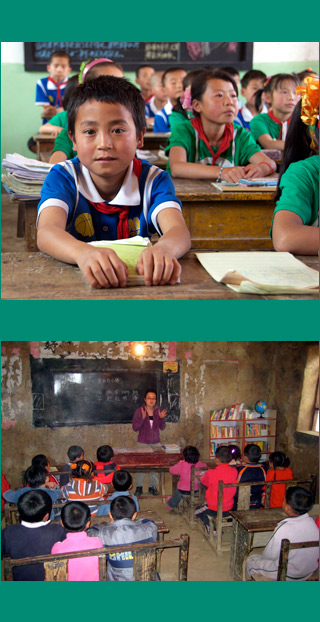
Poor education mortgaging the future? Students in a Gansu province school, where many are anemic (top); another class room in Loess Plateau. (Top Photo: Adam Gorlick)

DINGXI PREFECTURE: Wang Hongli, 8 years old, lives in a remote rural village on the Loess Plateau in one of China’s poorest and most agricultural provinces, Gansu. His prospects for living the good life are as bleak as the landscape. He is not on track to become part of China’s emerging middle class, the free-spending, computer-savvy, person-of-the-world often featured in the western media.

Hongli is a pseudonym. His parents work in a faraway industrial zone, coming home for only three weeks at Chinese New Year. His grandmother takes care of him and his siblings on the weekends, and during the week he lives in a dorm, three to a bed with 36 other students in an unheated room 4 by 4 meters.

Hongli suffers from iron-deficient anemia, but neither his family nor his teacher knows he is sick. Even if his anemia is discovered and treated by the researchers who have documented 30 percent anemia among children in poor rural areas, it likely will recur after he finishes the study, with furnished dietary supplements. Despite educational pamphlets, he’ll likely revert to a diet of staple grains and bits of pickled vegetables.

Unsurprisingly, Hongli’s grades are not good. In China’s competitive school system, he has only a slight chance of attending high school, much less college. In China’s future high-wage economy, all Hongli can hope for is a menial job in the provincial capital, Lanzhou, or as a temporary migrant elsewhere. Without urban permanent residency, hukou, he will have limited access to urban social services. He may suffer chronic unemployment, or resort to the gray economy or crime. He also may never marry – one of the millions of “forced bachelors” created by China’s large gender imbalance.

In China’s future high-wage economy, 
all the rural poor can hope for is menial jobs in a provincial capital.

Hongli is not alone. In fact, he’s one of 50 million school-age youth in China’s vast poor rural hinterlands. Recent studies by Stanford and Chinese collaborators show that 39 percent of fourth-grade students in Shaanxi Province are anemic, with similarly high rates elsewhere in the northwest; up to 40 percent of rural children in the poor southwest regions, e.g., Guizhou, are infected with intestinal worms. Millions of poor rural students throughout China are nearsighted, but do not wear glasses.

Because China’s urbanites have fewer children, poor rural kids like Hongli represent almost a third of China’s school-aged children, a large share of the future labor force. These young people must be healthy, educated and productive if China is to have any chance of increasing labor productivity to offset the shrinking size of its aging workforce.

Many observers presume that China’s growth will continue unabated, drawing upon a vast reservoir of rural labor to staff manufacturing plants for the world. In fact, to a considerable extent, China’s rural areas have already been emptied out, leaving many villages with only the old and the very young. The growth of wages for unskilled workers exceeds GDP growth.

Better pay should be good news for poverty alleviation. However, rising wages push up the opportunity cost of staying in school – especially since high school fees, even at rural public schools, are among the highest in the world.

It’s myopic to allow rural students to drop out of junior high and high school – mitigating the current labor shortage, but mortgaging their futures. Recent studies demonstrate that eliminating high school tuition – or reducing the financial burden on poor households – improves junior high achievement and significantly increases continuation on to high school. Yet unlike many other developing countries, China does not use incentives to keep children in school, such as conditional cash transfers. The public health and educational bureaucracies also do not proactively cooperate to remedy nutritional and medical problems – including mental health – that school-based interventions could address cost effectively.

Less than half of youth in China’s poor rural areas go to academic high school; less than 10 percent head to college.

The educational system, based on rote memory and drill, doesn’t teach children how to learn. The vocational education system is ineffective. Instead, China’s schools tend to focus resources on elite students. Tracking starts early, and test scores are often the sole criterion for success. A recent comparative study documents that China’s digital divide, with lower access to computers in poor rural areas, is among the widest in the world.

China’s government is increasing expenditures for school facilities and raising teacher salaries. However, these steps are far from adequate. During South Korea’s high growth, almost all Korean students finished high school. Today, less than half of youth in China’s poor rural areas go to academic high school, and the percent going to college remains in the single digits.

Greater investment in public health and education for the young people in China’s poor rural areas is urgent. If the government waits 10 years, it may be too late to avert risks for China’s stability and sustained economic growth.

Surely China could easily address this problem? A third of Chinese were illiterate in the early 1960s; now, fewer than 5 percent are. By 2010, about 120 million Chinese had completed a college degree. Chinese also enjoy a relatively long life expectancy compared to India and many other developing countries, and basic health insurance coverage is almost universal.

But the pace of change and citizens’ expectations are higher as well. Most Chinese assume that basic nutritional problems and intestinal worms were eradicated in the Mao era. China’s mortality halved in the 1950s; fertility halved in the 1970s. As a result, China will get old before it gets rich. Population aging, rapid urbanization and a large gender imbalance represent intertwined demographic challenges to social and economic governance. The policy options are complicated, the constraints significant, the risks of missteps real and ever-present.

China’s prosperity depends on youth mastering skills to thrive in a technology-driven world.

Timely policy response is complicated by competition for resources – pensions, long-term care, medical care for the elderly and more – as well as significant governance challenges arising from a countryside drained of young people. The well-intentioned programs for what government regards a “harmonious society” create large unfunded mandates for local authorities. Attempts to relocate rural residents to new, denser communities provoke anger at being uprooted and skepticism that local authorities simply want to expropriate land for development.

Millions of migrant workers – like Wang Hongli’s parents – return to their rural homes during economic downturns. Urbanization weakens this capacity to absorb future economic fluctuations. Government efforts at “social management” – strengthening regulatory control of informal social groups and strategies for diffusing social tensions – expand the bureaucratic state, a central target of popular discontent.

Premier Wen Jiabao’s announcement of a 7.5 percent growth target – the lowest in two decades – has been expected. Future economic growth will moderate partly because of demographics, but mostly because productivity gains slow as an economy runs out of surplus rural labor and converges on the technological frontier. Costly upgrading of industrial structure will squeeze the government’s ability to deliver on its promise of a better future for all, stoking social tensions.

China’s stability and prosperity, and that of the region and the globe, depends on how well today’s youth master the knowledge and skills that enable them to thrive in the technology-driven globalized world of the mid-21st century. Resilient public and private sector leaders of the future must be able to think creatively. Therefore, China’s government should respond to population aging by acting now to invest more in the health and education of youth, especially the rural poor.


Hero Image
5734696609 a3b10b4c8f z
All News button
1
News Type
News
Date
Paragraphs

“A postdoctoral program is crucial to the intellectual development of any strong academic institution. I am proud the Shorenstein Asia-Pacific Research Center will serve as a home next year for these four talented emerging Asia scholars. Not only will they benefit from taking part in our vibrant research and publishing activities, but they will also bring new expertise and perspectives to our Center.”

-Gi-Wook Shin, Director, Shorenstein APARC

 
In the coming academic year, the Shorenstein Postdoctoral Fellowship program will double in size.

The four incoming fellows represent the best of the next generation of contemporary Asia scholars. Their research ranges from civil society and authoritarian governance in China to ethnic conflict in South Asia, and Korean migration and identity to election politics in Japan.

During their time at the Shorenstein Asia-Pacific Research Center (Shorenstein APARC), the fellows will conduct their own research and writing, present their work at public seminars, and take part in the research and publishing activities of the Center. Postdoctoral fellows will also have the chance to exchange ideas with Shorenstein APARC experts and interact with the many distinguished visitors who visit each year from throughout the Asia-Pacific region.

In addition, the Asia Health Policy Program at Shorenstein APARC will welcome two postdoctoral fellows in the 2012–13 academic year: an Asia Health Policy Fellow and a Developing Asia Fellow.

Postdoctoral fellows are a vital part of the academic life of the Center, and their relationships with Shorenstein APARC will continue throughout their entire careers.

The Shorenstein Postdoctoral Fellowship Program is made possible through the generosity of Walter H. Shorenstein.

“This fellowship has changed the trajectory of my academic career. It has given me the intellectual space to be highly productive and the freedom to expand my understanding of world events in order to enhance my future teaching and research. Thanks in large part to the fellowship, I was able to obtain an appointment as an assistant professor in the Department of International Relations at Boston University.”

-Jeremy Menchik, 2011–12 Shorenstein Postdoctoral Fellow


2012–13 Shorenstein PostDoctoral Fellows

Image
Diana Fu

Diana Fu will be joining Shorenstein APARC from Oxford University’s Department of Politics and International Relations, and from the Massachusetts Institute of Technology where she recently served as a political science research fellow. Her research interests encompass state-society relations in authoritarian regimes, civil society, governance, and labor contention. She will be completing a series of journal articles about civil society and authoritarian governance in China. Fu holds an MPhil in international development from Oxford University where she studied as a Rhodes Scholar, and a BA in global studies and political science from the University of Minnesota.

Image
Jaeeun Kim
Jaeeun Kim is a postdoctoral research associate at the Center for the Study of Religion at Princeton University. She is interested in issues of identity within the context of international migration, which she explores in her dissertation Colonial Migration and Transborder Membership Politics in Twentieth-Century Korea. She is also developing a project focusing on ethnic Korean migrants from northeast China to the United States, including issues such as legalization strategies and conversion patterns. Kim holds an MA and a PhD in sociology from the University of California, Los Angeles, and a BA in law from Seoul National University.

Image
Daniel M. Smith
Daniel M. Smith, a PhD candidate with the Department of Political Science at the University of California, San Diego (UCSD), is completing his dissertation on the causes and consequences of political dynasties in developed democracies, with particular focus on Japan. He has conducted research in Japan as a Japanese Ministry of Education research scholar (2006–2007), and as a Fulbright dissertation research fellow (2010–2011). Smith holds an MA in political science from UCSD, and a BA in political science and Italian from the University of California, Los Angeles. After completing his fellowship at Shorenstein APARC, he will join the Department of Government at Harvard University as an assistant professor.

Image
Ajay Verghese
Ajay Verghese is a PhD candidate in the Department of Political Science at The George Washington University. His work focuses on comparative politics and international relations, and his research interests include South Asia, ethnicity, ethnic conflict, historical analysis, and qualitative methods. Verghese has conducted language training and fieldwork in India, with support from organizations such as the American Institute of Indian Studies and the U.S. State Department Critical Language Scholarship Program. He will be turning his dissertation into a book entitled The Colonial Origins of Ethnic Violence: India and the Indian Ocean Region. Verghese holds a BA in political science and French from Temple University.

Hero Image
EncinaSkyLOGO
Encina Hall, Stanford University campus
George Krompacky
All News button
1
-

More than two decades after the cold war ended elsewhere, it continues undiminished on the Korean Peninsula. The division of the Korean nation into competing North and South Korean states and the destructive war that followed gave rise to one of the great, and still unresolved, tragedies of the twentieth century.

Published for the first time in English, Peacemaker is the memoir of Lim Dong-won, former South Korean unification minister and architect of Nobel Peace Prize winner Kim Dae-jung’s Sunshine policy toward North Korea. Lim will present a talk at Stanford in conjunction with the book’s U.S. release, highlighting major themes from it and discussing them within the context of recent developments on the peninsula.

As both witness and participant, Peacemaker traces the process of twenty years of diplomatic negotiations with North Korea, from the earliest rounds of inter-Korean talks through the historic inter-Korean summit of June 2000 and beyond. It offers a fascinating inside look into the recent history of North-South Korea relations and provides important lessons for policymakers and citizens who seek to understand and resolve the tragic—and increasingly dangerous—situation on the Korean Peninsula.

About the Speaker

Following a thirty-year career in the South Korean military, Lim Dong-won’s government service began with his tenure as ROK ambassador to Nigeria and then Australia; under the Roh Tae-woo administration, he served as chancellor of the Institute of Foreign Affairs and National Security and director of arms control planning. During the Kim Dae-jung administration Lim held numerous key national-level posts, including head of the National Intelligence Service and minister of unification. He currently is chairman of the Korea Peace Forum and the Hankyoreh Foundation for Reunification and Culture.

This event is made possible by the generous support from the Koret Foundation.

Philippines Conference Room

Dong-won Lim former Minister of Unification, South Korea Speaker
Seminars
-

The emergence of Protestant Christianity introduced by American missionaries in the late 19th century influenced various reform movements aimed at reconstituting Korean society. Today, five of the ten largest Protestant churches as well as the largest mega-church in the world are said to be in South Korea. Professor Park argues, however, that Protestant Christianity appears to have lost its potential for transforming society, and that often the churches are enmeshed in heredity scandals and calumniations. He will examine the causes of these phenomena.

Yong-Shin Park is a professor of sociology emeritus at Yonsei University, Korea. His areas of interest include social theory, historical sociology, and social movements. He directed the Yonsei Institute of Korean Studies, and co-founded an interdiscplinary journal, Hyonsang-gwa-inshik. He takes part in ecological movements as a member of World Without Nuclear Power and Green Korea United where he served as president from 2000 to 2011.

Philippines Conference Room

Yong-Shin Park Professor of sociology emeritus Speaker Yonsei University in Korea
Seminars
Subscribe to South Korea