-

Transferring knowledge and skills through skilled labor has become a critical topic in contemporary migration studies. Countries that are traditionally non-immigrant destinations often turn to their diaspora communities to increase the chances of return flows and knowledge transfer. It has been almost twenty years since South Korea enacted the ‘Overseas Korean Act’ in 1999, which attracted a large number of overseas Koreans back to its shore. Yet there has been very little discussion over the policy implications and what particular ‘skills’ or contributions the returnees have brought to Korean society.

In this seminar, Jane Yeonjae Lee describes some of the research findings from her forthcoming book Quest for home: Transnational return migration of 1.5 generation Korean New Zealanders (Lexington Press, 2018). This book project, which has been based on a life-history and transnational ethnographic research with 49 Korean return migrants, partly investigates the implications for global knowledge transfer through skilled mobilities. Lee will discuss a number of different pathways of returnees’ particular influences on Korean society, and how their certain knowledge and skills can be transferred, hindered, or mutated.

Image
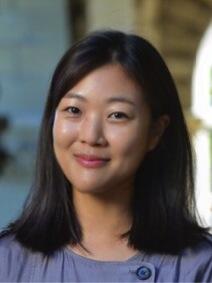
yeonjae lee
Jane Yeonjae Lee is an interdisciplinary qualitative researcher and her research revolves around transnationalism, migrant communities, mobilities, health, and urban environmental politics. In particular, she is interested in understanding the migratory experiences of highly skilled immigrants and how their mobile lives connect and shape the places of migration they move through. Her work has been featured in academic journals such as Health and Place; New Zealand Geographer; and Journal of Ethnic and Migration Studies. She has also contributed to key texts in the field of geography including Elgar Handbook on Medical Tourism and Patient Mobility; Researching the Lifecourse: Critical reflections from the social sciences; and Contemporary Ethnic Geographies in America. Lee holds a PhD in Geography from the University of Auckland. Dr. Lee is currently a visiting scholar at Shorenstein Asia-Pacific Research Center at Stanford University. 

616 Serra StreetEncina Hall E301Stanford, CA94305-6055
(650) 723-6530
0
yeonjae_lee.jpg Ph.D.

Jane Lee joins the Walter H. Shorenstein Asia-Pacific Research Center as a Visiting Scholar during the 2017-18 academic year. Prior to joining Shorenstein APARC, she was a Postdoctoral Research Fellow at Northeastern University working in a global comparative project on exploring sustainable mobilities policies.

Jane is an interdisciplinary qualitative researcher and her research revolves around transnationalism and migration, skilled mobilities, and social policies. In particular, she is interested in understanding the mobile (and marginalized) experiences of migratory groups, and how the particular mobilities of people and ideas may affect the places that are involved. Her work has been featured in academic journals such as Health and Place, and New Zealand Geographer. She has also contributed to key texts in the field of Geography including Elgar Handbook on Medical Tourism and Patient Mobility, Researching the Lifecourse: Critical reflections from the social sciences, and Contemporary Ethnic Geographies in America. During her time at Shorenstein APARC, Jane will participate as a paper author in the Koret Workshop and other center activities.

Jane holds a PhD and BA(Hons) in Geography from the University of Auckland. She also currently serves as an Honorary Research Associate at the University of Auckland. 


Recent Publications:

Lee, J.Y. (2017) ‘Being non-Christian in a Christian community: Experiences of Belonging and Identity among Korean Americans’, Institute of Asian American Studies Publications. 43.

Lee, J.Y., Friesen, W. and Kearns, R. (2015) ‘Return migration of 1.5 generation Korean New Zealanders: Long term and Short term reasons’, NZ Geographer, 71, 34-44.

Lee, J.Y., Kearns, R. and Friesen, W. (2015) ‘Diasporic medical return’, In Lunt, N., Hanefeld, J. and Horsfall, D. (Eds) Elgar Handbook on Medical Tourism and Patient Mobility. London: Elgar, (p.207-216).

Lee, J.Y. (2015) ‘Narratives of the Korean New Zealanders’ return migration: Taking a life history approach’, In Worth, N. and Hardill, I. (Eds) Researching the Lifecourse: Critical reflections from the social sciences. Bristol: Policy Press, (p.183-198). (Invited Contribution)

Lee, J.Y. (2015) ‘Korean Americans: Entrepreneurship and religion’, In Miyares, I. and Airriess, C. (Eds) Contemporary Ethnic Geographies in America (2nd Edition). Rowan & Littlefield Publishing Group, (p.285-302) (Invited Contribution)

Lee, J.Y. (2015) ‘Returning Diasporas: Korean New Zealander returnees’ journeys of searching ‘home’ and identity’ In Christou, A. and Mavroudi, E. (Eds) Dismantling diasporas: rethinking the geographies of diasporic identity, connection and development. London: Ashgate, (p.161-174).

Lee, J.Y. (2011) ‘A trajectory perspective towards return migration and development: The case of young Korean New Zealander returnees’, In Frank, R., Hoare, J., Kollner, P. and Pares, S. (Eds) Korea: Politics, Economy and Society. Danvers: Brill, (p.233-256).

Lee, J.Y., Kearns, R. and Friesen, W. (2010), ‘Seeking affective health care: Korean immigrants’ use of homeland medical services’, Health and Place, 16 (1), 108-115.

Visiting Scholar
<i>Visiting Scholar, APARC, Stanford University</i>
Seminars
News Type
Commentary
Date
Paragraphs

“I don't think [young South Koreans] necessarily want reunification,” APARC director Gi-Wook Shin tells an audience during the World Affairs panel, “Responding to North Korea: South Korea’s Olympic Olive Branch and US Cyber Warfare Options." Joined by Ambassador Kathleen Stephens, the two spoke with World Affars CEO Jane Wales about many of the issues facing the Korean peninsula as it prepares for the start of the Pyeongchang Winter Olympics

The conversation is also available as a downloadable podcast

Hero Image
Wrold Affairs CEO Jane Wales, APARC Director Gi-Wook Shin, and Kathleen Stephens
All News button
1
Paragraphs
Book cover of "Peace on a Knife's Edge" showing South Korean president Roh Moo-hyun alongside George W. Bush and Kim Jong-il

Lee Jong-Seok served as vice-secretary of South Korea’s National Security Council and as its unification minister under the Roh Moo-Hyun administration (2003–08). After Roh’s tragic death in 2009, Lee resolved to present a record of the so-called participatory government’s achievements and failures in the realm of unification, foreign affairs, and national security.

Peace on a Knife’s Edge is the translation of Lee’s 2014 account of Roh’s efforts to bring peace to the Korean Peninsula in the face of opposition at home from conservative forces and abroad from the Bush administration’s hard stances of “tailored containment” and its declaration of the North as part of the “axis of evil.” Lee’s narrative will give American readers rare insights into critical moments of Roh’s incumbency, including the tumultuous Six-Party Talks; the delicate process of negotiating the relocation and reduction of United States Forces Korea; Roh’s pursuit of South Korea’s “autonomous defense”; conflicts with Japan over history issues; and the North’s first nuclear weapons test.

Desk, examination, or review copies can be requested through Stanford University Press.

All Publications button
1
Publication Type
Books
Publication Date
Subtitle

The Inside Story of Roh Moo-hyun's North Korea Policy

Book Publisher
Shorenstein APARC
-

Free and open to the public. For details of this event, please visit the event website, https://events.stanford.edu/events/752/75249/

This event is sponsored by:
Stanford University Libraries, East Asia Library, History Department, Center for East Asian Studies, Shorenstein Asia-Pacific Research Center, Department of East Asian Languages and Cultures

East Asia Library, Room 224

518 Memorial Way

Stanford University

Lectures
-

Image
keunlee 2012
Keun Lee, winner of the 2014 Schumpeter Prize and a professor of economics at Seoul National University, will explore the Schumpeterian hypothesis that the effectiveness of the national innovation system (NIS) of a country determines its long term economic performance, using the case of South Korea as an example. Professor Lee will present an overview of South Korea’s NIS during the “catch-up” and “post-catch-up” stages; and will compare the Korean case with the NIS of European economies to derive comparative lessons. He will also address specific innovation issues in Korea, such as commercializing knowledge in the public sector.

Professor Lee authored Economic Catch-up and Technological Leapfrogging: Path to Development & Macroeconomic Stability in Korea (2016, E Elgar); and Schumpeterian analysis of Economic catch-up (Cambridge University Press, 2013: awarded Schumpeter Prize). He is currently president of the International Schumpeter Society, a member of the Committee for Development Policy of the UN, an editor of Research Policy, an associate editor of Industrial and Corporate Change, and a council member of the World Economic Forum. He obtained a PhD in economics from the University of California, Berkeley, and worked at the World Bank, University of Aberdeen, and the East West Center, Hawaii. One of his most cited articles is a paper on Korea’s Technological Catch-up published in Research Policy, with 1,000 citations (Google Scholar). His H-index is now 35, with 85 papers with more than 10 citations.

Keun Lee <i>Professor of Economics, Seoul National University</i>
Seminars
News Type
News
Date
Paragraphs

Former U.S. ambassador to South Korea Kathleen Stephens spoke on the "PBS News Hour" about the first high-level talks between North Korea and South Korea in more than two years. The two nations agreed to hold future military talks aimed at easing border tensions and the North pledged to send a delegation to the Olympic Games next month.

Stephens called it a good first step and an “all-too-rare positive development” on the peninsula. The decrease in potential for disruptions to next month’s games could—according to Stephens-be seen as the first deliverable by South Korea’s new president, Moon Jae-In, on a promise to reengage with the North.

Ambassador Stephens said it was not surprising that denuclearization did not come up during Tuesday’s talks, noting North Korea’s position that the issue is one to be dealt with the United States. Ambassador Stephens speculated that once the Olympics closed, the peninsula might experience a period of reduced tensions along with confidence building. However, she believes that come the spring there would still remain important questions about military exercises as well as nuclear weapons.

Asked about news reports of discussions within the Trump administration on the possibility of targeted strikes against North Korean military sites, Ambassador Stephens described it as a very risky strategy, adding that the discussions alone could prove unnerving in South Korea as well as North Korea.

The full interview is available on PBS.

Hero Image
Former Ambassador Stephens discusses talks between North and South Korea on PBS News Hour
All News button
1
News Type
Commentary
Date
Paragraphs

In advance of talks between North Korea and South Korea, APARC’s Daniel Sneider says the most immediate threat on the peninsula actually comes from the latter.

In a piece for The Hill, Sneider writes that by embracing North Korea’s offer for dialogue, South Korean President Moon Jae-in—who seeks a peaceful Olympic Games, good relations with China, and reduced tensions with the North—risks diminishing America’s presence in the region.

The challenge for the U.S. administration, accordng to Sneider, is to afford South Korea freedom to explore opportunities for dialogue, while ensuring that such freedom does not result in driving the United States off the peninsula.

The full article is available at The Hill


Hero Image
  Joint Security Area;  Panmunjom, DPRK (North Korea) Flickr/John Pavelka
All News button
1
News Type
News
Date
Paragraphs

Former U.S. ambassador to South Korea Kathleen Stephens spoke on "Bloomberg Daybreak: Asia" about President Trump's Asia trip on the eve of his arrival in China.

Stephens noted that in canceling a trip to the DMZ--more or less a presidential tradition on visits to Korea--Trump did the "right thing" by instead focusing on the "must-do" on this first trip of reassuring South Koreans on the U.S. commitment to its alliance with the Republic of Korea.

Both North Korean and Trump administration rhetoric seems to have cooled off in recent days; Stephens noted that Trump seems to have "gotten the message" about the importance of the relationship with South Korea and the level of nervousness in the country. 

Ambassador Stephens commented on the feasibility of beginning talks with North Korea and what additional pressure might be required to get the North to the table. She noted that if denuclearizing were a precondition for talks, they wouldn't happen.

She speculated on what President Trump might ask the Chinese to do to up the pressure on North Korea, for example, cutting off oil exports. She also suggested that when it comes to talking about trade, the emphasis might be on announcing deals and Trump might act as "salesman-in-chief."

The full interview is available on Bloomberg TV.

All News button
1
-

[[{"fid":"228881","view_mode":"crop_870xauto","fields":{"format":"crop_870xauto","field_file_image_description[und][0][value]":"","field_file_image_alt_text[und][0][value]":false,"field_file_image_title_text[und][0][value]":false,"field_credit[und][0][value]":"","field_caption[und][0][value]":"","thumbnails":"crop_870xauto","alt":"","title":""},"type":"media","field_deltas":{"1":{"format":"crop_870xauto","field_file_image_description[und][0][value]":"","field_file_image_alt_text[und][0][value]":false,"field_file_image_title_text[und][0][value]":false,"field_credit[und][0][value]":"","field_caption[und][0][value]":"","thumbnails":"crop_870xauto","alt":"","title":""}},"link_text":null,"attributes":{"style":"margin-left: 0px; margin-right: 15px; padding: 0px; float: left; width: 140px; height: 187px;","class":"media-element file-crop-870xauto","data-delta":"1"}}]]Hak-kyu Sohn, a career politician and the former chairman of the South Korea's Democratic Party, will share his insights into Korean democracy based on his decades of experience in politics.

As a student activist, Sohn participated in Korea's democratization movement, which rose up against the nation's military dictatorship, and he also led labor and human rights movements. As a result of his activities under South Korea's oppresive military rule, Sohn was imprisoned. Later, he went on to be appointed minister of health and welfare, became governor of Gyonggi Province, and served four terms as a member of the National Assembly.

Sohn received a PhD in politics from University of Oxford, England, and BA in political science from Seoul National University.

Philippines Conference Room
Encina Hall, 3rd floor
616 Serra Street
Stanford University
Directions

Hak-kyu Sohn <i>Visiting Scholar, Shorenstein APARC; former Chairman of Democratic Party, South Korea</i>
Seminars
Subscribe to South Korea