-

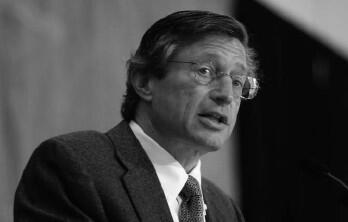
Mike Chinoy, the Pacific Council’s Edgerton Senior Fellow for Asia and author of the just-published and critically-received book, Meltdown: The Inside Story of the North Korean Nuclear Crisis will discuss the main themes in his book, update us on the recent developments in the Bush administration’s policy toward North Korea and assess what other policy options the next U.S. president might pursue.

Image
MELTDOWN The Inside Story of the North Korean Nuclear Crisis
Drawing on over 200 interviews conducted in Washington, Seoul, Tokyo and other Asian capitals – as well as insights gained from Mr. Chinoy’s 14 trips to Pyongyang – Meltdown provides a detailed account of the behind-the-scenes policy debates within the Bush administration and other governments that drove the recent confrontation over North Korea’s nuclear weapons program.  It also offers important new details of the impact the crisis had on U.S. relations with its key regional allies – Japan and South Korea – and on Washington’s fraught relationship with Beijing. 

» Washington Post’s review of the "Meltdown: The Inside Story of the North Korean Nuclear Crisis"

Mike Chinoy is one of America’s keenest observers of Asian affairs, having reported on the most important events in the region for almost thirty years. He previously served as CNN’s senior Asia correspondent (2000-06), its Hong Kong bureau chief (1996-2000), and Beijing bureau chief (1987-95).  Earlier, he spent four years as a reporter with NBC’s Hong Kong Bureau, and from 1975-78 he was a Hong Kong-based freelance reporter, contributing to CBS News as well as Newsday, The Far Eastern Economic Review and other publications.

Mr. Chinoy received an Emmy Award, an ACE Award, a Dupont Award and a Peabody Award for his coverage of the 1989 Tiananmen Square crisis.  His critically-acclaimed reporting during those weeks has been credited with strengthening CNN as an authoritative force in international news coverage. Mr. Chinoy has also covered North Korea extensively, traveling there 14 times since 1989.  In April 1994, he became the first broadcaster to file live TV reports from North Korea, and was the only journalist to travel with former U.S. President Jimmy Carter on his historic trip to Pyongyang in June of that year.

Philippines Conference Room

Mike Chinoy Edgerton Senior Fellow Speaker Pacific Council on International Policy
Seminars
Authors
News Type
News
Date
Paragraphs
Shorenstein APARC director Gi-Wook Shin offered his analysis of the possible scenarios for succession of power in North Korea in an interview with the New York Times. Shin told The Times that he thought the Kim dynasty would continue to play a role, even if symbolic in the structure, of power in North Korea. "My guess is like this: they will keep the Kim family as a social and political institution like the emperor system in Japan, offering symbolic and moral power for North Koreans, but are likely to establish a collective leadership system in which the military will play a key role. We may, then, witness some political instability in the North."
All News button
1

Kim argues anti-Americanism belongs to a category of political opposition which may be divided into orthodox dissent and unorthodox dissent: the former involving "efforts to improve the existing system in keeping with its underlying ideological values," while the latter is mainly concerned with the change in political and socioeconomic structures.

In the South Korean context, orthodox dissent is the conservative-rightist whereas unorthodox dissent the progressive-leftist. While sometimes criticizing the U.S. on selected issues, the conservative-rightist accounts cooperation with the U.S. crucial for keeping North Korea from provoking military actions against the South. On the other hand, the progressive-leftist regards the North Korean regime a partner to live together and unification with the North most valuable, transcending ideologies and systems. The progressive-leftist naturally regards "dependence" on the U.S. being against its national autonomy, and in the extreme, the U.S. an obstacle to its unification with the North.

This talk brings its focus on anti-Americanism derived from the progressive-leftist or unorthodox dissenting argument, and its influence on the ROK-U.S relations.

Hakjoon Kim is a visiting scholar at Center for East Asian Studies at Stanford and is the Chairman of Dong-a Il Bo, South Korean newspaper.  He was the President of Korea Political Science Association and Korean Federation of Teachers' Associations.  Kim was Scholar at the Alexander-von-Humboldt Foundation in Germany, and Guest Scholar at the Woodrow Wilson International Center for Scholars in Washington, D.C.

Philippines Conference Room

Hakjoon Kim Visiting Scholar, CEAS Speaker
Seminars

Shorenstein APARC
Stanford University
Encina Hall E301
Stanford, CA 94305-6055

(650) 723-6530
0
Visiting Scholar, 2008-09
Jong-Seok_Lee.JPG

Dr. Jong Seok Lee was the Minister of Unification, and the Chairman of the Standing Committee of the National Security Council in Korea. He is currently a Senior Fellow at Sejong Institute in Korea. He has published books on North Korea-China relations, contemporary North Korea, and Korea unification.

Authors
News Type
News
Date
Paragraphs
Pyongyang suspends its dismantling plans. Is North Korea hoping to push the Bush administration into reconsidering its verification policies or "playing for time in hopes of winning a better deal from" the next administration? Shorenstein APARC's associate director for research, Daniel C. Sneider, suggests they could be doing both.
All News button
1
Authors
Stephen J. Stedman
News Type
Commentary
Date
Paragraphs
FSI senior fellow Stephen Stedman reviews John Bolton's book, Surrender Is not an Option, in the July/August issue of the Boston Review. "The memoir reads like an international relations primer done in the style of a modern morality tale," he writes. "Imagine Kenneth Waltz's classic Man, the State, and War as written by Ayn Rand."

One of the more remarkable underreported stories of 2008 was a speech in which the State department’s legal adviser John Bellinger admitted that there “are also realities about the International Criminal Court that the United States must accept.” He also stated that the Bush administration would work with the Court to maximize its chances of success in Darfur. Bellinger did not say that the United States might actually join the Court, but acknowledged that it enjoyed widespread international support and legitimacy, and that the United States could fruitfully cooperate with it on areas of mutual benefit.

Neither mea culpa nor volte-face, the speech nonetheless indicates the distance the administration has traveled in seven years. While Bellinger’s oratory went largely unnoticed by foreign policy wonks and the attentive public alike, it did not escape the scrutiny of John Bolton, who dismissed it as Clinton-era “pabulum” and reflective of “the yearning the Rice State Department has for acceptance” by academics and foreign intellectuals. He added ominously, “the fight resumes after Jan. 20.”

Bolton has been a powerful influence on Republican foreign policy for the last twenty years. Before his appointment as ambassador to the United Nations in 2005—which was achieved without Senate confirmation—Bolton dominated arms-control policy in the first Bush term. He killed the Anti-Ballistic Missile (ABM) Treaty, negotiations with North Korea, and the Biological Weapons Convention verification protocol. During the Clinton years, he campaigned tirelessly from his Heritage Foundation perch for missile defense and against global governance, which he seems to equate with global government. In 1998, when then-Secretary-General of the United Nations Kofi Annan released a report critical of both the United Nations secretariat and member states for the failure to prevent genocide in Srebrenica, Bolton chastized Annan for having the temerity to criticize governments for what they did or did not do in the former Yugoslavia. He added menacingly: “I think if he continues down this road, ultimately it means war, at least with the Republican Party.”

Bolton came of age politically during Barry Goldwater’s presidential campaign. The future policy heavyweight was a high schooler in Baltimore at the time. He honed his conservatism at Yale College and Yale Law School, ducked Vietnam through a National Guard posting (“looking back, I am not terribly proud of this calculation”), and got his first taste of Washington as an intern to Spiro Agnew. During the Bush Sr. presidency, Bolton was Assistant Secretary for International Organization Affairs in James Baker’s State Department, and was one of the first people who Baker called when he needed a posse of chad-disputing lawyers in Florida in November 2000. Bolton’s name keeps showing up in various articles about the fight inside the Republican Party for the soul of John McCain’s foreign policy.

All of this makes it imperative to read his memoirs, which clarify the stakes in the forthcoming election. Although it is hard to imagine Bolton in a McCain administration—his memoirs offend so many within his party, across the aisle, and overseas, that Bolton could not win Senate confirmation for capitol dog-catcher—Bolton will be plotting, pressing, and pushing to force McCain’s foreign policy back to the unilateralism of George Bush’s first term, when the war on terror meant never having to say you’re sorry. And there are important national security posts that do not require Senate approval.

The memoir reads like an international relations primer done in the style of a modern morality tale—imagine Kenneth Waltz's classic Man, the State, and War as written by Ayn Rand.

To Bolton, the United Nations is a “target rich environment,” and I had a front row seat to watch his gunslinging. In 2005 I served as Special Adviser to UN Secretary-General Kofi Annan. I was responsible for developing member-state support for his efforts to overhaul the United Nations. In that capacity, I was in Brussels in March 2005 when President Bush nominated Bolton as Ambassador to the United Nations. One high-ranking EU official recoiled in horror, and, to share his agita, repeated two of Bolton’s more famous lines: that “UN headquarters could lose ten floors and no one would know the difference,” and that “there was no United Nations.” How in the world, the official asked, could such a man be Ambassador to the United Nations?

Amidst nodding heads and shared pained looks, I offered that if I could pick the ten floors, I would agree with Bolton. Moreover, I said, any sentient being who spends time in Turtle Bay—the Manhattan site of the United Nations—will at some point in frustration say to themselves that there is no United Nations. Bolton’s sin was to say it publicly. Finally, I suggested that John Bolton was irrelevant: “If the President of the United States and the Secretary of State want a strong, effective United Nations, then Bolton will have to deliver. If they don’t, you could have John Kerry as the U.S. ambassador, and nothing will happen.”

Oh well; win some, lose some. Which is what Condoleeza Rice is rumored to have told a friend who asked how John Bolton could have possibly been nominated for the position under her watch.

Or more accurately, I was half right, half wrong. Reading this book, one can almost feel sorry for how unsuited Bolton was for his new job. For four years he had been the point man for breaking American commitments abroad, insulting allies and enemies alike, ditching the ABM Treaty, and unsigning the Rome Statute, which established the International Criminal Court (“my happiest moment at State”). In the heady days of the first Bush administration, when it believed the United States was so powerful it could get anything that it wanted without friends, partners, or institutions, Bolton was the “say no” guy, a job he performed with great brio. How could he know that in 2005 his big boss, the President, and his nominal boss, the Secretary of State, would actually decide that international cooperation was necessary, and that maybe we should start worrying about America’s free fall in world opinion? A pit bull in the first term, Bolton would be a yap dog in the second, grating on the Secretary of State, the President, and most American allies.

Almost sorry, for whatever else you say about John Bolton, he is not of the “we can disagree without being disagreeable” school of American politics. This is one of the nastiest, pettiest memoirs in the annals of American diplomatic history. Among the many targets of insults and catty remarks are former and present U.K. ambassadors to the United Nations Emyr Jones Parry, Adam Thomson (“I could never look at or listen to Thomson without immediately thinking of Harry [Potter] and all his little friends”), and John Sawers; recent U.K. foreign ministers; just about every UN civil servant mentioned; indeed, just about every U.S. civil servant mentioned, along with countless journalists and politicians.

The memoir reads like an international relations primer done in the style of a modern morality tale—imagine Kenneth Waltz’s classic Man, the State, and War as written by Ayn Rand. Bolton, usually singlehandedly, takes on what he calls the High Minded, the Normers (those who create international norms of behavior or try to “[whip] the United States into line with leftist views of the way the world should look”), the EAPeasers (career State Department officials who advocate negotiations with North Korea), the Risen Bureaucracy, the Crusaders of Compromise, the Arms Control True Believers, and the EUroids.

The book has the formulaic allegories typical of the genre—the young, innocent female (Kristen Silverberg, Assistant Secretary for International Organization Affairs) driven to tears after being berated by the cold-hearted career bureaucrat (Nicholas Burns); the noble knight (Bolton himself) fighting against the political higher ups who care only about “positioning themselves” (Rice) or their legacy (Colin Powell). And of course Bolton’s plaintive cries that the 2005-06 changes in administration policy occurred against the will of the President. One sees the peasants now: ‘If only the King knew what was happening, this would never go on.’

Now add a heaping dose of xenophobia. Foreigners, appeasing foreigners, foreigners claiming to know us better than we know ourselves: all loom large in Bolton’s memoirs. He insults the former Swedish foreign minister and President of the General Assembly Jan Eliasson as not only having “an ethereal Hammarskjöldian vision problem, but also a Gunnar Myrdal problem, yet another foreigner who ‘understood’ us better than we did ourselves.” (This is the Myrdal who shared the 1974 Nobel Prize in Economics with Friedrich Hayek, and whose classic book on race, An American Dilemma: The Negro Problem and Modern Democracy, was cited in Brown v. Board of Education.) At one point in his belittlement of a Bush political appointee, a special assistant to Condoleeza Rice, no less, Bolton adds that she was “a naturalized citizen originally from Pakistan,” in case we wondered why she could not possibly understand America’s real foreign policy interests. In Bolton’s worldview Zbigniew Brzezinski is probably a naturalized American citizen originally from Poland; Henry Kissinger, a naturalized American citizen originally from Germany.

In the Bolton universe, you want Iran and North Korea to be referred to the Security Council, so that when it fails to unite behind a resolute strategy, the United States is then free to take the tough action it needs to take. And in the case of North Korea, Bolton is clear about what that would be: “unilateralist, interventionist, and preemptive.” Is it any wonder that when it came to Iran and North Korea, our allies and adversaries were loathe to refer them anywhere near Bolton?

Richard Hofstadter’s 1964 article “The Paranoid Style in American Politics” was prompted by the supporters of the Goldwater campaign. Bolton strides right off the pages of Hofstadter’s essay:

He is always manning the barricades of civilization . . . he does not see social conflict as something to be mediated and compromised, in the manner of the working politician. Since what is at stake is always a conflict between absolute good and absolute evil, what is necessary is not compromise but the will to fight things out to a finish. Since the enemy is thought of as being totally evil and totally unappeasable, he must be totally eliminated—if not from the world, at least from the theatre of operations to which the paranoid directs his attention. This demand for total triumph leads to the formulation of hopelessly unrealistic goals, and since these goals are not even remotely attainable, failure constantly heightens the paranoid’s sense of frustration. Even partial success leaves him with the same feeling of powerlessness with which he began, and this in turn only strengthens his awareness of the vast and terrifying quality of the enemy he opposes.

According to Bolton, we do not need diplomats who negotiate, seek common ground, and strive for cooperative solutions. We need litigators who will go to the wall defending American interests, who will understand that when others say no, they mean no, and that therefore compromise is illusion. But in a world where the United States needs international cooperation for its own peace and prosperity, what comes next? Bolton’s answers are laughable—we stick with our “closest friends in the United Nations”—Israel, Palau and the Marshall Islands. Or we forge a new alliance with Japan, South Korea, Australia, Canada, and New Zealand to overcome the parasitic and paralytic EU. The road to global primacy runs through . . . Wellington?

There are, of course, some glaring contradictions in the memoirs. Bolton is known as a sovereignty hawk and he spells out the content of that doctrine as “greater independence and fewer unnecessary restraints.” The job of civil servants, politically appointed or career, is “to implement the president’s policies.” So it comes as a double shock when we find Bolton handing a draft Security Council resolution to the Israeli ambassador, in case the ambassador wants to ask his Prime Minister to appeal directly to Bush or Rice to change President Bush’s policy on Lebanon.

Another example concerns Bolton’s recurring beratement of UN officials for forgetting that they work for the member states. He then describes how one Under-Secretary-General, American appointee Christopher Burnham, surreptitiously showed him budget documents that put the United States at an advantage in budget negotiations. It is hard to see how you can have it both ways. Either UN officials serve all member states equally or the organization is up for grabs to the most powerful state.

But it is the big betrayal that is at the heart of the book. Facing a quagmire in Iraq, a faltering coalition in Afghanistan, a nuclear armed North Korea, the possibility of a nuclear Iran, and a war against terror that was creating more, not fewer, terrorists, Condoleeza Rice convinced President Bush that maybe they should stop digging a bigger hole for American foreign policy. And that meant actually trying diplomacy in North Korea, Iran, and the Middle East.

The losers were John Bolton and his acolytes; the winners were the professionals like Nicholas Burns and Christopher Hill. Faced with defeat and repudiation of the failed policies he advocated, Bolton’s response is familiar and tiresome: the professionals had secretly hijacked the president’s policy; the Secretary of State cares more about appeasing foreigners than protecting American interests.

The moment of reckoning for Bolton and for the President that nominated him is not described in the book, but it took place two months after Bolton left the administration. When the United States and North Korea reached a deal in February 2007 that holds the promise of denuclearizing the country, Bolton tried to scuttle it. Asked by reporters whether he was loyal to the President, Bolton answered, “I’m loyal to the original policy.”

What did Bolton achieve at the United Nations? Very little, which was fine by him and fine by the cast of nonaligned Ambassadors who oppose a more effective international organization. I asked one of them in December 2006 if he was happy that Bolton was leaving. He said, “No, we’ve learned how to deal with Mr. Bolton.” When I sought clarification, he said, “Look, Bolton comes in and asks for the sun, the moon, and the stars, and we say ‘no.’ He then says, ‘I told you so’ and leaves. Everybody is happy.”

Which returns us to the question of why anyone would want to wade through these 500 self-serving pages. The best answer: to remind yourself of the stakes of this upcoming election and why the United States needs more old-fashioned diplomacy and less paranoia and arrogance. A McCain presidency might not eschew diplomacy, but in the political free-for-all that is the Republican party, Bolton and his minions are always there, ready to denigrate any agreement or compromise, to sabotage and subvert real diplomacy.

Asked by reporters whether he was loyal to the President, Bolton answered, "I'm loyal to the original policy."

To understand the stakes, consider the little known and even less appreciated record of American negotiations with North Korea since 1994. Between what was called the “Agreed Framework” that brought North Korea back into the Nonproliferation Treaty (NPT) in 1994 and the end of 2000, the United States and North Korea reached twenty agreements on a wide array of issues. Certain of these agreements foundered in implementation, but an objective assessment shows that some of the noncompliance stemmed from constraints placed by American domestic politics.

The Bolton strategy killed the Agreed Framework, hoping through threats, sanctions, and use of force to end the North Korean regime. Unfortunately for Bolton—fortunately for the rest of us—our ally South Korea and our necessary partner China did not want to deal with the consequences: either a war or a collapsed, deadly state on their borders. In the end, they did not have to because North Korea left the NPT, developed a nuclear bomb, and tested it, bankrupting the Bolton policy and producing the sharp change of strategy that has born fruit in recent North Korean steps to end its nuclear program.

Writing about the successes of American negotiators in bringing North Korea and the United States back together in February 2007, former State Department negotiator Robert Carlin and Stanford Professor Emeritus John Lewis have described why Bolton and his crowd loathe diplomacy is loathed by Bolton and his crowd, and why it is so necessary:

Diplomats strive to put down words all of them can swallow and hopefully their superiors in [the] capital can stomach. Written agreements are difficult to reach. The pain often comes not so much in dealing with the other side but in dealing with your own. Unless you are dictating terms to a defeated enemy, you are going to have to compromise on something, probably several somethings, that will make many people unhappy. That was done for the February 13th agreement, and there is no shame to it.

John Bolton did much damage to American interests in the first Bush administration, but he was implementing the president’s policy. President Bush deserves the blame for putting Bolton in a position to continue hardming American interests even when the overall direction of policy changed.

Given that many countries treated the United States as radioactive in 2005; given that trust and confidence in the United States were at all time lows; given that our record was one of a violator of international law and human rights; President Bush, had he truly wanted to start to move the United States out of the hole he had been so assiduously digging, would have had to send to the United Nations an ambassador with extraordinary listening skills, who could work across various international chasms, rebuild respect for American diplomacy, and, yes, advocate agreements that would make a lot of people unhappy. Someone, in fact, a lot like our present Ambassador, Zalmay Khalilzad, a naturalized citizen originally from Afghanistan. Instead he sent . . . Yosemite Sam.

So back to January 20. A new American president will take office with grinding wars in Iraq and Afghanistan, a nuclear-armed North Korea, an Iran headed that way, and crises in Sudan, Israel and Palestine, Lebanon, and Pakistan. Our foreign policy is anathema; our reputation in tatters. Throw in big issues like global warming, non-proliferation, catastrophic terrorism, and a potential pandemic of a deadly new influenza. It is hard to see how any of these crises or issues can be solved without sustained international cooperation and strong international institutions. Take global warming: protecting Americans from its ravages will depend on exercising sovereignty to strike deals with other countries whose domestic behavior threatens us and whose security our domestic behavior threatens. A narrow view of sovereignty as the ability to do as we damned well please will be—quite literally—the death of us all.

Image
surrender is not an option
Surrender Is not an Option: Defending America at the United Nations and Abroad
by John Bolton. Threshold Editions, $27.00 (hardcover)


All News button
1
Authors
Daniel C. Sneider
David Straub
News Type
News
Date
Paragraphs

Over more than six decades, the partnership between the United States and the Republic of Korea has been subject to many stresses and strains, from the Korean War to coping with the challenge of North Korea’s nuclear ambitions. More recently, the democratization of South Korea has opened the alliance to much greater public scrutiny and pressures from an active and mobilized Korean public. Managing this strategic alliance in an era of democracy has been a focus of the research work on Korea conducted by FSI’s Walter H. Shorenstein Asia-Pacific Research Center.

With the election in December of Lee Myung-bak as South Korea’s president, ending two terms of progressive rule, Shorenstein APARC decided to launch a nonpartisan group of former senior U.S. government officials, scholars, and other American experts on Korea to explore how to revitalize the U.S. alliance with the Republic of Korea (ROK) after a decade of tensions. In partnership with the New York-based Korea Society, Shorenstein APARC assembled this policy study group at Stanford in early February for in-depth discussion of the challenges facing the alliance and then took the group to Korea for meetings with key figures, from President-elect Lee and his advisors to leaders of the opposition, Korean businessmen, and American diplomats and security officials.

Based on these intensive meetings, the members of this “New Beginnings” policy study group concluded that the United States now has a major opportunity to bolster and broaden its relationship with the ROK. Lee, Korea’s first businessman to be elected president and a self-proclaimed “pragmatist,” has stressed that he gives top priority to the United States in his foreign policy. His fixed five-year tenure will coincide with the entire first term of the next U.S. president, allowing the two new leaders an extended period of cooperation.

Immediately before Lee’s first visit to the United States as president in mid-April, New Beginnings members led by Shorenstein APARC Director Gi-Wook Shin, APARC Distinguished Fellow Michael H. Armacost, and Korea Society President Evans J.R. Revere visited Washington, D.C., and New York City to release their report, New Beginnings in the U.S.-ROK Alliance: Recommendations to U.S. Policymakers. They also addressed a forum in San Francisco co-hosted by the World Affairs Council and the Asia Society of Northern California on June 3 to discuss their recommendations and subsequent developments in U.S.-South Korean relations. The report received extensive coverage in the South Korean news media and was noted in American media as well.

Surrounded by a rising China, a more assertive Russia, a Japan seeking a greater international role, and a nuclear North Korea, the ROK can play a key role in working with the United States to maintain peace and stability in East Asia. No effort to address the nuclear and other challenges posed by North Korea is likely to succeed without the closest U.S.-South Korean cooperation. The ROK, as the world’s 13th-largest economy and one of Asia’s most democratic countries, is a model of the virtues of a market economy, of the values of freedom and human rights, and of alignment with the United States. The two countries are also bound by personal ties: 2 million people of Korean descent live in the United States, and 100,000 Koreans come to the United States each year for study and exchanges, more than from any other country.

President Lee’s election reflects four key changes in South Korea: (1) a shift from the political left back toward the center; (2) greater skepticism about North Korea; (3) increased wariness of China; and (4) enhanced support for the U.S.-ROK alliance. The protests against the United States seen in South Korea in 2002 were the result in part of transitory circumstances and no longer reflect the reality there.

President Lee seeks a global partnership with the United States while maintaining good relations with Korea’s neighbors, Japan, China, and Russia. He favors improved relations with North Korea and has stated his willingness to meet North Korean leader Kim Jong-Il. In major departures from the earlier “sunshine” policy of the South Korean government toward North Korea, however, Lee will not provide large-scale economic assistance to the North until after it abandons its nuclear weapons program. In another major departure from the previous ROK policy, he has also criticized human rights abuses in North Korea. Lee supports continued food and other humanitarian aid to the people of North Korea.

New Beginnings group members believe that the United States cannot afford to lose the opportunity presented by President Lee to build a global partnership with one of the United States’ most important allies. The group identified a number of steps that the United States, in cooperation with the ROK, could take to move the alliance into a new era (see sidebar).

The New Beginnings group has announced that it plans to continue its efforts in support of strengthened U.S.-South Korean relations. Among other projects, the group intends to present recommendations early next year to the South Korean government on how to develop a close relationship and bolster the alliance with the incoming U.S. administration.

Recommendations to United States Policymakers

  • Global Partnership — Building on the cooperation between Presidents Bush and Lee, the new U.S. president next year should issue a vision statement with Lee detailing their partnership and goals for the alliance. To advise them, the two new presidents should establish a bi-national panel of distinguished Koreans and Americans. The United States and the ROK should also give increased emphasis to the foreign ministerial strategic dialogue they initiated in 2006.
  • Security Alliance — We support the ongoing realignment of U.S. forces in the ROK. Congress should increase its budget for the relatively small U.S. portion of the total cost of its implementation. The decision to transfer wartime operational control of Korean forces back to the ROK in 2012 was likewise correct, but the United States should respond positively to any South Korean proposal to discuss conditions related to the transfer. We welcome the Lee administration’s apparent desire to review the main North Korea war plan and to prepare jointly for other contingencies, including that of a North Korean collapse. The United States should conduct regular, joint consultations with South Korea and other allies in East Asia to determine whether security conditions warrant changes in our respective force levels and, if so, in what direction.
  • North Korea — The ROK election has brought the United States and South Korea into essential agreement, for the first time in seven years, on how to deal with North Korea and its nuclear aspirations. To avoid the danger that their North Korea policies will again diverge, they must establish stronger consultative mechanisms, including with Japan.
  • Economy and Trade — Congress should ratify the U.S.-ROK Free Trade Agreement now. U.S. failure to approve the FTA would not only represent foregone business opportunities; it would damage U.S.-ROK relations and be seen by the international community as a weakening of U.S. self-confidence and engagement, in East Asia and around the globe.
  • People-to-People Ties — The U.S. government should set an early target date to include the ROK in the Visa Waiver Program and encourage the Korean government to support a major expansion of the Fulbright Program’s English Teaching Assistant Program. The United States should create a new program to allow U.S. federal employees to intern in Korean ministries and increase the budget for the State Department’s International Visitor Program for young South Korean leaders. U.S. military personnel stationed in Korea should be joined by their families. The United States should, at long last, construct a new U.S. embassy in Seoul.
All News button
1
Authors
Siegfried S. Hecker
News Type
Q&As
Date
Paragraphs
Professor Siegfried S. Hecker of Stanford University's Centre for International Security and Cooperation in the US is one of the few outsiders to have visited North Korea's Yongbyon nuclear facility. He made the trips in an unofficial capacity to assess North Korea's nuclear programme. He told Al Jazeera what he saw on his visits to the plant, and how likely he thinks it is that North Korea will give up its nuclear programme.

What was Yongbyon like? How sophisticated was the plant?

It reminded me of the the Russian closed nuclear cities that you used to see.

As we approached Yongbyon there was one set of guard buildings and then lots of concrete-style guard buildings where plant workers lived.

The single greatest impression I had as I arrived was that its a really huge place. A significant facility.

Then we were shown the main building that contains the nuclear reactor. Again its a really huge place.

Inside, the buildings reminded me very much of ones built in a Soviet style.

The equipment inside seemed to be functioning well, but everything seemed very outdated, although it was adequate to get the job done.

However, the North Korean scientists themselves were very efficient at what they did - they were very impressive.

What did the plant tell you about how nuclear material was handled?

The reactor itself seemed safe and, as I said, the staff were very competetent.

In the spent fuel pool building, however, there was significant contamination - that building did not meet Western safety standards.

One has to be extremely careful when handling radioactive material - its a very tricky process - and they were not up to modern safety standards [in that particular building].

Do you think Yongbyon was built entirely by North Korea, as the government claims, or do you think there was outside help?

There was no question in my mind that the central facilities at the plant were built by North Korea.

They had significant help in installation and training from the Soviet Union.

But in the 1970's, the North Koreans decided to go solo.

They are masters at reverse engineering and the technology looked very much like nuclear facilities found in the early UK nuclear programme.

I spoke with the scientists there and there was no doubt in my mind that they understood the entire process.

Were you allowed to see everything you wanted to see on your visit?

I've been to North Korea five times and Yongbyon three times.

The first time I visited Yongbyon, in 2004, they had carefully scripted my visit.

They allowed me to physically handle the plutonium in a test tube, but they would not allow me into the laboratory itself.

But during my visits in 2007 and 2008 I was allowed to take pictures inside the building with my own camera.

By the time of the second visit they had also improved safety standards and I was required to wear a contamination suit.

Do you believe North Korea is serious about abandoning its nuclear programme?

I believe they are serious about abandoning plutonium production - they are serious and sincere.

However, they still have between 30 and 40 kilograms of plutonium that could be used to make weapons.

Getting rid of that will take some time.

All News button
1
Authors
News Type
News
Date
Paragraphs

“Should the United States promote democracy around the world?” Stanford alumna Kathleen Brown, a former FSI advisory board member, former Treasurer of the State of California, and current head of public finance (Western region) Goldman Sachs

How are democracy, development, and the rule of law in transitioning societies related? How can they be promoted in the world’s most troubled regions? These were among the provocative issues addressed by faculty from the Freeman Spogli Institute’s Center on Democracy, Development, and the Rule of Law, as part of Stanford Day in Los Angeles on January 21, 2006. Panelists included Michael A. McFaul, CDDRL director, associate professor of political science, and senior fellow, the Hoover Institution; Kathryn Stoner, associate director for research and senior research associate at CDDRL; and Larry Diamond, coordinator of CDDRL’s Democracy Program, a Hoover Institution senior fellow, and founding co-editor of the Journal of Democracy.

The capstone of a day devoted to “Addressing Global Issues and Sharing Ideas,” the CDDRL panel was attended by more than 850 alumni, Stanford trustees, and supporters as part of the nationwide “Stanford Matters” series. Moderated by Stanford alumna Kathleen Brown, a former FSI Advisory Board member, former treasurer of the State of California, and current head of public finance (western region) Goldman Sachs, the panel looked at some of the toughest trouble spots in the world, including Iraq, Russia, and other parts of the former Soviet Union.

“Should the United States promote democracy around the world?” Brown began by asking Center Director Michael McFaul. “The President of the United States has said that the United States should put the promotion of liberty and freedom around the world as a fundamental policy proposition,” McFaul responded, noting “it is the central policy question in Washington, D.C., today.” It is not a debate between Democrats and Republicans, he continued, but rather between traditional realists, who look at the balance of power, and Wilsonian liberals, who argue that a country’s conduct of global affairs is profoundly affected by whether or not it is a democracy. The American people, McFaul noted, are divided on the issue. In opinion polls, 55 percent of Republicans say we should promote democracy, while 33 percent say no. Among Democrats, only 13 percent answer unequivocally that the United States should promote democracy.

“The President of the United States has said that the United States should put the promotion of liberty and freedom around the world as a fundamental policy proposition, and it is the central policy question in Washington, D.C., today.” CDDRL Director Michael McFaulAsserting that the United States should promote democracy, McFaul offered three major arguments. First is the moral issue—democracies are demonstrably better at constraining the power of the state and providing better lives for their people. Democracies do not commit genocide, nor do they starve their people. Moreover, most people want democracy, opinion polls show. Second are the economic considerations—we benefit from open societies and an open, liberal world trade system, which allows the free flow of goods and capital. Third is the security dimension. Every country that has attacked the United States has been an autocracy; conversely, no democracy has ever attacked us. The transformation of autocracies, including Japan, Germany, Italy, and the Soviet Union, has made us safer.

It is plausible to believe that the benefits of transformation in the Middle East will make us more secure, McFaul argued. “It would decrease the threats these states pose for each other, their need for weapons, and the need for U.S. intervention in the region,” he stated. Democratic transformation would also address a root cause of terrorism, as the vast majority of terrorists come from autocratic societies. There are, however, short-term problems, McFaul pointed out. Free elections could lead to radical regimes less friendly to the United States, as they have in Egypt, Iran, Iraq, and now in Palestine. U.S. efforts to promote democracy, he noted, can actually produce resistance.

Having advanced a positive case, McFaul asked FSI colleague Stoner-Weiss, “So, how do we promote democracy?” Stoner-Weiss, also an expert on Russia, said it is instructive to see how Russia has fallen off the path to democracy. In 1991, when the Soviet Union collapsed, it seemed to be an exciting time, rife with opportunity. “Here was an enemy, a major nuclear superpower, turning to democracy,” she stated. Despite initial U.S. enthusiasm, the outcome has not been a consolidated democracy. Russia, under Vladimir Putin, is becoming a more authoritarian state, a cause for concern because it is a nuclear state and a broken state—with rising rates of HIV and unable to secure its borders or control the flow of illegal drugs.

“So can we promote democracy?” Stoner-Weiss asked. The answer is a qualified yes, from Serbia to Georgia, and the Ukraine to Kyrgyzstan. But Russia has 89 divisions, 130 ethnicities, 11 time zones, and is the largest landmass in the world, she noted. Moving from a totalitarian state to a democracy and an open economy is enormously complicated. As Boris Yeltsin said in retiring as president on December 31, 1999, “What we thought would be easy turned out to be very difficult.”

Where is Russia today? It ranks below Cuba on the human development index; it is moving backward on corruption; and its economic development is poor, with 30 percent of the public living on subsistence income. Under Putin’s regime, private media have come under pressure, television is totally stated controlled, elections for regional leaders have been canceled, troops have remained in Chechnya, and Putin has supported controversial new legislation to curb civil liberties and NGO’s operating in Russia.

“How did Russia come to this?” she asked. In retrospect, the power of the president has been too strong. Initial “irrational exuberance” in the United States and Europe about what we could do has given way to apathy. Under Yeltsin, rule was oligarchical and democracy disorganized. Putin came to office promising a “dictatorship of law” to rid the country of corruption. Yet Russia under Putin, who rose through the KGB and never held elective office, has become far less democratic. He has severely curtailed civil liberties. The economy, dependent on oil and natural gas, is not on a path of sustainable growth.

“What can the United States do?” Stoner-Weiss asked. We have emphasized security over democracy, she pointed out, and invested in personal relations with Russia’s leaders, as opposed to investing in political process and institutions. We do have important opportunities, she noted. Russia chairs the G-8 group of major industrial nations this year, providing major opportunities for consultation, and wants to join the World Trade Organization. The United States should advance an institutional framework to help put Russia back on a path to democracy, a rule of law, and more sustainable growth, she argued.

Diamond, an expert on democratic development and regime change, examined U.S. involvement in the Middle East, noting that it is difficult to be optimistic at present. “Democracy is absolutely vital in the battle against terrorism,” he stated. The United States has to drain the swamp of rotten governments, lack of opportunity for participation and the pervasive indignity of human life. “The dilemma we face,” he pointed out, “is getting from here to there in the intractable Middle East.” There is not a single democracy in the Arab Middle East. This is not because of Islam, but rather the authoritarian nature of regimes in the region and the problem of oil.

“Can we promote democracy under these conditions?” Diamond asked. We need to get smart about it, he urged, noting that success depends on the particular context of each country. “If we want to promote democracy, the first rule is to know the country, its language, culture, history, and divisions,” he stated. We need to know, he continued, “who stands to benefit from a democratic transformation and, conversely, who stands to lose?” Rulers of these countries need to allow the space for freedom, for civic and intellectual pluralism, for open societies and meaningful participation. The danger is that there could be one person, one vote, one time. A second rule is that “academic knowledge and political practice must not be compartmentalized.” “To succeed,” Diamond stated, “we need to marry academic theories with concrete knowledge of these countries’ traditions, cultures, practices, and proclivities.”

In the lively question-and-answer session, panelists were asked, “Under what conditions is it appropriate to use force to promote democracy?” McFaul answered that we cannot invade in the name of democracy—we rebuilt Japan in that name but we did not invade that nation. We invaded Iraq in the name of national security. We know how to invade militarily, but still must learn how to build democracy. Effectiveness in the promotion of democracy, Diamond pointed out, requires the exercise of “soft” power—engagement with other societies, linkages with their schools and associations, and offering aid to democratic organizations around the world. Stoner-Weiss concurred, noting that we have used soft power effectively in some parts of the former Soviet Union, notably the Ukraine. People-to-people exchanges definitely help, she added.

To combat Osama bin Laden and the threat of future attacks in the United States, Diamond stated, we must halt the proliferation of nuclear weapons. North Korea and Iran are two of the most important issues on the global agenda. And we have got to improve governance in the Middle East in order to reduce the chances that the states of the region will breed and harbor stateless terrorists. A democratic Iran is in our interest, McFaul emphasized. Saudi Arabia must change as well—the only issue is whether change occurs with evolution or revolution. Democracy, economic development, and the rule of law, McFaul concluded, are inextricably intertwined.

Asked by alumnus and former Stanford trustee Brad Freeman what needs to happen to re-democratize Russia, McFaul pointed out that inequality has been a major issue in Russia—a small portion of the population controls its wealth and resources and, therefore, the political agenda and the use of law. Russia has been ruled by men and needs the rule of institutions, said Stoner-Weiss. We should insist that Putin allow free and fair elections, freedom of the press, and freedom of political expression, and re-focus efforts on developing the institutions of civil society, she stated.

Reform is a generational issue, McFaul emphasized. We need to educate and motivate the young so they can change their country from within. The Stanford Summer Fellows Program, which brought emerging leaders from 28 transitioning countries to Stanford in the program’s inaugural year of 2005, provides an important venue for upcoming generations to meet experienced U.S. leaders and others fighting to build democracies in their own countries. Such exchanges help secure recognition that building support for democracy, sustainable development, and the rule of law is a transnational issue.

All News button
1
Subscribe to North Korea