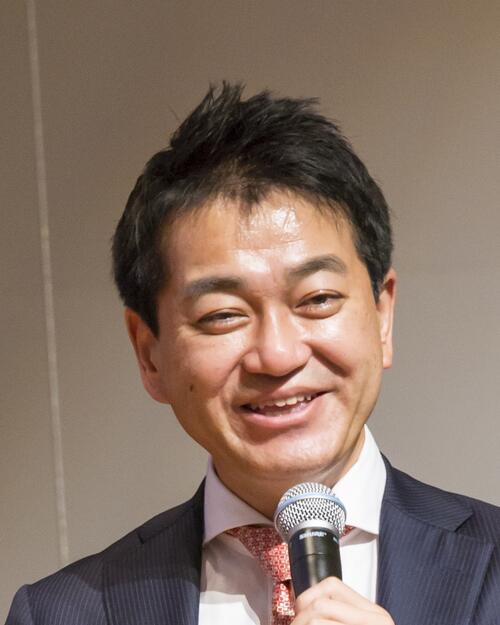
Authors
Noa Ronkin
News Type
News
Date
Paragraphs


By 1978, after the “epic impoverishment” borne of Mao’s non-market, ideologically-driven economy, China was almost like “a hot air balloon [that had been held] ten feet underwater” and suddenly let go, described Daniel Rosen, founding partner of the Rhodium Group, before an audience at a recent colloquium organized by Shorenstein APARC’s China Program.

Rosen—who leads the Rhodium Group’s work in China, India, and Asia—drew on his 26 years of professional experience analyzing China’s economy, commercial sector, and external interactions, to share his insights on the implications of China’s recent divergence from liberal market norms even as the U.S. and China are trying to reach an agreement that could end a protracted trade war.

With its explosive rise, increasing U.S.-China economic tensions, argued Rosen, were inevitable. By reverting to non-market principles under Xi Jinping, however, China’s divergence from advanced economic norms has triggered a hostile reaction from the United States.  He acknowledged that China has “the sovereign right to choose the system it thinks best for itself,” including reverting to non-market principles.  But, he noted, “as an old adage goes, paraphrased, China’s freedom to swing its fists stops where other noses begin.”

China, with its thirteen trillion-dollar economy is now the world’s second largest economy.  China’s economic footprint, too—as trader, foreign investor, and lender, among others—is enormous around the world.  Thus, Rosen pointed out, now when “China sneezes, the rest of the world can catch a cold or pneumonia.”  By disavowing the primacy of market principles, furthermore, China’s decisions will now have spillover consequences for not only the way the rest of the global economy functions but also for economic prospects of the United States.

Rosen highlighted, in particular, three aspects of China’s divergence from market norms:  its financial markets, competitive regimes; and IP protection rules.  China’s capital markets give preferential treatment to its domestic state firms and discriminates against not only foreign firms but also its private firms.  He also stressed China’s uneven competition policies—as most dramatically epitomized in its “Made in 2025” policy—that establish asymmetric market access for foreign firms in China versus Chinese firms abroad; China’s state and sub-state financial subsidies set up to advantage domestic firms; and China’s domestic control of intellectual property in large swathes of critical industries.  China’s “Made in 2025” policy thereby, for example, distorts the innovation ecosystem of the world and the United States.  As Rosen asserted, “We depend for our vitality on structural conditions that non-market policy choices by a systemically important national could disrupt.”

In Rosen’s assessment, President Xi Jinping had begun his tenure with a far-reaching set of economic reforms called the “60 Decisions” of the Third Plenum Resolution in 2013.  But these market-centered initiatives, many of which Xi’s administration did push initially, led to “mini” (and “many”) crises, he stated.  These reforms, therefore, have stalled.  “The shadow over U.S.-China economic engagement comes not because China refused to reform in the Xi Jinping years,” Rosen asserted, “but because lately it has stumbled in attempting to do so.”

NEW YORK, NY - MAY 6: Traders and financial professionals work at the opening bell on the floor of the New York Stock Exchange (NYSE), May 6, 2019 in New York City. The Dow Jones Industrial Average dropped over 360 points at the open on Monday morning after U.S. President Donald Trump said that the U.S. will raise tariffs on goods imported from China. China also threatened to skip upcoming trade talks following tariff threats from President Trump.

According to Rosen, hardening U.S. approach to Chinese trade policy and the current discussion of possible “disengagement” with China are the result of U.S. recognition that China had changed course away from convergence with the liberal international economic order.  It, in fact, stems from the U.S.’s valid need to protect its economic welfare and the welfare of other market economies from the deleterious effects of China’s illiberal policies.  In the same way, he claimed, that the U.S. is not as deeply engaged with Italy as it is with Germany, and that we are not as deeply engaged with Germany as we are with Great Britain, it is not “heresy” to say that nations that do not share the same basic economic framework cannot be as engaged together—or as interoperable—as nations that do.  

But, Rosen predicted, China’s own turn away from market principles is bound to fail.  Liberal market reforms delivered double-digit growth for China since Deng Xiaoping’s Opening and Reform.  And “[u]nless everything we think we know about the relative efficiency and dynamism of free markets over politically controlled economies is wrong, the present Chinese policy turn will be, in the end, a dead-end,” Rosen remarked.  According to his prediction, therefore, we will either see a weakened China that poses less of an economic and national security threat to the U.S. or a China that eventually returns to market norms (i.e., “a reversion back to what will work.”).

In the meantime, therefore, he suggested that the American response must be “provisional,” “partial,” and “peaceful.”  American policy must be adaptable and readily reversible such that our ability to reengage to the maximum with China is carefully protected.  Secondly, it must be “partial” rather than absolute.  And, lastly, it must be “peaceful.”  When Beijing’s non-market policies fail, as it will, Rosen averred, and China re-orients itself towards economic convergence with advanced economy norms once more, we must ensure a “foundation of good will” between the U.S. and China to which China can return.

Rosen also cautioned against the U.S. abandoning its own source of national strength—i.e., its openness.  Arguing that economic protectionism has too often been confused with national security, Rosen argued that primary threats to U.S. national security now stem more from new causes like climate change, pandemics, migration pressures and access to weapons of mass destruction.  “Economic protection will do little to nothing to address those risks,” Rosen pointed out.

Rosen spoke at Shorenstein APARC as part of the China Program’s Colloquia Series “A New Cold War?: Sharp Power, Strategic Competition, and the Future of U.S.-China Relations.”  The series continues on May 3 with Ambassador Chas W. Freeman, Jr.’s seminar “On Hostile Coexistence with China.”

Hero Image
Traders and financial professionals work at the opening bell on the floor of the New York Stock Exchange (NYSE), May 6, 2019
NEW YORK, NY - MAY 6: Traders and financial professionals work at the opening bell on the floor of the New York Stock Exchange (NYSE), May 6, 2019 in New York City. The Dow Jones Industrial Average dropped over 360 points at the open on Monday morning after U.S. President Donald Trump said that the U.S. will raise tariffs on goods imported from China. China also threatened to skip upcoming trade talks following tariff threats from President Trump.
Getty Images / Drew Angerer
All News button
1
News Type
News
Date
Paragraphs

On Thursday, the third Asia-Pacific Geo-Economic Strategy Forum (APGEO) saw discussion on issues of international strategic cooperation in the Asia-Pacific with a particular focus on the U.S.-Japan relationship. Speakers included experts on defense and foreign affairs, including former U.S. National Security Advisor H.R. McMaster and former Japanese Ministers of Defense.

Organized by the Hoover Institution, Nikkei Inc. and the Freeman Spogli Institute of International Studies (FSI), the talks occurred within the context of the United State’s Free and Open Indo-Pacific Strategy (FOIP) and Japan’s Medium Term Defense Program, both recently updated to outline the U.S. and Japan’s respective regional commitments.

The forum’s speakers focused on the rise of China as a common theme underscoring the importance of the U.S.-Japan alliance. Particularly, the speakers shared a general consensus that China’s attempts to increase its economic and political influence and its initiatives to drive progress on technological frontiers such as 5G networks and artificial intelligence pose a threat to the current international order...

Read the full article in The Stanford Daily

Hero Image
Gen H.R. McMaster at podium, delivering speech
Gen. H.R. McMaster, Hoover Institution, addresses the 3rd Asia-Pacific Geo-Economic Strategy Forum
Thom Holme, APARC
All News button
1
Authors
Thomas Holme
News Type
News
Date
Paragraphs

We are delighted to announce that APARC’s Oksenberg-Rohlen Fellow David M. Lampton is the recipient of the 2019 John and Vivian Sabel Award for best article published in the Journal of Contemporary China (JCC), for his article “Xi Jinping and the National Security Commission: Policy Coordination and Political Power.”

Lampton’s article discusses the rationale for, and progress to date of, creating a National Security Commission in China. First announced in late 2013, the commission was part of Xi Jinping's drive to consolidate his personal power over the internal and external coercive and diplomatic arms of the governing structure. Lampton argues that it remains to be seen whether the institutional attempt to achieve coordination will improve, or further complicate, China's long-standing coordination problem.

The John and Vivian Sabel Award was launched in 2016 to celebrate publication of the 100th issue and the 25th anniversary of the JCC. Dr. Lampton’s article was published in Volume 24, Issue 95, 2015.

An award reception and dinner will be held at the Josef Korbel School of International Studies, University of Denver on April 30, 2019.

Hero Image
David Lampton standing on Balcony of Falcon Lounge?
All News button
1
Authors
News Type
Commentary
Date
Paragraphs

China is making a risky bet in the Middle East. By focusing on economic development and adhering to the principle of noninterference in internal affairs, Beijing believes it can deepen relations with countries that are otherwise nearly at war with one another—all the while avoiding any significant role in the political affairs of the region. This is likely to prove naive, particularly if U.S. allies begin to stand up for their interests.

In meetings I attended earlier this month in Beijing on China’s position in the Middle East, sponsored by the Carnegie-Tsinghua Center, Chinese officials, academics, and business leaders expressed a common view that China can avoid political entanglement by promoting development from Tehran to Tel Aviv. China may soon find, however, that its purely transactional approach is unsustainable in this intractable region—placing its own investments at risk and opening new opportunities for the United States.

Over the past three years, China has charted an ambitious future in the Middle East by forging “comprehensive strategic partnerships” with Iran, the United Arab Emirates, Saudi Arabia, and Egypt. This is the highest level of diplomatic relations China can provide, and Beijing believes these four countries anchor a neutral position that will prove more stable over the long term than that of the United States. China has also made massive investments in infrastructure throughout the region, including in Israel, where China is now the second-largest trading partner behind the United States.

China’s interests in the Middle East are both structural and strategic. Structurally, China needs the natural resources of the region, whereas the United States—now the world’s largest oil producer—does not. China is also seeking new markets to absorb its excess industrial capacity, and sees the Middle East poised for growth after decades of wars, woeful infrastructure, and popular discontent. Strategically, together with Russia, China is taking advantage of the uncertainty produced by ever-shifting U.S. policies, including zero-sum prescriptions for Iran and Syria that are unlikely to produce desired outcomes anytime soon. Regional governments in turn have welcomed China’s embrace, and its offer of investment without pressure to politically reform or respect human rights.

China’s President Xi Jinping previewed this more assertive Middle East strategy in a landmark address in Cairo three years ago. There, he declared that China does not seek a “sphere of influence” in the region—even while sinking nearly $100 billion in investments there through ports, roads, and rail projects. He alleged China rejects “proxy” contests—even while concluding a strategic partnership with Iran, the main sponsor of proxies in the region. And he warned against “all forms of discrimination and prejudice against any specific ethnic group and religion”—even while reportedly forcing 1 million Muslims into reeducation camps in China’s Xinjiang province.

Such contradictions can be maintained only so long as traditional U.S. allies in the region now welcoming Chinese investment allow them to be maintained. These U.S. allies do not shy from asserting their broader interests with Washington or expressing disagreement where policies diverge, and it is time they do the same with Beijing.

As the United States questions Chinese investment and intentions, particularly in the areas of technology and ports such as Israel’s Haifa, it can also challenge traditional allies as to whether they are granting China a free ride on what remains a largely U.S.-led security architecture. Such an arrangement should be as unacceptable to American partners in the region as it is to Washington. At the very least, these partners, together with Washington, can demand that Beijing utilize its emerging influence—particularly with Tehran and Damascus—to pursue measures that promote longer-term stability.

Read the rest at The Atlantic.

Hero Image
mcgurk brett holden   official dos photo copy
All News button
1
News Type
News
Date
Paragraphs

Applications opened yesterday for the China Scholars Program, an intensive, college-level online course on contemporary China for U.S. high school students. The China Scholars Program is offered by the Stanford Program on International and Cross-Cultural Education (SPICE), Stanford University, and is open to rising 10th, 11th, and 12th graders. The Fall 2019 online course will run from late August through December. Applications are due June 15, 2019.


Stanford University China Scholars Program for high school students
Fall 2019 session (late August through December)
Application period: April 15 to June 15, 2019


Accepted applicants will engage in a rigorous academic exploration of key issues in China, spanning politics, economics, social issues, culture, and the arts, with an emphasis on the relationship between the United States and China. In real-time conversations with leading scholars, experts, and diplomats from Stanford University and other institutions, participants will be exposed to the cutting edge of U.S.–China relations and scholarship. Students who complete the online course will be equipped with a rare degree of expertise about China and international relations that may have a significant impact on their choice of study and future career.

As in previous sessions of the China Scholars Program, the Fall 2019 cohort will comprise high school students from across the United States. Participants in the current cohort represent states across the nation, including New York, New Jersey, Massachusetts, Missouri, Indiana, Pennsylvania, Illinois, Arizona, California, and Hawaii. The immense diversity of student backgrounds and experiences within each online course allows for an especially rich exchange of ideas and perspectives among the young scholars—a crucial and invaluable component of the learning experience.

“It’s been one of the most fascinating, valuable, and formative classes I have ever taken,” says Rebecca Qiu, a recent alum of the program. “Every week, you discuss pressing topics—from technology censorship to the urban-rural divide—with your motivated peers. During virtual classes, you have the opportunity to ask questions and speak with some of the most influential experts and researchers on modern China—I cannot emphasize how valuable this is. [The China Scholars Program] provides you with a huge breadth and depth of knowledge on China and U.S.–China relations that you cannot find in any typical high school class.”

More information on the China Scholars Program is available at http://chinascholars.org. Interested high school students can apply now at https://spicestanford.smapply.io/prog/china_scholars_program/. The deadline to apply is June 15, 2019.

To be notified when the next China Scholars Program application period opens, join our email list or follow us on Facebook and Twitter.


The China Scholars Program is one of several online courses for high school students offered by SPICE, Stanford University, including the Reischauer Scholars Program (on Japan), the Sejong Scholars Program (on Korea), and the Stanford e-Japan Program (on U.S. society, offered to high school students in Japan).


Related article:


Hero Image
Stanford University online courses for high school students
SPICE at Stanford University offers several online courses for high school students.
Stanford University
All News button
1
News Type
News
Date
Paragraphs

罗思高主讲“清华三农讲坛” 解析中国农村人力资本问题

4月11日晚,清华大学中国农村研究院主办的“清华三农讲坛”第二十五讲在清华大学公共管理学院报告厅举行。美国斯坦福大学教授、清华大学中国农村研究院学术委员会委员罗思高(Scott Rozelle)作了题为“农村人力资本:一个中国中长期发展的挑战”的演讲。北京大学国家发展研究院院长、教授姚洋进行点评。农研院副院长、研究员何宇鹏主持讲坛。

Read the full article here.

Hero Image
rozelle at tsinghua april 2019
Tsinghua University
All News button
1
Authors
Ketian Zhang
News Type
Commentary
Date
Paragraphs

On March 31, Taiwan’s Ministry of Foreign Affairs reported that two Chinese Air Force (PLAAF) J-11 jets crossed the median line of the Taiwan Strait. This violated the long-held tacit agreement between China and Taiwan that neither side should cross the median line.

Taiwan deemed this “an intentional, reckless & provocative action,” which triggered “a 10-minute standoff” in the air. As Asia security expert Bonnie S. Glaser notes that, if intentional, this would be the first PLAAF crossing of the median line in about 20 years. In this case, it’s likely that Taiwan, not the South China Sea, prompted Beijing’s actions.

An unresolved issue from the Chinese civil war, Taiwan has always been a “core interest” to party leaders in Beijing. Here are some key takeaways from my research on China-Taiwan relations…

Read the full article in The Washington Post.


To hear more from Ketian, don't miss her recently posted video Q&A. In addition, be sure to RSVP for her April 16 seminar "Killing the Chicken to Scare the Monkey: Explaining Coercion by China in the South China Sea."

Hero Image
The marines of China navy participate in the annual military training on January 3, 2018 in Zhanjiang,
ZHANJIANG, CHINA - JANUARY 03: The marines of China navy participate in the annual military training on January 3, 2018 in Zhanjiang, Guangdong Province of China.
Pu Haiyang/VCG via Getty Images
All News button
1
News Type
Q&As
Date
Paragraphs

We sat down with our 2018-19 Shorenstein Postdoctoral Fellow in Contemporary Asia Ketian Zhang to discuss China's use of coercion in foreign policy; her research on  South China Sea disputes; her forthcoming articles; and the fellowship experience in general. To hear more from Ketian, RSVP for her April 16 seminar "Killing the Chicken to Scare the Monkey: Explaining Coercion by China in the South China Sea."

Hero Image
Ketian Zhang participating in Q&A Thom Holme, APARC
All News button
1
News Type
News
Date
Paragraphs

SPICE is now accepting applications for the 2019 East Asia Summer Institute for High School Teachers. This free three-day institute is SPICE’s premier professional development opportunity for teachers, combining Stanford’s deep content expertise with SPICE’s award-winning lesson plans.

SPICE/NCTA East Asia Summer Institute for High School Teachers
July 8–10, 2019
Stanford University
Application deadline: May 6, 2019

High school teachers of social studies and language arts are especially encouraged to apply.

Participants will learn from Stanford faculty and other experts about the geography, cultures, politics, economics, history, and literature of East Asia, including a special focus on U.S.–Asia relations and the Asian diaspora in the United States. Teachers will also engage in pedagogy-focused discussions and receive training on several SPICE lesson plans on East Asia, in order to help them translate their new content knowledge to the classroom. Teachers who complete the professional development seminar will be eligible for a $250 stipend and three units of credit from Stanford Continuing Studies, and they will leave Stanford with several extensive SPICE curriculum units in hand.

This professional development opportunity will focus largely on China, Japan, and Korea. For example, last year’s speakers included Kathleen Stephens (former U.S. Ambassador to the Republic of Korea), Peter Duus (renowned Stanford scholar of modern Japan), and Clayton Dube (Director of the USC U.S.-China Institute). The institute also featured speakers like author Chun Yu (who grew up in China’s Cultural Revolution) and Joseph Yasutake (who grew up in a Japanese American internment camp), whose rich personal stories brought history to life. SPICE staff led complementary interactive curriculum training sessions on China’s economic development, the atomic bombing of Hiroshima, South Korean pop culture, and East Asia’s “history wars.”

“Every speaker added a new perspective to historical and contemporary events,” remarked participant Kimberly Gavin. “[The] lectures enriched my knowledge base of topics, curriculum demonstrations gave me ideas for effective lessons in the classroom, small group discussions led to rich conversations about primary and secondary sources, and teacher sharing introduced me to new websites. There wasn’t anything that was done that wasn’t valuable to me… I told my administrator yesterday that this was the best conference I have been to as a teacher.”

More information is available at https://spice.fsi.stanford.edu/fellowships/ncta_for_high_school_teachers. Interested high school teachers can apply directly at https://forms.gle/Jd3PP8EowXyPkAyX9. The application deadline is May 6.

The 2019 East Asia Summer Institute for High School Teachers at Stanford University is made possible by the National Consortium for Teaching about Asia.

Stay informed of SPICE news by joining our email list or following us on Facebook and Twitter.


Please note: Due to unexpected funding reductions this year, we are only able to offer our high school institute in 2019. We hope to bring back our middle school institute next year.


Related articles:


Hero Image
Stanford high school teacher professional development
Participants collaborate at the 2018 East Asia Summer Institute for High School Teachers.
Rylan Sekiguchi
All News button
1
-

Abstract: President Trump may talk about the Middle East differently than Obama did. But the two seem to share the view that the United States is too involved in the region and should devote fewer resources and less time to it. The reduced appetite for U.S. engagement in the region reflects, not an ideological predilection or an idiosyncrasy of these two presidents, but a deeper change in both regional dynamics and broader U.S. interests. Despite this, the United States exists in a kind of Middle Eastern purgatory—too distracted by regional crises to pivot to other global priorities but not invested enough to move the region in a better direction. This worst-of-both-worlds approach exacts a heavy price. It sows uncertainty among Washington’s Middle Eastern partners, which encourages them to act in risky and aggressive ways. It deepens the American public’s frustration with the region’s endless turmoil, as well as with U.S. efforts to address it. It diverts resources that could otherwise be devoted to confronting a rising China and a revanchist Russia. And all the while, by remaining unclear about the limits of its commitments, the United States risks getting dragged into yet another Middle Eastern conflict. 

 
It is time for Washington to put an end to wishful thinking about its ability to establish order on its own terms or to transform self-interested and shortsighted regional partners into reliable allies—at least without incurring enormous costs and long-term commitments. That means making some ugly choices to craft a strategy that will protect the most important U.S. interests in the region, without sending the United States back into purgatory. Karlin and Wittes will outline the choices before the next U.S. president and their view of a realistic, sustainable strategy for the United States in the Middle East. 
 
Tamara Wittes' Biography: Tamara Cofman Wittes is a senior fellow in the Center for Middle East Policy at Brookings. Wittes served as deputy assistant secretary of state for Near Eastern affairs from November of 2009 to January 2012, coordinating U.S. policy on democracy and human rights in the Middle East during the Arab uprisings. Wittes also oversaw the Middle East Partnership Initiative and served as deputy special coordinator for Middle East transitions.


Wittes is a co-host of Rational Security, a weekly podcast on foreign policy and national security issues. She writes on U.S. Middle East policy, regional conflict and conflict resolution, the challenges of global democracy, and the future of Arab governance. Her current research is for a forthcoming book, Our SOBs, on the tangled history of America’s ties to autocratic allies.


Wittes joined Brookings in December of 2003. Previously, she served as a Middle East specialist at the U.S. Institute of Peace and director of programs at the Middle East Institute in Washington. She has also taught courses in international relations and security studies at Georgetown University. Wittes was one of the first recipients of the Rabin-Peres Peace Award, established by President Bill Clinton in 1997.


Wittes is the author of "Freedom’s Unsteady March: America’s Role in Building Arab Democracy" (Brookings Institution Press, 2008) and the editor of "How Israelis and Palestinians Negotiate: A Cross-Cultural Analysis of the Oslo Peace Process" (USIP, 2005). She holds a bachelor's in Judaic and Near Eastern studies from Oberlin College, and a master's and doctorate in government from Georgetown University. She serves on the board of the National Democratic Institute, as well as the advisory board of the Israel Institute, and is a member of the Council on Foreign Relations and Women in International Security.


Mara Karlin's Biography: Mara Karlin, PhD, is Director of Strategic Studies at Johns Hopkins University’s School of Advanced International Studies (SAIS). She is also an Associate Professor at SAIS and a nonresident senior fellow at The Brookings Institution. Karlin has served in national security roles for five U.S. secretaries of defense, advising on policies spanning strategic planning, defense budgeting, future wars and the evolving security environment, and regional affairs involving the Middle East, Europe, and Asia. Most recently, she served as the deputy assistant secretary of defense for strategy and force development.  Karlin has been awarded Department of Defense Medals for Meritorious and Outstanding Public Service, among others. She is the author of Building Militaries in Fragile States: Challenges for the United States (University of Pennsylvania Press; 2018).

Tamara Wittes Senior fellow, Center for Middle East Policy Brookings
Mara Karlin Senior fellow,Center for 21st Century Security and Intelligence SAIS and Brookings
Seminars
Subscribe to China