President Donald Trump’s chief arms control envoy last week acknowledged the possibility that the 2010 New Strategic Arms Reduction Treaty (New START) could be extended, but he added, “only under select circumstances.” He then put down conditions that, if adhered to, will ensure the Trump administration does not extend the treaty.
New START and Extension
New START limits the United States and Russia each to no more than 700 deployed strategic missiles and bombers and no more than 1,550 deployed strategic warheads. It expires by its terms on February 5, 2021 but can be extended for up to five years. The Trump administration has adamantly refused to do that.
From the perspective of U.S. national security interests, extending New START is a no-brainer. As confirmed by the State Department’s annual report, Russia is complying with the treaty’s limits. Extension would keep Russian strategic forces constrained until 2026. It would also ensure the continued flow of information about those forces produced by the treaty’s data exchanges, notifications, on-site inspections and other verification measures.
And extension would not force a single change in U.S. plans to modernize its strategic forces, as those plans were designed to fit within New START’s limits.
Russian officials, including Vladimir Putin, have raised New START extension since the first days of the Trump administration. In 2017, Trump administration officials deferred on the issue, saying they would consider extension after (1) completion of a nuclear posture review and (2) seeing whether Russia met the treaty’s limits, which took full effect in February 2018.
Russia fully met the limits in February 2018. At about the same time, the administration issued its nuclear posture review. Yet, more than two years later, New START extension remains an open question.
On June 24, Amb. Marshall Billingslea, the president arms control envoy, briefed the press on his meeting with his Russian counterpart two days before in Vienna. Asked about extending New START, Amb. Billingslea—never a fan of the treaty or, it seems, any arms control treaty—left the option open. However, he described three conditions that will block extension.
China
Amb. Billingslea’s first condition focused on China, which he claimed had “an obligation to negotiate with [the United States] and Russia.” Beijing certainly does not see it that way—saying no, no and again no—citing the huge disparity between the size of the Chinese nuclear arsenal and those of the United States and Russia. China has less than one-tenth the number of nuclear warheads of each of the two nuclear superpowers.
To be sure, including China in the nuclear arms control process is desirable. But Beijing will not join a negotiation aimed at a trilateral agreement. What would such an agreement look like? Neither Washington nor Moscow would agree to reduce to China’s level (about 300 nuclear warheads). Nothing suggests either would agree to legitimize a Chinese build-up to match their levels (about 4,000 each). Beijing presumably would not be interested in unequal limits.
This perhaps explains why, well more than one year after it began calling for China’s inclusion, the Trump administration appears to have no proposal or outline or even principles for a trilateral agreement.
For its part, Moscow would welcome China limiting its nuclear arms. The Russians, however, choose not press the question, raising instead Britain and France. Amb. Billingslea pooh-poohed the notion, but France has as many nuclear weapons as China, and Britain has two-thirds the Chinese number. The logic for bringing in one but not the other two is unclear. The question raises yet another hinderance to including China.
A more nuanced approach might prove more successful. It would entail a new U.S.-Russian agreement providing for reductions beyond those mandated by New START. Washington and Moscow could then ask the Chinese (and British and French) to provide transparency on their nuclear weapons numbers and agree not to increase their total weapons or exceed a specified number. Much like his president, however, the arms control envoy does not appear to be into nuance.
Non-Strategic Nuclear Weapons
Amb. Billingslea’s second condition dealt with including in a new negotiation nuclear arms not constrained by New START, especially Russia’s large number of non-strategic nuclear weapons. Again, this is laudable goal, but getting there will require much time and unpalatable decisions that the Trump administration will not want to face.
Russian officials have regularly tied their readiness to discuss non-strategic nuclear arms to issues of concern to them, particularly missile defense. The Trump administration, however, has made clear that it has zero interest in negotiating missile defense.
Even if Moscow severed that linkage, negotiating limits on non-strategic nuclear weapons would take time. New START limits deployed strategic warheads by virtue of their association with deployed strategic missiles and bombers. The only warheads directly counted are those on deployed intercontinental ballistic missiles and submarine-launched ballistic missiles.
By contrast, most if not all non-strategic warheads are not mounted on their delivery systems. Monitoring any agreed limits would require new procedures, including for conducting on-site inspections within storage facilities. This does not pose an insoluble challenge, but it represents new territory for both Washington and Moscow. Working out limits, counting rules and verification measures will prove neither quick nor easy.
Verification
Amb. Billingslea earlier suggested some dissatisfaction with New START’s verification measures, though he did not articulate any particular flaw, and, as noted, the State Department’s annual compliance report says Russia is meeting the treaty’s terms. Last week, he made verification measures for his desired U.S.-Russia-China agreement the third condition for New START extension.
Verification measures are critical. Treaty parties have to have confidence that all sides are observing the agreement’s limits or, at a minimum, that any militarily significant violation would be detected in time to take countervailing measures. Working out agreement on those measures will prove a long process, even in just a bilateral negotiation, especially if it addresses issues such as stored nuclear weapons. That is not just because of Russian reluctance to accept intrusive verification measures such as on-site inspection; the U.S. military also wants verification measures that do not greatly impact its normal operations.
Russian officials have reiterated their readiness to extend New START now. Amb. Billingslea’s conditions will thwart extension for the foreseeable future. That’s unfortunate. By not extending New START, the Trump administration forgoes a simple action that would strengthen U.S. national security and make Americans safer.



 Dr. Roland Hsu


 Alvin Shiqi Wang (王世琪) has served as CEO and President of 21Vianet Group, Inc. since February 2018. Currently, Mr. Wang serves as Vice President of TUS Digital Group, a subsidiary of TUS Holdings, and serves on the board of directors of Beijing CIC Technology Co., Ltd. and Guangzhou Tuwei Technology Co., Ltd. . Mr. Wang has nearly 20 years of experience in the telecommunications industry, working at various renowned international companies, including 11 years with Ericsson, focusing primarily on strategy development and execution, corporate management, and equity investments. Mr. Wang received a bachelor's degree from Tsinghua University and an MBA from Peking University-Vlerick MBA Programme (BiMBA).
 Xiang Wang (王翔) is President and Acting CFO of Xiaomi Corporation, responsible for platform functions and for assisting the CEO with Group operations. Mr. Wang joined Xiaomi Corporation in July 2015 served as its Senior Vice President and President for International Business, responsible for global expansion, IP strategy, and strategic partner relationship management. Mr. Wang has more than 20 years of experience in the semiconductor and communications fields, with great vision and comprehensive understanding of next-generation wireless communications. He has played an integral role in shaping Xiaomi’s international business operations including with respect to its intellectual property compliance, management and strategy throughout the world. In 2016, Mr. Wang put together an international team of sales and marketing teams to expand into more markets outside of China. Within just 3 years, he led his teams into over 90 markets. As of Q3 2019, Xiaomi’s international revenue accounted for 48.7% of its total revenue. Today, Xiaomi is ranked among top 5 smartphone brands in over 40 markets. Mr. Wang previously served as the Senior Vice President of Qualcomm and President of Qualcomm Greater China, leading the company’s business and operations in Greater China. Prior to that role, he was Vice President of Qualcomm CDMA Technology, responsible for Qualcomm chipset business and customer service in China. Under his leadership, Qualcomm rapidly extended and strengthened its partnerships with increasing numbers of Chinese manufacturing customers. Before joining Qualcomm, Mr. Wang held key positions in sales and marketing at internationally leading companies, including Motorola and Lucent/Agere. Mr. Wang earned his BSEE from Beijing Polytechnic University.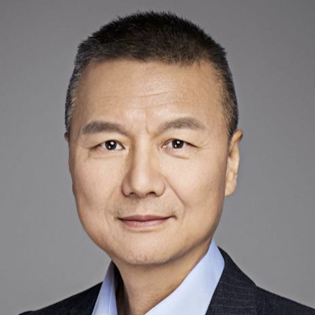
 Zhiqiang (ZZ) Zhang (张志强) is President of ABB in China since October 2018. He has extensive management experience and a deep understanding of the Chinese market, developed during his career at several large global companies over the past three decades. He joined ABB from Sandvik where he was Asia- Pacific Regional Holding Officer and President of Sandvik China, and Member of Sandvik Group Executive Committee. Prior to that, he held leadership positions at several other companies, including Nokia Siemens Networks, where he was President of the Greater China Region, and Siemens VDO Automotive, China, where he was President and CEO. Mr. Zhang is Non-Executive Board member of Georg Fischer AG (Switzerland) and Daetwyler Holding AG (Switzerland). He holds a bachelor’s degree in electronic engineering from Beijing Jiaotong University, China, and a master’s degree in business administration from the Smith School of Business at Queen’s University in Canada.
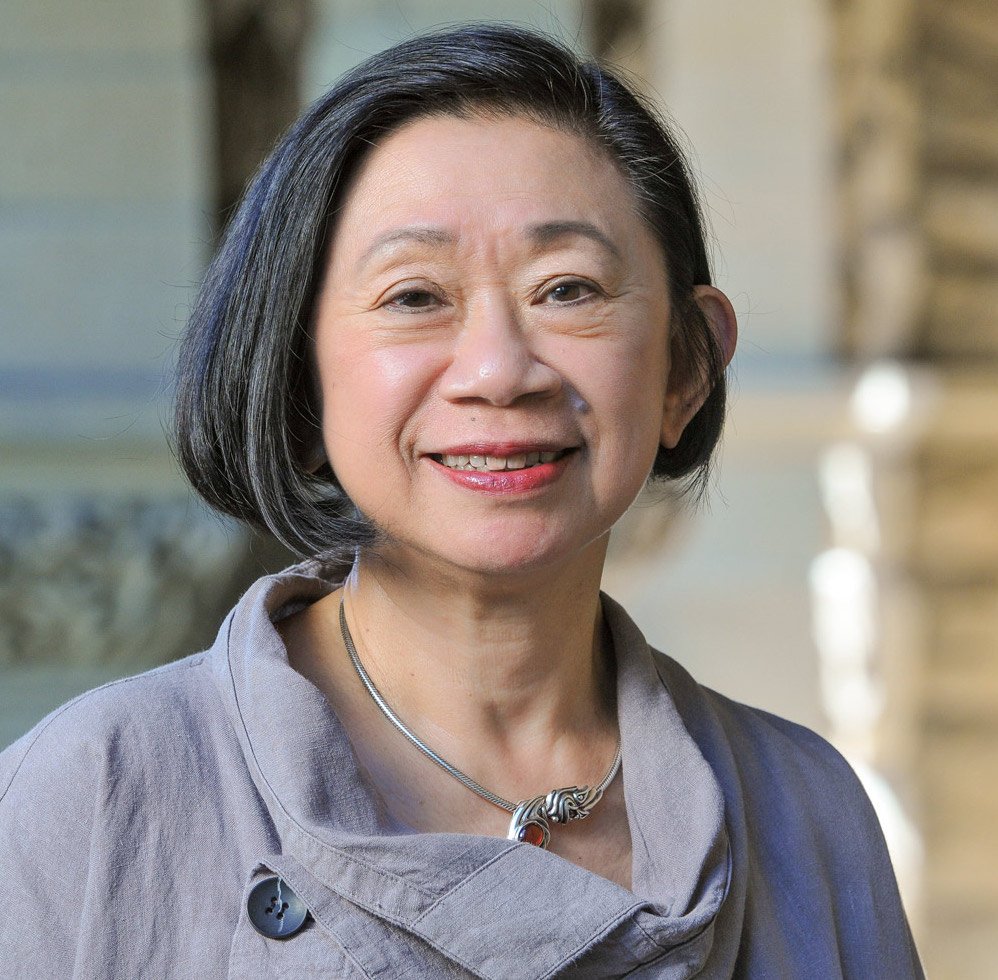 Jean C. Oi is the William Haas Professor of Chinese Politics in the Department of Political Science and a senior fellow in the Freeman Spogli Institute for International Studies at Stanford University. She directs the China Program at the Walter H. Shorenstein Asia-Pacific Research Center and is the Lee Shau Kee Director of the Stanford Center at Peking University. Professor Oi has published extensively on China’s reforms. Recent books include Zouping Revisited: Adaptive Governance in a Chinese County, coedited with Steven Goldstein (Stanford University Press, 2018), and Challenges in the Process of China’s Urbanization, coedited with Karen Eggleston and Yiming Wang (2017). Current research is on fiscal reform and local government debt, continuing SOE reforms, and the Belt and Road Initiative.
 Christopher Thomas was most recently a partner with McKinsey & Company. He served as co-Managing Partner for the Firm’s Global Digital Strategy service line as well as its Global IoT service line; and as the leader of its Asia Semiconductor Practice. Prior to McKinsey, Mr. Thomas spent ten years at Intel. He was the General Manager of Intel China, with joint ownership for the region’s $5 billion-plus P&L. In this role, he grew revenues by more than 50% and oversaw China’s successful elevation from a sales unit to an independent regional P&L business reporting directly into headquarters. Mr. Thomas began his career as a private equity investor at The Blackstone Group in New York City. He is currently a Visiting Professor at Tsinghua University, China’s leading educational institution. He received an MBA from Stanford Business School, where he was an Arjay Miller scholar; a Master of Arts in Political Science from Stanford University; and a Bachelor of Science in Economics, summa cum laude, from the Wharton School.