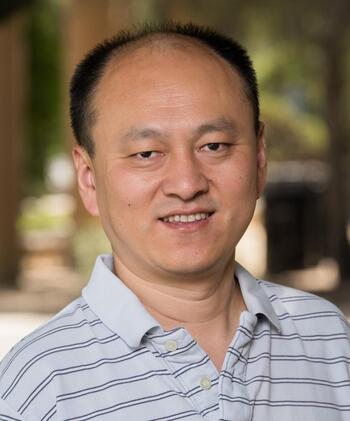
Authors
Arzan Tarapore
News Type
Commentary
Date
Paragraphs

This blog post was first published by the Australian Strategic Policy Institute's The Strategist analysis and commentary site.


The Quad is stronger than ever. The informal ‘minilateral’ grouping of Australia, India, Japan and the United States has in the past year held its first stand-alone ministerial meeting and its first leaders’ summit, and launched an ambitious project to deliver Covid-19 vaccines. This ‘golden age’ of the Quad is a product of newfound Indian enthusiasm for the grouping, in turn, spurred by the military crisis in Ladakh, where India faces ongoing Chinese troop incursions across the two countries’ disputed border.

But the Quad is not bulletproof. Some experts have suggested that the economic and diplomatic effects of the devastating second wave of the pandemic in India will preoccupy the Indian government, sapping the Quad of capacity for any new initiatives. Others counter that India remains committed to competition with China—which is what really matters for the Quad—although its partners always expected ‘two steps forward, one step back’ from India.


Sign up for APARC newsletters to receive our experts' commentary and analysis.


Related: On the Conversation Six podcast, Tarapore discusses the policy paper on which this blog post is based with Jawaharlal Nehru University Professor of International Politics Rajesh Rajagopalan. Listen:


The pandemic may well prove to be a hiccup in the Quad’s evolution, but a potentially much larger disruption may come from the ongoing Ladakh crisis itself. As I argue in a new ASPI Strategic Insights paper, the crisis has greatly increased the risk of a border war between India and China, which would present a defining test of the Quad. A possible war could either strengthen or enervate the Quad—depending on how India and its partners, including Australia, act now to shape the strategic environment.

Risk is a function of likelihood and consequence. The likelihood of war on the India–China border is still low—both countries would prefer to avoid it—but has risen since the crisis began. Both countries have greatly expanded their military deployments on the border and backed them with new permanent infrastructure to resupply and reinforce them. China has proved its revisionist intent with large and costly military incursions, although its specific objectives and plans remain unknown. And the interaction of both countries’ military strategies and doctrines would, on the threshold of conflict, promote escalation.

The consequences of a possible conflict would be dire for both belligerents and for the region. China — assuming it is the provocateur of conflict—would likely face some political rebuke from states that consider themselves its competitors, but it will work strenuously to reduce those costs, and would likely have priced them in to its calculations of whether to fight. India will suffer high tactical costs on the border, and may also suffer wider harm if China uses coercive cyberattacks against strategic or dual-use targets.

In a costly war, the repercussions may spill over to damage India’s recently developing strategic partnerships, especially with the United States and Australia. Despite generally favorable views of the US, the Indian strategic elite still harbors some latent suspicions. This was highlighted in two episodes in April 2021, when the US Navy conducted a freedom of navigation patrol through the Indian exclusive economic zone, and when the US was slow in delivering Covid-19 vaccine raw materials and other relief. Both instances quickly receded from the Indian public imagination—thanks to quick correctives from Washington—but they did reveal that, under some conditions, Indian perceptions of its new partnerships can be quickly colored by distrust.

A China–India border war may create exactly those conditions. There is a chance that conflict may result in a redoubled Indian commitment to the Quad, if New Delhi judges that it has no option but to seek more external assistance. Conversely, unless a conflict is managed well by India and its partners, it is more likely to result in Indian disaffection with the Quad. India deepened Quad cooperation during the Ladakh crisis partly as a deterrent signal to China, and partly because the Quad is still full of promise. However, after a conflict—when China hasn’t been deterred and has probably imposed significant costs on India—the Quad’s utility would have been tested, and probably not ameliorated India’s wartime disadvantage.

The task before Quad governments is to be sensitized to this risk and implement mitigation strategies before a possible conflict, to buttress the coalition in advance. As I outline in the ASPI paper, they could do this at three levels. First, they could offer operational support—such as intelligence or resupply of key equipment, as the US already has done in the Ladakh crisis—although Quad partners’ role here would be limited. Second, they could provide support in other theatres or domains—with a naval show of force, for example, although cyber operations would probably be more meaningful in deterring conflict or dampening its costs. Third, they could provide political and diplomatic support — signaling to Beijing that a conflict would harm its regional political standing.

For Quad members, the main goal would be to deter conflict in the first place, and, failing that, to preserve the long-term strategic partnership with India for the sake of maintaining as powerful and energetic a coalition as possible to counterbalance China in the long term.

Read More

An Island that lies inside Taiwan's territory is seen with the Chinese city of Xiamen in the background.
Commentary

The Taiwan Temptation

Why Beijing Might Resort to Force
The Taiwan Temptation
Protesters against the military coup in Myanmar hold banners.
Commentary

Southeast Asia: China’s Long Shadow

Chinese foreign policy in Southeast Asia affects, and is affected by, the more despotic character of ASEAN’s mainland compared with its maritime member states. But the destiny of even the already undemocratic mainland portion of Southeast Asia is not—not yet at least—made in Beijing.
Southeast Asia: China’s Long Shadow
Little white cup of espresso coffee, opened book, blue semi-transparent vase with purple lilac flowers on rustic wooden table in the garden at spring morning after sunrise or at evening before sunset
News

What to Read This Summer — 2021: Book Recommendations by APARC Faculty

APARC faculty suggest dozens of books for your summer reading.
What to Read This Summer — 2021: Book Recommendations by APARC Faculty
Hero Image
Indian Prime Minister Narendra Modi rides in a tank at Longewala in Jaisalmer, Rajasthan, 14 November 2020.
Indian Prime Minister, Narendra Modi rides in a tank at Longewala in Jaisalmer, Rajasthan, 14 November 2020. | Press Information Bureau, Government of India
All News button
1
Subtitle

The Ladakh crisis between China and India seems to have settled into a stalemate, but its trajectory could again turn suddenly. If it flares into a limited conventional war, one of its incidental victims could be the Quad.

News Type
News
Date
Hero Image
Chinese flag and lanterns on a street in China.
GettyImages
All News button
1
Subtitle

"As the ruling Communist Party celebrates its 100th anniversary this week, China’s leaders face formidable economic challenges, from falling birth rates and income inequality to rural-urban opportunity gaps." Scott Rozelle shares his insights.

0
Co-author, "The Highest Exam: How the Gaokao Shapes China"
Claire Cousineau 250px.png

Claire Cousineau  is a writer and former researcher at the Stanford Center on China’s Economy and Institutions, she is currently pursuing her MBA at Duke University.

Since studying and working in Beijing and Kunming, Claire is passionate about fostering a deeper public understanding of China’s role on the global stage and creating cross-cultural relationships. Claire is the co-author of the book, The Highest Exam: How the Gaokao Shapes China, along with Hongbin Li and Ruixue Jia, published by Harvard University Press in 2025. 

Former Program Manager, Stanford Center on China's Economy and Institutions
Date Label
News Type
Q&As
Date
Paragraphs

This article was originally published in The Wire China on June 20, 2021. You can see the full article here.

Q: In your book, Invisible China, you paint a stark portrait of rural China and those left behind in the country’s economic boom, and you offer some dire warnings about the consequences of such a large and potentially growing underclass. Can you tell us how and why they’ve been left behind?


A: Well, China has 1.4 billion people, and nearly 70 percent of them are rural. That’s more than 900 million people. That means one out of nine people in the world is from rural China. They’re factory and construction workers. They’re in the informal service sector. They’re the ones who sweep the streets and collect the garbage and deliver the packages to the door and open little stores and sit on the curbside and hawk apples and plums. 

The ironic thing is that even though there are so many of them, in many ways they are invisible to the outside world. They mostly live in villages in central and western China, which is a separate world from the cities that we see on CNN or read about in The New York Times. They have to send their kids to rural schools in their own remote local counties. They get their health care in home counties. 

In fact, in a number of ways it’s very much like the United States. We have 40,000 school districts in the United States. China has 40,000 school districts. All the school districts in the U.S. are funded by local property taxes. So if you’re rich, like Palo Alto [California] or Cambridge [Mass.], you have lots of resources to invest in your schools. About the only people they hire as new teachers at Palo Alto High School have PhDs. But if you’re in Fresno, California, or in the Appalachians or Mississippi, property taxes are really low, so the localities cannot afford to have very good schools. 

The same thing happens in China. Schools are supported by local fiscal resources, which in rural counties are terribly scarce. So you’ve got this system where there’s really two castes: a rural caste and an urban caste. You can move from rural to urban if you get a college degree but that tends to be very hard.

In fact, China has some of the highest rates of inequality in the world. And yet many of these people will say, “I’m much better off than my parents were…” And until now, this has sort of allowed them to buy into the system. There is also a long-held belief that the progress of the past will continue; that they will be better off 10 years from now. This is the China dream. 

But if some of those people at the bottom begin to lose hope that the future will be better — and, if they see the lives of others, meanwhile, continuing to improve — you could start to have the emergence of a polarized society where wages for those in the lower income strata start to top off or even fall, and their employment prospects also fall. People could begin to say, “I don’t know what my life is going to be like 10 years from now.” 

That’s what I try to address in the book; precisely that danger. It’s not a 100 percent certainty that the economy is going to unfold in that way, but if polarization does begin to emerge, hope for a better life would begin to fade for a large segment of society. And if it is going to happen, it is likely to begin to unfold now, since this often happens when a nation tries to go from an upper middle income society to a high income one; the nature of jobs change and the nature of opportunities in high-skilled economies changes.

Read the full Q&A.


Hero Image
A boy sits alone on a wood deck over a green field in China.
GettyImages
All News button
1
Subtitle

In this article by the Wire Scott Rozelle, SCCEI Co-Director and development economist, talks about the middle income trap, educating China's children, and why we should all want China's economy to succeed.

-

Webinar recording: https://youtu.be/ShtOUZ67F-s


Webinar Description:

From amazing athletic feats to beautiful pageantry, the Olympics command the world’s attention like no other event. Students and families alike are sure to watch at least some of this summer’s games from Tokyo. But how might we, as teachers, use the Olympics to introduce topics from East Asian history? In this webinar, Ethan Segal explores the many meanings of the Olympics for China, Japan, and South Korea, from displaying recovery to promoting democracy. Join us for an interesting, engaging session that will provide useful background content, help you rethink some old assumptions, and highlight some connections for teachers to use in bringing the Olympics into your classroom.

Register at https://bit.ly/3gU7SC5.

This webinar is a joint collaboration between SPICE, the National Consortium for Teaching about Asia (NCTA), and Stanford's Center for East Asian Studies.


Featured Speaker:

Professor Ethan Segal

Image
Professor Ethan Segal

Ethan Segal is Associate Professor of History at Michigan State University. He earned his Ph.D. at Stanford University, was a Fulbright Scholar at the University of Tokyo, and taught as a visiting professor at Harvard. Professor Segal’s research topics include economic and social history, nationalism, women and gender, and contemporary popular culture. He is the author of Coins, Trade, and the State: Economic Growth in Early Medieval Japan as well as numerous articles, reviews, and videos in scholarly journals and online. Professor Segal has won multiple teaching awards and is a regular contributor to NCTA and other outreach workshops and seminars.


Via Zoom Webinar. Registration Link: https://bit.ly/3gU7SC5.

Professor Ethan Segal Associate Professor of History, Michigan State University
Workshops
News Type
News
Date
Hero Image
Chinese senior man tapping on mobile phone in wooden house.
GettyImages
All News button
1
Subtitle

"Other countries might be able to address their shrinking workforce by replacing quantity with quality. But according to Invisible China, a new book by Scott Rozelle and Natalie Hell, the Chinese labour force has one of the lowest levels of education of any comparable country..."

News Type
News
Date
Hero Image
Two young boys stand in a driveway in rural China.
Rural Education Action Program
All News button
1
Subtitle

Author Nathan Vanderklippe quotes Scott Rozelle and references his research about the need for improved parenting education in rural China to reduce the number of cognitively delayed babies across rural China.

Authors
Callista Wells
News Type
News
Date
Paragraphs

In collaboration with Global:SF and the State of California Governor’s Office of Business and Economic Development, the China Program at Shorenstein APARC presented session five of the New Economy Conference, "Navigating Chinese Investment, Trade, and Technology," on May 19. The program featured distinguished speakers Ambassador Craig Allen, President of the US-China Business Council; David K. Cheng, Chair and Managing Partner of China & Asia Pacific Practice at Nixon Peabody LLPJames Green, Senior Research Fellow at the Initiative for U.S.-China Dialogue on Global Issues at Georgetown University; and Anja Manuel, Co-Founder and Principal of Rice, Hadley, Gates & Manuel LLC. The session was opened by Darlene Chiu Bryant, Executive Director of GlobalSF, and moderated by Professor Jean Oi, William Haas Professor of Chinese Politics and director of the APARC China Program.

U.S.-China economic relations have grown increasingly fraught and competitive. Even amidst intensifying tensions, however, our two major economies remain intertwined. While keeping alert to national security concerns, the economic strength of the United States will depend on brokering a productive competition with China, the world’s fastest growing economy. Precipitous decoupling of trade, investment, and human talent flows between the two nations will inflict unnecessary harm to U.S. economic interests--and those of California.  

Chinese trade and investments into California have grown exponentially over the last decade. But they have come under increasing pressure following geopolitical and economic tensions between the two nations, particularly in the science and technology sectors. Ambassador Craig Allen, David Cheng, James Green, and Anja Manuel explored the role of Chinese economic activity in California in the context of the greater US-Chinese relationship. Watch now: 

Read More

American and Chinese flags
News

U.S.-China Relations in the Biden Era

Dr. Thomas Wright examines the recent history of US-China relations and what that might mean for the new administration.
U.S.-China Relations in the Biden Era
Hero Image
Blue image with event title, time, and date
All News button
1
Subtitle

Ambassador Craig Allen, David Cheng, James Green, and Anja Manuel explore the role of Chinese economic activity in California in the context of the greater US-Chinese relationship.

Authors
Noa Ronkin
News Type
Commentary
Date
Paragraphs

Space strategy is central to great-power competition and China believes it needs to excel and compete effectively in space, whether in civilian, commercial, or military usage, says Center Fellow Oriana Skylar Mastro on Space Strategy, a podcast from the American Foreign Policy Council (AFPC). Listen below:

Sign up for APARC newsletters to receive the latest updates from our experts.


Mastro joined podcast host Peter Garretson, Senior Fellow in Defense Studies at AFPC, to examine how China views space and why space is key to any military conflict, particularly across the Taiwan strait.

The U.S. military is far superior to the Chinese, says Mastro, yet one main reason China might prevail in a conflict over Taiwan is that it might achieve its goals before the United States can amass enough forces to respond. “Whether the United States can do this is largely dependent on space."

During this conversation, Mastro discusses China's approach to negotiation, deterrence, diplomacy, and inducements; the potential for misunderstanding and escalation in targeting U.S. space assets; and the considerations that impact U.S.-China space cooperation. She also explains how freedom in space is critical to avoiding foreign dependence and why the United States must build a resilient military space architecture and not surrender global leadership in pursuing aspirational and inspirational space goals.

Read More

An Island that lies inside Taiwan's territory is seen with the Chinese city of Xiamen in the background.
Commentary

The Taiwan Temptation

Why Beijing Might Resort to Force
The Taiwan Temptation
President Biden and President Suga walk through the Rose Garden colonnade at the White House
Commentary

China Looms Large, Despite a Strong US-Japan Alliance

From Taiwan and the Senkaku Islands to economics, trade, and human rights issues in Xinjiang and Hong Kong, the U.S.-Japan alliance has plenty to tackle with its policies towards China.
China Looms Large, Despite a Strong US-Japan Alliance
Hero Image
A case holding lunar rock and debris collected from the Moon by China's space program that is part of a display at the National Museum of China is seen on March 2, 2021 in Beijing,
A case holding lunar rock and debris collected from the Moon by China's space program that is part of a display at the National Museum of China is seen on March 2, 2021, in Beijing. China's mission to the Moon marked the first time in 40 years that fresh lunar rock samples were returned to Earth. The unmanned spacecraft, called Chang-e 5, collected roughly 4 pounds of rock and debris from a region of the Moon's surface that had not been previously explored. | Kevin Frayer/ Getty Images
All News button
1
Subtitle

On the American Foreign Policy Council Space Strategy podcast, Center Fellow Oriana Skylar Mastro discusses how China views space and why the United States must not surrender global leadership in pursuing aspirational and inspirational space goals.

Subscribe to China