-

For winter quarter 2022, CISAC will be hosting hybrid events. Many events will offer limited-capacity in-person attendance for Stanford faculty, staff, fellows, visiting scholars, and students in accordance with Stanford’s health and safety guidelines, and be open to the public online via Zoom. All CISAC events are scheduled using the Pacific Time Zone. 

SESSION RECORDING


About the Event: Rather than assuming convergence in countries' military capabilities, this seminar examines why and how countries decide to develop different weapon capabilities within similar domains of warfare. To answer these questions, this seminar will explore the role of ideas and institutional bargaining in shaping decisions about military technology. This talk will subsequently apply the theory to the development of missile defense from the 1980s until today.


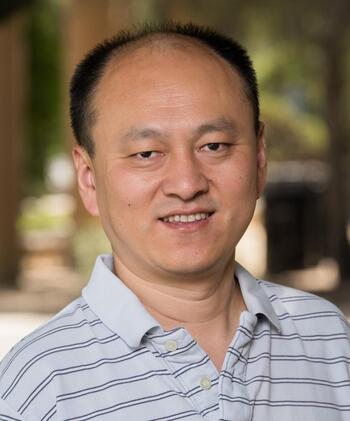
About the Speaker: Sanne Verschuren is a Stanton Nuclear Security Postdoctoral Fellow at the Center for International Security and Cooperation, Stanford University. Her research interests include the development of military technology, shifts in military strategy and tactics, and the role of ideas and norms therein. Her book project examines why and how countries decide to procure different weapon capabilities within similar military domains, particularly the development of missile defense (1980s-today), air power (1920s-1930s), and aircraft carriers (1950s-1960s). At CISAC, Sanne conducts research on the intersection between nuclear and conventional weapons. Sanne received her Ph.D. in Political Science from Brown University in August 2021.

Virtual to Public. Only those with an active Stanford ID with access to William J Perry Conference Room in Encina Hall may attend in person. 

Seminars
Governance
-


REGISTRATION

This event is virtual only. This event will not be held in person.

Seminars
-

For fall quarter 2021, CISAC will be hosting hybrid events. Many events will offer limited-capacity in-person attendance for Stanford faculty, staff, fellows, visiting scholars, and students in accordance with Stanford’s health and safety guidelines, and be open to the public online via Zoom. All CISAC events are scheduled using the Pacific Time Zone. 

REGISTRATION

(Stanford faculty, visiting scholars, staff, fellows, and students only)


Seminar Recording

About the Event: The technology controlling United States nuclear weapons predates the Internet. Updating the technology for the digital era is necessary, but it comes with the risk that anything digital can be hacked. Moreover, using new systems for both nuclear and non-nuclear operations will lead to levels of nuclear risk hardly imagined before. This book is the first to confront these risks comprehensively.

With Cyber Threats and Nuclear Weapons, Herbert Lin provides a clear-eyed breakdown of the cyber risks to the U.S. nuclear enterprise. Featuring a series of scenarios that clarify the intersection of cyber and nuclear risk, this book guides readers through a little-understood element of the risk profile that government decision-makers should be anticipating. What might have happened if the Cuban Missile Crisis took place in the age of Twitter, with unvetted information swirling around? What if an adversary announced that malware had compromised nuclear systems, clouding the confidence of nuclear decision-makers?

Cyber Threats and Nuclear Weapons, the first book to consider cyber risks across the entire nuclear enterprise, concludes with crucial advice on how government can manage the tensions between new nuclear capabilities and increasing cyber risk. This is an invaluable handbook for those ready to confront the unique challenges of cyber nuclear risk.

Purchase Book


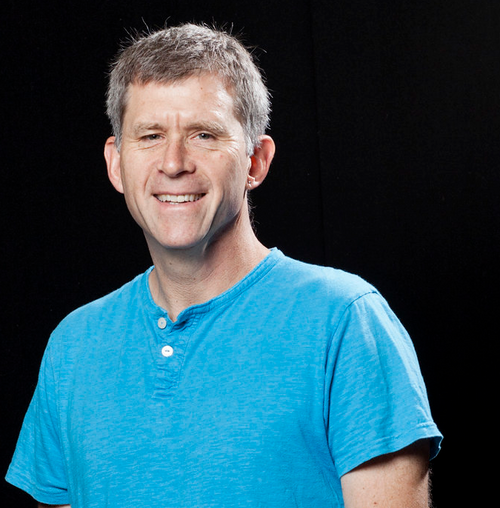
About the Speaker: Since 2014, Herb Lin has been senior research scholar for cyber policy and security at the Center for International Security and Cooperation and Hank J. Holland Fellow in Cyber Policy and Security at the Hoover Institution, both at Stanford University.  He also served as a professional staff member and staff scientist for the House Armed Services Committee (1986-1990), where his portfolio included defense policy and arms control issues. He received his doctorate in physics from MIT.

Virtual to Public. Only those with an active Stanford ID with access to William J Perry Conference Room in Encina Hall may attend in person. 

CISAC
Stanford University
Encina Hall, C236
Stanford, CA 94305-6165

650-497-8600
0
Senior Research Scholar at the Center for International Security and Cooperation
Hank J. Holland Fellow in Cyber Policy and Security, Hoover Institution
HerbertLin.jpg

Dr. Herb Lin is senior research scholar at the Center for International Security and Cooperation and Research Fellow at the Hoover Institution, both at Stanford University.  His research interests relate broadly to the impact of emerging technologies on national security, especially in the digital domain (cyber, artificial intelligence, information warfare and operations), and has written extensively on the role of offensive operations in cyberspace as instruments of national policy.  In addition to his positions at Stanford University, he is Chief Scientist, Emeritus for the Computer Science and Telecommunications Board, National Research Council (NRC) of the National Academies, where he served from 1990 through 2014 as study director of major projects on public policy and information technology.  From 2016 to 2025, he was a member of the Science and Security Board of the Bulletin of Atomic Scientists. In 2016, he served on President Obama’s Commission on Enhancing National Cybersecurity and in  2021 on the Aspen Commission on Information Disorder.  Prior to his NRC service, he was a professional staff member and staff scientist for the House Armed Services Committee (1986-1990), where his portfolio included defense policy and arms control issues. He received his doctorate in physics from MIT.

Avocationally, he is a longtime folk and swing dancer and a lousy magician. Apart from his work on cyberspace and cybersecurity, he is published in cognitive science, science education, biophysics, and arms control and defense policy. He also consults on K-12 math and science education.

Date Label
Seminars
-

*For fall quarter 2021, CISAC will be hosting hybrid events. Many events will offer limited-capacity in-person attendance for Stanford faculty, staff, fellows, visiting scholars, and students in accordance with Stanford’s health and safety guidelines, and be open to the public online via Zoom. All CISAC events are scheduled using the Pacific Time Zone.


REGISTRATION


Seminar Recording

About the Event: Natural gas prices in Europe have spiked in recent weeks. In the meantime, Russia is pressing for early certification of the newly-completed Nord Stream 2 gas pipeline, which would increase capacity for moving gas from Russia to Europe. How serious is the gas situation in Europe, and how might Nord Stream 2 affect it? What motivates Moscow's push to get the new pipeline in operation? What policy should the U.S. government pursue on these questions? Ambassador Daniel Fried of the Atlantic Council and Edward Chow of Center for Strategic and International Studies will address these issues on November 17.


About the Speakers: In the course of his forty-year Foreign Service career, Ambassador Fried played a key role in designing and implementing American policy in Europe after the fall of the Soviet Union. As special assistant and NSC senior director for Presidents Clinton and Bush, ambassador to Poland, and assistant secretary of state for Europe (2005-09), Ambassador Fried crafted the policy of NATO enlargement to Central European nations and, in parallel, NATO-Russia relations, thus advancing the goal of Europe whole, free, and at peace. During those years, the West’s community of democracy and security grew in Europe. Ambassador Fried helped lead the West’s response to Moscow’s aggression against Ukraine starting in 2014: as State Department coordinator for sanctions policy, he crafted US sanctions against Russia, the largest US sanctions program to date, and negotiated the imposition of similar sanctions by Europe, Canada, Japan, and Australia.   


Edward C. Chow is an international energy expert with 45 years of industry experience working in Asia, Middle East, Africa, South America, Europe, Russia, Black Sea and Caspian regions. He negotiated successfully multibillion-dollar oil and gas agreements and specializes in investments in emerging economies. He developed government policy and business strategy while advising governments, international financial institutions, major oil companies, and leading multinational corporations. He worked for more than 20 years at Chevron Corporation in headquarter and overseas assignments. He taught at Georgetown and George Washington universities and served as visiting professor at Ohio University and Fudan University in Shanghai. He is a senior associate in the Center for Strategic and International Studies and affiliate faculty at George Mason University.

Virtual Only. This event will not be held in person.

Daniel Fried ormer US Ambassador to Poland; Weiser Family Distinguished Fellow Atlantic Council
Edward C. Chow Center for Strategic and International Studies (CSIS)
Seminars
Paragraphs
Cover of book "Drivers of Innovation"

Innovation and entrepreneurship rank highly on the strategic agenda of most countries today. As global economic competition intensifies, many national policymakers now recognize the central importance of entrepreneurship education and the building of financial institutions to promote long-term innovation, entrepreneurship, and economic growth. Drivers of Innovation brings together scholars from the United States and Asia to explore those education and finance policies that might be conducive to accelerating innovation and developing a more entrepreneurial workforce in East Asia. 

Some of the questions covered include: How do universities in China and Singapore experiment with new types of learning in their quest to promote innovation and entrepreneurship? Is there a need to transform the traditional university into an “entrepreneurial university”? What are the recent developments in and outstanding challenges to financing innovation in China and Japan? What is the government’s role in promoting innovative entrepreneurship under the shadow of big business in South Korea? What can we learn about the capacity of services to drive innovation-led growth in India? 

Drivers of Innovation will serve as a valuable reference for scholars and policymakers working to develop human capital for innovation in Asia.

Contents

  1. Educating Entrepreneurs and Financing Innovation in Asia 
    Fei Yan, Yong Suk Lee, Lin William Cong, Charles Eesley, and Charles Lee
  2. Fostering Entrepreneurship and Innovation: Education, Human Capital, and the Institutional Environment 
    Charles Eesley, Lijie Zhou, and You (Willow) Wu
  3. Entrepreneurial Scaling Strategy: Managerial and Policy Considerations 
    David H. Hsu
  4. Innovation Policy and Star Scientists in Japan 
    Tatsuo Sasaki, Hiromi S. Nagane, Yuta Fukudome, and Kanetaka Maki
  5. Financing Innovation in Japan: Challenges and Recent Progress 
    Takeo Hoshi and Kenji Kushida
  6. Promoting Entrepreneurship under the Shadow of Big Business in Korea: The Role of the Government 
    Hicheon Kim, Dohyeon Kim, and He Soung Ahn
  7. The Creativity and Labor Market Performance of Korean College Graduates: Implications for Human Capital Policy 
    Jin-Yeong Kim
  8. Financing Innovative Enterprises in China: A Public Policy Perspective 
    Lin William Cong, Charles M. C. Lee, Yuanyu Qu, and Tao She
  9. Forging Entrepreneurship in Asia: A Comparative Study of Tsinghua University and the National University of Singapore 
    Zhou Zhong, Fei Yan, and Chao Zhang
  10. Education and Human Capital for Innovation in India’s Service Sector 
    Rafiq Dossani
  11. In Need of a Big Bang: Toward a Merit-Based System for Government-Sponsored Research in India 
    Dinsha Mistree
  12. The Implications of AI for Business and Education, and Singapore’s Policy Response 
    Mohan Kankanhalli and Bernard Yeung


All Publications button
1
Publication Type
Books
Publication Date
Subtitle

Entrepreneurship, Education, and Finance in Asia

Authors
Yong Suk Lee
Fei Yan
Book Publisher
Shorenstein APARC
Authors
News Type
Commentary
Date
Paragraphs

This summer, China conducted a series of tests with nuclear-capable hypersonic weapons systems that have clearly gotten the attention of officials across the U.S. government. The tests included a hypersonic glide vehicle — a delivery mechanism that can maneuver through the Earth’s atmosphere towards its target — and also incorporated a fractional orbital bombardment system. Because a fractional orbital bombardment system can deliver its payload by entering into lower orbit and then “dropping” it on the target, it could reach the U.S. homeland via the South Pole, bypassing U.S. early warning systems and missile defenses, which are primarily geared towards the interception of ballistic missiles from the north.

Read the rest at War on the Rocks

Hero Image
Rocket blasting Missile Defense Agency
All News button
1
Subtitle

China conducted a series of tests with nuclear-capable hypersonic weapons systems that have gotten the attention of officials across the U.S. government. The tests included a hypersonic glide vehicle — a delivery mechanism that can maneuver through the Earth’s atmosphere towards its target — and incorporated a fractional orbital bombardment system.

Authors
Melissa Morgan
News Type
News
Date
Paragraphs

William Burns has been many things in his long career: U.S. ambassador to Jordan and later Russia, deputy secretary of state, career ambassador, and president of the Carnegie Endowment for International Peace, among others. But with his confirmation on March 19, 2021 he added a wholly unique title to his already remarkable list of accomplishments: the first diplomat to ever serve as director of the Central Intelligence Agency.

Burns’ career path was not always clear. As a young college graduate in 1981, he received an offer from the Foriegn Service, but hesitated to take it. His father, a Major General in the U.S. Army, wrote him a note with the advice, “Nothing can make you prouder than to serve your country with honor.”

At his recent visit to the Freeman Spogli Institute for International Studies, Burns offered the students in attendance similar council about pursuing careers in public service. A recording of his remarks is below.

“I’m a believer in the virtues of public service and what it means to our country,” Burns told the audience.

He recognized that this moment in American policy at home and around the world is one of transition and uncertainty and that the current climate of distrust between the American public and government has had a tremendous impact on domestic politics. Abroad, the rise of China cuts across all sectors of U.S. geopolitics, while even larger, non-state challenges such as climate change, global health insecurity, and the rapid advancement of technology pose even greater existential challenges.

Still, Burns has faith in the unique relationship that the United States has to its public service institutions.

“It’s my obligation as a leader, and your opportunity [as potential future public servants] to demonstrate that we can produce institutions in this country that are professional, apolitical, and devoted to the national interest and doing things in accordance with American values,” he emphasized.

It’s my obligation as a leader, and your opportunity to demonstrate that we can produce institutions in this country that are professional, apolitical, and devoted to the national interest and doing things in accordance with American values.
William J. Burns
Director of the C.I.A.

In his jurisdiction over the C.I.A, Burns has already set benchmarks to ensure the agency remains competitive and serves its purpose of providing policymakers with high-quality, timely intelligence which supports their decision-making process. He is committed to streamlining the hiring process at the C.I.A. and making it more attractive to top talent, as well as diversifying the workforce and drawing on expertise from across all types of professional backgrounds and abilities. “We’re not going to be an effective intelligence organization if everyone at the C.I.A. looks like me,” he quipped.

Keeping the bigger picture in mind, Director Burns reiterated one of the underlying principles that has guided his approach to public service. “Both [diplomacy and intelligence] require a sense of humility. There are perspectives in the world that are not identical to ours. You don’t have to accept or indulge those perspectives, but understanding them is the starting point of effective intelligence work and effective diplomacy.”

Read More

William Burns
News

Ambassador William Burns Reflects On a Career in Diplomacy

Ambassador William Burns Reflects On a Career in Diplomacy
encina
News

Call for Applications: Visiting Fellow in Israel Studies at the Freeman Spogli Institute for International Studies, Stanford University

The visiting fellow will teach at least one course during the quarter of the visit on some aspect of Israel’s politics, society, economy, modern history, technological development and/or regional or international relations.
Call for Applications: Visiting Fellow in Israel Studies at the Freeman Spogli Institute for International Studies, Stanford University
Byter, Bombs, and Spies  - new book by Amy Zegart and Herb Lin
News

Scholars examine cyber warfare in new book

Scholars examine cyber warfare in new book
Hero Image
C.I.A. Director William Burns speaks to students at the Freeman Spogli Institute for International Studies at Stanford University. Rod Searcy
All News button
1
Subtitle

Director Burns shared how he is applying the lessons he learned as a diplomat to make the intelligence community an effective organization for the challenges facing policymakers today.

-

*For fall quarter 2021, CISAC will be hosting hybrid events. Many events will offer limited-capacity in-person attendance for Stanford faculty, staff, fellows, visiting scholars, and students in accordance with Stanford’s health and safety guidelines, and be open to the public online via Zoom. All CISAC events are scheduled using the Pacific Time Zone.


REGISTRATION


Seminar Recording

About the Event: As relations between the West and Russia plunge to a post-Cold War nadir, how strong a competitor will the Kremlin prove? Will constraints on Putin's autocracy hinder his ability to have Russia play a great power role, or has Russia alrealdy successfully resurrected itself and is now able to exercise significant influence on the global stage? On November 10, Timothy Frye (author of Weak Strongman: The Limits of Power in Putin's Russia) and Kathryn Stoner (author of Russia Resurrected: Its Power and Purpose in a New Global Order) will discuss the nature and depth of the Russian challenge to the West.


About the Speakers: 

Timothy Frye is the Marshall D. Shulman Professor of Post-Soviet Foreign Policy at Columbia University. Professor Frye received a B.A. in Russian language and literature from Middlebury College, an M.A. from Columbia's School of International and Public Affairs, and a Ph.D. in Political Science from Columbia. His research and teaching interests are in comparative politics and political economy with a focus on the former Soviet Union and Eastern Europe. His most recent book is Weak Strongman: The Limits of Power in Putin’s Russia (Princeton University Press, 2021). He co-directs the International Center for the Study of Institutions and Development at the Higher School of Economics in Moscow and edits Post-Soviet Affairs.

Kathryn Stoner is the Deputy Director at the Freeman Spogli Institute for International Studies (FSI) at Stanford University and a Senior Fellow at the Center on Democracy, Development, and the Rule of Law, and at the Center on International Security and Cooperation at FSI. She teaches in the Department of Political Science at Stanford, and in the Program on International Relations, as well as in the Ford Dorsey Master's in International Policy Program. Prior to coming to Stanford in 2004, she was on the faculty at Princeton University for nine years, jointly appointed to the Department of Politics and the Princeton School for International and Public Affairs (formerly the Woodrow Wilson School). At Princeton she received the Ralph O. Glendinning Preceptorship awarded to outstanding junior faculty. She also served as a Visiting Associate Professor of Political Science at Columbia University, and an Assistant Professor of Political Science at McGill University. She has held fellowships at Harvard University as well as the Woodrow Wilson Center in Washington, DC. In addition to many articles and book chapters on contemporary Russia, she is the author or co-editor of six books: "Transitions to Democracy: A Comparative Perspective," written and edited with Michael A. McFaul (Johns Hopkins 2013); "Autocracy and Democracy in the Post-Communist World," co-edited with Valerie Bunce and Michael A. McFaul (Cambridge, 2010); "Resisting the State: Reform and Retrenchment in Post-Soviet Russia" (Cambridge, 2006); "After the Collapse of Communism: Comparative Lessons of Transitions" (Cambridge, 2004), coedited with Michael McFaul; and "Local Heroes: The Political Economy of Russian Regional" Governance (Princeton, 1997). Her most recent book is Russia Resurrected: Its Power and Purpose in a New Global Order" (Oxford University Press, 2021). She received a BA (1988) and MA (1989) in Political Science from the University of Toronto, and a PhD in Government from Harvard University (1995). In 2016 she was awarded an honorary doctorate from Iliad State University, Tbilisi, Republic of Georgia.

Virtual Only. This event will not be held in person.

Timothy Frye

FSI
Stanford University
Encina Hall C140
Stanford, CA 94305-6055

(650) 736-1820 (650) 724-2996
0
Satre Family Senior Fellow, Freeman Spogli Institute for International Studies
kathryn_stoner_1_2022_v2.jpg MA, PhD

Kathryn Stoner is the Mosbacher Director of the Center on Democracy, Development, and the Rule of Law (CDDRL), and a Senior Fellow at CDDRL and the Center on International Security and Cooperation at FSI. From 2017 to 2021, she served as FSI's Deputy Director. She is Professor of Political Science (by courtesy) at Stanford and she teaches in the Department of Political Science, and in the Program on International Relations, as well as in the Ford Dorsey Master's in International Policy Program. She is also a Senior Fellow (by courtesy) at the Hoover Institution.

Prior to coming to Stanford in 2004, she was on the faculty at Princeton University for nine years, jointly appointed to the Department of Politics and the Princeton School for International and Public Affairs (formerly the Woodrow Wilson School). At Princeton she received the Ralph O. Glendinning Preceptorship awarded to outstanding junior faculty. She also served as a Visiting Associate Professor of Political Science at Columbia University, and an Assistant Professor of Political Science at McGill University. She has held fellowships at Harvard University as well as the Woodrow Wilson Center in Washington, DC. 

In addition to many articles and book chapters on contemporary Russia, she is the author or co-editor of six books: "Transitions to Democracy: A Comparative Perspective," written and edited with Michael A. McFaul (Johns Hopkins 2013);  "Autocracy and Democracy in the Post-Communist World," co-edited with Valerie Bunce and Michael A. McFaul (Cambridge, 2010);  "Resisting the State: Reform and Retrenchment in Post-Soviet Russia" (Cambridge, 2006); "After the Collapse of Communism: Comparative Lessons of Transitions" (Cambridge, 2004), coedited with Michael McFaul; and "Local Heroes: The Political Economy of Russian Regional" Governance (Princeton, 1997); and "Russia Resurrected: Its Power and Purpose in a New Global Order" (Oxford University Press, 2021).

She received a BA (1988) and MA (1989) in Political Science from the University of Toronto, and a PhD in Government from Harvard University (1995). In 2016 she was awarded an honorary doctorate from Iliad State University, Tbilisi, Republic of Georgia.

Download full-resolution headshot; photo credit: Rod Searcey.

Mosbacher Director, Center on Democracy, Development and the Rule of Law
Professor of Political Science (by courtesy), Stanford University
Senior Fellow (by courtesy), Hoover Institution
CV
Date Label
Seminars
-

This is a virtual event. Please click here to register and generate a link to the talk. 
The link will be unique to you; please save it and do not share with others.

November 10, 5:00-6:15 p.m. California time / November 11, 9:00-10:15 a.m. China time
 

Based on his recent Oxford University Press book Protecting China's Interests Overseas: Securitization and Foreign Policy, Dr. Andrea Ghiselli will discuss the role of the actors that contributed to the emergence and evolution of China's approach to the protection of its interests overseas. He will show how the securitization of non-traditional security threats overseas played a key role in shaping the behavior and preferences of Chinese policymakers and military elites, especially with regard to the role of the armed forces in foreign policy. 

While Chinese policymakers were able to overcome important organizational challenges, the future of China's approach to the protection of its interests overseas remains uncertain as Chinese policymakers face important questions about the possible political and diplomatic costs associated with different courses of action.

For more information about Protecting China's Interests Overseas or to purchase a copy, please click here.


Image
Portrait of Andrea Ghiselli
Dr. Andrea Ghiselli is an Assistant Professor at the School of International Relations and Public Affairs of Fudan University. He is also the Head of Research of the TOChina Hub's ChinaMed Project. His research focuses on the relationship between China's economic interests overseas and its foreign and defense policy. Besides his first monograph Protecting China's Interests Overseas: Securitization and Foreign Policy published by Oxford University Press, Dr. Ghiselli's research has been published in a number of peer-reviewed journals like the China Quarterly, the Journal of Strategic StudiesArmed Forces & Society, and the Journal of Contemporary China.


Via Zoom Webinar. Register at: https://bit.ly/3AUnPi3

Andrea Ghiselli Assistant Professor, School of International Relations and Public Affairs, Fudan University
Seminars
News Type
Commentary
Date
Paragraphs

"Anti-China sentiment is a global trend among advanced democratic nations [...] probably the most dramatic change is [in] South Korea," said APARC and Korea Program Director Gi-Wook Shin at a Korea Society forum on October 7, 2021.

In conversation with Korea Society Senior Director Stephen Noerper, Shin examines rising anti-China sentiments in South Korea and their implications for the upcoming South Korean presidential election and the U.S.-ROK alliance. He also explores these sentiments relative to Korean feelings toward Japan and the United States.

Watch the video recording or listen to the audio below. You can also view the coverage of the event in the Chosun Ilbo.

Read More

crowd in seoul
Commentary

[Us and Them] I’m Korean, You’re Not, and There’s a Fine Line You Can’t Cross

In a new interview with The Korea Herald, Gi-Wook Shin discusses ethnic homogeneity, its nationalist roots, and the limitations to building multicultural identity in South Korea.
[Us and Them] I’m Korean, You’re Not, and There’s a Fine Line You Can’t Cross
A man holds a 'Stop Asian Hate' sign during a rally protesting rising violence against Asian Americans.
News

Perspectives on Rising Anti-Asian Violence from REDI

The Racial Equity, Diversity, & Inclusion Task Force sheds light on historical roots of anti-Asian racism and considers how our troubling times can present an important opening for Asian Americans to challenge racialization and white supremacy.
Perspectives on Rising Anti-Asian Violence from REDI
"Patterns of Impunity" by Robert King on a backgorund showing the flags of North Korea, South Korea, and the United States.
News

Why North Korean Human Rights Matter: Book Talk with Robert R. King

In his new book, "Patterns of Impunity," Ambassador King, the U.S. special envoy for North Korean human rights from 2009 to 2017, shines a spotlight on the North Korean human rights crisis and argues that improving human rights in the country is an integral part of U.S. policy on the Korean peninsula.
Why North Korean Human Rights Matter: Book Talk with Robert R. King
Hero Image
Protesters participate in a rally oppose a planned visit by Chinese Foreign Minister Wang Yi near the Chinese Embassy on November 25, 2020 in Seoul, South Korea.
Chung Sung-Jun/ Getty Images)
All News button
1
Subtitle

APARC and Korea Program Director Gi-Wook Shin shares insights on rising anti-China sentiments in South Korea and their implications for the upcoming South Korean presidential election.

Subscribe to China