Authors
Gi-Wook Shin
News Type
Commentary
Date
Paragraphs

This commentary was first published by the Los Angeles Times.


The 104-minute speech by Chinese President Xi Jinping at the country’s 20th party congress reveals a leader who believes he is on a historic mission to save China’s self-described socialism in the 21st century.

Xi’s Oct. 16 speech launched the twice-a-decade meeting, which concludes this weekend, where the national Communist Party appoints its leadership and announces China’s policy direction for the coming years. The address reads very much like a sequel to his previous one five years ago. At that time, Xi cryptically said China had entered a “new era” of socialism. This time, he characterized his aim as “building a modern socialist country,” which the state media touted as the highlight of the speech. This statement clarifies his ambition to prove the superiority of socialism by 2049, with an implicit aim to surpass the U.S. by the centennial anniversary of the People’s Republic of China’s founding in 1949.

Xi is driven by the grand “Chinese dream,” the “great rejuvenation of the Chinese nation” that he referenced in his 2017 and 2022 National Congress speeches. He appears to view himself as the sole individual who can achieve this dream in the 21st century, perhaps casting himself as a 21st-century Mao Zedong. His plans — including “common prosperity” and “socialist modernization” — are long term and unlikely to shift even following the recent turmoil caused by COVID-19, China’s harsh lockdowns in response and the resulting economic pains.

These ambitions are the same ones promoted by the Xi administration over the last decade. But by the end of this latest congress, Xi will have cemented an unprecedented third term as president, and he can now be more aggressive than before in their pursuit.


Subscribe to APARC newsletters to receive our experts' commentary and analysis.


It follows then that U.S.-China relations are unlikely to improve in Xi’s next term. He has shown, time and again, that he differs from his predecessors, except Mao, in that he does not shy away from conflict with the United States. Xi has felt comfortable declaring that “the East is rising while the West is declining” and positioning the U.S. as a challenge to overcome, rather than an obstacle to avoid, on the road to the Chinese dream.

On the other hand, China will probably strengthen ties with Russia, North Korea and other like-minded authoritarian nations, just as the U.S. is strengthening alliance networks in the region, including with Japan and South Korea. We are, as Henry Kissinger once said, in the “foothills of a Cold War.”

The Taiwan Strait remains central to how quickly and drastically conflict could escalate. Xi’s latest speech reiterated that China wanted to gain Taiwan peacefully but “will never promise to renounce the use of force, and we reserve the option of taking all measures necessary.” He frames unification not as a choice but as a historical responsibility, which has been placed on his shoulders. Xi’s direct mention of Taiwan unification at the party congress suggests that he will use that issue as a justification for his long-term reign.

One factor that will help determine the actual longevity of Xi’s rule is whether meaningful protests against him will emerge. Xi’s policies and crackdowns against dissent have yielded sporadic protests that made international headlines. In China, however, the threshold for revolution is quite high, creating major barriers to a regime change. A large dose of state-led nationalism and indoctrination convinces people that the U.S. in particular is determined to torpedo China’s quest for modernity, creating an enemy to rally the country around.

China’s economic challenges pose another hurdle for Xi’s long-term agenda. The country’s rigid zero-COVID policy has limited growth, and Xi has displayed a heavy-handed approach toward private businesses, dampening entrepreneurial spirit. If Chinese people come to think of Xi’s anti-market tendency as the underlying problem, it will erode his authority.

To stave off such threats, Xi is likely to continue his iron-fist rule. He has purged enough rivals and earned enough grievances over the years that relaxing his power grip at this juncture will likely invite criticism, if not revenge, toward him. He is eager to turn China into a global power that will awe the West. As Xi put it at the 2017 party congress, China is increasingly taking “center stage in the world.” With Xi still at the helm, we should expect a more aggressive China and increasing turbulence in the regional and global order.

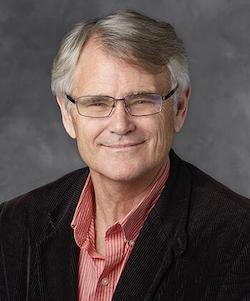
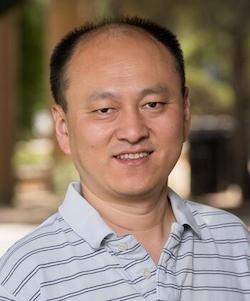
Gi-Wook Shin is the director of the Shorenstein Asia-Pacific Research Center at Stanford University. Seong-Hyon Lee is a senior fellow at the George H. W. Bush Foundation for U.S.-China Relations.

Read More

Chinese soldier
Commentary

China Hasn’t Reached the Peak of Its Power

Why Beijing can afford to bide Its time
China Hasn’t Reached the Peak of Its Power
Trans-Pacific Sustainability Dialogue flyer.
News

The Ban Ki-moon Foundation and Stanford’s Asia-Pacific Research Center Launch Trans-Pacific Sustainability Dialogue

The Trans-Pacific Sustainability Dialogue convenes social science researchers and scientists from Stanford University and across the Asia-Pacific region, alongside student leaders, policymakers, and practitioners, to generate new research and policy partnerships to accelerate the implementation of the United Nations-adopted Sustainable Development Goals. The inaugural Dialogue will be held in Seoul, Republic of Korea, on October 27 and 28, 2022.
The Ban Ki-moon Foundation and Stanford’s Asia-Pacific Research Center Launch Trans-Pacific Sustainability Dialogue
Hero Image
Chinese President Xi Jinping is applauded by senior members of the government and delegates.
Chinese President Xi Jinping is applauded by senior members of the government and delegates as he walks to the podium before his speech during the Opening Ceremony of the 20th National Congress of the Communist Party of China at The Great Hall of People on October 16, 2022 in Beijing, China.
Kevin Frayer/ Getty Images
All News button
1
Subtitle

Xi's plans are long term and unlikely to shift, but he can now be more aggressive than before in their pursuit.

-

About the Workshops


The SCCEI Young Researcher Workshops are a weekly series of presentations from scholars working on issues related to China’s economy and institutions. The series brings together young scholars by providing a platform to present new research, get feedback, exchange ideas, and make connections. Each session features a single presenter who may present a new research plan, results from preliminary data analyses, or even do a trial run of a job talk or conference presentation.

Workshops are held every Thursday from 2 - 3 pm. Afternoon refreshments will be provided! 

Visit the Young Researcher Workshops webpage for more information on the content and format of the series and to learn how to sign up to present. 

Goldman Room, Encina Hall, E409

Workshops
-

About the Workshops


The SCCEI Young Researcher Workshops are a weekly series of presentations from scholars working on issues related to China’s economy and institutions. The series brings together young scholars by providing a platform to present new research, get feedback, exchange ideas, and make connections. Each session features a single presenter who may present a new research plan, results from preliminary data analyses, or even do a trial run of a job talk or conference presentation.

Workshops are held every Thursday from 2 - 3 pm. Afternoon refreshments will be provided! 

Visit the Young Researcher Workshops webpage for more information on the content and format of the series and to learn how to sign up to present. 

Goldman Room, Encina Hall, E409

Workshops
-

About the Workshops


The SCCEI Young Researcher Workshops are a weekly series of presentations from scholars working on issues related to China’s economy and institutions. The series brings together young scholars by providing a platform to present new research, get feedback, exchange ideas, and make connections. Each session features a single presenter who may present a new research plan, results from preliminary data analyses, or even do a trial run of a job talk or conference presentation.

Workshops are held every Thursday from 2 - 3 pm. Afternoon refreshments will be provided! 

Visit the Young Researcher Workshops webpage for more information on the content and format of the series and to learn how to sign up to present. 

Goldman Room, Encina Hall, E409

Yun Shen
Workshops
-

About the Workshops


The SCCEI Young Researcher Workshops are a weekly series of presentations from scholars working on issues related to China’s economy and institutions. The series brings together young scholars by providing a platform to present new research, get feedback, exchange ideas, and make connections. Each session features a single presenter who may present a new research plan, results from preliminary data analyses, or even do a trial run of a job talk or conference presentation.

Workshops are held every Thursday from 2 - 3 pm. Afternoon refreshments will be provided! 

Visit the Young Researcher Workshops webpage for more information on the content and format of the series and to learn how to sign up to present. 

Goldman Room, Encina Hall, E409

Xueping Sun
Workshops
-

About the Workshops


The SCCEI Young Researcher Workshops are a weekly series of presentations from scholars working on issues related to China’s economy and institutions. The series brings together young scholars by providing a platform to present new research, get feedback, exchange ideas, and make connections. Each session features a single presenter who may present a new research plan, results from preliminary data analyses, or even do a trial run of a job talk or conference presentation.

Workshops are held every Thursday from 2 - 3 pm. Afternoon refreshments will be provided! 

Visit the Young Researcher Workshops webpage for more information on the content and format of the series and to learn how to sign up to present. 

Goldman Room, Encina Hall, E409

Jintao Xu
Workshops
-

About the Workshops


The SCCEI Young Researcher Workshops are a weekly series of presentations from scholars working on issues related to China’s economy and institutions. The series brings together young scholars by providing a platform to present new research, get feedback, exchange ideas, and make connections. Each session features a single presenter who may present a new research plan, results from preliminary data analyses, or even do a trial run of a job talk or conference presentation.

Workshops are held every Thursday from 2 - 3 pm. Afternoon refreshments will be provided! 

Visit the Young Researcher Workshops webpage for more information on the content and format of the series and to learn how to sign up to present. 

Goldman Room, Encina Hall, E409

Workshops
-

About the Workshops


The SCCEI Young Researcher Workshops are a weekly series of presentations from scholars working on issues related to China’s economy and institutions. The series brings together young scholars by providing a platform to present new research, get feedback, exchange ideas, and make connections. Each session features a single presenter who may present a new research plan, results from preliminary data analyses, or even do a trial run of a job talk or conference presentation.

Workshops are held every Thursday from 2 - 3 pm. Afternoon refreshments will be provided! 

Visit the Young Researcher Workshops webpage for more information on the content and format of the series and to learn how to sign up to present. 

Goldman Room, Encina Hall, E409

Jianan Yang Developing Asia Health Policy Postdoctoral Fellow Walter H. Shorenstein Asia-Pacific Research Center
Workshops
-
Banner image for webinar "Asian Perspectives on the U.S.-China Competition: Assessing India's Role", featuring photo portraits of speakers Suhasini Haidar, Arvind Subramanian, and Arzan Tarapore

India’s role and prospects as a strategic competitor to China come down to two broad factors: its intent and its capacity. In the midst of intensifying U.S.-China competition, this webinar examines India’s intent and capacity to be an effective player in the Indo-Pacific’s strategic competition. On intent, India has steadfastly insisted since 2020 that the bilateral relationship cannot progress unless “peace and tranquility” are restored to their unsettled border; but in recent months India has also engaged diplomatically with China. On capacity, India’s economic performance lies at the core of its national power, but reforms have been haphazard and its recent economic performance has attracted doubts over its long-term potential. Has India struck the right balance of defiance and conciliation in its foreign policy? Is it doing enough to unleash its enormous economic and demographic potential? In both dimensions, how robust is – and should be – coordination with the United States?


Speakers:

Image
Square headshot of Ms Suhasini Haidar
Suhasini Haidar is the Diplomatic Editor of The Hindu, one of India’s oldest and most respected national dailies, and hosts a weekly online show "WorldView with Suhasini Haidar." Over the course of her 28-year reporting career, Suhasini has reported from across the region and the world, including Kashmir, where she was injured in a bomb blast. In India, she has covered the foreign affairs beat for over a decade, and was the recipient of the most prestigious Indian print journalism award, the Prem Bhatia. Suhasini began her career at CNN's United Nation's bureau in New York. She holds Bachelor's degree at Lady Shriram College in Delhi, and a Masters in Broadcast Journalism at Boston University

Image
Square headshot photo of Dr Arvind Subramanian
Arvind Subramanian is the Meera & Vikram Gandhi Fellow at the Saxena Center for Contemporary South Asia, and a Senior Fellow at the Watson Institute for International and Public Affairs, at Brown University. He was previously a professor of economics at Ashoka University, and the chief economic adviser to the Government of India between 2014 and 2018. Prior to that, he taught at Harvard, researched at the Peterson Institute for International Economics, and worked at the IMF and GATT. In 2018, Professor Subramanian published Of Counsel: The Challenges of the Modi-Jaitley Economy, reflecting on his time guiding India’s economy. He holds a DPhil from Oxford.

Moderator:

Image
Square headshot photograph of Arzan Tarapore
Arzan Tarapore is the South Asia research scholar at the Shorenstein Asia-Pacific Research Center at Stanford University, where he leads the South Asia Initiative. His research focuses on military strategy, Indian defense policy, and contemporary Indo-Pacific security issues. Prior to his scholarly career, he served as an analyst in the Australian Defence Department. Arzan holds a PhD from King’s College London.


This event is part of APARC’s 2022 Fall webinar series, Asian Perspectives on the U.S.-China Competition. 

Arzan Tarapore

Virtual via Zoom

Suhasini Haidar Diplomatic Editor The Hindu
Arvind Subramanian Meera & Vikram Gandhi Fellow Saxena Center for Contemporary South Asia
Seminars
News Feed Image
fall_2022_series_event_nov_1.png
-
Portraits of speakers Chisako T. Masuo, Ryo Sahashi, and Kiyoteru Tsutsui.

In the context of growing tensions between the U.S. and China, many Asian countries have faced the challenge of balancing their relationships with the two countries. Given its security alliance with the U.S. is a cornerstone of its foreign policy, Japan seems to be more closely aligned with the U.S. than any other country. However, Japan’s most important trade partner is China, and it cannot overlook its economic relations with China in making foreign policy decisions. What should Japan’s approach be with the increasingly authoritarian regime in China expanding its ambitions to compete with the U.S. while domestic turmoil hampers the U.S. capacity to project its power and influence in the Indo-Pacific region? As a growing number of trade agreements in the region, such as CPTPP (Comprehensive and Progressive Agreement for Trans-Pacific Partnership), RCEP (Regional Comprehensive Economic Partnership), and now IPEF (Indo-Pacific Economic Framework) create an alphabet soup of intersecting economic relations, how should Japan navigate the treacherous terrain to ensure its economic security and energy sufficiency? To answer these questions, this webinar features two leading Japanese experts in Chinese politics, economy, and diplomacy — Chisako Masuo and Ryo Sahashi.

Speakers

Image
Square photo portrait of Dr. Chisako T. Masuo
Chisako T. Masuo (益尾知佐子) is a Professor at the Faculty of Social and Cultural Studies, Kyushu University, and an Adjunct Fellow at the Japan Institute of International Affairs (JIIA). She was given the Nakasone Yasuhiro Award of Excellence in 2021 for her contribution to China studies and for the policy discussions regarding China’s Coast Guard Law. She received Ph.D. from the University of Tokyo in 2008. Her research topics include Chinese domestic politics, foreign and maritime policies, and international relations with regard to China. Professor Masuo was a visiting scholar at the Chinese Academy of Social Sciences and China Foreign Affairs University in 2019, and a coordinated research scholar working with the late Professor Ezra F. Vogel at the Harvard-Yenching Institute from 2014-2015. She is the author of China’s Behavioural Principles: International Relations Determined by the Domestic Currents (Tokyo: Chuko Publishing, 2019), as well as China Looks Back: Mao’s Legacy in the Open-Door Era (University of Tokyo Press, 2010), and a co-author of A Diplomatic History of China (University of Tokyo Press, 2017) all in Japanese. She also writes articles and book chapters in English and Chinese.

Image
Square photo portrait of Dr. Ryo Sahashi
Ryo Sahashi is an Associate Professor of International Relations, Institute for Advanced Studies on Asia, the University of Tokyo. Dr. Sahashi specializes on international politics in East Asia. His recent book is US-China Rivalry: A Shift of American Strategy and Divided Worlds (Tokyo: Chuko, 2021), In a Search for Coexistence: the United States and Two Chinas during the Cold War (Tokyo: Keiso, 2015), and he edits East Asian Order in the Post-Cold War Era (Tokyo: Keiso, 2020). In English, he edits Looking for Leadership: The Dilemma of Political Leadership in Japan (Tokyo and New York: Japan Center for International Exchange, 2015), and his recent articles appears on China International Strategy Review, Contemporary Politics, and Journal of Contemporary China. he serves as a Member for Council on the Actual State of Land Use, Advisory Panel on Science & Technology Diplomacy, and Expert Panel on 50th Year of Japan-ASEAN Friendship and Cooperation. He also works as Faculty Fellow, Research Institute of Economy, Trade, and Industry; Visiting Fellow, 21st Century Policy Institute, Keidanren; Research Fellow of Japan Center for International Exchange. He has been Japan Scholar, Wilson Center, Visiting Associate Professor, Walter H. Shorenstein Asia Pacific Research Center, Stanford University and Professor, Kanagawa University. He received his B.A. from International Christian University and his Ph.D. from the Graduate Schools for Law and Politics at the University of Tokyo.

Moderator

Image
Square photo portrait of Kiyoteru Tsutsui
Kiyoteru Tsutsui is the Henri H. and Tomoye Takahashi Professor, Professor of Sociology, Senior Fellow at the Freeman Spogli Institute for International Studies, and Deputy Director of the Walter H. Shorenstein Asia-Pacific Research Center, where he is also Director of the Japan Program. He is the author of Rights Make Might: Global Human Rights and Minority Social Movements in Japan (Oxford University Press, 2018), co-editor of Corporate Responsibility in a Globalizing World (Oxford University Press, 2016) and co-editor of The Courteous Power: Japan and Southeast Asia in the Indo-Pacific Era (University of Michigan Press, 2021). 

Kiyoteru Tsutsui

Virtual via Zoom Webinar

Chisako T. Masuo Professor, Faculty of Social and Cultural Studies Kyushu University
Ryo Sahashi Associate Professor of International Relations, Institute for Advanced Studies on Asia University of Tokyo
Seminars
Subscribe to China