News Type
News
Date
Paragraphs

With more than a million dollars in committed new funding, CDDRL’s Stanford Summer Fellows on Democracy and Development marches into its fifth year with a sustainable future and also a new name: the Draper Hills Summer Fellows on Democracy and Development. The program’s new name recognizes the generous commitments of William Draper III and Ingrid von Mangoldt Hills to fund the program and enable it to continue its bold vision.

William Draper made his gift to honor his father, Maj. Gen. William H. Draper, Jr.; Ingrid von Mangoldt Hills made her gift in honor of her late husband, Reuben W. Hills.

Image
william
Maj. Gen. William H. Draper, Jr. was a chief advisor to Gen. George Marshall and chief diplomatic administrator of the Marshall Plan in Germany, where he worked to rebuild the German economy and sort out issues related to industry and agriculture, including decartelization, trade and commerce, price control, reparations and the restitution of assets removed from invaded countries. After the war he became the first under secretary of the Army and later, a special representative of President Harry Truman, for whom he coordinated American military, political, and economic policies in Europe and effectively served as the first ambassador to NATO.

Reuben W. Hills was a San Francisco philanthropist and president and chairman of the board of Hills Bros. Coffee. He was also vice president and director of the San Francisco Opera and trustee of the Fine Arts Museum of San Francisco. In 1992 he and his wife Ingrid started a nonprofit organization, The Hills Project, to connect inner-city youth with visual and performing arts. The project reaches out to 3,300 children in San Francisco and Berkeley schools, offering field trips to the San Francisco Ballet, museums, artists’ studios, and other cultural institutions as well as visits by artists.

Image
ingrid
The funding commitments from William Draper III and Ingrid von Mangoldt Hills generously secure the future of the Draper Hills Summer Fellows on Democracy and Development program, which brings a group of approximately 30 civic, political, and economic leaders from transitioning countries such as Iraq, Afghanistan, Iran, Pakistan, China, and Russia to Stanford every summer. Draper Hills Summer Fellows are former prime ministers and presidential advisors, senators and attorneys general, journalists and civic activists, academics and members of the international development community. Since the program was introduced in 2005, it has typically received more than 800 applications each year.

The generous support of Bill Draper and Ingrid von Mangoldt Hills enables CDDRL to continue to create a community of democratic activists dedicated to building new linkages among democracy, sustainable development, good governance, and the rule of law in transitioning nations.

All News button
1
Authors
Daniel C. Sneider
David Straub
News Type
News
Date
Paragraphs

Over more than six decades, the partnership between the United States and the Republic of Korea has been subject to many stresses and strains, from the Korean War to coping with the challenge of North Korea’s nuclear ambitions. More recently, the democratization of South Korea has opened the alliance to much greater public scrutiny and pressures from an active and mobilized Korean public. Managing this strategic alliance in an era of democracy has been a focus of the research work on Korea conducted by FSI’s Walter H. Shorenstein Asia-Pacific Research Center.

With the election in December of Lee Myung-bak as South Korea’s president, ending two terms of progressive rule, Shorenstein APARC decided to launch a nonpartisan group of former senior U.S. government officials, scholars, and other American experts on Korea to explore how to revitalize the U.S. alliance with the Republic of Korea (ROK) after a decade of tensions. In partnership with the New York-based Korea Society, Shorenstein APARC assembled this policy study group at Stanford in early February for in-depth discussion of the challenges facing the alliance and then took the group to Korea for meetings with key figures, from President-elect Lee and his advisors to leaders of the opposition, Korean businessmen, and American diplomats and security officials.

Based on these intensive meetings, the members of this “New Beginnings” policy study group concluded that the United States now has a major opportunity to bolster and broaden its relationship with the ROK. Lee, Korea’s first businessman to be elected president and a self-proclaimed “pragmatist,” has stressed that he gives top priority to the United States in his foreign policy. His fixed five-year tenure will coincide with the entire first term of the next U.S. president, allowing the two new leaders an extended period of cooperation.

Immediately before Lee’s first visit to the United States as president in mid-April, New Beginnings members led by Shorenstein APARC Director Gi-Wook Shin, APARC Distinguished Fellow Michael H. Armacost, and Korea Society President Evans J.R. Revere visited Washington, D.C., and New York City to release their report, New Beginnings in the U.S.-ROK Alliance: Recommendations to U.S. Policymakers. They also addressed a forum in San Francisco co-hosted by the World Affairs Council and the Asia Society of Northern California on June 3 to discuss their recommendations and subsequent developments in U.S.-South Korean relations. The report received extensive coverage in the South Korean news media and was noted in American media as well.

Surrounded by a rising China, a more assertive Russia, a Japan seeking a greater international role, and a nuclear North Korea, the ROK can play a key role in working with the United States to maintain peace and stability in East Asia. No effort to address the nuclear and other challenges posed by North Korea is likely to succeed without the closest U.S.-South Korean cooperation. The ROK, as the world’s 13th-largest economy and one of Asia’s most democratic countries, is a model of the virtues of a market economy, of the values of freedom and human rights, and of alignment with the United States. The two countries are also bound by personal ties: 2 million people of Korean descent live in the United States, and 100,000 Koreans come to the United States each year for study and exchanges, more than from any other country.

President Lee’s election reflects four key changes in South Korea: (1) a shift from the political left back toward the center; (2) greater skepticism about North Korea; (3) increased wariness of China; and (4) enhanced support for the U.S.-ROK alliance. The protests against the United States seen in South Korea in 2002 were the result in part of transitory circumstances and no longer reflect the reality there.

President Lee seeks a global partnership with the United States while maintaining good relations with Korea’s neighbors, Japan, China, and Russia. He favors improved relations with North Korea and has stated his willingness to meet North Korean leader Kim Jong-Il. In major departures from the earlier “sunshine” policy of the South Korean government toward North Korea, however, Lee will not provide large-scale economic assistance to the North until after it abandons its nuclear weapons program. In another major departure from the previous ROK policy, he has also criticized human rights abuses in North Korea. Lee supports continued food and other humanitarian aid to the people of North Korea.

New Beginnings group members believe that the United States cannot afford to lose the opportunity presented by President Lee to build a global partnership with one of the United States’ most important allies. The group identified a number of steps that the United States, in cooperation with the ROK, could take to move the alliance into a new era (see sidebar).

The New Beginnings group has announced that it plans to continue its efforts in support of strengthened U.S.-South Korean relations. Among other projects, the group intends to present recommendations early next year to the South Korean government on how to develop a close relationship and bolster the alliance with the incoming U.S. administration.

Recommendations to United States Policymakers

  • Global Partnership — Building on the cooperation between Presidents Bush and Lee, the new U.S. president next year should issue a vision statement with Lee detailing their partnership and goals for the alliance. To advise them, the two new presidents should establish a bi-national panel of distinguished Koreans and Americans. The United States and the ROK should also give increased emphasis to the foreign ministerial strategic dialogue they initiated in 2006.
  • Security Alliance — We support the ongoing realignment of U.S. forces in the ROK. Congress should increase its budget for the relatively small U.S. portion of the total cost of its implementation. The decision to transfer wartime operational control of Korean forces back to the ROK in 2012 was likewise correct, but the United States should respond positively to any South Korean proposal to discuss conditions related to the transfer. We welcome the Lee administration’s apparent desire to review the main North Korea war plan and to prepare jointly for other contingencies, including that of a North Korean collapse. The United States should conduct regular, joint consultations with South Korea and other allies in East Asia to determine whether security conditions warrant changes in our respective force levels and, if so, in what direction.
  • North Korea — The ROK election has brought the United States and South Korea into essential agreement, for the first time in seven years, on how to deal with North Korea and its nuclear aspirations. To avoid the danger that their North Korea policies will again diverge, they must establish stronger consultative mechanisms, including with Japan.
  • Economy and Trade — Congress should ratify the U.S.-ROK Free Trade Agreement now. U.S. failure to approve the FTA would not only represent foregone business opportunities; it would damage U.S.-ROK relations and be seen by the international community as a weakening of U.S. self-confidence and engagement, in East Asia and around the globe.
  • People-to-People Ties — The U.S. government should set an early target date to include the ROK in the Visa Waiver Program and encourage the Korean government to support a major expansion of the Fulbright Program’s English Teaching Assistant Program. The United States should create a new program to allow U.S. federal employees to intern in Korean ministries and increase the budget for the State Department’s International Visitor Program for young South Korean leaders. U.S. military personnel stationed in Korea should be joined by their families. The United States should, at long last, construct a new U.S. embassy in Seoul.
All News button
1
Authors
News Type
News
Date
Paragraphs

CISAC science fellow Undraa Agvaanluvsan faces no small task this summer: She has returned to her native Mongolia to help draft first-time legal and security protocols to ensure that the country’s uranium-based nuclear industry develops safely while also attracting international investment. “Our government needs to be prepared to move ahead,” the nuclear physicist said. “Mining needs to be regulated, there need to be laws specific to uranium so that extraction won’t cause a risk to security.”

Mongolia boasts rich uranium reserves and the mining industry contributes to about 25 percent of the country’s economy. Before the collapse of the Soviet Union, Russian partners exported Mongolian uranium ore for military purposes to a well-guarded enrichment facility in nearby Angarsk, Siberia, Undraa said. (Mongolians use only one name — Agvaanluvsan is Undraa’s late father’s name.) After the collapse of the Soviet Union in 1991, mining in Mongolia almost stopped. “Today the security concern is completely different,” Undraa said. “It is said that some people even dig uranium, among other minerals, out of the ground with no legal right to do so. They’re called ‘ninjas.’ It’s worrisome and it’s completely unregulated.”

According to Undraa, foreign investors want to develop Mongolia’s uranium mines quickly. “Mining companies may be supportive of nuclear nonproliferation but their main objective is their business bottom-line,” she said. “There is not enough concern for security. The area we’re concerned with — nonproliferation and national security — seems very far from them.”

Since November, Undraa has split her time between CISAC and Lawrence Livermore National Laboratory, where she has worked in the lab’s nuclear experimental group for three years. At CISAC, she has focused on the development of Mongolia’s civilian nuclear industry and how such changes are influencing the country’s fledgling democracy and market economy. Mongolia was a socialist state until a peaceful democratic revolution took place in 1990. The vast, landlocked country, squeezed between Russia and China with a population of 3 million, is now a multiparty capitalist democracy.

Undraa, 35, plans to return to Encina Hall this fall to continue this work with CISAC Co-Director Siegfried S. Hecker and consulting professor Chaim Braun. Under the auspices of the recently established Mongolian-American Scientific Research Center in Ulaanbaatar, the scientist is helping to organize two international conferences in the Mongolian capital this September on uranium mining and nuclear physics. Undraa hopes the conference findings will help her country, a non-nuclear weapons state, develop uranium mining profitably and responsibly.

“Mongolia plans to build a nuclear industry, starting from a zero baseline,” Undraa’s research plan states. “With a clean slate, how should Mongolia develop its uranium industry? What does Mongolia need to do to position itself as a trustworthy, global supplier of uranium?”

“With a clean slate, how should Mongolia develop its uranium industry? What does Mongolia need to do to position itself as a trustworthy, global supplier of uranium?”Undraa also wants to assess whether it makes economic sense for a developing Mongolia to turn to nuclear power or construct high-pressure coal-powered plants, which cost less and are faster to build and operate. She is acutely aware of the effects of climate change — in the late 1990s and early 2000s, millions of livestock across Mongolia’s steppes and deserts died due to harsh winters and summer droughts. “I have family members who lost their nomadic way of life — camels, sheep, goats, cattle died,” she said. “They had to move to the city because there was no point staying in the countryside.” As a result, the population of Ulaanbaatar has soared in recent years, with a parallel increase in pollution from coal fires burned by people living in traditional gers or yurts. “People say the pollution there is worse than Mexico City, worse than Beijing,” the scientist said.

Mining for Mongolia

On the uranium production front, Undraa wants to investigate whether her country should develop its own enrichment plant or collaborate with the Soviet-era facility in Angarsk. AREVA, the French multinational industrial nuclear power conglomerate, also is interested in building a power plant in Mongolia in exchange for raw uranium, she said.

An alterative proposal suggested by Sidney Drell, CISAC founding co-director, and Burton Richter, SLAC director emeritus, would establish a multinational uranium enrichment facility in Mongolia with possible collaboration from Japan, a country with a good track record for nuclear transparency. Such a facility could help meet the demands of growing energy markets in nearby China, India, and South Korea. Undraa said she supports exploring this option, which could bolster Mongolia’s position as a global producer of enriched uranium for nuclear power plants. “Mongolia is a democracy with friendly relations with Russia, China, the European Union, Japan, North and South Korea, as well as the United States,” she said during a May 7 presentation at CISAC. “This is a long shot,” Hecker said. “But perhaps an enriched uranium fuel guarantee from Mongolia instead of the United States may be more successful in keeping some countries from building their own enrichment facilities.”

Science as a tool to effect policy

Undraa hopes that her hands-on research at CISAC will help her homeland. “Being from Stanford has given me a platform to talk to the uranium mining people,” she said. “It gives me a right to talk to them as a scientist who is concerned with these global issues.”

The work brings Undraa full circle — as a teenager she wanted to become a diplomat but her father, a coal miner, was pro-western and pro-democratic during the socialist period and he knew that his daughter would face difficulties if she tried to enter the field. He instilled in Undraa what she calls “an American way” of thinking. “I was a very American girl in communist Mongolia in the 1980s,” she said smiling. “What he said was, ‘You’re entitled to have a view, so have a view. You’re entitled to ask questions, so ask questions.’” He also stressed the importance of pursuing education. Undraa took that lesson to heart, excelling in mathematics, then earning bachelor’s and master’s degrees in physics from the National University of Mongolia and a doctorate from North Carolina State University.

In addition to helping Mongolia develop protocols for uranium mining and enrichment, Undraa and her husband, Dugersuren Dashdorj, also a nuclear physicist, and like-minded colleagues such as the country’s foreign minister, Sanjaasuren Oyen — the first Mongolian to earn a doctorate from Cambridge — are considering plans to establish their nation’s first major interdisciplinary research English-language university. The project is representative of Undraa’s drive to make a difference in Mongolia. “We don’t have to be bound by how it has been done in the past,” she said. “We can do it differently. We realize this is not a one-to-two-year project — it will take decades to establish. But one has to start somewhere.”

Hero Image
undraa
All News button
1
Authors
Karen Eggleston
News Type
News
Date
Paragraphs

The July/August issue of Health Affairs, the leading U.S.-based health policy journal, focuses on China and India. The special issue includes an article on China’s pharmaceutical policy by five contributors to Prescribing Cultures and Pharmaceutical Policy in the Asia-Pacific, a book forthcoming in 2009 from the Shorenstein Asia-Pacific Research Center series with Brookings Institution Press. Chapters on Korea and Japan by Soonman Kwon (Seoul National University) and Toshiaki Iizuka (Aoyama Gakuin University) also appear in Chinese translation in the journal Bijiao (Comparative Studies), along with an overview paper (“Pharmaceutical policy reforms to separate prescribing from dispensing in Japan and South Korea: Possible implications for China”) by Karen Eggleston, Asian Health Policy Program Director.

As Eggleston writes in the introduction to Prescribing Cultures, pharmaceuticals and their regulation play an increasingly important and often contentious role in the health care systems of the Asia Pacific.  For example, some economies such as China have extraordinarily high drug spending as a percentage of total health spending; India and a few others host thriving domestic pharmaceutical industries of global importance, while controversy surrounds patents, trade-related aspects of intellectual property (TRIPS), and pharmaceutical pricing within bilateral trade agreements (Australia-US, Republic of Korea-US); nations throughout the region struggle with appropriate regulation of drugs, from patents to evidence-based purchasing (e.g., Australia’s Pharmaceuticals Benefit Scheme) and direct-to-consumer advertising; deeply-rooted traditions of indigenous medicine are modernizing and integrating into broader health care systems; and policies to separate prescribing and dispensing re-write the professional roles of physicians and pharmacists, with modifications to accommodate cultural norms and strong economic interests. Effective prescribing and pharmaceutical use will be central to controlling infectious diseases, both old and emerging; protecting the global public good of antimicrobial effectiveness; and treating the growing burden of chronic disease in the Asia Pacific.

The forthcoming book will explore these issues in detail, through a multi-disciplinary lens. The first section of the book features chapters on pharmaceutical policy within seven selected health care systems of the Asia Pacific: South Korea, Japan, Thailand, Taiwan, Australia, India, and China. The second section focuses on the cross-cutting themes of prescribing cultures and access versus innovation. Taken as a whole, the contributions aim to provide an evidence base for policy while acknowledging the historical and cultural context that makes policies distinctive.

Hero Image
Health Affairs 072008
All News button
1
Authors
Karen Eggleston
News Type
News
Date
Paragraphs

Clear evidence suggests the importance of health service provider payment incentives for achieving efficiency, equal access, and quality, including attention to primary, secondary, and tertiary prevention. “Pay for performance” may be on the cusp of significant expansion in Asia, and reform away from fee-for-service has been underway for several years in several economies. Yet despite the policy relevance, the evidence base for evaluating payment reforms in Asia is still very limited.

China in particular has been undertaking significant reforms to its health care system in both rural and urban areas. With the expansion of insurance coverage and need to resolve incentive problems like “supporting medical care through drug sales,” there is an urgent need for evaluating alternative ways of paying health service providers. Evidence from policy reforms in specific regions of China, as well as other economies of the Asia-Pacific, can provide valuable evidence to help inform policy decisions about how to align provider incentives with policy goals of quality care at reasonable cost.

To illuminate these questions, the Asia Health Policy Program and several collaborating institutions are planning to convene a conference on health care provider payment incentives on November 7-8, 2008 in Beijing. The conference will highlight and seek to distill “best-practice” lessons from rigorous and policy-relevant evaluations of recent reforms in China and elsewhere in the Asia Pacific.

The organizing committee – including health economists from Shorenstein APARC, Peking University, Tsinghua University, and Seoul National University – reviewed submissions in June 2008 and accepted sixteen. The conference papers cover payment issues in Korea, Japan, China, Taiwan, Thailand, Tajikistan, the Philippines, and the US, and the disciplines of economics, health services research/health policy, public health, medicine, and ethics. Topics include institutionalized informal payments; the impact of global budget policies on high-cost patients; public-private partnerships; public-sector physicians owning private pharmacies; evidence-informed case payment rates; payment and hospital quality; bonuses and physician satisfaction; physician prescription choice between brand-name and generic drugs; and differences in pharmaceutical utilization across insurance plans that pay providers differently (fee-for-service versus capitation).

Policymakers from China’s National Development and Reform Commission and Ministry of Health will also speak at the conference. Selected research papers will be published through the Shorenstein Asia-Pacific Research Center either in a special volume or in a special issue of an English-language health policy journal.

All News button
1
Authors
Eric Chen-hua Yu
News Type
News
Date
Paragraphs

In Political Change in China: Comparisons with Taiwan, CDDRL's Democracy in Taiwan program marshals commentary from leading experts on what lessons, if any, Taiwan's experience of democratization might hold for China's future. The volume was co-edited by Larry Diamond and includes a chapter by Weitseng Chen, one of CDDRL's 2007-08 Hewlett Fellows.

Hero Image
diamond cover
All News button
1
Authors
Yann-huei Song
News Type
Commentary
Date
Paragraphs
"Taiwan has territorial rights, sovereign rights and jurisdiction over islands in the South China Sea and the East China Sea, as well as, developmental and managerial rights to important resources in these areas," says Dr. Yann-huei Song. "It will be difficult for the South China Sea and the East China Sea to become truly peaceful and cooperative maritime areas" if Taiwan were not included in talks about developing the resources of these areas. Dr. Song would like to correct the translation in the online English version of the article. He says the translation says that in "2002 Taiwan built a runway on Itu Aba Island of the Spratly Island group in the South China Sea. In fact, it was built at the end of 2007, and Taiwan's President Chen visited the island by C-130 military cargo plane on February 2, 2008."
All News button
1
Date
Paragraphs

The Stanford Program on International and Cross-Cultural Education has taken on world religions, Russian leaders and Aztec history. Now it's boiling down the glory and controversy of China's history, culture and politics in time for the Summer Olympics in Beijing.

Helping to make the scholarship and research at Stanford's Freeman Spogli Institute for International Studies accessible to younger learners, the program, known by its acronym "SPICE," has developed a multimedia curriculum for middle and high school students that introduces them to the sights and sounds of China through the prism of the upcoming Olympics.

"The Road to Beijing" includes a documentary featuring cellist Yo-Yo Ma and musicians from the Silk Road Ensemble discussing how they blend traditional Chinese and classical music, and a documentary developed by NBC that showcases Olympians planning to compete in the August games. The package also offers an interactive website and professional development material for teachers.

The curriculum can be tailored for use in a single day or during several classes.

"We want to make Stanford faculty's scholarship accessible to a younger and broader audience," said Gary Mukai, director of SPICE. "We have a number of China specialists on campus, and we want to spread the knowledge of Stanford to other schools."

SPICE has been offering curriculum packages to middle and high school students for the past three decades, covering topics such as Islam, the span of Soviet and Russian leaders from Lenin to Putin and the political geography of Europe.

While "The Road to Beijing" uses the Olympics to hook student interest, it also offers lessons on the political, social and environmental criticism facing China.

"That's one of the richest parts of the curriculum," Mukai said. "It engages students and gets them to think about critical issues."

The teacher guides and documentaries are free on the SPICE website, http://spice.stanford.edu. More written materials, CD-ROM PowerPoints and DVDs of the documentaries cost $34.95.

All News button
1
Authors
News Type
News
Date
Paragraphs

TheStanford Program on International and Cross-Cultural Education (SPICE) develops innovative materials on key issues in international affairs for K-14 students in the United States and independent schools abroad. Multidisciplinary SPICE materials serve as a bridge between classrooms of receptive students and teachers and FSI scholars and collaborative partners. SPICE offered a number of important new publications for an emerging generation of scholars this year.

Image
1613 small 10
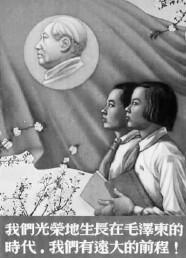
One new curriculum unit is titled China's Cultural Revolution. The Cultural Revolution (1966–1976) was a decade of enormous upheaval under the leadership of Mao Zedong with a lasting impact on China, its citizens, and the world. This unit teaches students about the social, educational, political, and economic transformations in China during this tumultuous era. Students examine primary source materials to hone their analytical and critical thinking skills, and gain exposure to a variety of perspectives on the Cultural Revolution. As part of the lessons, students evaluate official government documents, speeches, memoirs, eyewitness accounts, propaganda art, revolutionary songs, textbook coverage from three countries, and the book, Red Scarf Girl, by Ji-li Jiang.

As with all SPICE projects, collaboration with scholars and other experts on the Cultural Revolution was essential to the development of this unit. Andrew G. Walder, former director of the Shorenstein Asia-Pacific Research Center, served as principal advisor and was instrumental in the conceptualization of the curriculum. Connie Chin of Stanford’s Center for East Asian Studies translated entries from a Chinese textbook that students compare with textbooks of Taiwan and the United States. Jiang, a local author and survivor of the Cultural Revolution, oversaw the development of a lesson that features her book, Red Scarf Girl. Jiang worked with many Chinese who provided their own memoirs of the Cultural Revolution for the curriculum, exposing students to first-hand experiences of Chinese youth during this time.

Another new SPICE unit, titled Tea and the Japanese Tradition of Chanoyu, results from a collaboration with the Urasenke Foundation of Kyoto, Japan. This unit traces the history of tea from its origins in China 5,000 years ago to modern times, with an emphasis on its prominent role in Japan. By the 16th century, Japan’s tea practice had become formalized by Sen Rikyu, who integrated art, religion, social interaction, and economics into his tea practice. He so revolutionized chanoyu that he is universally recognized as the most important tea master who ever lived. The Urasenke School of Tea was established by one of his descendants some 400 years ago, and the Sen family has continued to pass on its way of tea for 16 generations.

SPICE worked with two of Sen Rikyu’s descendants, Great Grand Master Sen Soshitsu XV and Grand Master Sen Soshitsu XVI Iemoto, to develop this unit. Each wrote a personal letter, expressing their excitement about introducing American students to a cherished Japanese tradition. Grand Master Sen Soshitsu XVI Iemoto says, “In the age of globalization, there is a great need for truly international people, that is, those who understand and appreciate their own culture as well as that of others, and those who value both the diversity of mankind and the universality of the human spirit. These are the people who will enrich and reinvigorate our global society in the future.” His father, Great Grand Master Sen Soshitsu XV, adds, “I am very happy to have been involved with this project which, I pray, will help to contribute to world peace and goodwill through my motto ‘Peacefulness through a Bowl of Tea.’”

Hero Image
bow tea
All News button
1
News Type
News
Date
Paragraphs

As the world’s most dynamic and rapidly advancing region, the Asia-Pacific has commanded global attention. Business and policy leaders alike have been focused on the rise of China, tensions on the Korean peninsula, Japan’s economic recovery and political assertiveness, globalization and the outsourcing of jobs to South Asia, Indonesia’s multiple transitions, competing forces of nationalism vs. regionalism, and the future of U.S.-Asia relations.

What is the near-term outlook for change in the region? How might developments in the economic, political, or security sphere affect Asia’s expected trajectory? And how will a changing Asia impact the United States? These were among the complex and challenging issues addressed by a faculty panel from the Shorenstein Asia-Pacific Research Center (Shorenstein APARC) and the Eurasia Group at the Asia Society in New York on January 23, 2006.

Image
1607 small 4 1
Moderated by director of the Freeman Spogli Institute for International Studies Coit D. Blacker, the Olivier Nomellini Family University Fellow in Undergraduate Education, the panel included Michael H. Armacost, the Shorenstein Distinguished Fellow, former Under Secretary of State for Political Affairs, and former Ambassador to Japan and the Philippines; Donald K. Emmerson, the director of the Southeast Asia Forum at Shorenstein APARC and noted expert on Indonesia; Harry Harding, the director of research and analysis at the Eurasia Group in New York and University Professor of International Affairs at George Washington University; and Gi-Wook Shin, the director of Shorenstein APARC, founding director of the Korean Studies Program, and associate professor of sociology at Stanford.

Q. COIT BLACKER: WHAT IS THE MOST DIFFICULT, CHALLENGING ISSUE YOU SEE?

Image
1607 small 4 2

A. HARRY HARDING:

In China, we are seeing a darker side of the Chinese success story. Millions of people have been lifted out of poverty, China's role in international affairs is on the rise, and China is an increasingly responsible stakeholder in an open, liberal global economy. Yet, the world is now seeing the problems China's reform program has failed to resolve. China's new five-year plan seeks to address a number of these issues, providing a plan for sustainable economic development that is environmentally
responsible and addresses chronic pollution problems, for a harmonious society that
addresses inequalities and inadequacies in the provision of medical care, insurance
and pension systems, and for continuing technological innovation, as part of China's
quest to become an exporter of capital and technology.

Image
1607 small 4 3
A. GI-WOOK SHIN:

The world should be deeply concerned about developments on the Korean peninsula. Two pressing issues are U.S. relations with South Korea and the nuclear crisis with the North. It is not clear when or whether we will see a solution. Time may be against the United States on the issue. China and South Korea are not necessarily willing to follow the U.S. approach; without their cooperation, it is difficult to secure a successful solution. The younger generation emerging in South Korea does not see North Korea as a threat. Our own relations with South Korea are strained and we are viewed as preoccupied with Iraq and Iran, as North Korea continues to develop nuclear weapons.

Image
1607 small 4 4
A. DONALD EMMERSON:

In Southeast Asia, a key problem is uneven development, both in and between the political and economic spheres. Potentially volatile contrasts are seen throughout the region. Vietnam is growing at 8 percent per year, but will it become a democracy? It has not yet. Indonesia has shifted to democracy, but absent faster economic growth, that political gain could erode. Indonesia's media are among the freest in the region;
multiple peaceful elections have been held--a remarkable achievement--and nearly all Islamists shun terrorism. Older Indonesians remember, however, that the economy
performed well without democracy under President Suharto. Nowadays, corruption
scandals break out almost daily, nationalist and Islamist feelings are strong, and the
climate is not especially favorable to foreign investment. While Burma's economy
lags, its repressive polity embarrasses the Association of Southeast Asian Nations
(ASEAN). How long can the generals in Rangoon hold on? Disparities are also
international: dire poverty marks Laos and Cambodia, for example, while the
Malaysian and Thai economies have done well.

Image
1607 small 4 5
A. MICHAEL ARMACOST:

Japan is a "good news/bad news" story. The good news is that Japan has found a new security niche since the end of the Cold War. Previously, when a security problem loomed "over the horizon," they expected us to take care of it while, if prodded, they increased their financial support for U.S. troops stationed in Japan. During the first post-Cold War conflict in the Persian Gulf, Japan had neither the political consensus nor the legal framework to permit a sharing of the risks, as well as the costs, and this cost them politically. Since then, they have passed legislation that permits them to participate in U.N. peacekeeping activities, contribute noncombat, logistic, and other services to "coalition of the willing" operations, and even dispatch troops to join reconstruction activities in Iraq. Clearly, their more ambitious role is helping to make the U.S.-Japan alliance more balanced and more global.The bad news is a reemergence of stronger nationalist sentiment in Japan and more generally in Northeast Asia. In part this is attributable to the collapse of the Left in Japanese politics since the mid-1990s. This has left the Conservatives more dominant, and they are less apologetic about Japanese conduct in the 1930s and 1940s, more inclined to regard North Korea and China as potential threats, more assertive with respect to territorial issues, less sensitive to their neighbors’ reactions to Prime Ministerial visits to Yasukuni Shrine, and more eager to be regarded as a “normal” nation. Many Asians see the United States as pushing Japan to take on a more active security role and, in the context of rising Japanese nationalism, are less inclined to view the U.S.-Japan alliance as a source of reassurance.

Q. COIT BLACKER: WHAT ARE THE COMPETING AND CONFLICTING TENSIONS BETWEEN REGIONALISM AND NATIONALISM?

A. HARRY HARDING:

In China, there has been a resurgence of nationalism over the past 10 to 15 years. Since the end of the Maoist era and the beginning of the reform movement, the leadership has embraced nationalism as a source of legitimacy, but this is a double-edged sword. It places demands on the government to stand up for China’s face, rights, and prestige in international affairs, especially vis-à-vis Japan, the United States, and Taiwan, at times pushing Beijing in directions it does not wish to go.

A. DONALD EMMERSON:

In Indonesia, it is important to distinguish between inward and outward nationalism. Outward nationalism was manifest in Sukarno’s policy of confrontation with Malaysia. ASEAN is predicated on inward nationalism and outward cooperation. Nationalist feelings can be used inwardly to motivate reform and spur development. But there are potential drawbacks. Take the aftermath of the conflict in Aceh. The former rebels want their own political party. Hard-line nationalists in the Indonesian parliament, however, are loath to go along, and that could jeopardize stability in a province already exhausted by civil war and damaged by the 2004 tsunami.

A. GI-WOOK SHIN:

Korea is a nation of some 70 million people, large by European standards, but small in comparison to the giants of Asia, especially China, India, and Russia, making Korea very concerned about what other countries are doing and saying. Korea is currently undergoing an identity crisis. Until the 1980s, the United States was seen as a “savior” from Communism and avid supporter of modernization. Since then, many Koreans have come to challenge this view, arguing that the United States supported Korean dictatorship. Koreans are also rethinking their attitudes toward North Korea, seeing Koreans as belonging to one nation. This shift has contributed to negative attitudes toward both the United States and Japan

Q. COIT BLACKER: GENERATIONAL CHANGE IS ALSO A MAJOR ISSUE IN CHINA, THE DPRK, AND JAPAN. WHAT DOES IT BODE FOR POLITICAL CHANGE?

A. MICHAEL ARMACOST:

Japan has had a “one and a half party system” for more than half a century. Yet the Liberal Democratic Party has proven to be remarkably adaptive, cleverly co-opting many issues that might have been exploited by the opposition parties. It is clearly a democratic country, but its politics have not been as competitive as many other democracies. As for the United States, we have promoted lively democracies throughout the region. But we should not suppose that more democratic regimes will necessarily define their national interests in ways that are invariably compatible with ours. In both Taiwan and South Korea, to the contrary, democratic leaderships have emerged which pursue security policies that display less sensitivity to Washington’s concerns, and certainly exhibit little deference to U.S. leadership.

A. GI-WOOK SHIN:

In both North and South Korea, a marked evolution is under way. In the South, many new members of the parliament have little knowledge of the United States. Promoting mutual understanding is urgently needed on both sides. In the North, the big question is who will succeed Kim Jong Il—an issue with enormous implications for the United States.

A. DONALD EMMERSON:

Indonesians have a noisy, brawling democracy. What they don’t have is the rule of law. Judges can be bought, and laws are inconsistently applied. The Philippines enjoyed democracy for most of the 20th century, but poverty and underdevelopment remain rife, leading many Filipinos to ask just where democracy has taken their nation.

A. HARRY HARDING:

China has seen a significant increase in rural protests. There has been an increase in both the number of incidents and the level of violence. People are being killed, not just in rural areas, but also in major cities like Chengdu. We are seeing a new wave of political participation by professional groups, such as lawyers and journalists, galvanizing public support on such issues as environmental protection, failure to pay pensions, confiscation of land, and corruption. A new generation has been exposed to the Internet, the outside world, and greater choice, but it is not yet clear at what point they will demand greater choice in their own political life.


WHAT WOULD YOU ADVISE THE PRESIDENT ON U.S. POLICY TOWARDS ASIA?

In the lively question-and-answer session, panelists were asked, "Given the chance to talk to the U.S. President about change and improvement in U.S.-Asia policy, what would you say?"

MICHAEL ARMACOST: I am struck by a mismatch between our interests and our strategy in Asia. In some respects our Asia policy has become something of an adjunct of our policy toward the Middle East-where we confront perhaps more urgent, if not more consequential, concerns. Asia is still the most dynamic economic zone in the world; it is the region in which the most significant new powers are emerging; and it is where the interests of the Great Powers intersect most directly. Also, it is an area where profound change is taking place swiftly. We are adapting our policies in Asia to accommodate current preoccupations in the Muslim world, rather than with an eye to preserving our power and relevance in Asia.

HARRY HARDING: It is striking how much Asian nations still want us around- as an offshore balancer and a source of economic growth. Yet they want us to understand the priorities on their agenda as well as our own. We are seen as obsessed with terrorism and China. We should exhibit more support for Asian institution building, as we have with the European Union. We also need to get our own economic act together-promoting education, stimulating scientific research and technological innovation, and reducing our budget deficits-and quit resting on past laurels. Requiring Japan to accept U.S. beef exports and then sending them meat that did not meet the agreed-upon standards has been a setback for our relations, since the Japanese public regards the safety of its food supply as critically important.

DONALD EMMERSON: Most opinion-makers in Southeast Asia are tired of Washington's preoccupation with terrorism. To be effective in the region, we must deal-and appear to be dealing-with a wider array of economic, social, and political issues, and not just bilaterally. The United States is absent at the creation of East Asian regionalism. For various reasons, we were not invited to participate in the recent East Asia Summit. Meanwhile, China's "smile diplomacy" has yielded 27 different frameworks of cooperation between that country and ASEAN. We need to be more, and more broadly, engaged.

MICHAEL ARMACOST:
The establishment of today's European community began with the historic reconciliation between France and Germany. I doubt that a viable Asian community can be created without a comparable accommodation between China and Japan. Some observers believe that current tensions between Tokyo and Beijing are advantageous insofar as they facilitate closer defense cooperation between the United States and Japan. I do not share that view. A drift toward Sino-Japanese strategic rivalry would complicate our choices as well as theirs, and I hope we can find ways of attenuating current tensions.

All News button
1
Subscribe to China