-

This event - the final in a series of 4 film screening which will be followed by a discussion with director Clint Eastwood - is part of the second phase of a three year research effort to compare the formation of the divided memories in Japan, China, South Korea, Taiwan and the United States. We will conduct a comparative study of popular cinema dealing with historical subjects focusing roughly on the period from 1931-1951.

Letters From Iwo Jima Synopsis

Sixty-one years ago, US and Japanese armies met on Iwo Jima. Decades later, several hundred letters are unearthed from that stark island's soil. The letters give faces and voices to the men who fought there, as well as the extraordinary general who led them.

The Japanese soldiers are sent to Iwo Jima knowing that in all probability they will not come back. Among them are Saigo (Kazunari Ninomiya), a baker who wants only to live to see the face of his newborn daughter; Baron Nishi (Tsuyoshi Ihara), an Olympic equestrian champion known around the world for his skill and his honor; Shimizu (Ryo Kase), a young former military policeman whose idealism has not yet been tested by war; and Lieutenant Ito (Shidou Nakamura), a strict military man who would rather accept suicide than surrender.

Leading the defense is Lt. General Tadamichi Kuribayashi (Ken Watanabe), whose travels in America have revealed to him the hopeless nature of the war but also given him strategic insight into how to take on the vast American armada streaming in from across the Pacific.

With little defense other than sheer will and the volcanic rock of the island itself, Gen. Kuribayashi's unprecedented tactics transform what was predicted to be a quick and bloody defeat into nearly 40 days of heroic and resourceful combat.

Almost 7,000 American soldiers were killed on Iwo Jima; more than 20,000 Japanese troops perished. The black sands of Iwo Jima are stained with their blood, but their sacrifices, their struggles, their courage and their compassion live on in the letters they sent home.

Cubberley Auditorium
485 Lasuen Mall
Stanford University
Stanford, CA 94305

Clint Eastwood Director Speaker
Seminars
-

This is the second phase of a three year research effort to compare the formation of the divided memories in Japan, China, South Korea, Taiwan and the United States.  We will conduct a comparative study of popular cinema dealing with historical subjects focusing roughly on the period from 1931-1951.

This is the third in a series of 4 film screening which will be followed by a discussion of the audience.

Yamato Synopsis

During late World War II, the Japanese army starts loosing the battle.  Special junior officers including Kamio (Kenichi Matsuyama) board Yamato and meet officer Moriwaki (Takashi Sorimachi) and Uchia (Shidou Nakamura).  However, this battle marks the virtual end of the combined fleet of the ikmperial Japanese Navy.  Then in April 1945. Yamato is ordered to carry out a suicide mission and sets out tot he waters of Okinawa...

Philippines Conference Room

Seminars
-

This is the second phase of a three year research effort to compare the formation of the divided memories in Japan, China, South Korea, Taiwan and the United States.  We will conduct a comparative study of popular cinema dealing with historical subjects focusing roughly on the period from 1931-1951.

This is the first in a series of 4 film screening which will be followed by a discussion of the audience.

Devils on the Doorstep synopsis

Renowned actor Jiang Wen directs this sweeping look at a small Chinese village located near the Great Wall during the closing days of WWII. As Japanese soldiers march up and down the village's main thoroughfare, Ma Dasan (Wen) is making love with his widowed lover Yu'er (Jiang Hongbo). Suddenly, there is a knock at the door and a gun at Ma's head. He is informed that for the next week he is to house two gagged and bound prisoners, one a fanatical Japanese soldier, the other a Chinese translator -- and to interrogate the pair. The village elders uneasily question the two, while the translator intentionally mistranslates the epithets and insults from the soldier. When the Chinese resistance fighters do not return to pick up the prisoners, the villagers panic and order Ma to execute them. Ma, in turn, panics and tries to hide the cantankerous duo in the Great Wall -- that is until the villagers discover his ruse and almost lynch him, despite a strongly worded defense by Yu'er. Six months later, the villagers become increasingly worried about boarding these prisoners, lest they all be branded collaborators. This film won the prestigious Grand Prix at the 2000 Cannes Film Festival.

Philippines Conference Room

Seminars
-

This is the second phase of a three year research effort to compare the formation of the divided memories in Japan, China, South Korea, Taiwan and the United States.  We will conduct a comparative study of popular cinema dealing with historical subjects focusing roughly on the period from 1931-1951.

This is the second in a series of 4 film screening which will be followed by a discussion of the audience.

Blue Swallow synopsis

An aspiring Japanese aviator longing to take flight from Japanese-occupied Korea enrolls in Tachikawa Flight Academy in director Yoon Jong-chan's lavish look at the life of pre-World War II aviatrix Park Gyeong-weon. Raised in the Korean countryside but longing to embrace her Korean heritage, Park Gyeong-weon (Jang Jin-yeong) longs to take to the sky "like a swallow." Park is convinced that she has what it takes to soar through the clouds, and in 1925 she begins to pursue her dreams by enrolling in the Tachikawa Flight Academy. An amiable cab driver by day, the tomboyish aeronaut eventually strikes up a close friendship with fellow Koreans Kang Se-gi (Kim Tae-hyeok) and Lee Jeong-heui (Han ji-men) while entering into a tenuous romance with handsome student Han Ji-hyeok (Kim Ju-hyeok). High up in the sky Park attempt to hold her own against airborne Nipponese nemesis Masako Gibe (Yuko Fueki), and as tensions begin to heat up between Japan and Korea the skillful pilot plans a high-profile "friendship" flight to Manchuria in hopes of encouraging peaceful relations between the two countries. - Jason Buchanan,

Philippines Conference Room

Seminars
Authors
News Type
News
Date
Paragraphs

On October 2, 2008, Dr. Marcus Feldman of Stanford's Biology department delivered the first colloquium in the series on "The Implications of Demographic Change in China," co-sponsored by the Asia Health Policy Program and the Stanford China Program. Dr. Feldman discussed the sex-ratio imbalance and gender studies in China.

As Dr. Feldman noted, the total fertility rate in China has dropped dramatically in recent years, due in large part to the Chinese government's One Child Policy, which was introduced in 1979. In the early 1970s, the fertility rate averaged almost 6 births per woman, dropping to about 1.6 after the year 2000. China's sex ratio of males to females at birth (SRB), meanwhile, has risen. In 1975, the SRB was about 106 male births per 100 female births, and in 2005 had climbed to over 120 male births per 100 female births. When parity (birth order) is taken into account, the ratio becomes even more startling; for the first birth, the ratio is close to even (about 108 in the year 2005), but exceeded 145 in 2005 for the second birth and even higher for the third birth (almost163 in 2005). Research indicates that the imbalanced SRB is largely concentrated in the lower coastal regions of mainland China, where the population is predominantly Han. Shaanxi, Anhui and Jiangxi Province have the highest ratio of male to female births.

Evidence of gender imbalance is not merely limited to the ratio at birth; high ratios of male to female children are seen through ages 0-4, indicating that son preference affects not only which children survive birth, but also the survival rate of females in early childhood. In fact, research indicates that while excess girl child mortality (EGCM) has decreased for infants less than a year old in the period between 1973 and 2000, it has become increasingly pronounced for children between the ages of 0-4 and 5-9, with EGCM rates increasing every year.

Two Studies

Two studies were carried out in 1997 and 2000 by the Institute for Population and Development Studies of Xi'an Jiaotong University to investigate the causes of gender imbalance. The 1997 study focused on the cultural transmission of son preference, and the 2000 study on marriage form and old age support.

Three counties were chosen as sites, and the studies were a combination of surveys, in-depth interviews and focus group discussions. The first county, Sanyuan () in Shaanxi province, is a medium-developed region whose principal agricultural product is wheat. Fertility is high in Sanyuan, which is characterized by the dominance of virilocal marriage (in which the bride joins the family of her husband) and strict patrilineal family systems. The second county, Lueyang () in Shaanxi province is an underdeveloped mountainous region in which the patrilineal family system is more relaxed, fertility is lower than in Sanyuan, and there are diversified forms of marriage. The third site, Songzi () in Hubei province, is a well-developed rice- and cotton-producing plains region, with low fertility, relaxed family systems and diversified marriage. The results of household surveys showed a strong preference among parents in both Sanyuan and Lueyang to live with their sons in old age, which was not surprising, but a surprising result was found when parents were asked about the primary benefits of having a son. The most-reported reason was for carrying on the family name, which shows that traditional (Confucian) values played a bigger role in son preference than practical considerations such as labor or old age support. Overall, Lueyang was shown to have a much higher rate for transmitting no son-preference than Sanyuan, with older women slightly more likely to transmit no son-preference.

The marriage study found that rates of uxorilocal marriage (in which the groom joins the family of his wife) have, for the most part, been dropping in both Lueyang and Songzi since the 1970's. In Sanyuan, where uxorilocal marriage has been traditionally uncommon, the rates have remained steady at around 5 percent since the 1950's. The researchers calculated children's odds ratios of providing financial help to parents based on marriage form, and found the net ratios highest for women in virilocal marriages and sons in uxorilocal marriages.

Mechanisms of gender imbalance

There are several likely factors for the imbalanced sex ratio at birth in China. Underreporting of female births, infanticide, and sex-selective abortion (post-pre-natal gender testing) all contribute to this syndrome. Furthermore, poor nutritional and medical care for girls in their younger years can further skew the gender balance by exacerbating excess female child mortality. At the basic source of this issue, however, remains a fundamental gender bias that dates back historically and philosophically through Confucian culture and traditional patriarchal structures.

If the SRB, EFCM, TFR (total fertility rate) were all to remain at their early 2000s levels, then by 2030 the total population of China would be 84.2% of what would normally be expected at the current fertility rate (potentially causing economic welfare issues for the elderly, along with a work force deficiency). Moreover, there would be an excess in the male population of 20-21% (relative to females), essentially making it mathematically impossible for this proportion of the male population to marry. Needless to say, the possibility of such a severe "marriage squeeze", and the general top-heavy ratio of aging population to young working population are very problematic prospects for China's population and for the government's endeavors to promote both economic growth and social stability.

Examples of government efforts

The government is considering several policy options to try to avert this potential crisis. Stronger punishments were suggested at the 2008 National People's Congress (NPC) and Chinese People's Political Consultative Conference (CPPCC) for non-medical sex identification and sex-selection abortions (both of which can be obtained for relatively cheap rates within the country, despite being illegal). More proactively, an experimental program called "Care For Girls" was implemented in 2000 in Chaohu (a city in Anhui province). This program includes: financial help for 1- and 2-daughter families; sponsoring of girls' educational fees and increased pensions to families with daughters; and the promotion of uxorilocal marital structures. Since the introduction of the program, the local SRB went from 125 in 1999 to 114 in 2002. In response to this apparent success, the government expanded the "Care For Girls" program to 24 counties with high SRB rates in 2003-2004, and saw the average SRB in those counties drop from 133.8 in 2000 to 119.6 in 2005. Stipulation and initiation of a national "Care For Girls" campaign occurred in January 2006 - July 2006, with the goal of bringing the national SRB average to normal levels within 15 years. In January 2008, the government expanded on this effort by launching the "Care For Girls Youth Volunteer Action", beginning with more than 1000 students (mostly at the university level) directed at engaging in promotional activities and data collection (under the Chinese Communist Youth League). These policies are part of a comprehensive aspiration on the part of the PRC government towards the "construction of a new reproductive culture."

Son preference among migrant workers in Shenzhen

With the Chinese economic reform of the early 1980s, millions of laborers have been migrating from rural to urban areas. After migration, rural-urban laborers have to familiarize themselves with the rules and customs of their new locations, rebuilding their social networks in the process of adapting to their new occupations and habitation. But how do individual characteristics (i.e. gender, education level and the time of residency), restructured social networks, and the experiences of migration influence migrants' attitudes and behaviors regarding son preference? These questions were examined in a 2005 study conducted in Shenzhen.

Shenzhen is the first Special Economic Zone in China to implement economic reform and has since developed from a small fishing village into a modern coastal city. According to the 2000 Population Census, the total population of Shenzhen is 7,008,800, and the ratio of migrants to permanent urban residents is 4.77:1.

The Shenzhen study seemed to indicate initially that only a small minority of migrants (7% of total respondents) expressed a strong attitude towards son preference. However, the actual childbearing behavior of rural-urban migrants was remarkably different compared to their reported attitudes. The sex ratio of migrant children is as high as 163 male births per 100 female births, and the later in the birth order, the higher the sex ratio for the child, i.e., the sex ratio is 1.52 for the first birth and rises steeply to 1.80 for the second birth, peaking at 1.94 for the third and above birth. Thus the results suggest that migrants' childbearing behaviors actually suggest a strong son preference.

The Shenzhen study also found that three major determinants, namely social networks, migration history, and individual factors, all have significant effects on son preference among rural-urban migrants.

First, weak ties (formed by friends, bosses, and fellow workers) in social networks affect the attitude of son preference among rural-urban migrants. That is, the risk of having son-preference tends to decrease when the overall influence of network members is positive (without son preference). Moreover, increasing social contacts with network members will reduce the dependence upon strong ties (formed by family members and kin) and thus decrease the traditional culture of "rearing a son to support parents in their old age" and familial pressures to have more children.

Second, the duraction of residency in an urban area has a significant effect on the attitude of son preference among rural-urban migrations. The longer the migrants live in an urban area, the more likely that their attitudes of son-preference will adapt to urban reproductive norms. For example, the data indicated that ratio of male and female birth is more balanced among those living in urban areas for 8 years or longer. However, rural-urban migrants still exhibit a strong overall behavior of son preference. In other words, the change in childbearing behavior in terms of birth patterns still lags far behind the apparent change of attitudes.

Age and education are identified as factors affecting son preference among rural-urban migrants. For instance, an increase in age relative to initial migration will often decrease the imbalance in the sex ratio.

An additional study on rural-urban migrants examined the relationship between the gender of married migrants and their provision of financial support to parents and parents-in-law post-migration. The results showed, in fact, that female migrants are more likely to give financial support to their parents-in-law after migration.

Even today, the patrilineal conception of support for elderly family members is still very prevalent in rural China. Sons are expected to provide fundamental support to their parents, while daughters tend to provide supplementary and emotional support. This traditional old-age support pattern of reliance on sons can often intensify the syndrome of son bias among rural or traditional Chinese. However, the results here proved that if aging parents are more likely to receive sustenance from married daughters compared to married sons, the dominant son-preference in rural China could be logically undercut and eventually the traditional patrilineal conception of old-age support, and resulting gender bias, could be ameliorated and even eliminated.

All News button
1
-

In addition to Iraq, Afghanistan, Pakistan, the financial crisis, and the housing crisis (as if that were not enough!), the next American president will have his hands full with matters on the Korean peninsula.  What will be the future of Six Party talks?  What is the status of the leadership in Pyongyang?  How do changes in leadership in Washington (and potentially in Pyongyang) affect outcomes?  What are the prospects for US-ROK relations?  And what of the KORUS FTA?  Victor Cha, former director of Asian affairs at the White House, will lead a discussion on these issues.

Professor Cha is director of Asian Studies and holds the D.S. Song Chair in the Department of Government and School of Foreign Service at Georgetown University.  He left the White House in May 2007 after serving since 2004 as Director for Asian Affairs at the National Security Council.  At the White House, he was responsible primarily for Japan, the Korean peninsula, Australia/New Zealand and Pacific Island nation affairs.   Dr. Cha was also the Deputy Head of Delegation for the United States at the Six Party Talks in Beijing, and received two Outstanding Service commendations during his tenure at the NSC.  

He is the award-winning author of Alignment Despite Antagonism: The United States-Korea-Japan Security Triangle (Stanford University Press) (winner of the 2000 Ohira Book Prize) and co-author of Nuclear North Korea: A Debate on Engagement Strategies (Columbia University Press, 2004).  He has written articles on international relations and East Asia in journals including Foreign Affairs, International Security, Political Science Quarterly, Survival, International Studies Quarterly, and Asian Survey.   Professor Cha is a former John M. Olin National Security Fellow at Harvard University, two-time Fulbright Scholar, and Hoover National Fellow,  CISAC Fellow, and William J. Perry Fellow at Stanford University.

Image
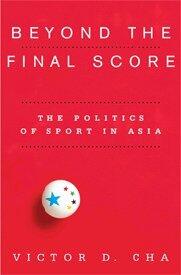
beyond the final score
He serves as an independent consultant, and has testified before Congress on Asian security issues.  He has been a guest analyst for various media including CNN, ABC Nightline, NBC Today Show, CBS Morning Show, Fox News, MSNBC, CNBC, BBC, ESPN, Sports Illustrated, and National Public Radio.

His new book Beyond the Final Score: The Politics of Sport in Asia (Columbia University Press, 2008) looks at the politics of sports and the Beijing Olympics. Cha holds a BA and Ph.D. from Columbia University, MA from University of Oxford.

This event is sponsored by the Pantech Group in Korea.

Philippines Conference Room

Victor D. Cha Director of Asian Studies Speaker Georgetown University
Seminars
Authors
Daniel C. Sneider
News Type
Commentary
Date
Paragraphs

In the waning days of the Clinton administration, the momentum for engagement with North Korea, building from the earlier agreement to freeze its nuclear program and a moratorium on ballistic missile launches, accelerated to the brink of full-scale normalization of relations. The U.S. presidential election in 2000 brought that diplomatic freight train to an abrupt halt.

Will the 2008 election bring yet another dramatic change in U.S. Korea policy?

The answer, based on the published positions of the two candidates and conversations with his senior Asia policy advisors, seems to be NO. There are important differences of emphasis in the approaches of both candidates, which I will discuss, but the bottom line is that both men are likely to pick up where President George W. Bush leaves off.

There are two fundamental reasons why U.S. policy toward Korea – and more broadly in Northeast Asia --- will not change dramatically. First, Asia will continue to suffer from a deficit of presidential attention. The arc of crisis – Iraq, Iran, Afghanistan and Pakistan -- will necessarily still command, as it has for almost 8 years, the attention of senior American policymakers. Even that will have to fight for space with the growing global financial crisis.

Second, both candidates agree on the broad outlines of an Asia policy, one that does not depart radically from the one pursued by the Bush administration. As a senior McCain advisor put it to me: “There is not a huge difference on Asia between Obama and McCain.” Privately, Obama advisors also stress that there will not be a huge break with current U.S. policy.

Both campaigns are critical of the lack of attention paid to Asia and the need for the U.S. to be more proactive to strengthen existing alliances and to join the discussion about new forms of regional integration. Both candidates support the need to engage, rather than confront, a rising China. Both men call for the U.S. to pay more attention to management of our alliances with South Korea and Japan. And both Obama and McCain support the North Korean nuclear negotiations carried out by President Bush in his second term, although privately both campaigns are critical of the deal that has been struck.

If there are differences, they can be found in two areas – support for the Korea US free trade agreement and the willingness to directly engage North Korea and its regime.

Free Trade and the KORUS Free Trade Agreement

If there is one single issue regarding Korea on which Senators Obama and McCain clearly part company, it is the future of the free trade agreement negotiated with the Bush administration. Senator McCain is an unambiguous supporter of the FTA, not only as a trade pact but also as a symbol of the broader partnership between the U.S. and South Korea.

Senator Obama also supports free trade but is critical of this and other agreements, such as NAFTA, for failing to ensure market access and the protection of labor rights and the environment. Privately, Obama’s advisors understand the symbolic value of the FTA to the alliance, but they plan to ask Seoul to reopen talks on market access, particularly for the automobile industry. Their position reflects the importance of trade unions and the role of some key states – Michigan most of all – in the election outcome. Even if Obama loses, the Democrats are likely to strengthen their control of Congress, making approval of the FTA difficult under any circumstances.

Negotiating with Pyongyang: Back to the Future?

Both the McCain and the Obama camps publicly back the Bush administration’s negotiations with Pyongyang, but both are also privately critical, though for different reasons.

The Obama team is heavily populated by former Clinton administration officials who were involved in the negotiation of the 1994 Agreed Framework with North Korea. They see the current deal as an inevitably flawed bargain, the result of the refusal of the administration to seriously engage the North directly until it had crossed the red line of nuclear weapons testing. With little leverage, not least the credible threat of coercion, we are left with containing the plutonium production of the North, and hoping that a grand bargain down the line can yield full denuclearization.

Obama recognizes the need for “close coordination and consultation with our allies South Korea and Japan,” as one of his advisors put it in a published interview, and supports continuing the Six Party Talks. But the emphasis is clearly on direct talks with North Korea, though conducted with a principled toughness that the Bush administration has not exhibited in its final months in office.

That readiness to conduct direct negotiations, up to conclusion of a peace treaty with Pyongyang and full normalization of relations, is where the two candidates part company. The Republican nominee is clearly uncomfortable with direct dealings with Pyongyang – his position resembles the first term of the Bush administration more than the second in that respect. His advisory team combines realists, mainly veterans of the Powell State Department, and neoconservatives, reproducing the divisions that thwarted coherent policy-making in that first Bush term.

In the end, the views of McCain himself may be decisive. He was an opponent of the Agreed Framework, an agreement he characterized as “appeasement.” He maintained this stance into the Bush administration, vocally opposing any direct negotiations with the North Koreans as long as they maintained the right to develop nuclear weapons. He has been critical as well of the main deal struck by President Bush in his second term – “I didn’t believe in the KEDO agreement that President Clinton made and I don’t believe in this one,” he said in January.

McCain, according to an interview with one of his senior Asia advisors, would “seek a return to the core principles of denuclearization known as CVID, or complete, verifiable, irreversible, dismantlement.” The demand for CVID was the watchword of the Bush administration’s earlier stance, in effect a call for Pyongyang to abandon its nuclear option as a first step. But that demand was dropped after Pyongyang called the Bush administration’s bluff by exploding a nuclear device in October, 2006.

McCain also wants to “broaden our policy goals related to North Korea” beyond nuclear issues, to including human rights, economic and political reform, and reduction of the conventional military threat from North Korea, goals also set out at the outset of the Bush administration. McCain has repeatedly referred to the North Korean regime, and its leader, Kim Jong Il, in harsh terms and embraced a policy of “rogue state rollback.”

Realistically, however, McCain offers no credible, practical means to reach these goals. He reserves, as does Obama, the option to use force. But concretely he comes back to the strategy of pressing China to bring North Korea to heel. Unfortunately the Bush administration also relied on China and found there were clear limits to Beijing’s ability to control or its willingness to press its North Korean client. In the end, McCain may have little option but to follow Bush to Pyongyang’s doorstep.

One Caveat – Events Matter

Despite the powerful impetus to maintain continuity in U.S. policy toward the Korean peninsula, no matter whom is elected in November, there is one important caveat to keep in mind – events matter. Unplanned, and unforeseen, developments could force Korea to the top of the President’s agenda. Already we have seen the reports of Kim Jong Il’s serious illness trigger fresh concerns about a possible collapse of political authority in Pyongyang. A simultaneous rush by China, South Korea and the United States to fill a vacuum of power in the North could upset all calculations. For South Korea, and President Lee Myung-bak, it is always best to prepare for the unexpected.

Hero Image
sneider
All News button
1

An international conference will be convened on February 11-12, 2008 at Stanford University at the Walter H. Shorenstein Asia-Pacific Research Center to examine the role of high school history textbooks in the formation of historical memory regarding the events of the Sino-Japanese and Pacific wars and their outcome. Shorenstein APARC researchers have looked at the treatment of those events, in the period from 1931-1951, in the most widely circulated high school history textbooks (national and world history), including those used in college preparatory course, in China, Japan, South Korea, Taiwan and the United States. Translations of those textbooks into English have been prepared for use by historians and other scholars, allowing a comparative study of how historical memory is being shaped in the school systems.

The conference will have three main goals: first it will ask historians to comment and analyze the treatment of history in those textbooks, comparing it to accepted historical understanding. Second, it will look at the process of textbook writing and revision – in some cases (China and Taiwan particularly), the main textbooks have undergone significant revision recently and our data set includes the old and new versions of history textbooks in use in schools. Third, the conference will examine how the formation of divided memories impacts international relations in East Asia and between the United States and Asia and how this effort to understand this process may aid the goal of reconciliation.

The proceedings of this conference will be the basis of an edited volume, including comparative excerpts from the textbooks themselves, to be published by an academic press in the United States and hopefully in Asia as well. Participants will be asked to prepare a written paper for presentation and for publication.

Daniel and Nancy Okimoto Conference Room

Shorenstein APARC
Encina Hall E301
616 Jane Stanford Way
Stanford, CA 94305-6055
(650) 724-8480 (650) 723-6530
0
Senior Fellow at the Freeman Spogli Institute for International Studies
Professor of Sociology
William J. Perry Professor of Contemporary Korea
Professor, by Courtesy, of East Asian Languages & Cultures
Gi-Wook Shin_0.jpg PhD

Gi-Wook Shin is the William J. Perry Professor of Contemporary Korea in the Department of Sociology, senior fellow at the Freeman Spogli Institute for International Studies, and the founding director of the Korea Program at the Walter H. Shorenstein Asia-Pacific Research Center (APARC) since 2001, all at Stanford University. In May 2024, Shin also launched the Taiwan Program at APARC. He served as director of APARC for two decades (2005-2025). As a historical-comparative and political sociologist, his research has concentrated on social movements, nationalism, development, democracy, migration, and international relations.

In Summer 2023, Shin launched the Stanford Next Asia Policy Lab (SNAPL), which is a new research initiative committed to addressing emergent social, cultural, economic, and political challenges in Asia. Across four research themes– “Talent Flows and Development,” “Nationalism and Racism,” “U.S.-Asia Relations,” and “Democratic Crisis and Reform”–the lab brings scholars and students to produce interdisciplinary, problem-oriented, policy-relevant, and comparative studies and publications. Shin’s latest book, The Four Talent Giants, a comparative study of talent strategies of Japan, Australia, China, and India to be published by Stanford University Press in the summer of 2025, is an outcome of SNAPL.

Shin is also the author/editor of twenty-seven books and numerous articles. His books include The Four Talent Giants: National Strategies for Human Resource Development Across Japan, Australia, China, and India (2025)Korean Democracy in Crisis: The Threat of Illiberalism, Populism, and Polarization (2022); The North Korean Conundrum: Balancing Human Rights and Nuclear Security (2021); Superficial Korea (2017); Divergent Memories: Opinion Leaders and the Asia-Pacific War (2016); Global Talent: Skilled Labor as Social Capital in Korea (2015); Criminality, Collaboration, and Reconciliation: Europe and Asia Confronts the Memory of World War II (2014); New Challenges for Maturing Democracies in Korea and Taiwan (2014); History Textbooks and the Wars in Asia: Divided Memories (2011); South Korean Social Movements: From Democracy to Civil Society (2011); One Alliance, Two Lenses: U.S.-Korea Relations in a New Era (2010); Cross Currents: Regionalism and Nationalism in Northeast Asia (2007);  and Ethnic Nationalism in Korea: Genealogy, Politics, and Legacy (2006). Due to the wide popularity of his publications, many have been translated and distributed to Korean audiences. His articles have appeared in academic and policy journals, including American Journal of SociologyWorld DevelopmentComparative Studies in Society and HistoryPolitical Science QuarterlyJournal of Asian StudiesComparative EducationInternational SociologyNations and NationalismPacific AffairsAsian SurveyJournal of Democracy, and Foreign Affairs.

Shin is not only the recipient of numerous grants and fellowships, but also continues to actively raise funds for Korean/Asian studies at Stanford. He gives frequent lectures and seminars on topics ranging from Korean nationalism and politics to Korea's foreign relations, historical reconciliation in Northeast Asia, and talent strategies. He serves on councils and advisory boards in the United States and South Korea and promotes policy dialogue between the two allies. He regularly writes op-eds and gives interviews to the media in both Korean and English.

Before joining Stanford in 2001, Shin taught at the University of Iowa (1991-94) and the University of California, Los Angeles (1994-2001). After receiving his BA from Yonsei University in Korea, he was awarded his MA and PhD from the University of Washington in 1991.

Selected Multimedia

Director of the Korea Program and the Taiwan Program, Shorenstein Asia-Pacific Research Center
Director of Stanford Next Asia Policy Lab, APARC
Date Label
Gi-Wook Shin Speaker
0
Visiting Scholar
Peattie_web.jpg PhD

Mark R. Peattie was a visiting scholar at the Walter H. Shorenstein Asia-Pacific Research Center and a research fellow at the Hoover Institution. He was a professor of history emeritus at the University of Massachusetts at Boston, and was the John A. Burns Distinguished Visiting Professor of History at the University of Hawai'i in 1995.

Peattie was a specialist in modern Japanese military, naval, and imperial history. His current research focused on the historical context of Japanese-Southeast Asian relations. He was also directing a pioneering and international collaborative effort of the military history of the study of the Sino-Japanese war of 1937–45 being sponsored by the Asia Center at Harvard University.

He is editor, with Peter Duus and Ramon H. Myers, of the Japanese Wartime Empire, 1937–1945 (Princeton University Press, 1996). Peattie is the author of the Japanese Colonial Empire: The Vicissitudes of Its Fifty-Year History (Tokyo: Yomiuri Press, 1996).

He coauthored, with David Evans, Kaigun: Strategy, Tactics and Technology in the Imperial Japanese Navy, 1887–1941 (Naval Institute Press, 1997), winner of a 1999 Distinguished Book Award of the Society for Military History. A sequel, Sunburst: The Rise of Japanese Naval Air Power, 1909–1941, was published by the Naval Institute Press in 2001.

Peattie is also the author of the monograph A Historian Looks at the Pacific War (Hoover Essays in Public Policy, 1995).

Peattie was a reader for Columbia University, University of California, University of Hawai'i, Stanford University, University of Michigan, and U.S. Naval Institute Presses.

Peattie frequently served as lecturer in the Stanford University Continuing Studies Program and in the Stanford Alumni Travel Program.

He was named an associate in research at the Edwin O. Reischauer Institute of Japanese Studies at Harvard University from 1982 to 1993.

He was a member of the U.S. Information Agency from 1955 to 1968 with service in Cambodia (1955–57), in Japan (Sendai, Tokyo, Kyoto, 1958–67), and in Washington, D.C. (1967–68).

Peattie held a PhD in Japanese history from Princeton University.

Mark Peattie Speaker
Li Weike Director, History Department Speaker People's Education Press, Beijing
Hsin-Huan Michael Hsaio Center for Asia-Pacific Area Studies Speaker Academica Sinica
Peter Duus Department of History Speaker Stanford University
Tohmatsu Haruo Speaker Tamagawa University
Chung Jae-Jung Speaker City University of Seoul
Mitani Hiroshi Speaker Tokyo University
Chen Qi Speaker People's Education Publishing House, China
Chou Liang-kai Speaker Feng Chia University, Taiwan
Kim Do-Hyung Speaker Yonsei University
Bert Bower Speaker Teachers' Curriculum Institute, California

Stanford University
Encina Hall, Room E301
Stanford, CA 94305-6055

0
Lecturer in International Policy at the Ford Dorsey Master’s in International Policy
2011_Dan_Sneider_2_Web.jpg MA

Daniel C. Sneider is a lecturer in international policy at Stanford's Ford Dorsey Master’s in International Policy and a lecturer in East Asian Studies at Stanford. His own research is focused on current U.S. foreign and national security policy in Asia and on the foreign policy of Japan and Korea.  Since 2017, he has been based partly in Tokyo as a Visiting Researcher at the Canon Institute for Global Studies, where he is working on a diplomatic history of the creation and management of the U.S. security alliances with Japan and South Korea during the Cold War. Sneider contributes regularly to the leading Japanese publication Toyo Keizai as well as to the Nelson Report on Asia policy issues.

Sneider is the former Associate Director for Research at the Walter H. Shorenstein Asia-Pacific Research Center at Stanford. At Shorenstein APARC, Sneider directed the center’s Divided Memories and Reconciliation project, a comparative study of the formation of wartime historical memory in East Asia. He is the co-author of a book on wartime memory and elite opinion, Divergent Memories, from Stanford University Press. He is the co-editor, with Dr. Gi-Wook Shin, of Divided Memories: History Textbooks and the Wars in Asia, from Routledge and of Confronting Memories of World War II: European and Asian Legacies, from University of Washington Press.

Sneider was named a National Asia Research Fellow by the Woodrow Wilson International Center for Scholars and the National Bureau of Asian Research in 2010. He is the co-editor of Cross Currents: Regionalism and Nationalism in Northeast Asia, Shorenstein APARC, distributed by Brookings Institution Press, 2007; of First Drafts of Korea: The U.S. Media and Perceptions of the Last Cold War Frontier, 2009; as well as of Does South Asia Exist?: Prospects for Regional Integration, 2010. Sneider’s path-breaking study “The New Asianism: Japanese Foreign Policy under the Democratic Party of Japan” appeared in the July 2011 issue of Asia Policy. He has also contributed to other volumes, including “Strategic Abandonment: Alliance Relations in Northeast Asia in the Post-Iraq Era” in Towards Sustainable Economic and Security Relations in East Asia: U.S. and ROK Policy Options, Korea Economic Institute, 2008; “The History and Meaning of Denuclearization,” in William H. Overholt, editor, North Korea: Peace? Nuclear War?, Harvard Kennedy School of Government, 2019; and “Evolution or new Doctrine? Japanese security policy in the era of collective self-defense,” in James D.J. Brown and Jeff Kingston, eds, Japan’s Foreign Relations in Asia, Routledge, December 2017.

Sneider’s writings have appeared in many publications, including the Washington Post, the New York Times, Slate, Foreign Policy, the New Republic, National Review, the Far Eastern Economic Review, the Oriental Economist, Newsweek, Time, the International Herald Tribune, the Financial Times, and Yale Global. He is frequently cited in such publications.

Prior to coming to Stanford, Sneider was a long-time foreign correspondent. His twice-weekly column for the San Jose Mercury News looking at international issues and national security from a West Coast perspective was syndicated nationally on the Knight Ridder Tribune wire service. Previously, Sneider served as national/foreign editor of the Mercury News. From 1990 to 1994, he was the Moscow bureau chief of the Christian Science Monitor, covering the end of Soviet Communism and the collapse of the Soviet Union. From 1985 to 1990, he was Tokyo correspondent for the Monitor, covering Japan and Korea. Prior to that he was a correspondent in India, covering South and Southeast Asia. He also wrote widely on defense issues, including as a contributor and correspondent for Defense News, the national defense weekly.

Sneider has a BA in East Asian history from Columbia University and an MPA from the John F. Kennedy School of Government at Harvard University.

Daniel C. Sneider Speaker
Daniel Chirot Speaker University of Washington
Park Soon-Won Speaker George Mason University

616 Jane Stanford Way
Encina Hall, C331
Stanford, CA 94305-6060

(650) 723-1116 (650) 723-6784
0
gary_mukai.jpeg EdD

Dr. Gary Mukai is Director of the Stanford Program on International and Cross-Cultural Education (SPICE). Prior to joining SPICE in 1988, he was a teacher in Gunma Prefecture, Japan, and in California public schools for ten years.

Gary’s academic interests include curriculum and instruction, educational equity, and teacher professional development. He received a bachelor of arts degree in psychology from U.C. Berkeley; a multiple subjects teaching credential from the Black, Asian, Chicano Urban Program, U.C. Berkeley’s Graduate School of Education; a master of arts in international comparative education from Stanford University’s Graduate School of Education; and a doctorate of education from the Leadership in Educational Equity Program, U.C. Berkeley’s Graduate School of Education. 

In addition to curricular publications for SPICE, Gary has also written for other publishers, including Newsweek, Calliope Magazine, Media & Methods: Education Products, Technologies & Programs for Schools and Universities, Social Studies Review, Asia Alive, Education About Asia, ACCESS Journal: Information on Global, International, and Foreign Language Education, San Jose Mercury News, and ERIC Clearinghouse for Social Studies; and organizations, including NBC New York, the Silk Road Project at Harvard University, the Japanese American National Memorial to Patriotism in Washington, DC, the Center for Asian American Media in San Francisco, the Laurasian Institution in Seattle, the Japanese American National Museum in Los Angeles, and the Asia Society in New York.

He has developed teacher guides for films such as The Road to Beijing (a film on the Beijing Olympics narrated by Yo-Yo Ma and co-produced by SPICE and the Silk Road Project), Nuclear Tipping Point (a film developed by the Nuclear Security Project featuring former Secretary of State George P. Shultz, former Secretary of Defense William J. Perry, former Secretary of State Henry A. Kissinger, former Senator Sam Nunn, and former Secretary of State Colin L. Powell), Days of Waiting: The Life & Art of Estelle Ishigo (an Academy Award-winning film about Japanese-American internment by Steven Okazaki), Doubles: Japan and America’s Intercultural Children (a film by Regge Life), A State of Mind (a film on North Korea by Daniel Gordon), Wings of Defeat (a film about kamikaze pilots by Risa Morimoto), Makiko’s New World (a film on life in Meiji Japan by David W. Plath), Diamonds in the Rough: Baseball and Japanese-American Internment (a film by Kerry Y. Nakagawa), Uncommon Courage: Patriotism and Civil Liberties (a film about Japanese Americans in the Military Intelligence Service during World War II by Gayle Yamada), Citizen Tanouye (a film about a Medal of Honor recipient during World War II by Robert Horsting), Mrs. Judo (a film about 10th degree black belt Keiko Fukuda by Yuriko Gamo Romer), and Live Your Dream: The Taylor Anderson Story (a film by Regge Life about a woman who lost her life in the 2011 Great East Japan Earthquake and Tsunami). 

He has conducted numerous professional development seminars nationally (including extensive work with the Chicago Public Schools, Hawaii Department of Education, New York City Department of Education, and school districts in the San Francisco Bay Area and Los Angeles County) and internationally (including in China, France, Indonesia, Japan, Korea, Laos, Malaysia, Myanmar, the Philippines, Singapore, Spain, Thailand, and Turkey).

In 1997, Gary was the first regular recipient of the Franklin Buchanan Prize from the Association for Asian Studies, awarded annually to honor an outstanding curriculum publication on Asia at any educational level, elementary through university. In 2004, SPICE received the Foreign Minister’s Commendation from the Japanese government for its promotion of Japanese studies in schools; and Gary received recognition from the Fresno County Office of Education, California, for his work with students of Fresno County. In 2007, he was the recipient of the Foreign Minister’s Commendation from the Japanese government for the promotion of mutual understanding between Japan and the United States, especially in the field of education. At the invitation of the Consulate General of the Republic of Korea, San Francisco, Gary participated in the Republic of Korea-sponsored 2010 Revisit Korea Program, which commemorated the 60th anniversary of the beginning of the Korean War. At the invitation of the Nanjing Foreign Languages School, China, he participated in an international educational forum in 2013 that commemorated the 50th anniversary of NFLS’s founding. In 2015 he received the Stanford Alumni Award from the Asian American Activities Center Advisory Board, and in 2017 he was awarded the Alumni Excellence in Education Award by the Stanford Graduate School of Education. Most recently, the government of Japan named him a recipient of the Order of the Rising Sun, Gold and Silver Rays.

He is an editorial board member of the journal, Education About Asia; advisory board member for Asian Educational Media Services, University of Illinois at Urbana-Champaign; board member of the Japan Exchange and Teaching Alumni Association of Northern California; and selection committee member of the Elgin Heinz Outstanding Teacher Award, U.S.–Japan Foundation. 

Director
Gary Mukai Speaker
Conferences
Subscribe to China