-

Due to high interest for this event, we have met our space capacity and registration is now closed.


Skyline Scholars Series


Wednesday, May 28, 2025 | 1:00-2:30 pm Pacific Time
Goldman Room E409, Encina Hall, 616 Jane Stanford Way


China's Economic Development From a Perspective of Modernization


China’s economic success can be attributed to its leadership’s pragmatic approach and its respect for grassroots initiatives. The near double-digit average GDP growth during the first three decades after 1978 was achieved through bottom-up industrialization, without fundamentally altering the “ancient regime.” With industrialization largely completed—as evidenced by massive excess capacities—the country faced an urgent need to shift its growth engine from investment to innovation, a transition that demands a very different set of institutions. Delays or failures in making this shift—namely, in modernizing its institutions—may lead to the so-called “middle-income trap” and diminish hopes of becoming a leader in the global race for cutting-edge technologies. This talk explores China’s developmental trajectory through the lens of modernization theory, highlighting both the achievements and the institutional challenges that lie ahead.


About the Speaker
 

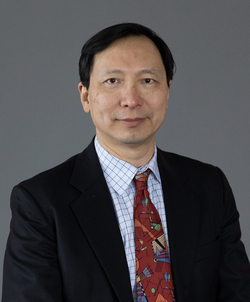
Xiaonian Xu headshot

Dr. Xiaonian Xu is Professor Emeritus at CEIBS, where he held the position of Professor of Economics and Finance from 2004 to 2018.  In recognition of his contributions, he was named an Honorary Professor in Economics from September 2018 to August 2023. He is also Skyline Scholar at the Stanford Center on China's Economy and Institutions from 2024-25 at Stanford University.

Between 1999 and 2004, Dr. Xu served as Managing Director and Head of Research at China International Capital Corporation Limited (CICC). Before joining CICC, he was a Senior Economist at Merrill Lynch Asia Pacific, based in Hong Kong from 1997 to 1998, and worked as a World Bank consultant in Washington DC in 1996. Dr. Xu was appointed Assistant Professor of Amherst College, Massachusetts, where he taught Economics and Financial Markets from 1991 to 1995. Earlier in his career, he was a research fellow at the State Development Research Centre of China from 1981 to 1985.

Dr. Xu earned his Ph.D. in Economics from the University of California, Davis, in 1991, and an MA in Industrial Economics from the People's University of China in 1981. In 1996, he was awarded the distinguished Sun Yefang Economics Prize, the highest honor in the field in China, for his research on China’s capital markets. His research interests include Macroeconomics, Financial Institutions and Financial Markets, Transitional Economies, China’s Economic Reform, Corporate Strategy and Digital Transformation. His publications include: Freedom and Market Economy (《自由与市场经济》), There has Never been A Savior (《从来就没有救世主》), The Pendulum Swinging Back (《回荡的钟摆》), The Nature of the Business and the Internet (《商业的本质和互联网》), and The Nature of the Business and the Internet, 2nd Edition (《商业的本质和互联网》第二版).

A dedicated educator, he has been recognized with the CEIBS Teaching Excellence Award in 2005 and 2006, as well as the esteemed CEIBS Medal for Teaching Excellence in 2010.


Questions? Contact Xinmin Zhao at xinminzhao@stanford.edu


Goldman Room, E409
Encina Hall, East Wing, 4th Floor

Encina Hall, East Wing, Room 014

Office Hours:
Select Mondays | 3:00-5:00 PM 
Please schedule a meeting in advance

0
Skyline Scholar (2024), Stanford Center on China's Economy and Institutions
Professor of Economics and Finance, China Europe International Business School
prof._xu_xiaonian.jpg Ph.D.

Dr. Xiaonian Xu is Professor Emeritus at CEIBS, where he held the position of Professor of Economics and Finance from 2004 to 2018. In recognition of his contributions, he was named an Honorary Professor in Economics from September 2018 to August 2023.

Between 1999 and 2004, Dr. Xu served as Managing Director and Head of Research at China International Capital Corporation Limited (CICC). Before joining CICC, he was a Senior Economist at Merrill Lynch Asia Pacific, based in Hong Kong from 1997 to 1998, and worked as a World Bank consultant in Washington DC in 1996. Dr. Xu was appointed Assistant Professor of Amherst College, Massachusetts, where he taught Economics and Financial Markets from 1991 to 1995. Earlier in his career, he was a research fellow at the State Development Research Centre of China from 1981 to 1985.

Dr. Xu earned his Ph.D. in Economics from the University of California, Davis, in 1991, and an MA in Industrial Economics from the People's University of China in 1981. In 1996, he was awarded the distinguished Sun Yefang Economics Prize, the highest honor in the field in China, for his research on China’s capital markets. His research interests include Macroeconomics, Financial Institutions and Financial Markets, Transitional Economies, China’s Economic Reform, Corporate Strategy and Digital Transformation. His publications include: Freedom and Market Economy (《自由与市场经济》), There has Never been A Savior (《从来就没有救世主》), The Pendulum Swinging Back (《回荡的钟摆》), The Nature of the Business and the Internet (《商业的本质和互联网》), and The Nature of the Business and the Internet, 2nd Edition (《商业的本质和互联网》第二版).

A dedicated educator, he has been recognized with the CEIBS Teaching Excellence Award in 2005 and 2006, as well as the esteemed CEIBS Medal for Teaching Excellence in 2010.

Date Label
Xiaonian Xu, Skyline Scholar (2024-25); Professor Emeritus, CEIBS
Lectures
Date Label
All Publications button
1
Publication Type
Journal Articles
Publication Date
Subtitle

Using reading performance data from a randomized controlled trial of 5224 fifth-grade students in East China, this paper provides a novel test of the hypothesis that evoking a gender stereotype creates gender gaps in education through self-fulfilling prophecies. We found that without intervention, boys performed worse than girls did in reading tests. Evoking a gender stereotype by indicating the expected outperformance of girls over boys in reading had a significantly negative effect on boys and an insignificant effect on girls. As a result, the net effect on the gender gap in reading performance was economically important but statistically insignificant. We also found evidence that increased anxiety was likely the underlying mechanism. Finally, a heterogeneous analysis showed that boys from environments with biased gender role beliefs were more susceptible to the intervention.

Journal Publisher
Journal of Population Economics
Authors
Scott Rozelle
Authors
Noa Ronkin
News Type
News
Date
Paragraphs

Mounting hidden local government debt is one of China’s pressing challenges. Held by local government financing vehicles (LGFVs) and estimated between US$8-10 trillion, this off-the-books debt originates from a long-running tug-of-war over tax revenue between China’s central government and the localities. In the years before COVID-19, LGFVs controlled their debt by drawing on steady non-tax revenues. In summer 2020, however, approximately six months after the pandemic broke out in Wuhan, the hidden debt held by LGFVs began rising dramatically. Today, many of them are nearing default, and local governments are increasingly going broke.

​​Why did hidden LGFV debt rise so much during COVID?

A recent study, published in The China Journal, sheds light on this question. The study’s co-authors – including Jean Oi, the William Haas Professor of Chinese Politics, a senior fellow at the Freeman Spogli Institute for International Studies, and director of the China Program at APARC – use quantitative data to show how China’s central government’s regulatory crackdowns on income tied to the real estate sector during the pandemic disrupted the revenue sources LGFVs and their local governments relied on to service their debts. These policy changes “interacted with the zero-COVID policy to create a perfect storm, pushing hidden local government debt to new highs,” they write. 

Their study draws on a wide array of quantitative data, tracking information on factors ranging from COVID shocks (including confirmed cases and deaths) to, among others, government medical responses, special treasury bonds and their allocation, local debt, land purchases, and business activities. Using these sources, the co-authors built a province-level dataset covering all 31 of China’s provincial units from 2018 to 2022, allowing comparative analyses before and after China’s COVID shocks. They organized the data into three categories: (1) the impact of COVID on small and medium enterprises; (2) government fiscal responses and COVID expenditures during the pandemic; and (3) local government finances and debts.


Sign up for APARC newsletters to receive our scholars’ research updates >

The grand bargain seemed like a win-win situation: the central government got more tax revenues as the economy grew, and localities used land finance to fill the fiscal gap and generate new growth. But this growth was fueled by debt.
Jean Oi et al

The Pre-COVID Era: The Grand Bargain That Failed


China’s local debt problem traces back to the 1994 fiscal reforms, which recentralized tax revenues in Beijing and left local governments with chronic budget shortfalls. To bridge the gap, the central government struck a “grand bargain”: while claiming a larger share of tax income, localities could generate new non-tax revenues through special-purpose vehicles, namely, local government financing vehicles. These LGFVs were set up as state-owned enterprises to incur and hold debt off-the-books, yet not illegally, on behalf of local governments.

The workaround fueled rapid development for years but laid the groundwork for today’s mounting hidden debt crisis.

“The success of LGFVs hinged largely on revenue generated through land finance,” explain Oi and her co-authors. “Local governments provided LGFVs with cheap land as collateral for bank loans and bonds. Further revenue was generated from preparing and selling land to real estate developers.”

Thus, LGFVs powered over a decade of rapid growth in China, driving infrastructure booms and urbanization that made the real estate sector a cornerstone of the economy. The model appeared mutually beneficial: the central government gained more tax revenue as the economy grew, while local governments used land sales and debt to fund development. But this growth depended on a continuous flow of non-tax income, making the system increasingly fragile.

After the 2008 global financial crisis, Beijing launched a sustained push to rein in local government hidden debt, focusing heavily on LGFVs. By 2017, officials labeled the risk a “gray rhino.” Yet this drive for fiscal discipline ground to a halt with the onset of COVID.

The call for LGFVs to buy land to create revenue for local governments made matters worse, turning land from a key source of revenue into a source of new debt.
Jean Oi et al

A Perfect Storm of Policy and Pandemic


The pandemic’s impact was swift and severe. Small and medium-sized businesses, especially in the hardest-hit regions like Hubei Province, saw their incomes collapse by up to 90%. In response, Beijing provided a massive fiscal support package to localities, including one trillion yuan in special COVID bonds to offset the costs from the initial onslaught of the pandemic. Crucial for LGFVs, these bonds cushioned the impact of the pandemic on land sales.

By summer 2020, however, as China was still locked away from the rest of the world and COVID was under control, Beijing resumed its policy agenda to enforce fiscal discipline and curb local government debt. The central government’s most consequential measure was the “three red lines” policy, which dealt a major blow to China’s real estate sector by sharply restricting developers’ ability to borrow once debt thresholds were crossed. The policy, expanded from 12 pilot firms in 2020 to cover the entire sector by 2021, disrupted the “borrow-to-grow” model and triggered a liquidity crisis. Evergrande, China’s second-biggest property developer, was among the first groups affected.

As borrowing dried up, firms struggled to repay debt, halted construction, and stopped buying land, slashing local government revenues. Land sales plummeted across provinces, with national revenue growth from land transfers plunging into negative territory by 2022. The crisis deepened when unfinished housing projects led to mortgage boycotts by frustrated home buyers, prompting more state intervention.

For local governments, the shift came at a steep cost. They were ordered to step in, using LGFVs to purchase land and inject cash into public budgets. As a result, even wealthier provinces like Shanghai and Guangdong saw sharp increases in LGFV debt.

“The call for LGFVs to buy land to create revenue for local governments made matters worse, turning land from a key source of revenue into a source of new debt and forcing LGFVs further to increase borrowing, all of which caused soaring increases in LGFV debt, without any alternative revenue source to service or pay that debt,” explain Oi and her co-authors.

It may be time for Chinese leadership to stop kicking the can down the road and undertake institutional reforms of the fiscal system.
Jean Oi et al

A Fiscal Reform Imperative


The study shows how China’s shifts in central government policies during the pandemic – especially the three red lines and the directive for LGFVs to buy up unwanted land — exacerbated long-standing vulnerabilities in local public finance. What had been a delicate balancing act quickly became unsustainable.

“At the root of China’s continuing crisis of LGFVs' debt is China’s flawed fiscal system,” the co-authors emphasize. Before the pandemic, the system masked deficits by relying on LGFVs to generate off-the-books revenues, primarily through land sales fueled by a booming real estate market. This arrangement allowed Beijing to capture the bulk of tax revenue while localities chased growth. But when COVID struck and the property sector collapsed, the facade crumbled.

The fallout exposed how deeply local governments had come to depend on land finance – an unstable, non-institutionalized revenue stream. With the real estate sector once accounting for over 20 percent of GDP, its collapse left localities and their financing vehicles adrift. “In the context of a crisis such as COVID, the weakness of the fiscal system and LGFVs was exposed as policy instability added to the volatility of the economic situation,” Oi and her co-authors note.

The local government debt problem might not trigger a financial crisis in China, “but LGFVs and their local governments remain in dire straits,” they write. More worrying, the economy has not rebounded in the post-COVID years as hoped, and “as long as the real estate sector remains depressed, land finance will not be able to make local government budgets whole as it once did. The grand bargain can’t work.”

Rather than assume the debt, Beijing is extending lifelines: urging banks to offer LGFVs 25-year loans with temporary interest relief, approving debt swaps into longer maturity municipal bonds, and allowing new issuances of special-purpose bonds. But these are stopgaps, not solutions.

Hidden debt will keep resurfacing unless China overhauls the fiscal system born out of the 1994 reforms, Oi and her co-authors conclude. Institutionalized, dependable, alternative revenue streams for local governments are needed, or the crisis will persist. “It may be time for Chinese leadership to stop kicking the can down the road and undertake institutional reforms of the fiscal system. This may be painful, but there is no other sustainable solution.”

Read More

money
News

Bargaining Behind Closed Doors: Why China’s Local Government Debt Is Not a Local Problem

New research in 'The China Journal' by APARC’s Jean Oi and colleagues suggests that the roots of China’s massive local government debt problem lie in secretive financing institutions offered as quid pro quo to localities to sustain their incentive for local state-led growth after 1994
Bargaining Behind Closed Doors: Why China’s Local Government Debt Is Not a Local Problem
Oksenberg Symposium panelists (L to R) Jean C Oi, Alex Gabuev, Sumit Ganguly, Da Wei, Michael McFaul
News

Oksenberg Symposium Panelists Analyze Evolving Strategic Dynamics Between China, Russia, India, and the United States

APARC's 2025 Oksenberg Symposium explored how shifting political, economic, and social conditions in China, Russia, India, and the United States are reshaping their strategies and relationships. The discussion highlighted key issues such as military and economic disparities, the shifting balance of power, and the implications of these changes for global stability, especially in the Indo-Pacific region.
Oksenberg Symposium Panelists Analyze Evolving Strategic Dynamics Between China, Russia, India, and the United States
Shilin Jia
News

Tracking Elite Political Networks: Shorenstein Postdoctoral Fellow Shilin Jia’s Data-Driven Approach to Understanding Chinese Bureaucracy

APARC’s 2024-25 Shorenstein Postdoctoral Fellow on Contemporary Asia Shilin Jia researches the careers of high-level Chinese political elites during the economic reform period from 1978 to 2011. Using a quantitative approach, Jia explores how China's party-state orchestrated elite circulation as a governance tool during a time of significant economic and political transformation.
Tracking Elite Political Networks: Shorenstein Postdoctoral Fellow Shilin Jia’s Data-Driven Approach to Understanding Chinese Bureaucracy
Hero Image
A man walks past a bear-like sculpture at Evergrande City Plaza shopping center on September 22, 2021 in Beijing, China.
A man walks past a bear-like sculpture at Evergrande City Plaza shopping center on September 22, 2021, in Beijing, China.
Andrea Verdelli/ Getty Images
All News button
1
Subtitle

A co-authored study by a team including Stanford political scientist Jean Oi traces how the Chinese central government’s shifting policies during the COVID pandemic exposed its fiscal fault lines and created a local government liquidity crisis.

Date Label
All Publications button
1
Publication Type
Working Papers
Publication Date
Subtitle

China’s total fertility rate declined very little following implementation of the One Child Policy (OCP) in 1979/1980, but then fell sharply, by more than one-third, during the early 1990s. In this paper, we propose that strengthening bureaucratic incentives under the “One Vote Veto” (OVV) policy, which strictly prohibited career promotion for adherence failure, was necessary for more “effective” implementation of the OCP—and for its delayed impact on fertility. We use provincial variation in OVV implementation to estimate event study regression inputs needed to build actual and counterfactual sequential multi-decrement fertility life tables, finding that the policy explains 46% of China’s total fertility rate decline during the 1990s, driving it below replacement level. Use of intrauterine devices (IUDs, the most prevalent form of modern contraception in China) that was “recommended” by party officials increased by 133% under the policy, a relative increase more than four times as large as the increase in “voluntary” use. Overall, our paper suggests that population policy made a larger contribution to low fertility in China than suggested by past research. More generally, our paper highlights the central role of aligning bureaucratic incentives with public policy objectives, even in a centrally-planned economy like China’s.

Journal Publisher
National Bureau of Economic Research (NBER)
Authors
Hongbin Li
Lingsheng Meng
Grant Miller
Paragraphs
Cover of volume 93 of The China Journal

After the abrupt end of China’s zero-COVID policy at the end of 2022, the debt held by local government financing vehicles (LGFVs) on behalf of their local governments had soared to at least US$8 trillion. Some local governments are now cutting public services due to a lack of funds. The mountains of LGFV debt cannot be explained by COVID public health expenditures, but the impact of COVID determined policy changes that led to the crisis of hidden debt. Paradoxically, China’s success in combatting the first wave of COVID triggered policies that ultimately upended LGFVs. Using quantitative data, we show that changing central government policies during the pandemic created debt and undermined the operation of LGFVs. The three red lines policy instituted against the real estate sector in the middle of the pandemic interacted with the zero-COVID policy to create a perfect storm, pushing hidden local government debt to new highs when the revenue that LGFVs needed to service their debt dried up. COVID exposed the inherent vulnerability of LGFVs and their local governments relying on a noninstitutionalized source of revenue—namely, income tied to the real estate sector—to fill their annual fiscal gaps and underscored the need for systemic fiscal reform.

All Publications button
1
Publication Type
Journal Articles
Publication Date
Journal Publisher
The China Journal
Authors
Jean C. Oi
-
event flyer

A potential historic trilateral appearance by Xi Jinping, Kim Jong Un, and Vladimir Putin at Moscow's May 9 Victory Day parade would signal powerful solidarity against U.S. pressure, following the June 2024 'Comprehensive Strategic Partnership' treaty between Pyongyang and Moscow.

Join our expert panel as we analyze this unprecedented geopolitical alignment amid intensifying U.S.-China rivalry. We'll examine covert arms exchanges trading North Korean missiles for Russian defense systems, North Korean troops in Ukraine honing combat skills, and China's evolving role as it perceives American decline and builds its own alliance network.

Could this potential summit herald a new Cold War framework? We'll explore the profound implications for international relations, strategic partnerships, and regional security in what may become a defining moment in 21st-century global politics.

Speakers:

Seong-Hyon Lee headshot

Seong-Hyon Lee is a Senior Fellow at the George H. W. Bush Foundation for U.S.-China Relations and an Associate in Research at Harvard University's Asia Center. A China scholar, Lee gained unique insights during his 11 years residing in China; after completing his Harvard degree, he worked in Beijing as a U.N. consultant and foreign correspondent before earning his Ph.D. from Tsinghua University – President Xi Jinping's alma mater – as the sole international student in his cohort. His connection to Stanford includes previously serving as the Pantech Fellow at the Shorenstein APARC following his time in China.

Lee is the author of two books on U.S.-China relations and their impact on the Korean Peninsula, with his latest publication being The New Cold War: U.S.-China Rivalry and the Future of Global Power. His research spans East Asian international relations, specializing in Chinese domestic politics and foreign policy, U.S.-China relations, North Korea, nuclear weapons, and techno-economic competition. His prior roles include serving as China Director at a Seoul-based think tank advising the South Korean government, holding an Assistant Professorship at Japan’s Kyushu University, and being a Visiting Scholar at the Harvard Fairbank Center for Chinese Studies.

Joseph Torigian headshot

Joseph Torigian is a research fellow at the Hoover Institution; an associate professor at the School of International Service at American University in Washington, DC; a Global Fellow in the History and Public Policy Program at the Wilson Center; and a Center Associate of the Lieberthal-Rogel Center for Chinese Studies at the University of Michigan.

Torigian was previously a visiting fellow at the Australian Center on China in the World at Australian National University; a Stanton Fellow at the Council on Foreign Relations; a postdoctoral fellow at the Princeton-Harvard China and the World Program; a postdoctoral (and predoctoral) fellow at Stanford’s Center for International Security and Cooperation; a predoctoral fellow at George Washington University’s Institute for Security and Conflict Studies; an IREX scholar affiliated with the Higher School of Economics in Moscow; and a Fulbright Scholar at Fudan University in Shanghai.

His book Prestige, Manipulation, and Coercion: Elite Power Struggles in the Soviet Union and China after Stalin and Mao was published in 2022 by Yale University Press. His biography on Xi Jinping’s father, The Party’s Interests Come First: The Life of Xi Zhongxun, Father of Xi Jinping, will be published in June 2025 with Stanford University Press. He studies Chinese and Russian politics and foreign policy.

Moderator:

Ria Roy headshot

Ria Roy is a Kleinheinz Fellow at the Hoover Institution, is a specialist in the history of modern Korea and East Asia. Her doctoral dissertation, which she is currently turning into a book, examines the intellectual and cultural history of North Korea in the context of the Japanese Empire’s legacy as well as the influence of the revolutionary bloc. In particular, she explores the history and development of the leadership succession in North Korea, focusing on the role of intellectuals and their ideas in the generation of the unique North Korean model of leadership. More broadly, she is interested in the intellectual interplay between East and West and how it paved the way for a transition to an illiberal modernity.

Roy received her PhD from the Faculty of Asian and Middle Eastern Studies at the University of Cambridge as a Gates Cambridge Scholar. She previously received her MA from Harvard University and her BA from Waseda University in Japan. 

Directions and Parking > 

Ria Roy, Kleinheinz Fellow, Hoover Institution

Philippines Conference Room (C330)
Encina Hall, 3rd Floor
616 Jane Stanford Way, Stanford, CA 94305

Seong-Hyon Lee, Senior Fellow, George H. W. Bush Foundation; Associate in Research, Harvard University
Joseph Torigian, Research Fellow, Hoover Institution; Associate Professor, American University
Panel Discussions
Date Label
All Publications button
1
Publication Type
Working Papers
Publication Date
Subtitle

This paper examines how power lawyers shape judicial and economic outcomes by studying the “revolving door” between judges and lawyers in China’s judicial system—namely, former judges who quit the bench to practice law. In otherwise identical lawsuits, revolving-door lawyers deliver 8−23% higher win rate for their clients. Their performance in home versus away courts suggests these gains stem from both “know how” and “know who.” We extend the theoretical framework of Dewatripont and Tirole (1999) to show that revolving-door lawyers create countervailing forces in society: they enhance judicial decision-making through evidence and reasoning, but also exploit strategic arguments and connections to bias outcomes in favor of their clients. We estimate a structural model of the judicial process to quantify these trade-offs and find that increasing the supply of power lawyers can have a non-monotonic effect on equilibrium judicial quality.

Journal Publisher
NBER Working Paper
Authors
-

Please note: This event, "Major General William Bowers on the U.S. Military Posture to Maintain Peace in the Indo-Pacific," has been postponed indefinitely due to scheduling changes. Thank you for your interest.


Join Stanford's Shorenstein APARC China Program as we welcome U.S. Marine Corps Major General William Bowers, who will present on the advanced Naval bases of U.S. military forces in the Indo-Pacific, and their role in maintaining deterrence and allied security in the region.

As the Commanding General of Marine Corps Installations Pacific from 2019 to 2022, Major General Bowers oversaw all U.S. Marine Corps bases in the Pacific Area of Operations, supporting the largest U.S. military expeditionary force in the theater.  Currently, Bowers heads the Marine Corps’ Recruiting Command, where he overhauled the Corps’ recruiting, leading to record enlistment and retention.

Image
Major General Bowers

Major General Bowers was commissioned in 1990 after graduating with distinction from Virginia Military Institute with a B.A. in History.  He assumed command of Marine Corps Recruiting Command in July 2022 during a time of historic change and challenge for recruiting.  In September 2023, General Bowers led a “Strategy Conference” here at Stanford University in which members of the Stanford community partnered with Marine Corps Recruiting Command to develop and launch the “Made for This” advertising campaign focused on enduring American values.  Major General Bowers' personal decorations include the Legion of Merit (with gold star), the Bronze Star, the Defense Meritorious Service Medal (with oak leaf cluster), the Meritorious Service Medal, the Navy and Marine Corps Commendation Medal (with two gold stars), the Navy and Marine Corps Achievement Medal, and the Humanitarian Service Medal.  He was named “Combat Engineer Officer of the Year” in 1998 and has received several writing awards.

Philippines Room, Encina Hall (3rd floor), Room C330
616 Jane Stanford Way, Stanford, CA 94305

Major General Bowers, Commanding General, Marine Corps Recruiting Command; Commanding General of Marine Corps Installations Pacific (2019–2022)
Lectures
Date Label
Authors
Michael Breger
News Type
News
Date
Paragraphs

China’s rise as a global power has ushered in a period of strategic flux marked by renewed great power competition, heightened geopolitical uncertainty, and intensifying U.S.-China rivalry. As China's economic and military capabilities have grown, so too have concerns about its long-term intentions, raising the stakes for states attempting to interpret and respond to its foreign policy behavior. In this volatile environment, the ability of states to credibly signal peaceful or aggressive intentions has become a central concern for policymakers and scholars alike. Misunderstandings can escalate into costly miscalculations, especially amid shifting power dynamics, unstable preferences, and growing competition for influence.

Understanding states’ signaling behavior is the research focus of Brandon Yoder, a 2024–25 Stanford Next Asia Policy Fellow at the Walter H. Shorenstein Asia-Pacific Research Center (APARC). Yoder is a senior lecturer at the Australian National University’s School of Politics and International Relations and the Australian Centre on China in the World. He is also a non-resident research fellow at the National University of Singapore’s Lee Kuan Yew School of Public Policy, Centre on Asia and Globalisation.

While at APARC, Yoder is working with the Stanford Next Asia Policy Lab (SNAPL) on projects as part of its research track on shared and varying perceptions in U.S. relations with regional actors in Asia. His research investigates how states communicate their intentions under uncertainty and how these signaling processes shape the prospects for peace or conflict. Combining formal modeling with historical and empirical analysis, Yoder seeks to illuminate how credibility is constructed, interpreted, and contested in strategic interaction, focusing on Chinese foreign policy and U.S.-China dynamics.

Sign up for APARC newsletters to receive updates from our scholars >


When Theory Meets Practice: Modeling Signaling and Testing It Empirically


Much of Yoder’s research aims to bridge the gap between abstract theory and pressing policy questions. One focus is the ongoing evolution of great power competition and how China's behavior can be better understood through the lens of signaling theory. Yoder applies theoretical findings to Chinese foreign policy to examine “how China can credibly signal its intentions and how others can figure out China's intentions, with an eye toward managing great power competition.”

Yoder’s academic journey began with a long-standing curiosity about China. “I always had an interest in China dating back to high school. It was obviously important but not covered much, so I was curious about it,” he reflects. After college, a few years spent teaching English in China deepened that curiosity and helped build the language skills that would become instrumental in his research. Graduate school provided the theoretical structure for his inquiry, and the challenges of understanding credibility in international politics led him to formal modeling. “In grad school, I became interested in how China could credibly signal its intentions, which led me to game theory,” he recalls. “I essentially taught myself the method over a long period of trial and (tons of) error.”

Beliefs are hard to measure, which makes empirical work very difficult. You can't just use a large-N dataset
Brandon Yoder
Stanford Next Asia Policy Fellow 2024-25

Now, his work weaves together a rigorous theoretical approach to general questions with applications to specific, policy-relevant problems in U.S.-China relations. Despite the appeal of elegant theoretical models, the empirical realities of signaling are anything but simple. Yoder identifies three key challenges in studying the phenomenon.

“One is that you have to formalize your theories, or else you can't possibly keep straight the complexities of rational belief formation mechanisms,” he explains. This realization led him toward game theory.

A second issue is the gap between rationalist models and human behavior. “Actors are not fully rational in their beliefs, so real-world signaling deviates systematically from rationalist predictions. These psychological and rational mechanisms interact in complex ways,” he adds, noting that some of his work tries to integrate both perspectives.

The third challenge lies in measurement. “Beliefs are hard to measure, which makes empirical work very difficult. You can't just use a large-N dataset,” he explains. In response, his empirical approach blends historical case studies with experiments to evaluate how signaling works in specific instances and at the population level.

At SNAPL, Yoder has continued developing several key projects. One model examines how alliance politics are shaped by fears of abandonment or entrapment, concerns that can inhibit alliance formation altogether. Another investigates how rising powers, facing multiple international audiences, can credibly signal peaceful intentions through diplomatic statements, offering insight into the triangular dynamics between the United States, China, and Russia since World War II.

Yoder’s recent work broadens his empirical scope. One survey experiment explores how Australian national identity shapes public attitudes toward China. Another paper argues that war between the United States and China over Taiwan may be less likely than often assumed. A third project develops a model of how smaller Asian states can help moderate U.S.-China competition by avoiding firm alignment with either power. Across these diverse topics, the through line remains the same: understanding how intentions are communicated or miscommunicated between states.

Academic Community and Next Steps


Yoder describes his time at APARC as both intellectually stimulating and refreshingly collaborative. “Mostly just being around really good people, having engaging discussions, and getting feedback” has been a major boost to his research, he says. Conversations with scholars like Jim Fearon and Ken Schultz have sharpened his theoretical thinking, while connections with Center Fellow Oriana Skylar Mastro have deepened his understanding of cross-strait dynamics. He’s also enjoyed working closely with fellow SNAPL postdocs and visiting scholars, and credits their informal discussions as particularly energizing.

SNAPL, directed by Professor Gi-Wook Shin, is an interdisciplinary research initiative housed within APARC addressing pressing social, cultural, economic, and political challenges in Asia through comparative, policy-relevant studies. The lab cultivates the next generation of researchers and policy leaders by offering mentorships and fellowship opportunities for students and emerging scholars. These include two-year postdoctoral fellowships and one-year visiting fellowships, including for scholars from the Asia-Pacific region. Fellows collaborate with Stanford faculty, students, and other researchers to produce interdisciplinary, problem-oriented, and policy-relevant publications. The lab also offers research assistantships and a research workshop to foster academic exchange and mentorship. 

Yoder has been pleasantly surprised by the vibrancy of the intellectual community at APARC and FSI. “There are so many fantastic talks and events, it’s legitimately difficult to go to everything I want to,” he notes. The intersection of APARC, the Political Science Department, and the Center for International Security and Cooperation (CISAC) has created what he describes as a deeply interdisciplinary space, one that encourages both breadth and depth in academic inquiry and policy-relevant discussion.

Reflecting on academia, Yoder offers unflinching but thoughtful advice to early-career scholars. “It’s gonna get rough out there; hedge your bets,” he says. Success, in his view, depends on three things: genuine passion, persistence, and luck. “Plenty of talented, hard-working people don't get the breaks they need and their careers flounder,” he explains. For this reason, he encourages young scholars to pursue work they truly enjoy rather than trying to reverse-engineer success. “The process is the payoff, or it’s not worth doing. But be ready to shift to a different career path if it doesn’t work out.”

As he prepares to return to his position at the Australian National University in July, Yoder is eager to continue his work on signaling, great power politics, and Chinese foreign relations. A book project is a possibility, but not a priority — at least not yet. “I keep thinking of too many new articles I want to write,” he says, “so I’d rather do new stuff than expand my old stuff into a book.”

Through rigorous modeling, empirical grounding, and a deep engagement with contemporary strategic challenges, Brandon Yoder’s work offers essential insights into how states interpret signals, manage risks, and shape the evolving landscape of global power.

Read More

U.S. President Donald Trump holds up a chart of "reciprocal tariffs" while speaking
News

Tariffs Boost China's Image, But the US Has No Substitute, Says APARC Scholar Thomas Fingar

President Trump's tariff policy will serve no one's interests, says Thomas Fingar, a Shorenstein APARC Fellow at Stanford University's Freeman Spogli Institute for International Studies.
Tariffs Boost China's Image, But the US Has No Substitute, Says APARC Scholar Thomas Fingar
American flag and network imagery
Commentary

US Research in Retreat?

Zealous measures to defend against foreign exploitation of university-based research would be inadequate to preserve US preeminence in science and technology without much greater effort to strengthen US capabilities.
US Research in Retreat?
Shilin Jia
News

Tracking Elite Political Networks: Shorenstein Postdoctoral Fellow Shilin Jia’s Data-Driven Approach to Understanding Chinese Bureaucracy

APARC’s 2024-25 Shorenstein Postdoctoral Fellow on Contemporary Asia Shilin Jia researches the careers of high-level Chinese political elites during the economic reform period from 1978 to 2011. Using a quantitative approach, Jia explores how China's party-state orchestrated elite circulation as a governance tool during a time of significant economic and political transformation.
Tracking Elite Political Networks: Shorenstein Postdoctoral Fellow Shilin Jia’s Data-Driven Approach to Understanding Chinese Bureaucracy
Hero Image
Brandon Yoder, Stanford Next Asia Policy Fellow
All News button
1
Subtitle

Brandon Yoder, APARC’s 2024–25 Stanford Next Asia Policy Fellow, focuses on a central challenge in international politics: how states can credibly signal their intentions and avoid war. His work investigates this question in high-stakes contexts, such as during power shifts, amid strategic uncertainty, and in multi-actor settings where traditional signaling models often fall short.

Date Label
Authors
News Type
News
Date
Paragraphs

China is at the center of global dynamics today. What does its new superpower status mean for the world? For China? How will the worsening U.S.–China tariffs affect world trade? Is China’s clean energy leadership the key to the world’s climate crisis or will China remain the world’s top emitter of greenhouse gases? Would China go to war over Taiwan? Would the U.S.? What are China’s internal challenges? Is this China’s century?  

U.S. high school students wondering about these questions and more, who want to explore the nuance and history behind the headlines, in conversation with diverse experts and classmates, are invited to apply for SPICE’s China Scholars Program.

Fall 2025 China Scholars Program: Introduction to Contemporary China
Application period: April 22 to June 15, 2025
Tuition: $2500

Program dates: August 28 – December 20, 2025

This online, college-level course for advanced 10th through 12th graders provides an overview of China’s internal dynamics and recent history, as well as its complicated relationship with the United States, with critical, timely insights into this superpower of the 21st century.

Kristina Danilenko (Huntersville, NC, Fall 2024 CSP alum) observes, “[W]ith all the generalizations and inaccuracies I hear about China (whether it be its government or people as a whole) due to the volatile political environment right now, taking your class was especially valuable in that I’m able to navigate through these swirling narratives and think critically about the information I’m consuming.”

Each week, CSP students engage with leading scholars and experts on Zoom, read deeply on that week’s topic, and engage in analytical discussion with classmates. In addition to weekly written assignments, students conduct independent research, which culminates in an academic paper. Students will also have an opportunity to meet online with Chinese students enrolled in the Stanford e-China Program.

The program’s interdisciplinary nature encourages wide-ranging student research topics. Recent papers have addressed education (“Gaokao: How Effective Is the Gateway to Chinese Meritocracy?”); economics (“Impacts of Taiwan’s Microchip Monopoly on U.S.–China Economic Relations”); environmental issues (“Till the Well Runs Dry: Water Shortages in Northern China”); cultural politics (“Children and Politics: How Children’s Cinema Shapes China’s Youth”; “Mao’s Playlist: Music of the Cultural Revolution”); as well as language, demographics, literature, and beyond.

“[My son is] getting to watch his research topic on tariffs and China play out in real time (for better or worse),” comments Jaime Zollars, parent of Griffin Zollars (Newbury Park, CA, Fall 2024 CSP alum). “The course has inspired many conversations since, and it really gave him a working base knowledge, strengthened his skills, and solidified his interest in continuing to explore Chinese studies and language alongside economics in college!”

CSP’s rigor helps students build a strong foundation for college and future careers. “This course only solidified my desire to pursue studies pertaining to Chinese politics and history, particularly within the realm of international relations,” reports one Fall 2024 alum. “Yet, even for those whose primary academic aspirations lie elsewhere, the abilities you develop during CSP—whether it involves a deeper understanding of China or building cross-cultural skills—are ones that can be applied across a wide range of fields and pursuits both within and beyond academia.” 

As China’s influence expands, the U.S. is heading towards a shortage in China expertise. CSP alums may ultimately find themselves in high demand.

For more information, please see http://chinascholars.org. Or contact Tanya Lee with questions.

The China Scholars Program is one of several online courses offered by SPICE.

To stay updated on SPICE news, join our email list and follow us on Facebook, X, and Instagram.

Read More

poster titled, Protect Our Pollinators
Blogs

U.S.–China Co-Lab on Climate Solutions: A New Transnational Program

The U.S.–China Co-Lab on Climate Solutions is now accepting applications for the spring 2025 session.
U.S.–China Co-Lab on Climate Solutions: A New Transnational Program
Santiago Calderon at Harvard University for debate tournament
Blogs

How SPICE’s China Scholars Program Accelerated My Love for International Relations

The following reflection is a guest post written by Santiago Calderon, an alumnus of the China Scholars Program, which is currently accepting applications for the Fall 2021 course.
How SPICE’s China Scholars Program Accelerated My Love for International Relations
Hero Image
red and white concrete building during nighttime
Tiananmen square
Photo Credit: Yang Yang on Unsplash
All News button
1
Subtitle

Applications are open for CSP’s “Introduction to Contemporary China” course. Interested students must apply by June 15, 2025.

Date Label
Subscribe to China