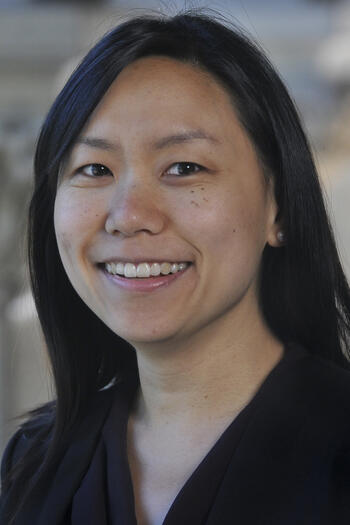
Diamond on deepening democratic recession
President Barack Obama’s trip to four Asian nations – Japan, South Korea, Malaysia and the Philippines – set out to address an ambitious agenda, including trade negotiations, territorial disputes, and the threat of North Korea. Scholars at the Shorenstein Asia-Pacific Research Center in the Freeman Spogli Institute provided commentary to local and international media about the state tour.
Ambassador Michael Armacost, a distinguished fellow at Shorenstein APARC, evaluated the goals of the trip, saying it aimed to deliver a message of reassurance to East Asia that the U.S. rebalance is intact. Armacost highlighted the efforts to negotiate a 12-nation trade pact, the Trans-Pacific Partnership (TPP) as the centerpiece of the Obama trip to Asia. He was interviewed by Weekly Toyo Keizi, a Japanese political economy magazine. An English version of the Q&A is available on Dispatch Japan.
Many foreign policy issues shadowed the outset of President Obama’s Asia trip, the crisis in Ukraine and Syria, among others. Daniel Sneider, associate director of research at Shorenstein APARC, said in Slate that Asian nations notice where the United States focuses its time. Obama’s commitment to the region may have come across as distracted given the breadth of his current foreign policy agenda.
Sneider also spoke with LinkAsia on Obama’s stop in Tokyo. President Obama met with Japanese Prime Minister Shinzo Abe; the two leaders addressed issues surrounding territorial disputes and attempted to reach an agreement on outside market access issues in the TPP negotiations.
Donald Emmerson, director of Shorenstein APARC’s Southeast Asia Forum, offered an assessment of America’s ‘pivot to Asia’ and on the significance of the Malaysia and Philippines visits. He said the trip most notably reinforced America’s efforts to upgrade security commitments and promote freer trade negotiation in that region. The Q&A was carried by the Stanford News Service.
Emmerson spoke with McClatchyDC on two occasions about the Philippines leg of the tour. He commented on Obama’s statement reaffirming the United States’ security commitment to Japan, which recognized Japan’s administrative control over the Senkaku Islands. Emmerson suggested the greater context of claims in the South China Sea must be considered, including Manila’s. He also said maintenance of the security alliance is a positive step, but trade is a an essential part of the the pivot's sustainablility.
When President Barack Obama this week began a high-profile visit to Asia, it called into question how effective the "Asian pivot" in America's foreign policy has been. A few years ago, Obama announced that a rebalancing of U.S. interests toward Asia would be a central tenet of his legacy. Now he is visiting Japan, South Korea, Malaysia and the Philippines to reassert the message that America is truly focused on Asia – despite finding itself repeatedly pulled away by crises in Ukraine and the Middle East, and political battles in Washington, D.C.
Stanford political scientist Donald K. Emmerson, an expert on Asia, China-Southeast Asia relations, sovereignty disputes and the American "rebalance" toward Asia, sat down with the Stanford News Service to discuss Obama's trip. Emmerson is a senior fellow emeritus at the Walter H. Shorenstein Asia-Pacific Research Center in the Freeman Spogli Institute for International Studies.
President Obama started his Asian pivot a few years ago. Have problems in Ukraine, Syria, Iran and at home detracted from this new approach?
The pivot as practiced continues unabated. The pivot as perceived has suffered from its displacement on various attention spans by superseding events and concerns, both foreign and domestic. President Obama's current trip to Asia is itself a reflection of these distractions. Originally planned for October, it was postponed by extreme political discord in Washington. But the chief elements of the pivot remain in place and in progress. They are most notably the upgrading of American security commitments and the effort to negotiate freer trade.
Why does this rebalancing in U.S. foreign policy make sense – or not?
The pivot certainly serves U.S. interests. Americans cannot afford to deny themselves, or be denied by others, the opportunities for trade and investment that Asia's most dynamic economies will continue to generate. The U.S. also needs to work with China and its neighbors to help ensure that China's rise serves the wider security interests of Americans, Chinese, Asians and the world, however dissonant the day-to-day advocacy of those interests may be. Ironically, by obliterating Obama's proposed reset of U.S.-Russia relations, Vladimir Putin has become an unintentional friend of the rebalance toward Asia. His aggression in Crimea and eastern Ukraine has made all the more urgent the need for Washington to pursue mutually beneficial relations with Beijing and the rest of Asia that could moderate China's willingness and ability to force its ownfaits accomplis in the East and South China Seas.
Do Chinese leaders view Obama's Asian pivot as a de facto containment approach to a rising China?
China's leaders do question U.S. intentions. But one ought not ignore the dozens and dozens of venues and ways in which the two countries' governments continue to cooperate on multiple fronts. In domestic terms it is politically convenient for Chinese hardliners to disparage American motives. As with the pivot itself, however, perception and practice are not the same thing.
Are Asian countries more rattled than ever by China's behavior in places like the South and East China Seas?
Concerned, yes; rattled, no. There are six or seven different claimants to contested land features and/or sea space in the South China Sea, not to mention the territorial tensions that also bedevil interstate relations in Northeast Asia. East Asian leaders are not lined up in a united front against Beijing. They are themselves divided. The more assertive China becomes, the more pushback it can expect. But most of the states in Southeast Asia do not want to ally with the U.S. against China, or with China against the U.S.
The U.S. and the Philippines are poised to sign a treaty that will expand America's military presence in the island country. What's the significance of the treaty?
Articles 4 and 5 of the treaty commit Washington and Manila to "act to meet the common dangers" implied by "an armed attack in the Pacific Area" on the "metropolitan territory" of either party, or on the "island territories under its jurisdiction," or on "its armed forces, public vessels or aircraft in the Pacific," and to do so "in accordance with its constitutional processes." But these provisions are hardly self-implementing; they require interpretation. Even if China were to forcibly evict the Philippine marines who now occupy Second Thomas Shoal in the South China Sea, the treaty would not automatically trigger an American military response. Applied to that scenario, the treaty would not instantly entrap the U.S. in a war with China. But the treaty would require some action or statement on the part of Washington. In Manila, Obama will try to reassure his Philippine host in this regard without enraging its Chinese neighbor.
Obama will be the first U.S. president in five decades to visit Malaysia. What does that visit mean for that country?
Of the four countries that Obama is visiting, it is in Malaysia that the pivot's third face after security and economy – namely democracy – will be most visible. Obama will be careful not to appear to enter into the domestic political turbulence Malaysia is experiencing, but his visits with civil society actors and university students in Kuala Lumpur will send the nonpartisan message that America remains committed to democratic values for itself and for Asians as well.
Clifton Parker is a writer for the Stanford News Service.
Economists and business scholars have long tried to construct theoretical models that can explain economic growth and development in emerging economies, but Western models have not always been fully applicable to developing economies, particularly in Asia, due to differences in political, economic and social systems. Created to address this gap, the ABCD framework of K-Strategy is a more nearly universal approach showing how inherent disadvantages can be overcome and competitive advantages achieved. Using the ABCD framework, the lecturer will analyze Korea’s success at both national and corporate levels since the 1960s and discuss the framework’s implications for Korea’s future government policies and corporate strategies. He will also demonstrate the ABCD framework’s applicability to other countries. Hwy-Chang Moon, dean of Seoul National University’s graduate school of international studies, has done extensive research and theoretical work on the ABCD framework.
Hwy-Chang Moon received his PhD from the University of Washington and is currently a professor of international business and strategy in the graduate school of international studies at Seoul National University. Professor Moon has taught at the University of Washington, University of the Pacific, State University of New York at Stony Brook, Helsinki School of Economics, Kyushu University, Keio University, Hitotsubashi University, and other executive and special programs in various organizations. On topics such as international business strategy, foreign direct investment, corporate social responsibility, and cross-cultural management, Professor Moon has published numerous journal articles and books. He is currently the editor-in-chief of the Journal of International Business and Economy, an international academic journal. Professor Moon has conducted consulting and research projects for several multinational companies, international organizations (APEC, World Bank, and UNCTAD), and governments (Malaysia, Dubai, Azerbaijan, and Guangdong Province of China). For interviews and debates on international economy and business, he has been invited by international newspapers and media, including New York Times and NHK World TV.
This event is made possible through the generous support of the Koret Foundation.
Philippines Conference Room
Shorenstein APARC postdoctoral fellowships offer a unique opportunity for recent graduates to reside at Stanford for a year to further their research and engage with scholars. The Center annually offers multiple Shorenstein Postdoctoral Fellowships in Contemporary Asia, and one Postdoctoral Fellowship in Asia Health Policy.
Fellows develop their dissertations for publication, present their research, and participate in Center activities related to and beyond their specialty. Most importantly, they establish valuable connections with professionals that continue long after they leave Stanford.
Postdoctoral fellows go on to pursue teaching positions and advisory roles at top universities and research organizations around the world. They often continue to contribute to Shorenstein APARC publications, and participate in conferences and related activities into the future.
Shorenstein APARC is delighted to welcome its latest group of exceptional postdoctoral fellows this autumn:
Jianzhi (Jason) Zhao is completing his PhD in international development and economic policy at the University of Maryland. His current research interests are focused on development economics and empirical and international corporate finance, particularly China. His dissertation focuses on how China’s financial system interacts with state-owned enterprises, and policy perspectives of China’s banking sector and macroeconomic stability. At Stanford, Zhao will continue his dissertation work and extend his research analyzing how a firm’s connection to government affects performance and investment behavior. Zhao holds BAs in finance and business administration from Jiangzi University of Science and Technology, and an MA in economics from Fudan University.
Paul Schuler is a political scientist whose current research focuses on liberalization under authoritarian rule and political change in Southeast Asia, particularly Vietnam. His dissertation focuses on how the Vietnam Communist Party has liberalized the legislature in order to gain information, co-opt opposition and stabilize power sharing. At Stanford, Schuler will develop his dissertation work into a book manuscript and pursue other projects related to governance under authoritarian rule. Schuler will receive his PhD in political science from the University of California, San Diego – Graduate School of International Relations and Pacific Studies in 2014. He holds a BA in journalism and government & politics from the University of Maryland, and an MA in Pacific international affairs from UC – San Diego.
Pham Ngoc Minh is a health researcher and administrator. His main interests are public health, disease prevention and the rural-urban divide in developing countries. At Stanford, Pham will be studying epidemiological trends and policy perspectives of diabetes in Vietnam, particularly those among adults in mountainous areas of that country. Pham has more than six years of experience working as a medical lecturer at the Thai Nguyen University of Medicine and Pharmacy in Vietnam, and spent two and a half years conducting postdoctoral research in Japan. He received a Bachelor of Medicine from the Thai Nguyen University of Medicine and Pharmacy, a BA in English from Hanoi University, an MPH from the University of Melbourne, and a PhD in medical science from Kyushu University.
This event has moved to the Philippines Conference Room
Professor Paine will explore China’s outlook on the territorial disputes in the South China Sea within the larger settings of Chinese geography and history, including the lessons Chinese leaders continue to draw from Russia’s experience, and how these contexts shape China’s views of its East Asian neighbors. Earlier paradigms of foreign policy offered by Confucianism before 1911 and by Communism thereafter have undergone serious critiques. Which elements in these partly tarnished legacies will China’s leaders decide to affirm, alter, reject, or ignore as they fashion a foreign policy for the 21st century? The outcome will signally affect not only China, but most particularly its neighbors in Southeast and Northeast Asia.
Sarah Paine is a professor of strategy and policy at the U.S. Naval War College, Newport, RI. She is the author of two prize-winning books: The Wars for Asia, 1911-1949 (Cambridge, 2012) and Imperial Rivals: China, Russia, and Their Disputed Frontier (M. E. Sharpe,1996). Among her other publications are The Sino-Japanese War of 1894-1895 (2003); Modern China, 1644 to the Present (co-auth., 2010); Nation Building, State Building, and Economic Development (ed., 2010); and four co-edited naval books respectively on blockades, coalitions, expeditionary warfare, and commerce-raiding. She has degrees in in history (Columbia, PhD), Russian (Middlebury, MA), and Latin American studies (Harvard, BA).
Philippines Conference Room
![]() |
| Dominik Müller |
As a visiting scholar at Shorenstein APARC in 2013, Dominik Müller finished worked on revising his doctoral dissertation into publishable form. The manuscript was published in March 2014 as Islam, Politics and Youth in Malaysia: The Pop-Islamist Reinvention of PAS (Routledge). In its pages, Dr. Müller has insightful things to say about the intersections of Malaysian politics, pop culture, and transnationally manifested "post-Islamism," among other topics. Rather than essentialize or overgeneralize "Islamism," with or without the prefix, he views the phenomenon dynamically in plural terms as a political ideology, a life philosophy, and a social phenomenon shaped by local contexts that are themselves diverse.
Southeast Asia Forum offers hearty congratulations to Dr. Müller, along with thanks for acknowledging in the book the hospitality of Shorenstein APARC's "extremely helpful" faculty and staff and the "excellent conditions for writing and research" that he recalls Shorenstein APARC having provided. SEAF director Donald K. Emmerson remembers with particular fondness his conversations with Dr. Müller, and is pleased to be mentioned for having contributed "ingenious thoughts and practical suggestions," although what stands out in Emmerson's recollection are the originality and cogency of Dr. Müller's ideas about Islam, politics and modernity in Southeast Asia.
Upon returning to Germany, Dr. Müller was awarded a prestigious four-year position (2013-17) in the Cluster of Excellence at Goethe-University Frankfurt that will enable him to pursue further scholarly research and writing.
Asked to summarize his biography and career, Donald K. Emmerson notes the legacy of an itinerant childhood: his curiosity about the world and his relish of difference, variety and surprise. A well-respected Southeast Asia scholar at Stanford since 1999, he admits to a contrarian streak and corresponding regard for Socratic discourse. His publications in 2014 include essays on epistemology, one forthcoming in Pacific Affairs, the other in Producing Indonesia: The State of the Field of Indonesian Studies.
Emmerson is a senior fellow emeritus at the Freeman Spogli Institute for International Studies (FSI), an affiliated faculty member of the Center on Democracy, Development and the Rule of Law, an affiliated scholar in the Abbasi Program in Islamic Studies, and director of the Southeast Asia Program at the Shorenstein Asia-Pacific Research Center. Recently he spoke with Shorenstein APARC about his life and career within and beyond academe.
Your father was a U.S. Foreign Service Officer. Did that background affect your professional life?
Indeed it did. Thanks to my dad’s career, I grew up all over the world. We changed countries every two years. I was born in Japan, spent most of my childhood in Peru, the USSR, Pakistan, India and Lebanon, lived for various lengths of time in France, Nigeria, Southern Rhodesia (now Zimbabwe) and the Netherlands, and traveled extensively in other countries. Constantly changing places fostered an appetite for novelty and surprise. Rotating through different cultures, languages, and schools bred empathy and curiosity. The vulnerability and ignorance of a newly arrived stranger gave rise to the pleasure of asking questions and, later, questioning the answers. Now I encourage my students to enjoy and learn from their own encounters with what is unfamiliar, in homework and fieldwork alike.
Were you always focused on Southeast Asia?
No. I had visited Southeast Asia earlier, but a fortuitous failure in grad school play a key role in my decision to concentrate on Southeast Asia. At Yale I planned a dissertation on African nationalism. I applied for fieldwork support to every funding source I could think of, but all of the envelopes I received in reply were thin. Fortunately, I had already developed an interest in Indonesia, and was offered last-minute funding from Yale to begin learning Indonesian. Two years of fieldwork in Jakarta yielded a dissertation that became my first book, Indonesia’s Elite: Political Culture and Cultural Politics. I sometimes think I should reimburse the African Studies Council for covering my tuition at Yale – doubtless among the worst investments they ever made.
Indonesia stimulated my curiosity in several directions. Living in an archipelago led me to maritime studies and to writing on the rivalries in the South China Sea. Fieldwork among Madurese fishermen inspired Rethinking Artisanal Fisheries Development: Western Concepts, Asian Experiences. Experiences with Islam in Indonesia and Malaysia channeled my earlier impressions of Muslim societies into scholarship and motivated a debate with an anthropologist in the book Islamism: Contested Perspectives on Political Islam.
What led you to Stanford?
In the early 1980s, I took two years of leave from the University of Wisconsin-Madison to become a visiting scholar at Stanford, and later I returned to The Farm for shorter periods. At Stanford I enjoyed gaining fresh perspectives from colleagues in the wider contexts of East Asia and the Asia-Pacific region. In 1999, I accepted an appointment as a senior fellow in FSI to start and run a program on Southeast Asia at Stanford with initial support from the Luce Foundation.
As a fellow, most of your time is focused on research, but you also proctor a fellowship program and have led student trips overseas. How have you found the experience advising younger scholars?
In 2006, I took a talented and motivated group of Stanford undergrads to Singapore for a Bing Overseas Seminar. I turned them loose to conduct original field research in the city-state, including focusing on sensitive topics such as Singapore’s use of laws and courts to punish political opposition. Despite the critical nature of some of their findings, a selection was published in a student journal at the National University of Singapore (NUS). NUS then sent a contingent of its own students to Stanford for a research seminar that I was pleased to host. I encouraged the NUS students to break out of the Stanford “bubble” and include in their projects not only the accomplishments of Silicon Valley but its problems as well, including those evident in East Palo Alto.
That exchange also helped lay the groundwork for an endowment whereby NUS and Stanford annually and jointly select a deserving applicant to receive the Lee Kong China NUS-Stanford Distinguished Fellowship on Contemporary Southeast Asia. The 2014 recipient is Lee Jones, a scholar from the University of London who will write on regional efforts to combat non-traditional security threats such as air pollution, money laundering and pandemic disease.
Where does the American “pivot to Asia” now stand, and how does it inform your work?
Events in Iran, Iraq, Afghanistan, Syria and now in Crimea as well, have pulled American attention away from Southeast Asia. Yet the reasons for priority interest in the region have not gone away. East Asia remains the planet’s most consequential zone of economic growth. No other region is more directly exposed to the potentially clashing interests and actions of the world’s major states – China, Japan, India and the United States. The eleven countries of Southeast Asia – 630 million people – could become a concourse for peaceful trans-Pacific cooperation, or the locus of a new Sino-American cold war. It is in that hopeful yet risky context that I am presently researching China’s relations with Southeast Asia, especially regarding the South China Sea, and taking part in exchanges between Stanford scholars and our counterparts in Southeast Asia and China.
Tell us something we don’t know about you.
Okay. Here are three instructive failures I experienced in 1999, the year I joined the Stanford faculty. I was evacuated from East Timor, along with other international observers, to escape massive violence by pro-Indonesian vigilantes bent on punishing the population for voting for independence. The press pass around my neck failed to protect me from the tear gas used to disperse demonstrators at that year’s meeting of the World Trade Organization – the “Battle of Seattle.” And in North Carolina in semifinal competition at the 1999 National Poetry Slam, performing as Mel Koronelos, I went down to well-deserved defeat at the hands of a terrific black rapper named DC Renegade, whose skit included the imaginary machine-gunning of Mel himself, who enjoyed toppling backward to complete the scene.
The Faculty Spotlight Q&A series highlights a different faculty member at Shorenstein APARC each month giving a personal look at his or her teaching approaches and outlook on related topics and upcoming activities.
Abstract:
Political polarization has paralyzed the functioning of democracy in Thailand, Bangladesh, and Taiwan, where students have recently occupied the parliament building. Civil liberties and political opposition are under intensified assault by an abusive prime minister in Turkey. Indian democracy is increasingly diminished by brazen corruption and rent-seeking. Several African democracies have failed, and others are slipping. The Arab Spring has largely imploded, and Egypt is in the grip of military authoritarian rule more repressive than anything the country has seen in decades. After invading and swallowing a piece of Ukraine, Russia now poses a gathering threat to its democratic postcommunist neighbors. For the eighth consecutive year, Freedom House finds that the number of countries declining in freedom have greatly exceeded the number improving. And most of the advanced industrial democracies, including the United States, seem unable to address their long-term fiscal and other policy challenges. Is there an emerging global crisis of democracy? And if so, why?
Speaker Bio:
Larry Diamond is a senior fellow at the Hoover Institution and at the Freeman Spogli Institute for International Studies, where he directs the Center on Democracy, Development, and the Rule of Law. Diamond also serves as the Peter E. Haas Faculty Co-Director of the Haas Center for Public Service at Stanford. He is the founding co-editor of the Journal of Democracy and also serves as Senior Consultant (and previously was co-director) at the International Forum for Democratic Studies of the National Endowment for Democracy. During 2002-3, he served as a consultant to the U.S. Agency for International Development (USAID) and was a contributing author of its report Foreign Aid in the National Interest. He has also advised and lectured to the World Bank, the United Nations, the State Department, and other governmental and nongovernmental agencies dealing with governance and development. His latest book, The Spirit of Democracy: The Struggle to Build Free Societies Throughout the World (Times Books, 2008), explores the sources of global democratic progress and stress and the prospects for future democratic expansion.
Reuben W. Hills Conference Room
CDDRL
Stanford University
Encina Hall, C147
616 Jane Stanford Way
Stanford, CA 94305-6055
Larry Diamond is the William L. Clayton Senior Fellow at the Hoover Institution, the Mosbacher Senior Fellow in Global Democracy at the Freeman Spogli Institute for International Studies (FSI), and a Bass University Fellow in Undergraduate Education at Stanford University. He is also professor by courtesy of Political Science and Sociology at Stanford, where he lectures and teaches courses on democracy (including an online course on EdX). At the Hoover Institution, he co-leads the Project on Taiwan in the Indo-Pacific Region and participates in the Project on the U.S., China, and the World. At FSI, he is among the core faculty of the Center on Democracy, Development and the Rule of Law, which he directed for six and a half years. He leads FSI’s Israel Studies Program and is a member of the Program on Arab Reform and Development. He also co-leads the Global Digital Policy Incubator, based at FSI’s Cyber Policy Center. He served for 32 years as founding co-editor of the Journal of Democracy.
Diamond’s research focuses on global trends affecting freedom and democracy and on U.S. and international policies to defend and advance democracy. His book, Ill Winds: Saving Democracy from Russian Rage, Chinese Ambition, and American Complacency, analyzes the challenges confronting liberal democracy in the United States and around the world at this potential “hinge in history,” and offers an agenda for strengthening and defending democracy at home and abroad. A paperback edition with a new preface was released by Penguin in April 2020. His other books include: In Search of Democracy (2016), The Spirit of Democracy (2008), Developing Democracy: Toward Consolidation (1999), Promoting Democracy in the 1990s (1995), and Class, Ethnicity, and Democracy in Nigeria (1989). He has edited or coedited more than fifty books, including China’s Influence and American Interests (2019, with Orville Schell), Silicon Triangle: The United States, China, Taiwan the Global Semiconductor Security (2023, with James O. Ellis Jr. and Orville Schell), and The Troubling State of India’s Democracy (2024, with Sumit Ganguly and Dinsha Mistree).
During 2002–03, Diamond served as a consultant to the US Agency for International Development (USAID) and was a contributing author of its report, Foreign Aid in the National Interest. He has advised and lectured to universities and think tanks around the world, and to the World Bank, the United Nations, the State Department, and other organizations dealing with governance and development. During the first three months of 2004, Diamond served as a senior adviser on governance to the Coalition Provisional Authority in Baghdad. His 2005 book, Squandered Victory: The American Occupation and the Bungled Effort to Bring Democracy to Iraq, was one of the first books to critically analyze America's postwar engagement in Iraq.
Among Diamond’s other edited books are Democracy in Decline?; Democratization and Authoritarianism in the Arab World; Will China Democratize?; and Liberation Technology: Social Media and the Struggle for Democracy, all edited with Marc F. Plattner; and Politics and Culture in Contemporary Iran, with Abbas Milani. With Juan J. Linz and Seymour Martin Lipset, he edited the series, Democracy in Developing Countries, which helped to shape a new generation of comparative study of democratic development.
Download full-resolution headshot; photo credit: Rod Searcey.
Since the democratization of Indonesia began in 1998, the country’s military has been undergoing major change. It has significantly altered or is preparing to change its organizational structure, doctrinal precepts, education and training formats, and personnel policies. Partly to acquire advanced weaponry, its budget has more than tripled in the past decade. Why? Is Indonesia preparing to become a regional military power? Answering a growing potential threat from China in the South China Sea? Compensating for the loss of military influence under democratic reform? And how will the military fare under new national leadership following this year’s elections?
Evan A. Laksmana is a doctoral candidate in political science at the Maxwell School, a researcher with the Centre for Strategic and International Studies (Jakarta), and a non-resident German Marshall Fund fellow. He has taught at the Indonesian Defense University (Jakarta) and has held research and visiting positions at the S. Rajaratnam School of International Studies (Singapore) and the Asia Pacific Center for Security Studies (Honolulu). Journals that have published his work include Asian Security, Contemporary Southeast Asia, Defence Studies, the Journal of the Indian Ocean Region, Harvard Asia Quarterly, and the Journal of Strategic Studies. He tweets @stratbuzz.
Daniel and Nancy Okimoto Conference Room